لماذا الدوار & تطالب T-Junction Chevrons بأطر امتثال منفصلة
يعرف معظم المقاولين شيفرون W1-8. يعرف عدد أقل بكثير أن نشر تلك اللافتة عند تقاطع طرق أو تقاطع على شكل حرف T دون فهم القواعد الخاصة بالتقاطعات يعد طريقًا سريعًا لفشل فحص وزارة النقل - أو ما هو أسوأ من ذلك, رفض اعتماد الطريق السريع s.38 في المملكة المتحدة.
الإصدار الحادي عشر من MUTCD وTSRGD في المملكة المتحدة 2016 كلاهما يحكم علامات شيفرون دوار وشيفرون تقاطع T. يعين كل إطار رموز إشارة مميزة, مخططات الألوان, فئات الانعكاسية, ومنطق الموضع الذي يختلف بشكل كبير عن قواعد المنحنى العالمية التي تحفظها معظم فرق الموقع.
الرهانات: الفشل في الامتثال مكلف
يتم اكتشاف علامة غير متوافقة أثناء فحص DOT للحالة مما يؤدي إلى الإزالة, إعادة الشراء, وإعادة التثبيت – وكل ذلك على نفقة المقاول. بشأن عقود المساعدات الفيدرالية المرتبطة بالمعالم, يمكن أن يؤدي تأثير الوقت إلى مصادرة حماية الأضرار المصفاة. في المملكة المتحدة, نتائج تدقيق الطرق السريعة في إنجلترا بموجب BS EN 12899-1 يمكن أن يؤدي إلى رفض التبني الكامل للمادة 38, ترك المطور مسؤولاً عن الصيانة الدائمة للطريق غير المعتمد.
تفويض الامتثال MUTCD الخاص بـ FHWA بموجب 23 جزء CFR 655 يضع أهلية التمويل الفيدرالي على التوافق مع معايير الإشارة هذه. قانون الطرق السريعة في المملكة المتحدة 1980, قسم 41, يفرض واجبًا قانونيًا على سلطات الطرق السريعة للحفاظ على الطرق الآمنة - ويبدأ هذا الواجب بلافتات محددة بشكل صحيح عند التقاطعات المعقدة. يتحمل المقاولون العاملون في كلا الولايتين القضائيتين تعرضًا مزدوجًا.
للحصول على مراجعة تأسيسية لمتطلبات MUTCD القسم 2C.12 التي تدعم جميع عمليات نشر شيفرون, انظر تفاصيلنا التفصيلية MUTCD القسم 2C.12 متطلبات الامتثال.
علامات دوار شيفرون: متطلبات الإصدار الحادي عشر من MUTCD في الولايات المتحدة
تصنيف علامة: W1-8, R6-4, والخطأ الشائع في المشتريات
علامات شيفرون دوار في الولايات المتحدة تتضمن عائلتين مميزتين من العلامات. علامة محاذاة شيفرون W1-8 هي علامة تحذير تستخدم في سلسلة عند اقتراب الجزيرة الفاصلة ومنحنيات الدخول حيث تتغير المحاذاة الأفقية. اللافتات الاتجاهية R6-4 وR6-4a هي علامات تنظيمية موضوعة داخل الدوار لتعزيز تدفق السفر عكس اتجاه عقارب الساعة.
يعد الخلط بين هاتين العائلتين أحد أكثر أخطاء الشراء شيوعًا في المشاريع الدائرية. تركيب لوحات R6-4 حيث W1-8 علامات شيفرون دوار مطلوبة تنتهك عتبات قابلية تطبيق جدول MUTCD 2C-5 ولن تفي بمتطلبات التوقيع على نهج المنحنى.
يتضمن الخطأ الموازي السهم الكبير ذو الاتجاه الواحد W1-6. وفقًا لقسم MUTCD 2C.12, يتم استخدام W1-6 حيث يُتوقع حدوث دورة واحدة تبلغ حوالي 90 درجة أو أكثر - وليس على التوالي. تعتبر شيفرون W1-8 العلامة الصحيحة للجزر الفاصلة الدائرية, حيث يكون التوجيه التوجيهي التقدمي عبر الوظائف المتعددة مطلوبًا. سيؤدي طلب لوحات W1-6 لتطبيق الجزيرة المقسمة الدائرية إلى رفض الفحص.
جزيرة الفاصل & قواعد وضع منحنى الدخول
يحدد القسم 2A.19 من MUTCD إزاحة جانبية تبلغ 6 أقدام على الأقل من حافة الطريق المسافر لتركيبات لافتة شيفرون الريفية. يجوز استخدام الدوارات الحضرية ذات الهندسة المقيدة 2 قدم, ولكن هذا يتطلب حكمًا هندسيًا موثقًا في الملف.
ارتفاع العمود يتبع قسم MUTCD 2A.18: يجب أن يكون الجزء السفلي من علامة شيفرون الدوار واضحًا 7 أقدام في مناطق المشاة و 5 الأقدام في المناطق غير المخصصة للمشاة. تتطلب تركيبات جزيرة سبليتر عادةً خلوصًا يبلغ 7 أقدام مع توفير مسارات مشاة مشتركة في تصميمات الدوارات الحديثة.
تواجه شيفرون الموجودة على الجزر المنقسمة الممر المقترب, وضعت على الوجه الأيمن للجزيرة. عدد العلامات المتسلسلة وفترات التباعد بينها تعتمد على هندسة المنحنى. تتم معالجة حسابات التباعد بشكل منفصل في المورد المخصص تباعد منحنى النهج وفترات المواضع القائمة على الصيغة.
إعادة الانفعال & معايير المواد لشيفرون الدوار الأمريكي
الإدارة الفيدرالية للطرق السريعة (FHWA). 2012 قاعدة الانعكاسية, مقننة في MUTCD القسم 2A.08, تم تحديد الحد الأدنى من مستويات الانعكاس الرجعي التي تم الحفاظ عليها والتي تقدم درجة المهندس القياسية بشكل فعال (النوع الأول) الأغطية غير كافية لمعظم تركيبات اللافتات التحذيرية الجديدة عند مقارنتها بحدود الأداء التي تم الحفاظ عليها. يوصى بشدة بذلك علامات شيفرون دوار استخدام صفائح عالية الأداء, مثل ASTM D4956 النوع الثالث أو أفضل. يوصى بشدة بالنوع IV لمداخل الدوارات عالية السرعة التي تتجاوز السرعات التصميمية 40 ميلا في الساعة.
معيار الركيزة هو .080-بوصة من الألومنيوم لكل ASTM B209. يُفضل الألومنيوم المبثوق في بيئات أعمدة الجزيرة المقسمة نظرًا لأحمال الاهتزاز الناتجة عن المركبات المارة. لون الخلفية هو المعيار الفيدرالي 595 لون 33538 أصفر, مع أسطورة سوداء.
أحجام اللوحة القياسية لتطبيقات الدوار: 30-بوصة × 30 بوصة لسرعات دخول تصل إلى 40 ميلا في الساعة; 36-بوصة × 36 بوصة للإدخالات ذات السرعة العالية. هذه وسائل شرح خاصة بالوصلات - وليست بديلاً لجدول أبعاد MUTCD الكامل.
علامات دوار شيفرون: المملكة المتحدة TSRGD 2016 متطلبات
مخططات TSRGD, نظام الألوان & السلطة القانونية
المملكة المتحدة علامات شيفرون دوار تعمل في ظل بنية قانونية مختلفة تماما. TSRGD 2016 (و 2016/362) يحكم تصميم اللافتات; فصل دليل إشارات المرور 4 (2013 طبعة, ينطبق بموجب TSRGD 2016) يوفر التوجيه العملي للتنسيب.
تستخدم الشارات الاستشارية في الجزر والمقاربات المركزية في المملكة المتحدة شارات سوداء على خلفية بيضاء بموجب جدول TSRGD 12. ويعد هذا تمييزًا حاسمًا عن مخطط الأسود على الأصفر في الولايات المتحدة، فالفرق ليس جماليًا بل تنظيميًا. إن توفير لوحات ذات خلفية صفراء بمواصفات أمريكية لمشروع في المملكة المتحدة سوف يفشل بشكل قاطع في فحص الطرق السريعة في إنجلترا.
علامات الاتجاه الدائرية التنظيمية الزرقاء ضمن جدول TSRGD 2 كثيرا ما يتم الخلط بينه وبين الشارات الاستشارية في مجال المشتريات. هذه أنواع علامات منفصلة تمامًا. تتطلب العلامات الإلزامية أمر تنظيم المرور (TRO); صفائف شيفرون الاستشارية لا تفعل ذلك. يؤدي التحديد غير الصحيح لعلامة إلزامية حيث يكون الاستشارة مناسبًا - أو العكس - إلى إنشاء مسؤولية قانونية بموجب قانون الطرق السريعة 1980.
قواعد التنسيب في المملكة المتحدة: الموافقات, مرتفعات & نصف قطر الدخول
يجب أن تقوم الشارات الاستشارية للدوار في المملكة المتحدة بمسح الحد الأدنى من 450 ملم من حافة الطريق — تقريبًا 18 بوصة, مقابل الحد الأدنى الأمريكي البالغ 6 أقدام للمنشآت الريفية. تعد هذه الفجوة الأبعاد مصدرًا مستمرًا للخطأ في مشاريع الولاية القضائية المزدوجة حيث تطبق فرق الموقع قواعد التخليص الأمريكية على منشآت المملكة المتحدة.
ارتفاع آخر: يجب أن يكون الجزء السفلي من اللافتة واضحًا بمقدار 900 مم فوق مستوى الطريق في المناطق غير المخصصة للمشاة بموجب جدول TSRGD 16. تتطلب مناطق المشاة المشتركة خلوصًا يبلغ 2100 ملم.
لإدخالات الدوار مع نصف قطر تحت 6 متر, الفصل 4 يوفر إرشادات محددة بشأن توقيع جزر الانحراف. تتطلب إدخالات الهندسة الضيقة هذه تعديلات على موضع شيفرون لا تتبع فترات منحنى الاقتراب القياسية.
مواد المملكة المتحدة & مواصفات الانعكاسية
BS واحد 12899-1:2007 هو المعادل البريطاني لإطار الانعكاس الرجعي MUTCD. يجب أن تفي علامات تحذير شيفرون عند الدوارات في المملكة المتحدة بالحد الأدنى من فئة الانعكاس الرجعي RA2 - أي ما يعادل النوع الثالث في الولايات المتحدة. تتطلب التركيبات الجديدة عادةً أغطية RA2 أو أعلى لتلبية متطلبات الرؤية لهذه الوصلات, و RA1 (النوع الأول يعادل) من غير المرجح أن تلبي الحد الأدنى من مستويات الأداء التي تم الحفاظ عليها طوال العمر المطلوب للعلامة, مما يجعلها غير مناسبة عمليا.
الركيزة: 1.5 مم أو 2 ملم ألومنيوم إلى BS EN 1396, مع مادة وجه الإشارة المطابقة لـ BS 873 ومواصفات الطرق السريعة في إنجلترا MCH 1800. حجم اللوحة يتبع المعايير المترية: 700 مم x 700 ملم لمقاربات الدوار القياسية; 900 مم x 900 مم للإدخالات عالية السرعة أعلاه 60 ميلا في الساعة (96 كم/ساعة) سرعة التصميم.
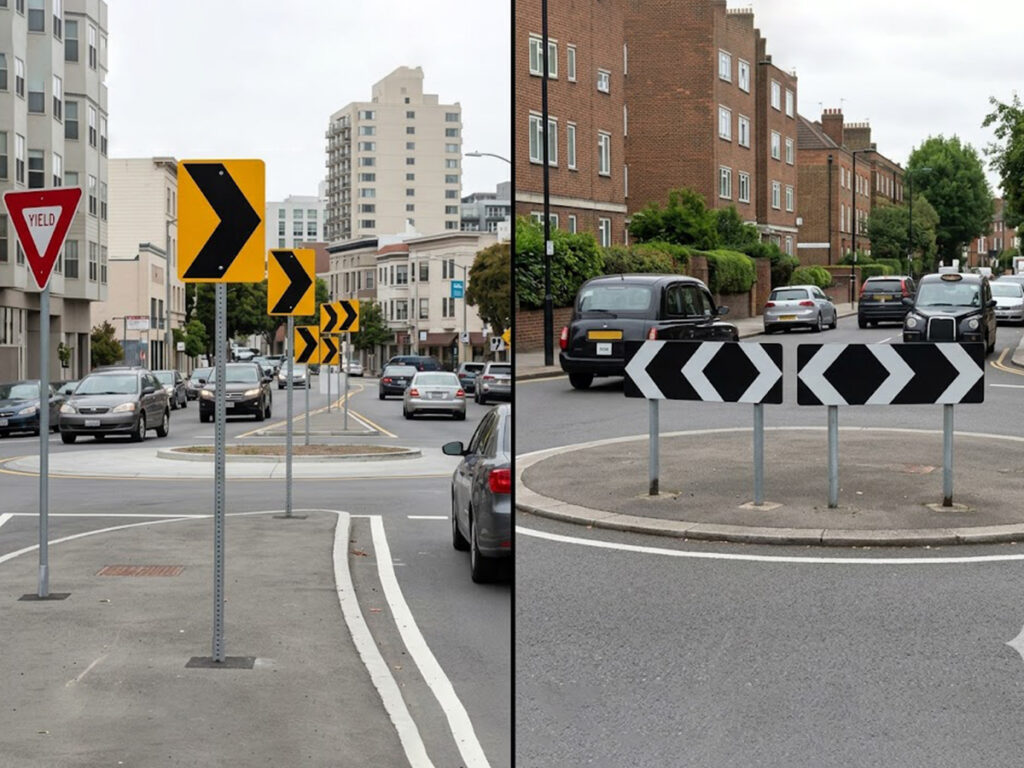
الولايات المتحدة مقابل. المملكة المتحدة دوار شيفرون علامة: مرجع الامتثال جنبًا إلى جنب
| يصف | الولايات المتحدة MUTCD الطبعة 11 | المملكة المتحدة TSRGD 2016 |
| الوثيقة الحاكمة | MUTCD 11th إد. (الهيئة الفيدرالية للطرق السريعة (FHWA)., 2023) | TSRGD 2016 / الفصل TSM 4 |
| تسمية التوقيع | W1-8 (تحذير) / R6-4 (تنظيمي) | مجدولة. 12 شيفرون استشاري / مجدولة. 2 اتجاهي |
| لون الخلفية | أصفر (بنك الاحتياطي الفيدرالي. الأمراض المنقولة جنسيا. 595 لون 33538) | أبيض (عاكس) |
| لون الأسطورة | أسود | أسود |
| إعادة الانفعال | ASTM D4956 النوع الثالث دقيقة. (النوع الرابع تفصيل.) | BS واحد 12899-1 RA2 دقيقة. |
| الركيزة | .080″ الألومنيوم, أستم B209 | 1.5- ألومنيوم 2 ملم, BS واحد 1396 |
| حجم اللوحة القياسية | 30″×30″ / 36″x36″ (سرعة عالية) | 700مم × 700 مم / 900مم × 900 مم |
| التخليص الجانبي | 6 قدم الريفية / 2 قدم الحضرية (MUTCD 2A.19) | 450 مم من حافة الطريق |
| ارتفاع آخر (دقيقة.) | 5 قدم غير ped / 7 قدم قدم (MUTCD 2A.18) | 900مم غير ped / 2100مم |
| السلطة القانونية | 23 جزء CFR 655 / الهيئة الفيدرالية للطرق السريعة (FHWA). | قانون الطرق السريعة 1980 / TSRGD 2016 |
| مطلوب TRO? | لا (علامات التحذير) | لا (استشاري); نعم (تنظيمي) |
مصادر: MUTCD الطبعة الحادية عشرة (الهيئة الفيدرالية للطرق السريعة (FHWA)., 2023), TSRGD 2016 (و 2016/362), فصل دليل إشارات المرور 4
علامات شيفرون T-تقاطع: متطلبات MUTCD الأمريكية لإنهاء الطرق
مشكلة إنهاء التوقيع & تكامل لوحة الرؤية PW-68
تمثل نهاية طريق تقاطع T تحديًا مختلفًا تمامًا للتوقيع عن المنحنى. ينتهي الطريق العابر. يجب على السائقين الذين يقتربون بسرعة أن يفهموا أن الطريق ينتهي وأن الانعطاف إلزامي وليس اختياريًا. تنقل علامات شيفرون T-junction هذه الضرورة من خلال مزيج من توقيع سلسلة النهج ولوحة رؤية الإنهاء.
تحت MUTCD الإصدار الحادي عشر القسم 2C.12, يتم نشر شيفرون W1-8 بشكل متسلسل على منحنى الاقتراب و, بشكل نقدي, على لوحة الرؤية عند وجه الإنهاء. لوحة الرؤية PW-68 (تمت الإشارة إليه بجانب علامة W20-1.4 Road Ends) عبارة عن لوحة عاكسة كبيرة مثبتة بشكل عمودي على اقتراب حركة المرور. يتم ترتيب شيفرون على وجهها بنمط يتوافق مع اتجاه الانحراف.
الحد الأدنى للحكم الهندسي MUTCD لتوقيع الإنهاء الإلزامي هو تجاوز سرعة التشغيل 35 ميلا في الساعة على الطريق من خلال. تحت هذه العتبة, يحكم الحكم الهندسي. فوقه, لوحة الرؤية ذات مصفوفة شيفرون غير اختيارية.
وضع لوحة البصر, صفيف اللوحة & إعادة الانفعال
متطلبات وضع MUTCD تضع لوحة الرؤية بأسفلها على الأقل 2 أقدام فوق الحافة القريبة من الطريق المتقاطع. يجب أن تكون اللوحة مرئية لمسافة الرؤية الكاملة المطلوبة للتوقف - المشار إليها في جدول الكتاب الأخضر AASHTO 3-1 لسرعة تصميم الطريق من خلال.
تحمل لوحة رؤية T-junction النموذجية 3 ل 5 شيفرون W1-8 حسب عرض اللوحة. يسمح القسم 2C.12 من MUTCD بالحكم الهندسي على نمط الصفيف الدقيق, لكن الأغطية العاكسة من النوع الرابع هي الحد الأدنى لشارات لوحة الرؤية - وهي درجة أعلى من متطلبات شارة منحنى الاقتراب القياسية - نظرًا لأهمية الرؤية الليلية عند نهايات الطرق.
يتم تشغيل تسلسل التحذير المسبق الخاص بتثبيت تقاطع T في الولايات المتحدة: قف قبل (W3-1a) أو نهايات الطريق (W14-2), تليها سلسلة من شارات النهج W1-8, تنتهي عند لوحة الرؤية PW-68.
علامات شيفرون T-تقاطع: المملكة المتحدة TSRGD 2016 & قواعد لوحة الميزات الطرفية
إطار المملكة المتحدة: رسم بياني 562/563 & لوحة الميزات الطرفية
يبدأ توقيع T-junction في المملكة المتحدة بـ TSRGD 2016 رسم بياني 562 (تحذير الانحناء) والرسم التخطيطي 563 (الانحناء المزدوج) على النهج - وهي مماثلة للسهم الأمريكي W1-6 أحادي الاتجاه, يستخدم عندما يتجاوز الانحراف الأفقي العتبات الهندسية. إنهم يسبقون, ولكن لا تحل محل, تتميز اللوحة الطرفية بشيفرون.
إن المعادل البريطاني للوحة الرؤية الأمريكية PW-68 هو لوحة الميزات الطرفية - وهي لوحة بيضاء عاكسة مع مصفوفة شيفرون سوداء, المحددة في فصل دليل إشارات المرور 4, قسم 4.7.3. الحد الأدنى لعرض اللوحة هو 1.8 متر. يبلغ ارتفاعه السفلي 600 مم فوق مستوى الطريق لكل فصل 4 إرشاد. يجب أن يكون الوجه العاكس من فئة RA2 (BS واحد 12899-1).
تحمل لوحة الميزات الطرفية وضعًا قانونيًا استشاريًا بموجب TSRGD 2016، ولا يلزم وجود TRO لتثبيتها. لكن, قانون الطرق السريعة في المملكة المتحدة 1980, قسم 41 ينشئ مسؤولية مدنية لأي هيئة للطرق السريعة تفشل في تثبيت توقيع الإنهاء المناسب حيث تتطلب هندسة الطريق ذلك. بشأن عقود التصميم والبناء, تنتقل هذه المسؤولية إلى المطور حتى يتم اعتماد المادة 38.
المملكة المتحدة T-جانكشن مقابل. الولايات المتحدة T-تقاطع: الاختلافات الرئيسية للمشتريات ذات الولاية القضائية المزدوجة
| يصف | الولايات المتحدة MUTCD 11th إد. | المملكة المتحدة TSRGD 2016 |
| نظام علامة الإنهاء | لوحة الرؤية PW-68 + مصفوفة W1-8 | لوحة الميزات الطرفية + مصفوفة شيفرون |
| علامة تحذير الاقتراب | W20-1.4 / W14-2 (ينتهي الطريق) | رسم بياني 562 / 563 (تحذير من الانحناء) |
| لون اللوحة/اللوحة | أبيض أو أصفر عاكس | عاكس أبيض (RA2) |
| نظام الألوان شيفرون | أسود على أصفر | أسود على أبيض |
| إعادة الانفعال (سبورة) | ASTM D4956 النوع الرابع دقيقة. | BS واحد 12899-1 RA2 |
| دقيقة. عرض اللوحة/اللوحة | حكم هندسية (~8-12 قدم) | 1.8م الحد الأدنى |
| ارتفاع الجزء السفلي من اللوحة | 2 قدم فوق حافة الطريق المتقاطعة | 600مم فوق الطريق |
| الزناد القانوني (إلزامي) | سرعة التشغيل > 35 ميلا في الساعة | الهندسة التي يتم تشغيلها لكل فصل 4 |
| مطلوب TRO? | لا | لا (المجلس الاستشاري) |
مصادر: MUTCD الإصدار الحادي عشر القسم 2C.12, فصل دليل إشارات المرور 4, قسم 4.7.3
قواعد التثبيت: ارتفاع آخر, الأجهزة & معايير الصيانة
بريد الولايات المتحدة, الأجهزة الانفصالية & متطلبات الأوفست الجانبية
يجب أن تستخدم جميع دعامات اللافتات الموجودة على جانب الطريق داخل المنطقة الواضحة عند الدوارات والتقاطعات على شكل حرف T في الولايات المتحدة أجهزة مقاومة للأعطال تعتبر مقبولة بموجب سياسة FHWA الحالية (يتوافق عادةً مع إرشادات MASH للمشاريع الجديدة في المرافق عالية السرعة).
يجب أن تتجنب تركيبات الجزيرة الفاصلة بشكل عام المواقع التي تحركها التربة بسبب متطلبات الخلوص الضحلة, عادةً ما يتم اختيار طرق الأساس الأخرى.
الإدارة الفيدرالية للطرق السريعة (FHWA). 2012 تتطلب قاعدة صيانة الانعكاس الرجعي من الوكالات إنشاء برامج تفتيش. الطريقتان المقبولتان هما النوع 1 (التفتيش البصري ليلا) ونوع 2 (مقياس الانعكاس الرجعي المحمول وفقًا لمعيار ASTM E1701). يجب على المقاولين بموجب عقود صيانة طويلة الأجل التحقق من الطريقة التي تحددها الوكالة المالكة في خطة إدارة الأصول الخاصة بها.
معايير البريد في المملكة المتحدة, الفصل 8 & التزامات قانون الطرق السريعة
يجب أن تتوافق المواد البريدية في المملكة المتحدة مع BS EN ISO 1461 للجلفنة بالغمس الساخن أو الفولاذ المقاوم للصدأ للبيئات الساحلية وعالية التآكل. حوامل لوحة الحافة تتبع BS 5400 المثبتات الهيكلية. يشير تصميم الأساس إلى DfT Circular 01/2016 لدعم علامة الطريق السريع.
تقع جميع أعمال تركيب لافتات الطرق السريعة في المملكة المتحدة ضمن قانون الطرق الجديدة وأعمال الشوارع 1991 عندما تكون داخل حدود الطريق السريع. الفصل 8 من دليل إشارات المرور يحكم عملية التثبيت. يؤدي التثبيت غير المتوافق - حتى مع اللافتات المحددة بشكل صحيح - إلى تعرض هيئة الطرق السريعة بموجب المادة 41 من قانون الطرق السريعة 1980.
BS واحد 12899-1 يتطلب التحقق الأولي من الأداء فيما يتعلق بالتركيب والصيانة الدورية بما يتماشى مع خطة إدارة الأصول الخاصة بهيئة الطرق السريعة. يوصى بتنظيف الوجه سنويًا في المناطق الزراعية والمناطق عالية التلوث للحفاظ على الانعكاس الرجعي أعلى من الحد الأدنى RA2.
قائمة مراجعة المشتريات: مصادر الدوار المتوافقة & تي جنكشن شيفرون
مصادر المقاولين علامات شيفرون دوار بالنسبة للمشاريع الأمريكية، يجب أن تطلب الوثائق التالية من أي مورد قبل إصدار أمر الشراء:
- شهادة الأغطية ASTM D4956 النوع الثالث أو الرابع (شهادة الشركة المصنعة, ليس تأكيد الموزع)
- MUTCD القسم 2 أ.08 خطاب الامتثال
- اذكر قائمة DOT QPL عند الاقتضاء (على سبيل المثال, كالترانس QPL, تكسدوت QPL)
- MASH بعد الحصول على شهادة الأجهزة القابلة للتعطل في حالة شراء مجموعات كاملة
لمشاريع الدوار أو تقاطع T في المملكة المتحدة, الحد الأدنى لمجموعة الوثائق هو:
- BS واحد 12899-1 تقرير اختبار الانعكاس الرجعي RA2 (بيانات الاختبار الفعلية; علامة CE وحدها غير كافية)
- إعلان مطابقة مخطط TSRGD
- مواصفات الطرق السريعة في إنجلترا لأعمال الطرق السريعة (شو) مسلسل 1200 بيان الامتثال
لأوامر الاختصاص المزدوج, ASTM D4956 وBS EN 12899-1 درجات الأغطية غير قابلة للتبديل. حدد كلا المعيارين في نفس أمر الشراء مع بنود منفصلة بشكل واضح. مهلة المخزون القياسية: لوحات أمريكية (30″ × 30″ و 36″ × 36″) عادة ما يتم الشحن من المخزون; لوحات لوحة الرؤية المخصصة (48″ × 48″ وما فوق) تحمل مهلة تصنيع تتراوح من 10 إلى 15 يوم عمل. تتبع لوحات الأبعاد المترية في المملكة المتحدة فترات زمنية مخصصة مماثلة.
للحصول على أبعاد اللوحة التي تم التحقق منها عبر جدول MUTCD الكامل, الرجوع إلى الموارد على تم التحقق من أبعاد علامة MUTCD.
صورة المعايير الأوسع: الامتثال لشركة شيفرون في جميع التطبيقات
يقع الامتثال لشيفرون التقاطع الدائري والتقاطع T ضمن إطار MUTCD وTSRGD الأوسع الذي يحكم علامات التحذير عبر المنحنيات الأفقية, مناطق العمل, ومرافق متعددة الممرات. يستفيد المقاولون الذين يديرون عطاءات البنية التحتية المعقدة عبر أنواع الوصلات هذه من مرجع موحد يغطي اختيار اللافتات, التحجيم, منطق التباعد, والسلطة التنظيمية من المبادئ الأولى.
للحصول على مرجع شامل حول معايير علامة شيفرون عبر جميع أنواع التطبيقات - بدءًا من المنحنيات الأفقية وحتى الوصلات المعقدة - راجع دليلنا الكامل MUTCD معايير علامة شيفرون, الموضع, والمواصفات. ويغطي كل البعد, قاعدة التنسيب, والاستشهاد بالكود الذي يحتاج مقاول البنية التحتية إلى تحديده بشكل صحيح والمصدر بثقة.
الأسئلة المتداولة: الدوار & علامات شيفرون T-تقاطع
ما هي علامة MUTCD الصحيحة للدوار الأمريكي؟?
تحكم علامات محاذاة شيفرون W1-8 منحنيات الاقتراب من الدوار والجزر الفاصلة. تعمل اللافتات الاتجاهية R6-4 وR6-4a على تعزيز التدفق عكس اتجاه عقارب الساعة داخل الدوار. هذه أنواع لافتات مميزة ذات قواعد وضع منفصلة - قم دائمًا بالتأكد من ما تحدده خطط المشروع قبل الشراء.
ما هو الفرق بين علامة شيفرون الدوارة في الولايات المتحدة والمملكة المتحدة?
نحن علامات شيفرون دوار (W1-8) استخدم اللون الأسود على الأصفر ويجب أن يتوافق مع معايير ASTM D4956 النوع III/IV الانعكاسية. تستخدم الشارات الاستشارية في المملكة المتحدة اللون الأسود على الأبيض ويجب أن تتوافق مع BS EN 12899-1 RA2 تحت TSRGD 2016. المواصفات اثنين غير قابلة للتبديل. سوف تفشل اللوحات ذات المواصفات الأمريكية في فحص الطرق السريعة في إنجلترا; ستفشل اللوحات ذات المواصفات البريطانية في فحص DOT القائم على MUTCD.
أين تذهب بالضبط علامات شيفرون عند تقاطع T?
على وجه الإنهاء, يتم ترتيب شيفرون W1-8 على لوحة الرؤية PW-68 (نحن) أو لوحة الميزات الطرفية (المملكة المتحدة), تم وضعه لمواجهة حركة المرور القادمة على الطريق العابر ويكون مرئيًا لمسافة الرؤية الكاملة المطلوبة للتوقف. تسبق شيفرون W1-8 المتقدمة في السلسلة الإنهاء على منحنى الاقتراب.
هل السهم W1-6 هو نفس سهم رتبة W1-8 للاستخدام في الدوار?
لا. تم تحديد السهم الكبير أحادي الاتجاه W1-6 للدورات الفردية التي تبلغ حوالي 90 درجة أو أكثر. يتم نشر شيفرون W1-8 في سلسلة تقدمية للمنحنيات والانحرافات التي تتطلب توجيهًا اتجاهيًا خطوة بخطوة. يعد طلب W1-6 لتطبيقات جزيرة التقسيم الدائرية خطأً شائعًا في الشراء يؤدي إلى رفض فحص DOT.
هل تتطلب لوحات ميزات محطة T-junction في المملكة المتحدة وجود TRO?
لا. تحمل شارات لوحة الميزات الطرفية وضعًا قانونيًا استشاريًا بموجب TSRGD 2016 ولا تتطلب أي أمر تنظيم المرور. لكن, قانون الطرق السريعة في المملكة المتحدة 1980, قسم 41, ينشئ مسؤولية مدنية عن الفشل في تثبيت توقيع الإنهاء المناسب حيث تتطلب الهندسة ذلك - لذا فإن الاستشارة لا تعني اختيارية.
ما هي درجة الانعكاس الرجعي التي تتطلبها علامات شيفرون الدائرية في الولايات المتحدة والمملكة المتحدة?
نحن: ASTM D4956 النوع الثالث الحد الأدنى للتركيبات الجديدة; يوصى بالنوع الرابع عند المداخل عالية السرعة ومواقع لوحة الرؤية. المملكة المتحدة: BS واحد 12899-1 الحد الأدنى RA2 لجميع عمليات تثبيت اللافتات التحذيرية والإرشادية الجديدة منذ TSRGD 2016 نطاق. درجة المهندس القياسية (النوع الأول) ستفشل صفائح RA1 عمومًا في تلبية متطلبات الأداء والانعكاس المطلوبة في مشاريع الدوارات وتقاطعات T الحديثة في كلا المنطقتين, مما يجعلها اختيارات غير مناسبة للمنشآت الجديدة.
مراجع
- الإدارة الفيدرالية للطرق السريعة (الهيئة الفيدرالية للطرق السريعة (FHWA).). دليل على أجهزة مراقبة حركة المرور الموحدة (Mutcd), 11الطبعة الرابعة
- وزارة النقل في المملكة المتحدة. لوائح مرور المروري والاتجاهات العامة 2016 (TSRGD 2016), و 2016/362.
- وزارة النقل في المملكة المتحدة. يدوي علامات المرور, الفصل 4: علامات التحذير. 2013 (ينطبق بموجب TSRGD 2016).
- مسؤولي الطرق السريعة في الجمعية الأمريكية ونقلهم (عاشتو). سياسة التصميم الهندسي للطرق السريعة والشوارع (الكتاب الأخضر), 7إد. 2018.
- الهيئة الفيدرالية للطرق السريعة (FHWA).. القاعدة النهائية: الحد الأدنى من متطلبات الانعكاس الرجعي لإشارات المرور. السجل الفيدرالي, يناير 2012
- قانون الطرق السريعة في المملكة المتحدة 1980, قسم 41.
- BS واحد 12899-1:2007. مُثَبَّت, إشارات المرور العمودية على الطرق. معهد المعايير البريطانية.
- برنامج أبحاث الطرق السريعة التعاونية الوطنية (NCHRP). تقرير 350: الإجراءات الموصى بها لتقييم أداء السلامة في ميزات الطرق السريعة. TRB, 1993.
- الهيئة الفيدرالية للطرق السريعة (FHWA).. 23 جزء CFR 655 - العمليات المرورية: الإدارة الفيدرالية للطرق السريعة, الامتثال MUTCD وأهلية المساعدات الفيدرالية.