لماذا يعد الحصول على أبعاد علامة شيفرون بشكل صحيح قرارًا بالغ الأهمية فيما يتعلق بالمشتريات
أبعاد علامة شيفرون ليست متغيرة سلعة. لمديري المشتريات البنية التحتية الثقيلة, يؤدي طلب الحجم الخاطئ إلى رفض مادة DOT, تكاليف إعادة الطلب في حالات الطوارئ, وتجاوز الجدول الزمني لعقود الممرات الحساسة للوقت. علامة MUTCD W1-8 — علامة محاذاة الشيفرون القياسية في الولايات المتحدة. البنية التحتية لحركة المرور - تعمل ضمن إطار حجم فدرالي متدرج والذي تحل محله DOTs في كثير من الأحيان بمتطلبات أكثر صرامة.
وفقا لFHWA 2024 بيانات السلامة على الطرق السريعة, حوادث مغادرة الطريق - نوع الحادث الأساسي الذي تخفف منه علامات شيفرون على المنحنيات الأفقية - تمثل ما يقرب من 53% من جميع حوادث الطرق القاتلة على الصعيد الوطني. (مصدر: https://Highway.dot.gov/safety/roadway-departure/overview)
مديري المشتريات الذين يعالجون أبعاد علامة شيفرون كمصادر مخاطرة ذات مواصفات ثابتة إلى الحد الأدنى الفيدرالي بينما تفرض وزارة النقل التابعة لولاية مشروعهم حجمًا أكبر. يغطي هذا الدليل إطار الحجم الكامل W1-8 - بدءًا من خط الأساس 18×24 إلى مواصفات التنسيق الكبير 36×48 - إلى جانب درجات الصفائح العاكسة للضوء ومتطلبات المواد الهيكلية. لأولئك الذين يحتاجون إلى التأسيس نظرة عامة على علامات محاذاة شيفرون وكيف تمنع حوادث مغادرة الطريق, هذا السياق يكمل البيانات الأبعاد المقدمة هنا.
إطار حجم MUTCD W1-8: خطوط الأساس الفيدرالية حسب تصنيف الطرق
يحدد الإصدار الحادي عشر من جدول MUTCD 2C-5 الحد الأدنى الفيدرالي أبعاد علامة شيفرون لكل فئة الطريق. هذه أرضيات إلزامية، وقد تتجاوزها الولايات, ولكن لا تسقط أبدا أدناه. يقوم النظام ثلاثي المستويات بتعيين نوع الطريق وسرعة التشغيل مباشرةً.
| تصنيف الطرق | الأبعاد القياسية | نطاق السرعة النموذجي | تسمية MUTCD |
| عادي / الطرق منخفضة السرعة | 18 × 24 بوصة | ≤ 45 ميلا في الساعة | W1-8 (معيار) |
| متعدد الخطوط / الشرايين عالية السرعة | 24 × 30 بوصة | 45 - 55 ميلا في الساعة | W1-8 (معيار) |
| الطرق السريعة / الطرق السريعة | 30 × 36 بوصة | ≥ 55 ميلا في الساعة | W1-8 (المتضخم) |
| الطرق السريعة الريفية عالية السرعة | 36 × 48 بوصة | ≥ 65 ميلا في الساعة | W1-8 (المتضخم) |
مصدر: MUTCD الطبعة الحادية عشرة, الجدول 2ج-5
18 × 24 بوصة: معيار الطريق التقليدي
تنطبق مواصفات 18×24 على الطرق التقليدية, الطرق السريعة الريفية ذات المسارين, والشوارع الحضرية التي تعمل عند أو أقل 45 ميلا في الساعة. ال 3:4 نسبة الارتفاع (عرض: ارتفاع) يحمل بشكل ثابت عبر جميع مستويات المقاسات W1-8. بهذا الحجم القياسي لعلامة شيفرون, الصف المهندس (على سبيل المثال) الأغطية هي الحد الأدنى الفني, على الرغم من أن معظم DOTs في الولاية تفرض الآن منشورية عالية الكثافة (خاصرة) حتى على الطرق التقليدية.
24 × 30 بوصة: الطريق السريع متعدد الحارات الافتراضي
تعد مواصفات علامة شيفرون مقاس 24 × 30 هي فئة الحجم الأكثر شيوعًا في عقود إدارة الطرق السريعة بالولاية. وينطبق ذلك على الطرق السريعة المقسمة والشرايين عالية السرعة. تتعامل فرق المشتريات مع 18 × 24 باعتباره الإعداد الافتراضي في أي مشروع رئيسي، مما يؤدي إلى مخاطر امتثال قابلة للقياس - تحدد معظم الخطط القياسية لوزارة النقل الحكومية 24 × 30 كحد أدنى لتطبيقات الطرق السريعة المقسمة.
30 × 36 و 36 × 48 بوصة: مواصفات الطريق السريع والتنسيق الكبير
تتطلب تطبيقات الطرق السريعة والطرق السريعة مواصفات لافتة شيفرون مقاس 30×36 كحد أدنى. على الممرات الريفية بين الولايات بسرعات استشارية تبلغ أو أعلى 65 ميلا في الساعة, أصبح البعد الكبير الحجم 36 × 48 هو معيار DOT الخاص بالولاية بشكل متزايد وليس استثناءً. انتقلت Texas DOT وFlorida DOT إلى التفويض 36×48 كإعداد افتراضي على منحنيات الطرق السريعة الريفية. بهذا الحجم للوحة, يصبح الألومنيوم الفارغ مقاس 0.080 بوصة بالمقياس القياسي هو الأرضية الهيكلية - وتتصاعد بعض مواصفات ممر الرياح العاتية إلى مقياس 0.100 بوصة.
مطابقة السرعة مع الحجم: كيف تؤدي السرعات المعلنة والاستشارة إلى تحديد أبعاد علامة شيفرون
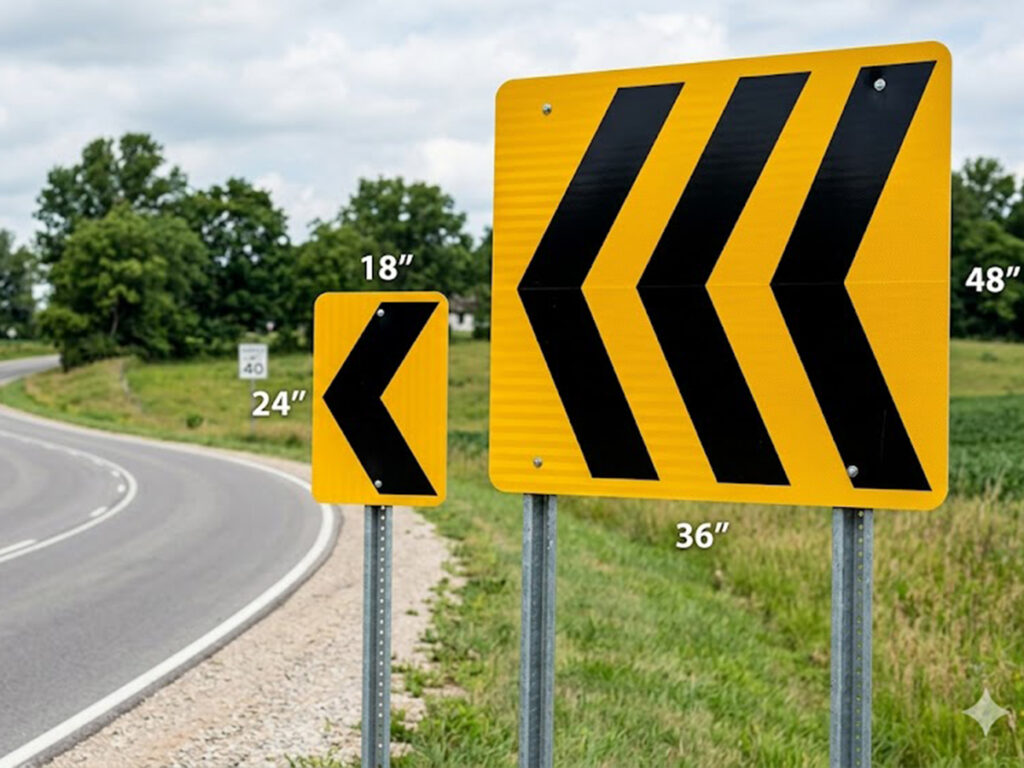
لا تقوم MUTCD بإصدار جدول مباشر من ميل بالساعة إلى البعد. يؤدي تصنيف الطرق إلى تحديد الحجم، ويرتبط التصنيف بالسرعة. رسم الخرائط العملية للمشتريات هو:
- ≤ 45 ميل في الساعة → 18 × 24 بوصة
- 45 - 55 ميل في الساعة → 24 × 30 بوصة
- ≥ 55 ميل في الساعة → 30 × 36 بوصة كحد أدنى; 36 × 48 يفضل على الطرق السريعة الريفية
تقدم لوحات السرعة الاستشارية متغيرًا مهمًا للمشتريات. عندما أ 55 الطريق ميلا في الساعة يحمل أ 35 لوحة استشارية منحنى ميلا في الساعة, السرعة الاستشارية - وليس الحد المعلن - تحكم اختيار أبعاد علامة شيفرون. يعد الطلب بالسرعة المنشورة مصدرًا موثقًا جيدًا للأخطاء الصغيرة في عمليات الشراء بالجملة.
يجب على فرق المشتريات إجراء إحالة مرجعية لوثائق هندسة المرور الخاصة بالمشروع للحصول على بيانات السرعة الاستشارية قبل الانتهاء من مواصفات الأبعاد. تخضع شروط المنحنى المحددة ومعلمات مسافة الرؤية التي تؤدي إلى تثبيت اللافتة - وليس الحجم الذي يجب أن تكون عليه - إلى MUTCD القسم 2C.12, الذي يحدد معايير التنسيب التنظيمية لعلامات محاذاة شيفرون.
مواصفات الأغطية العاكسة: درجة المادة وراء كل البعد
أبعاد علامة شيفرون تحديد اللوحة. تحدد الأغطية العاكسة للضوء ما إذا كانت تلك اللوحة تلبي الامتثال الضوئي الليلي. يحكم ASTM D4956 تصنيف الأغطية لجميع إشارات المرور, بما في ذلك W1-8.
تصنيفات النوع ASTM D4956 لعلامات شيفرون W1-8
- النوع الثالث / النوع الرابع (الصف المهندس): الحد الأدنى لـ 18 × 24 على الطرق ذات الحجم المنخفض. غير كافية على نحو متزايد - فمعظم DOTs بالولاية تفرض HIP للأسفل.
- النوع الثامن / النوع التاسع (المنشورية عالية الكثافة - HIP): مطلوب لفئة 24 × 30; بتكليف من العديد من DOTs بالولاية على الطرق التقليدية أيضًا.
- النوع الحادي عشر (درجة الماس - DG3): بتفويض من DOTs الرائدة في الولاية للألواح مقاس 30 × 36 و36 × 48. أعلى معامل الانعكاس. عمر خدمة أطول بكثير من HIP.
يعد الحصول على صفائح HIP عندما تتطلب مواصفات المشروع DG3 بمثابة عدم مطابقة مادية. إنه يؤدي إلى الرفض بغض النظر عما إذا كانت اللوحة أم لا أبعاد علامة شيفرون صحيحة. تعد درجة الصفائح وحجم اللوحة من متغيرات الامتثال المعتمدة على بعضها البعض.
أصفر الفلورسنت: مواصفات اللون وأخطاء الاستبدال الشائعة
تتطلب علامات MUTCD W1-8 أغطية صفراء فلورية - وليس اللون الأصفر القياسي. توفر صبغة الفلورسنت إضاءة نهارية لا يمكن أن يضاهيها اللون الأصفر القياسي. تم تحديد إحداثيات اللونية CIE للأصفر الفلوريسنت في MUTCD وASTM D4956. اللون الأصفر القياسي الذي تم الحصول عليه عن طريق الخطأ سوف يفشل في اختبار التوافق الضوئي أثناء النهار. تتطلب عمليات تقديم المواد DOT شهادة تنسيق الألوان الخاصة بالشركة المصنعة للألواح - ويجب أن تصاحب هذه الوثائق الشحنة.
الحد الأدنى من الانعكاسية الرجعية وآثار العقد طويلة الأجل
يحدد القسم 2A.22 من MUTCD الحد الأدنى من الانعكاسية الرجعية (معدل وفيات الأمهات) المعايير. يجب أن تستوفي اللافتات هذه القيم طوال فترة خدمتها, ليس فقط عند التثبيت. عمر الخدمة الممتد لألواح DG3 - عادةً 12+ سنوات مقابل. 7– 10 سنوات لـ HIP – يجعلها المواصفات المعقولة اقتصاديًا لعقود الصيانة طويلة الأجل. (مصدر: https://mutcd.fhwa.dot.gov/pdfs/2009r1r2/mutcd2009r1r2edition.pdf)
دعم الألومنيوم ومواصفات اللوحة الهيكلية
تمتد مواصفات علامة شيفرون إلى ما هو أبعد من الوجه العاكس. تحدد المواد الداعمة الأداء الهيكلي, طول العمر, وقبول DOT.
معيار الألومنيوم بقياس 0.080 بوصة
MUTCD وAASHTO مرجعان 0.080 بوصة (2.03مم) قياس الألومنيوم كدعم قياسي لإشارات المرور الدائمة. تهيمن سبائكان على المواصفات الفارغة للإشارة المعتمدة من وزارة النقل:
- 5052-H38: مقاومة عالية للتآكل, قابلية تشكيل جيدة - تستخدم على نطاق واسع في تطبيقات الممرات الساحلية والبحرية.
- 6061-T6: قوة شد أعلى - مفضلة في تطبيقات أحمال الرياح العالية والممرات الجبلية.
يعد شراء الفراغات مقاس 0.063 بوصة كإجراء لخفض التكلفة أحد أوضاع الفشل الموثقة في عمليات تقديم مواد DOT. بمقاس 36×48, تحدد بعض نقاط DOT في الحالة مقياسًا يبلغ 0.100 بوصة أو تتطلب أضلاع تقوية طولية لصلابة اللوحة كبيرة الحجم في مناطق الرياح العالية.
ترقيات المواد الخاصة بالمناخ
لا يلبي الألومنيوم القياسي المطلي بجميع المواصفات البيئية لوزارة النقل الحكومية. يتم تطبيق ثلاثة سيناريوهات للترقية:
- البيئات الساحلية/البحرية: فراغات من الألومنيوم المؤكسد أو المطلي بالبوليستر لمقاومة التآكل بما يتجاوز تشطيب المطحنة القياسي.
- البيئات ذات الأشعة فوق البنفسجية العالية (الصحراء الجنوبية الغربية, ممرات عالية الارتفاع): أنظمة لاصقة للألواح مثبتة بالأشعة فوق البنفسجية لمنع التصفيح المبكر.
- البيئات شديدة البرودة (الولايات الشمالية, الممرات الجبلية): تم تصنيف أنظمة لاصقة الصفائح إلى -40 درجة فهرنهايت للتركيب والامتثال لدرجة حرارة الخدمة.
هذه الترقيات ليست قياسية في أوامر تسجيل السلع. ويجب أن تحددها وثائق الشراء بشكل صريح.
علامات شيفرون كبيرة الحجم: مواصفات التنسيق الكبير واتجاهات اعتماد وزارة النقل
على المدى “علامة شيفرون كبيرة الحجم” يعتمد على السياق. اللوحة مقاس 36 × 48 هي الحجم القياسي لعلامة شيفرون في العديد من تطبيقات الطرق السريعة الريفية بموجب تفويضات وزارة النقل بالولاية - ولكنها تتجاوز الحد الأدنى لـ MUTCD لنفس فئة الطريق. يجب أن تشير عمليات تقديم المواد لأي لوحة تتجاوز الحد الأدنى من MUTCD إلى رقم رسم خطة DOT القياسية الخاص بالحالة والذي يسمح بالبعد الأكبر.
أنماط اعتماد التنسيق الكبير لـ DOT
تمثل الطرق السريعة الريفية عالية السرعة المحرك الرئيسي لحجم المشتريات الضخم W1-8. أنماط التبني الرئيسية:
- TxDOT: 36×48 هو الإعداد الافتراضي على المنحنيات الريفية بين الولايات; تعتبر الأغطية الصفراء الفلورية DG3 قياسية في جميع الطرق السريعة بالولاية.
- FDOT: فِهرِس 700 تتطلب السلسلة 36 × 48 على النظام الاستراتيجي متعدد الوسائط (SIS) الممرات; الألمنيوم المؤكسد مطلوب في المقاطعات الساحلية.
- Caltrans: خط الأساس القياسي للخطة ES-7A هو 30 × 36 لمعظم الطرق السريعة بالولاية; 36×48 لكل تحديد هندسة المرور على مستوى المشروع على الممرات عالية السرعة.
وتدعم أبحاث سلوك السائق هذا الاتجاه: تعمل مساحة اللوحة الأكبر على زيادة الانعكاس الرجعي على مسافات طويلة للمصابيح الأمامية - وهو أمر بالغ الأهمية في الممرات الريفية ذات الإضاءة المحيطة المحدودة. تقرير NCHRP 923 (2023) يوفر دعمًا لبيانات مسافة الوضوح لمواصفات إشارات المرور ذات التنسيق الكبير.
الأبعاد المخصصة وغير القياسية: مخاطر الجدول الزمني للمشتريات
غير قياسي أبعاد علامة شيفرونتتطلب s - مثل 42 × 54 لتطبيقات الأنفاق أو الجسور المتخصصة - موافقة رسمية على الانحراف الهندسي من مهندس السجل بالمشروع ومراجعة DOT. تحمل الفراغات المخصصة مهلة تصنيع تتراوح من 4 إلى 8 أسابيع مقابل 1-2 أسابيع لأحجام المخزون. تتطلب اللوحات المخصصة ذات التنسيق الكبير تطبيقًا يدويًا للأغطية بدلاً من التصفيح الآلي, زيادة كبيرة في تكلفة الوحدة. تؤدي الفرق التي تحدد متطلبات الأبعاد المخصصة في وقت متأخر من عملية الشراء إلى إنشاء تعرض للمسار الحرج.
شراء علامات شيفرون على نطاق واسع: متطلبات التقديم والتحقق من الجودة
يتطلب الشراء بكميات كبيرة للعلامات W1-8 المتوافقة صرامة في التوثيق تتجاوز ما تفرضه عمليات شراء السلع عادةً.
حزمة تقديم المواد المتوافقة
يجب أن يتضمن تقديم المواد المقبولة من قبل وزارة النقل لعلامات شيفرون W1-8 كل ما يلي:
- شهادة أبعاد اللوحة من الشركة المصنعة
- سبائك الألومنيوم وشهادة مطحنة القياس (5052-H38 أو 6061-T6; 0.080-بوصة كحد أدنى)
- تقرير الاختبار المعتمد من الشركة المصنعة للألواح العاكسة (نسبة النقر إلى الظهور) تأكيد تصنيف النوع ASTM D4956 وإحداثيات الألوان CIE
- بيانات اختبار الانعكاس الرجعي تؤكد الامتثال لقسم MUTCD 2A.22 MMR
- قم بشراء شهادة الامتثال الأمريكية بتمويل من إدارة الغذاء والدواء الأمريكية (FHWA). (ممر هيئة الخدمات الصحية الوطنية) المشاريع
تعد حزم التقديم غير المكتملة هي السبب الرئيسي لتأخير الموافقة على المواد في مشاريع البنية التحتية لوزارة النقل - وليس عدم مطابقة الأبعاد. يجب على مديري المشتريات أن يطلبوا الحزمة الكاملة من الشركات المصنعة قبل قبول الشحنة.
اتساق الحجم والمصنع مقابل. تطبيق الصفائح الميدانية
قد تتطلب مشاريع الممرات الكبيرة مئات إلى آلاف العلامات W1-8. التسامح الأبعاد لفراغات إشارة المرور هو ± 1/8 بوصة. ينبغي تحديد عينات الدفعة وفقًا لمعيار ANSI/ASQ Z1.4 في أوامر الشراء للعقود كبيرة الحجم. تتطلب الطلبات ذات الحجم المختلط — الشائعة في المشروعات التي تجمع بين روابط الطرق المحلية وأجزاء الطرق الرئيسية والطرق السريعة — فصلًا صارمًا ورسم خرائط التثبيت الميداني لمنع النشر بالحجم الخاطئ.
للألواح مقاس 30×36 و36×48, الأغطية المطبقة في المصنع هي المسار الوحيد المتوافق. يؤدي التطبيق الميداني بأحجام الألواح هذه إلى انحباس الهواء وفشل الالتصاق. يجب أن تحدد وثائق الشراء “الأغطية العاكسة المطبقة في المصنع, يتم تطبيقه وفقًا لتعليمات التثبيت الخاصة بالشركة المصنعة في ظل ظروف بيئية خاضعة للرقابة.” اختبار التصاق الصفائح وفقًا لمعيار ASTM D3359 هو نقطة تثبيت الجودة المناسبة. للحصول على تفاصيل تفصيلية لكيفية تحديد هندسة المنحنى لمتطلبات كمية الإشارة الإجمالية, انظر تباعد علامة شيفرون وصيغة التنسيب للمنحنيات الأفقية.
ربط أبعاد علامة شيفرون باستراتيجية الامتثال الكاملة لـ MUTCD
أبعاد علامة شيفرون تمثل طبقة مواصفات واحدة في إطار امتثال MUTCD متعدد المتغيرات. مديرو المشتريات الذين يتقنون هذه الطبقة - رسم الخرائط من فئة الطريق إلى الحجم, الدولة التحقق من خطة DOT القياسية, اختيار درجة الأغطية, ووثائق تقديم المواد - القضاء على المصادر الأكثر شيوعًا لتأخير المشروع في حزم توقيع المنحنى.
يعمل التسلسل الهرمي لقرار الشراء المكون من خمس خطوات على دمج كل شيء في هذا الدليل:
- خطوة 1: حدد تصنيف الطريق والسرعة المنشورة/الاستشارية ← حدد طبقة حجم MUTCD المطبقة.
- خطوة 2: اسحب خطة DOT القياسية للولاية المعمول بها ← تأكد مما إذا كانت تفويضات الولاية تتجاوز الحد الأدنى لـ MUTCD.
- خطوة 3: تحديد درجة الأغطية (الورك أو DG3) بناءً على فئة الطريق ومتطلبات وزارة النقل بالولاية.
- خطوة 4: تحديد المواد الداعمة (0.080-بوصة كحد أدنى; ترقيات خاصة بالمناخ حسب الاقتضاء).
- خطوة 5: قم ببناء متطلبات حزمة تقديم المواد في أمر الشراء قبل اختيار المورد.
مديرو المشتريات المسؤولون عن حزم التوقيع المنحني الكامل - علامات شيفرون, المرمى, والتنسيق المسبق لعلامات التحذير - سوف تجد ذلك أبعاد علامة شيفرون يتم تحديدها بشكل أكثر فعالية ضمن إطار معايير MUTCD الأوسع. هذا المرجع الكامل على MUTCD معايير علامة شيفرون, مواصفات التنسيب, والمتطلبات المادية يغطي صورة الامتثال الكاملة لفرق مشروع البنية التحتية.
الأسئلة المتداولة: أبعاد ومواصفات علامة شيفرون
ما هو حجم علامة شيفرون القياسية لمشروع طريق سريع بالولاية?
لا يوجد معيار عالمي واحد. خط الأساس MUTCD هو 24 × 30 بوصة لتطبيقات الطرق السريعة متعددة الممرات - سياق الطرق السريعة الأكثر شيوعًا في الولاية. لكن, تتطلب DOTs في كثير من الأحيان أحجامًا أكبر. TxDOT, FDOT, وغيرها من نقاط DOT ذات الحجم الكبير في الولاية تصل إلى 36 × 48 على ممرات الطرق السريعة الريفية. يجب على فرق المشتريات الرجوع إلى رسم خطة وزارة النقل القياسية المعمول به في الولاية, ليس جدول MUTCD وحده.
ما هو الحد الأدنى لحجم علامة شيفرون المسموح به بموجب MUTCD?
الحد الأدنى MUTCD على التقليدية, الطرق منخفضة السرعة 18 × 24 بوصة. على الطرق السريعة متعددة الحارات, يرتفع الحد الأدنى الفعال إلى 24×30. على الطرق السريعة والطرق السريعة, الحد الأدنى هو 30×36. لا يوجد حد أدنى عالمي واحد، بل إنها وظيفة تصنيف الطرق. إن استخدام الحد الأدنى 18×24 في مشروع الطريق السريع يشكل عدم امتثال للمواصفات.
ما هي درجة الأغطية العاكسة التي تتطلبها علامات شيفرون على الطريق السريع?
درجة الماس (DG3) - ASTM D4956 Type XI - هو تفويض DOT المهيمن على تطبيقات الطرق السريعة W1-8. المنشورية عالية الكثافة (خاصرة) تمثل الحد الأدنى من الأرضية ولكنها غير كافية على نحو متزايد بموجب معايير وزارة النقل الحالية للممرات عالية السرعة. يجب أن تكون الأغطية صفراء الفلورسنت; يفشل اللون الأصفر القياسي في الامتثال للقياسات الضوئية أثناء النهار.
ما هو مقياس الألومنيوم المحدد لفراغات علامة شيفرون W1-8?
المعيار هو 0.080 بوصة (2.03مم) كَيّل. السبائك المعتمدة من وزارة النقل هي 5052-H38 أو 6061-T6. للوحات كبيرة الحجم مقاس 30×36 و36×48 في مناطق أحمال الرياح العالية, تحدد بعض نقاط DOT الخاصة بالحالة مقياسًا يبلغ 0.100 بوصة أو تتطلب أضلاعًا تقوية طولية. إن شراء فراغات أرق بقياس 0.063 بوصة كتخفيض للتكلفة هو سبب موثق لرفض تقديم DOT.
هل يمكن استخدام حجم علامة شيفرون واحدة عبر جميع أنواع الطرق في مشروع ممر متعدد الطرق السريعة?
يعد استخدام أكبر حجم ممكن عبر الممر الكامل أمرًا مسموحًا به ويسهل عملية الشراء. لكن, يتمثل النهج الصحيح من الناحية الفنية في تحديد الحجم المناسب لتصنيف كل جزء من أجزاء الطريق. تتطلب الطلبات ذات الحجم المختلط فصلًا صارمًا وتعيين موقع التثبيت لمنع النشر الميداني ذي الحجم الخاطئ. الحجم الموحد يقلل من مخاطر سلسلة التوريد.
ما هي الوثائق المطلوبة في تقديم المواد لعلامات شيفرون المشتراة من وزارة النقل?
تتطلب حزمة التقديم المتوافقة: (1) شهادة أبعاد اللوحة, (2) سبائك الألومنيوم وشهادة مطحنة القياس, (3) تؤكد نسبة النقر إلى الظهور الخاصة بالشركة المصنعة للألواح نوع ASTM D4956 وإحداثيات الألوان CIE, (4) بيانات اختبار الانعكاس الرجعي للامتثال لقسم MUTCD 2A.22 MMR, و (5) قم بشراء شهادة أمريكا للمشاريع الممولة من إدارة الغذاء والدواء الأمريكية (FHWA).. التوثيق غير المكتمل هو السبب الرئيسي لتأخير التقديم - وليس عدم المطابقة الأبعاد.
مراجع
- FHWA MUTCD الإصدار الحادي عشر, الجدول 2ج-5
- أستم D4956 — المواصفات القياسية للألواح العاكسة للضوء للتحكم في حركة المرور
- MUTCD القسم 2أ.22 — الحد الأدنى من الانعكاس الرجعي الذي تم الحفاظ عليه
- إن إس آي/ASQ Z1.4 — إجراءات أخذ العينات للتفتيش حسب الصفات
- أستم D3359 — قياس الالتصاق عن طريق اختبار الشريط