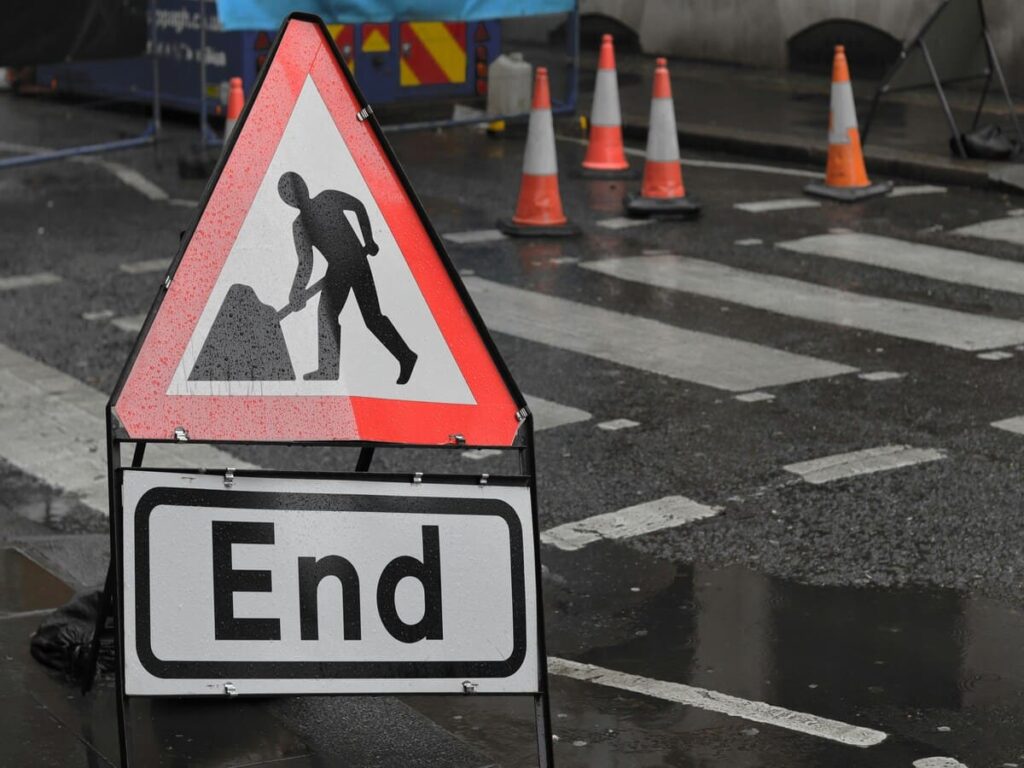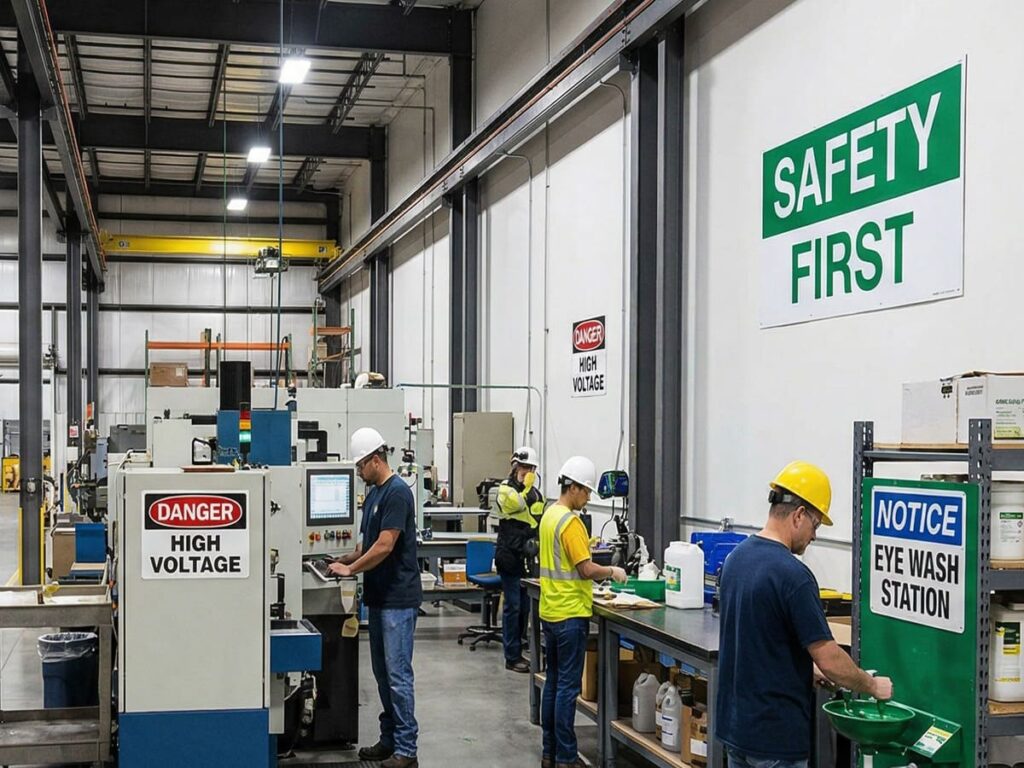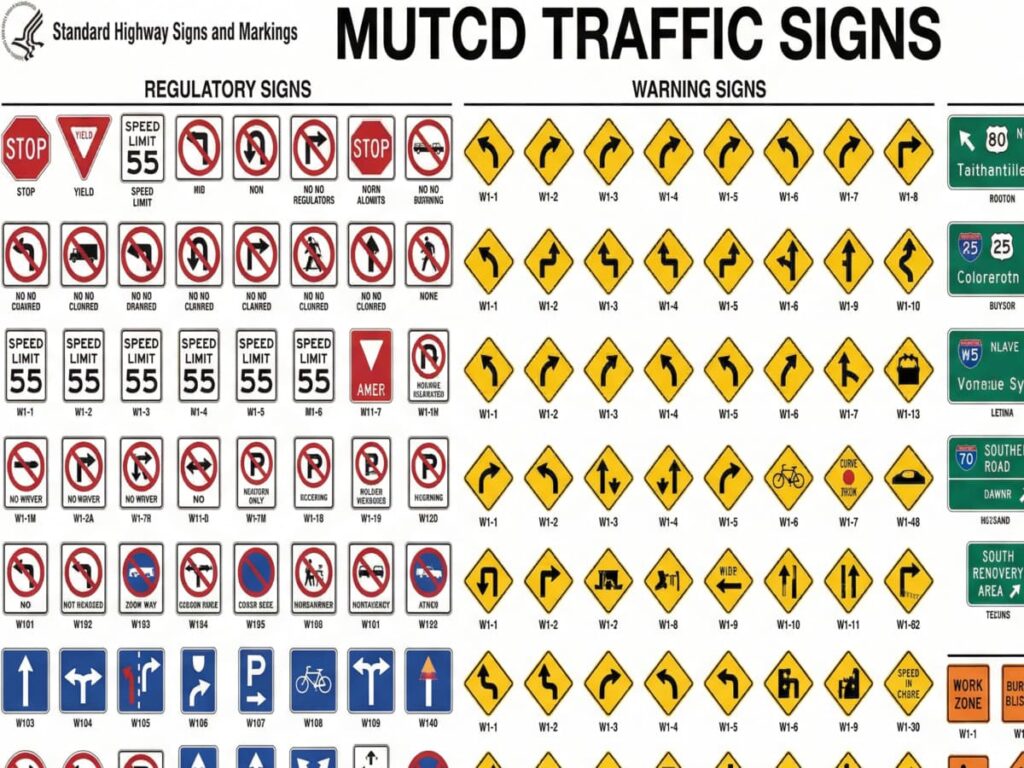

What Is Chapter 8 du manuel de signalisation routière?
Chapitre 8 du manuel de signalisation routière is the UK’s definitive code of practice for temporary traffic management (TTM) on public roads. The Department for Transport publishes it, and it applies across England, Écosse, Pays de Galles, and Northern Ireland. En bref, it establishes the minimum standards that every party must meet whenever a road or lane becomes obstructed — whether by planned roadworks, utility maintenance, an incident, or any other temporary situation requiring traffic to be redirected or slowed.
The scope of Chapitre 8 is deliberately broad. It governs the design of temporary traffic management layouts, the signing and marking of obstructions, and the selection and placement of physical devices — including cônes de circulation, cylinders, barrières, and temporary road markings. Au-delà de l'équipement, it also sets out the operational procedures that contractors must follow when they set up, maintenir, and close down a works site safely. Equally important, it addresses worker safety, gestion des piétons, and the legal responsibilities of every party involved in a project.
To reflect the complexity of TTM, Chapitre 8 comprises three separate documents:
- Partie 1: Conception — layout principles, device specifications, taper design, speed restrictions, and site geometry
- Partie 2: Opérations — on-site deployment, road cone maintenance, worker safety during live operations, and site management
- Partie 3: Conseils — supplementary guidance for complex, non-standard, or higher-risk situations
All three parts must be read together for full compliance. Among the physical devices Chapitre 8 regulates, cônes de circulation play the most visible role — and their height, espacement, rétro -flectivité, and lighting requirements are covered in detail throughout this article.
The Legal Status of Chapter 8
Chapitre 8 is a code of practice, not primary legislation — with one important exception. En Irlande du Nord, Article 31 of the Road Traffic Regulation (Irlande du Nord) Commande 1997 donner Chapitre 8 direct statutory force for certain roads and devices.
In England, Écosse, et le Pays de Galles, Chapitre 8 carries no direct statutory force on its own. Néanmoins, compliance with it is the accepted means of satisfying the legal duties that several pieces of primary legislation impose:
- Section 174 de la loi sur les autoroutes 1980 — places the duty to properly guard and sign road works on the person carrying them out
- Sections 65 et 124 of the New Roads and Street Works Act 1991 — back the Safety at Street Works and Road Works Code of Practice, which references Chapitre 8 principles directly
- The Construction (Design and Management) Règlements 2015 (CDM) — impose health and safety duties on all parties involved in a works project
- The Traffic Management Act 2004, Section 16 — sets network management duties for local traffic authorities
En pratique, donc, all highway authorities strongly recommend making Chapitre 8 compliance a condition of contract for any works on their behalf. This recommendation extends to toll roads, tunnels, ponts, hospital grounds, railway land, and private estate roads open to the public. Surtout, non-compliance does not simply mean failing a code — it means failing the underlying legal duties these standards exist to satisfy.
For a full breakdown of who is legally permitted to place road cones on UK roads and what penalties apply to unauthorised use, see our guide to UK traffic cone laws.
Traffic Cone Requirements Under Chapter 8
Cone Height by Road Type and Speed Limit
Chapitre 8 sets minimum heights for road cones based on the permanent speed limit of the road where works take place. Table A1.3 (Appendix 1) of Part 1 defines these requirements as follows:
| Type de route / Limitation de vitesse | Hauteur minimale du cône | Remarques |
|---|---|---|
| Roads with speed limit up to 40 mph | 450 mm | Standard urban and suburban use |
| Roads with speed limit over 40 mph | 750 mm | Rural A-roads and dual carriageways |
| Motorways and dual carriageways with hard shoulders (limite de vitesse nationale) | 1,000 mm | Required for both entry/lead tapers and facing wall |
| Northern Ireland motorways and dual carriageways with hard shoulders | 1,000 mm | Seulement 1 m cones permitted; aucune exception |
One operational point that procurement managers frequently overlook: where safety cones go in by machine, or where operatives could confuse 1,000 mm et 750 mm cones at night, Chapitre 8 recommends standardising the entire site to 1,000 mm. Autrement dit, mixed heights on a motorway site create a compliance risk that outweighs any cost saving from using shorter cones in sections where the rules technically permit it.
Retroreflective Sleeve Requirements
Chaque cône de circulation on a public road under Chapitre 8 must carry a retroreflective sleeve that meets BS EN 13422. Spécifiquement, Chapitre 8 recognises two sleeve classes, and each applies to a different operating environment:
- Classe R1B — standard reflectivity, suitable for roads with speed limits of 40 mph or below and lit urban environments
- Classe R2 — higher luminance, required for high-speed roads, autoroutes, and unlit rural environments
Par conséquent, procurement managers placing bulk orders must specify the sleeve class at the point of purchase. Ordering Class R1B sleeves for a motorway deployment is a compliance failure — not merely a specification oversight.
For a full technical breakdown of BS EN 13422 — including weight requirements, sleeve class testing, and material specifications — see our UK traffic cones EN 13422 compliance guide.
Warning Lights on Road Cones
La nuit, contractors must place amber warning lights alongside the road cone layout. Table A1.3 of Part 1 sets the required intervals:
- On tapers: warning lights at 9 m intervals
- On parallel runs (facing wall): spacing as specified per road type in Table A1.3
- Flashing amber lights are permissible only on roads with a speed limit of 40 mph ou moins that have an active street lighting system
En outre, where contractors mount rotating reflector delineators on cônes de circulation, they may increase warning light spacing by up to 50% (atteinte 13.5 m or 27 m depending on location). Where delineators sit at the midpoint between consecutive lights on the near side of traffic, that increase rises to 100%.
Cone Spacing and Taper Design
What Is a Taper?
A taper is the diagonal line of safety cones that guides vehicles from an open lane into a restricted path. C'est, in practice, the most safety-critical element of any temporary traffic management layout. Chapitre 8 Partie 1, Section D3.6, sets the principles for safe taper positioning and design.
Above all else, sight lines govern where a taper can start. Each successive cone in a taper closing an offside lane must be clearly visible to the left of the preceding cone. De la même manière, for a nearside lane closure, each cone must be clearly visible to the right of the one before it. Par conséquent, contractors must never position tapers at bends or anywhere with restricted forward visibility.
Cone Spacing by Layout Zone
Because different parts of a temporary layout serve different purposes, Chapitre 8 applies different spacing rules to road cones depending on their position within that layout:
| Layout Zone | Typical Cone Spacing | Remarques |
|---|---|---|
| Lead-in taper (routes à grande vitesse) | Per Table A1.3 — varies by speed | Longer tapers required at higher speeds |
| Lead-in taper with Stop/Go or traffic signals | ~45° angle, cones at 1.2 m apart | Fixed angle requirement applies |
| Exit taper | 45° angle | Except where guide islands are provided |
| Parallel run / facing wall | Per Table A1.3 | Consistent with cone height and road type |
| Relaxation works (autoroutes) | 3 m spacing (Detail C2, Table A1.5) | Applies where relaxation conditions are met |
On congested roads with a speed limit of 30 mph ou moins, contractors may reduce the lead-in taper angle to no more than 45° to the kerb — particularly where drivers normally park on that road.
Taper Visibility Rule
Section D3.9 of Chapitre 8 Partie 1 states that cônes de circulation must sit close enough together to give an impression of continuity and substance. Table A1.3 details the specific taper rates and spacing values by road class and cone size. The underlying principle, cependant, remains constant: drivers must have enough distance and visibility to respond to the taper safely at the speed that applies.
Where roadworks sit near a bend — especially a left-hand bend — the tapered line of orange cones must begin far enough in advance of the obstruction to let drivers negotiate both the bend and the restriction safely. Spécifiquement, the taper must be clearly visible from the approach side before drivers reach the bend.
Site Layout Principles
Safety Zones
Chapitre 8 defines the safety zone as the area between the live traffic lane and the working space. More precisely, it extends to the outside edge of the road cones, or to the traffic edge of any road markings or studs that separate live lanes from the work area. Surtout, the areas within coned tapers also count as part of the safety zone.
The following rules apply without exception:
- Contractors must not deposit or store materials within the safety zone
- Moving parts of plant or machinery must not enter the safety zone
- Operatives may enter the safety zone only to place, remplacer, retirer, or maintain cones and signs
- On roads with speed limits above 40 mph, the inner boundary of the safety zone must always carry a physical marking
En plus, where the clearance between the working space and the live carriageway falls below 1.2 m on a road with a speed limit of 50 mph ou plus, contractors must impose a temporary speed restriction of 30 ou 40 mph and use physical measures to enforce it. In that scenario, the absolute minimum clearance is 0.5 m.
Maximum Site Length and Inter-Site Distances
On trunk roads, Chapitre 8 caps the maximum length of a single works site at 4 km, measured from the end of the lead taper to the start of the exit taper. Tableau 3.3 of Part 1 specifies the minimum distance between consecutive sites, which varies depending on whether both sites involve standard works or one qualifies for relaxation. Contractors may only vary these distances with Highway Authority approval.
Signalisation avancée
Before setting out any road cone layout, contractors must put advance warning signs in position to give drivers adequate notice of the works ahead. Chapitre 8 specifies sign types, tailles, and placement distances for each road type. On high-speed roads in particular, le “Workforce in Road — Slow” signe (Diagramme 7001.3) must go on the nearside in advance of the first crossing point during cone setting-out. Where variable message signs (Machines virtuelles) are available, contractors should use them to display the same message.
Chapitre 8 Compliance for Different Road Types
Routes urbaines (Jusqu'à 40 mph)
- Minimum road cone height: 450 mm (Table A1.3, Partie 1)
- Retroreflective sleeves: Classe R1B (BS One 13422)
- Taper angle: contractors may reduce to 45° in congested conditions
- Warning lights: required at night; flashing amber permitted where street lighting is present
- Safety zone inner boundary marking: not mandatory at this speed band
Rural A-Roads and Dual Carriageways (Sur 40 mph)
- Minimum cône de circulation hauteur: 750 mm (Table A1.3, Partie 1)
- Retroreflective sleeves: Classe R2 (BS One 13422)
- Taper design: per Table A1.3; longer tapers required due to higher approach speeds
- Warning lights: amber lights required; flashing amber not permitted where no street lighting
- Safety zone inner boundary marking: obligatoire
Autoroutes (National Speed Limit)
- Minimum motorway cone height: 1,000 mm for entry/lead tapers and facing wall; 750 mm permitted elsewhere — unless machine-installed or night-time confusion risk applies (Table A1.3, Partie 1)
- Retroreflective sleeves: Classe R2 (BS One 13422)
- Irlande du Nord: 1,000 mm only, aucune exception (Article 31, Road Traffic Regulation (NI) Commande 1997)
- Warning lights: amber lights at 9 m intervals on tapers (Table A1.3, Partie 1)
- Speed restriction: generally no lower than 40 mph temporary maximum; site-specific risk assessment required
- Safety zone inner boundary marking: obligatoire
Who Must Comply With Chapter 8?
Chapitre 8 places obligations on every party that touches a temporary traffic management project on a public road:
- Clients — the commissioning organisation must ensure the overall scheme meets Chapitre 8 design standards from the outset
- Créateurs — they must produce a Traffic Management Plan (TMP) that satisfies Part 1 requirements before works begin
- Contractors and operatives — they must deploy roadwork cones, signes, and lighting in strict accordance with the approved TMP and Part 2 operational requirements
- Sociétés de gestion du trafic — they carry day-to-day responsibility for maintaining the safety cone layout, avertissement, and signs throughout the works period
De plus, CDM 2015 imposes parallel legal health and safety duties on all of these parties. The two frameworks complement each other — and compliance with one does not substitute for the other.
Traffic Management Plans (TMP) and Permits
Before any road cones go out, contractors must prepare a Traffic Management Plan. The TMP must set out:
- The full layout of cônes de circulation, barrières, et signes
- The taper design and road cone spacing for the specific road type
- Advance warning sign placement distances
- Speed restriction requirements (le cas échéant)
- Lighting requirements for night-time operations
- Emergency access arrangements
Beyond the TMP, contractors working on streets covered by the New Roads and Street Works Act 1991 must also hold a Street Works Licence (Section 50) or equivalent permit. The Highway Authority must receive notification, and the TMP must satisfy Chapitre 8 requirements before the authority will grant the permit.
Only once the permit is in place and the TMP is approved can contractors legally put road cones on the public highway.
Common Chapter 8 Compliance Failures
En pratique, the following errors account for the majority of Chapitre 8 violations on UK roadworks sites:
Wrong cone height for road type. En utilisant 450 mm safety cones on a 60 mph road is the single most common error. The permanent speed limit — not the temporary restriction the contractor imposes — determines the minimum cone height. Many contractors get this wrong because they assume the reduced speed limit they post changes the requirement. It does not.
Incorrect sleeve class. Fitting cônes de circulation with Class R1B sleeves on a motorway or rural A-road. Before placing any bulk order, operatives must verify the sleeve class against the road’s permanent speed category.
Taper positioned at a bend. Starting a taper at a point where forward visibility is restricted. Chapitre 8, Section D3.6, is unambiguous on this point: sight lines take priority over all other positioning considerations.
Inadequate warning lighting. Omitting amber warning lights at night alongside road cones, or using flashing amber lights on unlit roads above 40 mph. Lighting is not discretionary — Table A1.3 specifies it as a mandatory requirement.
Safety zone encroachment. Allowing plant to operate or materials to accumulate within the coned safety zone. The safety zone exists for cone maintenance only — nothing else belongs inside it.
No Traffic Management Plan. Deploying orange cones without a prepared, approved TMP in place. This is not a procedural technicality; without a TMP, the deployment has no legal basis whatsoever.
Foire aux questions
What is Chapter 8 du manuel de signalisation routière?
Chapitre 8 is the Department for Transport’s code of practice for temporary traffic management on UK public roads. It covers all cône de circulation requirements — height, espacement, taper design, and lighting — alongside signage, zones de sécurité, and operational procedures. It applies across England, Écosse, Pays de Galles, and Northern Ireland, and the DfT publishes all three parts on gov.uk.
Is Chapter 8 a legal requirement?
In England, Écosse, et le Pays de Galles, Chapitre 8 is a code of practice rather than primary legislation. Cependant, it represents the accepted means of fulfilling duties under the Highways Act 1980, the New Roads and Street Works Act 1991, and CDM 2015. En Irlande du Nord, Article 31 of the Road Traffic Regulation (NI) Commande 1997 gives it direct statutory force for certain roads.
What size traffic cone does Chapter 8 require?
The minimum road cone height follows the road’s permanent speed limit: 450 mm for roads up to 40 mph, 750 mm for roads over 40 mph, et 1,000 mm for motorways and dual carriageways with hard shoulders at the national speed limit. These figures come from Table A1.3 (Appendix 1) of Part 1.
What cone spacing does Chapter 8 require?
Spacing varies by layout zone and road type, as Table A1.3 of Part 1 précise. On low-speed roads with Stop/Go control, lead-in tapers use safety cones at 1.2 m apart at a 45° angle. Exit tapers also run at 45°. On motorway relaxation works, 3 m spacing applies under Detail C2 of Table A1.5. Dans tous les cas, road cones must create a continuous, clear delineation that drivers can read at the applicable speed.
Do traffic cones need lights under Chapter 8?
Oui. During hours of darkness, contractors must place amber warning lights alongside cône de circulation layouts at intervals defined in Table A1.3 — 9 m on tapers. Flashing amber lights are only permissible on roads with speed limits of 40 mph or less where a street lighting system is in operation.
What is a Traffic Management Plan?
A Traffic Management Plan is a document that contractors must prepare before works begin. It sets out the full road cone layout, taper design, signalisation, éclairage, and any speed restriction arrangements. It must satisfy Chapitre 8 Partie 1 design requirements, and the Highway Authority must approve it before issuing a permit.
Qui est responsable du chapitre 8 compliance on a roadworks site?
Responsibility is shared. The client commissions a compliant scheme, the designer produces a compliant TMP, and the contractor deploys and maintains the layout in line with the approved plan. CDM 2015 then adds legal health and safety duties on top of those Chapitre 8 obligations for all parties.
What is the maximum site length under Chapter 8?
On trunk roads, the maximum length of a single works site is 4 km — measured from the end of the lead taper to the start of the exit taper, as specified in Part 1, Section D3.5. Contractors need Highway Authority approval to exceed this.
Can Chapter 8 apply to private roads?
Chapitre 8 carries no direct legal force on private roads in England, Écosse, et le Pays de Galles. Qui dit, highway authorities recommend making Chapitre 8 compliance a contract condition for works on any road open to the public — including car parks, hospital grounds, retail parks, docks, and similar estate roads.
Conclusion
Chapitre 8 governs everything that happens between the first advance warning sign and the last road cone on a UK roadworks site. Pour les responsables des achats, the practical implication is clear: the road’s permanent speed limit determines both the cône de circulation height and the sleeve class for every order. Getting this wrong is not a minor oversight — it is a compliance failure that transfers legal liability directly to the person responsible for the works.
For site operatives and traffic management designers, Chapitre 8 demands a documented TMP before safety cones go out, taper positions that treat forward visibility as the overriding constraint, and warning lighting that matches Table A1.3 for the road type in question — not just on inspected sites, but every time.
OPTRAFIC fournitures Chapitre 8-compliant traffic cones across the full size range, all with BS EN 13422 retroreflective sleeves and sand-weighted bases built for high-speed road environments. Whether you are equipping a single site or procuring for a fleet, our road cone range meets the specifications this article describes.
Browse our full traffic cone range →
Guides connexes: UK Traffic Cone Regulations
- UK Traffic Cone Laws: Loi sur les autoroutes, Amendes & Règles de la route — Legal framework: who can place cones on UK roads, penalties for unauthorised use, and private vs public road rules.
- UK Traffic Cones EN 13422 Compliance Guide — Product standards: sleeve classes, weight requirements, spécifications matérielles, and bulk order verification.
Références: Traffic Signs Manual Chapter 8 Parts 1, 2, et 3 (Département des transports, gov.uk); Loi sur les autoroutes 1980, Section 174 (legislation.gov.uk); Acte de nouvelles routes et des travaux de rue 1991, Sections 65 et 124 (legislation.gov.uk); Construction (Design and Management) Règlements 2015; Traffic Management Act 2004, Section 16; BS One 13422 (traffic cone standard); Road Traffic Regulation (Irlande du Nord) Commande 1997, Article 31.