Расстояние между знаками шеврона на горизонтальных кривых — это расчетная инженерная задача, а не полевая оценка. Инженеры-дорожники и подрядчики по техническому обслуживанию дорог, которые применяют неточные интервалы между интервалами, подвергают свои агентства выводам о несоответствиях MUTCD., Аудит безопасности дорожного движения (ЮАР) недостатки, и деликтная ответственность.
По данным Федерального управления автомобильных дорог (FHWA), горизонтальные кривые составляют примерно 25% всех дорожно-транспортных происшествий со смертельным исходом, хотя на их долю приходится лишь небольшая часть общего пробега по шоссе (Источник: https://Highways.dot.gov/safety/rwd/keep-vehicles-road/horizontal-curve-safety). Правильное размещение знака шеврона является основной контрмерой, но только в том случае, если подрядчики правильно выполняют формулы интервалов..
В этом руководстве представлена полная формула интервала., Механика MUTCD Таблица 2C-6, пошаговый процесс установки, и контрольный список соответствия требованиям после установки — все, что нужно инженерам-дорожникам и подрядчикам для достижения юридически оправданного результата., точная установка шевронных знаков на традиционных горизонтальных поворотах шоссе. Настоящее техническое руководство было проверено старшими инженерами по управлению дорожным движением на предмет соответствия требованиям FHWA и инженерным стандартам штата..
Почему расстояние между знаками шеврона является расчетным инженерным решением, Не оценка
Связь между геометрией кривой и частотой знака
Радиус кривой (Р) напрямую определяет, сколько знаков шеврона требуется для кривой и с какими интервалами они должны появляться.. Отношения обратные: по мере уменьшения радиуса, интервал между ними сокращается, и требуется больше знаков на кривую. Подрядчик устанавливает шевроны на кривой радиусом 300 футов в 45 миль в час использует значительно более узкий интервал между интервалами, чем при работе в радиусе 1000 футов на скорости 60 миль в час.
MUTCD, 11-е издание, раздел 2C.12 (в частности, пункты 02 через 04) является руководящим органом для установки всех шевронных знаков выравнивания на горизонтальных поворотах.. Прежде чем применять какое-либо значение расстояния между знаками шеврона к конкретному проекту, инженеры должны сверить этот раздел с обязательными и рекомендательными формулировками., обеспечение полного соблюдения MUTCD Раздел 2C.12 Требования к знаку выравнивания шеврона.
Воздействие на соответствие требованиям из-за неправильного интервала
Недостаточное расстояние приводит к трате бюджета и созданию визуального беспорядка, который может снизить чувствительность водителей.. Превышение интервала является более серьезным нарушением.: это оставляет водителей без надлежащего руководства по выравниванию на критической дуге поворота.. Любое условие представляет собой обнаружение несоответствия во время процесса обнаружения претензий RSA или деликта..
Департаменты транспорта штатов часто налагают дополнительные требования к расстоянию, которые заменяют федеральные минимумы MUTCD.. Подрядчики должны проверить Руководство по управлению дорожным движением своего штата, прежде чем завершать какие-либо работы. Расстояние между знаками шеврона план. Полагаться только на федеральные минимумы недостаточно в штатах с улучшенными стандартами разграничения кривых..
Что охватывает это руководство, а что нет
В этом руководстве рассматривается формула интервала, Таблица MUTCD 2C-6, характеристики бокового и вертикального размещения, правила устройства дороги с двусторонним движением, и пошаговый рабочий процесс развертывания на местах — все это применимо к традиционным горизонтальным кривым шоссе..
Ограждение заканчивается, фиксированные препятствия, Т-образные перекрестки, кольцевые развязки, и временное развертывание управления дорожным движением выходит за рамки данного руководства.. Знаки Шеврона не могут использоваться для этих целей.. Инженеры, исследующие основополагающие принципы проектирования этих устройств безопасности, должны ознакомьтесь со значением знака выравнивания шеврона и предотвращением несчастных случаев. данные перед расчетом размещения полей
Основные входные переменные: Что инженеры должны собрать перед любым расчетом расстояния
Радиус кривизны (Р) — Основная переменная
Радиус кривизны является самым важным параметром любого процесса. Расстояние между знаками шеврона определение. Инженеры извлекают R из утвержденных планов проектирования автомагистралей, исполнительные чертежи, или полевые измерения с использованием расчетов хорды и дуги и тахеометра или оборудования GPS.. Значения R отображаются в стандартных заголовках листов плана DOT в таблице геометрических данных..
Когда R недоступен в существующих планах, измерение поля с использованием хорды длиной 100 футов дает надежную аппроксимацию.. Формула: Р = С² / (8М), где C — длина хорды, и M - средняя ордината (смещение от средней точки хорды до кривой). Этот подход является стандартной практикой для старых сельских автомагистралей, на которых отсутствует действующая исследовательская документация..
Расчетная скорость против. Рабочая скорость — какое значение контролирует?
MUTCD использует расчетную скорость в качестве основного входного параметра для поиска в Таблице 2C-6.. Однако, когда полевые исследования подтверждают, что рабочая скорость 85-го процентиля значительно превышает расчетную скорость (что является обычным явлением на старых сельских автомагистралях), для Расстояние между знаками шеврона цели.
Использование слишком низкого значения скорости является наиболее распространенной ошибкой подрядчиков в сфере строительства. Расстояние между знаками шеврона расчеты. Это обеспечивает более широкие интервалы между шагами., меньше знаков на кривую, и систематическое состояние недостаточной установки. На рекомендательных табличках скорости (W13-1) размещено ниже разрешенной скорости, инженеры по-прежнему должны применять нормативную скорость при поиске в таблице интервалов., не рекомендательная ценность.
Степень кривой (Дюймовый) — Преобразование в радиус для поиска в таблице
В старых наборах планов горизонтальное выравнивание выражается в градусах кривой. (Дюймовый) а не радиус. В таблице MUTCD 2C-6 в качестве входных данных требуется радиус.. Стандартная формула преобразования::
Р = 5,729.58 ÷ Д
Например, кривая 5° преобразуется в R = 5,729.58 ÷ 5 = 1,145.9 ноги. Крутая кривая 15° преобразуется в R = 381.97 ноги. Подрядчики, которые пропустят это преобразование и попытаются выполнить прямой поиск в таблице значений D, дадут неверные значения интервалов — ошибка соответствия, которая может сохраниться при окончательной проверке, если рецензенты не знакомы с устаревшими форматами планов..
Таблица MUTCD 2C-6: Как читать, Интерполировать, и применить значения интервалов
Чтение таблицы 2C-6 — Радиус, Скорость, и интервалы выходного сигнала
MUTCD Таблица 2C-6 организует Расстояние между знаками шеврона значения по двум входам: радиус кривой (в футах) и скорость (в милях в час). Результатом таблицы является требуемый интервал интервала. (С) в футах между последовательными знаками шеврона вдоль кривой.
Репрезентативные значения интервалов из таблицы MUTCD 2C-6. (11е издание)
| Радиус кривой (футов) | Скорость (миль в час) | Интервал интервала (футов) | Примечания |
| < 300 | 45 | 40 | Плотная кривая — максимальная плотность |
| 300–500 | 45–50 | 80 | Стандартное сельское шоссе |
| 500–750 | 50–55 | 100 | Умеренная кривая |
| 750–1000 | 55–60 | 120 | Плавный поворот на высокой скорости |
| > 1,000 | 60–65 | 160–200 | Интерполируйте при необходимости |
Источник: MUTCD, 11-е издание, Таблица 2C-6 — Федеральное управление автомобильных дорог
Когда радиус кривой проекта попадает между двумя строками таблицы, инженеры должны линейно интерполировать между граничными значениями. Интерполяция предотвращает консервативную ошибку, связанную с выбором по умолчанию строки с более узкими интервалами, которая добавляет ненужное количество знаков, или более свободной строки, что приводит к несоответствующей недостаточной установке..
Как только инженеры подтвердят необходимое количество знаков из Таблицы 2C-6., Поиск подходящих панелей W1-8 в нужном объеме становится решающим этапом закупок.. Подрядчики, управляющие проектами коридоров с несколькими кривыми, должны запрашивать оптовые цены на шевронные знаки, соответствующие требованиям MUTCD, чтобы обеспечить экономическую эффективность в масштабе проекта и согласованные спецификации световозвращающего покрытия..
Как выполнить линейную интерполяцию для таблицы 2C-6:
Когда радиус, измеренный на месте, находится между официальными значениями, указанными в таблице 2C-6 MUTCD., инженеры должны использовать формулу линейной интерполяции для определения точного расстояния. (С):
С = С_1 + (Р – Р_1) (Р_2 – Р_1)/ (С_2 – С_1)
Где R — радиус поля, R_1 и R_2 — радиусы ограничивающей таблицы., а S_1 и S_2 — соответствующие расстояния между столами..
Пример: Если радиус вашей кривой (Р) является 450 футов при рабочей скорости 50 миль в час, а в Таблице 2C-6 представлены данные только для 400 ноги (С_1 = 60 футов) и 500 ноги (S_2 = 80 футов):
$$С = 60 + (450 – 400)(500 – 400) / (80 – 60) = 60 + (0.5 х 20) = 70 футов}
Использование этого точного метода гарантирует, что ваш план подписания будет отражать точные инженерные расчеты, а не приближения, связанные с риском соблюдения требований..
Пример расчета с работой: Применение формулы интервалов от начала до конца
Следующий рабочий пример демонстрирует полную Расстояние между знаками шеврона расчет от исходной геометрии кривой до окончательного количества знаков.
Учитывая входные данные: Р = 500 футов | Расчетная скорость = 50 миль в час | Длина дуги кривой = 800 футов
- Шаг 1 — Поиск по таблице: Используя Р = 500 фут и 50 миль в час, В таблице 2C-6 указаны интервалы. (С) из 80 футов.
- Шаг 2 — Количество знаков: N = Длина дуги ÷ S = 800 ÷ 80 = 10 знаки. Всегда округляйте в большую сторону, а не в меньшую, чтобы обеспечить непрерывное покрытие..
- Шаг 3 - Макет: Расположение знаков разметки, начиная с точки кривизны или непосредственно выше нее по течению. (ПК), продолжая с интервалом 80 футов по дуге до точки касания (ПТ).
- Шаг 4 — Соглашение об округлении: Если дуга не разделяется равномерно, округлите интервал немного короче, а не размещайте последний знак за пределами PT. Последний знак должен располагаться на PT или внутри него..
Якоря ПК и PT — куда идут первый и последний знак
Точка кривизны (ПК) отметки, где выравнивание по касательной переходит в выравнивание по кривой. Первый знак шеврона должен быть размещен на ПК или выше него на расстоянии одного интервала, когда расстояние видимости при приближении ограничено.. Последний знак в ряду попадает в точку касания или сразу за ней. (ПТ).
Инженерам не следует выдвигать шевронный знак на касательную за пределы PT.. Разграничение после касательной возвращается к стандартному разграничению края проезжей части., не шевронные знаки выравнивания. Смешение этих приложений по одной и той же линии создает путаницу для водителей и представляет собой неправильное использование устройства W1-8..
Боковое размещение, Высота монтажа, и требования к угловому выравниванию
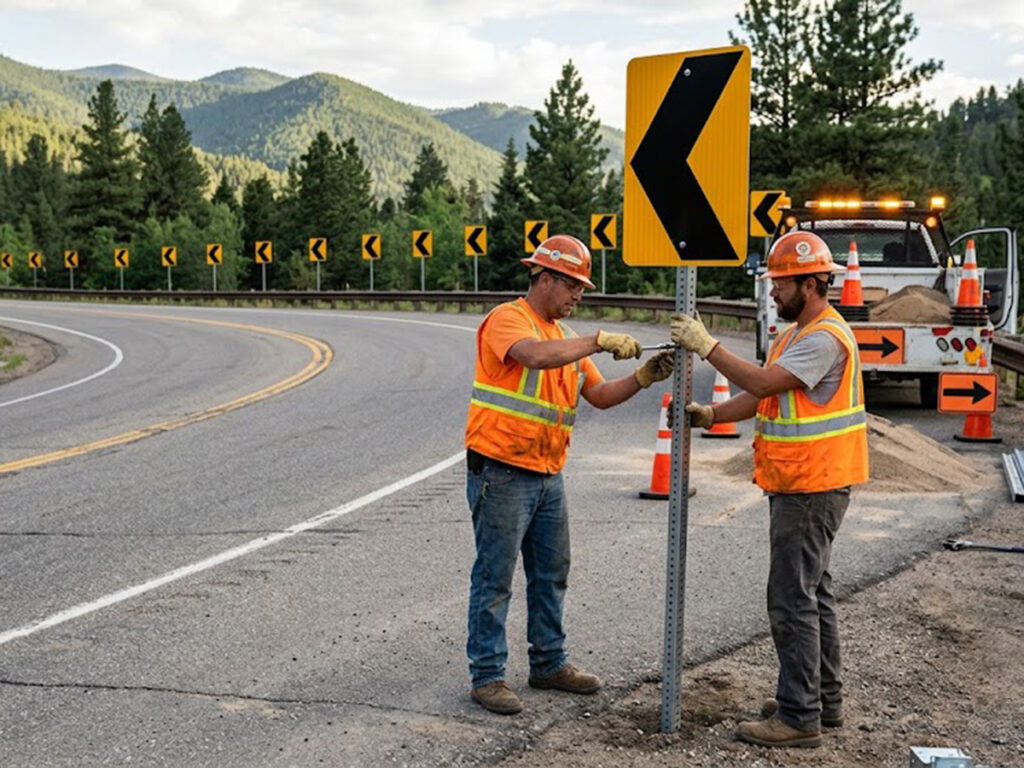
Боковое смещение от пройденного пути
Знаки шеврона устанавливаются на внешней стороне поворота (в направлении поворота дороги) и расположены таким образом, чтобы лицевая сторона знака попадала в естественное поле зрения водителя через дугу.. Для управления MUTCD требуется горизонтальный зазор от края проезжей части, соответствующий свободной зоне проезжей части., но при размещении знак не должен располагаться настолько далеко вбок, чтобы он выходил за пределы периферийной линии обзора водителя на поворотах с узким радиусом..
На городских участках с бордюрами и желобами, знаки крепятся к отколовшимся стойкам, отодвинутым от бордюра. На открытых обочинах сельских дорог, пост обычно устанавливает 2 к 6 футов от линии края. Коридоры, ограниченные перилами, требуют монтажа к существующему оборудованию с использованием одобренных кронштейнов для знаков на перилах, но только в целях разграничения., не для обозначения конца самого ограждения.
Минимальная высота установки — требование по вертикали 4 фута
MUTCD 11-е издание требует минимальной высоты установки 4 ноги, измеряется вертикально от нижней части знака до отметки ближнего края проезжей части. Это отличается от стандартного просвета в 5 футов, применяемого к большинству предупреждающих знаков, и отражает близость к тротуару при установке очертаний кривых..
Наиболее распространенная полевая ошибка на виражных участках связана с измерением высоты от уровня земли у основания столба, а не от отметки пройденного пути.. На возвышенной кривой с 8% поперечный уклон и откат на 6 футов, разница уклонов между основанием столба и краем проезжей части может превышать 4 к 6 дюймов — достаточно, чтобы создать несоответствующую установке установку, которая выдержит случайную проверку, но не выполнит точное измерение RSA.
Угловое выравнивание — ориентация каждого знака перпендикулярно приближающемуся транспортному средству.
MUTCD требует, чтобы шевронные знаки были установлены под прямым углом к направлению приближающегося транспорта, а не перпендикулярно осевой линии дороги или касательной к шоссе.. На непрерывной горизонтальной кривой, при приближении направление движения меняется в каждой точке дуги. Для каждого последующего знака требуется постепенно регулировать угол отклонения от курса..
Полевой метод прост.: монтажник стоит на предполагаемом месте знака, обращен в сторону встречного движения в этой конкретной точке кривой, и ориентирует лицевую сторону знака так, чтобы она указывала прямо на эту линию обзора.. В высокоточных или высокоскоростных проектах, ручной компас или оптический прибор обеспечивает документированный азимут для каждого поста..
Пакетная установка, при которой все стойки устанавливаются параллельно (принимая всю кривую, как если бы она была касательной), приводит к смещению лицевых сторон знака, которые отражаются под неправильными углами и теряют световозвращающую эффективность на самых критических расстояниях просмотра..
Двусторонние дорожные установки: Требования к знакам «Шеврон», расположенным «спина к спине»
Когда знаки «Спина к спине» обязательны
На двухполосной дороге, дороги с двусторонним движением, Раздел 2C.12 MUTCD налагает обязательное требование: шевронные знаки должны быть двусторонними, с лицами знаков, направленными должным образом на транспортное средство, приближающееся с каждого направления. Это обязательное требование, а не рекомендательное.. Односторонние шевронные знаки на неразделенных сельских автомагистралях с двусторонним движением представляют собой прямое несоответствие MUTCD..
Инженеры должны оценить, создает ли кривая необходимость в руководстве по выравниванию для одного или обоих направлений движения.. Сложная кривая, которая представляет проблемы с выравниванием только в одном направлении, может потребовать односторонних знаков для этого направления.. Если требуется направление в обоих направлениях (наиболее распространенное условие на извилистых сельских трассах), установка «спина к спине» обязательна..
Рекомендации по установке оборудования и конструкции двусторонних сборок
Для установки «спина к спине» требуются отрывные стойки, рассчитанные на ветровую нагрузку с двойным знаком.. Двусторонняя сборка знака представляет собой композитную площадь паруса примерно в два раза больше, чем у односторонней установки.. Подрядчики должны убедиться, что выбранная стойка и глубина заглубления соответствуют критериям отрыва AASHTO для данного условия нагрузки и класса почвы..
При монтаже знак-к-вывеске используются кронштейны для знаков «спина к спине» или Z-образные сборки.. Критическим ограничением является то, что две стороны знака должны быть независимо направлены на соответствующие направления приближающегося движения.. На криволинейной трассе, две грани будут направлены в разные стороны — они не будут параллельны. Параллельная установка встречных шевронов на кривой – это систематическая ошибка монтажа, сводящая на нет эффективность одной или обеих граней..
Расчеты расстояния на двусторонних кривых
Интервалы расстояния из таблицы MUTCD 2C-6 применяются независимо для каждого направления движения.. На симметричной кривой, где каждое направление движется по одной и той же дуге с одинаковой скоростью, одно физическое расположение знака со смежными панелями может одновременно удовлетворить обе последовательности интервалов.. Асимметричные кривые требуют независимых расчетов расположения знаков для каждого направления..
Подрядчики, оборудующие двухполосные сельские коридоры встречными шевронными знаками, должны планировать закупки с учетом общего количества панелей., не считать постов. Для каждого положения стойки на двусторонней кривой требуются две панели — по одной для каждого направления — плюс соответствующее монтажное оборудование с двумя знаками.. Использование обеих панелей в виде соответствующих сборок W1-8 с одинаковыми классами световозвращающих листов обеспечивает равномерную видимость в ночное время в обоих направлениях..
Где НЕ ПРИМЕНЯЮТСЯ формулы расстояния между знаками шеврона: Запрещенные приложения
Концы ограждений и фиксированные препятствия
MUTCD категорически запрещает использование знаков выравнивания Chevron. (П1-8) для обозначения фиксированных препятствий или конечных точек ограждения. Подходящим семейством устройств для этих приложений является серия Object Marker. (ОМ-1, ОМ-2, ОМ-3) как указано в разделе 2C.63 MUTCD.
Неправильное использование шевронов на концах ограждений в полевых условиях является документально подтвержденным и повторяющимся состоянием несоответствия.. Подрядчики, у которых есть шевронные панели, обычно используют их для обозначения концов ограждений — обычно для восполнения нехватки материалов.. Запрет MUTCD очевиден., и такое неправильное применение влечет за собой юридическую ответственность для устанавливающей организации.. Маркер OM обеспечивает правильный световозвращающий профиль и учитывает ожидания водителя при определении препятствий..
Т-образные перекрестки, Тупики, и некривые приложения
Значения расстояния в таблице 2C-6 получены для непрерывного криволинейного выравнивания, когда водителю требуется постепенное ведение по дуге.. Т-образные перекрестки и тупиковые подходы предполагают резкие изменения трассы, а не непрерывные дуги, и требуют совершенно других сборок знаков.: Устройства предупреждения о переходе дороги и указатели тупика, соответственно.
Частные дороги, парковка, и заявки на право отвода, не являющиеся общедоступными, выходят за рамки юрисдикции MUTCD.. Расстояние между знаками шеврона формулы из таблицы MUTCD 2C-6 не применимы в этих контекстах.. Подрядчики, применяющие значения интервалов, полученные из MUTCD, к кривым частных учреждений, вводят нормативные формулировки в ненормативный контекст и могут создать непреднамеренное юридическое воздействие в отношении стандартов медицинского обслуживания..
Строительные зоны — в рамках части применяются разные правила 6
Временное управление движением (Ttc) развертывания осуществляются в рамках части MUTCD 6, не часть 2C. The Расстояние между знаками шеврона Значения из Таблицы 2C-6 являются значениями постоянной установки Части 2C и не могут быть напрямую применены к контекстам TTC.. Часть 6 интервал регулируется разными таблицами, Геометрия зоны ТТС, и скоростные условия рабочей зоны.
Подрядчики, которые работают как в контексте постоянного технического обслуживания, так и в контексте TTC, должны поддерживать четкое функциональное разделение между Частью 2C и Частью 6 Стандарты интервала. Применение значений таблицы постоянной установки к развертыванию TTC (или наоборот) является ошибкой соответствия, которую можно выявить во время аудита безопасности рабочей зоны..
Рабочий процесс установки на месте: Пошаговый контрольный список развертывания
Предмонтажное обследование и сбор данных (Шаги 1–4)
- Шаг 1: Получите утвержденные планы проектирования дорог или проведите полевое обследование.. Извлечь радиус кривой (Р) в футах и длине дуги на основе таблиц геометрических данных или измерений в полевых условиях..
- Шаг 2: Подтвердите расчетную скорость. Если данные 85-го процентиля рабочей скорости из исследования трафика превышают расчетную скорость, используйте более высокое значение для поиска в Таблице 2C-6..
- Шаг 3: При работе со старыми наборами планов со значениями степени кривой, применить формулу преобразования R = 5,729.58 ÷ D, прежде чем перейти к таблице интервалов.
- Шаг 4: Найдите и отметьте ставки PC и PT.. Восстановите их с помощью GPS или тахеометра, если они отсутствуют в поле.. Координаты документа в журнале полей проекта для обеспечения защищенности RSA.
Расчет количества знаков и размещение ставок (Шаги 5–8)
- Шаг 5: Примените таблицу 2C-6 для определения интервала (С) за подтвержденный R и скорость. Интерполировать, если R попадает между строками таблицы.
- Шаг 6: Подсчитать общее количество знаков: N = Длина дуги ÷ S. Округлить до следующего целого числа.
- Шаг 7: Разметьте местоположения столбов от PC на интервале S через кривую до PT.. Отрегулируйте последний интервал внутрь, если дуга не делится равномерно.
- Шаг 8: Отрегулируйте угловое выравнивание каждой стойки, чтобы ориентировать ее перпендикулярно направлению приближающегося движения в этой конкретной точке кривой.. Используйте ручной компас в высокоточных проектах.
На этом этапе процесса развертывания — после подтверждения количества вывесок и определения местоположения постов — подрядчики должны завершить закупку панелей W1-8.. Запрос оптового ценового предложения на шевронные знаки, соответствующие требованиям MUTCD, на этом этапе позволяет избежать нехватки материалов в середине проекта при установке коридоров с несколькими поворотами..
Настройка публикации, Монтаж на панели, и окончательная проверка (Шаги 9–12)
- Шаг 9: Установите опорные стойки на необходимую глубину заделки в соответствии с критериями отрыва AASHTO для класса почвы проекта.. Проверьте отвес столба перед засыпкой.
- Шаг 10: Установите таблички на правильной высоте — минимум внизу знака. 4 футов над отметкой проезжей части пути. Проверьте с помощью стержня уровня или лазера на виражных участках.; не измеряйте от уровня земли после основания.
- Шаг 11: Для встречной установки на дорогах с двусторонним движением., установить и независимо направить каждый знак лицом к соответствующему направлению приближающегося движения.
- Шаг 12: Провести проверку проезда с обоих направлений на расчетной скорости или близкой к ней.. Проверьте световозвращающую видимость и угловое выравнивание.. Документ с фотографиями с отметкой даты для протокола соответствия проекта..
Проверка соответствия: Контрольный список на местах и документация после установки
Контрольный список соответствия MUTCD — точки проверки на местах
| Объект проверки | Требование MUTCD |
| Интервал интервала | Согласно Таблице 2C-6 (Р + скорость) |
| Первая позиция знака | На ПК или выше него |
| Ориентация лица знака | Перпендикулярно приближающемуся транспортному средству |
| Высота монтажа (нижний) | Мин. 4 футов над краем пройденного пути |
| Дороги с двусторонним движением | Панели спина к спине, независимо направленный |
| Ограждение заканчивается / препятствия | Шевроны ЗАПРЕЩЕНЫ — используйте серию ОМ |
| Соответствие табличке | П1-8, Световозвращающая пленка, соответствующая MUTCD |
Требования к документации для ответственности и готовности к RSA
Агентства и подрядчики должны хранить специальные записи для защиты Расстояние между знаками шеврона установка на основании выводов RSA или обнаружения правонарушений. Требуемая документация включает в себя: примечания к полям с входами R и скорости, Таблица 2C-6. Таблицы поиска., GPS-координаты каждого местоположения поста, расчет количества знаков, фотозаписи окончательной установки, и сертификаты соответствия материалов для панелей W1-8, включая спецификации классов световозвращающих листов..
Отсутствие документации по расчету расстояний рассматривается во время RSA или судебного разбирательства как отсутствие инженерной экспертизы.. Агентства, которые полагаются на суждения подрядчика на местах без документированных вводных формул, несут полную ответственность за любое несоответствие интервалов.. Структурированная документация на каждом этапе установки — это не административные издержки, а защита ответственности..
Оставаться в курсе: MUTCD 11-е издание и мониторинг государственных дополнений
MUTCD 11-е издание, принят в качестве федерального стандарта в 2023, внесены изменения, которые инженеры и подрядчики должны сверить с предыдущей практикой. Государственные DOT могут ввести ужесточение Расстояние между знаками шеврона интервалы, дополнительные требования к разметке кривых с высокой степенью аварийности, или минимальные классы улучшенного световозвращающего покрытия.
Инженеры должны сверяться с руководством по управлению дорожным движением своего штата или руководством по стандартным дорожным знакам и разметке для каждого проекта.. План распределения интервалов, соответствующий федеральным минимумам MUTCD, все равно может быть несоответствующим в соответствии с дополнением штата — и в этих юрисдикциях действуют требования штата к дополнениям..
Подробную информацию о выборе знака MUTCD., калибровка, контексты приложения, и спецификации соответствия для каждого варианта использования шевронного знака, а не только для горизонтальных кривых. полные стандарты знаков шеврона, размещение, и руководство по техническим характеристикам предоставляет исчерпывающий технический обзор из одного источника для инженеров-транспортников и подрядчиков, работающих над любым проектом, регулируемым MUTCD..
Часто задаваемые вопросы: Расстояние между знаками шеврона и установка горизонтальной кривой
Каково правильное расстояние между знаками шеврона на горизонтальной кривой??
Расстояние между знаками шеврона определяется таблицей MUTCD 2C-6 с использованием двух входов: радиус кривой (Р) в футах и расчетная или рабочая скорость в милях в час.. Не существует универсального интервала — каждая кривая требует индивидуального поиска в таблице.. Типичные интервалы варьируются от 40 ноги на крутых поворотах (Р < 300 футов) до 160–200 футов на плавных высокоскоростных поворотах (Р > 1,000 футов).
Как инженеры рассчитывают общее количество шевронов, необходимых для кривой?
После определения интервала (С) из таблицы 2C-6, инженеры делят общую длину дуги на S, чтобы получить количество знаков: N = Длина дуги ÷ S, всегда округляю в большую сторону. Для кривой с 800 футы дуги и интервал 80 футов, минимально необходимое количество составляет 10 знаки.
Какова минимальная высота установки шевронных знаков выравнивания??
MUTCD 11-е издание требует, чтобы нижняя часть знака находилась на высоте не менее 4 футов выше отметки ближнего края пройденного пути, измерено вертикально. Это измерение должно учитывать высоту пройденного пути, а не уровень земли у основания столба, что имеет решающее значение на виражных участках..
Можно ли использовать шевронные знаки для обозначения концов ограждений или фиксированных препятствий??
Нет. MUTCD явно запрещает использование шевронных знаков совмещения. (П1-8) от использования для обозначения фиксированных препятствий или конечных точек ограждения. Правильными устройствами для этих приложений являются маркеры объектов. (ОМ-1, ОМ-2, ОМ-3) как указано в разделе 2C.63 MUTCD. Использование шевронов в таких контекстах представляет собой прямой вывод о несоответствии..
На двухполосной дороге, дорога с двусторонним движением, знаки шеврона должны быть обращены в обе стороны?
Да — это обязательное требование MUTCD.. На двухполосной дороге, дороги с двусторонним движением, шевронные знаки должны быть двусторонними (спина к спине) каждое лицо независимо направлено на приближающийся транспортный поток с соответствующего направления. Интервалы из Таблицы 2C-6 должны применяться независимо для каждого направления движения..
По какой формуле преобразуется степень кривой в радиус для таблицы 2C-6??
Стандартное преобразование: R = 5,729.58 ÷ Д, где R — радиус в футах, а D — степень изгиба.. Например, кривая 10° преобразуется в R = 5,729.58 ÷ 10 = 572.96 ноги. Это преобразование важно при работе со старыми наборами планов автомагистралей, которые выражают выравнивание в формате степени кривизны, а не радиуса..
Ссылки
- Федеральное управление шоссе (FHWA). Руководство по однородным устройствам управления движением (Mutcd), 11е издание, 2023. Раздел 2C.12: Знаки выравнивания Шеврона.
- Федеральное управление шоссе (FHWA). Безопасность FHWA — безопасность горизонтального изгибай.
- Американская ассоциация государственных служащих шоссейных дорог и транспорта (Аашто). Руководство по проектированию придорожной полосы, 4е издание. Критерии отрыва и стандарты поддержки знаков.
- Федеральное управление шоссе (FHWA). Стандартные дорожные знаки и разметка (ШСМ), 2023 Версия. Характеристики шевронного знака W1-8.