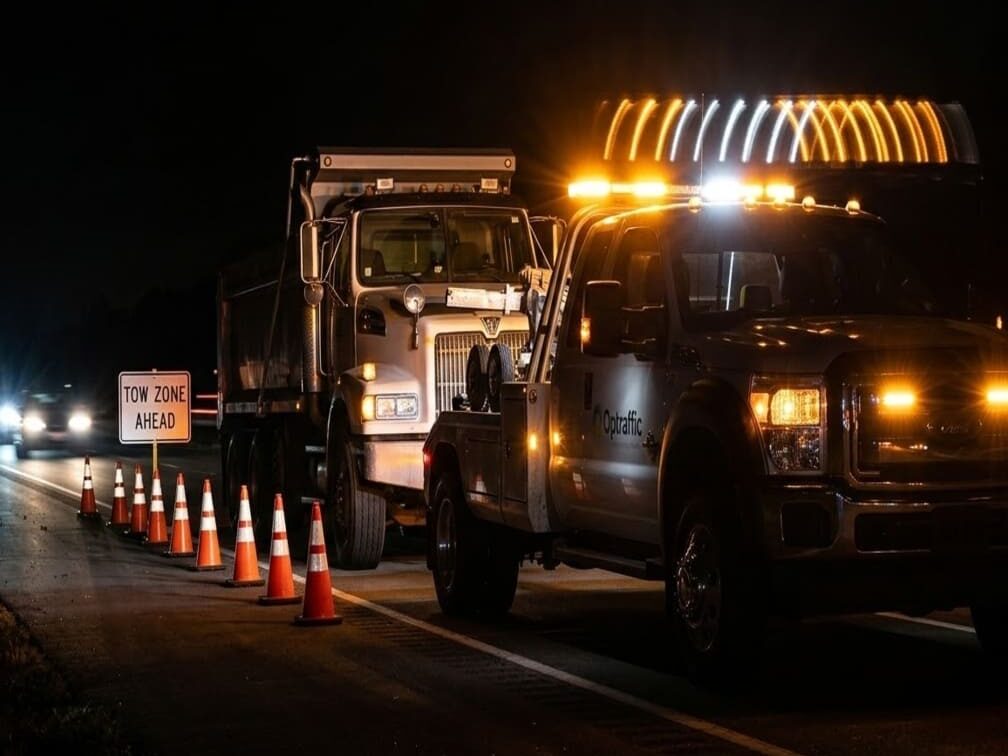
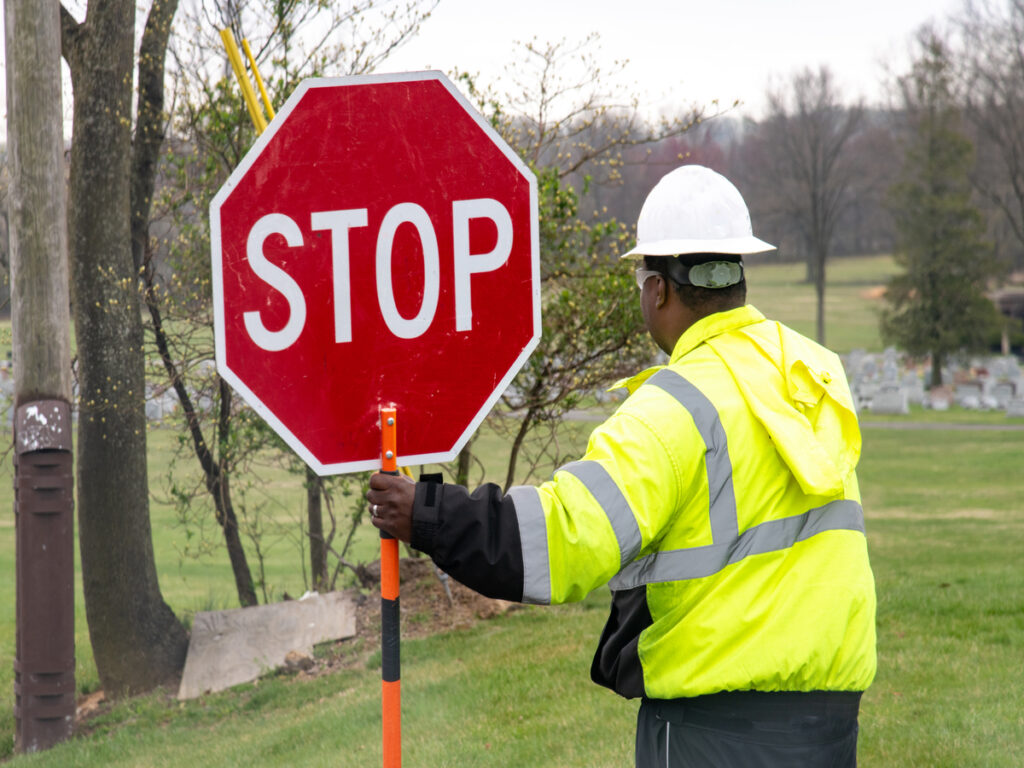
Most drivers recognize a stop and slow sign, but not everyone understands its role in a road construction zone. Unlike a fixed warning sign, a STOP/SLOW paddle is used by a trained flagger to control traffic in real time. It tells approaching drivers when to stop, when to proceed, and how to move safely through a temporary traffic control area.
Road construction can create conditions that make normal traffic movement difficult, including narrowed lanes, Временные закрытия дорог, ограниченная видимость, and equipment operating near moving vehicles. В этих ситуациях, a stop and slow sign helps coordinate traffic movements and prevent conflicting vehicle movements.
For traffic control contractors, строительные компании, and road maintenance teams, choosing the right equipment is equally important. Оптрафические принадлежности stop and slow signs designed for temporary work zones, with reflective sign faces, different handle configurations, and size options for traffic management applications.
What Is a Stop and Slow Sign?
А stop and slow sign, also called a STOP/SLOW paddle or stop/slow traffic paddle, is a handheld traffic control device used by flaggers to direct vehicles through temporary traffic control zones.
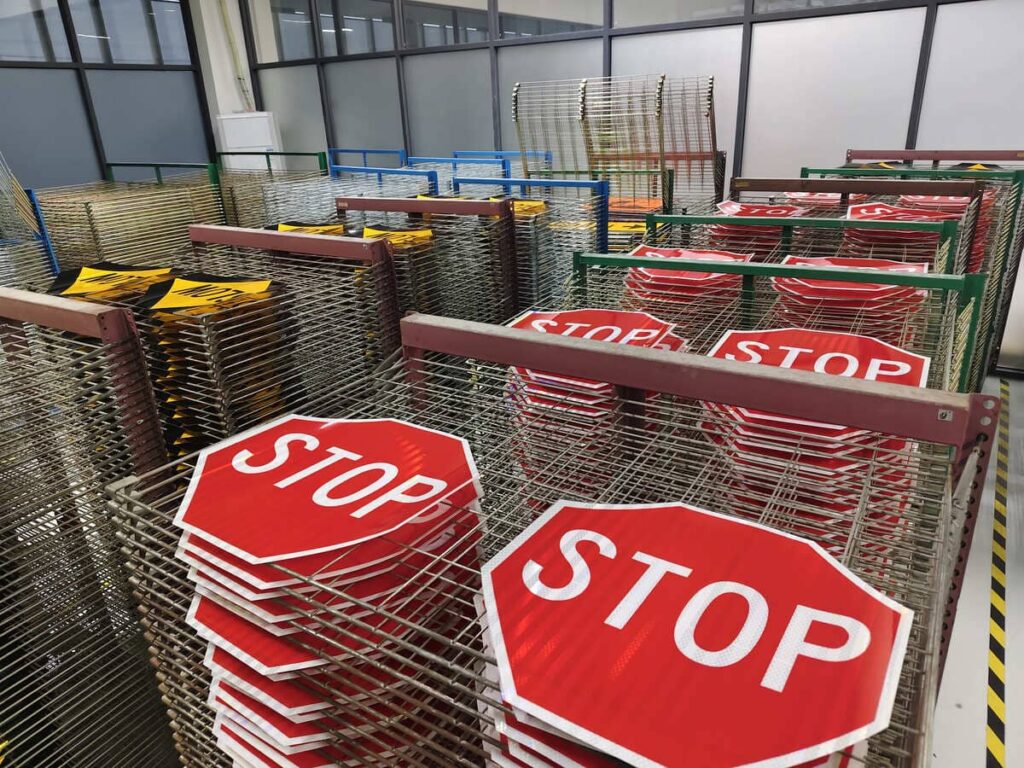
It has two different messages on opposite sides:
- ОСТАНАВЛИВАТЬСЯ: A red face with white lettering instructs approaching drivers to stop and wait.
- МЕДЛЕННЫЙ: An orange face with black lettering instructs drivers to proceed cautiously or reduce speed under the flagger’s direction.
Unlike a fixed road sign that displays the same message continuously, a stop/slow paddle allows a flagger to change instructions according to current road and work-zone conditions.
The two-sided design is particularly useful when traffic needs to move in alternating directions, when construction equipment temporarily occupies part of the roadway, or when workers need to control vehicle access to a restricted area.
STOP and SLOW: Understanding the Two Messages
Although both messages appear on the same device, they serve different traffic control purposes.
| Особенность | ОСТАНАВЛИВАТЬСЯ | МЕДЛЕННЫЙ |
|---|---|---|
| Цвет фона | Красный | Апельсин |
| Надпись | Белый | Черный |
| Main instruction | Stop and wait | Proceed cautiously |
| Traffic movement | Hold position | Move under controlled conditions |
| Типичное применение | Preventing entry into a restricted area | Releasing or guiding traffic through a work zone |
When the STOP side is displayed
Drivers must bring their vehicles to a complete stop at the designated stopping point and wait for further instructions. They should not enter the work zone, move around the flagger, or assume that traffic in the opposite direction has stopped.
Например, when two directions of traffic share a single open lane, the STOP instruction prevents one stream of vehicles from entering while the other stream is still using that space.
When the SLOW side is displayed
Drivers should follow the flagger’s instructions and proceed at a controlled speed when released. They must remain alert to workers, строительная техника, changing road conditions, and possible stops ahead.
The SLOW message does not mean that drivers can return to normal highway speed. It indicates that movement is permitted under the conditions of the temporary traffic control operation.
When Are Stop and Slow Signs Used in Road Construction?
A stop and slow sign is most useful when traffic needs active direction rather than a simple warning about upcoming road work.
Its application depends on the work-zone layout, available road space, объем трафика, видимость, and the movements that need to be controlled.
Однополосный, Two-Way Traffic Control
One of the most common applications is a temporary one-lane, two-way traffic operation.
Например, road resurfacing, ремонт моста, and utility installation may leave only one usable lane for vehicles traveling in both directions.
A flagger at each end of the restricted section coordinates vehicle movements. One direction is released while the opposite direction remains stopped. Once the first group clears the controlled section, traffic from the other direction can proceed.
This arrangement helps prevent opposing vehicles from entering the same narrow lane simultaneously.
For more details about this application, см. наше руководство по one-lane traffic control with stop/slow signs.
Temporary Road Closures and Utility Work
Road maintenance and utility projects sometimes require temporary closures of a lane, плечо, or road section.
Примеры включают:
- Underground cable and pipeline installation
- Water and sewer maintenance
- Road surface repairs
- Bridge and drainage maintenance
- Temporary equipment access across a roadway
A flagger can use a stop/slow paddle to hold approaching vehicles while workers or machinery complete a particular operation.
The paddle is especially useful when access conditions change throughout the working period and traffic instructions need to be adjusted accordingly.
Construction Zones with Changing Traffic Conditions
Some work zones have hazards that appear only during certain stages of the job.
A construction truck may need to enter the roadway, a loader may cross an active traffic lane, or workers may need temporary access to an area that is normally open to vehicles.
A fixed warning sign cannot communicate whether the immediate hazard has cleared. A flagger can assess the situation and coordinate the next movement according to the approved traffic control plan.
How Do Flaggers Use a Stop and Slow Paddle?
A stop/slow paddle is not simply a sign that workers hold up to attract attention. It is part of an organized hand-signaling procedure.
Flaggers need to understand the approved traffic control plan, maintain visibility to approaching drivers, and communicate clearly with other personnel.
Displaying the STOP Message
To stop approaching traffic, the flagger faces the road users and presents the STOP face toward them.
Under MUTCD hand-signaling procedures, the paddle is held in a stationary position with the arm extended horizontally away from the body. The flagger also uses the free hand to reinforce the stopping instruction.
The flagger must remain in a position where approaching drivers can recognize the instruction in sufficient time to stop safely.
Releasing Traffic with the SLOW Message
When the controlled roadway is available, the flagger presents the SLOW face toward approaching drivers.
The flagger uses the free hand to signal stopped vehicles to proceed. Drivers should wait for this instruction rather than interpreting the appearance of the SLOW side as automatic permission to move.
The release should only happen after the flagger has confirmed that the movement is allowed under the traffic control plan.
Видимость, Позиционирование, and Communication
Effective flagger operations require more than a clearly printed paddle.
Important considerations include:
- Видимость: Drivers should be able to recognize the paddle and its message before reaching the stopping point.
- Позиционирование: The flagger should stand where approaching traffic can see them and where they can safely perform their duties.
- Коммуникация: Flaggers at opposite ends of a one-lane operation need a reliable method of coordinating vehicle releases.
- Последовательность: STOP and SLOW instructions should follow the established traffic control procedure rather than changing unpredictably.
Poor positioning, unclear instructions, and uncoordinated traffic releases can undermine even a well-designed traffic control setup.
Stop and Slow Sign vs. Другие устройства контроля дорожного движения
Different traffic control devices serve different purposes. Selecting the right one depends on whether the work zone requires advance warning, ведение по полосе движения, or active control of vehicle movement.
Stop/Slow Paddle vs. Fixed Road Work Sign
A fixed ROAD WORK AHEAD sign warns drivers that they are approaching a construction area. A fixed SLOW sign communicates a speed-related warning or instruction.
A stop/slow paddle has a different function: it allows a flagger to actively control when vehicles stop and proceed.
| Сравнение | Fixed Road Work Sign | Stop/Slow Paddle |
|---|---|---|
| Main purpose | Provide advance warning or guidance | Direct traffic movements |
| Сообщение | Generally fixed | Changes between STOP and SLOW |
| Операция | Stand-mounted | Handheld by a flagger |
| Real-time control | Нет | Да |
| Типичное применение | Approaches to work zones | Active flagger stations |
These devices are often used together rather than as substitutes. Advance warning signs prepare drivers for the work zone, while the flagger controls movement at the designated point.
For a more detailed comparison, читать Construction Stop/Slow Sign vs. Знаки дорожных работ.
Stop/Slow Paddle vs. Красный Флаг
A red flag is another hand-signaling device that may be used in traffic control situations. Однако, the MUTCD identifies the STOP/SLOW paddle as the primary and preferred hand-signaling device because it provides more positive guidance to road users.
The MUTCD guidance also limits the use of flags to emergency situations.
A paddle provides drivers with clearly differentiated STOP and SLOW messages, making it easier to understand the flagger’s instructions.
Stop/Slow Paddle vs. Автоматизированное устройство помощи флажкам
An Automated Flagger Assistance Device (АФАД) is a traffic control system that can be operated remotely to manage vehicle movements without requiring a flagger to stand directly in the roadway.
A handheld stop/slow paddle, по сравнению, is operated directly by a flagger.
The choice depends on the project design, условия дорожного движения, site layout, and applicable traffic control requirements. An AFAD is not automatically suitable for every work zone, and its use must follow the relevant standards and project traffic control plan.
How to Choose the Right Stop and Slow Sign
For traffic management companies and construction contractors, purchasing a stop/slow paddle involves more than choosing between two colors.
The sign’s dimensions, отражающие свойства, handle configuration, and durability all affect its suitability for a particular application.
1. Choose the Appropriate Sign Size
Sign size affects how easily approaching drivers can recognize the STOP and SLOW messages.
Larger faces may offer better visibility at greater distances, although the appropriate size also depends on the road environment and applicable standards.
Common purchasing considerations include:
- Road type and approach speed
- Distance between the flagger and approaching vehicles
- Daytime or nighttime operation
- Local traffic control requirements
- Ease of handling during extended shifts
Optraffic предлагает 450 мм и 600 mm stop/slow sign options.
For projects in the United States, buyers should pay particular attention to MUTCD requirements. The national MUTCD specifies a minimum paddle width of 18 дюймы (457.2 мм). Поэтому, the nominal 450 mm option should not automatically be assumed to meet this dimension. Buyers should verify the actual finished dimensions, face configuration, надпись, and applicable state requirements before ordering.
2. Select a Suitable Handle Material and Length
The handle affects how the paddle is carried, позиционированный, stored, and used during a working shift.
Two common options are:
Telescopic aluminum handle
An aluminum handle with an adjustable length is useful when storage space and carrying convenience are important. It can be extended for operation and shortened for transportation or storage.
Wooden handle
A fixed wooden handle provides a straightforward alternative for users who prefer a traditional handle configuration.
OPTRAFFIC lists an 1800 mm wooden handle and a telescopic aluminum handle adjustable from 1130 мм до 1920 мм.
When comparing options, consider the total weight, grip comfort, handle rigidity, storage requirements, and the visibility needed at the flagger station.
3. Check the Reflective Material
Reflective material is an important consideration when a stop/slow paddle is used in low-light conditions or at night.
A retroreflective surface helps return light toward its source, improving the visibility of the sign face when illuminated by vehicle headlights.
Перед покупкой, проверять:
- Reflective material classification
- Reflective performance documentation
- Surface durability
- Resistance to outdoor exposure
- Compatibility with the applicable project standards
OPTRAFFIC lists Avery/3M Class 1 reflective film for its stop/slow sign product and also references Diamond Grade material in its product specifications. Buyers should confirm the exact material supplied for their selected configuration rather than assuming all versions have identical reflective performance.
For US projects, the product must also satisfy the applicable MUTCD design and retroreflectivity requirements.
4. Consider Durability and Weather Resistance
Stop/slow paddles are handled repeatedly and are commonly used outdoors.
Construction environments can expose equipment to sunlight, дождь, пыль, ветер, and frequent transportation between job sites.
Important factors include:
- Ультрафиологическое сопротивление
- Погодная сопротивление
- Sign-face durability
- Handle strength
- Resistance to repeated handling
- Ease of cleaning and storage
A durable sign can help reduce replacement frequency and support more consistent equipment availability across multiple projects.
5. Evaluate Customization and Bulk Purchasing
Traffic control contractors and equipment distributors may need multiple paddles for different projects or operational teams.
When purchasing in larger quantities, it is useful to confirm:
- Available sign sizes and handle configurations
- Reflective material options
- Custom logo and marking availability
- Packaging and transportation arrangements
- Production lead time
- Minimum order quantity
- Product documentation and compliance information
Confirming these details before placing an order helps procurement teams select equipment that matches their operational and market requirements.
Stop and Slow Sign Requirements and MUTCD Considerations
Traffic control equipment must be selected according to the standards applicable to the project location.
For buyers working with US construction contractors, Руководство по однородным устройствам управления движением (Mutcd) is an important reference for temporary traffic control and flagger operations.
STOP/SLOW Paddle Design and Dimensions
The MUTCD specifies key design characteristics for STOP/SLOW paddles, включая:
- An octagonal shape
- A rigid handle
- A minimum width of 18 дюймы
- STOP lettering in white on a red background
- SLOW lettering in black on an orange background
- Retroreflective treatment when used at night
The lettering must also meet the applicable minimum height requirements.
These design specifications help make the two messages recognizable and consistent for road users.
Retroreflectivity and Nighttime Visibility
When a STOP/SLOW paddle is used at night, it must be retroreflectorized under the MUTCD.
Reflective material is therefore not simply an optional cosmetic feature for nighttime applications. Its performance and suitability need to be considered when selecting equipment for projects that operate after dark.
Buyers should verify the actual reflective material and documentation against the requirements applicable to their project.
OSHA Requirements for Flagger Operations
В Соединенных Штатах, OSHA’s construction standard, 29 CFR 1926.201(а), requires flagger signaling and the use of flaggers, including their warning garments, to conform to Part 6 MUTCD.
This connects flagger operations to an established traffic control framework rather than leaving signaling procedures entirely to individual preference.
For the latest requirements, consult the official OSHA signaling regulation и current FHWA MUTCD edition.
Important purchasing note: OPTRAFFIC lists Australian Standards compliance for its stop/slow sign. This should not be interpreted as automatic compliance with US MUTCD requirements. Buyers should confirm the exact product configuration and applicable local requirements before using it on a regulated project.
OPTRAFFIC Stop Slow Sign for Traffic Control
Для подрядчиков, road maintenance teams, and traffic equipment distributors looking for handheld traffic control devices, OPTRAFFIC offers stop/slow signs designed for temporary work zones and roadway management.
Explore OPTRAFFIC Stop Slow Sign
Available Sizes and Handle Options
The OPTRAFFIC stop/slow sign is available in two listed size options:
- 450 мм
- 600 мм
Buyers can also choose between a wooden handle and a telescopic aluminum handle, depending on their handling and storage preferences.
Reflective Materials and Customization
The product uses Class 1 рефлексивный фильм, with Avery/3M material references in the product specifications.
Other listed features include:
- Double-sided STOP/SLOW printing
- UV-resistant construction
- Weatherproof design
- Lightweight handling
- Custom logo and marking options
These features support the practical needs of traffic management teams that regularly transport and use handheld signs in outdoor working environments.
For distributors and contractors purchasing multiple units, customization options can also help align equipment with specific project or branding requirements.
Request a Quote for Your Traffic Control Needs
Choosing a suitable stop/slow paddle requires matching the product configuration to the intended application and local traffic control standards.
If you need handheld traffic control signs for construction projects, road maintenance operations, or distribution, посетить OPTRAFFIC Stop Slow Sign product page to review available options and request a quotation.
Часто задаваемые вопросы
What does a stop and slow sign mean in road construction?
A stop and slow sign is a handheld traffic control device used by flaggers in temporary traffic control zones. The STOP face tells drivers to stop and wait, while the SLOW face directs them to proceed cautiously under the flagger’s instructions.
Is a stop and slow sign the same as a stop/slow paddle?
Да. Stop and slow sign, Ручка СТОП/МЕДЛЕННО, and stop/slow traffic paddle are commonly used names for the same type of two-sided handheld traffic control device.
What size should a stop and slow paddle be?
The appropriate size depends on the applicable traffic control standard and project requirements. The US MUTCD specifies a minimum width of 18 дюймы (457.2 мм). Other jurisdictions may have different requirements, so buyers should verify the required dimensions before ordering.
Can stop and slow paddles be used at night?
Да. The MUTCD requires STOP/SLOW paddles to be retroreflectorized when used at night. Reflective materials help make the sign face more visible when illuminated by vehicle headlights. The flagger station and overall traffic control arrangement must also meet applicable nighttime requirements.
Are stop and slow signs required for road construction?
Not every construction project requires a handheld stop/slow paddle. The need for flagger control depends on the road layout, условия дорожного движения, work-zone hazards, and approved temporary traffic control plan. They are commonly used when traffic movements need to be actively coordinated.
Why are stop and slow paddles preferred over red flags?
The MUTCD identifies the STOP/SLOW paddle as the primary and preferred hand-signaling device because its distinct messages provide more positive guidance to road users. Its guidance limits flag use to emergency situations.
What should drivers do when they see a stop and slow sign?
Drivers should reduce speed when approaching the flagger station, follow the displayed instruction, and remain alert to changing conditions. When the STOP face is displayed, they must stop and wait. When the SLOW face is displayed, they should proceed cautiously only as directed by the flagger.
What should buyers check before purchasing stop and slow signs?
Buyers should check sign dimensions, face design, отражающий материал, handle length, construction durability, Параметры настройки, and compliance with the standards applicable to their projects. For bulk purchases, confirming product specifications and documentation before ordering is also recommended.