एक भी गैर-अनुपालक बोलार्ड प्लेसमेंट नगरपालिका निरीक्षण को विफल कर सकता है, एडीए शिकायतों को ट्रिगर करें, और एक वाणिज्यिक साइट पर शून्य देयता कवरेज. ठेकेदारों के लिए, नागरिक अभियंता, और संपत्ति प्रबंधक, ट्रैफ़िक बोलार्ड विशिष्टताएँ प्रत्येक परिधि सुरक्षा की कानूनी और संरचनात्मक रीढ़ बनें, स्टोरफ्रंट सुरक्षा, और पैदल यात्री सुरक्षा परियोजना.
स्टोरफ्रंट सेफ्टी काउंसिल के दस्तावेज़ इससे भी अधिक हैं 100 पूरे संयुक्त राज्य अमेरिका में हर दिन इमारत से टकराने वाली गाड़ियों की दुर्घटनाएं होती रहती हैं, मोटे तौर पर कारण 16,000 चोटें और 2,600 हर साल मौतें (स्रोत: HTTPS के://www.storefrontsafety.org/post/our-statistics). ठीक से इंजीनियर किया गया ट्रैफ़िक बोलार्ड विशिष्टताएँ इनमें से अधिकतर घटनाओं को वाहनों के इमारत के लिफ़ाफ़े तक पहुँचने से पहले ही रोक दें. यह मार्गदर्शिका संघीय संहिताओं को समेकित करती है, एएसटीएम मानक, आयामी नियम, और नींव की आवश्यकताएं जो आकार देती हैं ट्रैफ़िक बोलार्ड विशिष्टताएँ में व्यावसायिक प्रतिष्ठानों के लिए 2026.
ट्रैफ़िक बोलार्ड विशिष्टताएँ क्या हैं??
ट्रैफ़िक बोलार्ड विशिष्टताएँ आयामी को परिभाषित करें, सामग्री, संरचनात्मक, और अनुपालन मानदंड जो व्यावसायिक वातावरण में बोलार्ड प्रदर्शन को नियंत्रित करते हैं. श्रेणी में ऊँचाई शामिल है, व्यास, दीवार की मोटाई, नींव की गहराई, अंतर, क्रैश रेटिंग, और विशिष्टता-प्रत्येक एक विशिष्ट शासी संहिता से बंधा हुआ है.
चार नियामक ढाँचे प्रत्येक व्यावसायिक स्थापना को आकार देते हैं:
- MUTCD सार्वजनिक मार्ग में प्लेसमेंट और यातायात-नियंत्रण को नियंत्रित करता है.
- एडीए पैदल यात्री मार्गों पर पहुंच संबंधी मंजूरी को नियंत्रित करता है.
- एएसटीएम प्रभाव और क्रैश-रेटिंग प्रदर्शन को नियंत्रित करता है.
- स्थानीय AHJ कोड शासन अनुमति दे रहा है, रास्ते के अधिकार की मंजूरी, और आग तक पहुंच.
प्रत्येक विशिष्टीकरण निर्णय दो प्रतिस्पर्धी इंजीनियरिंग लक्ष्यों को संतुलित करता है: पैदल यात्रियों की पहुंच को बनाए रखते हुए वाहन की पहुंच को प्रतिबंधित करना. संतुलन खोना, और इंस्टॉलेशन या तो निरीक्षण में विफल रहता है या सुरक्षा करने में विफल रहता है.
व्यावसायिक परियोजनाओं के लिए विशिष्टताएँ क्यों मायने रखती हैं?
गैर-अनुपालक संस्थापनों में तीन ठोस दायित्व होते हैं. असफल निरीक्षणों से परियोजना बंद होने में देरी होती है और महंगा रेट्रोफ़िट शुरू हो जाता है. एडीए गैर-अनुरूपता संपत्ति मालिकों को नागरिक दावों और शीर्षक III प्रवर्तन के लिए उजागर करती है. वाणिज्यिक संपत्तियों की हामीदारी करने से पहले बीमा वाहकों को बोलार्ड मानकों के साथ दस्तावेजी अनुपालन की आवश्यकता बढ़ रही है. पहली बार सही ढंग से निर्दिष्ट करने से बजट की सुरक्षा होती है, समयरेखा, और संपत्ति का मालिक.
शासी संहिताएँ & बोलार्ड के लिए अनुपालन ढाँचे
चार कोड परतें वाणिज्यिक को नियंत्रित करती हैं ट्रैफ़िक बोलार्ड विशिष्टताएँ प्रत्येक यू.एस. पर. साइट. प्रत्येक परत का अपना प्रवर्तन तंत्र और अपना स्वयं का विफलता मोड होता है.
MUTCD बोलार्ड आवश्यकताएँ
समान यातायात नियंत्रण उपकरणों पर संघीय राजमार्ग प्रशासन का मैनुअल प्लेसमेंट स्थापित करता है, रंग, और किसी भी बोलार्ड ठेकेदारों के लिए सुस्पष्टता नियम सार्वजनिक मार्ग पर स्थापित करने या यातायात-नियंत्रण उपकरण के रूप में उपयोग करने के लिए. MUTCD बोलार्ड आवश्यकताएँ न्यूनतम परावर्तनशीलता को संबोधित करती हैं, यात्रा लेन से पार्श्विक ऑफसेट, और रात के समय दृश्यता. इंजीनियरिंग टीमों को इसका संदर्भ देना चाहिए संपूर्ण MUTCD बोलार्ड प्लेसमेंट गाइड एप्लिकेशन-विशिष्ट नियमों के लिए.
एडीए बोलार्ड आवश्यकताएँ
The 2010 सुलभ डिज़ाइन के लिए एडीए मानक यह नियंत्रित करते हैं कि बोलार्ड पैदल यात्री मार्गों के साथ कैसे संपर्क करते हैं. प्रत्येक व्यावसायिक स्थापना को तीन नियम संचालित करते हैं:
- एडीए मानक §403.5.1 के अनुसार सुलभ मार्गों की न्यूनतम 36-इंच निरंतर स्पष्ट चौड़ाई होनी चाहिए, प्रत्येक में 60-इंच x 60-इंच पासिंग स्पेस के साथ 200 फीट प्रति §403.5.3. इसके अतिरिक्त, §307.2 के तहत, बोलार्ड को इससे अधिक फैला हुआ नहीं होना चाहिए 4 यदि उनका अग्रणी किनारा बीच में है तो परिसंचरण पथ में इंच 27 और 80 तैयार मंजिल से इंच ऊपर.
- वस्तुएँ बीच में आरूढ़ हैं 27 और 80 फर्श से इंच ऊपर से अधिक नहीं निकल सकता 4 मार्ग में इंच.
- सुलभ प्रवेश द्वारों पर सुरक्षा बोलार्ड सुलभ मार्गों या निकास के साधनों को बाधित नहीं कर सकते.
ये एडीए बोलार्ड आवश्यकताएँ लगभग हर खुदरा पर लागू होती हैं, मेहमाननवाज़ी, कार्यालय, और शीर्षक III द्वारा कवर की गई संस्थागत संपत्ति.
एएसटीएम क्रैश रेटिंग मानक
दो एएसटीएम मानक प्रभाव प्रदर्शन को नियंत्रित करते हैं:
- एएसटीएम एफ2656/एफ2656एम-23 शत्रुतापूर्ण वाहन शमन के लिए उच्च गति वाहन बाधा परीक्षण को शामिल किया गया है, संघीय सुविधाओं पर परिधि सुरक्षा, और महत्वपूर्ण बुनियादी ढाँचा. परीक्षण में 15,000-पौंड मध्यम-ड्यूटी ट्रक का उपयोग किया जाता है 30, 40, या 50 मील प्रति घंटे और P1 के साथ M30/M40/M50 पदनाम उत्पन्न करता है, पी 2, या P3 प्रवेश रेटिंग.
- एएसटीएम F3016/F3016M-19 स्टोरफ्रंट पर कम गति वाले वाहन प्रभावों को कवर करता है, घर के बाहर बैठने, और पैदल यात्री क्षेत्र. परीक्षण में 5,000-पौंड सरोगेट वाहन का उपयोग किया जाता है 10, 20, या 30 मील प्रति घंटे और S10/S20/S30 पदनाम उत्पन्न करता है.
स्टोरफ्रंट और आउटडोर बैठने की सुरक्षा ASTM F3016 के अनुरूप होनी चाहिए. संघीय में परिधि सुरक्षा, वित्तीय, या उच्च-खतरे वाली साइटों को ASTM F2656 से मिलना चाहिए.
स्थानीय कोड & नगरपालिका मार्गाधिकार
जबकि स्थानीय अध्यादेश काफी भिन्न होते हैं, मानक नगरपालिका राइट-ऑफ़-वे कोड - जैसे कि सांता क्लारा काउंटी के मानक उपयोगिता लेआउट में लागू होते हैं - आपातकालीन पहुंच सुनिश्चित करने के लिए अक्सर उपयोगिता खंभों से 48 इंच की न्यूनतम निकासी और अग्नि हाइड्रेंट से 60 इंच की न्यूनतम निकासी की आवश्यकता होती है।. सिविल इंजीनियरों को स्थानीय शीर्षक के विरुद्ध इन मापदंडों को सत्यापित करना होगा 12 क्षेत्राधिकार वाले विशिष्ट प्राधिकरण के मार्गाधिकार संबंधी अध्यादेश (एएचजे) अनुमति देने से पहले. फायर लेन स्थापना में अंतर्राष्ट्रीय फायर कोड अनुभाग के तहत अतिरिक्त आवश्यकताएं शामिल हैं 503, जो आम तौर पर आपातकालीन पहुंच मार्गों पर हटाने योग्य या बंधने योग्य बोलार्ड को अनिवार्य करता है.
मल्टी-साइट रोलआउट के लिए बोलार्ड निर्दिष्ट करना? ऑप्ट साइन्स’ इंजीनियरिंग टीम MUTCD के विरुद्ध परियोजना योजनाओं की समीक्षा करती है, एडीए, और स्थानीय कोड आवश्यकताएँ. →
➡️अनुपालन समीक्षा का अनुरोध करें!
यातायात बोलार्ड आयाम & निर्माण विशिष्टताएँ
आकार ट्रैफ़िक बोलार्ड विशिष्टताएँ दृश्य विशिष्टता और संरचनात्मक प्रदर्शन दोनों निर्धारित करें. प्रत्येक व्यावसायिक स्थापना को तीन माप संचालित करते हैं.
मानक ऊँचाई आवश्यकताएँ
व्यावसायिक ट्रैफ़िक बोलार्ड विशिष्टताएँ में ऊंचाई रखें 36 जमीन से 48 इंच की ऊंचाई तक. परियोजना टीमों को आवेदन के आधार पर ऊंचाई का चयन करना चाहिए:
- 36 इंच कम गति वाले पैदल यात्री चित्रण और सजावटी उपयोग के लिए उपयुक्त है.
- 42 इंच स्टोरफ्रंट और पार्किंग-क्षेत्र सुरक्षा के लिए व्यावसायिक डिफ़ॉल्ट के रूप में कार्य करता है.
- 48 इंच और इससे अधिक सुरक्षा परिधि और उच्च दृश्यता वाले प्रतिष्ठानों पर लागू होता है.
मानक व्यास विशिष्टताएँ
एक सुरक्षा पोस्ट के लिए न्यूनतम व्यास है 4 इंच. वाणिज्यिक व्यास वहां से बढ़ते हैं. चार- और छह इंच के पोस्ट चित्रण और मानक स्टोरफ्रंट ड्यूटी संभालते हैं. आठ इंच के पोस्ट मध्यम-ड्यूटी यातायात मार्गदर्शन और पार्किंग-परिधि को संभालते हैं. दस- और बारह इंच के पोस्ट सुरक्षा और एंटी-रैम अनुप्रयोगों को संभालते हैं. व्यास सीधे प्रभाव-ऊर्जा अवशोषण से संबंधित होता है - बड़े पोस्ट प्रति प्रभाव घटना में अधिक गतिज ऊर्जा को नष्ट करते हैं.
सामग्री & निर्माण मानक
हेवी-ड्यूटी वाणिज्यिक बोलार्ड शेड्यूल में स्टील पाइप का उपयोग करते हैं 40 या शेड्यूल 80 दीवार की मोटाई, द्रव्यमान और प्रभाव अवशोषण बढ़ाने के लिए कंक्रीट से भरा गया. अनुसूची 80 इसमें मोटी दीवारें होती हैं और यह सुरक्षा-ग्रेड अनुप्रयोगों में कार्य करता है. अनुसूची 40 मानक वाणिज्यिक शुल्क शामिल है. सामग्री के विकल्पों में संक्षारक वातावरण के लिए स्टेनलेस स्टील शामिल है, सजावटी आवरणों के लिए नमनीय लोहा, और लचीले चित्रण पदों के लिए बहुलक यौगिक.
बोलार्ड रिक्ति आवश्यकताएँ: 3 से 5 फुट का नियम
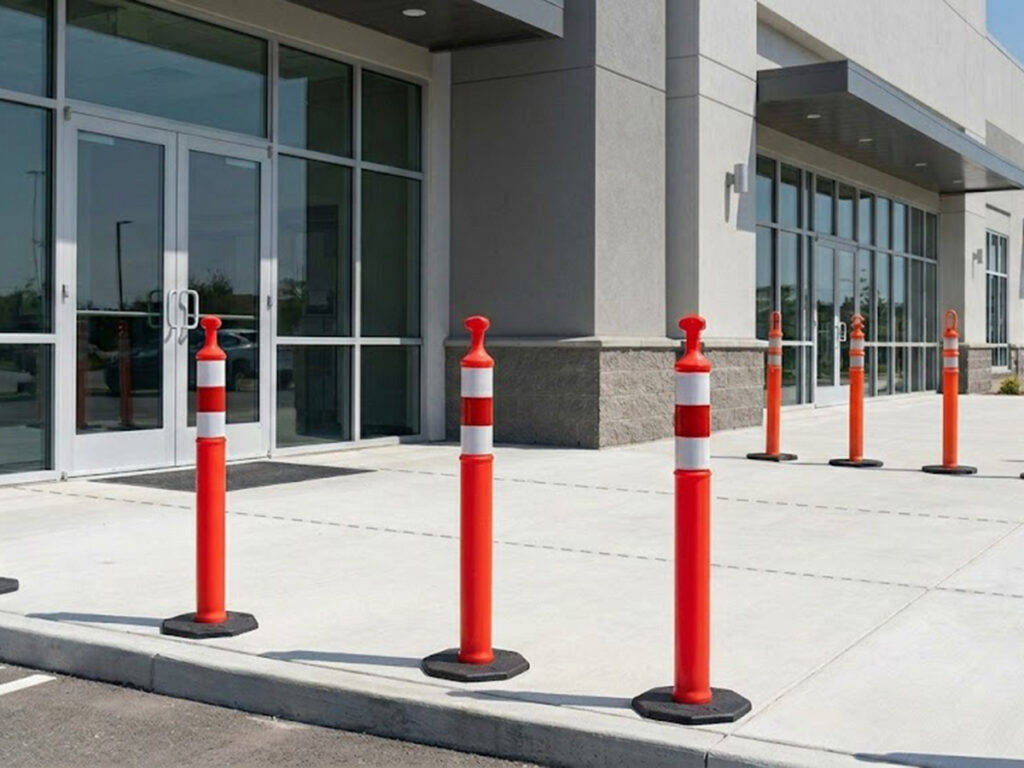
बोलार्ड रिक्ति आवश्यकताएँ किसी भी व्यावसायिक विनिर्देश का सबसे अधिक उद्धृत अनुभाग बनाती हैं. डिफ़ॉल्ट सीमा पैदल यात्रियों की पहुंच के विरुद्ध वाहन प्रतिबंध को संतुलित करती है - और सबसे सामान्य बिंदु बनी हुई है ट्रैफ़िक बोलार्ड विशिष्टताएँ निरीक्षण में विफलता.
मानक रिक्ति रेंज
वाणिज्यिक रिक्ति बीच में पड़ती है 3 और 5 पैर केंद्र-से-केंद्र. सटीक स्पष्ट उद्घाटन W_ की गणना करने के लिए(स्पष्ट) दो बोलार्ड के बीच, इंजीनियर सूत्र का उपयोग करते हैं:
W_(स्पष्ट) = एस_(केंद्र) – डी_(bollard) (जहां S_(केंद्र) केंद्र-से-केंद्र अंतर है और D_(bollard) बाहरी व्यास है).
उदाहरण के लिए, यदि 6.625-इंच निर्दिष्ट किया जा रहा है (अनुसूची 40 6″ पाइप) बोलार्ड्स पर 42 इंच केंद्र-से-केंद्र, स्पष्ट उद्घाटन है 42 – 6.625 = 35.375 इंच, जो एडीए §403.5.1 36-इंच की न्यूनतम आवश्यकता को विफल करता है. पालन करने के लिए, केंद्र से केंद्र की दूरी कम से कम बढ़ाई जानी चाहिए 43 इंच. 5 फुट की अधिकतम सीमा मानक यात्री वाहनों को खंभों के बीच जाने से रोकती है. सख्त दूरी पहुंच को प्रतिबंधित करती है लेकिन पैदल यात्रियों के प्रवाह को अवरुद्ध करती है. चौड़ी दूरी से पहुंच में सुधार होता है लेकिन वाहन को गुजरने की सुविधा मिलती है.
अनुप्रयोग द्वारा रिक्ति
| आवेदन | अनुशंसित रिक्ति | शासी तर्क |
| पैदल यात्री वॉकवे | 36-48 इंच | एडीए क्लीयरेंस + पहुँच |
| स्टोरफ्रंट सुरक्षा | 48-60 इंच | वाहन अवरोध + एडीए |
| विरोधी राम परिधि | 48 अधिकतम में | यात्री वाहन की चौड़ाई को हराएं |
| डॉक संरेखण लोड हो रहा है | चर | परिचालन मंजूरी |
| बाइक लेन / साझा पथ | 60+ में | हैंडलबार क्लीयरेंस |
सूत्रों का कहना है: एडीए §403.5; एएसटीएम एफ2656-23; एएसटीएम F3016-19.
गहराई में उतरें विभिन्न उपयोग के मामलों को दिखाकर ट्रैफिक बोलार्ड स्पेसिंग गाइड.
कस्टम प्रॉपर्टी लाइनों के लिए रिक्ति की गणना
अनियमित परिधियों के लिए खतरे-दिशा विश्लेषण की आवश्यकता होती है. इंजीनियरिंग टीमों को संभावित वाहन दृष्टिकोण वैक्टर के साथ दूरी को कड़ा करना चाहिए और सीधे रन के साथ लगातार अंतराल रखना चाहिए. कोनों और चौराहों पर विशेष ध्यान देने की आवश्यकता है - बोलार्ड को कभी भी अंधा स्थान नहीं बनाना चाहिए या पैदल चलने वालों की दृष्टि रेखाओं को अवरुद्ध नहीं करना चाहिए. The ट्रैफ़िक बोलार्ड विशिष्टताएँ किसी भी कस्टम साइट के लिए अंतिम लेआउट से पहले संपत्ति सर्वेक्षण और खतरे के आकलन दोनों का संदर्भ लेना चाहिए.
बोलार्ड फाउंडेशन & स्थापना विशिष्टताएँ
फाउंडेशन का चयन यह निर्धारित करता है कि बोलार्ड रेटेड विनिर्देश पर प्रदर्शन करता है या लोड के तहत विफल रहता है. तीन आधार प्रकार प्रत्येक व्यावसायिक परिदृश्य को कवर करते हैं, और बोलार्ड बेस प्लेट इंस्टॉलेशन व्यापक के तहत दीर्घकालिक प्रदर्शन को संचालित करता है ट्रैफ़िक बोलार्ड विशिष्टताएँ रूपरेखा.
फाउंडेशन प्रकार निर्णय मैट्रिक्स
| नींव प्रकार | गहराई / तरीका | के लिए सबसे अच्छा | संघात प्रतिरोध |
| डीप-माउंट (अंतर्निहित) | 3-4 फीट, ठोस सेट | स्थायी परिधि, राम विरोधी | अधिकतम |
| उथला-पर्वत | ~6 इंच, बेस प्लेट | नीचे उपयोगिताओं वाली साइटें | उच्च |
| लगा हुआ सतह | बोल्ट, एचडी एंकर | यातायात मार्गदर्शन, चित्रण | सीमित |
| हटाने योग्य / त्याग देने योग्य | आस्तीन या यांत्रिक | फायर लेन, नियंत्रित पहुंच | चर |
स्रोत: एएसटीएम F2656-23 परीक्षण प्रोटोकॉल; निर्माता फाउंडेशन विनिर्देश.
डीप-माउंट मानक
डीप-माउंट इंस्टॉलेशन की आवश्यकता होती है 3 को 4 3,000-4,000 पीएसआई कंक्रीट में निम्न श्रेणी की गहराई सेट की गई. आधार का विस्तार स्थानीय शीत रेखा के नीचे होना चाहिए, और सरिया सुदृढीकरण स्थानीय भवन कोड से मेल खाना चाहिए. डीप-माउंट अधिकतम रोकने की शक्ति प्रदान करता है और एएसटीएम एफ2656 एंटी-रैम अनुप्रयोगों के लिए नींव की आवश्यकताओं से मेल खाता है.
उथला-माउंट और सतह-माउंट
उथली-माउंट नींव लगभग परस्पर जुड़े बेस प्लेटों का उपयोग करती है 6 इंच गहरा, जो उथले उपयोगिता रन वाली साइटों के लिए उपयुक्त है (गैस, फाइबर, पानी). सरफेस-माउंट इंस्टॉलेशन हेवी-ड्यूटी वेज या रासायनिक एंकर का उपयोग करके मौजूदा कंक्रीट स्लैब पर सीधे बोल्ट लगाते हैं. सरफेस-माउंट ट्रैफ़िक मार्गदर्शन और दृश्य चित्रण को संभालता है लेकिन सीमित प्रभाव प्रतिरोध प्रदान करता है. पूर्ण एंबेडेड बनाम. सरफेस-माउंट फाउंडेशन तुलना में एंकर विनिर्देशों को शामिल किया गया है, स्लैब आवश्यकताएँ, और स्थापना सहनशीलता.
के बारे में और पढ़ें एम्बेडेड और सतह पर लगाने के लिए बोलार्ड फाउंडेशन और बेस प्लेट की आवश्यकताएं.
वाणिज्यिक अनुप्रयोग द्वारा प्लेसमेंट रणनीति
ट्रैफ़िक बोलार्ड विशिष्टताएँ आवेदन के साथ बदलाव. बी2बी खरीद निर्णयों पर पांच व्यावसायिक परिदृश्य हावी हैं, और बोलार्ड प्लेसमेंट आवश्यकताएँ प्रत्येक में तेजी से भिन्न होती हैं.
संपत्ति परिधि & राम विरोधी सुरक्षा
परिधि सुरक्षा के लिए साइट खतरे की प्रोफ़ाइल से मेल खाने वाले एएसटीएम एफ2656-रेटेड बोलार्ड की आवश्यकता होती है. कम गति वाले शहरी दृष्टिकोण के लिए आमतौर पर M30 की आवश्यकता होती है. उच्च-मूल्य संघीय, वित्तीय, और महत्वपूर्ण बुनियादी ढांचा साइटें M50/P1 की मांग करती हैं. संरक्षित संपत्ति से सेटबैक की दूरी रेटिंग के प्रवेश वर्ग पर निर्भर करती है - P1 रेटिंग्स इसके तहत झटके को सहन करती हैं 4 पैर.
स्टोर के सामने & खुदरा प्रवेश मार्ग सुरक्षा
स्टोर के सामने ट्रैफ़िक बोलार्ड विशिष्टताएँ ASTM F3016 से मिलना चाहिए. पैडल-त्रुटि की घटनाएँ मोटे तौर पर ड्राइव करती हैं 41% स्टोरफ्रंट क्रैश की, अधिकांश घटनाएं पार्किंग स्थल में कम गति पर होती हैं [1]. बोलार्ड तैनात 3 को 5 अग्रभाग से पैर, स्टोरफ्रंट लाइन के साथ अधिकतम 4 फुट के अंतराल पर दूरी रखें, वाहनों के शीशे तक पहुँचने से पहले अधिकांश कम गति वाली घुसपैठों को रोकें.
डॉक लोड हो रहा है & सेवा क्षेत्र
लोडिंग डॉक बोलार्ड डॉक लेवलर्स की सुरक्षा करते हैं, उपकरण, और संरचनात्मक स्तंभ. प्लेसमेंट पैदल यात्री नियमों के बजाय ट्रेलर पैंतरेबाज़ी ज्यामिति का पालन करता है. डॉक लेवलर किनारों पर कॉर्नर-प्रोटेक्शन पोस्ट और डॉक ज़ोन के अंदर कॉलम-गार्ड पोस्ट बैकिंग ऑपरेशन के दौरान उपकरण क्षति को कम करते हैं.
पैदल यात्री प्लाजा & एडीए रूट
प्लाजा और क्रॉसवॉक प्लेसमेंट में प्रत्येक के लिए न्यूनतम 60 इंच की पासिंग जगह होनी चाहिए 200 फीट और लगातार 36 इंच की स्पष्ट चौड़ाई. इन क्षेत्रों में बोलार्ड इससे अधिक बाहर नहीं निकल सकते 4 के बीच के मार्ग में इंच 27 और 80 ग्रेड से इंच ऊपर.
फायर लेन & आपातकालीन अभिगम
फायर लेन स्थापनाओं को हटाने योग्य की आवश्यकता होती है, त्याग देने योग्य, या अंतर्राष्ट्रीय अग्नि संहिता अनुभाग के अंतर्गत बंधने योग्य बोलार्ड 503. फायर मार्शल साइन-ऑफ एक प्रोजेक्ट गेट है, शिष्टाचार समीक्षा नहीं - फायर लेन पर गैर-हटाने योग्य बोलार्ड निर्दिष्ट करना निरीक्षण में विफल रहता है.
B2B खरीद के लिए विशिष्टता चेकलिस्ट
निम्नलिखित प्री-प्रोक्योरमेंट चेकलिस्ट प्रत्येक ट्रैफ़िक बोलार्ड विनिर्देशन निर्णय को एक संदर्भ में समेकित करती है:
- आवेदन की पहचान की गई (सुरक्षा/मार्गदर्शन/पहुंच-योग्यता/सजावटी)
- क्रैश रेटिंग निर्धारित की गई (एएसटीएम F2656 / F3016 / गैर रेटेड)
- ऊंचाई, व्यास, और दीवार शेड्यूल निर्दिष्ट
- फाउंडेशन का प्रकार साइट की स्थितियों से मेल खाता है
- एडीए और उपयोग-मामले के आधार पर रिक्ति की गणना की गई
- स्थानीय मंजूरी सत्यापित (उपयोगिता खंभे 48 में, अग्निशक हाइड्रेंट 60 में)
- एएचजे परमिट मार्ग की पहचान की गई
- फायर लेन और एडीए ओवरले की पुष्टि की गई
- उद्धरण पूर्ण इंस्टालेशन दस्तावेज़ के साथ प्राप्त किया गया है
खरीद के लिए तैयार? Optsigns को प्रोजेक्ट विवरण भेजें’ एक ही दिन की बोली के लिए वाणिज्यिक टीम, मात्रा मूल्य निर्धारण, और स्थापना के लिए तैयार दस्तावेज़ीकरण. अभी कोटेशन का अनुरोध करें!
निष्कर्ष: पहली बार सही निर्दिष्ट करें
ट्रैफ़िक बोलार्ड विशिष्टताएँ प्रत्येक अनुपालक व्यावसायिक इंस्टाल को एंकर करें. चार-कोड ढांचा-एमयूटीसीडी, एडीए, एएसटीएम, और स्थानीय AHJ—प्रत्येक आयाम को निर्देशित करता है, संरचनात्मक, और अवधारणा से समापन तक प्लेसमेंट निर्णय. ठेकेदारों, नागरिक अभियंता, और संपत्ति प्रबंधक जो इस ढांचे के विरुद्ध निर्दिष्ट करते हैं, वे अपनी परियोजनाओं को निरीक्षण विफलता से बचाते हैं, दायित्व जोखिम, और महँगा रेट्रोफ़िट.
उत्पाद श्रेणियों के संपूर्ण दृश्य के लिए—टी-टॉप सहित, लचीला, stackable, और परावर्तक बोलार्ड जो मिलते हैं ट्रैफ़िक बोलार्ड विशिष्टताएँ ऊपर उल्लिखित—ऑप्टसाइन्स देखें’ ट्रैफिक बोलार्ड के लिए संपूर्ण गाइड.
अक्सर पूछे जाने वाले प्रश्नों
जब B2B टीमें अपना ऑडिट करती हैं तो निम्नलिखित प्रश्न सबसे अधिक बार सामने आते हैं ट्रैफ़िक बोलार्ड विशिष्टताएँ खरीद से पहले.
ट्रैफिक बोलार्ड के लिए मानक दूरी क्या है??
वाणिज्यिक रिक्ति बीच में पड़ती है 3 और 5 पैर केंद्र-से-केंद्र. तीन फ़ुट एडीए व्हीलचेयर क्लीयरेंस को सुरक्षित रखता है; यात्री वाहनों को रोकने के लिए पांच फीट पर्याप्त तंग रहता है.
एक वाणिज्यिक बोलार्ड कितना लंबा होना चाहिए?
वाणिज्यिक बोलार्ड खड़े हैं 36 को 48 जमीन के ऊपर इंच. बयालीस इंच स्टोरफ्रंट और पार्किंग क्षेत्रों के लिए सबसे आम डिफ़ॉल्ट के रूप में कार्य करता है.
ASTM F2656 और F3016 में क्या अंतर है??
F2656 परिधि सुरक्षा के लिए 30-50 मील प्रति घंटे पर 15,000-पौंड ट्रक का उपयोग करके उच्च गति के प्रभावों का परीक्षण करता है. F3016 स्टोरफ्रंट और पैदल यात्री क्षेत्रों के लिए 10-30 मील प्रति घंटे पर 5,000-पौंड वाहन का उपयोग करके कम गति के प्रभावों का परीक्षण करता है.
क्या बोलार्ड को एडीए का अनुपालन करने की आवश्यकता है??
हाँ. सुलभ मार्गों पर बोलार्ड की न्यूनतम चौड़ाई 36 इंच होनी चाहिए, 60-इंच गुजरने वाली जगहें हर 200 पैर, और बीच में 4 इंच का अधिकतम फलाव नियम 27 और 80 ग्रेड से इंच ऊपर.
बोलार्ड फाउंडेशन कितना गहरा होना चाहिए?
डीप-माउंट इंस्टॉलेशन की आवश्यकता होती है 3 को 4 3,000-4,000 पीएसआई कंक्रीट में निम्न श्रेणी की गहराई सेट की गई. उथले-माउंट विकल्प 6-इंच इंटरकनेक्टेड बेस प्लेट का उपयोग करते हैं.
सुरक्षा बोलार्ड के लिए न्यूनतम व्यास क्या है??
एक सुरक्षा पोस्ट के लिए न्यूनतम व्यास है 4 इंच. सुरक्षा और एंटी-रैम अनुप्रयोगों का स्तर ऊपर है 8, 10, या 12 इंच.
संदर्भ
- हम. विभाग का न्याय. “2010 सुलभ डिज़ाइन के लिए एडीए मानक — अध्याय 4: सुलभ मार्ग (§403.5).
- हम. प्रवेश बोर्ड. “अध्याय 4: सुलभ मार्ग -एडीए मानकों के लिए गाइड।”
- एएसटीएम इंटरनेशनल. “एएसटीएम एफ2656/एफ2656एम-23 वाहन सुरक्षा बाधाओं के दुर्घटना परीक्षण के लिए मानक परीक्षण विधि.
- एएसटीएम इंटरनेशनल. “एएसटीएम F3016/F3016M-19 वाहन प्रभाव सुरक्षात्मक उपकरणों के सरोगेट परीक्षण के लिए मानक परीक्षण विधि.”
- अंतर्राष्ट्रीय कोड परिषद. “अंतर्राष्ट्रीय अग्नि संहिता अनुभाग 503: अग्नि उपकरण पहुंच मार्ग.“
- संघीय राजमार्ग प्रशासन. “समान यातायात नियंत्रण उपकरणों पर मैनुअल (MUTCD).”