Одно несоответствующее размещение столбика может не пройти муниципальную проверку., вызывать жалобы ADA, и аннулирование покрытия ответственности на коммерческом сайте. Для подрядчиков, строительные инженеры, и управляющие недвижимостью, характеристики дорожного столба составляют юридическую и структурную основу каждой системы безопасности периметра., защита витрины, проект по безопасности пешеходов.
Совет по безопасности витрин документирует более 100 каждый день по всей территории Соединенных Штатов происходит столкновение автомобиля с зданием, вызывая примерно 16,000 Травмы и 2,600 смертей каждый год (Источник: https://www.storefrontsafety.org/post/our-statistics). Правильно спроектированный характеристики дорожного столба остановить большинство этих инцидентов до того, как транспортные средства доберутся до ограждающей конструкции здания. В этом руководстве объединены федеральные кодексы, Стандарты ASTM, правила размеров, и фундаментальные требования, которые формируют характеристики дорожного столба для коммерческих установок в 2026.
Каковы характеристики дорожного столба?
Характеристики дорожного столба определить размерность, материал, структурный, и критерии соответствия, которые определяют работу боллардов в коммерческой среде. Категория охватывает высоту, диаметр, толщина стены, глубина фундамента, интервал, краш-рейтинг, и заметность — каждый из них привязан к определенному руководящему кодексу..
Четыре нормативные базы определяют каждую коммерческую установку:
- Mutcd регулирует размещение и заметность для контроля дорожного движения на полосе отвода в общественных местах..
- Ада регулирует пропускную способность вдоль пешеходных маршрутов.
- Астм управляет ударом и рейтингом аварийности.
- Местные коды AHJ управлять, разрешая, разрешение на полосу отчуждения, и пожарный доступ.
Каждое решение по спецификации балансирует две конкурирующие инженерные цели.: ограничение доступа транспортных средств при сохранении доступности для пешеходов. Упустить баланс, и установка либо не проходит проверку, либо не защищает.
Почему спецификации важны для коммерческих проектов
Установка, не соответствующая требованиям, влечет за собой три конкретных обязательства. Неудачные проверки задерживают закрытие проекта и вызывают дорогостоящую модернизацию.. Несоблюдение ADA подвергает владельцев собственности гражданским искам и принудительному исполнению Раздела III.. Страховые компании все чаще требуют документально подтвержденного соблюдения стандартов боллардов, прежде чем заключать договоры о коммерческой недвижимости.. Правильное указание первого раза бережет бюджет, график, и владелец недвижимости.
Руководящие кодексы & Рамки соответствия для боллардов
Четыре уровня кода управляют коммерческой деятельностью характеристики дорожного столба в каждом США. сайт. Каждый уровень имеет свой собственный механизм обеспечения соблюдения требований и свой режим отказа..
Требования к столбу MUTCD
В Руководстве по единым устройствам управления дорожным движением Федерального управления шоссейных дорог установлено размещение, цвет, и правила заметности для любых столбиков, которые подрядчики устанавливают на общественных полосах отвода или используют в качестве устройства регулирования дорожного движения.. Требования к столбам MUTCD касаются минимальной отражательной способности., боковое смещение от полос движения, и видимость в ночное время. Инженерные группы должны ссылаться на Полное руководство по установке столбиков MUTCD для правил, специфичных для приложения.
Требования ADA к болларду
The 2010 Стандарты ADA для доступного дизайна контролируют взаимодействие столбиков с пешеходными маршрутами.. Три правила управляют каждой коммерческой установкой:
- Доступные маршруты должны иметь непрерывную ширину не менее 36 дюймов в соответствии со стандартами ADA §403.5.1., с проходными пространствами размером 60 на 60 дюймов каждый 200 футов согласно §403.5.3. Кроме того, согласно §307.2, столбики не должны выступать более чем 4 дюймов в путь циркуляции, если их передняя кромка находится между 27 и 80 дюйма над готовым полом.
- Объекты, установленные между 27 и 80 дюймах над полом не может выступать более чем 4 дюймов в маршрут.
- Охранные столбики на доступных входах не могут препятствовать доступным маршрутам или средствам выхода..
Эти требования ADA к боллардам применяются практически к каждой розничной торговле., гостеприимство, офис, и институциональная собственность, подпадающая под Раздел III.
Стандарты рейтинга аварийности ASTM
Два стандарта ASTM регулируют ударопрочность.:
- АСТМ Ф2656/Ф2656М-23 охватывает испытания барьеров для высокоскоростных транспортных средств для смягчения последствий враждебных транспортных средств., охрана периметра на федеральных объектах, и критическая инфраструктура. В тесте используется среднетоннажный грузовик грузоподъемностью 15 000 фунтов. 30, 40, или 50 миль в час и дает обозначения M30/M40/M50 с P1., П2, или рейтинг проникновения P3.
- АСТМ Ф3016/Ф3016М-19 покрывает удары транспортных средств на низкой скорости для витрин магазинов, место для отдыха на открытом воздухе, и пешеходные зоны. В тесте используется суррогатный автомобиль массой 5000 фунтов на 10, 20, или 30 миль в час и дает обозначения S10/S20/S30..
Защита витрины магазина и сидений на открытом воздухе должна соответствовать стандарту ASTM F3016.. Охрана периметра на федеральном уровне, Финансовый, или объекты с высокой угрозой должны соответствовать ASTM F2656..
Местный кодекс & Муниципальная полоса отвода
Хотя местные постановления существенно различаются, стандартные муниципальные правила полосы отвода, например те, которые предусмотрены в Стандартных схемах инженерных коммуникаций округа Санта-Клара, часто требуют минимального расстояния в 48 дюймов от опор и минимального расстояния в 60 дюймов от пожарных гидрантов для обеспечения аварийного доступа.. Инженеры-строители должны сверить эти параметры с местным титулом. 12 Постановления о полосе отвода конкретного органа, обладающего юрисдикцией (AHJ) прежде чем разрешить. К установкам пожарных полос предъявляются дополнительные требования в соответствии с разделом Международного пожарного кодекса. 503, который обычно требует установки съемных или складных столбиков на маршрутах аварийного доступа..
Выбор боллардов для развертывания на нескольких площадках? ОптСайнс’ команда инженеров проверяет планы проекта на соответствие MUTCD, Ада, и требования местных норм. →
➡️Запросить проверку соответствия!
Размеры дорожного столба & Строительные характеристики
Размерный характеристики дорожного столба определить как визуальную заметность, так и структурные характеристики. Три измерения определяют каждую коммерческую установку.
Стандартные требования к высоте
Коммерческий характеристики дорожного столба укажите высоту в 36 до 48 дюймов над землей. Проектные группы должны выбирать высоту в зависимости от приложения.:
- 36 дюймов подходит для обозначения пешеходов на низкой скорости и для декоративного использования..
- 42 дюймы служат коммерческим стандартом для витрин и защиты парковочных мест..
- 48 дюймов и выше применяется к периметрам безопасности и объектам повышенной видимости..
Характеристики стандартного диаметра
Минимальный диаметр поста безопасности составляет 4 дюймы. Отсюда масштабируются коммерческие диаметры.. Четыре- и шестидюймовые стойки предназначены для разграничения и стандартной работы витрин.. Восьмидюймовые стойки обеспечивают управление движением средней нагрузки и периметры парковочных мест.. Десять- и двенадцатидюймовые стойки предназначены для обеспечения безопасности и защиты от тарана.. Диаметр напрямую коррелирует с поглощением энергии удара: столбы большего размера рассеивают больше кинетической энергии за одно событие удара..
Материал & Строительные стандарты
В тяжелых коммерческих боллардах используются стальные трубы по графику. 40 или Расписание 80 толщина стены, заполнен бетоном для увеличения массы и поглощения ударов. Расписание 80 имеет более толстые стенки и служит для приложений уровня безопасности. Расписание 40 покрывает стандартную коммерческую пошлину. Альтернативный материал включает нержавеющую сталь для агрессивных сред., ковкий чугун для декоративных крышек, и полимерные соединения для гибких разграничительных столбиков.
Требования к расстоянию между столбами: Правило 3-5 футов
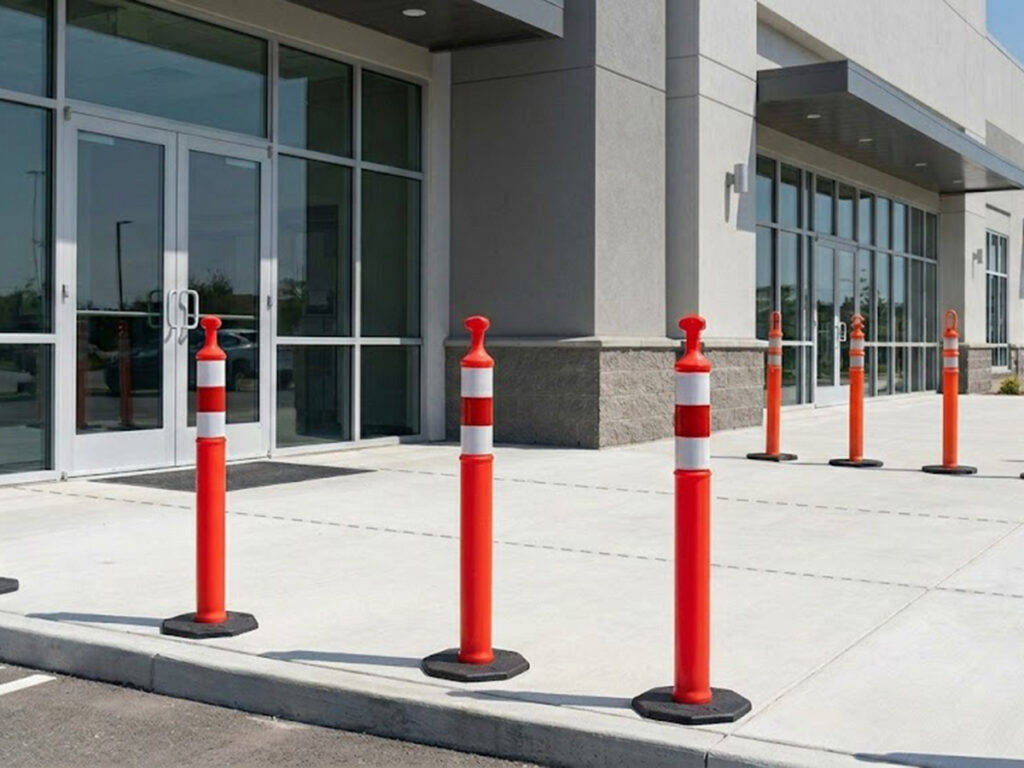
Требования к расстоянию между столбами являются наиболее цитируемым разделом любой коммерческой спецификации.. Диапазон по умолчанию уравновешивает ограничение доступа транспортных средств и доступ пешеходов и остается наиболее распространенной точкой характеристики дорожного столба провал при проверке.
Стандартный диапазон интервалов
Коммерческая площадь находится между 3 и 5 ноги от центра к центру. Чтобы рассчитать точное открытое отверстие W_(прозрачный) между двумя столбами, инженеры используют формулу:
W_(прозрачный) = С_(центр) – Д_(Боллард) (где S_(центр) межцентровое расстояние и D_(Боллард) внешний диаметр).
Например, если указано 6,625 дюйма (Расписание 40 6″ трубка) столбы на 42 дюймы от центра к центру, прозрачное отверстие 42 – 6.625 = 35.375 дюймы, что не соответствует минимальным требованиям ADA §403.5.1 к 36-дюймовому экрану.. Соблюдать, межцентровое расстояние должно быть увеличено как минимум до 43 дюймы. Максимальная высота 5 футов не позволяет стандартным пассажирским транспортным средствам перемещаться между постами.. Меньшее расстояние ограничивает доступ, но блокирует поток пешеходов.. Более широкое расстояние улучшает доступность, но позволяет проехать транспортному средству..
Расстояние по применению
| Приложение | Рекомендуемое расстояние | Управляющая логика |
| Пешеходные дорожки | 36–48 дюймов | Разрешение ADA + доступ |
| Защита витрины | 48–60 дюймов | Автомобильный блок + Ада |
| Противотаранный периметр | 48 в максимуме | Победить ширину легкового автомобиля |
| Выравнивание погрузочной платформы | Переменная | Оперативное оформление |
| Велосипедная дорожка / общий путь | 60+ в | Зазор руля |
Источники: АДА §403.5; АСТМ Ф2656-23; АСТМ Ф3016-19.
Погрузитесь глубоко в руководство по расстановке дорожных столбиков, показывающее различные варианты использования.
Расчет интервала для пользовательских линий свойств
Неровные периметры требуют анализа направления угроз.. Инженерным группам следует сократить расстояние вдоль вероятных векторов подхода транспортных средств и соблюдать одинаковые интервалы на прямых участках.. Углы и перекрестки требуют особого внимания: столбики ни в коем случае не должны создавать слепые зоны или блокировать обзор пешеходов.. The характеристики дорожного столба для любого индивидуального объекта перед окончательным макетом необходимо ссылаться как на обследование объекта, так и на оценку угроз..
Фонд Болларда & Характеристики установки
Выбор фундамента определяет, будет ли столбик работать в соответствии с номинальными характеристиками или выйдет из строя под нагрузкой.. Три типа фундамента подходят для любого коммерческого сценария, и установка опорной плиты столбика обеспечивают долгосрочную производительность в более широком плане. характеристики дорожного столба рамки.
Матрица решений типа фундамента
| Фонд тип | Глубина / Метод | Лучше всего для | Воздействие сопротивления |
| Глубокое крепление (Встроенный) | 3–4 фута, бетонный набор | Постоянный периметр, противотаранный | Максимум |
| Мелкая гора | ~6 дюймов, опорные плиты | Сайты с утилитами ниже | Высокий |
| Накладной монтаж | Болтовой, HD-якоря | Руководство по дорожному движению, очертание | Ограничен |
| Съемный / Выдвижной | Рукавный или механический | Пожарные дорожки, контролируемый доступ | Переменная |
Источник: Протоколы испытаний ASTM F2656-23; характеристики фундамента от производителя.
Стандарты глубокого монтажа
Для глубокого монтажа требуется 3 к 4 футов глубины ниже уровня земли, залитых бетоном давлением 3000–4000 фунтов на квадратный дюйм.. Основание должно выступать ниже местной линии промерзания., и арматура должна соответствовать местным строительным нормам.. Глубокий монтаж обеспечивает максимальную тормозную способность и соответствует основным требованиям для противотаранных приложений ASTM F2656..
Неглубокий монтаж и поверхностный монтаж
В фундаментах неглубокого монтажа используются соединенные между собой опорные плиты примерно 6 дюймы глубиной, который подходит для участков с неглубокими коммуникациями (газ, волокно, вода). Установки для поверхностного монтажа крепятся непосредственно к существующим бетонным плитам с помощью прочного клина или химических анкеров.. Поверхностный монтаж обеспечивает управление движением транспорта и визуальное разграничение, но обеспечивает ограниченную ударопрочность.. Полная встроенная версия против. Сравнение фундаментов для поверхностного монтажа охватывает характеристики анкеров, требования к плитам, и допуски на установку.
Подробнее о Требования к фундаменту столбика и опорной плите для встроенного и поверхностного монтажа.
Стратегия размещения по коммерческому приложению
Характеристики дорожного столба сдвиг с применением. Пять коммерческих сценариев доминируют в решениях о закупках B2B, и требования к размещению столбиков резко различаются в зависимости от каждого из них..
Периметр недвижимости & Защита от тарана
Для обеспечения безопасности периметра необходимы столбики с рейтингом ASTM F2656, соответствующие профилю угроз объекта.. Подъезды к городу на низкой скорости обычно требуют M30.. Высокоценный федеральный, Финансовый, и объекты критической инфраструктуры требуют M50/P1. Расстояние отступления от защищаемого актива зависит от класса проникновения рейтинга: рейтинги P1 допускают отставание ниже 4 ноги.
Витрина магазина & Защита входа в торговую точку
Витрина магазина характеристики дорожного столба должен соответствовать ASTM F3016. Случаи ошибок педали ездят грубо 41% аварий на витринах магазинов, при этом большинство событий происходит на низких скоростях на парковках [1]. Болларды расположены 3 к 5 ноги от фасада, расположены с максимальным интервалом 4 фута вдоль линии витрины, перехватывать большинство вторжений на низкой скорости до того, как транспортные средства доберутся до стекла.
Загрузка доков & Зоны обслуживания
Погрузочные доковые тумбы защищают перегрузочные платформы, оборудование, и несущие колонны. Размещение соответствует геометрии маневрирования прицепа, а не правилам пешеходов.. Угловые защитные стойки на краях доклевеллера и стойки ограждения колонн внутри зоны дока предотвращают повреждение оборудования при движении задним ходом..
Пешеходные площади & Маршруты ADA
Места на площади и пешеходных переходах должны обеспечивать пространство для прохода минимум 60 дюймов каждый раз. 200 футов и непрерывная ширина в свету 36 дюймов.. Болларды в этих зонах не могут выступать более чем на 4 дюймов в маршрут между 27 и 80 дюймов выше уровня.
Пожарные переулки & Аварийный доступ
Для установки пожарных дорожек требуются съемные, выдвижной, или складные болларды в соответствии с разделом Международного пожарного кодекса. 503. Утверждение начальника пожарной охраны — это ворота проекта, это не проверка вежливости: установка несъемных столбиков на пожарной полосе не проходит проверку..
Контрольный список спецификаций для закупок B2B
Следующий контрольный список перед закупкой объединяет все решения по спецификации дорожного столба в одну ссылку.:
- Приложение идентифицировано (безопасность/наведение/доступность/декоративный)
- Определен рейтинг аварийности (ASTM F2656 / F3016 / без рейтинга)
- Высота, диаметр, и расписание стен указано
- Тип фундамента, соответствующий условиям площадки
- Расстояние рассчитывается на основе ADA и варианта использования.
- Местные допуски подтверждены (столбы электропередач 48 в, пожарные гидранты 60 в)
- Определен путь получения разрешения AHJ
- Подтверждены наложения пожарной полосы и ADA
- Цитирование с полной документацией по установке
Готов закупить? Отправьте спецификации проекта в Optsigns’ коммерческая команда для расчета в тот же день, оптовые цены, и готовая к установке документация. Запросите ценовое предложение сейчас!
Заключение: Укажите правильно с первого раза
Характеристики дорожного столба привязывать каждую коммерческую установку, соответствующую требованиям. Четырехкодовая структура — MUTCD, Ада, Астм, и местный AHJ — диктует все измерения, структурный, и решение о размещении от концепции до закрытия. Подрядчики, строительные инженеры, и управляющие недвижимостью, которые соблюдают эти правила, защищают свои проекты от провалов проверок., риск ответственности, и дорогостоящие модификации.
Для полного просмотра категорий продуктов, включая T-Top, гибкий, Сложный, и светоотражающие столбы, соответствующие требованиям характеристики дорожного столба изложено выше - см. Optsigns’ Полное руководство по дорожным столбам.
Часто задаваемые вопросы
Следующие вопросы чаще всего возникают, когда B2B-команды проводят аудит своих характеристики дорожного столба перед закупкой.
Каково стандартное расстояние для дорожных столбиков??
Коммерческая площадь находится между 3 и 5 ноги от центра к центру. Три ноги сохраняют зазор для инвалидной коляски ADA; пять футов остается достаточно плотным, чтобы заблокировать пассажирские транспортные средства.
Какой высоты должен быть коммерческий столбик?
Торговые стойки 36 к 48 дюймы над землей. Сорок два дюйма — наиболее распространенный стандарт по умолчанию для витрин и парковочных мест..
В чем разница между ASTM F2656 и F3016??
F2656 тестирует удары на высокой скорости с использованием грузовика массой 15 000 фунтов на скорости 30–50 миль в час для обеспечения безопасности периметра.. F3016 тестирует удары на низкой скорости с использованием автомобиля массой 5000 фунтов на скорости 10–30 миль в час для витрин магазинов и пешеходных зон..
Должны ли болларды соответствовать требованиям ADA??
Да. Столбики вдоль доступных маршрутов должны иметь минимальную ширину в свету 36 дюймов., 60-дюйм проходного пространства каждые 200 ноги, и правило максимального выступа в 4 дюйма между 27 и 80 дюймов выше уровня.
Насколько глубоким должен быть фундамент для столбика?
Для глубокого монтажа требуется 3 к 4 футов глубины ниже уровня земли, залитых бетоном давлением 3000–4000 фунтов на квадратный дюйм.. Альтернативы для неглубокого монтажа используют 6-дюймовые соединенные между собой опорные пластины..
Какой минимальный диаметр защитного столба??
Минимальный диаметр поста безопасности составляет 4 дюймы. Приложения безопасности и защиты от оперативной памяти масштабируются до 8, 10, или 12 дюймы.
Ссылки
- НАС. Министерство юстиции. “2010 Стандарты ADA для доступного дизайна - Глава 4: Доступные маршруты (§403.5).
- НАС. Доска доступа. “Глава 4: Доступные маршруты — Руководство по стандартам ADA.”
- ASTM International. “АСТМ Ф2656/Ф2656М-23 Стандартный метод испытаний на краш-тестирование барьеров безопасности транспортных средств.
- ASTM International. “АСТМ Ф3016/Ф3016М-19 Стандартный метод испытаний суррогатных испытаний устройств защиты транспортных средств от ударов.”
- Международный совет по кодексам. “Раздел Международного пожарного кодекса 503: Подъездные пути для пожарной техники.“
- Федеральное управление шоссе. “Руководство по однородным устройствам управления движением (Mutcd).”