Référence principale — MUTCD 11e édition
Tous les codes de signalisation de ce guide font référence à MUTCD 11e édition (à compter de janvier 18, 2024), Partie 6 — Contrôle temporaire de la circulation, Chapitres 6F et 6H.
Référence des distances d’espacement Tableau 6C-1. Référence des exigences de taille Tableau 6F-1.
Texte intégral disponible sur: mutcd.fhwa.dot.gov
Panneaux de zone de travail ne sont pas un seul produit. Ils sont un système. Le bon ensemble de signalisation de zone de travaux pour une fermeture de voie sur un 55 L'artère mph diffère de ce dont une équipe de services publics a besoin pour une réparation de nids-de-poule de deux heures. Cela diffère également de ce qu’exige un projet de pavage de longue durée sur une autoroute divisée.. Pour les sociétés de location, obtenir ces bonnes configurations est important à deux niveaux: conformité et efficacité.
Conformité car MUTCD 11e édition partie 6 prescrit des séquences de signes spécifiques, distances de placement, et tailles minimales par type de travail et zone de vitesse. Efficacité car les kits préemballés – assemblés selon la configuration correcte avant qu'un camion ne quitte le chantier – réduisent les erreurs de configuration, déploiement rapide, et donnez aux entrepreneurs un dossier de conformité défendable.
Ce guide crée un ensemble de panneaux de zone de travail pour chacun des cinq types de travaux les plus courants.. Chaque package répertorie les codes MUTCD, tailles standards, quantités typiques, et obligatoire vs. statut facultatif. Utilisez-le comme référence directe pour l'assemblage du kit.
Pour un aperçu plus large de la façon dont les types de panneaux sont liés les uns aux autres sur un chantier, voir notre aperçu complet de la signalisation de construction. Signalisation de zone de travail conforme MUTCD d'OPTRAFFIC couvre tous les codes de signalisation référencés dans ce guide.
Panneaux de zone de travail: La structure à quatre zones que chaque package doit couvrir
Avant de créer des packages de signalisation de zone de travail spécifiques à un travail, cela aide à comprendre le cadre structurel de la partie MUTCD 6 s’applique à chaque zone temporaire de contrôle de la circulation. Toutes les zones de travail, quel que soit le type de travail, se composent de quatre zones séquentielles. Chaque paquet de panneaux doit s'adresser à chacun.
| Zone | Fonction | Signes typiques |
| Avertissement préalable | Alerte les conducteurs de la zone de travail à venir; donne du temps de réaction | TRAVAUX ROUTIERS À VENIR (W20-1), signes de distance, Signes de réduction de vitesse |
| Transition | Guide le trafic du chemin normal vers la configuration modifiée | Lane fermé (W20-5), FUSIONNER les signes, dispositifs coniques |
| Activité | L'espace de travail lui-même; des panneaux protègent les travailleurs | Signes de symbole de travailleur, Signes de limite de vitesse, DRAPEAUX À L'AVANCE (W20-7) |
| Terminaison | Ramène le trafic à des conditions normales | FIN DES TRAVAUX ROUTIERS (G20-2), indicateurs de réouverture de voie |
Une lacune courante en matière de conformité consiste à couvrir uniquement la zone d'avertissement préalable et à ignorer la zone de terminaison.. Chaque kit que vous livrez doit inclure le panneau END ROAD WORK et toute signalisation de transition vers l'arrière requise par la configuration spécifique du travail..
Avec ce cadre en place, voici les cinq packages de types de tâches standard.
Panneaux de fermeture de voie: Ensemble route à plusieurs voies
Quand utiliser ce forfait
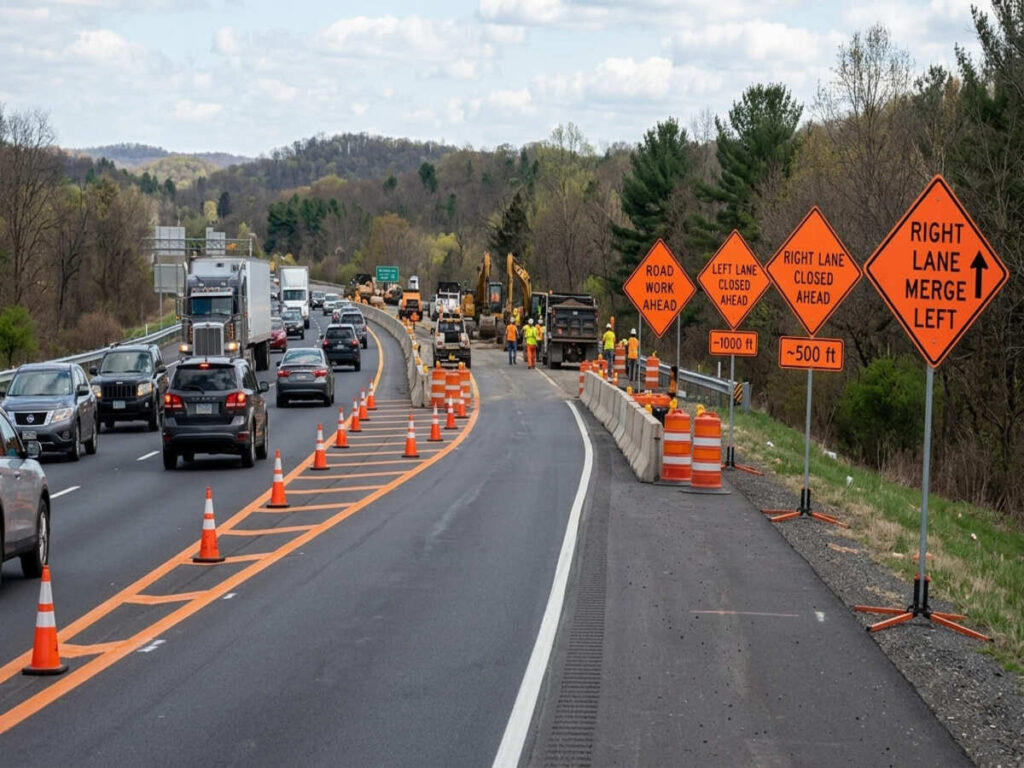
Les forfaits de fermeture de voies s'appliquent à tout travail où une ou plusieurs voies d'une route à plusieurs voies sont proches de la circulation.. Les applications courantes incluent le pavage, rayures, travaux de tablier de pont, et passages à niveau sur les artères et les autoroutes divisées. Le package ci-dessous couvre une fermeture standard d'une seule voie de droite sur une route affichée à une vitesse de 35 à 55 mph..
| Code MUTCD | Légende des signes | Taille (standard) | Quantité (typique) | Statut |
| W20-1 | TRAVAUX ROUTIERS À VENIR | 48″×48″ | 1–2 | ✅Obligatoire |
| W20-5 | VOIE DE DROITE FERMÉE DEVANT | 48″×48″ | 1 | ✅Obligatoire |
| W4-2 | FIN DE VOIE – FUSIONNER À GAUCHE | 48″×48″ | 1 | ✅Obligatoire |
| W3-4 | SOYEZ PRÊT POUR VOUS ARRÊTER | 48″×48″ | 1 | ⚠️ Si le marquage est utilisé |
| W20-7 | DRAPEAUX À L'AVANCE | 48″×48″ | 1 | ⚠️ Si le marquage est utilisé |
| R4-7 | RESTEZ À DROITE | 30″×36″ | 1–2 | ⚠️ Si besoin |
| G20-2 | FIN DES TRAVAUX ROUTIERS | 48″×48″ | 1 | ✅Obligatoire |
Notes de conformité clés
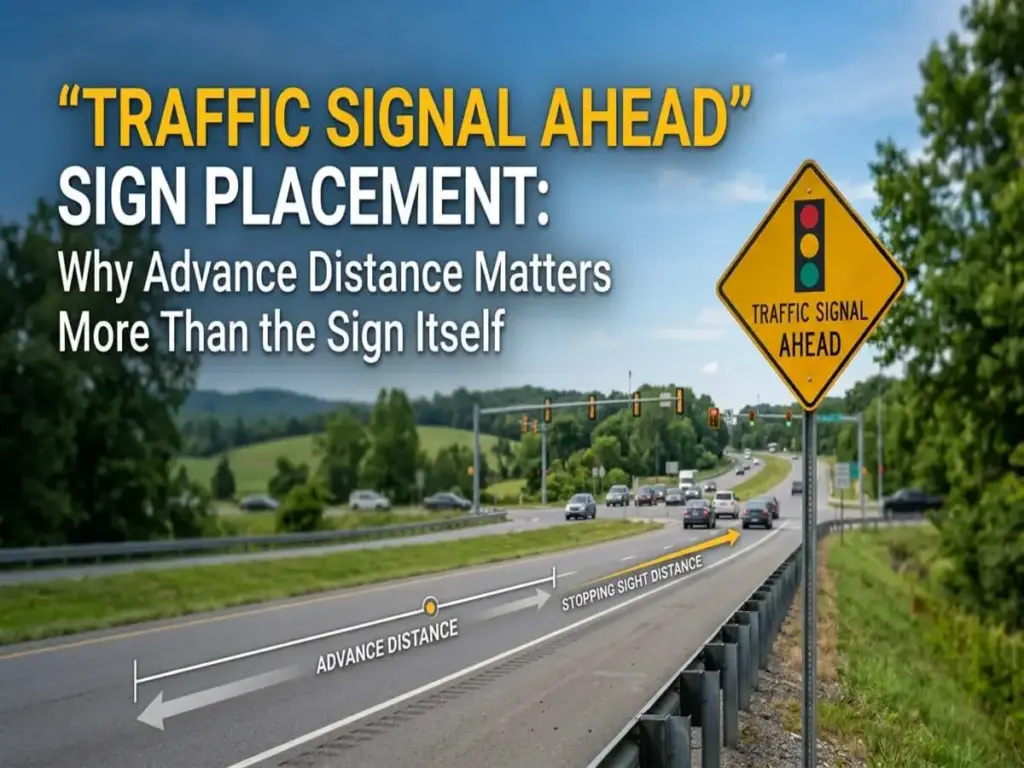
La vitesse affichée détermine les distances de placement des panneaux d’avertissement – et non l’inverse.. Placez le panneau VOIE FERMÉE (W20-5) avant le tapering, pas au niveau du cône lui-même. Par partie MUTCD 11e édition 6, Tableau 6C-1: permettre environ 350 pieds à 35 mph, 500 pieds à 45 mph, et 700 pieds à 55 mph du premier panneau au début du cône.
Pour les fermetures à deux voies spécifiquement, remplacer W20-5a (DEUX VOIES FERMÉES) et ajoutez W4-7 (FUSION DU TRAFIC À GAUCHE) selon la section 6F.23 du MUTCD.
Kits de fermeture de voie préemballés conçus pour 2009 Les tables d'espacement des éditions peuvent ne plus respecter les seuils de la 11e édition. Confirmez vos feuilles d'espacement par rapport à la pièce actuelle 6 tableaux. Pour un examen détaillé de la conformité MUTCD, voir notre Guide de conformité des panneaux de signalisation MUTCD, 11e édition.
Panneau de travaux routiers à venir et panneau de signaleur à venir: Forfait de marquage à deux voies
Quand utiliser ce forfait
Le forfait signalisation à deux voies s'applique aux travaux sur les voies à deux voies., routes à double sens où une voie est fermée temporairement et un signaleur contrôle la circulation en alternance. Les applications courantes incluent le resurfaçage des routes rurales à deux voies, réparations de ponts, et travaux publics sur les rues non divisées. C'est l'un des types de forfaits les plus fréquemment loués.
| Code MUTCD | Légende des signes | Taille (standard) | Quantité (typique) | Statut |
| W20-1 | TRAVAUX ROUTIERS À VENIR | 48″×48″ / 36″×36″ (locale) | 2 (un par direction) | ✅Obligatoire |
| W20-4 | UNE ROUTE À UNE VOIE EN AVANT | 48″×48″ | 2 (un par direction) | ✅Obligatoire |
| W20-7 | DRAPEAUX À L'AVANCE (symbole) | 48″×48″ | 2 (un par direction) | ✅Obligatoire |
| W3-4 | SOYEZ PRÊT POUR VOUS ARRÊTER | 48″×48″ | 2 (un par direction) | ✅Obligatoire |
| W20-7a | DRAPEAUX (message verbal) | 48″×48″ | Alt facultatif. à W20-7 | ⚠️ Facultatif |
| W6-3 | CIRCULATION BIDIRECTIONNELLE | 36″×36″ | 2 | ⚠️ Si vous convertissez à partir de divisé |
| G20-2 | FIN DES TRAVAUX ROUTIERS | 48″×48″ | 2 (un par direction) | ✅Obligatoire |
Notes de conformité clés
Surtout, placez le panneau FLAGGER (W20-7) avant la station du signaleur — pas immédiatement à côté du signaleur. Par partie MUTCD 6, Article 6F.29, utilisez les distances du tableau 6C-1 basées sur la vitesse affichée pour ce placement.
En outre, orienter tous les panneaux de ce paquet pour faire face à leurs directions respectives de circulation en approche. Cela signifie que le package nécessite deux types de panneaux, un par approche..
Éloignez le panneau FLAGGER de la circulation lorsque le signaleur n'est pas présent.. Associez-le au panneau BE PREPARE TO STOP (W3-4) dans toutes les opérations de signalisation bidirectionnelle à une voie. Pour les normes d’installation et de placement des panneaux, y compris les hauteurs de montage et l’orientation, voir notre guide d'installation et de placement des panneaux de construction.
Panneau de travaux publics à venir: Package utilitaire de courte durée
Quand utiliser ce forfait
Le programme de travaux anticipés des services publics couvre les travaux de courte durée (généralement moins de trois jours) dans lesquels une équipe de services publics travaille sur ou à proximité d'une route.. Les applications incluent la réparation de nids-de-poule, remplacements de plaques d'égout, coupures d'aqueduc, et pose de fibre. Ce sont des emplois de location à haute fréquence. Par conséquent, ils bénéficient le plus d'un kit pré-emballé standardisé.
| Code MUTCD | Légende des signes | Taille (standard) | Quantité (typique) | Statut |
| W21-7 | TRAVAUX UTILITAIRES À VENIR | 36″×36″ (locale) / 48″×48″ (artériel) | 1 | ✅Obligatoire (ou W20-1) |
| W20-1 | TRAVAUX ROUTIERS À VENIR | 36″×36″ ou 48″×48″ | 1 | ✅ Alt. à W21-7 |
| W21-1 | OUVRIERS (symbole) | 36″×36″ | 1–2 | ⚠️ Recommandé |
| W3-4 | SOYEZ PRÊT POUR VOUS ARRÊTER | 36″×36″ ou 48″×48″ | 1 | ⚠️ Si arrêt obligatoire |
| W20-7 | DRAPEAUX À L'AVANCE | 36″×36″ ou 48″×48″ | 1 | ⚠️ Si le marquage est utilisé |
| R4-7 | RESTEZ À DROITE / RESTEZ SUR LA GAUCHE | 30″×36″ | 1–2 | ⚠️ Si besoin |
| G20-2 | FIN DES TRAVAUX ROUTIERS | 36″×36″ ou 48″×48″ | 1 | ✅Obligatoire |
Notes de conformité clés
MUTCD autorise explicitement le signe UTILITY WORK AHEAD (W21-7) comme substitut direct aux TRAVAUX ROUTIERS À VENIR (W20-1) dans les opérations de services publics sur ou à proximité d’une autoroute. De nombreux clients de location optent par défaut pour les travaux routiers à venir, quel que soit le type de travail.. Les deux options sont conformes. Cependant, UTILITY WORK AHEAD communique le danger plus précisément.
Pour des travaux de courte durée inférieure à une heure sur des rues locales à faible trafic, MUTCD permet un ensemble de panneaux réduit – confirmez avec le plan de contrôle de la circulation de votre client. Pour un travail de plus de trois jours, les panneaux de signalisation avancés montés sur poteau remplacent les supports portables. Intégrez les deux configurations de durée dans les options de votre kit.
Panneaux de zone de travaux de construction: Forfait Projet de Longue Durée
Quand utiliser ce forfait
Les panneaux de zone de travail de longue durée pour les projets de construction s'appliquent aux travaux d'une durée de plus de trois jours au même endroit. Les applications incluent des contrats de pavage, réhabilitation du pont, remplacements majeurs de services publics, et opérations étendues similaires. Ces forfaits sont généralement les plus gros kits proposés par votre entreprise de location.. Ils sont également les plus susceptibles d'être confrontés à des exigences en matière de documentation de conformité des entrepreneurs pour les projets financés par le gouvernement fédéral..
| Code MUTCD | Légende des signes | Taille (standard) | Quantité (typique) | Statut |
| W20-1 | TRAVAUX ROUTIERS À VENIR | 48″×48″ | 2+ | ✅Obligatoire |
| W20-5 | VOIE DROITE/GAUCHE FERMÉE | 48″×48″ | 1–2 | ✅ Si voie fermée |
| W4-2 | EXTRÉMITÉS DES VOIES – FUSION | 48″×48″ | 1–2 | ✅ Si voie fermée |
| W3-5 | LIMITE DE VITESSE RÉDUITE À L'AVANT | 48″×48″ | 1 | ✅ Si réduction de vitesse >10 mph |
| R2-1 | LIMITATION DE VITESSE (zone de construction) | 24″×30″ ou 30″×36″ | Multiple | ✅Obligatoire en zone de travaux |
| W20-7 | DRAPEAUX À L'AVANCE | 48″×48″ | Au besoin | ⚠️ Là où les signaleurs sont présents |
| W21-1 | OUVRIERS (symbole) | 48″×48″ | Multiple | ⚠️ Recommandé |
| W20-1 | TRAVAUX ROUTIERS SUIVANTS X MILLES | 48″×48″ | 1 | ⚠️ Pour les projets longs |
| G20-2 | FIN DES TRAVAUX ROUTIERS | 48″×48″ | 1 | ✅Obligatoire |
Notes de conformité clés
Contrairement aux kits portables, les colis de longue durée nécessitent des panneaux d'avertissement préalables montés sur des poteaux plutôt que des supports portables. Par partie MUTCD 6, Article 6G.02, le post-montage s'applique aux travaux d'une durée de plus de trois jours consécutifs. Confirmez auprès de votre client si les spécifications du projet nécessitent un montage sur poteau avant de livrer un kit de support portable..
En outre, panneaux de limitation de vitesse de construction (R2-1) doit apparaître dans toute la zone de travaux à des intervalles précisés par le plan de contrôle de la circulation. Ce sont des panneaux réglementaires et non des panneaux consultatifs.. Conformément à la section 6F.57 du MUTCD, ils doivent répondre aux mêmes normes dimensionnelles et de rétroréflectivité que les panneaux réglementaires permanents.
Pour la conformité de la signalisation des chantiers de construction sous MUTCD et OSHA ensemble, voir notre guide de conformité de la signalisation de chantier.
Signes de détour: Forfait fermeture de routes et réacheminement
Quand utiliser ce forfait
Les forfaits de détour s'appliquent lorsqu'une route ou une voie est complètement fermée et que la circulation doit être redirigée vers un autre chemin.. Les scénarios de location courants incluent la fermeture de ponts, d'importantes excavations de services publics bloquant une voie de circulation, fermetures de routes liées à des événements, et fermetures d'urgence. Les kits de détour sont parmi les forfaits les plus variables. La signalisation spécifique dépend fortement de la géométrie de l'itinéraire alternatif.
| Code MUTCD | Légende des signes | Taille (standard) | Quantité (typique) | Statut |
| W20-1 | TRAVAUX ROUTIERS À VENIR | 48″×48″ | 1+ | ✅Obligatoire |
| R11-3 | ROUTE BARRÉE | 48″×30″ | 1 | ✅Obligatoire au point de fermeture |
| W20-2 | DEVIATION (avec flèche) | 48″×48″ | Multiple | ✅Obligatoire à chaque point de décision |
| M4-9 | DEVIATION (panneaux de flèches) | Varie | Multiple | ✅ À chaque tour |
| R11-3a | ROUTE FERMÉE - CIRCULATION LOCALE SEULEMENT | 48″×30″ | 1 | ⚠️ Si accès partiel maintenu |
| W20-1 | TRAVAUX ROUTIERS À VENIR (sur un itinéraire de détour) | 48″×48″ | 1 | ⚠️ Si les travaux affectent le détour |
| G20-2 | FIN DES TRAVAUX ROUTIERS / REPRENDRE LA NORME | 48″×48″ | 1 | ✅ Au bout du détour |
Notes de conformité clés
Conformément à la section 6F.14 du MUTCD, Panneaux de détour (W20-2) doit apparaître à chaque point de décision le long de l’itinéraire alternatif – pas seulement au point de fermeture lui-même. Un kit de détour couvrant uniquement la fermeture crée un défaut de conformité. Cela expose également l'entrepreneur et la société de location à des responsabilités si les conducteurs manquent un virage..
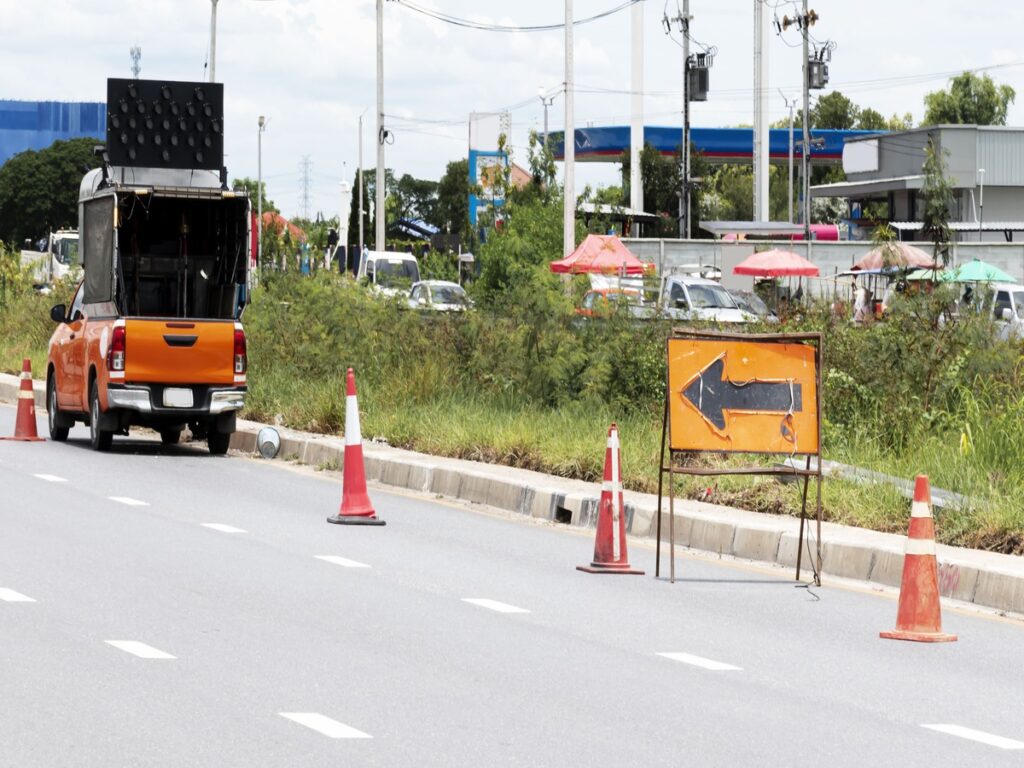
La direction du panneau de flèche de détour doit correspondre à la géométrie réelle du virage.. Par conséquent, les sociétés de location qui fournissent des panneaux de détour standardisés pour tourner à gauche ou à droite doivent confirmer que la direction correspond à l'itinéraire de détour spécifique du client avant l'expédition du kit.. Construire des kits de détour spécifiques à une direction – ou comprenant des variantes à gauche et à droite – constitue l’approche opérationnelle la plus sûre.
Panneau de fin de travaux routiers et configuration de l'inventaire de la flotte
Le signe universel: FIN DES TRAVAUX ROUTIERS (G20-2)
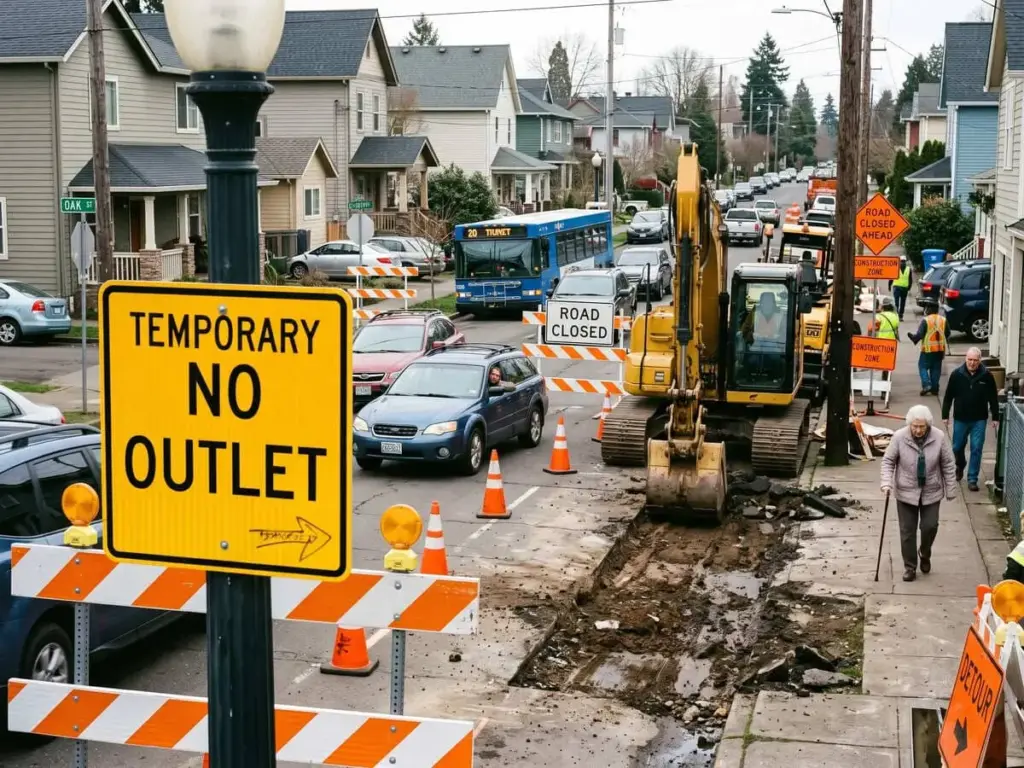
Chaque type de travail dans ce guide nécessite le panneau END ROAD WORK (G20-2) à l'extrémité aval de la zone de terminaison. Malgré, c'est l'un des panneaux les plus souvent manquants dans les kits de location. Les kits se concentrent souvent sur la séquence d'avertissement préalable et traitent la zone de terminaison comme secondaire..
Donc, intégrer des panneaux de FIN DES TRAVAUX ROUTIERS dans chaque kit préemballé en tant qu'élément obligatoire. Utiliser 48″×48″ pour les déploiements autoroutiers et artériels. Utiliser 36″×36″ pour les applications routières locales. Traitez-le de la même manière que les TRAVAUX ROUTIERS À L'AVANCE – requis pour chaque travail, à chaque fois.
Quantités de stock de base par type de colis
Le tableau ci-dessous résume les quantités de stock recommandées pour une flotte de location desservant une clientèle mixte sur les cinq types de travaux de signalisation de zone de travail.. Les quantités supposent 10 déploiements actifs simultanés de chaque type de kit.
| Signe | Code MUTCD | Fermeture de voie | Signalement | Utilitaire | Construction | DEVIATION |
| TRAVAUX ROUTIERS À VENIR | W20-1 | 20 | 20 | 10 | 20+ | 10 |
| VOIE DROITE/GAUCHE FERMÉE | W20-5 | 10 | — | — | 10 | — |
| UNE ROUTE À UNE VOIE EN AVANT | W20-4 | — | 20 | — | — | — |
| DRAPEAUX À L'AVANCE | W20-7 | 10 | 20 | 10 | 10+ | — |
| SOYEZ PRÊT POUR VOUS ARRÊTER | W3-4 | 10 | 20 | 10 | — | — |
| TRAVAUX UTILITAIRES À VENIR | W21-7 | — | — | 10 | — | — |
| ROUTE BARRÉE | R11-3 | — | — | — | — | 10 |
| DEVIATION (flèche) | W20-2 | — | — | — | — | 30 |
| FIN DES TRAVAUX ROUTIERS | G20-2 | 10 | 20 | 10 | 10 | 10 |
Tous les panneaux dans ces configurations doivent être conformes au minimum aux feuilles orange fluorescent ASTM D4956 Type III.. Optraffic Signalisation de zone de travail conforme au MUTCD couvre tous les codes MUTCD référencés dans ce guide. Les commandes de flotte en gros sont disponibles avec la documentation des spécifications sur demande.
Garder les kits prêts pour le terrain: Cycles d’évaluation de l’état et de remplacement des flottes de location
Assembler le bon kit de signalisation pour zone de travail ne représente que la moitié du défi opérationnel. L’autre moitié est de savoir quand une pancarte contenue dans ce kit s’est dégradée au-delà du point de conformité – avant qu’elle ne quitte votre établissement., pas après qu'un entrepreneur ait appelé pour un problème.
Un système de notation de l'état à quatre niveaux
Les flottes de location bénéficient d'un système simple, cadre de notation cohérent appliqué à chaque inspection pré-location. Les quatre niveaux suivants correspondent directement aux seuils de conformité importants en vertu de la section 2A.22 du MUTCD et de l'OSHA. 29 CFR 1926.200:
Catégorie A – Prêt à louer: Le visage du panneau est propre, légende entièrement lisible, la feuille ne présente aucun délaminage ni aucune décoloration significative. La rétroréflectivité respecte la durée de vie attendue pour la qualité des feuilles. Aucun dommage physique au substrat ou aux bords. Mise en location sans restriction.
Catégorie B — Moniteur: Contamination superficielle mineure, légère oxydation des bords sur l'aluminium, ou abrasion mineure de la feuille qui n'affecte pas la rétroréflectivité. Nettoyer et réinspecter avant le prochain cycle de location. Ne pas libérer sans nettoyage.
Catégorie C – Réparer ou restreindre: Délaminage visible, légende partiellement obscurcie, déformation importante du substrat, ou des feuilles qui ont dépassé leur durée de vie prévue à la date d'acquisition. Ne pas libérer pour les déploiements artériels ou autoroutiers. Indicateur de remplacement dans 30 jours.
Grade D — Retraite: Substrat plié qui ne peut pas être redressé à plat, légende illisible dans des conditions normales de visualisation, tôle visiblement dégradée ou manquante, ou tout dommage physique créant une arête vive ou un risque de détachement. Retirer immédiatement de l'inventaire. Ne relâchez sous aucun prétexte.
Appliquer cette notation en deux points: inspection pré-location à l'expédition du kit, et inspection après retour à son retour. Documenter la note attribuée, le nom de l'inspecteur, et la date sur votre dossier de lot. Cela crée la chaîne d'enregistrement de conformité qui satisfait à la fois à la section 2A.22 du MUTCD et à l'OSHA. 29 CFR 1926.200 simultanément.
Intervalles de remplacement par type de panneau
Le moment du remplacement dépend de la qualité de la feuille et de l'intensité de la manipulation.. Les panneaux de location sont confrontés à beaucoup plus de stress physique que les panneaux installés en permanence – installation et démontage répétés, transport dans des plates-formes de camion, exposition au contact avec l'équipement. Planifiez les cycles de remplacement en conséquence:
| Type de signe | Note | Durée de vie attendue (installation permanente) | Intervalle de remplacement de location recommandé |
|---|---|---|---|
| Panneaux d'avertissement TTC en aluminium | ASTM D4956 Type III | 7–10 ans | 5–7 ans |
| Panneaux d'avertissement TTC en aluminium | ASTM D4956 Type IX/XI | 10–12 ans | 7–9 ans |
| Panneaux TTC en tissu enroulable | Équivalent de type III | 3–5 ans | 2–3 ans (ou plus tôt si le tissu se déchire) |
| Signes réglementaires (série R) | Type III ou IV | 7–10 ans | 5–7 ans |
| ROUTE BARRÉE / Signes de détour | Type III | 7–10 ans | 5–7 ans |
Le remplacement global par date d'acquisition - en supprimant tous les signes d'un lot de SKU donné à l'intervalle ci-dessus - est la méthode la plus efficace sur le plan opérationnel pour les flottes de location.. Il élimine le besoin de mesurer la rétroréflectivité individuelle et satisfait à la méthode de gestion de la durée de vie attendue du signe de la section 2A.22 du MUTCD..
Suivre la date d'acquisition par lot, pas par unité de signalisation individuelle. Lorsqu'un lot atteint sa date de mise hors service, retirer le lot entier, quel que soit son état apparent. Documentez la mise hors service dans votre dossier de lot.
Le risque spécifique à la location: Dommages post-déploiement
Les sociétés de location sont exposées à une responsabilité que les propriétaires d'enseignes permanentes n'ont pas.: les panneaux reviennent du terrain dans un état inconnu. Un entrepreneur qui stocke de manière inappropriée, transports, ou déploie vos panneaux, vous pouvez les restituer avec des dommages qui ne sont pas immédiatement visibles — substrat plié redressé sur le terrain, bâches contaminées par des matériaux routiers, dommages aux trous de montage causés par des cadres non standard.
Trois pratiques protègent votre exploitation de cette exposition:
Documentation photographique avant location. Photographiez chaque kit avant son expédition : une simple photo des faces et du dos des panneaux crée une condition de base horodatée et défendable.. Si une enseigne revient endommagée au-delà de l'état d'avant location, la photo établit que les dégâts sont survenus pendant la période de location.
Clauses des conditions du contrat de location. Votre contrat de location doit préciser que le client accepte le matériel dans l'état documenté au moment de la livraison., et que le client est responsable des dommages au-delà de l'usure normale. Définir “usure normale” explicitement - la saleté de surface est normale; le substrat plié et les déchirures de la feuille ne sont pas.
Inspection après retour avant réapprovisionnement. Ne remettez jamais une enseigne d’un cycle de location directement à l’inventaire actif sans inspection. Les panneaux qui passent avec succès l'inspection après retour sont reclassés et réapprovisionnés.. Les panneaux qui échouent sont signalés pour réparation ou mise hors service. Cela empêche une enseigne endommagée d'entrer dans le prochain cycle de location sans être découverte..
Ces trois pratiques créent ensemble un système de gestion des conditions en boucle fermée. Combiné avec le cadre de notation ci-dessus, ils donnent à votre entreprise de location un dossier de conformité défendable depuis l'achat jusqu'à la retraite - ce qui est exactement ce qu'exige la section 2A.22 du MUTCD et ce que l'OSHA 29 CFR 1926.200 prise en charge des normes de documentation.
Foire aux questions: Panneaux de zone de travail pour les flottes de location
T1: Quel est le premier panneau dans une séquence de panneaux de zone de travail ??
TRAVAUX ROUTIERS À VENIR (W20-1) devrait être le premier signe que les conducteurs rencontrent dans n'importe quelle zone de travail. Partie MUTCD 6 spécifie ceci comme panneau d'ouverture standard pour toutes les zones TTC. Placez-le à la distance de préavertissement indiquée dans le tableau 6C-1 pour la vitesse affichée – et non au niveau du cône ou de la zone d'activité..
Q2: Combien de temps à l’avance les panneaux de zone de travail doivent-ils être placés?
La vitesse affichée détermine les distances de placement des avertissements avancés selon la partie MUTCD 11e édition 6, Tableau 6C-1. Référence générale: environ 100 à 350 pieds à 25 à 35 mph; 350–500 pieds à 40-45 mph; 500–700 pieds à 50-55 mph. Ce sont des minimums. Conditions sur le terrain — courbes, collines, distance de visibilité restreinte – peut nécessiter un espacement plus long. La 11e édition a mis à jour plusieurs distances du 2009 Edition. Vérifier toutes les feuilles d'espacement du kit par rapport aux tableaux actuels.
T3: Le panneau UTILITY WORK AHEAD peut-il remplacer ROAD WORK AHEAD?
Oui. MUTCD autorise explicitement le TRAVAIL UTILITAIRE À L'AVANCE (W21-7) en remplacement des TRAVAUX ROUTIERS À VENIR (W20-1) pour les opérations de services publics sur ou à proximité d’une autoroute. Les deux sont conformes. UTILITY WORK AHEAD communique le danger plus précisément pour les déploiements spécifiques aux utilitaires et certaines spécifications DOT de l'État peuvent l'exiger..
T4: Le panneau FIN TRAVAIL ROUTIER est-il obligatoire?
Oui. Lieu FIN DES TRAVAUX ROUTIERS (G20-2) à l'extrémité aval de la zone de terminaison pour toutes les zones TTC. C'est l'un des panneaux les plus fréquemment omis dans les kits de location préemballés.. Incluez-le comme élément obligatoire dans chaque kit, quel que soit le type de travail..
Q5: Quelle taille de panneaux de zone de travail un parc de location doit-il stocker?
Actions 48″×48″ comme taille principale pour les panneaux d'avertissement sur les artères et les autoroutes — routes affichées 35 mph et plus. Action 36″×36″ comme taille secondaire pour les applications routières locales à faible vitesse. Partie MUTCD 6, Le tableau 6F-1 précise ces seuils. En cas de doute, la plus grande taille est toujours conforme et offre une meilleure distance de reconnaissance du conducteur.
Q6: Comment mettre à jour les kits préemballés à partir du 2009 Édition à la 11e édition?
Examinez chaque configuration de kit par rapport à la pièce MUTCD 11e édition 6, Tableau 6C-1 pour l'espacement et tableau 6F-1 pour les dimensions. Documenter la date d'examen et la date de mise à jour pour chaque conception de kit. Étiquetez les kits mis à jour avec la date de conformité de la 11e édition afin que les clients et les inspecteurs puissent vérifier la validité. Concentrez-vous d'abord sur les kits de fermeture de voie : ils comportent le plus de changements d'espacement entre les éditions..
Des kits de signalisation pour zones de travaux de construction qui résistent sur le terrain
Les cinq packages de panneaux de zone de travail présentés dans ce guide couvrent les types de travaux qui représentent la majorité des déploiements de location de panneaux de signalisation.. Chaque package suit la partie MUTCD 6 structure à quatre zones — avertissement préalable, transition, activité, résiliation - et comprend les panneaux obligatoires qui rendent chaque zone conforme.
Plus important encore, l'étape la plus utile sur le plan opérationnel qu'une entreprise de location puisse prendre est de standardiser ces forfaits. Attribuez à chaque kit une configuration documentée. Examinez-le par rapport aux tableaux de la 11e édition. Mettez-le à jour régulièrement. Un entrepreneur qui loue chez vous devrait être en mesure de remettre la documentation de votre kit à un inspecteur de l'OSHA ou à un responsable de la conformité du DOT et avoir un dossier défendable.. C'est ce qui différencie une entreprise de location professionnelle d'un fournisseur d'enseignes de base..
Articles connexes dans cette série
- Panneaux de signalisation MUTCD: 11Guide de conformité e édition pour les flottes de location (A1)
- Exigences de signalisation de l'OSHA pour les opérations de location de contrôle de la circulation (A2)
- Retour au pilier: Panneaux de signalisation pour les sociétés de location — Flotte complète & Guide d'approvisionnement