積み込みドックがブロックされると倉庫に 1 時間あたり数千ドルのコストがかかる理由 — そしてサイネージがそれを解決する方法
埠頭の混雑には目に見える代償が伴う. アメリカ交通研究所によると (アトリ), トラックの留置にかかる運送業者の費用はおよそ $32.75 ドライバー時間あたり - ただし、アイドルクラスになると施設レベルの損失が急激に増加します 8 トラックがアクティブなステージングレーンをブロックする. シングル 駐車禁止の荷積みゾーンの標識, 正しく配置された, ほとんどの無許可車両侵入の根本原因をドックエプロンに到達する前に排除します。.
乗用車が主な犯罪者. 従業員, 請負業者, 明確に禁止されているものがないため、配送ドライバーは定期的に貨物中継エリアに駐車します。. 53フィートのセミにはおおよその必要量 55 バックイン操作を実行するためのスイングクリアランスのフィート. アーク内に不適切に駐車された 1 台のセダンが進入を中止, 再配置の遅延, 下流でのカスケードスケジュール障害.
このガイドでは、特に重量貨物ドック環境について説明します — クラス 8 トラックステージング, ドロップアンドフックヤード, およびマルチベイ産業施設.
スループットの賭け: 制御されていない積載ゾーンの実際のコスト
サプライチェーンのタイミングに対するカスケード効果
1 つのベイドアがブロックされると連鎖反応が引き起こされる. 一般社団法人異業種商業標準協会 (VICS) ベンチマークの平均ドック滞留時間は、制御されていない施設では 90 ~ 120 分であるのに対し、アクティブなゾーン管理プロトコルを備えた施設では 60 分未満です。. 稼働中のステージングゾーンに放置されたボブテイルや空のトレーラーが問題をさらに悪化させます。認可されていない設備が稼働中の貨物通路を占拠すると、高処理能力施設は使用可能なヤード容量の 15 ~ 25% を失います。.
見える, 準拠した駐車禁止荷積みゾーン標識は、ドライバーが貨物ヤードに入る前に尊重するゾーン境界を確立することで、そのギャップを埋めます。. 演算計算は簡単です: ドック時間を回復することは、運送業者の滞留コストの削減に直接つながります。.
乗用車の問題
標準クラス 8 トラクターには約 55 ブラインドサイドバックイン操作のための横方向スイングクリアランスのフィート. 許可されていない車両がその円弧内に駐車した場合, ドライバーは安全にアプローチを完了できない. OSHA 29 CFR 1910.178 電動産業用トラックの認可を管理する, および一般義務条項 (セクション 5(a)(1)) 工業地域におけるすべての車両交通危険に対する雇用主責任を拡大する.
トラックが無許可駐車車両と接触した場合、ドライバーの賠償責任が増大する. 標識が設置されていない施設では、保険金請求が複雑になる可能性があります, 規制上のエクスポージャ, キャリア関係の悪化.
受動的な取り締まりインフラとしての標識
多くの施設は口頭での指示や床テープのみに頼っています。. どちらも防御可能な執行記録を作成しない. MUTCD 準拠の商用積載ゾーン標識は、ほとんどの州の車両法規に基づいてサードパーティの牽引認可のための規制書類の証跡を確立します。. 適切に展開された 駐車禁止の荷積みゾーンの標識 ドックアクセスポリシーを適用します 24 人間のエージェントを必要とせずに 1 日あたり数時間.
MUTCD R7-6 への準拠: 標準を解読する
R7-6 サイン仕様
MUTCD R7-6 指定は、 駐車禁止の荷積みゾーンの標識: 白い再帰反射の背景, 赤い境界, 太字の赤いテキストの凡例. MUTCD パート 2B は、すべての駐車および停止制限標識を管理します。. 標準の凡例オプションには次のものがあります。 “駐車場の積み込みゾーンはありません,” “レッカー車撤去区域,” 凡例と次のような時間制限を組み合わせたもの “7 午前 - 6 午後 月曜~土曜”
タイポグラフィはシリーズEを踏襲(m) または MUTCD セクション 2A.11 に基づくシリーズ C ハイウェイ フォント. 装飾書体または凝縮書体はコンプライアンス要件を満たしていません. 最低限 3:1 凡例と背景の間のコントラスト比により、日中の視認性が向上します; 再帰反射シートが夜間のパフォーマンスを自動的に管理.
貨物環境向けの駐車禁止標識の標準寸法
寸法の選択により、操作時のアプローチ速度での視認性が向上します. 以下の表は、パネル サイズと推奨用途を対応付けています。:
| パネルサイズ | 推奨アプリケーション | アプローチ速度 |
| 12”×18” | 低速専用ヤード | < 10 MPH |
| 18”×24” | トラック交通による標準的なドックアプローチ | 10–20マイル/時 |
| 24”×30” | 高速または大量の出入りが可能なヤード入口 | > 20 MPH |
MUTCD 表 2A-3 による, 文字高さ 6 インチで、約 6 インチの可読性を実現 175 フィート - クラスにとって重要 8 ドライバーが進入の決定を下す 15 MPH. 特大24″ ×30″ パネルはドックへのアプローチが超過した場合に適用されます 200 足元に遮るもののない視線.
OSHA および ANSI Z535 ヘッダー語の要件
OSHA 29 CFR 1910.145 および ANSI Z535.2 は、産業環境における補足安全標識ヘッダー ワードを管理します。. ヘッダー単語の階層は、ゾーンの近くに設置されたゾーン隣接の安全標識に適用されます。 駐車禁止の荷積みゾーンの標識 クラスタ:
- 危険 (赤いパネル): 死亡または重傷の危険 - ドックの端やピンチポイントの危険に備えて用意されています
- 注意 (黄色のパネル): 軽傷の可能性 - フォークリフトと歩行者の境界ゾーンに適しています
- 知らせ (青いパネル): 人身事故を起こさない運用に関する指令 — 以下の用途に適しています “荷積みエリア - 認可された車両のみ” 看板
主要なメッセージの読みやすさには、最低限の読みやすさが必要です。 5 近接ドック標識用フィート. 車両の接近距離に応じて文字の高さを上方にスケールします.
マルチドック施設用の MUTCD R7-6 準拠の荷積みゾーン標識の調達? OPTSigns は、カスタム時間制限凡例を備えた事前構成された R7-6 パネルを大量に提供します. → optsigns.com で一括見積もりをリクエストする
産業環境向けの材料およびハードウェアの仕様
基材およびシートの規格
貨物ヤードに設置される商業用積載ゾーン標識には、最低でも厚手のアルミニウムが必要です。 .080 ゲージ (約2mm). 風圧による反りに強い下地です。, マイナーフォークリフトのサイドワイプ接触, 露出した造船所での熱サイクリング. 標準 .063-ゲージ高速道路アルミニウムは、クラスのドック端の風荷重に耐えられません 8 環境.
反射シートの選択によって決まります 24/7 パフォーマンス:
- 3M 高輝度プリズム (ヒップ), ASTM D4956 タイプ IV — 活発な貨物輸送の最低基準; エンジニアリンググレードよりも広いヘッドライト角度で再帰反射を提供します
- ダイヤモンドグレード (タイプIX) — ボラード隣接設置用に指定, ドックランプエッジ, 高速進入可能なヤード入口
プラスチック複合材を避ける (高紫外線気候では 18 ~ 24 か月以内に UV 分解) そして塗装されたスチール (ドックの湿気環境における錆の発生).
ドック設置用の取り付け金具
2 つの主要な構成が荷積みドック環境に使用されます:
- U チャンネル鋼ポスト (2” × 2” 亜鉛メッキ): オープンステージエリアの自立型ヤードサインに適しています. 車両衝突のリスクが高まる場合は、伸縮式または分離式の設計を選択してください. コンクリート基礎に柱を少なくとも 36 インチの深さで設置します。.
- 壁掛けブラケット (耐久性の高い粉体塗装スチール): ベイドアに隣接するドック外壁に直接貼り付けられる標識に推奨されます。. 改ざん防止ハードウェアにより不正な取り外しを防止.
ASCEの場合 7-22, オープンな工業ヤードにあるドックに隣接する標識は、暴露カテゴリー C の風荷重に該当します。. 定格のハードウェアを指定してください 90 最低風速mph相当. ネジロック剤を塗布します (例えば。, ロックタイト 243) 高振動ドック環境におけるすべてのボルトマウント設置に適用.
カスタムドック識別文字
ベイ番号標識 (例えば。, “ドック1、” “ドック12”) トラック積載ゾーンの標識を運用上で補完する重要な要素です. これらにより、ヤード管理ソフトウェアがリアルタイムのドック割り当てを調整できるようになります。. 同じものを指定してください .080 黄色地に黒、または白地に黒のハイコントラストのゲージアルミニウム基板. 最小文字高さ: 4 近距離壁掛け用インチ; 6+ キャブの高さから読める標識のインチ (地面から約 8 ~ 9 フィート).
戦略的な配置: 授業用のレイアウトを設計する 8 操縦性
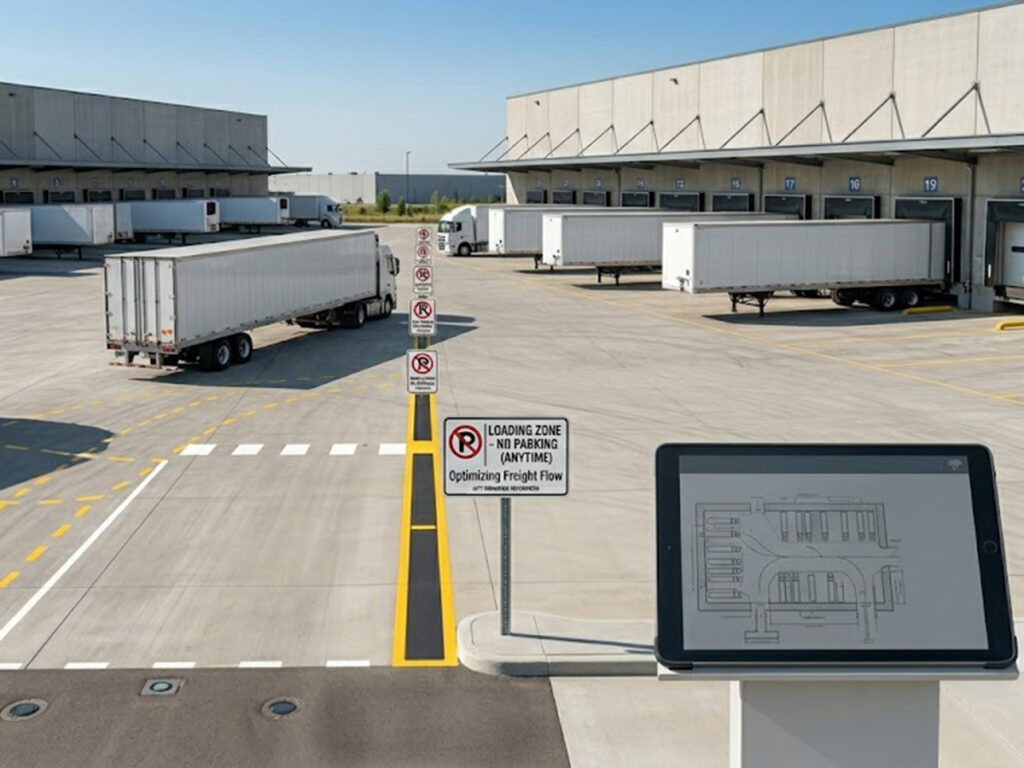
間隔の間隔, 取り付け高さ, と視角
連続積載ゾーン指定スペースに関する貨物業界標準 駐車禁止の荷積みゾーンの標識 毎 30 アクティブなドック面に沿ったフィート. 許容可能な動作範囲は次のとおりです。 25 に 75 フィートは庭の周囲の長さとアプローチの視距離に応じて異なります.
標識は最低限取り付けてください 7 地面から看板の下までのフィート. この高さは標準的なフォークリフトのマスト高さをクリアしています (5–6フィート低くなりました), 歩行者通行許可, ヤードトラクターのミラープレーン. トラックの運転手が標識を読めるように、入ってくる交通の流れに対して 30 ~ 45 度の角度で標識を配置します。 駐車禁止の荷積みゾーンの標識 まだ 50+ ベイエプロンからの足元, バックアプローチベクトルにコミットする前に.
施設のゲートや庭の入り口で, オーバーサイズ 24 を展開″ ×30″ “前方の荷積みゾーン — 無断駐車禁止” 乗用車が貨物ヤードに侵入する前に阻止するパネル.
ヤードフロー管理とブラインドサイドバックゾーン
ドロップアンドフック操作には、ライブロードベイとは別に専用のステージングエリアが必要です. 境界線に署名します “認可されたステージングのみ - 乗用車の通行禁止” 高頻度のトレーラー交換時の侵入を防止するパネル.
工業ヤード環境では、ブラインドサイドの裏地は怪我の危険性が最も高くなります。. 労働統計局が記録した 79 倉庫保管業務における輸送事故に関連した死亡者数 2023, 後方機動の衝突が主な要因として挙げられる. 位置 “バックエリア – 離れてください” ドックエプロンの隅にある標識で、ドライバーはトレーラーの尾翼から視線を失います。.
一方通行の標識 — “トラック入口のみ,” “出口のみ,” “立入禁止” — と共同展開 駐車禁止の荷積みゾーンの標識 システムは、監視員と入ってくるトラックの間の正面衝突を排除するループ状のヤードフローを確立します。.
ボブテイルと空のトレーラーステージングゾーン
ボブテイルと空のトレーラーは、活荷重レーンと混合するとアクティブなドックのキューを混雑させます. で署名された物理的に分離されたボブテイル ステージング ゾーンを指定します。 “ボブテイル駐車場のみ - 積載されたトレーラーは不可。” トレーラーの空き区画には次のものが必要です “空のトレーラーステージング - 最長 72 時間” 放棄されたトレーラーの蓄積を防ぐ周囲パネル.
J.J. Keller OSHA 準拠のチェックイン サインにより、文書化されたプロトコル層が追加されます: “すべてのドライバーは、桟橋に向かう前にガードハウスでチェックインする必要があります。” この標識は、トレーラーの配置に関する保管管理を確立し、無断駐車事件の執行記録を作成します。.
補完的な視覚的コントロール: 舗装標識, 障壁, と執行
路面標示仕様
黄色のクロスハッチングは、地上レベルでの積載ゾーンの境界を定義します. 少なくとも ASTM D1155 に準拠した再帰反射ガラスビーズブロードキャストを使用した交通グレードのアルキドまたは水性エポキシ塗料を指定してください 4 ポンド/ガロンのビーズ荷重. 赤いクロスハッチングは、最も制限の高いゾーンに適用されます。つまり、障害物があると即座に業務が停止されるベイドアの直前です。.
最小線幅: 4-標準ゾーン周囲のインチストライプ; 6-フォークリフトと歩行者の交通が交差するインチのストライプ. 熱可塑性舗装マーキングは、稼働中の貨物ヤードの塗装マーキングの耐用年数が 12 ~ 18 か月であるのに対し、3 ~ 5 年に延長されます。.
物理バリアの統合
スチールボラード — 4″ または6″ 直径スケジュール 40 鋼管, コンクリートで満たされた, 堅固な足場に設置 — 乗用車をドックエプロンゾーンから永久に物理的に排除します. ボラードを安全黄色にペイントする (連邦標準 595 色 33538). トラック進入通路の端にボラードを設置する, 裏封筒に入っていない.
小さい “駐車禁止 / 荷役場” ボラードポストキャップに取り付けられたプラカードは、 駐車禁止の荷積みゾーンの標識 ドックエッジレベルでのメッセージ — 駐車車両のドライバーの目の高さから見える 2 番目の強制レイヤー.
牽引認可の文言と法的要件
アメリカのほとんどの. 州の車両法規では、所有者の同意なしに私有商業地から車両を合法的に牽引する前に、掲示された牽引許可が必要です. カリフォルニアの車両コードセクション 22658 およびテキサス州交通法セクション 684 特定の言語と最小文字サイズを義務付ける.
必要な牽引パネルの言語: “荷積みゾーンに駐車されている車両は、所有者の費用負担で牽引されます — 24 1日何時間も / 7 週に何日 — [レッカー会社名と電話番号].” カリフォルニアCVC 22658 レッカー会社名と電話番号を 1 インチ以上の文字で入力することが義務付けられています.
牽引認証パネルをプライマリ R7-6 と同じ場所に配置されたクラスターとして取り付けます 駐車禁止の荷積みゾーンの標識 — 単一のインストールポイント, 統一された取り締まり信号, 保険および法的目的のための明確な文書.
導入ワークフロー: マルチドックサイネージ導入計画の構築
ローディングゾーンの標識サイト監査の実施
構造化された監査により、4 つのステップで実用的な設置計画が作成されます。:
- ヤードマッピング: すべてのアクティブなベイドアを文書化する, ステージングゾーン, ボブテイルがたくさん, 寸法指定された施設区画図を備えたトレーラー降下エリア.
- アプローチベクトル解析: 各トラックの進入経路を歩き、標識が欠けている視線の隙間を特定します。, 妨げられた, またはサイズが小さい.
- コンプライアンスギャップ評価: 設置されたサイネージを MUTCD R7-6 仕様と比較する, OSHA 29 CFR 1910.145 ヘッダーワードの要件, および適用される州車両コード牽引認可言語.
- 優先ゾーニング: 施行の緊急度によってゾーンをランク付け — 最初にエプロンをドッキングします, 次にステージング境界, 庭の入り口, およびボブテールロット — 予算の制約内で設置フェーズを順序付けるため.
施設面積別の符号数量マトリックス
| 施設の種類 | ベイ数 | 推奨される R7-6 パネル | 間隔 |
| 小規模なシングルテナント (<50K平方フィート) | 2–4ベイ | 4–8パネル (18”×24”) | 30 ft |
| 中型DC (50K–200K 平方フィート) | 8–20ベイ | 12– パネル20枚 (18”×24” または 24”×30”) | 30 ft |
| 大規模な地域DC / クロスドック (>200K平方フィート) | 20+ 湾 | 全周, ダイヤモンドグレード | 25 ft |
ソース: https://mutcd.fhwa.dot.gov
メンテナンス間隔とコンプライアンスの再認定
HIP シートの定格耐用年数は 10 ASTM D4956 に基づく年. 保証範囲内で再帰反射性能を維持するには、7 ~ 8 年で事前に交換するようにスケジュールを立ててください。. 四半期ごとの目視検査で衝撃による損傷を確認する必要があります, フェード, ハードウェアの緩み, そして遮られた視界.
コンプライアンス再監査のトリガーには次のものがあります。: 設備拡張, ドックの再構成, テナント変更, OSHA 検査の引用, または保険会社の要件. サインのインストール ログを維持する - サインの種類, 位置, 設置日, ハードウェアスペック, および設置者名 — 規制上の防御のため.
荷積みゾーンの標識を施設全体の駐車取り締まり戦略に結び付ける
荷積みゾーンの標識が完全な財産執行システムにどのように適合するか
a 駐車禁止の荷積みゾーンの標識 貨物ドックのスループットに対処する. 完全な商業不動産執行戦略では、周囲の駐車場にも対処する必要があります, ビジターエリア, 従業員ゾーン, および緊急車両通路 - それぞれが個別の規制当局によって管理されています.
防火帯の撤去 (NFPA 1, IFC), ADA準拠のロット施行, と貨物積載ゾーン管理は異なるコード権限の下で運営されており、標識インフラストラクチャを共有してはなりません. これらを交換可能なものとして扱うと、3 つのゾーンすべてに同時にコンプライアンスのギャップが生じます。.
防火帯から訪問者用敷地に至るまで、商業施設の全周囲にわたる駐車取り締まりを管理する運営ディレクター向け - OPTSigns’ に関する包括的なリソース 商業施設駐車禁止区域標識の施行.
積載ゾーンと緊急避難ゾーンの標識を重ならないように調整する
頻繁に起こるインストールエラー: 緊急車両進入通路と衝突する位置に積載ゾーン標識を設置する, 施行の曖昧さと消防法違反の可能性を生み出す. 防火帯標識は NFPA に基づいて緊急車両のアクセスを管理します 1 および国際消防法. MUTCD R7-6 に基づいて毎日の貨物および商用車の運行を管理する積載ゾーン標識. 2 つの標識タイプが同じ指定ゾーンを共有してはなりません.
荷積みドックと緊急車両進入通路が同じ周囲を共有する施設の場合, このシリーズの Fire Lane Enforcement ブログでは、貨物輸送を制限せずに緊急避難ゾーンを正しく境界設定する方法について詳しく説明しています.
複数の施設の場所にわたる拡張
マルチサイトオペレーター — 3PL, 国内代理店, および産業用 REIT — すべての場所で荷積みゾーン標識の仕様を標準化することで、調達とコンプライアンスの利点を実現します. 承認された MUTCD 指定を指定する企業サイン標準マニュアル, 基板ゲージ, シートグレード, パネルサイズの階層, 承認されたハードウェアにより、場所ごとの変動が排除されます.
ロックされた仕様に基づいてボリュームを発注することで、ユニットあたりのコストが削減され、すべての 駐車禁止の荷積みゾーンの標識 ポートフォリオ全体にわたる設置が同じ再帰反射と一致します, 構造的な, および寸法規格.
コンプライアンスのチェックボックスから競争力のあるスループットの利点まで
3 層強制モデル — MUTCD 準拠 駐車禁止の荷積みゾーンの標識 インスタレーション, 舗装マーキング, 物理的障壁 - 貨物の流れを 24 時間保護する受動的なインフラストラクチャ システムを構築します. 各層が他の層を強化します: 標識は法的権限を確立します, マーキングは境界を視覚的に定義します, そしてボラードがそれらを物理的に強制します.
車両の不正移動から回復したドック時間ごとに、運送業者の滞留コストが削減され、滞船罰金が回避されることに直接つながります。. HIPグレードのアルミニウム 駐車禁止の荷積みゾーンの標識 ASTM D4956 に基づく 10 年間の定格耐用年数があり、設置は 1 回限りの設備投資で済み、10 年間の準拠した運用収益が得られます。.
荷積みゾーンの標識は設備メンテナンス項目ではありません. スループットインフラストラクチャです.
よくある質問
MUTCD 準拠の駐車積載禁止ゾーン標識はどのようなものですか, そしてそれはどこで必要ですか?
MUTCD R7-6 指定では、白い再帰反射背景が指定されています。, 赤い境界, 太字の赤いテキストの読み取り “駐車禁止荷積みゾーン。” 商業施設または工業施設が荷積みドックに隣接する貨物専用ゾーンを指定する場合に適用されます。, ベイドア, またはトラックの停留所. MUTCD パート 2B は、公衆がアクセスできる道路または駐車場での使用を規制します。; OSHA の一般義務条項は、勧告を民間の工業ヤードにも拡大.
倉庫ドック環境における荷積みゾーン標識の正しい取り付け高さはどれくらいですか??
標識は最低限取り付けられます 7 地面から標識の下端までのフィート - フォークリフトのマストの高さをクリアする, 歩行者制限区域, ヤードトラクターのミラープレーン. ベイドアに隣接する標識は、ドックレベラーエプロンの高さ以上に設置する必要があります (4–5フィート) ただし、キャブの視界を確保するためにドックキャノピーラインより下にあります. ドック入口上のオーバーヘッド バナー マウントの設置には、標準トレーラーのノーズ高さのクリアランスとして、看板の下に少なくとも 14 フィートのクリアランスが必要です.
商業用積載ゾーン標識はどのような素材で作るべきですか 24/7 貨物輸送?
最低でも厚手のアルミニウム .080 ゲージは基板として機能し、風荷重に耐えます, 軽度の機器接触, および熱サイクル. 反射シートは 3M 高輝度プリズムを満たす必要があります (ヒップ), ASTM D4956 タイプ IV 最小値, 夜間貨物輸送時の広いヘッドライト角度での再帰反射用. 高振動のドック環境では、ハードウェアにはネジロック剤を塗布した亜鉛メッキまたは粉体塗装されたスチールが必要です.
駐車禁止標識は荷積みドックの周囲に沿ってどのくらいの間隔で配置する必要がありますか?
貨物業界の標準スペース商業積載ゾーンは、すべての標識に署名します。 30 アクティブなドック面に沿ったフィート. 許容可能な動作範囲は次のとおりです。 25 に 75 フィートは庭の周囲の長さとアプローチの視距離に応じて異なります. クリティカル配置ノード - 間隔間隔とは無関係 - アクティブな各ベイ ドアが含まれます, すべての庭の入り口ポイント, ステージングゾーンの周囲の隅々まで.
商業用積載ゾーンの標識に牽引許可の文言が法的に義務付けられていますか?
アメリカのほとんどの. 州の車両法では、所有者の同意なしに私有商業用地から車両を合法的に牽引する前に、郵送された牽引許可通知が必要です. 必須要素には通常、牽引会社名が含まれます, 電話番号, 車両のレッカー移動は所有者の費用負担で行われる旨の声明. カリフォルニアCVC 22658 牽引会社の連絡先情報の文字の高さは最低 1 インチにすることが義務付けられています. 牽引認証パネルをプライマリ R7-6 駐車禁止積載ゾーン標識と同じ場所に配置されたクラスターとして取り付けて、統一された標識を作成します。, 法的に防御可能な執行クラスター.
参照
- アメリカ交通研究所 (アトリ). トラック輸送の運営コストの分析: 2023 アップデート.
- 労働安全衛生局 (OSHA). 29 CFR 1910.178 — 動力付き産業用トラック.
- 労働統計局. 死亡労働災害の国勢調査 (CFOI) — 倉庫保管と保管, 2023.
- アメリカ土木学会. ASCE 7-22: 建物およびその他の構造物の最小設計荷重および関連基準.
- J.J. ケラー & アソシエイト. OSHAコンプライアンス: トラックドックの安全性.
- カリフォルニア州の法律情報. カリフォルニアの車両コードセクション 22658 — 私有地からの車両の撤去.
- ASTMインターナショナル. ASTM D4956 — 交通規制用再帰反射シートの標準仕様.