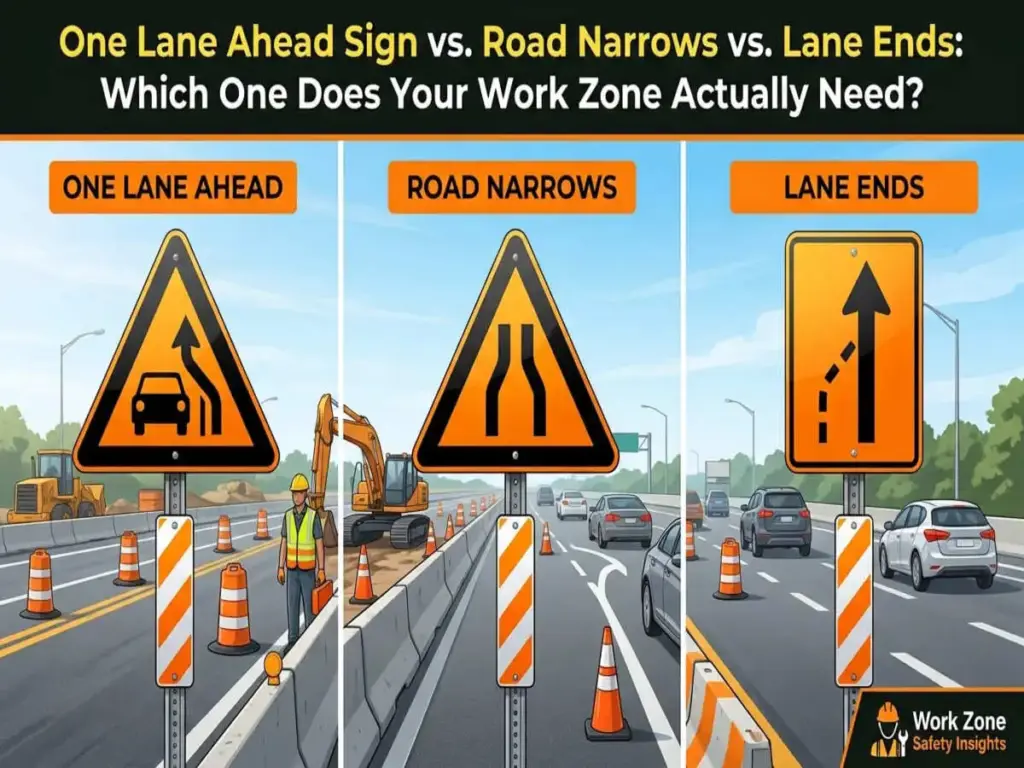
作業区域の現場では、他のほとんどの現場よりも 3 つの警告標識が混同されています: 一車線先の標識, 道幅狭し, 車線の端と. 見た目は似ています. 3 人全員が、前方の道路が変化することをドライバーに警告します. しかし, それぞれが法的に異なる状況を説明しています, 間違ったものを投稿すると、技術的に兆候が存在する場合でも、サイトが MUTCD 準拠から外される可能性があります。.
私たちのチームは、実際に道路ナローの標識が必要な場所に乗組員が設置した現場を歩いてきました。 一車線先の標識 フラッガーまたは信号制御付き. 道が狭くなった. しかし, 交通も単一車線を交互に通過する必要がありました, 掲示された標識が決して伝えなかったもの. そのギャップは表面的なものではありません. ドライバーが停止して待つことを期待するか、単に合流して続行することを期待するかが変わります。.
このガイドでは、各標識が法的に何を意味するのかを詳しく説明します。, いつどれを使うか, 現場検査中に指摘される取り違えを回避する方法.
キーテイクアウト
- 1 車線先 (W20-4): 標識器または信号制御の下で単一の車線を交通が交互に通過する必要がある場合にのみ使用してください。.
- 車線の端 (W4-2): 1 つの通過車線が永久に終了し、交通が隣接する車線に合流する場合に使用します。, 交互制御は必要ありません.
- 道幅狭し (W5-1): 舗装幅が狭くなるが、車線数は変わらない場合に使用します。.
- 間違った符号, 正しい場所: これら 3 つのうち間違ったものを投稿しても検査に合格しません, たとえ技術的には警告サインが存在していても.
- コントロールを一致させる, 形だけじゃない: 正しい標識は、サイトで交互交通制御が必要かどうかによって異なります。, 道路の狭さだけではなく.
それぞれのサインが実際に伝えていること
これら 3 つの標識は似ています: 黄色, ダイヤモンド型の, そして今後の道路の変化に焦点を当てました. まさにそれが彼らが混乱する理由です. 似たような形状の下に, それぞれがドライバーに異なる交通パターンを予想するよう指示します.
1 車線先 (W20-4)
この標識は、前方の道路が狭くなり、双方向の交通が共用する 1 車線になることをドライバーに警告します。. 重要なことに, それは交互制御が来ることを知らせます, フラガーからかどうか, 一時的な信号, またはパイロットカー. ドライバーは停止する準備ができている必要がある, ただ合併するだけではなく.
車線の端, 左/右を結合 (W4-2)
この標識は、2 つ以上の通過車線のうちの 1 つが永久に終了する場合に適用されます。. 終了車線の交通は隣接する車線に合流します, しかし両方向は動き続ける. フラッガーまたはシグナル制御は暗黙的に含まれません.
道幅狭し (W5-1)
この標識は舗装幅が狭くなることを示しています, 橋や両側に障害物があるセクションでよく見られます. レーン数自体は変わらない. これはすでに詳しく説明した兆候です, 完全車線削減との違いも含めて, 私たちの中で ロードナローズの標識ガイド.
現場の状況に応じた適切な標識の選択
| 敷地状況 | 正しい符号 | 交互交通制御が必要です? | レーン数の変更? |
|---|---|---|---|
| 一車線通行止め, 交通は両方向に交互に進みます | 1 車線先 (W20-4) | はい — 報告者, 信号, またはパイロットカー | はい, 1つの共有レーンまで |
| 1 つのスルーレーンが永久に終了します, 他の人は続けます | 車線の端 (W4-2) | いいえ | はい, 通過レーンが 1 つ減ります |
| 歩道は狭くなるが車線数は変わらない | 道幅狭し (W5-1) | いいえ | いいえ |
上の表は、看板が消える前に敷地計画を確認する最も早い方法です。. 要するに, 乗組員が標識器または臨時信号機を手配した場合, サイトには 一車線先の標識, 車線の端または狭い道路の標識ではありません. ストップアンドゴー制御なしで車線が合流した場合, 代わりに車線の端が正しいです. 車線を失うことなく道路が単に狭くなった場合, ロードナローズが適用されます.
実際のサイトで混同が起こる理由
通常、混乱は定義を知らないことでは起こりません. その代わり, これは、プロジェクトの途中で作業区域の状況がどのように変化するかに由来します。.
- サイトは車線端条件として開始され、後でフラガー コントロールを追加します。. 交互制御が開始されると、乗組員は時々、元のレーンエンドの標識を 1 車線前の標識に交換するのではなく、そのままにしてしまうことがあります。.
- 狭い橋に建設機械のための一時的な車線制限が追加される. 単純なロードナローズコンディションが単一車線交互コンディションになる, それに合わせて看板も変える必要がある.
- 乗組員はデフォルトでトラックにすでにある標識を使用します. 特定のサインが手元にない場合, 代わりに十分近い代役が上がる, 法的意味がサイトと一致しない場合でも.
実際の状況に応じて適切な標識を利用できるようにする
修正は、記号の定義についてのトレーニングを増やすことではありません. その代わり, 適切な在庫を手元に置いておくことです. 現場の状況はプロジェクトの進行とともに変化します, それに合わせて看板も変える必要がある. ロードナローズの標識だけを運ぶ乗組員, 例えば, フラガーコントロールが追加されると、サイトに正しく再署名できなくなります.
Optraffic チームは、3 つのバリアントすべてを含む作業ゾーン標識セットを構築します - One Lane Ahead, 車線の端, およびRoad Narrows – 作業員が標識をその日の実際の現場の状況と照合できるようにする, すでにトラックに積まれているものではありません. 長期にわたるプロジェクトでは柔軟性が最も重要である, 作業の進行に応じて交通規制計画が変更される場所.
関連書籍
- 道路狭窄標識と交通安全におけるその重要な役割を理解する
- 単一車線通行止め標識ガイド: MUTCD のセットアップ & テーパー
- 作業区域標識のサイズ: レンタル車両の MUTCD 寸法リファレンス
- 高速道路一車線の作業区域標識, 双方向操作: フラグを立てる & パイロットカーガイド
よくある質問
一車線先の標識は何を意味しますか?
前方の道路が狭くなり、双方向の交通が共有する単一車線になることをドライバーに警告します。, そしてその交互制御, フラッガーや一時的な信号など, 誰が通過するかを制御します.
1 車線前は車線の端と同じですか?
いいえ. 車線の終点とは、両方向が動き続けながら、一方の車線が別の車線に合流することを意味します. 1 車線前とは、交互制御の下で両方向からのトラフィックが 1 つの車線を共有することを意味します.
Road Narrows の標識を持った通報者が必要ですか??
必ずしもそうではありません. Road Narrows は、舗装幅が減少することのみを示します. これは、車線数の変更や交互交通制御を単独で行うことを意味するものではありません。.
敷地の状況に応じて間違った標識が掲示されたらどうなるか?
標識が設置されていても検査に合格しない可能性がある, 掲示されている標識がドライバーが実際に遭遇するものと一致しないため. このギャップにより、ドライバーが前方の状況を誤判断するリスクも高まります.
結論
これら 3 つの標識は似ています, しかし、彼らはドライバーに今後のことについて 3 つの異なることを伝えます. 間違った投稿は審査に落ちてしまうリスクがあるだけではありません. ドライバーは停止すべきかどうか迷ってしまいます, マージ, または単にレーンを維持する. そのため、Optraffic チームは 3 つすべてを在庫しています 一車線先の標識 バリエーションも一緒に, 現場の状況が変化したときに、作業員が標識を現場の状況に合わせて調整できるようにする, 身近なものだけでなく.