ブラケットロットが次のような証明書とともにドックに到着します。 “ASTM A123に準拠した亜鉛メッキ” — 成績なし, 改訂年なし, 測定された厚さのデータがありません. 月曜日に設置スタッフが出動する前に、承認または拒否する必要があります.
間違っていると思います, その結果は事務処理ではありません. 年に錆びが滲むブラケットの回廊です 8 年の代わりに 40, 計画外の代替広告申込情報, 提出レビューに署名することで、コーティング不足を不法行為請求に変えるノックダウンサイン.
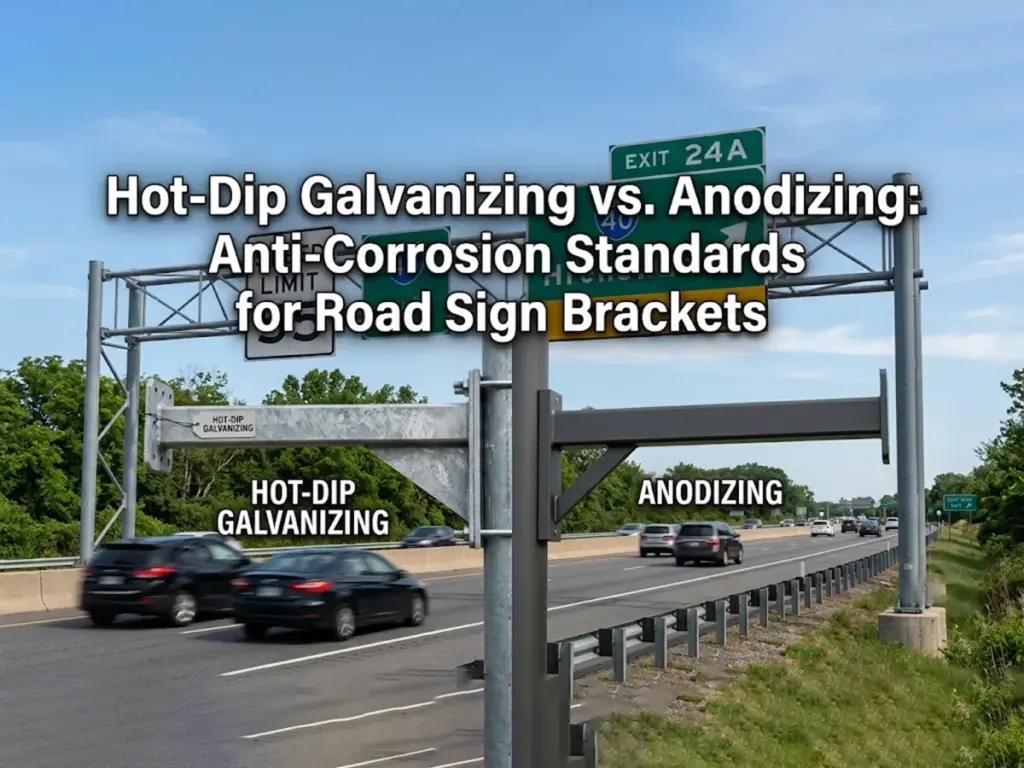
このガイドでは、その方法を正確に説明します。 亜鉛メッキ看板ブラケット 陽極酸化アルミニウムは冶金レベルでの塩化物の攻撃から保護し、ASTM グレード表を提供します。, 塩水噴霧ベンチマーク, 監査でのいずれかの決定を擁護するための認証チェックポイント.
バルク金属ではなく表面化学がブラケットの耐用年数を左右する理由
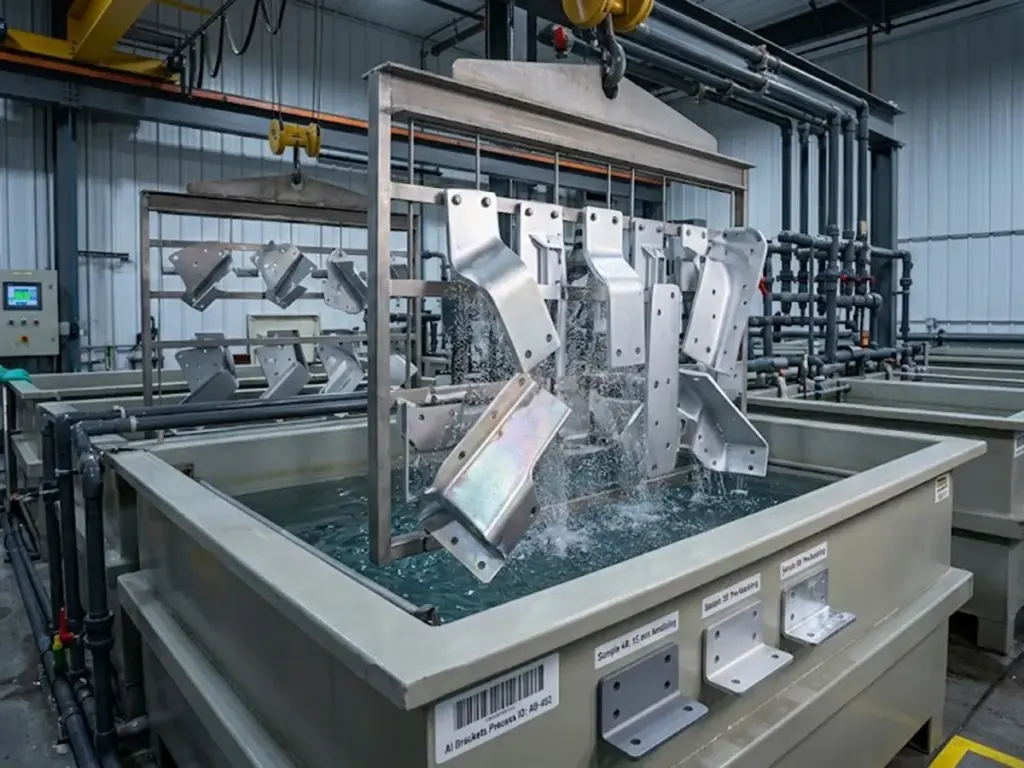
犠牲亜鉛陽極 vs. パッシブ酸化物バリア
亜鉛メッキサインブラケット 陽極酸化アルミニウム製ブラケットは、同じ方法で保護しないため、同じように故障することはありません。.
溶融亜鉛めっき (HDG) 電気化学的に活性なシステムを作成します. ガルバニック系列では亜鉛が鉄の上に位置します, そのため優先的に腐食し、触れてもいない露出した鋼材を保護します。. 陽極酸化により、受動的な誘電体バリアが形成されます。変換された酸化アルミニウム膜は、損傷を受けていない部分にのみ機能します。.
この違いが、この記事におけるあらゆる下流での意思決定の原動力となります: 犠牲システムはコーティングの破損を許容します; バリアシステムはそうではありません.
ISO による路側腐食性の分類 9223 カテゴリ
米国の標識ハードウェアは 3 つの異なる攻撃メカニズムに直面しています:
- 塩水のしぶき (0–8フィートゾーン) — プラウスプレーから直接塩化物を投入
- 海岸エアロゾル — 海洋回廊への浮遊塩化物沈着
- 湿式-乾式サイクル - ファスナーの凹部内の残留塩の凍結融解濃度
USGS 鉱物商品概要によると, 高速道路の除氷は大体消費します 40% 米国の塩需要のうち、年間 1,700 ~ 2,000 万トン程度. 最新の MgCl₂ および CaCl₂ の塩水が問題を悪化させる: 吸湿性がある, 表面の水分を保持し、岩塩だけで生成される時間をはるかに超えて湿潤時間を延長します。.
コンプライアンス審査担当者が実際に検証していること
入札評価中のあなたの仕事は書類の調整です, 材料科学ではない. 拒否のほとんどの原因は 3 つの提出書類の不備です:
- グレードやクラスなしで引用される基準
- コーティング重量 (オンス/平方フィート) 指定された厚さに置き換えられます (ミル)
- 塩水噴霧時間は、準拠する試験方法や試料前処理なしで見積もられています。
亜鉛と鉄の冶金的結合の内部
4 層合金スタックと拡散接合が摩耗に強い理由
ホットディップ 亜鉛メッキ看板ブラケット コーティングされていません - 冶金的に合金化されています. 約830~850°Fの溶融亜鉛に浸漬すると、4つの異なる層が生成されます。:
| 層 | 構成 | 鉄分 | 硬度 (DPN) |
| ガンマ | Fe₃Zn₁₀ | 21–28% | 250 |
| デルタ | FeZn₇ | 7-11.5% | 244 |
| ゼータ | FeZn₁₃ | 5–6% | 179 |
| そして (遊離亜鉛) | 亜鉛 | — | 70 |
合金層はベーススチールよりも硬い (ベーススチール ≈ 159 DPN). それが理由です 亜鉛メッキ看板ブラケット バンディングを生き残る, 輸送, 塗布された塗膜のようなチッピングではなく、取り付けトルクが向上します。. 電気めっきまたは機械めっきされた亜鉛には拡散層がありません - 入札で代替の試みにフラグを立てます.
アルミニウムブラケット上の陽極酸化物成長
タイプ II 対. タイプIII: 細孔の構造と厚さ
陽極酸化処理では、アルミニウム製ブラケットを酸性電解液中で陽極として使用します。, 薄いバリア層の上で表面を六方晶系の多孔質酸化物に変換する.
- タイプII (硫酸): 0.1–100万(標準)
- タイプIII (ハードコート): 0.5–450万, より高い電流密度とより低いバス温度で動作
機械加工ブラケットの 1 次元注記: フィルムの約半分が外側に伸びます, 穴とスロットの公差が変化します.
シーリング化学は真の腐食ゲートです
封止されていない陽極皮膜は開孔スポンジです. 耐食性はシール工程で生まれる, 陽極酸化ステップではありません.
| シール方式 | 機構 | 相対的な耐塩化物性 |
| 熱水 (沸騰したお湯/蒸気) | ベーマイトの水分補給 | 良い |
| 酢酸ニッケル (中温) | 毛穴詰まり | とても良い |
| 重クロム酸塩 | クロム酸塩阻害 | 最高 (環境的に制限されている) |
A submittal naming Type and Class but silent on sealing is functionally incomplete for chloride-exposed service.
Where Passive Barriers Break Down — With No Self-Healing
Chloride ions initiate pitting at pores, inclusions, and micro-cracks under sustained wetness. Crevice corrosion develops at bracket-to-post interfaces, washer faces, and band clamp contact zones where oxygen depletes and chloride concentrates.
The decisive asymmetry: a scratched or drilled anodic layer exposes bare aluminum permanently. There is no galvanic mechanism to compensate.
Decoding ASTM Galvanizing Specifications: A123 and A153
ASTM galvanizing specifications assign coating thickness by material category and steel thickness — not by product name. Reviewers must verify grade, not just standard.
ASTM A123 Material Categories and Coating Grades
以下の表は、鋼厚ごとの A123 要件を比較しています。, 最小平均コーティング厚さ, およびおおよそのコーティング重量.
| 鋼の厚さ (構造形状・プレート) | コーティンググレード | 分. 平均. 厚さ | 約. コーティング重量 |
| ≥ 1/4 で. | 学年 100 | 3.9 ミル (100 µm) | 2.3 オンス/平方フィート |
| ≥ 3/16 に < 1/4 で. | 学年 75 | 3.0 ミル (75 µm) | 1.75 オンス/平方フィート |
| ≥ 1/8 に < 3/16 で. | 学年 65 | 2.6 ミル (65 µm) | 1.5 オンス/平方フィート |
| < 1/8 で. | 学年 45 | 1.8 ミル (45 µm) | 1.0 オンス/平方フィート |
2 つの合格数値が常に混同される: 試験片の平均の最小値と個々の測定の最小値. 両方を満たす必要があります.
遠心分離機ハードウェアの ASTM A153 クラス
ボルト, ナッツ, Uボルト, ワッシャー, バンドクランプはA153に該当します, クラスごとにコーティング重量を指定します。クラス C は、以下のファスナーをカバーします。 3/8 で. 直径 (1.25 平均オンス/平方フィート), クラスDカバー 3/8 で. そしてその下 (1.00 平均オンス/平方フィート). 遠心分離により、構造部材よりも低い最小値が可能になります.
オンスレッドフィット: 亜鉛メッキ後にナットをオーバータップする, ボルトネジ部のコーティングを絶対に剥がさないでください. そして、混合規格の提出物に注目してください — 認定されていないファスナーで組み立てられた A123 ブラケットは、ファスナーが障害点になります.
AASHTO 相互参照と DOT 承認の署名ハードウェア言語
ほとんどの州の仕様書は AASHTO の指定を引用しています。:
アシュト M111 ↔ ASTM A123
アシュト M232 ↔ ASTM A153
完全なパッケージも A385 を参照しています (デザイン), A780 (修理), A143 (脆化), とA239 (プリース均一性試験). モデルラインアイテムの言語:
“ブラケットは、ASTM A123/A123M-17 に従って製造後に溶融亜鉛メッキされるものとします。, 学年 100 最小, ASTM E376に従って検証済み. ASTM A153/A153M に準拠したファスナー, クラスC. 納入時に必要な測定厚さを記載した亜鉛メッキ業者の証明書。”
未加工の基材とコーティングからカスタム印刷に至るまで、エンドツーエンドのサプライチェーンを運営する完全に統合された交通標識メーカーとして、当社はロットとともにコーティング証明書を発行します。, 数週間後ではない. 今すぐサンプルをリクエストしてください!
陽極酸化アルミニウム製サイン ブラケットの MIL-A-8625 コールアウトの読み取り
外部塩化物サービスのタイプとクラスの選択
MIL-A-8625F は、米国仕様の陽極酸化アルミニウム標識ブラケットを規定します:
| タイプ | 電解質 | 典型的な厚さ | 外装路側適合性 |
| 私 / IB | クロム酸 | 0.02–0.1百万 | 貧しい (ペイントベース/航空宇宙) |
| IC | ノンクロム | 薄い | 限定 |
| ii | 硫酸 | 0.1–100万 | 密封されている場合は許容されます |
| iii | 硬質陽極 | 0.5–450万 | 入手可能な最良のもの |
MIL-A-8625 では、耐久性のために密閉コーティングが必要です 336 ASTM B117 中性塩霧の時間(指定されたカウントに限定された孔食あり).
クラス 1 vs. クラス 2: 染料の腐食コスト
クラス 1 無染色です; クラス 2 染まっている. 有機染料は、シールがなければ閉じるであろう細孔容積を占めます。, 看板に面したハードウェアの染料システムは紫外線の下で退色します。. 美的要件は、腐食要件を静かに低下させる可能性があります.
サポートする ASTM テスト スイート
| 方法 | 関数 |
| ASTM B244 | 非磁性基板上の渦電流厚さ |
| ASTM B137 | 剥離による付着量 |
| ASTM B136 | 染料汚れシールの品質 |
| ASTM B680 | 酸溶解シール品質 |
シール試験に合格すると、厚さだけよりも耐塩化物性が予測されます。. 陽極酸化によりプロセッサの適合証明書が得られることにも注意してください。, 熱ベースの MTR ではない - ロットのトレーサビリティの仕組みが異なります.
塩水噴霧時間と現場でのパフォーマンスを調整する
ASTM B117 の結果とその相関限界
以下の表は、コーティングシステムを管理規格ごとに比較したものです。, 厚さ, B117の性能を報告, 観察された故障モード.
| システム | 標準 | 厚さ | B117時間 | 障害モード |
| タイプII, 封印された | MIL-A-8625 | 0.7 ミル | 336+ | 局所的な孔食 |
| タイプIII, 封印された | MIL-A-8625 | 2.0 ミル | 336–1,000 | 損傷部位の穴あき |
| HDGグレード 100 | ASTM A123 | 3.9 ミル | 1,000+ | 均一な亜鉛損失 |
| デュプレックス (HDG + 粉) | A123 + コーティング | 3.9 ミル + 3 ミル | 3,000+ | スクライブ時のコーティングクリープ |
塩水回廊と凍結融解回廊の周期試験
C4・C5廊下用, 周期データのリクエスト — ASTM G85 Annex A5 (希薄電解質の周期的霧), SAE J2334 (自動車用塩水サイクリング), またはASTM D5894 (紫外線/霧を伴う結露). スクライブクリープを評価する, エッジ攻撃, ファスナーの凹み腐食, そしてアンダーカット. AASHTO NTPEP または州の製品評価リストと照合します。.
ミルから年へ: 最初のメンテナンスまでの時間の計算
ISOによる亜鉛消費量 9223 カテゴリにより、防御可能な耐用年数が得られます:
| カテゴリ | 環境 | 亜鉛損失率 | 学年 100 人生 |
| C2 | 田舎 | 0.1–0.7μm/年 | 140+ 年 |
| C3 | 都会的な | 0.7–2.1μm/年 | 48–140歳 |
| C4 | 工業用/塩水 | 2.1–4.2μm/年 | 24–48歳 |
| C5 | 海兵隊 | 4.2–8.4μm/年 | 12–24歳 |
コーティングの厚さを腐食速度で割ります - それが最初のメンテナンスの時期です (5% 下地の錆び). 陽極酸化アルミニウムには同等の曲線はありません, 劣化は損傷履歴によって支配される局所的な孔食の可能性であるため, 均一な間伐率ではない.
検査スケジュールのポイント: 犠牲システムは徐々に、そして予想通りに故障します; バリアシステムが局所的かつ突然故障する.
検査, 認定レビュー, およびフィールド修理プロトコル
納品時のコーティング厚さの確認 (5 ステップ)
- 正しいゲージを選択します - 鋼上の亜鉛に対する ASTM E376 に基づく磁束; アルミニウム上の陽極皮膜に対する ASTM B244 に基づく渦電流.
- 各ロットの前に認定された参照標準に対して校正します.
- 試験品ごとに必要な読み取り値を取得し、A123 §6 に従ってそれらの平均値を試験片結果に導きます。.
- A123 サンプリング ルールに従ってロットとサンプル サイズを定義します。.
- 指定されている場合は、A239 プリース均一性および接着性評価を補足します。.
防御可能な認定パッケージの内容
亜鉛メッキルート: 熱数と鋼の化学, 製造トレーサビリティ, A123グレードまたはA153クラスを記載した亜鉛メッキ業者の証明書, 測定された厚さデータ, 必要に応じてケトルバス分析, および仕様改定年.
アルマイトルート: 合金と焼き戻しID, MIL-A-8625 タイプ/クラスへの適合証明書, B244 ごとに測定された厚さ, B136 または B680 に従って文書化されたシール品質結果.
これらの認定がフロアでどのように生成されるかについては、次の記事で説明されています。 ブラケットの製造と品質管理のウォークスルー.
フィールドダメージ: ASTM A780 修理と比較. 修復不可能なフィルム
ASTM A780 では、次の 3 つの修理ルートが認可されています。 亜鉛メッキ看板ブラケット — ジンクリッチペイント, 亜鉛はんだ, および溶射 - 表面処理と厚さの要件あり, 被害地域ごとの面積制限.
陽極酸化されたブラケットには同等のものはありません. 現場でフィルムを再生することはできません; タッチアップは、バリアも認証も回復しない有機コーティングに限定されます。. 両方のシステムでウェットスタック保管とコーティング後の現場切断を指定しないでください。.
廊下に合わせた塗装システム
混合金属アセンブリにおけるガルバニック結合の防止
カップルは頻繁に現れます: 亜鉛メッキ鋼製ハードウェアで固定された陽極酸化アルミニウム製ブラケット, または亜鉛メッキのポストやバンドに取り付けます.
誘電体絶縁ワッシャーとブッシングで軽減する, 接触面のシーラント, 面積比の認識 - 大きなカソードに対する小さなアノードは危険な構成です. ほとんどのエンジニアが見逃している詳細: ある金属から別の金属へ流出物を運ぶ排水路は、接合部の下流で濃縮物を攻撃します。.
コリドーベースの選択マトリックス
| 露出プロファイル | ISOカテゴリー | 推奨システム | 必要なデータ | 検査間隔 |
| 雪帯の塩水のしぶき | C4~C5 | HDGグレード 100 または両面印刷 | 周期的 + 厚さ | 5 年 |
| 沿岸海洋 | C5~CX | デュプレックス HDG | G85 A5 | 3 年 |
| 乾燥した内陸部 | C2~C3 | タイプ II/III シールアルマイト | B117 + シールテスト | 7 年 |
| ハイノックダウンアーバン | C3~C4 | HDG (ダメージ耐性) | A780プロトコル | 5 年 |
重い塩水と海岸の飛沫は、犠牲亜鉛メッキで作られた耐食性の標識ブラケットに有利に働きます。, ダメージ耐性が優勢だから. 低塩化物, 外観が重要な設置場所では、適切に密閉された陽極酸化アルミニウムが適切に機能します。.
調達レビューに耐えられる要件を作成する
標準年と改訂年を指定してください, 学年/クラス, 最小および平均の厚さ, 密閉要件, テスト方法, サンプリング計画, および必要な提出物. A780 を参照するコーティング損傷受諾条項を追加して、現場での紛争が事前に解決されるようにする.
コーティングの化学的性質は、より大きな意思決定の 1 つの層です. 完全なエンジニアリングのために, 耐久性, そしてその背後にあるコンプライアンスフレームワーク プログラムに適したブラケット素材の選択, 究極のガイドから始めましょう.
よくある質問
なぜ亜鉛メッキの標識柱は接地線から最初に腐食するのでしょうか?
グランドラインが潤いを集中, 酸素勾配, そして塩化物がポストに流れ落ちた, 露出したシャフトよりも早く亜鉛を消費する差動曝気セルを作成します。. このゾーンには、より重いコーティング グレードまたは追加の下地保護を指定してください.
現場でドリルした穴には再亜鉛メッキが必要ですか?
小さなドリル穴は亜鉛の 1/8 ~ 1/4 インチで保護されます。. スローイングパワーを犠牲にし、修理の必要がありません。. 大きめのカット, 焼けた端, または現場溶接ではその範囲を超えて鋼が露出するため、ASTM A780 に従って修理する必要があります。.
丸い伸縮式ポストは平らな穴あきポストよりも早く腐食しますか?
水管理よりも断面形状が重要. 四角い伸縮式チューブと穴あきチャンネルが滞留ブラインを内部に捕捉します, したがって、排水穴と A385 通気設計は形状よりも優れたパフォーマンスを予測します.
白錆は拒絶理由となるか?
白錆は湿った状態で保管した場合に CO₂ にさらされずに亜鉛が酸化してできる汚れです。, 一般に、これは ASTM A123 に基づく不合格原因ではありません。ただし、測定された厚さが ASTM E376 に従って検証されたときに指定グレードを満たしている場合に限ります。.
陽極酸化アルミニウムブラケットを亜鉛メッキ支柱に直接取り付けることができます?
彼らはできます, しかし、塩化物環境で直接接触するとガルバニックカップルが発生し、界面攻撃が加速されます。. 誘電体絶縁を指定する, 互換性のあるファスナーコーティング, 取り付け詳細の逃げ方向.
参照
ASTM A123/A123M — 亜鉛 (溶融亜鉛メッキ) 鉄鋼製品のコーティング
ASTM A153/A153M — 鉄および鋼製ハードウェアの亜鉛コーティング
MIL-A-8625F — アルミニウムおよびアルミニウム合金の陽極酸化皮膜
ASTM B117 — 塩水噴霧装置の操作実習
ASTM A780/A780M — 傷ついた溶融亜鉛めっきの補修
ASTM G85 — 修正塩水噴霧試験の実習
USGS 国立鉱物情報センター — 塩の統計と情報