Un lotto di parentesi arriva sul tuo molo con un certificato che legge “zincato secondo ASTM A123” – nessun voto, nessun anno di revisione, nessun dato sullo spessore misurato. Dovrete approvarlo o respingerlo prima che lunedì si mobiliti la squadra di installazione.
Indovina sbagliato, e la conseguenza non sono scartoffie. È un corridoio di mensole che sanguinano ruggine ogni anno 8 invece dell'anno 40, un elemento pubblicitario sostitutivo non pianificato, e un segno di knockdown che trasforma una carenza di rivestimento in una richiesta di illecito civile con la tua firma sulla revisione della presentazione.
Questa guida spiega esattamente come staffe segnaletiche zincate e l'alluminio anodizzato proteggono dall'attacco del cloruro a livello metallurgico e forniscono le tabelle dei gradi ASTM, parametri di riferimento in nebbia salina, e punti di controllo della certificazione per difendere entrambe le decisioni in un audit.
Perché è la chimica superficiale, e non il metallo sfuso, a determinare la durata di servizio delle staffe
Anodi sacrificali di zinco vs. Barriere passive all'ossido
Staffe segnaletiche zincate e le staffe in alluminio anodizzato non falliscono allo stesso modo perché non proteggono allo stesso modo.
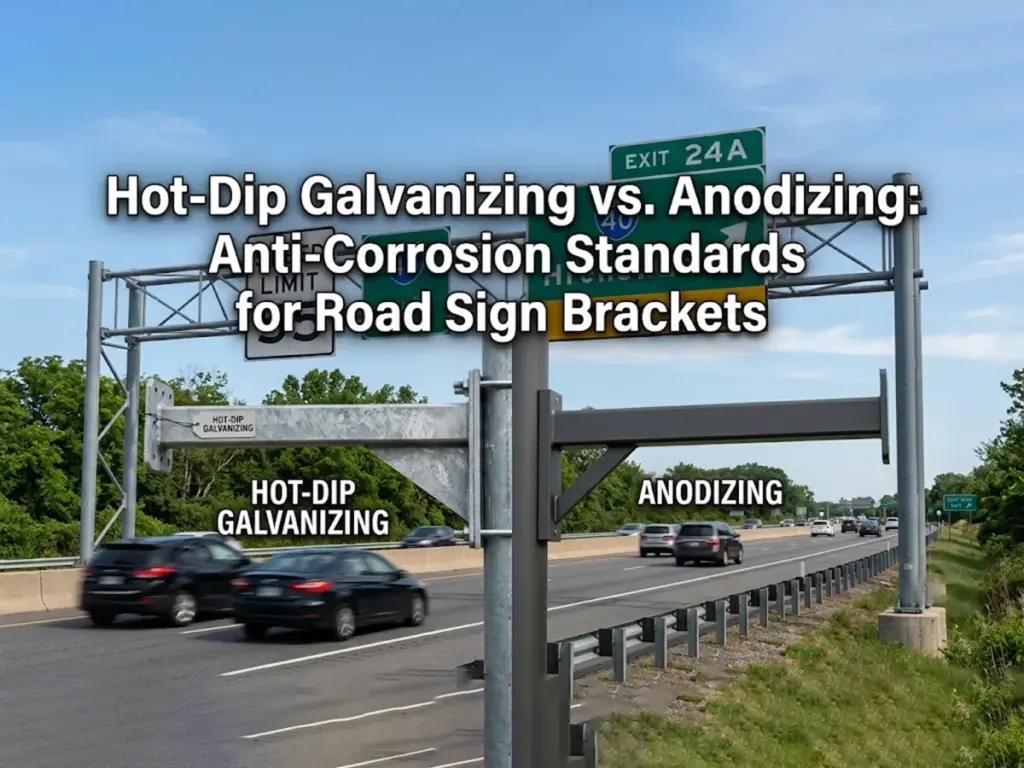
Galvanizzazione a caldo (HDG) crea un sistema elettrochimicamente attivo. Lo zinco si trova sopra il ferro nella serie galvanica, quindi si corrode preferenzialmente e protegge l'acciaio esposto senza nemmeno toccarlo. L'anodizzazione crea una barriera dielettrica passiva, una pellicola di ossido di alluminio convertito che funziona solo dove rimane intatta.
Questa distinzione guida ogni decisione a valle in questo articolo: i sistemi sacrificali tollerano le rotture del rivestimento; i sistemi di barriera no.
Classificazione della corrosività stradale mediante ISO 9223 Categoria
L’hardware della segnaletica statunitense deve affrontare tre distinti meccanismi di attacco:
- Spruzzata di salamoia (0Zona –8 piedi) — caricamento diretto di cloruro da parte dell'aratro
- Aerosol costiero: deposizione di cloruro nell'aria sui corridoi marini
- Ciclo umido-asciutto: concentrazione di congelamento-scongelamento di sali residui nelle cavità degli elementi di fissaggio
Secondo i riepiloghi delle materie prime minerali dell'USGS, Lo sbrinamento dell'autostrada consuma all'incirca 40% della domanda di sale degli Stati Uniti, nell’ordine di 17-20 milioni di tonnellate all’anno. Le moderne salamoie MgCl₂ e CaCl₂ aggravano il problema: sono igroscopici, trattenendo l'umidità superficiale e prolungando il tempo di bagnatura ben oltre ciò che il solo salgemma produce.
Cosa stanno effettivamente verificando i revisori della conformità
Il tuo compito durante la valutazione dell'offerta è la riconciliazione dei documenti, non scienza dei materiali. Tre carenze nella presentazione rappresentano la maggior parte dei rifiuti:
- Uno standard citato senza un grado o una classe
- Un peso di rivestimento (once/piedi²) sostituito con uno spessore specificato (mils)
- Ore di nebbia salina indicate senza metodo di prova o preparazione dei campioni
All'interno del legame metallurgico zinco-ferro
La pila di leghe a quattro strati e perché il legame per diffusione resiste all'abrasione
Tuffo caldo staffe segnaletiche zincate non sono rivestiti: sono legati metallurgicamente. L'immersione nello zinco fuso a circa 830–850°F produce quattro strati distinti:
| Strato | Composizione | Contenuto di ferro | Durezza (DPN) |
| Gamma | Fe₃Zn₁₀ | 21–28% | 250 |
| Delta | FeZn₇ | 7–11,5% | 244 |
| Zeta | FeZn₁₃ | 5–6% | 179 |
| E (zinco libero) | Zn | - | 70 |
Gli strati di lega sono più duri dell'acciaio di base (acciaio base ≈ 159 DPN). Ecco perché staffe segnaletiche zincate sopravvivere alla fasciatura, trasporto, e coppia di installazione invece di scheggiarsi come una pellicola di vernice applicata. Lo zinco elettrolitico o placcato meccanicamente non ha uno strato di diffusione: segnala qualsiasi tentativo di sostituzione durante un'offerta.
Crescita dell'ossido anodico su staffe in alluminio
Tipo II vs. Tipo III: Architettura e spessore dei pori
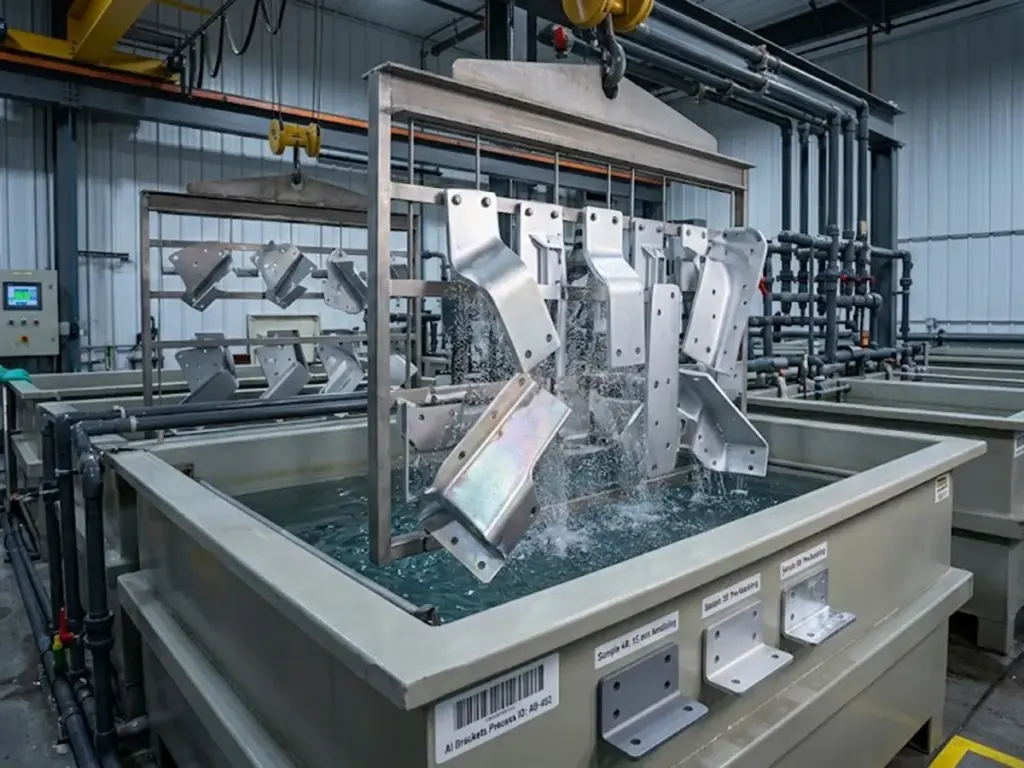
L'anodizzazione fa funzionare la staffa di alluminio come anodo in un elettrolita acido, convertendo la superficie in un ossido poroso esagonale su un sottile strato barriera.
- Tipo II (acido solforico): 0.1–1,0 milioni tipico
- Tipo III (pelo duro): 0.5–4,5 milioni, funzionare con una densità di corrente più elevata e una temperatura del bagno più bassa
Nota unidimensionale per attacchi lavorati: circa la metà del film cresce verso l'esterno, che sposta le tolleranze di fori e asole.
La chimica della sigillatura è la vera barriera alla corrosione
Una pellicola anodica non sigillata è una spugna a pori aperti. La prestazione alla corrosione viene creata nella fase di sigillatura, non la fase di anodizzazione.
| Metodo del sigillo | Meccanismo | Resistenza relativa al cloruro |
| Idrotermale (acqua bollente/vapore) | Idratazione boemite | Bene |
| Acetato di nichel (media temperatura) | Ostruzione dei pori | Molto bene |
| Dicromato | Inibizione del cromato | Più alto (limitato dal punto di vista ambientale) |
Una richiesta che menziona Tipo e Classe ma non menziona il sigillo è funzionalmente incompleta per il servizio esposto al cloruro.
Dove le barriere passive crollano, senza autoguarigione
Gli ioni cloruro avviano la vaiolatura nei pori, inclusioni, e microfessure in condizioni di umidità prolungata. La corrosione interstiziale si sviluppa nelle interfacce tra staffa e montante, facce della rondella, e zone di contatto con fascetta dove l'ossigeno si esaurisce e il cloruro si concentra.
L'asimmetria decisiva: uno strato anodico graffiato o forato espone permanentemente l'alluminio nudo. Non esiste un meccanismo galvanico per compensare.
Decodifica delle specifiche di zincatura ASTM: A123 e A153
Le specifiche di zincatura ASTM assegnano lo spessore del rivestimento in base alla categoria del materiale e allo spessore dell'acciaio, non in base al nome del prodotto. I revisori devono verificare il voto, non solo standard.
ASTM A123 Categorie di materiali e gradi di rivestimento
La tabella seguente confronta i requisiti A123 in base allo spessore dell'acciaio, spessore medio minimo del rivestimento, e il peso approssimativo del rivestimento.
| Spessore dell'acciaio (Forme strutturali/piastra) | Grado di rivestimento | minimo. Media. Spessore | ca. Peso del rivestimento |
| ≥ 1/4 In. | Grado 100 | 3.9 mil (100 µm) | 2.3 once/piedi² |
| ≥ 3/16 A < 1/4 In. | Grado 75 | 3.0 mil (75 µm) | 1.75 once/piedi² |
| ≥ 1/8 A < 3/16 In. | Grado 65 | 2.6 mil (65 µm) | 1.5 once/piedi² |
| < 1/8 In. | Grado 45 | 1.8 mil (45 µm) | 1.0 once/piedi² |
Due figure di accettazione si confondono costantemente: media minima per il campione rispetto al minimo per ogni singola misurazione. Entrambi devono essere soddisfatti.
Classi ASTM A153 per hardware centrifugato
Bulloni, noci, Bulloni a U, rondelle, e i morsetti a fascia rientrano in A153, che specifica il peso del rivestimento per classe: la Classe C copre gli elementi di fissaggio 3/8 In. diametro (1.25 oz/ft² media), Coperture di classe D 3/8 In. e sotto (1.00 oz/ft² media). La centrifugazione consente minimi inferiori rispetto agli elementi strutturali.
Adattamento al filo: sovrapporre i dadi dopo la zincatura, non rimuovere mai il rivestimento dalle filettature dei bulloni. E osserva le richieste di standard misti: le staffe A123 assemblate con elementi di fissaggio non certificati rendono l'elemento di fissaggio il punto di fallimento.
Riferimenti incrociati AASHTO e linguaggio hardware dei segni approvato DOT
La maggior parte delle specifiche statali citano le designazioni AASHTO:
AASHTO M111 ↔ ASTM A123
AASHTO M232 ↔ ASTM A153
Un pacchetto completo fa riferimento anche all'A385 (progetto), A780 (riparazione), A143 (infragilimento), e A239 (Test di uniformità della precece). Lingua dell'elemento pubblicitario del modello:
“Le staffe dovranno essere zincate a caldo dopo la fabbricazione secondo ASTM A123/A123M-17, Grado 100 minimo, verificato secondo ASTM E376. Elementi di fissaggio conformi a ASTM A153/A153M, Classe C. Certificato dello zincatore attestante lo spessore misurato richiesto alla consegna.”
In qualità di produttore di segnali stradali completamente integrato che gestisce una catena di fornitura end-to-end, dal substrato grezzo e rivestimento fino alla stampa personalizzata, rilasciamo la certificazione del rivestimento con il lotto, non settimane dopo. Richiedi subito i campioni!
Lettura dei richiami MIL-A-8625 sulle staffe per segnaletica in alluminio anodizzato
Selezione del tipo e della classe per il servizio del cloruro esterno
MIL-A-8625F regola le staffe per segnaletica in alluminio anodizzato nelle specifiche statunitensi:
| Tipo | Elettrolita | Spessore tipico | Idoneità stradale esterna |
| IO / IB | Acido cromico | 0.02–0,1 mln | Povero (base verniciante/aerospaziale) |
| CIRCUITO INTEGRATO | Non cromico | Magro | Limitato |
| Ii | Acido solforico | 0.1–1,0 milioni | Accettabile se sigillato |
| Iii | Anodico duro | 0.5–4,5 milioni | Il migliore disponibile |
MIL-A-8625 richiede rivestimenti sigillati per resistere 336 ore di nebbia salina neutra ASTM B117 con vaiolatura limitata a conteggi specificati.
Classe 1 vs. Classe 2: Il costo della corrosione del colorante
Classe 1 non è tinto; Classe 2 è tinto. I coloranti organici occupano il volume dei pori che altrimenti la sigillatura chiuderebbe, e i sistemi di tintura sulla ferramenta rivolta verso l'insegna sbiadiscono sotto i raggi UV. Un requisito estetico può tranquillamente degradare un requisito di corrosione.
La suite di test ASTM di supporto
| Metodo | Funzione |
| ASTM B244 | Spessore delle correnti parassite su un substrato non magnetico |
| ASTM B137 | Peso del rivestimento mediante stripping |
| ASTM B136 | Qualità della sigillatura antimacchia |
| ASTM B680 | Qualità di tenuta alla dissoluzione acida |
Un test di tenuta superato prevede una resistenza al cloruro migliore del solo spessore. Si noti inoltre che l'anodizzazione produce un certificato di conformità del processore, non un MTR basato sul calore: la tracciabilità dei lotti funziona diversamente.
Conciliare le ore di nebbia salina con le prestazioni sul campo
Risultati ASTM B117 e relativi limiti di correlazione
La tabella seguente mette a confronto i sistemi di rivestimento in base allo standard applicabile, spessore, riportato prestazioni B117, e modalità di guasto osservata.
| Sistema | Standard | Spessore | B117 Ore | Modalità di fallimento |
| Tipo II, sigillato | MIL-A-8625 | 0.7 mil | 336+ | Vaiolature localizzate |
| Tipo III, sigillato | MIL-A-8625 | 2.0 mil | 336–1.000 | Vaiolatura nei siti danneggiati |
| Grado HDG 100 | ASTM A123 | 3.9 mil | 1,000+ | Perdita uniforme di zinco |
| Duplex (HDG + polvere) | A123 + rivestimento | 3.9 mil + 3 mil | 3,000+ | Il rivestimento striscia sullo scriba |
Test ciclici per corridoi salamoia e gelo-disgelo
Per corridoi C4/C5, richiedere dati ciclici — ASTM G85 Allegato A5 (nebbia ciclica di elettrolita diluito), SAE J2334 (ciclismo della salamoia nel settore automobilistico), o ASTM D5894 (UV/condensa con nebbia). Valuta il creep dello scriba, attacco di bordo, corrosione della rientranza degli elementi di fissaggio, e sottoquotazione. Effettuare un controllo incrociato con AASHTO NTPEP o elenchi di valutazione dei prodotti statali.
Dai Mil agli Anni: Calcolo del tempo necessario alla prima manutenzione
Tassi di consumo di zinco secondo ISO 9223 la categoria fornisce un numero di vita utile difendibile:
| Categoria | Ambiente | Tasso di perdita di zinco | Grado 100 Vita |
| C2 | Rurale | 0.1–0,7 µm/anno | 140+ anni |
| C3 | Urbano | 0.7–2,1 µm/anno | 48–140 anni |
| C4 | Industriale/salamoia | 2.1–4,2 µm/anno | 24–48 anni |
| C5 | Marino | 4.2–8,4 µm/anno | 12–24 anni |
Dividi lo spessore del rivestimento in base al tasso di corrosione: è il momento della prima manutenzione (5% ruggine del substrato). L'alluminio anodizzato non offre una curva equivalente, perché il degrado è una probabilità di vaiolatura localizzata dominata dalla storia dei danni, non un tasso di diradamento uniforme.
Il punto per la pianificazione delle ispezioni: i sistemi sacrificali falliscono gradualmente e in modo prevedibile; i sistemi di barriera falliscono localmente e bruscamente.
Ispezione, Revisione della certificazione, e protocolli di riparazione sul campo
Verifica dello spessore del rivestimento alla consegna (5 Passi)
- Selezionare il calibro corretto: flusso magnetico secondo ASTM E376 per zinco su acciaio; correnti parassite secondo ASTM B244 per pellicola anodica su alluminio.
- Calibrare rispetto agli standard di riferimento certificati prima di ogni lotto.
- Prendere le letture richieste per articolo di prova e mediarle in un risultato del campione secondo A123 §6.
- Definire il lotto e la dimensione del campione in base alle regole di campionamento A123.
- Supplemento con A239 Valutazione dell'uniformità e dell'adesione di Preece dove specificato.
Cosa contiene un pacchetto di certificazione difendibile
Percorso galvanizzato: numero di calore e chimica dell'acciaio, tracciabilità della fabbricazione, certificato dello zincatore attestante il grado A123 o la classe A153, dati sullo spessore misurato, analisi del bagno bollitore ove richiesto, e l'anno di revisione delle specifiche.
Percorso anodizzato: ID della lega e della tempra, certificato di conformità al tipo/classe MIL-A-8625, spessore misurato per B244, e risultati documentati sulla qualità della tenuta secondo B136 o B680.
Viene spiegato come queste certificazioni vengono generate sul campo la nostra guida dettagliata sulla fabbricazione degli attacchi e sul controllo qualità.
Danno sul campo: Riparazione ASTM A780 rispetto a. la pellicola non ripristinabile
ASTM A780 autorizza tre percorsi di riparazione per staffe segnaletiche zincate — vernice ricca di zinco, saldatura di zinco, e spruzzo termico - con requisiti di preparazione della superficie e spessore, e limiti di area per regione danneggiata.
Le staffe anodizzate non hanno equivalenti. La pellicola non può essere rigenerata sul campo; il ritocco è limitato ai rivestimenti organici che non ripristinano né la barriera né la certificazione. Non specificare lo stoccaggio in contenitori umidi e il taglio sul campo post-rivestimento per entrambi i sistemi.
Abbinamento del sistema di rivestimento al corridoio
Prevenzione dell'accoppiamento galvanico negli assemblaggi di metalli misti
La coppia appare costantemente: staffe in alluminio anodizzato fissate con viteria in acciaio zincato, o montato contro pali e fasce zincati.
Mitigare con rondelle e boccole di isolamento dielettrico, sigillante sulle facce di contatto, e consapevolezza del rapporto d'area: un piccolo anodo contro un grande catodo è la configurazione pericolosa. Il dettaglio che manca alla maggior parte degli ingegneri: percorsi di drenaggio che trasportano il deflusso da un metallo a un altro attacco concentrato a valle del giunto.
Una matrice di selezione basata sul corridoio
| Profilo di esposizione | Categoria ISO | Sistema consigliato | Dati richiesti | Intervallo di ispezione |
| Spruzzi di salamoia della cintura di neve | C4-C5 | Grado HDG 100 o duplex | Ciclico + spessore | 5 anni |
| Marina costiera | C5-CX | HDG duplex | G85A5 | 3 anni |
| Entroterra arido | C2-C3 | Anodizzazione sigillata di tipo II/III | B117 + prova di tenuta | 7 anni |
| Urbano ad alto abbattimento | C3-C4 | HDG (tolleranza al danno) | Protocollo A780 | 5 anni |
La salamoia pesante e gli spruzzi costieri favoriscono le staffe dei segnali resistenti alla corrosione costruite su zincatura sacrificale, perché domina la tolleranza al danno. Basso contenuto di cloruro, le installazioni sensibili all'aspetto sono quelle in cui l'alluminio anodizzato adeguatamente sigillato offre buone prestazioni.
Scrivere requisiti che sopravvivono alla revisione degli appalti
Specificare lo standard più l'anno di revisione, grado/classe, spessore minimo e medio, requisito di sigillatura, metodi di prova, piano di campionamento, e le comunicazioni richieste. Aggiungere una clausola di accettazione per danni al rivestimento che faccia riferimento ad A780 in modo che le controversie sul campo siano pre-risolte.
La chimica del rivestimento è uno strato di una decisione più ampia. Per l'ingegneria completa, durata, e il quadro di conformità alle spalle scegliendo il materiale della staffa giusto per il tuo programma, inizia con la guida definitiva.
Domande frequenti
Perché i segnali stradali zincati si corrodono prima sulla linea di terra?
La linea di terra concentra l'umidità, gradienti di ossigeno, e i cloruri hanno inondato il palo, creando una cella di aerazione differenziale che consuma lo zinco più velocemente dell'albero esposto. Specificare gradi di rivestimento più pesanti o protezione supplementare di sottogrado per questa zona.
I fori praticati sul campo richiedono una nuova zincatura?
I piccoli fori praticati sono protetti da zinchi da 1/8–1/4 pollici. potere di lancio sacrificale e non necessita di riparazione. Tagli più grandi, estremità bruciate, o le saldature sul campo espongono l'acciaio oltre tale intervallo e devono essere riparate secondo ASTM A780.
I pali telescopici rotondi si corrodono più velocemente dei pali perforati piatti?
La forma della sezione trasversale conta meno della gestione dell’acqua. I tubi telescopici quadrati e i canali perforati intrappolano la salamoia all'interno, quindi i fori di drenaggio e il design di ventilazione dell'A385 prevedono le prestazioni meglio della geometria.
La ruggine bianca è motivo di rifiuto?
La ruggine bianca è una macchia dovuta alla conservazione umida dello zinco senza esposizione alla CO₂, e generalmente non è una causa di rifiuto secondo ASTM A123, a condizione che lo spessore misurato soddisfi ancora il grado specificato quando verificato secondo ASTM E376.
Le staffe in alluminio anodizzato possono essere montate direttamente su pali zincati?
Possono, ma il contatto diretto in un ambiente cloruro crea una coppia galvanica che accelera l'attacco all'interfaccia. Specificare l'isolamento dielettrico, rivestimenti di fissaggio compatibili, e la direzione del deflusso nel dettaglio di montaggio.
Riferimenti
ASTM A123/A123M — Zinco (Zincato a caldo) Rivestimenti su prodotti in ferro e acciaio
ASTM A153/A153M — Rivestimento in zinco su ferramenta in ferro e acciaio
MIL-A-8625F — Rivestimenti anodici per alluminio e leghe di alluminio
ASTM B117 — Pratica per il funzionamento dell'apparecchio per la nebbia salina
ASTM A780/A780M — Riparazione di rivestimenti zincati a caldo danneggiati
ASTM G85 — Pratica per test in nebbia salina modificata
Centro nazionale informazioni sui minerali dell'USGS - Statistiche e informazioni sul sale