Perché l'ingombro dello storage è diventato una leva di profitto nascosta per gli appaltatori del traffico
Gli appaltatori di ingegneria del traffico tengono traccia ossessivamente di tre numeri: velocità di distribuzione, Conformità MUTCD, e il costo unitario per dispositivo. Raramente un parametro è sufficiente, ma distrugge silenziosamente il margine in ogni ciclo di lavoro. Questa metrica è l'ingombro di stoccaggio per dissuasore.
Il vero costo nascosto nell'inventario di ogni dissuasore
La media nazionale per gli Stati Uniti. raggiunta la rendita industriale $9.03 per piede quadrato all'anno all'inizio 2026 (Fonte: https://www.yardimatrix.com/blog/u-s-industrial-market-outlook-april-2026/). I mercati costieri come quello di Los Angeles costano dai 18 ai 22 dollari al metro quadrato. Ogni metro quadrato di spazio del cortile contenente fatture di inventario inattive per il controllo del traffico rispetto al P&L. Gli appaltatori raramente calcolano quella voce, ma i concorrenti che gestiscono inventari impilabili lo hanno già fatto.
Perché la geometria del dissuasore supera il materiale del dissuasore per le flotte mobili
Le installazioni permanenti richiedono specifiche del materiale. I montanti fissi in acciaio devono soddisfare le classificazioni anti-ram ASTM F2656. Per flotte mobili che eseguono cicli di distribuzione-ripristino-ridistribuzione, Tuttavia, la forma del dissuasore determina un costo annuale maggiore rispetto alla qualità del materiale. Dissuasori T-top vincere il concorso di geometria con un ampio margine.
Il problema della geometria: Perché i dissuasori cilindrici standard consumano lo spazio del magazzino
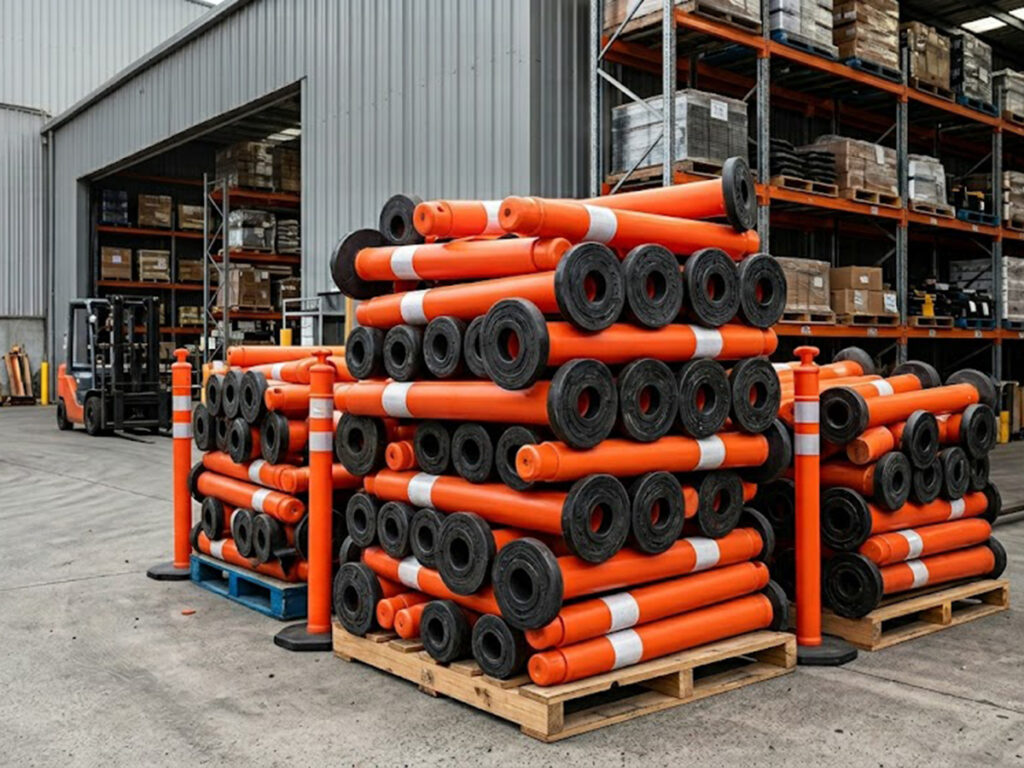
I dissuasori di traffico cilindrici standard comportano una limitazione strutturale intrinseca: la loro uniforme, il diametro rigido impedisce loro di annidarsi. Mentre un cilindro dritto in acciaio o in PVC spesso fornisce un ottimo allineamento temporaneo in cantiere, diventa incredibilmente inefficiente “maiale spaziale” nel momento in cui entra nel tuo magazzino o nel pianale del tuo camion.
Perché i pali cilindrici tradizionali non possono essere annidati
A differenza dei coni di sicurezza rastremati, i pali cilindrici standard condividono una realtà geometrica punitiva: non possono occupare lo stesso spazio verticale. Quando impilati o disposti orizzontalmente, il loro volume scala linearmente con il conteggio delle unità. Perché non possono nidificare l'uno nell'altro, una flotta di pali cilindrici standard immagazzinati è essenzialmente una raccolta di tubi cavi, il che significa che stai pagando un affitto commerciale premium per immagazzinare aria vuota.
IL 45 mq. Piede. Controllo della realtà dello storage
Per mettere questo in prospettiva, diamo un'occhiata a una modesta flotta di 50 standard, 42-perni cilindrici non annidabili in pollici (dotato di basi in gomma standard da 12 libbre). Quando pallettizzati fianco a fianco utilizzando lo standard 48″x40″ pallet (senza impilamento verticale per evitare instabilità), occupano circa 45 Sq. ft. di preziosa superficie di magazzino.
Nota: Questo calcolo presuppone 2.5 posizioni dei pallet standard a circa 18 piedi quadrati ciascuno, tenendo conto del necessario divario di manovra.
All'attuale media nazionale degli immobili commerciali $9.03 per piede quadrato, la ripartizione finanziaria si presenta così:
- Costo di trasporto annuale (50 Unità): All'incirca $406 solo per sedermi nel tuo giardino.
- IL “Spazio morto” Tassare: Perché non nidificano, stai massimizzando l'ingombro del pavimento molto prima di raggiungere il potenziale delle scaffalature verticali per pallet.
Costi cumulativi in una flotta stradale attiva
Per un appaltatore di ingegneria del traffico di medie dimensioni che gestisce una flotta di 1,000 dissuasori standard, i conti diventano brutti velocemente.
- Orma: Conservazione 1,000 le unità non impilabili bruciano all'incirca 900 Sq. ft. di spazio cortile o magazzino.
- Base sopraelevata: Quell'impronta si prosciuga $8,127 annualmente in costi di mantenimento di base puri.
- Il vero totale (Tripla rete): Una volta preso in considerazione Triple-Net (NNN) spese (tasse sulla proprietà, assicurazione, e manutenzione delle aree comuni), il tuo reale costo annuale di stoccaggio supera gli 11.000 dollari, il tutto prima ancora che un singolo dissuasore colpisca un camion.
Questo drenaggio nascosto di beni immobili è l'esatto costo operativo di base che dissuasori t-top sono progettati per eliminare.
Come l'impilabilità T-Top riscrive i calcoli dello storage
La geometria affusolata di premium dissuasori t-top ribalta completamente lo svantaggio dello spazio cilindrico. Invece di competere per lo spazio limitato del magazzino, ogni unità nidifica sopra quella sottostante, telescopico in un unico, compatto, e colonna altamente stabile.
Il principio ingegneristico dello stelo conico
Il segreto sta nello stampaggio specializzato dello stelo flessibile. Un dissuasore t-top impilabile ad alte prestazioni è caratterizzato da una cavità, profilo affusolato che si allarga leggermente alla base e si restringe verso il gambo superiore, sormontato dal suo caratteristico ampio cappuccio ergonomico.
Quando conservato, l'ampia base dell'unità superiore scorre agevolmente sulla testa a T dell'unità inferiore. Gli steli si annidano strettamente insieme finché le loro basi non si incastrano. Questa tolleranza ingegneristica consente un singolo stack di 50 unità per ottenere un rapporto di altezza pila densa di 50:1 (unità al profilo verticale finale), compressione 50 unità all'incirca nello stesso profilo di stoccaggio verticale di 12 pali cilindrici tradizionali.
Nota: Questo salvaspazio, il profilo di nidificazione altamente flessibile è un vantaggio principale della scelta di polimeri di alta qualità rispetto ai metalli rigidi. Per comprendere l'impatto della selezione dei materiali sulla logistica e sulla sicurezza del sito, consulta la nostra guida su I casi d'uso giusti per i dissuasori stradali in plastica (E quando passare a Steel).
IL 86% Riduzione dell'impronta, Documentato
I numeri parlano direttamente dei profitti di un appaltatore. Cinquanta annidati dissuasori t-top occupare circa 6 Sq. ft. del magazzino o del cortile, rispetto a 45 Sq. ft. per l'equivalente cilindrico non annidato.
Questo design supportato dalla fisica offre un 86% riduzione dell'ingombro di storage per un numero di unità identico. Riformulato in termini operativi: un magazzino standard da 24 pallet che in precedenza sembrava esaurito ora può contenere comodamente circa sei volte l'inventario di sicurezza.
Impilamento verticale, Densità dei pallet, e transito della flotta
Questo design di nidificazione autocentrante fa molto di più che liberare spazio nel magazzino; spinge il tuo inventario verso l'alto in modo sicuro. Gli steli ad incastro allineano automaticamente il baricentro, eliminando i rischi di oscillazione e ribaltamento comuni quando si tenta di impilare i pali del delineatore standard.
Per il Responsabile della Sicurezza di Cantiere attivo, questa stabilità verticale si traduce direttamente in una migliore logistica della flotta:
- Carrello elevatore & Efficienza dei pallet: Un singolo pallet standard può contenere un blocco denso di 60 A 80 T-Top annidati, rendendo l'avvolgimento dei pallet e il trasporto con carrelli elevatori veloce e sicuro.
- Inversione di marcia del camion: Perché la densità dei pallet è triplicata rispetto ai montanti fissi standard, il tuo equipaggio può trasportare più attrezzature di sicurezza in un minor numero di veicoli da trasporto, riducendo i viaggi di transito, carburante in testa, e tempi di distribuzione dimezzati.
Densità dei pallet e tasso di rotazione del trasporto della flotta
L’impilabilità non è solo una vittoria in magazzino. Trasforma l'economia del carico del camion in ogni lavoro.
Benchmark sulla densità dei pallet
Un 48 normale″x40″ il pallet può contenere 60–80 t-top annidati contro solo 20–25 unità cilindriche standard. Circa 3× la densità dei pallet si traduce direttamente in 3× unità per camion.
| Configurazione | Unità per pallet | Spazio sul pavimento (50 unità) |
| Dissuasori cilindrici standard | 20–25 | ~45 mq. ft. |
| Nidificato dissuasori t-top | 60–80 | ~6 mq. ft. |
Fonte: Specifiche della geometria di nidificazione standard del settore, riferimenti incrociati con i dati relativi al carico dei pallet dei dispositivi di controllo del traffico pubblicati dal National Work Zone Safety Information Clearinghouse, https://workzonesafety.org/
Meno viaggi, Tempi di consegna più rapidi
Una distribuzione di 200 unità scende da 8-10 pallet standard fino a 3 pallet per t-top. Ciò converte l’organizzazione di più camion in una spedizione a camion singolo. Il tasso di turnaround del trasporto della flotta raddoppia effettivamente nel ciclo di distribuzione-recupero-ridistribuzione.
Carburante, Ore di guida, e matematica delle ore di servizio DOT
dell'ATRI 2025 l'analisi operativa ha fissato il costo medio di trasporto su strada $2.26 per mile. Le spese non legate al carburante hanno raggiunto un record $1.78 per miglio: il più alto mai registrato. Ogni viaggio in camion eliminato rimuove 100% di tali costi e libera ore di guida rispetto ai limiti HOS FMCSA. Per gli appaltatori ad alta frequenza, queste unità nidificate restituiscono le ore fatturabili consumate dall'inventario cilindrico. Gli equipaggi che specificano dispositivi di controllo del traffico nelle zone di lavoro conformi al MUTCD dovrebbero valutare questo moltiplicatore logistico con la stessa attenzione del grado di rivestimento riflettente.
Proprietà del costo totale (TCO): Dissuasori T-Top vs. Sistemi fissi in acciaio
Spesso emerge un'obiezione comune da parte degli uffici acquisti: “I pali in acciaio durano più a lungo, quindi non dovremmo semplicemente investire in una flotta di acciaio permanente o pieghevole?”
Mentre l’acciaio di grosso spessore vince sulla pura resistenza agli urti fisici, tale argomento crolla completamente se applicato alla gestione temporanea del traffico. Quando si valuta il costo totale di proprietà (TCO), l'ingegneria finanziaria alla base di una flotta di dissuasori t-top impilabili di alta qualità offre un ROI molto più variabile per le zone di lavoro attive.
Il nascosto “Spese generali fuori servizio” di pali non impilabili
La sicurezza perimetrale permanente e la protezione anti-ramificazione degli edifici richiedono assolutamente l'acciaio ancorato. Tali installazioni non ritornano mai nel tuo deposito, il che significa che le impronte del magazzino sono irrilevanti per il costo del loro ciclo di vita.
Tuttavia, mobile, i progetti di ingegneria civile multifase raccontano una storia completamente diversa. Se la tua flotta di sicurezza è schierata 30% dell'anno e rimane in deposito per l'altro 70%, l'acciaio non annidato o i pali rigidi pesanti generano spese generali continue fuori servizio. Nel corso di una durata di servizio standard di 5 anni, l'affitto degli immobili commerciali che paghi per immagazzinare quelli vuoti, i tubi non impilabili possono effettivamente superare il costo originale dell'hardware stesso.
La realtà per gli appaltatori: L’acciaio rigido rimasto inattivo nel tuo giardino sta prosciugando attivamente i margini di profitto del tuo progetto.
Perché i dissuasori T-Top offrono un ROI operativo senza pari
Qualsiasi distribuzione temporanea, mobile, o ad alto ciclo è l'habitat nativo del dissuasore di sicurezza t-top. Se i tuoi equipaggi stanno gestendo chiusure rapide delle corsie, tagli di utilità, operazioni di pavimentazione, striatura notturna, o parcheggio per eventi, il mercato dei dissuasori t top favorisce le apparecchiature che si muovono velocemente.
Quando guardi l'equazione TCO a più variabili, dissuasori t-top inclina la bilancia decisamente a tuo favore:
- Tariffe di magazzino drasticamente inferiori: Trasformare un'importante spesa generale in un 86% vittoria salvaspazio.
- Tempi di consegna della logistica: Consentire il caricamento dei gestori della sicurezza del sito, distribuire, recuperare, e riimpilare centinaia di unità in una frazione delle ore di manodopera richieste da bulky, sistemi di barriere non annidati.
Per gli appaltatori che attualmente cercano dissuasori t top premium in vendita, l'analisi di questo costo completo dello stile di vita garantisce che il mix di risorse delle attrezzature protegga sia il personale stradale che i profitti.
Approvvigionamento su larga scala: Cosa richiedere a un produttore di dissuasori T-Top
Il caso educativo è una cosa. I criteri di approvvigionamento sono un altro. Un serio dissuasori t-top il produttore documenta le prestazioni anziché commercializzarle.
Lista di controllo delle specifiche per l'approvvigionamento di dissuasori T-Top in grandi quantità
Acquirenti che valutano l'ingrosso dissuasori t-top dovrebbe richiedere quanto segue:
- Mescola polimerica stabilizzata ai raggi UV (Miscele HDPE o LDPE classificate per 5-7 anni di servizio all'aperto)
- Conformità al rivestimento riflettente MUTCD: ASTM Tipo III, IV, o superiore per la visibilità durante il lavoro notturno
- MASH verificato (Manuale per la valutazione dell'hardware di sicurezza) Rapporto di prova: Gli acquirenti devono richiedere la convalida da parte di un'agenzia di test di terze parti della resistenza all'urto e delle caratteristiche di autoripristino dell'unità in caso di impatti di veicoli a velocità autostradale standard, garantendo la vera conformità al MUTCD.
- Mescola polimerica stabilizzata ai raggi UV (Miscele HDPE o LDPE classificate per 5-7 anni di servizio all'aperto)
Valutazione di un produttore di dissuasori T-Top per programmi di vendita all'ingrosso
Le domande da porre a qualsiasi fornitore all'ingrosso di dissuasori t top includono:
- Tempi di consegna per ordini di volumi in container
- Flessibilità MOQ per appalti basati su progetti
- Configurazioni personalizzate di nastri riflettenti e opzioni di bande colorate per il branding della flotta
- Documentazione dei dati relativi alla densità dei pallet e alla riduzione dell'ingombro
Qualsiasi offerta del fornitore dissuasori t-top per la vendita su larga scala dovrebbe pubblicare queste specifiche senza esitazione.
Leggere il mercato dei dissuasori T-Top prima di acquistare
Il mercato dei dissuasori t top si è consolidato attorno a design impilabili proprio perché i calcoli logistici sono innegabili. I prescrittori dovrebbero dare priorità alla geometria di impilamento verificata rispetto al prezzo unitario. UN 5% il risparmio sul prezzo unitario scompare rispetto a a 30% differenziale dei costi di archiviazione entro il primo anno di implementazione.
Distribuzione-Ripristino-Ridistribuzione: Come l'impilabilità si combina nei cicli di lavoro
L’intero caso si cristallizza attorno al flusso di lavoro operativo in cui vivono effettivamente gli appaltatori.
Giorno 1 — Distribuzione più rapida dal camion alla corsia
Una maggiore densità dei pallet significa meno pallet da abbattere durante l'allestimento. Gli operatori abbassano i coni più velocemente e riducono il superamento delle ore fatturabili dovute alla chiusura delle corsie. Lo mostrano i dati FHWA 850 morti nella zona di lavoro in 2024, con l’eccesso di velocità che tiene conto di una quota crescente di incidenti mortali. Una configurazione più rapida consente una maggiore precisione, canalizzazione più sicura nelle prime fasi del ciclo di lavoro.
Giorno 30 — Recupero e re-stack più rapidi
La geometria autocentrante consente alle squadre di recupero di ricollocare le unità in pile pronte per il trasporto sul campo. IL “pile sciolte e poi resort” il passo nel cortile scompare. I tempi di recupero si riducono, e il lavoro in cantiere viene liberato per altri compiti.
Giorno 31+ — Riduzione dei costi di inventario inattivo fino al lavoro successivo
IL 86% la riduzione dell'impronta continua a ridurre i costi di stoccaggio ogni giorno in cui la flotta si trova tra una mobilitazione e l'altra. Per gli appaltatori che eseguono 12-20 cicli di lavoro all'anno, i soli risparmi di stoccaggio spesso superano la voce dissuasore nel budget capex annuale. Specificatori che confrontano l'intero panorama dei dispositivi: da dissuasori t-top dai delineatori flessibili ai pali fissi in acciaio: è necessario rivedere il confronto completo tra acquirenti di tipi e specifiche di dissuasori di traffico per mappare ciascuna opzione rispetto ai modelli di distribuzione effettivi.
Rendere l'impilabilità la vostra strategia logistica predefinita
Il calcolo è semplice, e il verdetto è decisivo. 86% meno spazio sul pavimento. 3× densità del pallet. Raddoppio dei tempi di trasporto. Interrompere l'approvvigionamento di dissuasori come elemento pubblicitario a prezzo unitario. Inizia a procurarteli come moltiplicatore logistico.
Appaltatori che valutano la massa dissuasori t-top o all'ingrosso dissuasori t-top i programmi dovrebbero richiedere specifiche di nidificazione documentate e dati sulla densità dei pallet da qualsiasi potenziale cliente dissuasori t-top produttore prima di firmare un ordine di acquisto. Il fornitore che pubblica numeri verificati è il fornitore che ha costruito il proprio prodotto attorno alla realtà logistica. Chiunque si occupi dei dati vende un cilindro con un adesivo diverso.
Domande frequenti sui dissuasori T-Top e sull'impilabilità
Quanti dissuasori T-Top si adattano a un pallet standard?
Un 48 normale″x40″ il pallet in genere contiene 60-80 t-top annidati, rispetto a 20-25 unità cilindriche standard. Circa 3 volte la densità per posizione pallet.
Sono t-top impilabili conformi MUTCD per le zone di lavoro?
SÌ. Unità specificate con rivestimento riflettente ASTM Tipo III o superiore e altezza adeguata (tipicamente 28″–42″) soddisfare i requisiti del capitolo 6F del MUTCD per la canalizzazione dei dispositivi. Verifica sempre la documentazione di conformità del modello specifico rispetto agli standard attuali del tuo DOT.
Quanto spazio in magazzino riesco effettivamente a risparmiare con i dissuasori T-Top?
Il punto di riferimento del settore si trova a 86% riduzione dell’impronta: 50 le unità nidificate occupano all'incirca 6 Sq. ft. contro 45 Sq. ft. per equivalenti cilindrici non annidati. Al 2026 affitto medio nazionale di $ 9,03/SF, ciò si traduce in risparmi annuali significativi per una flotta di 1.000 unità.
Quando dovrei scegliere pali fissi in acciaio rispetto ai T-Top per uso mobile?
Scegli montanti in acciaio fissi o pieghevoli per installazioni permanenti che richiedono protezione anti-ram secondo ASTM F2656/F3016, sicurezza perimetrale, o difesa della facciata. Scegli le magliette per qualsiasi temporaneo, mobile, o distribuzione a ciclo elevato in cui le unità ritornano in magazzino tra un lavoro e l'altro.
Cosa devo cercare quando acquisto dissuasori T-Top sfusi da un produttore?
Verifica tre elementi: specifiche pubblicate sull'altezza dello stack di nidificazione, Polimero stabilizzato ai raggi UV con durata di servizio all'aperto documentata, e grado di rivestimento riflettente abbinato alla classe MUTCD del tuo progetto. Richiedi conferme della densità dei pallet campione prima di impegnarti nei volumi all'ingrosso.
I t-top riducono i costi di manodopera nei cantieri?
SÌ. La parte superiore rastremata autocentrante semplifica le operazioni di accumulo e riimpilamento dei pallet. Le squadre sul campo segnalano in genere tempi di movimentazione per pallet più rapidi del 40-60% rispetto all'inventario cilindrico sfuso. Questi risparmi si sommano ai cicli ad alta frequenza.
Riferimenti
- CommercialCafe — aprile 2026 Rapporto industriale nazionale.
- ReadySpaces — Prezzi dello spazio di magazzino 2026: Tariffe regionali & Tendenze.
- ATSSA / FHWA— Nuove statistiche mostrano un calo delle vittime nelle zone di lavoro, aprile 2026.
- NOI. Ufficio di statistica del lavoro — Infortuni e malattie sul lavoro segnalati dal datore di lavoro 2023-2024 (rilasciato a gennaio 22, 2026).
- Istituto americano di ricerca sui trasporti – 2025 Analisi dei costi operativi dell'autotrasporto.
- FMCSA— Risorse per la sensibilizzazione sulla sicurezza nella zona di lavoro.
- FMCSA— Orari di servizio (CON) Regolamenti.