Perché la segnaletica di sicurezza sul posto di lavoro specifica del settore è più importante di quanto pensi
Gli Stati Uniti. registrato 5,070 infortuni mortali sul lavoro in 2024. Un operaio muore ogni 104 minuti da un incidente lavorativo, secondo il Bureau of Labor Statistics (Fonte: https://www.bls.gov/news.release/cfoi.nr0.htm). Questi numeri delineano la necessità di una strategia più intelligente segnaletica di sicurezza sul lavoro. I segnali generici falliscono in ambienti specializzati. Magazzini, raffinerie di petrolio, aule, e i cantieri comportano rischi distinti. Ciascuno richiede un approccio di segnaletica su misura.
Questa guida non funziona segnaletica di sicurezza sul lavoro requisiti da parte dell’industria. Si ispira agli Stati Uniti. regolamenti, specifiche tecniche, E 2024 dati dell'incidente. Responsabili della sicurezza, Ufficiali EHS, e i progettisti delle strutture troveranno parametri di riferimento pratici per ogni settore coperto.
Il costo reale della segnaletica inadeguata negli ambienti industriali
Il Consiglio nazionale per la sicurezza ha messo il 2024 costo degli infortuni sul lavoro a $181.4 miliardi. I costi medi degli infortuni consultati dal medico $48,000. Una singola morte sul posto di lavoro costa $1.54 milioni. (Fonte: https://injuryfacts.nsc.org/work/costs/work-injury-costs/)
Le sanzioni OSHA si aggiungono a questi costi. IL 2026 il massimo è pari a $16,550 per violazione grave e $165,514 per citazione intenzionale o ripetuta. (Fonte: https://www.osha.gov/memos/2025-01-07/2025-annual-adjustments-osha-civil-penalties) I lavoratori hanno perso 102 milioni di giorni per infortunio 2024. Povero segnaletica di sicurezza sul lavoro appare spesso nella catena di citazioni.
Il linguaggio universale della segnaletica di sicurezza: Standard, Colori & Categorie
Efficace segnaletica di sicurezza sul lavoro si basa su regole visive condivise. Tre standard dominano gli Stati Uniti. e la pratica internazionale.
| Standard | Giurisdizione | Focus chiave |
| OSHA 29 Cfr 1910.145 | Stati Uniti | Categorie di segni, colori, formulazione |
| ANSI Z535.2 | Stati Uniti | Parole di segnalazione, disposizione, leggibilità |
| Iso 7010 | Internazionale | Pittogrammi standardizzati |
| UE 92/58/CEE | Unione Europea | Segnaletica di sicurezza sul lavoro |
Fonte: https://www.osha.gov/laws-regs/regulations/standardnumber/1910/1910.145
ANSI Z535.2 classifica le parole di segnalazione in base alla gravità. PERICOLO segnala un rischio di morte immediato. ATTENZIONE segnala un rischio di lesioni gravi. ATTENZIONE indica rischi moderati. AVVISO trasmette informazioni di carattere generale.
Le quattro categorie funzionali della segnaletica di sicurezza
Moderno segnaletica di sicurezza sul lavoro rientra in quattro gruppi funzionali:
- Segni di divieto (cerchio rosso, barra diagonale): vietare azioni pericolose
- Segnali di avvertimento (triangolo giallo): segnalare i pericoli più avanti
- Segni obbligatori (cerchio blu): richiedono azioni specifiche come l’uso dei DPI
- Segni di condizione sicuri (quadrato verde): segnare le uscite, primo soccorso, e attrezzature di sicurezza
Segni di attrezzatura antincendio (rosso con pittogramma bianco) costituiscono una quinta categoria.
Specifiche della segnaletica industriale e commerciale
La segnaletica di sicurezza industriale e commerciale differisce in termini di durabilità dei materiali, gravità del pericolo, e carico normativo. La segnaletica industriale deve sopravvivere alle sostanze chimiche, vibrazione, e atmosfere esplosive. I segnali commerciali riguardano principalmente i codici di costruzione e l'accessibilità. Per una ripartizione dettagliata delle candidature, i lettori possono rivedere il differenza fondamentale tra segnaletica di sicurezza commerciale e industriale.
Segnaletica di sicurezza del magazzino: Traffico, Pedoni & Zone di stoccaggio
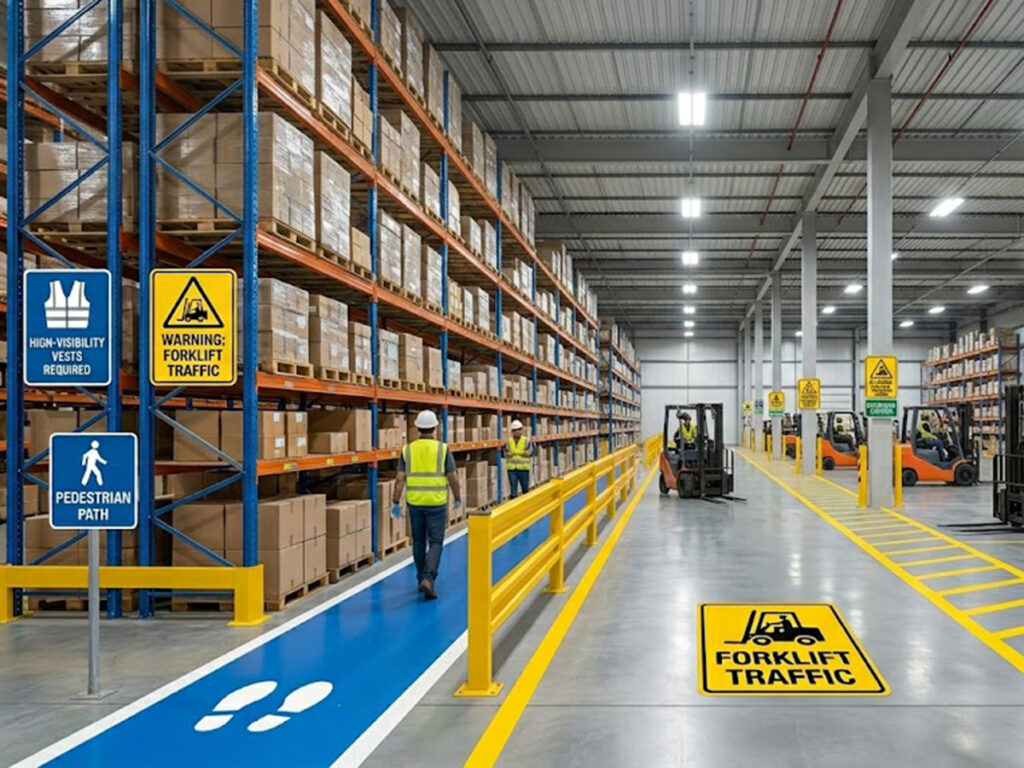
I magazzini si trovano nel cuore degli Stati Uniti. statistiche sugli infortuni. Registrate le occupazioni nel settore dei trasporti e dello spostamento di materiali 1,391 lesioni mortali a 2024 — il più alto tra tutti i gruppi professionali. Gran parte di quel pedaggio è stato causato dai carrelli elevatori (Fonte: https://www.bls.gov/news.release/pdf/cfoi.pdf). Hanno causato 84 decessi legati al lavoro in 2024 E 25,110 infortuni non mortali nel periodo 2023-2024. (Fonte: https://leyfacts.nsc.org/work/safety-topics/forklifts/) Gli impatti pedonali sono in cima alla lista delle cause. Una forte segnaletica di sicurezza del magazzino riduce questi incidenti.
Ottimizzazione del flusso del traffico e della segregazione pedonale
I passaggi pedonali devono essere chiaramente definiti e, dove fattibile, fisicamente separati dalle corsie dei carrelli elevatori. L'OSHA affronta questo problema di seguito 29 Cfr 1910.178(N)(1), che lo richiede “dovranno essere rispettate tutte le norme della circolazione stradale...[E] dovrà essere mantenuta una distanza di sicurezza.” Pur non imponendo tipologie di barriere specifiche, ciò implica un requisito normativo per una gestione efficace del traffico, spesso ottenuto attraverso una forte segregazione visiva e la marcatura del pavimento.
Il solo settore manifatturiero si è trovato ad affrontare 937 citazioni relative ai carrelli elevatori e $2.7 milioni di sanzioni quell'anno. Gli operatori del Regno Unito devono affrontare pressioni simili ai sensi dell’HSG136. L'approfondimento sulla segnaletica di sicurezza dei magazzini del Regno Unito e sull'ottimizzazione del flusso pedonale copre in dettaglio il livello normativo.
Posizionamento della segnaletica strategica di sicurezza nei corridoi, Dock di caricamento & Zone di scaffalature
Il posizionamento della segnaletica di sicurezza determina se i lavoratori vedono i pericoli in tempo. Mentre l'OSHA non specifica una larghezza numerica della linea del pavimento in 29 Cfr 1910.178, le migliori pratiche attuali del settore (facendo riferimento alle precedenti interpretazioni OSHA e agli standard ANSI) suggerisce che la larghezza della segnaletica sul pavimento dovrebbe essere almeno 4 pollici (101.6mm) per garantire la dominanza visiva. I segnali a livello degli occhi si trovano a 1,5-1,8 m dal pavimento. I segnali di spazio aereo sono montati a un'altezza minima di 2,1 m.
La segnaletica di sicurezza del centro logistico deve tenere conto anche degli angoli di visibilità e delle variazioni di illuminazione.
| Categoria dei segni | Guida al montaggio/posizionamento (Rif. ANSI Z535.2 / Fattori umani) | Intento di visibilità/sightline |
| Livello degli occhi dei pedoni | Montatura coerente con una visione ottimale all'altezza naturale degli occhi (ca.. 1.5–1,8 m); non deve essere ostruito. | Evita i punti ciechi; fondamentale per la separazione uomo-carrello. |
| Liquidazione dall'alto | Montare in corrispondenza o in prossimità del punto di pericolo più basso. Riferimento alla chiara visibilità dell'altezza per i PIT (Carrelli industriali a motore). | Previene le collisioni tra montanti e soppalchi, luci, o irrigatori. |
| Segnali sul pavimento | Applicato a livello del pavimento. Utilizzo del contrasto cromatico (rosso per pericolo, giallo per cautela) è critico. | Definisce corsie di traffico sicure; stabilisce confini chiari per i lavoratori in movimento. |
| Avvisi sul bordo del bacino | Applicato sulla superficie della banchina o sul pavimento immediatamente fino al bordo. Riferimento all'OSHA 1910.28(B)(1) requisiti per la protezione anticaduta. | Fondamentale per la prevenzione delle cadute sia dei lavoratori che dei PIT. |
Fonte: https://www.osha.gov/laws-regs/regulations/standardnumber/1910/1910.178
Per uno sguardo più approfondito all'analisi della visuale e alla segnaletica delle intersezioni, vedi la chiave suggerimenti per il posizionamento della segnaletica di sicurezza per magazzini e centri logistici.
Conservazione frigorifera & Ambienti logistici specializzati
La conservazione a freddo aggiunge domande sulla durabilità dei materiali. I segnali adesivi standard non funzionano a temperature inferiori a 0°C. Gli operatori devono specificare substrati in vinile resistenti alle basse temperature o in alluminio rigido. L'esposizione ai raggi UV degrada anche la segnaletica esterna della zona di carico entro 3-5 anni.
Industriale & Segnaletica per ambienti ad alto rischio: Olio, Gas, Chimico & Produzione
La segnaletica di sicurezza ambientale ad alto rischio deve affrontare le specifiche più severe in qualsiasi settore. Devono sopravvivere al caldo, prodotti chimici, vibrazione, e atmosfere esplosive. Il fallimento comporta gravi conseguenze.
Olio, Gas & Requisiti per la segnaletica dei siti petrolchimici
La segnaletica di sicurezza per petrolio e gas deve soddisfare l'API RP 1109 standard di marcatura e NFPA 704 valutazioni dei diamanti. Il sistema NFPA utilizza una scala da 0 a 4 in quattro categorie: salute, infiammabilità, instabilità, e pericoli speciali.
L'estrazione mineraria, estrazione, e il settore dell’estrazione di petrolio e gas hanno registrato un tasso di infortuni mortali eccezionalmente elevato nel 2024. Questi ambienti richiedono il più forte segnaletica di sicurezza sul lavoro gerarchie nel settore.
Stratificazione di segnali multipli in zone di pericolo complesse
Un unico segnale raramente copre pericoli complessi. Le aree di processo necessitano di gerarchie di segnaletica a più livelli. La guida su utilizzare in modo efficace più segnali di sicurezza nelle aree ad alto rischio spiega la spaziatura, gerarchia, e principi del carico cognitivo.
Stoccaggio chimico, Spazi confinati & Pericoli da arco elettrico
La segnaletica per lo stoccaggio dei prodotti chimici è conforme all'OSHA 29 Cfr 1910.1200 (Comunicazione del pericolo) - il secondo standard OSHA più citato nell'anno fiscale 2024. (6) I pittogrammi GHS identificano specifici pericoli chimici. NFPA 704 aree di stoccaggio del contrassegno del diamante esternamente.
La segnaletica relativa agli spazi confinati segue l'OSHA 29 Cfr 1910.146. Lo standard differenzia gli spazi con autorizzazione richiesta da quelli senza autorizzazione. Le etichette relative all'arco elettrico seguono lo standard NFPA 70E. Devono rivelare l'energia incidente e la categoria dei DPI.
Cantiere & Segnaletica di sicurezza della linea elettrica
Secondo l’ultimo Bureau of Labor Statistics (BLS) dati, lavoratori edili ed estrattivi registrati 1,032 vittime in 2024. Cade, incidenti colpiti, elettrocuzioni, e gli eventi coinvolti/intermedi costituiscono gli OSHA “Quattro fatali.” Robusto segnaletica di sicurezza sul lavoro affronta direttamente ciascuno di questi pericoli.
Rischi elettrici e segnaletica della linea elettrica aerea
I rischi elettrici richiedono distanze di approccio rigorose. Per lavori di pubblica utilità e di costruzione che coinvolgono gru, OSHA 29 Cfr 1926.1408 generalmente impone una distanza minima di 20 piedi per linee elettriche fino a 350kV, mentre le altre sottoparti, ad esempio 1926.959(UN), imporre una condizione al contorno di 10 piedi per i lavoratori e le apparecchiature che operano vicino a linee energizzate fino a 50 kV. La segnaletica delle linee elettriche deve indicare queste distanze minime di avvicinamento (PAZZO) chiaramente basato sull’utilizzo dell’attrezzatura specifica del sito. Tensioni più elevate richiedono buffer più ampi. La segnaletica delle linee elettriche deve delimitare chiaramente queste zone.
I recenti incidenti mortali hanno attirato una nuova attenzione sul lavoro dei servizi pubblici. L'analisi di segnali di pericolo elettrico e protezioni per i lavoratori edili delle linee elettriche esamina cosa è cambiato dopo quegli incidenti.
Segnali di costruzione temporanei e permanenti
I cantieri cambiano ogni giorno. I segnali devono tenere il passo. La segnaletica provvisoria segue la parte MUTCD 6 standard. Il rivestimento riflettente rientra nella norma ASTM D4956 (Tipi I-XI). Le pellicole di qualità superiore sono adatte a progetti di lunga durata.
PPE, Scavo & Segnaletica di lavoro in quota
La protezione anticaduta è stata nuovamente in cima alla lista dei prodotti più citati dall'OSHA durante l'anno fiscale 2025 con 5914 citazioni (Fonte: https://workcare.com/resources/article/osha-top-10-violations-2025/). I segnali di scavo segnalano le trincee 5 piedi di profondità secondo OSHA 1926.651. Seguono le indicazioni per l'accesso al ponteggio 29 Cfr 1926.451.
Scuola & Segnaletica di sicurezza per le strutture educative
La segnaletica di sicurezza scolastica deve affrontare sfide diverse. I bambini elaborano le informazioni visive in modo diverso dai lavoratori adulti. I progettisti devono trovare un equilibrio tra conformità e accessibilità. Efficace segnaletica di sicurezza sul lavoro nelle scuole protegge gli studenti, personale, e visitatori allo stesso modo.
Segnaletica di evacuazione antincendio e uscita di emergenza
NFPA 101 (Codice per la sicurezza della vita) regola la segnaletica di uscita negli ambienti scolastici. I segnali di uscita devono rimanere visibili durante l'interruzione di corrente. Insegne fotoluminescenti conformi UL 924 gli standard offrono un'opzione senza batteria. Colpi consigliati per la distanza di visione 100 piedini per lettere standard da 6 pollici.
Lezioni dagli aggiornamenti della segnaletica scolastica nel mondo reale
Le revisioni della segnaletica promosse dal Comune offrono casi di studio chiari. IL Programma di aggiornamento della segnaletica scolastica del West Dunbartonshire mostra come gli audit sistematici si traducono in vantaggi misurabili in termini di sicurezza. (Nota: questa risorsa offre contenuti in lingua araba.)
Campi da gioco, Laboratori e Spazi Educativi Specializzati
La segnaletica del laboratorio segue ANSI Z358.1 per docce di emergenza e stazioni lavaocchi. Le stazioni necessitano di 10 secondi di accesso da qualsiasi pericolo. I parchi gioco necessitano di segnaletica resistente all'usura che resista ai raggi UV e agli urti.
| Altezza della lettera | Distanza di visualizzazione | Caso d'uso |
| 1 pollice | 25 ft | Generale interno |
| 2 pollici | 50 ft | Corridoi del magazzino |
| 3 pollici | 75 ft | Banchine di carico |
| 4 pollici | 100 ft | Siti all'aperto |
Fonte: https://webstore.ansi.org/
Stratificazione dei segnali senza creare rumore visivo
Troppi segnali riducono l'attenzione su tutti loro. I responsabili EHS dovrebbero raggruppare i segnali correlati. Non dovrebbero conservare più di tre messaggi in ogni singola linea visiva. La ricerca sul carico cognitivo supporta questa regola.
Pianificazioni di audit e gestione del ciclo di vita dei segni
Le ispezioni visive trimestrali rilevano sbiadimenti e danni. Documento di audit formale annuale segnaletica di sicurezza sul lavoro conformità alle norme OSHA sulla tenuta dei registri. I trigger di sostituzione includono la perdita di colore, substrati rotti, modifiche normative, e modifiche del processo.
Costruire una conformità, Programma di segnaletica su misura per il settore
Efficace segnaletica di sicurezza sul lavoro tutela i lavoratori e riduce la responsabilità.
La correzione inizia con un audit specifico del settore. I leader della sicurezza dovrebbero mappare i pericoli per zona. Dovrebbero abbinare ciascun pericolo alla categoria di segnale corretta. Dovrebbero verificare le altezze di montaggio, Materiali, e distanze di visione.
La tua lista di controllo della segnaletica specifica del settore
- Magazzini: segregazione dei carrelli elevatori, limiti di scaffalatura, bordi del bacino
- Industriale: NFPA 704 diamanti, Pictogrammi GHS, etichette per arco elettrico
- Costruzione: protezione anticaduta, scavo, linee aeree
- Scuole: percorsi di uscita, sicurezza del laboratorio, pericoli del parco giochi
- Ad alto rischio: gerarchie stratificate, Zonizzazione ATEX, spazio ristretto
Quando avvalersi di una competenza specialistica in segnaletica
I siti complessi beneficiano di audit professionali. I fornitori specializzati possono certificare la conformità, consigliare i materiali, e documentare il tutto segnaletica di sicurezza sul lavoro sistema. I programmi di segnaletica personalizzata offrono un ROI misurabile in termini di sicurezza.
Domande frequenti sulla segnaletica di sicurezza sul lavoro
Quali sono le quattro principali categorie di segnaletica di sicurezza sul lavoro?
Le quattro categorie principali sono il proibizionismo (rosso), avvertimento (giallo), obbligatorio (blu), e condizione sicura (verde). Segni di attrezzatura antincendio (rosso con pittogramma bianco) costituiscono una quinta categoria funzionale. Iso 7010 e ANSI Z535.2 si organizzano entrambi segnaletica di sicurezza sul lavoro attorno a questi codici visivi.
In che modo i requisiti della segnaletica di sicurezza industriale differiscono dalla segnaletica commerciale?
La segnaletica di sicurezza industriale e commerciale differisce nella durata del materiale, gravità del pericolo, e carico normativo. I segnali industriali sono esposti a sostanze chimiche, vibrazione, e atmosfere esplosive. Seguono standard più severi come NFPA 704, ATEX, e APIRP 1109. I segnali commerciali riguardano solo i codici di costruzione e l'accessibilità.
Qual è l'altezza di montaggio corretta per la segnaletica di sicurezza in un magazzino??
La segnaletica pedonale a livello degli occhi è montata a 1,5-1,8 m dal pavimento. I segnali di spazio aereo si trovano ad un'altezza minima di 2,1 m. La segnaletica sul pavimento utilizza larghezze di 2-4 pollici secondo le raccomandazioni OSHA. Gli avvisi sul bordo della banchina sono montati sulla facciata della banchina stessa.
Sono ISO 7010 segnaletica di sicurezza obbligatoria negli Stati Uniti?
Iso 7010 non è obbligatorio negli Stati Uniti. L'OSHA accetta i progetti ANSI Z535.2 come standard principale per gli Stati Uniti. standard. Tuttavia, le aziende multinazionali spesso adottano l'ISO 7010 per coerenza. Entrambi gli standard condividono la maggior parte delle convenzioni sui pittogrammi, allentamento segnaletica di sicurezza sul lavoro conformità transfrontaliera.
Con quale frequenza è necessario ispezionare e sostituire la segnaletica di sicurezza sul posto di lavoro??
Le migliori pratiche richiedono ispezioni visive trimestrali e audit formali annuali. I trigger sostitutivi includono lo sbiadimento del colore, danni al substrato, aggiornamenti normativi, e cambiamenti di processo. I segnali esterni esposti ai raggi UV durano in genere 3-7 anni. Le insegne fotoluminescenti necessitano di cicli di ricarica ogni 30 minuti.
Quale segnaletica è necessaria per ambienti ad alto rischio come i siti di petrolio e gas?
La segnaletica di sicurezza per petrolio e gas deve coprire la normativa NFPA 704 diamanti, Pictogrammi GHS, Segnalatori di zona ATEX, segnali di spazio confinato, ed etichette per arco elettrico secondo NFPA 70E. API RP 1109 regola la marcatura degli impianti di gasdotti. Stratificato segnaletica di sicurezza sul lavoro le gerarchie gestiscono efficacemente le zone di pericolo complesse.
Riferimenti
OSHA— 29 Cfr 1910.145, Specifiche per Segnaletica e Targhetta Antinfortunistica.
OSHA— 29 Cfr 1910.146, Controlli ambientali generali
OSHA— 29 Cfr 1910.178, Movimentazione e stoccaggio dei materiali
OSHA— 29 Cfr 1910.1200, Comunicazione del pericolo.
ANSI Z535.2-2023: Segnaletica di sicurezza per struttura/ambiente