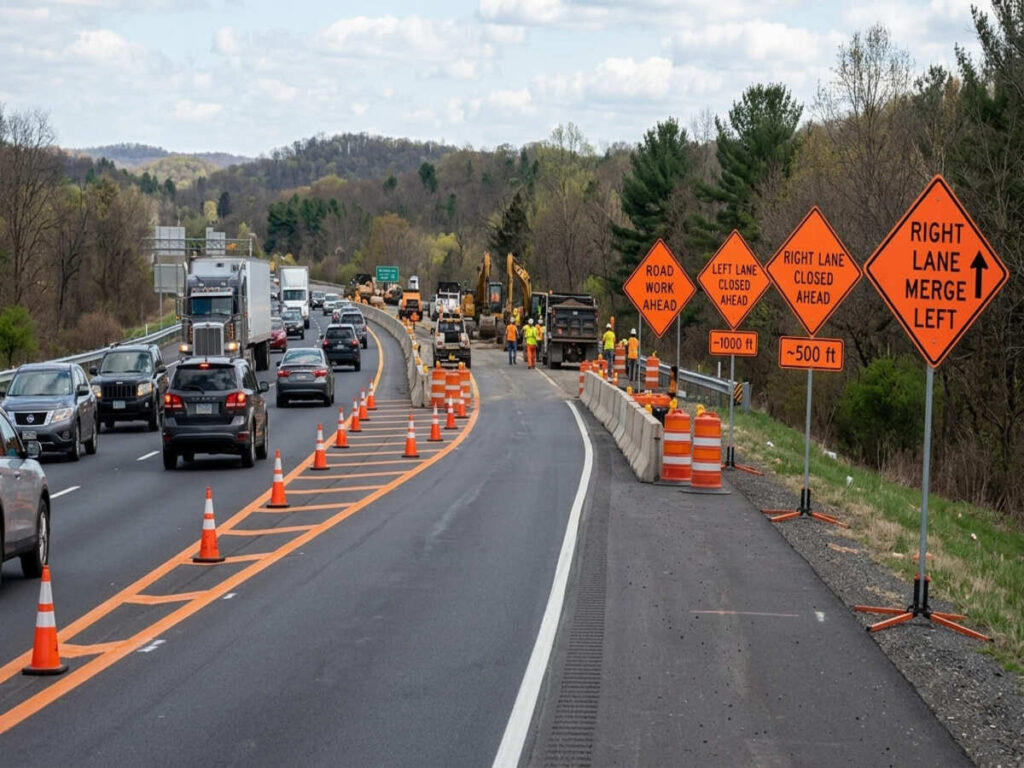
Warum der Speicherbedarf für Verkehrsunternehmen zu einem versteckten Gewinnhebel geworden ist
Verkehrsingenieure verfolgen besessen drei Zahlen: Einsatzgeschwindigkeit, MUTCD-Konformität, und Stückkosten pro Gerät. Eine Kennzahl schafft selten den Durchbruch – zerstört aber stillschweigend die Marge bei jedem Auftragszyklus. Diese Metrik ist der Speicherplatzbedarf pro Poller.
Die wirklichen versteckten Kosten in jedem Pollerbestand
Der nationale Durchschnitt für die USA. Industriemiete erreicht $9.03 pro Quadratfuß jährlich in früh 2026 (Quelle: https://www.yardimatrix.com/blog/u-s-industrial-market-outlook-april-2026/). Küstenmärkte wie Los Angeles kosten 18 bis 22 US-Dollar pro Quadratfuß. Auf jedem Quadratfuß der Hoffläche liegen Rechnungen für ungenutztes Verkehrskontrollinventar vor dem P&L. Auftragnehmer berechnen diesen Einzelposten selten, Aber Konkurrenten, die stapelbare Lagerbestände anbieten, haben dies bereits getan.
Warum die Pollergeometrie dem Pollermaterial für mobile Flotten überlegen ist
Permanente Installationen erfordern Materialspezifikationen. Feste Stahlpfosten müssen den ASTM F2656-Anti-Ramm-Bewertungen entsprechen. Für mobile Flotten mit Bereitstellungs-Wiederherstellungs-Neubereitstellungszyklen, Jedoch, Die Form des Pollers verursacht mehr jährliche Kosten als seine Materialqualität. T-Top-Poller Gewinnen Sie den Geometriewettbewerb mit großem Vorsprung.
Das Geometrieproblem: Warum standardmäßige zylindrische Poller den Platz im Lager verbrauchen
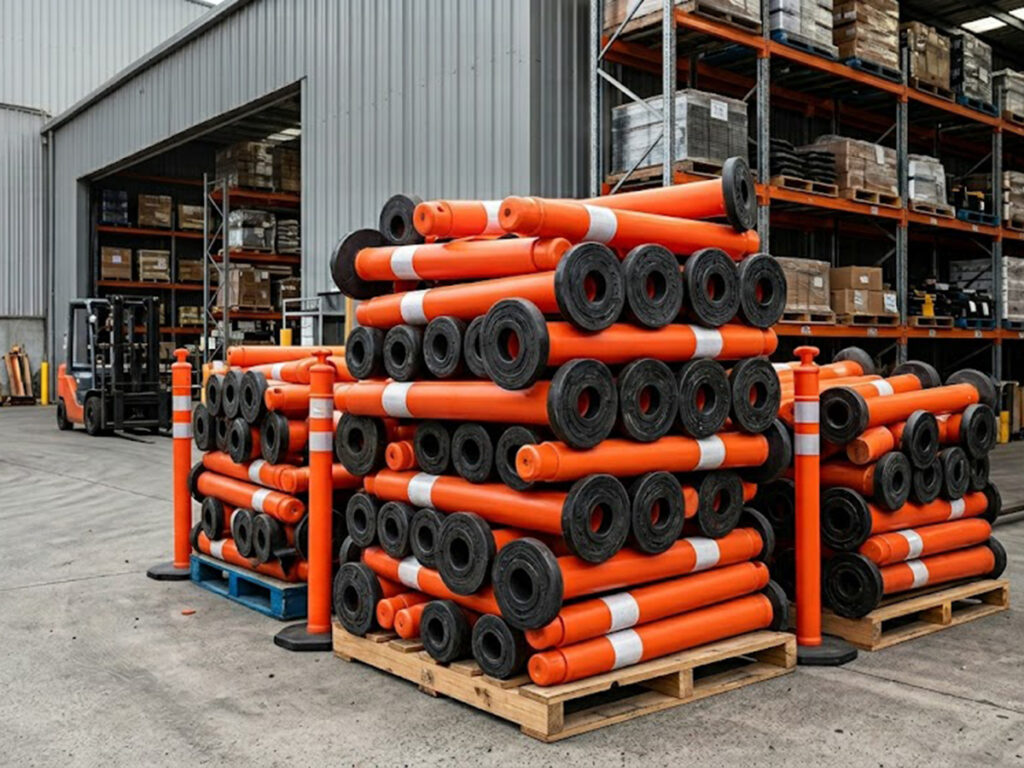
Standardmäßige zylindrische Verkehrspoller weisen inhärente strukturelle Einschränkungen auf: ihre Uniform, Der starre Durchmesser verhindert ein Verschachteln. Während ein gerader Stahl- oder dicker PVC-Zylinder eine hervorragende temporäre Ausrichtung vor Ort ermöglicht, es wird unglaublich ineffizient “Weltraumschwein” in dem Moment, in dem es Ihr Lager oder Ihre LKW-Ladefläche erreicht.
Warum sich herkömmliche zylindrische Pfosten nicht verschachteln lassen
Im Gegensatz zu konischen Sicherheitskegeln, Standard-Zylinderpfosten haben eine harte geometrische Realität gemeinsam: Sie können nicht denselben vertikalen Raum einnehmen. Beim Stapeln oder horizontalen Verlegen, Ihr Volumen skaliert linear mit der Anzahl der Einheiten. Weil sie nicht ineinander nisten können, Eine Flotte gelagerter zylindrischer Standardpfosten besteht im Wesentlichen aus einer Ansammlung hohler Rohre – was bedeutet, dass Sie für die Lagerung leerer Luft eine hohe Gewerbemiete zahlen.
Der 45 Quadrat. Ft. Speicher-Realitätscheck
Um das ins rechte Licht zu rücken, Schauen wir uns eine bescheidene Flotte an 50 Standard, 42-Zoll nicht ineinander steckbare zylindrische Pfosten (Ausgestattet mit standardmäßigen 12-Pfund-Gummibasen). Bei paralleler Palettierung mit Standard 48″x40″ Paletten (ohne vertikale Stapelung, um Instabilität zu verhindern), sie nehmen ungefähr ein 45 sq. ft. wertvoller Lagerfläche.
Notiz: Diese Berechnung geht davon aus 2.5 Standardpalettenpositionen bei ungefähr 18 Quadratmeter pro Stück, Berücksichtigung der notwendigen Manövrierlücke.
Beim aktuellen nationalen Gewerbeimmobiliendurchschnitt von $9.03 pro Quadratfuß, Die finanzielle Aufschlüsselung sieht so aus:
- Jährliche Transportkosten (50 Einheiten): Rund $406 Nur um in deinem Garten zu sitzen.
- Der “Toter Raum” Steuer: Weil sie nicht nisten, Sie schöpfen Ihre Grundfläche aus, lange bevor Sie Ihr Potenzial für vertikale Palettenregale ausschöpfen.
Zusammengesetzte Kosten für eine aktive Straßenflotte
Für einen mittelständischen Verkehrstechnikunternehmer, der eine Flotte von betreibt 1,000 Standardpoller, Die Mathematik wird schnell hässlich.
- Fußabdruck: Speicherung 1,000 Nicht stapelbare Einheiten brennen grob durch 900 sq. ft. von Hof- oder Lagerfläche.
- Basis-Overhead: Dieser Fußabdruck erschöpft sich $8,127 jährlich in reinen Grundbuchkosten.
- Die wahre Summe (Triple-Net): Sobald Sie Triple-Net berücksichtigen (NNN) Gebühren (Grundsteuern, Versicherung, und Instandhaltung des Gemeinschaftsbereichs), Ihr tatsächlicher jährlicher Lageraufwand übersteigt 11.000 US-Dollar – und das alles, bevor auch nur ein einziger Poller einen LKW berührt.
Dieser versteckte Immobilienverbrauch stellt genau die grundlegenden Betriebskosten dar T-Top-Poller wurden entwickelt, um sie zu beseitigen.
Wie die Stapelbarkeit von T-Top die Speichermathematik neu schreibt
Die konische Geometrie von Premium T-Top-Poller hebt den Nachteil des zylindrischen Raums vollständig auf. Anstatt um begrenzte Lagerfläche zu konkurrieren, Jede Einheit ist über der darunter liegenden Einheit verschachtelt, in ein einziges teleskopierbar, kompakt, und hochstabile Säule.
Das Prinzip der Tapered-Stem-Technik
Das Geheimnis liegt in der speziellen Formung des flexiblen Stiels. Ein leistungsstarker, stapelbarer T-Top-Poller mit Hohlraum, Konisches Profil, das an der Basis etwas breiter ist und sich zum oberen Stiel hin verjüngt, gekrönt von der charakteristischen ergonomischen breiten Kappe.
Bei Lagerung, Die breite Basis der oberen Einheit gleitet reibungslos über den T-Kopf der unteren Einheit. Die Stängel liegen eng aneinander, bis ihre Basen ineinandergreifen. Diese technische Toleranz ermöglicht einen einzelnen Stapel von 50 Einheiten, um ein dichtes Stapelhöhenverhältnis von zu erreichen 50:1 (Einheiten bis zum endgültigen vertikalen Profil), komprimieren 50 Einheiten in ungefähr das gleiche vertikale Lagerprofil wie 12 traditionelle zylindrische Pfosten.
Notiz: Dadurch platzsparend, Das hochflexible Verschachtelungsprofil ist ein Hauptvorteil der Wahl hochwertiger Polymere gegenüber starren Metallen. Um zu verstehen, wie sich die Materialauswahl auf Ihre Logistik und Standortsicherheit auswirkt, Sehen Sie sich unseren Leitfaden an Die richtigen Anwendungsfälle für Plastikverkehrsnadel (Und wann upgrade auf stahl).
Der 86% Reduzierung des Platzbedarfs, Dokumentiert
Die Zahlen sprechen direkt für das Endergebnis eines Auftragnehmers. Fünfzig verschachtelt T-Top-Poller belegen ca 6 sq. ft. des Lager- oder Hofbodens – vs 45 sq. ft. für das nicht verschachtelte zylindrische Äquivalent.
Dieses physikgestützte Design liefert eine 86% Reduzierung Ihres Lagerbedarfs bei identischer Einheitenanzahl. In operativer Hinsicht neu formuliert: Ein standardmäßiger Lagerraum mit 24 Paletten, der sich früher als ausgelastet anfühlte, kann jetzt bequem etwa das Sechsfache des Sicherheitsbestands aufnehmen.
Vertikales Stapeln, Palettendichte, und Flottentransit
Dieses selbstzentrierende Nesting-Design schafft mehr als nur Platz im Lagerraum; Es schiebt Ihr Inventar sicher nach oben. Die ineinandergreifenden Stiele richten den Schwerpunkt automatisch aus, Dadurch werden die Schwankungs- und Umsturzrisiken beseitigt, die beim Stapeln von Standard-Leitpfosten häufig auftreten.
Für den aktiven Site Safety Manager, Diese vertikale Stabilität führt direkt zu einer verbesserten Flottenlogistik:
- Gabelstapler & Paletteneffizienz: Eine einzelne Standardpalette kann einen dichten Block aufnehmen 60 Zu 80 verschachtelte T-Tops, Schnelles und sicheres Umwickeln von Paletten und Gabelstaplertransport.
- LKW-Umkehr: Denn Ihre Palettendichte verdreifacht sich im Vergleich zu Standard-Festpfosten, Ihre Crew kann mehr Sicherheitsausrüstung in weniger Transportfahrzeugen unterbringen und so Transitfahrten einsparen, Treibstoffaufwand, und Bereitstellungszeiten halbieren.
Palettendichte und Umlaufgeschwindigkeit des Flottentransports
Stapelbarkeit ist nicht nur ein Vorteil im Lager. Es verändert die Wirtschaftlichkeit von Lkw-Ladungen bei jedem Auftrag.
Benchmarks zur Palettendichte
Ein Standard 48″x40″ Die Palette fasst 60–80 ineinander verschachtelte T-Tops im Vergleich zu nur 20–25 zylindrischen Standardeinheiten. Eine etwa 3-fache Palettendichte entspricht direkt 3-fachen Einheiten pro LKW-Ladung.
| Konfiguration | Einheiten pro Palette | Grundfläche (50 Einheiten) |
| Standard-Zylinderpoller | 20–25 | ~45 qm. ft. |
| Verschachtelt T-Top-Poller | 60–80 | ~6 qm. ft. |
Quelle: Spezifikationen für die Verschachtelungsgeometrie nach Industriestandard, mit Querverweisen zu Palettenladedaten von Verkehrskontrollgeräten, die vom National Work Zone Safety Information Clearinghouse veröffentlicht wurden, https://workzonesafety.org/
Weniger Fahrten, Schnellere Abwicklung
Bei einem Einsatz von 200 Einheiten sinkt die Standardkapazität von 8–10 Paletten auf 3 Paletten für T-Tops. Das wandelt die Bereitstellung mehrerer LKW in den Versand mit einem einzigen LKW um. Die Umschlagshäufigkeit des Flottentransports verdoppelt sich effektiv über den gesamten Einsatz-Wiederherstellungs-Neueinsatz-Zyklus.
Kraftstoff, Fahrerstunden, und DOT Hours-of-Service Math
ATRIs 2025 Die Betriebsanalyse ermittelte die durchschnittlichen Transportkosten auf $2.26 pro Meile. Die Ausgaben außerhalb des Treibstoffs erreichten einen Rekordwert $1.78 pro Meile – der höchste jemals gemessene Wert. Jede eliminierte LKW-Fahrt entfällt 100% dieser Kosten und befreit die Fahrerstunden von den FMCSA HOS-Grenzwerten. Für Hochfrequenzunternehmer, Diese verschachtelten Einheiten geben abrechnungsfähige Stunden zurück, die das zylindrische Inventar verbraucht. Teams, die MUTCD-konforme Verkehrskontrollgeräte für Arbeitsbereiche spezifizieren, sollten diesen Logistikfaktor ebenso sorgfältig abwägen wie die Qualität der reflektierenden Folie.
Total Cost Ownership (Gesamtbetriebskosten): T-Top-Poller vs. Feste Stahlsysteme
Ein häufiger Einwand aus Einkaufsabteilungen taucht häufig auf: “Stahlpfosten halten länger, Sollten wir also nicht einfach in eine permanente oder klappbare Stahlflotte investieren??”
Während dicker Stahl durch die reine physikalische Schlagfestigkeit überzeugt, Dieses Argument scheitert völlig, wenn man es auf das temporäre Verkehrsmanagement anwendet. Wenn Sie die Gesamtbetriebskosten bewerten (Gesamtbetriebskosten), Die Finanztechnik hinter einer hochwertigen stapelbaren T-Top-Pollerflotte sorgt für einen weitaus höheren variablen ROI für aktive Arbeitsbereiche.
Das Verborgene “Overhead außerhalb des Dienstes” von nicht stapelbaren Pfosten
Eine dauerhafte Perimetersicherung und ein Rammschutz von Gebäuden erfordern unbedingt verankerten Stahl. Diese Anlagen kehren nie auf Ihren Lagerplatz zurück, Das bedeutet, dass die Lagerfläche für die Lebenszykluskosten irrelevant ist.
Jedoch, Mobile, Ganz anders sieht es bei mehrstufigen Tiefbauprojekten aus. Wenn Ihre Sicherheitsflotte im Einsatz ist 30% des Jahres und liegt für den anderen im Lager 70%, Nicht ineinander verschiebbare Stahlpfosten oder schwere starre Pfosten erzeugen eine kontinuierliche Überlast außerhalb des Betriebs. Über eine Standardlebensdauer von 5 Jahren, die Gewerbeimmobilienmiete, die Sie zahlen, um diese leer zu lagern, Nicht stapelbare Röhren können tatsächlich die ursprünglichen Kosten der Hardware selbst übersteigen.
Die Realität für Auftragnehmer: Starrer Stahl, der in Ihrem Garten ungenutzt herumliegt, schmälert aktiv die Gewinnspanne Ihres Projekts.
Warum T-Top-Poller einen unübertroffenen Betriebs-ROI bieten
Jede Bereitstellung, die vorübergehend ist, Mobile, oder High-Cycle ist der natürliche Lebensraum des T-Top-Sicherheitspollers. Ob Ihre Teams schnelle Fahrbahnsperrungen bewältigen müssen, Versorgungskürzungen, Pflasterarbeiten, nächtliches Striping, oder Veranstaltungsparkplätze, Der T-Top-Pollermarkt bevorzugt Geräte, die sich schnell bewegen.
Wenn Sie sich die TCO-Gleichung mit mehreren Variablen ansehen, T-Top-Poller Kippen Sie die Waage entscheidend zu Ihren Gunsten:
- Drastisch niedrigere Lagergebühren: Aus einem großen Gemeinkostenaufwand einen machen 86% platzsparender Sieg.
- Logistikdurchlaufzeit: Erlauben Sie Ihren Site-Sicherheitsmanagern das Laden, einsetzen, genesen, und stapeln Sie Hunderte von Einheiten in einem Bruchteil der Arbeitsstunden, die für sperrige Einheiten erforderlich sind, nicht verschachtelte Barrieresysteme.
Für Bauunternehmer, die derzeit hochwertige T-Top-Poller zum Verkauf suchen, Durch die Analyse dieser gesamten Lebenshaltungskosten wird sichergestellt, dass Ihr Ausrüstungs-Asset-Mix sowohl Ihr Straßenpersonal als auch Ihr Endergebnis schützt.
Beschaffung im großen Maßstab: Was Sie von einem T-Top-Pollerhersteller erwarten können
Der pädagogische Fall ist eine Sache. Ein anderes sind Beschaffungskriterien. Ein Ernst T-Top-Poller Der Hersteller dokumentiert die Leistung, anstatt sie zu vermarkten.
Spezifikationscheckliste für die Massenbeschaffung von T-Top-Pollern
Käufer bewerten die Masse T-Top-Poller sollte Folgendes erfordern:
- UV-stabilisierte Polymerverbindung (HDPE- oder LDPE-Mischungen mit einer Lebensdauer von 5–7 Jahren im Freien)
- Konformität mit reflektierenden MUTCD-Folien: ASTM Typ III, Iv, oder höher für Sichtbarkeit bei Nachtarbeit
- Verifizierter MASH (Handbuch zur Bewertung von Sicherheitshardware) Testbericht: Käufer müssen die Validierung der Unfallsicherheit und der Selbstwiederherstellungseigenschaften des Geräts bei normalen Fahrzeugaufprallen mit Autobahngeschwindigkeit von einer unabhängigen Prüfstelle verlangen, Gewährleistung einer echten MUTCD-Konformität.
- UV-stabilisierte Polymerverbindung (HDPE- oder LDPE-Mischungen mit einer Lebensdauer von 5–7 Jahren im Freien)
Bewertung eines T-Top-Pollerherstellers für Großhandelsprogramme
Zu den Fragen, die Sie jedem Großhandelslieferanten für T-Top-Poller stellen sollten, gehören::
- Lieferzeiten für Bestellungen mit Containervolumen
- MOQ-Flexibilität für projektbasierte Beschaffung
- Benutzerdefinierte reflektierende Bandkonfigurationen und Farbbandoptionen für das Flotten-Branding
- Dokumentation der Zahlen zur Palettendichte und Platzbedarfsreduzierung
Jedes Lieferantenangebot T-Top-Poller zum Verkauf in großem Maßstab sollten diese Spezifikationen ohne zu zögern veröffentlichen.
Informieren Sie sich vor dem Kauf über den Markt für T-Top-Poller
Der Markt für T-Top-Poller hat sich auf stapelbare Designs konsolidiert, gerade weil die logistische Mathematik unbestreitbar ist. Planer sollten der verifizierten Stapelgeometrie Vorrang vor dem Preis pro Einheit einräumen. A 5% Stückpreisersparnis verschwindet gegenüber a 30% Speicherkostendifferenz innerhalb des ersten Bereitstellungsjahres.
Bereitstellung-Wiederherstellung-Neubereitstellung: Wie sich die Stapelbarkeit über Arbeitszyklen hinweg verbessert
Der gesamte Fall kristallisiert sich rund um die betrieblichen Arbeitsabläufe heraus, in denen Auftragnehmer tatsächlich leben.
Tag 1 — Schnellere Bereitstellung vom LKW auf der Spur
Eine höhere Palettendichte bedeutet, dass bei der Bereitstellung weniger Paletten kaputtgehen. Die Teams bringen die Leitkegel schneller herunter und verringern die Zahl der Überschreitungen der abrechnungsfähigen Stunden bei Sperrung der Fahrspur. FHWA-Daten zeigen 850 Todesfälle im Arbeitsbereich in 2024, Dabei ist Geschwindigkeitsüberschreitung für einen wachsenden Anteil tödlicher Unfälle verantwortlich. Eine schnellere Einrichtung ermöglicht eine engere, sicherere Kanalisierung früher im Arbeitszyklus.
Tag 30 – Schnellere Wiederherstellung und Neustapelung
Dank der selbstzentrierenden Geometrie können Bergungsteams die Einheiten vor Ort wieder in transportbereite Stapel verschachteln. Der “Lockerer Haufen, dann Resort” Schritt am Hof verschwindet. Die Erholungszeiten verkürzen sich, und die Gartenarbeit wird für andere Aufgaben frei.
Tag 31+ — Geringere Kosten für Leerbestände bis zum nächsten Auftrag
Der 86% Durch die Reduzierung des Platzbedarfs werden die Lagerkosten weiterhin gesenkt, jeden Tag, an dem die Flotte zwischen Mobilisierungen steht. Für Auftragnehmer, die jährlich 12–20 Arbeitszyklen ausführen, Allein die Lagereinsparungen übersteigen häufig den Poller-Einzelposten im jährlichen Investitionsbudget. Spezifizierer vergleichen die gesamte Gerätelandschaft – von T-Top-Poller über flexible Leitpfosten bis hin zu festen Stahlpfosten – sollte überprüft werden Vollständiger Käufervergleich der Typen und Spezifikationen von Verkehrspollern um jede Option den tatsächlichen Bereitstellungsmustern zuzuordnen.
Machen Sie Stapelbarkeit zu Ihrer Standard-Logistikstrategie
Die Mathematik ist einfach, und das Urteil ist entscheidend. 86% weniger Stellfläche. 3× Palettendichte. Verdoppelter Transportumschlag. Hören Sie auf, Poller als Einheitspreis-Einzelartikel zu beziehen. Beginnen Sie damit, sie als Logistikmultiplikator zu nutzen.
Auftragnehmer bewerten Massengut T-Top-Poller oder Großhandel T-Top-Poller Programme sollten von jedem Interessenten dokumentierte Verschachtelungsspezifikationen und Zahlen zur Palettendichte anfordern T-Top-Poller Informieren Sie sich beim Hersteller, bevor Sie eine Bestellung unterzeichnen. Der Lieferant, der verifizierte Zahlen veröffentlicht, ist der Lieferant, der sein Produkt auf der Grundlage der Logistikrealität entwickelt hat. Wer Daten absichert, verkauft einen Zylinder mit einem anderen Aufkleber.
Häufig gestellte Fragen zu T-Top-Pollern und Stapelbarkeit
Wie viele T-Top-Poller passen auf eine Standardpalette??
Ein Standard 48″x40″ Die Palette fasst normalerweise 60–80 ineinander verschachtelte T-Tops, im Vergleich zu 20–25 standardmäßigen zylindrischen Einheiten. Etwa das Dreifache der Dichte pro Palettenposition.
Sind stapelbare T-Tops MUTCD-konform für Arbeitsbereiche?
Ja. Einheiten mit reflektierender Folie nach ASTM Typ III oder höher und entsprechender Höhe (typischerweise 28″–42″) erfüllen die MUTCD-Anforderungen Kapitel 6F für Kanalisierungsgeräte. Überprüfen Sie immer die Konformitätsdokumentation des jeweiligen Modells anhand der aktuellen Standards Ihres DOT.
Wie viel Lagerfläche spare ich tatsächlich mit T-Top-Pollern??
Der Branchen-Benchmark liegt bei 86% Reduzierung des Platzbedarfs: 50 verschachtelte Einheiten belegen ungefähr 6 sq. ft. gegen 45 sq. ft. für nicht verschachtelte zylindrische Äquivalente. Am 2026 nationale Durchschnittsmiete von 9,03 $/SF, Das bedeutet erhebliche jährliche Einsparungen pro Flotte mit 1.000 Einheiten.
Wann sollte ich für den mobilen Einsatz feste Stahlpfosten gegenüber T-Tops wählen??
Wählen Sie feste oder herunterklappbare Stahlpfosten für dauerhafte Installationen, die einen Rammschutz gemäß ASTM F2656/F3016 erfordern, Umfangssicherheit, oder Fassadenverteidigung. Wählen Sie vorübergehend T-Tops, Mobile, oder ein Einsatz mit hohem Zyklus, bei dem die Einheiten zwischen den Aufträgen in den Speicher zurückkehren.
Worauf sollte ich achten, wenn ich T-Top-Poller in großen Mengen von einem Hersteller kaufe??
Überprüfen Sie drei Elemente: veröffentlichte Spezifikationen zur Verschachtelungsstapelhöhe, UV-stabilisiertes Polymer mit dokumentierter Lebensdauer im Außenbereich, und reflektierende Folienqualität, abgestimmt auf die MUTCD-Klasse Ihres Projekts. Fordern Sie Musterbestätigungen für die Palettendichte an, bevor Sie sich auf Großhandelsmengen festlegen.
Reduzieren T-Tops die Arbeitskosten auf Baustellen??
Ja. Die selbstzentrierende, konische Oberseite optimiert den Palettenaufbau und das erneute Stapeln. Außendienstteams berichten in der Regel von einer um 40–60 % schnelleren Handhabungszeit pro Palette im Vergleich zu losem zylindrischem Inventar. Diese Einsparungen summieren sich über Hochfrequenzzyklen hinweg.
Referenzen
- CommercialCafe — April 2026 Nationaler Industriebericht.
- ReadySpaces — Preise für Lagerflächen 2026: Regionaltarife & Trends.
- ATSSA / FHWA — Neue Statistiken zeigen einen Rückgang der Todesfälle in Arbeitsbereichen, April 2026.
- UNS. Büro für Arbeitsstatistik – Vom Arbeitgeber gemeldete Verletzungen und Erkrankungen am Arbeitsplatz 2023–2024 (Januar veröffentlicht 22, 2026).
- Amerikanisches Verkehrsforschungsinstitut – 2025 Analyse der Betriebskosten des LKW-Transports.
- FMCSA – Ressourcen für die Öffentlichkeitsarbeit zur Sicherheit im Arbeitsbereich.
- FMCSA – Öffnungszeiten (MIT) Vorschriften.