औद्योगिक सुविधाओं और निजी सड़कों को सार्वजनिक राजमार्गों की तुलना में अलग-अलग खतरों का सामना क्यों करना पड़ता है?
ख़तरा परिदृश्य: तीव्र वक्र, मृत अंत, और ब्लाइंड फोर्कलिफ्ट कॉर्नर
इंजीनियर्ड विज़नलाइन से सार्वजनिक राजमार्गों को लाभ होता है, गति सीमाएँ पोस्ट की गईं, और सरकार द्वारा बनाए गए साइनेज. निजी औद्योगिक सुविधाएं डिफ़ॉल्ट रूप से इनमें से कोई भी सुरक्षा उपाय प्रदान नहीं करती हैं. सुविधा प्रबंधकों को शुरू से ही अपनी स्वयं की ट्रैफ़िक चित्रण प्रणाली बनानी होगी - और इसमें बहुत कुछ जोखिम है.
अमेरिका. श्रम सांख्यिकी ब्यूरो ने रिपोर्ट दी 22,710 गैर-घातक फोर्कलिफ्ट-संबंधित चोटें 2022, गोदामों में होने वाली अधिकांश मौतों के लिए बीच-बीच में होने वाली और बीच-बीच में होने वाली मौतें होती हैं. (स्रोत: घातक व्यावसायिक चोटों की बीएलएस जनगणना 2022)
तीन प्राथमिक खतरनाक वातावरण मांग को बढ़ाते हैं औद्योगिक शेवरॉन संकेत गैर-सार्वजनिक सेटिंग में:
- निजी पहुंच सड़कें: तेज कर्व्स, मृत अंत, और घुमावदार वितरण मार्ग साइट लेआउट से अपरिचित एचजीवी और सेमी-ट्रक ड्राइवरों को भटका देते हैं.
- गोदाम एवं वितरण केन्द्र: गलियारे के चौराहों और लोडिंग डॉक दृष्टिकोणों पर अंधे कोने फोर्कलिफ्ट और पैदल यात्रियों के बीच टकराव क्षेत्र बनाते हैं.
- औद्योगिक स्थल और विनिर्माण संयंत्र: वाहन यातायात गलियारों और पैदल यात्री मार्गों के बीच अचिह्नित सीमाएँ, खतरनाक गिरावट, और उपकरण बहिष्करण क्षेत्र चोट के जोखिम को काफी बढ़ा देते हैं.
मानक सड़क प्रवृत्ति - लेन चिह्न, ट्रैफ़िक लाइट, पोस्ट की गई गति सीमाएँ - अधिकांश निजी सुविधाओं के अंदर मौजूद नहीं हैं. औद्योगिक शेवरॉन संकेत स्पष्ट रूप से क्षैतिज संरेखण परिवर्तनों के माध्यम से ड्राइवरों का मार्गदर्शन करके उस अंतर को भरें, अंतरराष्ट्रीय स्तर पर मान्यता प्राप्त दृश्य संकेत.
निजी सड़कें बनाम. सार्वजनिक राजमार्ग - आपके साइनेज के लिए कौन जिम्मेदार है?
सार्वजनिक सड़कों पर, सरकारी एजेंसियां समान यातायात नियंत्रण उपकरणों पर मैनुअल के तहत साइनेज जिम्मेदारी निभाती हैं (MUTCD). निजी सड़कों पर - संयंत्र पहुंच सड़कों सहित, वितरण केंद्र मार्ग, और औद्योगिक पार्क के आंतरिक मार्ग - यह जिम्मेदारी पूरी तरह से संपत्ति के मालिक या सुविधा प्रबंधक पर आती है.
MUTCD भाग 1, धारा 1ए.08, निजी सड़क संचालकों को स्वेच्छा से MUTCD मानकों को अपनाने की अनुमति देता है. जोखिम प्रबंधन पेशेवर और वाणिज्यिक बीमाकर्ता देखभाल के उचित मानक को प्रदर्शित करने के लिए उद्योग में सर्वोत्तम अभ्यास के रूप में इस स्वैच्छिक अपनाने को व्यापक रूप से स्वीकार करते हैं.
यह एक महत्वपूर्ण कानूनी भेद पैदा करता है. OSHA कर्मचारियों के लिए कार्यस्थल सुरक्षा को नियंत्रित करता है. MUTCD सार्वजनिक यात्रा के लिए खुली सड़कों को नियंत्रित करता है. कई निजी औद्योगिक सुविधाएं - विशेष रूप से वे जो तीसरे पक्ष से डिलीवरी प्राप्त करती हैं - दोनों नियामक व्यवस्थाओं के बीच पूरी तरह से ग्रे जोन में हैं.
जहां शेवरॉन साइन किसी सुविधा की समग्र यातायात प्रबंधन योजना में फिट होते हैं
औद्योगिक शेवरॉन संकेत व्यापक निजी यातायात नियंत्रण योजना के अंतर्गत एक विशिष्ट और गैर-विनिमेय कार्य प्रदान करें. स्टॉप साइन्स के विपरीत, गति सीमा संकेत, या पैदल यात्री क्रॉसिंग मार्कर, शेवरॉन चिह्न विशेष रूप से क्षैतिज संरेखण परिवर्तनों को चित्रित करते हैं: घटता, झुकता, और दिशा बदल जाती है.
वह परिशुद्धता बनाता है औद्योगिक शेवरॉन संकेत घुमावदार पौधों वाली सड़कों के लिए विशिष्ट रूप से अनुकूल, गोदाम गलियारे के प्रवेश बिंदु, और गोदी दृष्टिकोण वक्र. सुविधा प्रबंधक जो शेवरॉन को सामान्य चेतावनी संकेतों के साथ विनिमेय मानते हैं वे अपने मूल मूल्य - ड्राइवरों का मार्गदर्शन करने से चूक जाते हैं’ ज्यामिति के माध्यम से आंखें और स्टीयरिंग इनपुट का वे अनुमान नहीं लगा सकते.
ओएसएचए बनाम. निजी स्थानों में एमयूटीसीडी - औद्योगिक साइनेज को नियंत्रित करने वाला नियामक ढांचा
सामान्य उद्योग में ट्रैफ़िक नियंत्रण संकेतों के लिए OSHA को वास्तव में क्या चाहिए
दो OSHA मानक सीधे औद्योगिक साइनेज को नियंत्रित करते हैं. OSHA 29 सीएफआर 1910.144 शारीरिक खतरों के लिए पीले रंग को सुरक्षा रंग के रूप में अनिवार्य किया गया है, जो मानक पीले-और-काले शेवरॉन चिह्न चेहरे के साथ सटीक रूप से संरेखित होता है. OSHA 29 सीएफआर 1910.145 दुर्घटना निवारण संकेतों के लिए प्रदर्शन विनिर्देश निर्धारित करता है - दृश्यता को कवर करता है, टिकाऊपन, और सुपाठ्यता सीमाएँ जो MUTCD-ग्रेड शेवरॉन लगातार पूरी करती हैं.
OSHA यातायात चित्रण के लिए विशिष्ट चिह्न आकार निर्धारित नहीं करता है. बजाय, यह प्रदर्शन आवश्यकताओं को निर्धारित करता है जो MUTCD-अनुपालक के लिए जगह छोड़ता है औद्योगिक शेवरॉन संकेत पूरी तरह से अनुपालन समाधान के रूप में कार्य करने के लिए. ट्रैफ़िक संदर्भों में प्रत्येक शेवरॉन रंग क्या संकेत देता है, इसकी पूरी जानकारी के लिए, आगामी मार्गदर्शिका देखें प्रत्येक शेवरॉन चिह्न रंग का क्या अर्थ है.
जब MUTCD मानक निजी सड़कों और ड्राइववेज़ पर लागू होते हैं
निजी सड़कों पर एमयूटीसीडी की प्रयोज्यता एक प्रमुख वाक्यांश पर निर्भर करती है: 'सार्वजनिक यात्रा के लिए खुला’ (एमयूटीसीडी धारा 1ए.08). औद्योगिक पार्क की प्रवेश सड़कें डिलीवरी वाहनों के साथ साझा की गईं, वितरण केंद्र मार्ग, और बंदरगाह सुविधा वाली आंतरिक सड़कें आम तौर पर योग्य होती हैं. उन मार्गों के लिए, MUTCD अनुपालन स्वैच्छिक सर्वोत्तम अभ्यास से एक रक्षात्मक कानूनी आवश्यकता में बदल जाता है.
न्यूनतम साइनेज मानकों से अधिक के लिए दायित्व का मामला
स्थापित टेक्सास परिसर दायित्व कानून के तहत, यदि निजी औद्योगिक ऑपरेटरों के आंतरिक लॉजिस्टिक्स लेन और पहुंच बिंदुओं में स्पष्ट संरेखण चित्रण का अभाव है, तो उन्हें महत्वपूर्ण जोखिम का सामना करना पड़ता है. जबकि OSHA जैसे संघीय नियम मुख्य रूप से कंपनी के अपने कर्मचारियों की सुरक्षा पर ध्यान केंद्रित करते हैं, टेक्सास आम कानून (एक्सॉन कॉर्प जैसी ऐतिहासिक मिसालों के माध्यम से स्थापित. वी. टिडवेल और क्लेटन डब्ल्यू. विलियम्स, जूनियर, इंक. वी. जैतून) सभी की देखभाल के लिए एक ऑपरेटर के कर्तव्य का विस्तार करता है “व्यवसाय आमंत्रित।” (स्रोत: HTTPS के://कानून.justia.com/cases/texas/supreme-court/2016/13-0961.html)
तृतीय-पक्ष डिलीवरी ड्राइवर, स्वतंत्र ठेकेदार, और साइट विज़िटर प्रतिदिन भारी औद्योगिक सुविधाओं का भ्रमण करते हैं. यदि कोई अचिह्नित पहुंच मार्ग है, एक तीव्र दिशाहीन वक्र, या एक जटिल यातायात चौराहा गंभीर बहु-वाहन या एकल-वाहन परिवहन दुर्घटना में योगदान देता है, अदालतें यह आकलन करती हैं कि क्या संपत्ति के मालिक ने उन ज्ञात स्थानिक खतरों के बारे में सक्रिय रूप से चेतावनी देने के लिए उचित सावधानी बरती है. केवल न्यूनतम नियामक ढांचे को पूरा करना शायद ही कभी करोड़ों डॉलर के लापरवाही के दावों के खिलाफ पर्याप्त बचाव हो, जबकि उन्नत चित्रण प्रणाली आसानी से जोखिम को कम कर सकती थी।.
यह सुनिश्चित नहीं है कि आपका वर्तमान साइनेज आपकी साइट की देखभाल के मानक को पूरा करता है या नहीं?
→एक मानार्थ साइनेज ऑडिट का अनुरोध करें ऑप्टसाइन्स से’ औद्योगिक साइन विशेषज्ञ
पर्यावरण द्वारा शेवरॉन साइन अनुप्रयोग - निजी सड़कें, गोदामों, और औद्योगिक स्थल
निजी सड़कें और पहुंच मार्ग - वितरण वाहनों को घुमावों और अंतिम छोरों के माध्यम से मार्गदर्शन करना
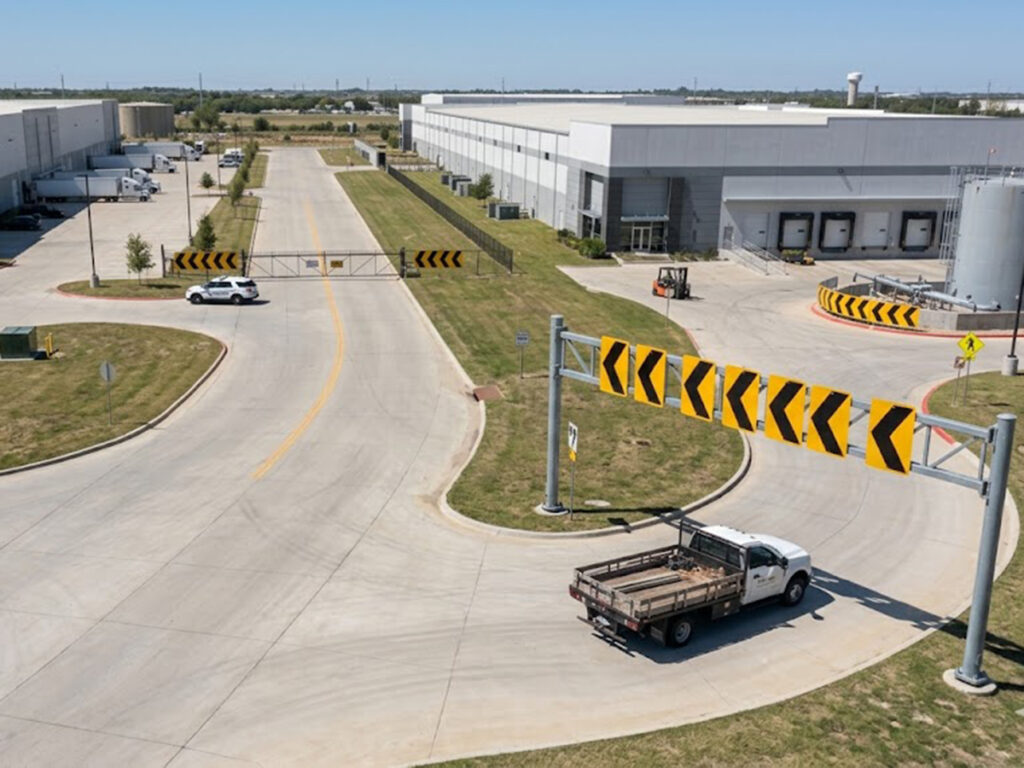
औद्योगिक शेवरॉन संकेत निजी संयंत्र पहुंच सड़कों के किनारे घुमावों के बाहर एचजीवी ऑपरेटरों के लिए गाइड लगाए गए हैं, अर्ध-ट्रक चालक, और क्षैतिज संरेखण परिवर्तन के माध्यम से डिलीवरी वैन. पीला और काला चेहरा वक्र की दिशा पर जोर देता है, ड्राइवरों को उस समय महत्वपूर्ण स्टीयरिंग संकेत देना, जब उन्हें उनकी आवश्यकता हो.
औद्योगिक पार्कों में बंद पड़े रास्ते एक अलग ख़तरा पैदा करते हैं. टर्नअराउंड ज़ोन दृष्टिकोण को चित्रित करने वाला एक शेवरॉन ऐरे लोडिंग बे में ओवररन को रोकता है, ईंधन भंडारण क्षेत्र, या पैदल यात्री पथ - परिचालन प्रवाह में बाधा डालने वाली बाधाओं की आवश्यकता के बिना.
की संख्या की गणना औद्योगिक शेवरॉन संकेत एक निजी सड़क वक्र के लिए वक्र त्रिज्या और दृष्टिकोण गति जानने की आवश्यकता होती है. शेवरॉन साइन स्पेसिंग और क्षैतिज वक्र प्लेसमेंट गाइड इसमें उस गणना पद्धति को पूर्ण रूप से शामिल किया गया है.
गोदाम और वितरण केंद्र - फोर्कलिफ्ट लेन को चिह्नित करना, गोदी दृष्टिकोण, और ब्लाइंड कॉर्नर
OSHA का संचालित औद्योगिक ट्रक मानक, 29 सीएफआर 1910.178, चौराहों और सीमित दृश्यता वाले क्षेत्रों में सुरक्षित यात्रा गति की आवश्यकता होती है - लेकिन यह निर्दिष्ट नहीं करता है कि सुविधाओं को उन खतरों के बारे में कैसे बताना चाहिए. औद्योगिक शेवरॉन संकेत तीन सिद्ध अनुप्रयोगों में उस परिचालन अंतर को भरें: (स्रोत: OSHA 29 सीएफआर 1910.178)
- फोर्कलिफ्ट गलियारे का चित्रण: गलियारे के प्रवेश बिंदुओं पर शेवरॉन सरणियाँ दिशात्मक यातायात प्रवाह को सुदृढ़ करती हैं और ऑपरेटरों को फोर्कलिफ्ट आंदोलनों का विरोध करने की चेतावनी देती हैं.
- डॉक दृष्टिकोण मार्गदर्शन लोड हो रहा है: डॉक दरवाजे की ओर जाने वाले मोड़ पर स्थित संकेत महत्वपूर्ण स्टीयरिंग संकेत प्रदान करते हैं जहां एचजीवी को उलटने से पीछे की ओर दृश्यता गंभीर रूप से सीमित हो जाती है.
- अंधे कोने की चेतावनी: अकेला औद्योगिक शेवरॉन संकेत समकोण गलियारे वाले चौराहों पर लगाए गए फोर्कलिफ्ट ऑपरेटरों को चौराहा दिखाई देने से पहले क्रॉस-गलियारा यातायात के लिए सचेत करते हैं.
सब्सट्रेट का चयन पर्यावरण के अनुसार भिन्न होता है. इनडोर गोदाम अनुप्रयोगों के लिए रासायनिक धुलाई प्रतिरोध की आवश्यकता होती है जहां फर्श की सफाई नियमित होती है. बाहरी गोदी क्षेत्र साइन शीटिंग से पूर्ण यूवी प्रतिरोध और मौसम-ग्रेड आसंजन की मांग करते हैं.
औद्योगिक स्थल और विनिर्माण संयंत्र - पैदल यात्री क्षेत्रों से वाहन पथों को अलग करना
OSHA की वॉकिंग-वर्किंग सरफेस मानक, 29 सीएफआर 1910.22, सभी सामान्य उद्योग कार्यस्थलों में स्पष्ट रूप से परिभाषित गलियारों और मार्गों को अधिदेशित किया गया है. औद्योगिक शेवरॉन संकेत खतरनाक ड्रॉप-ऑफ़ तक पहुंचने वाले वाहन गलियारों को चित्रित करके अनुपालन का समर्थन करें, क्रेन स्विंग त्रिज्या क्षेत्र, पंक्तियाँ दबाएँ, और आपातकालीन निकास मार्ग. (स्रोत: OSHA 29 सीएफआर 1910.22)
प्लांट सड़कों पर दो-तरफा वाहन मार्गों को बैक-टू-बैक या डबल-हेडेड शेवरॉन असेंबली से लाभ मिलता है, जो एक साथ किसी भी दिशा से आने वाले वाहन चालकों का मार्गदर्शन करते हैं.
औद्योगिक और निजी सड़क उपयोग के लिए सही शेवरॉन साइन स्पेक्स का चयन करना
सामग्री और परावर्तन ग्रेड - आपके बजट के लिए OSHA अनुपालक और इंजीनियर ग्रेड का क्या मतलब है
रिफ्लेक्टिव शीटिंग ग्रेड सुरक्षा प्रदर्शन और यूनिट लागत दोनों को संचालित करता है. तीन ग्रेड औद्योगिक खरीदार की जरूरतों को पूरा करते हैं:
| चादर ग्रेड | एमयूटीसीडी प्रकार | सबसे अच्छा उपयोग | लागत सूचकांक |
| इंजीनियर ग्रेड | टाइप I | धीमी गति, पूरी तरह से प्रकाशित गोदाम के अंदरूनी हिस्से | 1एक्स (आधारभूत) |
| उच्च-तीव्रता वाले प्रिज्मीय | टाइप III | रात्रिकालीन यातायात के साथ निजी पहुंच सड़कें | 1.8x–2.2x |
| डायमंड ग्रेड | टाइप IX | उच्च गति वाली निजी सड़कें; सार्वजनिक वितरण मार्ग | 2.8x–4x |
स्रोत: एफएचडब्ल्यूए रेट्रोरिफ्लेक्टिविटी मानक अवलोकन
सब्सट्रेट विकल्प मानक अवधि .080″ अधिकांश निजी सड़क अनुप्रयोगों के लिए एल्यूमीनियम, हेवी-गेज .125″ उच्च प्रभाव वाले औद्योगिक क्षेत्रों के लिए एल्यूमीनियम, और डॉक दरवाज़ों के चारों ओर एचडीपीई लचीले सबस्ट्रेट्स जहां वाहन संपर्क का अनुमान लगाया जा सकता है.
अपने ऑर्डर में अत्यधिक बदलाव किए बिना सही आकार का चयन करना
गति-आधारित आकार चयन निजी सड़क ऑर्डर देने वाले औद्योगिक खरीदारों के लिए एक व्यावहारिक प्रारंभिक बिंदु प्रदान करता है:
| वाहन की गति | अनुशंसित चिह्न आकार | विशिष्ट अनुप्रयोग |
| अंतर्गत 15 मील प्रति घंटा | 18″ x 18″ या 24″ x 24″ | गोदाम गलियारे, गोदी दृष्टिकोण |
| 15-25 मील प्रति घंटे | 30″ x 30″ | निजी संयंत्र सड़कें, यार्ड मार्ग |
| ऊपर 25 मील प्रति घंटा | 36″ x 36″ या बड़ा | वितरण यातायात के साथ निजी पहुंच सड़कें |
स्रोत: MUTCD 2009 संस्करण, तालिका 2सी-4
यह निजी सेटिंग्स के लिए एक व्यावहारिक कार्य मार्गदर्शिका है, पूर्ण MUTCD-संगत आकार तालिका नहीं. गति क्षेत्र और साइन प्रकार द्वारा पूर्ण आकार मैट्रिक्स के लिए, उच्च गति वाली निजी सड़कों के लिए बड़े प्रारूप वाले विनिर्देश शामिल हैं, देखें विस्तृत शेवरॉन साइन आयाम गाइड.
सीमित गोदाम गलियारों में अत्यधिक आकार बढ़ने से बढ़ती समस्याएं और दृश्य अव्यवस्था पैदा होती है. सही आकार वह न्यूनतम आकार है जो वास्तविक परिचालन गति के लिए आवश्यक दृष्टिकोण दूरी पर सुपाठ्यता प्राप्त करता है.
औद्योगिक वातावरण के लिए माउंटिंग हार्डवेयर और पोस्ट विकल्प
औद्योगिक शेवरॉन साइन माउंटिंग को वाहन निकासी के लिए जिम्मेदार होना चाहिए, प्रभाव जोखिम, और रखरखाव की पहुंच. चार कॉन्फ़िगरेशन अधिकांश परिदृश्यों को कवर करते हैं:
- यू-चैनल या वर्गाकार ट्यूब पोस्ट: निजी सड़क स्थापनाओं के लिए मानक; हॉट-डिप गैल्वेनाइज्ड फिनिश बाहरी औद्योगिक वातावरण में जंग का प्रतिरोध करती है.
- ब्रेकअवे पोस्ट सिस्टम: वाहन पहुंच क्षेत्रों के लिए अनुशंसित जहां फोर्कलिफ्ट या डिलीवरी वाहन के बाद प्रभाव एक संभावित जोखिम है - साइन प्रतिस्थापन लागत और चोट की गंभीरता को कम करें.
- दीवार या स्तंभ ब्रैकेट माउंटिंग: इनडोर गोदाम गलियारों के लिए जहां ग्राउंड पोस्ट फोर्कलिफ्ट यात्रा लेन में बाधा डालते हैं.
- ओवरहेड केबल या चेन सस्पेंशन: डॉक एप्रोच ज़ोन और उच्च-निकासी गोदाम गलियारों के लिए अधिकतम फ़्लोर क्लीयरेंस की आवश्यकता होती है.
सभी स्थापना रिकॉर्ड - दिनांक, जगह, हार्डवेयर विशिष्टताएँ, इंस्टॉलर का नाम - सुविधा की सुरक्षा प्रबंधन प्रणाली में लॉग इन किया जाना चाहिए. यह दस्तावेज़ सीधे OSHA अनुपालन रिकॉर्डकीपिंग और बीमा दावों की रक्षा का समर्थन करता है.
कस्टम औद्योगिक शेवरॉन चिह्न — जब मानक कैटलॉग चिह्न पर्याप्त न हों
निजी और औद्योगिक अनुप्रयोगों के लिए सामान्य अनुकूलन अनुरोध
मानक सूची औद्योगिक शेवरॉन संकेत अधिकांश अनुप्रयोगों को अच्छी तरह से सेवा प्रदान करें. विशिष्ट परिचालन आवश्यकताओं वाले सुविधा प्रबंधक, तथापि, अक्सर अनुरूप समाधानों की आवश्यकता होती है:
- कस्टम लीजेंड परिवर्धन: 'फोर्कलिफ्ट क्रॉसिंग' जैसे टेक्स्ट,’ 'धीमे - पैदल यात्री,’ या शेवरॉन सरणी के नीचे मुद्रित साइट-विशिष्ट खतरा पहचानकर्ता.
- गैर मानक रंग: रंग-कोडित क्षेत्र प्रबंधन प्रणालियों का उपयोग करने वाली सुविधाएं (वाहन मार्गों के लिए नीला, खतरनाक सामग्री गलियारों के लिए नारंगी) केवल-आंतरिक मार्गों के लिए गैर-एमयूटीसीडी रंग शेवरॉन की आवश्यकता हो सकती है.
- बड़े आकार के प्रारूप: बड़े खुले मैदान वाले औद्योगिक स्थलों को 48 की आवश्यकता हो सकती है″ x 48″ या मानक स्टॉक कैटलॉग में बड़े चिह्न अनुपलब्ध हैं.
- द्विभाषी या चित्रलेख जोड़: बहुभाषी कार्यबल को दोहरे भाषा वाले साइन चेहरों से लाभ होता है जो OSHA के प्रतीक-और-पाठ सुपाठ्यता मानकों को बनाए रखते हैं.
पीले और काले रंग से विचलन केवल आंतरिक गैर-सार्वजनिक मार्गों पर लागू होता है. बाहरी डिलीवरी ड्राइवरों या आगंतुकों के लिए सुलभ किसी भी मार्ग को भ्रम से बचने और अनुपालन बनाए रखने के लिए मानक MUTCD रंग कॉन्फ़िगरेशन की आवश्यकता होती है.
कस्टम साइन लीड टाइम्स, कलाकृति आवश्यकताएँ, और अनुमोदन कार्यप्रवाह
रिवाज़ औद्योगिक शेवरॉन संकेत वेक्टर आर्टवर्क फ़ाइलों की आवश्यकता है - अधिमानतः .AI, .ईपीएस, या .पीडीएफ प्रारूप - किसी भी साइन आकार में स्वच्छ पुनरुत्पादन सुनिश्चित करने के लिए. फ़ाइल सबमिशन के बाद प्रूफ़िंग राउंड होता है, और उत्पादन आम तौर पर चलता है 5 को 15 मात्रा और जटिलता के आधार पर व्यावसायिक दिन.
सुरक्षा-महत्वपूर्ण संकेतों को उत्पादन की पुष्टि से पहले सुविधा के आंतरिक सुरक्षा प्रबंधक अनुमोदन वर्कफ़्लो को साफ़ करना होगा. उस चरण को छोड़ना - प्रतिक्रियाशील खरीद में एक सामान्य शॉर्टकट - दस्तावेज़ीकृत परिवर्तन-प्रबंधन रिकॉर्ड में अंतराल पैदा करता है जिसे OSHA ऑडिटर और बीमाकर्ता जांचते हैं.
आपकी सुविधा के लिए एक कस्टम शेवरॉन चिह्न उद्धरण की आवश्यकता है? अपना विवरण जमा करें और विस्तृत उद्धरण प्राप्त करें एक व्यावसायिक दिन के भीतर!
मूल्य निर्धारण कारक और थोक ऑर्डरिंग - कोटेशन का अनुरोध करने से पहले औद्योगिक खरीदारों को क्या जानना आवश्यक है
पाँच चर जो आपकी प्रति-चिह्न लागत निर्धारित करते हैं
प्रत्येक औद्योगिक साइन विक्रेता समान पाँच मूल्य निर्धारण चर का उपयोग करता है. उन्हें समझने से सुविधा प्रबंधकों को सटीक खरीद औचित्य और बजट अनुमान लिखने की सुविधा मिलती है:
- साइन आकार: बड़े प्रारूपों में गैर-रेखीय पैमाने पर उच्च सामग्री लागत होती है - 36″ x 36″ साइन की लागत 2.25x प्रति 24 से काफी अधिक है″ x 24″.
- चिंतनशील शीटिंग ग्रेड: इंजीनियर ग्रेड बनाम. एक ही चिह्न आकार पर डायमंड ग्रेड 2x से 4x लागत अंतर का प्रतिनिधित्व कर सकता है.
- सब्सट्रेट गेज और सामग्री: मानक .080″ एल्यूमीनियम बनाम. हेवी-गेज .125″ बनाम. विशेष सबस्ट्रेट्स में प्रत्येक की अलग-अलग कीमत होती है.
- अनुकूलन जटिलता: स्क्रीन प्रिंट, डिजिटल प्रिंट, और कट विनाइल ओवरले की उत्पादन लागत अलग-अलग होती है; अतिरिक्त रंग सेटअप शुल्क को कई गुना बढ़ा देते हैं.
- ऑर्डर मात्रा: वॉल्यूम मूल्य ब्रेक आमतौर पर ट्रिगर होते हैं 10, 25, 50, और 100+ इकाइयां. प्रति-यूनिट लागत बड़े पैमाने पर काफी कम हो जाती है - एक ऐसा कारक जो मल्टी-साइट ऑपरेटरों के लिए समेकित ऑर्डर को आवश्यक बनाता है.
मल्टी-साइट ऑपरेटरों और वार्षिक सुरक्षा बजट के लिए थोक ऑर्डरिंग रणनीतियाँ
मल्टी-साइट औद्योगिक ऑपरेटर - लॉजिस्टिक्स कंपनियाँ, बंदरगाह संचालक, और कई प्लांट स्थानों वाले विनिर्माण समूहों को लगातार चुनौती का सामना करना पड़ता है: रणनीतिक खरीद के साथ प्रतिक्रियाशील संकेत प्रतिस्थापन को संतुलित करना. तीन दृष्टिकोण निर्णय की संरचना करते हैं:
- समेकित वार्षिक खरीद आदेश बनाम. साइट-दर-साइट प्रतिक्रियाशील ऑर्डरिंग: वार्षिक पीओ सभी साइटों पर वॉल्यूम मूल्य ब्रेक को कैप्चर करते हैं और विशिष्टताओं को मानकीकृत करते हैं, प्रति-यूनिट लागत कम करना और दृश्य स्थिरता सुनिश्चित करना.
- सभी साइटों पर मानकीकृत संकेत विशिष्टताएँ: एकसमान चिह्न विशिष्टताएँ पुनः क्रमित करना सरल बनाती हैं, अनुमोदन चक्र कम करें, और एक सुसंगत सुरक्षा पहचान बनाएं जिस पर OSHA ऑडिटर और बीमाकर्ता सकारात्मक प्रतिक्रिया दें.
- एकल आपूर्तिकर्ता के साथ ब्लैंकेट पीओ की व्यवस्था मूल्य निर्धारण स्थिरता को लॉक करती है और चरम मांग अवधि के दौरान उत्पादन प्राथमिकता की गारंटी देती है.
ओएसएचए रिकॉर्डकीपिंग ऑडिट और बीमा समीक्षाएं मल्टी-साइट संचालन में साइनेज स्थिरता की तेजी से जांच कर रही हैं. सुविधाओं के पोर्टफोलियो में असंगत संकेत गुणवत्ता या गैर-मानक कॉन्फ़िगरेशन प्रणालीगत सुरक्षा प्रबंधन अंतराल का संकेत देते हैं.
सही खरीदारी निर्णय लेना - औद्योगिक सुविधा प्रबंधकों के लिए एक व्यावहारिक जाँच सूची
प्री-ऑर्डर विशिष्टता चेकलिस्ट
कोई भी औद्योगिक शेवरॉन साइन ऑर्डर देने से पहले इन निर्णयों को ध्यान में रखें:
- अनुप्रयोग परिवेश की पुष्टि की गई: निजी सड़क / इनडोर गोदाम / बाहरी औद्योगिक स्थल.
- संकेतों की आवश्यकता वाले प्रत्येक मार्ग के लिए वाहन की गति सीमा का दस्तावेजीकरण किया जाता है.
- गति और दृष्टि दूरी के आधार पर चिह्न का आकार चुना जाता है.
- परावर्तक शीटिंग ग्रेड का चयन प्रकाश की स्थिति और जोखिम स्तर के आधार पर किया जाता है.
- सब्सट्रेट प्रकार एक्सपोज़र स्थितियों से मेल खाता है (इनडोर/आउटडोर/रासायनिक धुलाई).
- माउंटिंग विधि की पुष्टि की गई: पोस्ट/दीवार ब्रैकेट/ओवरहेड सस्पेंशन.
- प्रति स्थान चिह्न मात्रा की गणना की जाती है (वक्र स्थापनाओं के लिए रिक्ति गाइड का उपयोग करें).
- कस्टम आवश्यकताओं की पहचान की गई: किंवदंती पाठ, गैर मानक आकार, द्विभाषी चेहरा.
- किसी भी कस्टम साइन आर्टवर्क के लिए आंतरिक सुरक्षा प्रबंधक की मंजूरी प्राप्त की जाती है.
- सबसे अनुकूल वॉल्यूम मूल्य ब्रेक प्राप्त करने के लिए ऑर्डर मात्रा को अंतिम रूप दिया गया.
आपूर्तिकर्ता चुनना - खरीदने से पहले पूछने के लिए पाँच प्रश्न
ये पांच प्रश्न एक पेशेवर औद्योगिक साइन आपूर्तिकर्ता को एक सामान्य वस्तु विक्रेता से अलग करते हैं:
- क्या परावर्तक शीटिंग किसी प्रमाणित निर्माता - 3M से प्राप्त की जाती हैं, एवरी डेनिसन, या समकक्ष - प्रलेखित प्रदर्शन वारंटी के साथ?
- क्या आपूर्तिकर्ता MUTCD-अनुपालक चिह्न आकारों का स्टॉक रखता है, या सभी आइटम संबंधित लीड टाइम निहितार्थों के साथ ऑर्डर करने के लिए कस्टम-निर्मित हैं?
- मानक और कस्टम दोनों के लिए मानक और त्वरित उत्पादन लीड समय क्या हैं औद्योगिक शेवरॉन संकेत?
- क्या आपूर्तिकर्ता सुरक्षा-महत्वपूर्ण अनुप्रयोगों के लिए सामग्री प्रमाणन और रेट्रोरिफ्लेक्टिविटी वारंटी प्रदान करता है?
- क्या आपूर्तिकर्ता मल्टी-साइट ऑपरेटरों के लिए व्यापक खरीद ऑर्डर या वार्षिक आपूर्ति समझौतों का समर्थन करता है?
MUTCD मानकों की व्यापक समीक्षा के लिए, प्लेसमेंट इंजीनियरिंग, और पूर्ण शेवरॉन साइन विनिर्देश सार्वजनिक और निजी दोनों संदर्भों में लागू होते हैं, the शेवरॉन साइन मानकों के लिए संपूर्ण मार्गदर्शिका, प्लेसमेंट, और विशिष्टताएँ निश्चित तकनीकी संदर्भ प्रदान करता है.
अक्सर पूछे जाने वाले प्रश्न - औद्योगिक शेवरॉन साइन ख़रीदना गाइड
अक्सर पूछे जाने वाले प्रश्न 1: क्या निजी सड़कों और गोदामों को MUTCD-मानक शेवरॉन संकेतों का उपयोग करना होगा?
MUTCD अनुपालन केवल सार्वजनिक यात्रा के लिए खुली सड़कों के लिए कानूनी रूप से अनिवार्य है. पूरी तरह से निजी आंतरिक सड़कों और गोदाम के अंदरूनी हिस्सों के लिए, MUTCD मानक स्वैच्छिक हैं - लेकिन जोखिम प्रबंधक और वाणिज्यिक बीमाकर्ता व्यापक रूप से MUTCD-ग्रेड को मान्यता देते हैं औद्योगिक शेवरॉन संकेत देखभाल के उचित मानक को प्रदर्शित करने के लिए बेंचमार्क के रूप में. OSHA's 29 सीएफआर 1910.144 और 1910.145 कार्यस्थल के वातावरण पर लागू करें और न्यूनतम प्रदर्शन आवश्यकताओं को निर्धारित करें जो MUTCD-ग्रेड संकेत लगातार पूरा करते हैं या उससे अधिक करते हैं.
अक्सर पूछे जाने वाले प्रश्न 2: औद्योगिक शेवरॉन चिह्नों के लिए विशिष्ट मूल्य सीमा क्या है??
कीमत पाँच चरों पर निर्भर करती है: साइन आकार, चिंतनशील शीटिंग ग्रेड, सब्सट्रेट प्रकार, अनुकूलन जटिलता, और आदेश मात्रा. सामान्य आकार में मानक इंजीनियर-ग्रेड एल्यूमीनियम शेवरॉन (18″ x 18″ 24 से″ x 24″) प्रवेश-स्तर मूल्य बिंदु का प्रतिनिधित्व करें. कस्टम किंवदंतियों के साथ भारी-गेज सबस्ट्रेट्स पर बड़े प्रारूप वाले हीरे-ग्रेड के संकेत ऊपरी छोर पर बैठते हैं. सटीक बजट योजना के लिए परियोजना-विशिष्ट उद्धरण का अनुरोध करें - सामान्य मूल्य सूचियाँ साइट-विशिष्ट कॉन्फ़िगरेशन आवश्यकताओं को ध्यान में नहीं रखती हैं.
अक्सर पूछे जाने वाले प्रश्न 3: क्या किसी गोदाम के अंदर पीले और काले शेवरॉन चिन्हों का उपयोग किया जा सकता है?
पीले और काले औद्योगिक शेवरॉन संकेत आंतरिक गोदाम उपयोग के लिए सही और OSHA-संरेखित विकल्प हैं. OSHA 29 सीएफआर 1910.144 शारीरिक खतरों के लिए पीले रंग को सुरक्षा रंग के रूप में नामित किया गया है. गैर-मानक रंग आंतरिक क्षेत्र प्रबंधन प्रणालियों का समर्थन कर सकते हैं - लेकिन बाहरी ड्राइवरों या आगंतुकों के लिए पहुंच वाले किसी भी मार्ग पर मानक पीला और काला रहना चाहिए.
अक्सर पूछे जाने वाले प्रश्न 4: एक निजी पहुंच सड़क पर एक वक्र के लिए कितने शेवरॉन संकेतों की आवश्यकता होती है?
साइन गिनती वक्र त्रिज्या और वाहन दृष्टिकोण गति पर निर्भर करती है. एक व्यावहारिक नियम: सख्त मोड़ और उच्च दृष्टिकोण गति के लिए निकट अंतराल पर अधिक संकेतों की आवश्यकता होती है. सटीक गणना पद्धति - रिक्ति तालिकाओं और वक्र ज्यामिति इनपुट सहित - में विस्तार से शामिल किया गया है शेवरॉन साइन स्पेसिंग और क्षैतिज वक्र प्लेसमेंट गाइड.
अक्सर पूछे जाने वाले प्रश्न 5: एक गोदाम के अंदर रात्रिकालीन फोर्कलिफ्ट संचालन के लिए कौन सा परावर्तन ग्रेड उपयुक्त है?
पूरी तरह से रोशनी वाले गोदामों में लगातार कृत्रिम प्रकाश व्यवस्था और वाहन हेडलाइट्स पर कोई निर्भरता नहीं, इंजीनियर ग्रेड (टाइप I) शीटिंग पर्याप्त और लागत प्रभावी है. आंशिक रूप से रोशनी वाले क्षेत्रों के लिए, अर्ध-आउटडोर गोदी दृष्टिकोण, या कोई भी क्षेत्र जहां फोर्कलिफ्ट हेडलाइट्स प्राथमिक रोशनी स्रोत के रूप में काम करती हैं, उच्च-तीव्रता वाले प्रिज्मीय (टाइप III) अनुशंसित न्यूनतम है. निर्णय नियम: साइट पर वास्तव में अनुभव की गई सबसे खराब प्रकाश स्थिति के लिए निर्दिष्ट करें.
अक्सर पूछे जाने वाले प्रश्न 6: क्या औद्योगिक शेवरॉन संकेतों में किसी विशिष्ट सुविधा के लिए कस्टम टेक्स्ट शामिल हो सकता है??
कस्टम लेजेंड परिवर्धन - जिसमें 'फोर्कलिफ्ट क्रॉसिंग' भी शामिल है,’ 'धीमे - पैदल यात्री,’ और सुविधा-विशिष्ट खतरे की चेतावनियाँ - औद्योगिक साइन ऑर्डर के लिए मानक अभ्यास हैं. वर्कफ़्लो में लेजेंड टेक्स्ट या वेक्टर आर्टवर्क सबमिट करना शामिल है, सुविधा के सुरक्षा प्रबंधक अनुमोदन प्रक्रिया के माध्यम से डिजिटल प्रमाण की समीक्षा करना, और उत्पादन की पुष्टि कर रहा है.
संदर्भ
- हम. श्रम सांख्यिकी ब्यूरो. घातक व्यावसायिक चोटों की जनगणना (सीएफओआई) - 2022 सारांश.
- व्यावसायिक सुरक्षा और स्वास्थ्य प्रसाशन. 29 सीएफआर 1910.144 - शारीरिक खतरों के लिए सुरक्षा रंग कोड.
- व्यावसायिक सुरक्षा और स्वास्थ्य प्रसाशन. 29 सीएफआर 1910.145 - दुर्घटना निवारण चिह्नों और टैगों के लिए विशिष्टताएँ.
- व्यावसायिक सुरक्षा और स्वास्थ्य प्रसाशन. 29 सीएफआर 1910.178 - संचालित औद्योगिक ट्रक.
- व्यावसायिक सुरक्षा और स्वास्थ्य प्रसाशन. 29 सीएफआर 1910.22 - चलने-फिरने-काम करने वाली सतहें: सामान्य आवश्यकताएँ.
- संघीय राजमार्ग प्रशासन. रेट्रोरिफ्लेक्टिविटी मानक और अनुपालन अवलोकन.
- MUTCD 2009 संस्करण, तालिका 2सी-4 - स्पीड ज़ोन द्वारा आकार अनुशंसाओं पर हस्ताक्षर करें.