توفر البنية التحتية الأمنية المحيطة الحماية فقط إذا كان مرساها ثابتًا. عندما تصطدم المركبة بحاجز الأمان, تتحول الطاقة الحركية بالكامل إلى الاتصال الأرضي. إن الاختيار بين الأساس المدمج ونظام التثبيت على السطح يحدد ما إذا كان الحاجز ثابتًا أم ينقطع عند الاصطدام.
توضح البيانات الصادرة عن مجلس سلامة واجهة المتجر أن تأثيرات دخول السيارة إلى المبنى قد انتهت 60 مرات يوميا في الولايات المتحدة, مما أدى إلى أكثر من 4,000 الإصابات السنوية (مصدر: https://www.storefrontsafety.org/crash-statistics). لمديري مرافق الموقع, الهندسة المناسبة للواجهة الأرضية تمنع الأضرار الكارثية للمباني وتحمي مناطق المشاة من الفشل الهيكلي.
تقييم أنواع الأساسات بولارد: الاستقرار الهيكلي ونطاق المشروع
الدفن المباشر مقابل. تركيب السطح: ملفات تعريف الأمان الأساسية ومقاومة التأثير
تعتمد تصميمات الدفن المباشر على تغليف التربة العميقة. تنقل الكتلة الخرسانية المحيطة قوى التأثير مباشرة إلى الأرض, التقليل من إجهاد القص الموضعي على المنشور نفسه. تعتمد التركيبات المثبتة على السطح على قوة الشد للمثبتات الفولاذية وقدرة الضغط للبلاطة الموجودة مسبقًا. يعالج الحاجز المثبت على السطح التأثيرات ذات السرعة المنخفضة, في حين أن النظام المضمن ينجو من عمليات النقل الحركية عالية الطاقة.
التنقل في قيود الموقع: سلامة التربة, الألواح الموجودة, وحدود التنقيب
ظروف المنشأة الحالية تحد من مسارات التثبيت. يتطلب إنشاء نظام الدفن المباشر حفرًا أساسية, الحفر العميق, وتقييم التربة. إذا كان الموقع يتميز دون عائق, التربة المتماسكة, تنطبق أحجام القدم القياسية. تتطلب التربة الحبيبية أو الرطبة آثارًا خرسانية أكبر لمنع انقلاب الأساس. يوفر التثبيت السطحي بديلاً غير مدمر للمستودعات الداخلية أو الألواح الخرسانية بعد الشد حيث يمكن أن يؤدي القطع العميق إلى قطع الأوتار الهيكلية الحرجة.
تقييم ديناميكيات المرور: مطابقة قوة الأساس مع سرعة السيارة وحمولتها.
يقوم المهندسون بحساب القوة المطلوبة لـ أ مؤسسة حاجز المرور من خلال تحليل معادلة الطاقة الحركية: كه = 1/2 م في ^ 2
حيث يمثل m كتلة المركبة ويمثل v سرعة الاصطدام. تتعامل أصول حماية مواقف السيارات الصغيرة مع الكتل المنخفضة بسرعات منخفضة. تواجه أرصفة الشحن ذات الإجراءات الأمنية المشددة مركبات لوجستية متعددة الأطنان تتحرك بسرعات أعلى.
يجب أن يتناسب ملف الهندسة الإنشائية مع هذه القوى. يؤدي سوء تقدير هذا الارتباط إلى فشل المرساة أو اختراق الخرسانة تحت الحمل.
لفهم كيف توجه هذه الصيغة تصميم الأساس, قارن بين سيناريوهين شائعين للمنشأة:
السيناريو أ (موقف سيارات قياسي للبيع بالتجزئة): وزن سيارة ركاب 2,000 كجم (تقريبا. 4,400 رطل) أخطأ في استخدام دواسة الوقود واصطدم بحاجز بسرعة منخفضة 4.5 آنسة (تقريبا. 10 ميلا في الساعة).
كه = 1/2 س 2,000 س (4.5)^2 = 20,250 جول (أو 20.25 كيلوجول)
السيناريو ب (رصيف التحميل الصناعي): وزن شاحنة توصيل متوسطة الحجم محملة بالكامل 6,800 كجم (تقريبا. 15,000 رطل) يفقد السيطرة على الكبح أسفل المنحدر ويصطدم بحاجز عنده 13.4 آنسة (تقريبا. 30 ميلا في الساعة).
كه = 1/2 س 6,800 س (13.4)^2 = 610,504 جول (أو 610.5 كيلوجول)
متطلبات التأسيس: ملف تعريف الطاقة في السيناريو ب هو 30 مرات أكبر من ذلك في السيناريو أ.
قوة من 610.5 سوف يقوم kJ على الفور بقص مثبتات الأرضية أو سحق الخرسانة غير المسلحة. لاستيعاب ونقل هذا الحمل الهائل بأمان دون حدوث عطل هيكلي, يجب على مديري المنشأة تحديد تصنيف ASTM للأعطال, شبكة أساس مدفونة بعمق باستخدام قفص من حديد التسليح المقوى للخدمة الشاقة. يؤدي فقدان هذا الحساب إلى المخاطرة بفشل المرساة الفوري أو اختراق الخرسانة الهيكلية أثناء تأثير العالم الحقيقي.
أسس حاجز المرور المضمنة: عمق القدم ومعايير الحفر
تحديد متطلبات عمق قاعدة الحاجز بناءً على فئة وزن السيارة
يجب أن تقاوم الأنظمة المدمجة لحظات الانقلاب الجانبي. للتحكم القياسي في حركة المرور التجارية, يجب أن يتناسب عمق التضمين مع فئة وزن السيارة المستهدفة.
حجم الحفر الهندسي وبصمة القدم لتحقيق أقصى قوة للقص
يحدد قطر الحفر مساحة القص الإجمالية لواجهة التربة. الحد الأدنى لقطر أسطواني مؤسسة حاجز المرور يجب أن يساوي الثقب ثلاثة أضعاف القطر الاسمي لغلاف الأنابيب الفولاذية.
لجدول 6 بوصات 40 أنابيب الصلب, يجب على المشغل أن يقوم بحفر ثقب بقطر 18 بوصة على الأقل. يؤدي تقليص هذه البصمة إلى تقليل كتلة الخرسانة, مما يتسبب في اختراق أسطوانة الأساس بأكملها لكتلة التربة المحيطة عند ضربها.
إدارة خطوط الصقيع المحلية وعمليات تخفيف التجميد والذوبان باستخدام مواصفات الخرسانة ASTM
تواجه الخرسانة الإنشائية الخارجية أضرارًا موسمية بسبب التجميد والذوبان. إذا انتهت القاعدة فوق خط الصقيع المحلي, سيؤدي تكوين عدسة ثلجية أسفل القاعدة إلى رفع الأساس, اختلال تخطيط المحيط.
يجب أن تمتد جميع عمليات صب الهياكل تحت عمق خط الصقيع البلدي. يجب الاستفادة من تصميم المزيج 2,500 ل 4,000 خرسانة ذات قوة ضاغطة PSI. للمناطق الخارجية المعرضة لدرجات حرارة تحت الصفر, تتطلب المواصفات أن تستوفي الخرسانة المحبوسة بالهواء معايير ASTM C260 للحفاظ على مرونة المسام الدقيقة (معايير البناء OSHA).
ميكانيكا مرساة الترباس: قاعدة للخدمة الشاقة للانسحاب ومقاومة القص
تقوم مجموعة القاعدة بنقل القوى الجانبية إلى ضغط سحب الشد على المثبتات الخلفية وضغط القص على المثبتات الأمامية. يتطلب التثبيت التجاري القياسي ما لا يقل عن أربع إلى ست نقاط تثبيت موزعة بالتساوي عبر محيط لوحة القاعدة.
يجب أن تتكون الركيزة الخرسانية المضيفة من صوت, بلاطة مسلحة بسماكة لا تقل عن 4 إلى 6 بوصات. تركيب حاجز قاعدة للخدمة الشاقة على رقيقة, سوف تؤدي خرسانة الرصيف غير المسلحة إلى انفجار مفاجئ لحافة الخرسانة أو فشل المخروط.
الميكانيكية مقابل. المراسي الكيميائية: اختيار مسامير J أو مثبتات التمدد للألواح الموجودة
يحدد اختيار جهاز التثبيت الصحيح معدل بقاء التثبيت.
مسامير J (يلقي في المكان): توفر هذه المراسي أعلى قدرة تحميل هيكلية. يجب أن يقوم القائمون على التركيب بوضعها مباشرة في الخرسانة الطازجة أثناء الصب الأولي.
إسفين الميكانيكية/المراسي التوسع: تعمل هذه المثبتات على تثبيت الجدران الخرسانية عن طريق الاحتكاك الميكانيكي. أنها توفر التثبيت السريع على الألواح الموجودة, ولكن يمكن أن تنزلق تحت الاهتزازات الدورية أو التأثيرات شديدة الصدمات.
المراسي الكيميائية/الايبوكسي: ويعتمد هذا النهج على الراتنجات اللاصقة الهيكلية. أنها تقضي على إجهاد التوسع داخل المصفوفة الخرسانية, مما يجعلها مثالية للتركيبات القريبة من الحافة حيث قد تؤدي مثبتات التمدد القياسية إلى تشقق البلاطة.
| نوع المرساة | غطاء الشد النموذجي. | طريقة التثبيت | أفضل حالة استخدام | المخاطر الرئيسية |
| J- الترباس (يلقي في المكان) | أعلى من جميع الأنواع | صب مسبقًا في البلاطة الرطبة | بناء جديد | عدم التسامح مع الموقف |
| مرساة إسفين | ~8,200 رطل (3/4″) | حفر في البلاطة المعالجة | التحديثية الخفيفة / المتوسطة | يخفف تحت الحمل الدوري |
| الايبوكسي / مرساة كيميائية | 12,000-15000 رطل (3/4″) | حفر + المستعبدين | التحديثية الثقيلة | يتطلب تنظيفًا صارمًا للفتحة |
مصدر: تقارير خدمة التقييم ICC-ES; إيه سي آي 318-19 الفصل. 17
المعايير الأساسية للأعمدة المقاومة للتصادم: هندسة الأمن العالي
تمثل الحواجز المحيطية ذات التصنيف العالي للتصادم الفئة ذات العواقب الأعلى مؤسسة حاجز المرور هندسة. يمكن أن تؤدي قاعدة واحدة غير محددة في نظام محيط مقدر إلى إبطال شهادة التعطل الخاصة بالتثبيت بأكمله - لأن تصنيف النظام يعكس أضعف عنصر أساسي, ليس المتوسط. يجب على مديري المرافق الذين يحددون الأعمدة المقاومة للصدمات التعامل مع تصميم الأساس باعتباره نظامًا هندسيًا, ليست سلعة شراء.
فك رموز ASTM F2656 و PAS 68 تقييمات قوة الضغط الخرسانية
أستم F2656 (نحن.) و PAS 68 (المملكة المتحدة, تم استبداله الآن بـ IWA 14-1 للاستخدام الدولي) هما المعياران السائدان لاختبارات التصادم المشار إليهما في مشاريع الأمن المحيطي التجارية والحكومية. يصنف ASTM F2656 الأداء حسب وزن السيارة, سرعة, ومسافة اختراق ما بعد التأثير: ك 4 (15,000 رطل في 30 ميلا في الساعة), ك8 (15,000 رطل في 40 ميلا في الساعة), ك12 (15,000 رطل في 50 ميلا في الساعة). لا 68 يستخدم كتلة السيارة وسرعتها لتحديد فئات مركبات الاختبار V/7200.
يشترك كلا المعيارين في متطلب أساسي بالغ الأهمية: يجب أن تحقق الخرسانة التي تدعم حاجز التصنيف الحد الأدنى من 3,000 قوة الضغط PSI, مع 3,500 ل 4,000 PSI محدد لتطبيقات K8 وK12. هذا ليس مبدأ توجيهي عام، بل هو شرط اختبار. حاجز تم اختباره واعتماده ضد أ 4,000 تفقد مؤسسة PSI شهادتها إذا تم تركيبها فيها 2,500 الخرسانة PSI. لا يتم نقل الأداء المقدر; تعد المواصفات الأساسية جزءًا من قائمة المنتجات.
يتم تحديد بروتوكولات معالجة الخرسانة بالتساوي. يجب أن تحقق الأساس قوة تصميم كاملة لمدة 28 يومًا قبل اعتبار المحيط نشطًا من الناحية التشغيلية. طرق المعالجة السريعة (علاج بالبخار, المسرعات الكيميائية) يُسمح بها فقط عندما يتم التحقق من قوة المعالجة المتسارعة عن طريق اختبار كسر الأسطوانة في موقع التثبيت - ولا يُفترض ذلك من تصميم المزيج وحده.
تكوينات قفص حديد التسليح ومواصفات التعزيز للحواجز المضادة للصدمات
لا تعتمد الأنظمة المقاومة للتصادم على الكتلة الخرسانية غير المسلحة وحدها. إنها تتطلب أقفاص حديدية مصممة هندسيًا لتوزيع موجات الصدمة الشدية.
تتطلب مواصفات التصميم استخدام مصفوفة شبكية متكاملة #4 أو #6 درجة مشوهة 60 حديد التسليح الهيكلي, مربوطة بإحكام في مراكز 6 بوصات. تعمل هذه المصفوفة الفولاذية الداخلية على ربط الخرسانة ببعضها البعض, منع فشل القص الهيكلي عندما يتلقى الجسم الحاجز ضربة مباشرة.
عندما يفشل التثبيت على السطح: حدود الأصول عالية الأمان غير المضمنة
لا يمكن للتصميمات المثبتة على السطح أن تتطابق مع التصنيفات الهيكلية للهندسة المدمجة. تحت تأثيرات المركبات عالية السرعة, إن الرافعة المالية التي يمارسها عمود طويل يبلغ 36 بوصة تولد ذراعًا لحظية تتجاوز قدرة الشد النهائية للمثبتات الخرسانية القياسية.
عندما يتم تجاوز هذه العتبة, يتم سحب البراغي مباشرة من الأرض أو تمزيق أجزاء من الوسادة الخرسانية. بالتالي, يجب على مديري المرافق تقييد الوحدات المثبتة على السطح في المناطق ذات السرعة المنخفضة, ممرات انطلاق المركبات, أو مناطق فصل الأصول.
مقارنة هندسية جنبًا إلى جنب: مضمن مقابل. جبل السطح
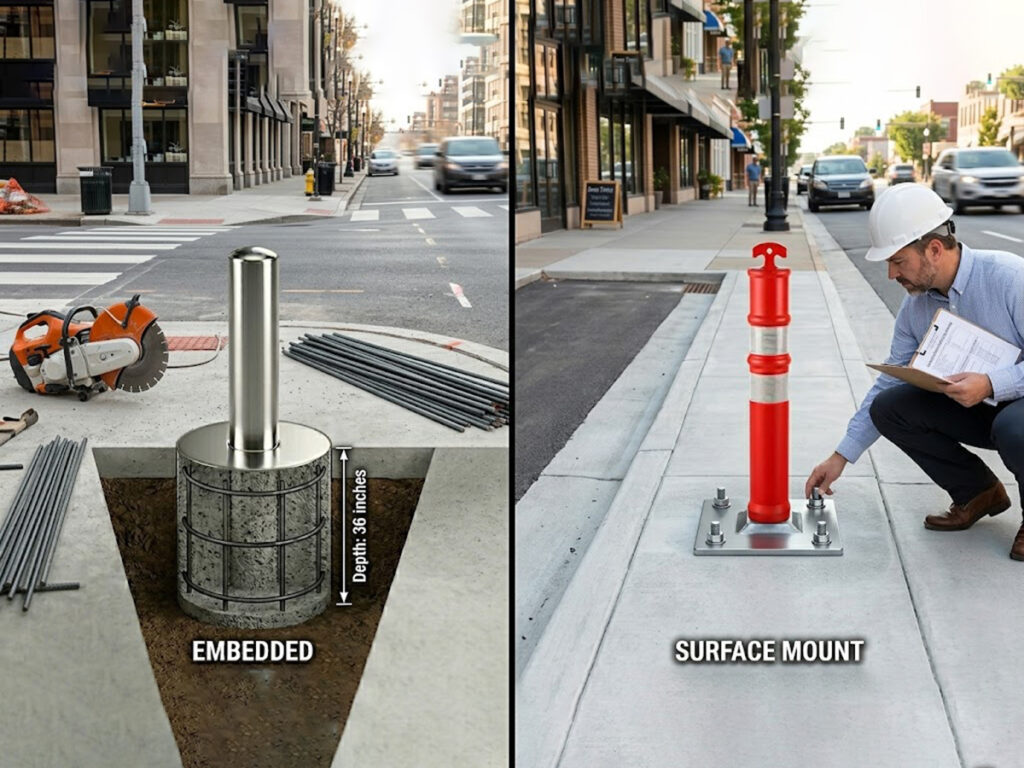
يوفر الجدول أدناه لمديري المرافق مصفوفة قرارات منظمة تقارن بين الأجهزة المضمنة والمثبتة على السطح مؤسسة حاجز المرور الأنظمة عبر الأبعاد الأكثر صلة بتخطيط المشروع وإدارة الأصول طويلة المدى.
| مقياس المقارنة | مؤسسة مدمجة | لوحة قاعدة مثبتة على السطح |
| مقاومة التأثير | الأعلى - يمكن تحقيق تصنيف التصادم من K4 إلى K12 | متوسطة إلى منخفضة — محدودة بقدرة القص المرساة |
| التنقيب مطلوب | نعم - الحفر العميق, 18″-36″+ عمق | لا - الحفر السطحي فقط (فتحات المرساة) |
| متطلبات الركيزة | أي تربة مستقرة أو صب خرسانة جديدة | 4″-6″ بلاطة معززة دقيقة. (التحقق منها بواسطة العينة الأساسية) |
| المواصفات ملموسة | 2,500-4,000 رطل لكل بوصة مربعة; ASTM C260 في مناطق التجميد والذوبان | يجب أن تلبي البلاطة الموجودة 2,500 رطل لكل بوصة مربعة دقيقة. |
| تكلفة الوحدة & تَعَب | أعلى - الحفر, حجم الخرسانة, وقت العلاج | أقل - أجهزة التثبيت فقط, الانتهاء في نفس اليوم |
| الجدول الزمني للتثبيت | 2-5 أيام + 28-علاج يوم قبل الاستخدام المقدر | 4– 8 ساعات; استعادة حركة المرور في نفس اليوم |
| الدوام / المرونة | دائم; تتطلب الإزالة آلة ثقب الصخور & إصلاح البلاطة | قابلة للإزالة أو الاستبدال; تخطيط قابل لإعادة التشكيل |
| صيانة / استبدال | منخفض - مختوم تحت الدرجة; لا يوجد إعادة عزم دوران قفل | فحص عزم الدوران السنوي; إعادة الحفر إذا تدهورت البلاطة |
| مرونة التجميد والذوبان | عالي - مزيج ASTM C260 + عمق تحت خط الصقيع | معتدل - الحشية مطلوبة; حافة بلاطة عرضة للخطر |
| تصنيف الأعطال يمكن تحقيقه | نعم - ASTM F2656 / ايوا 14-1 مع تصميم PE | لا (معيار); أنظمة معتمدة محدودة فقط |
مصدر: أستم F2656, إيه سي آي 318-19, ايوا 14-1, بيانات ICC-ES ESR
سير عمل التثبيت والأساس خطوة بخطوة
الأفضل تحديدا مؤسسة حاجز المرور يفشل إذا لم يتم تنفيذ سير عمل التثبيت بدقة. تمثل الإجراءات التالية أفضل ممارسات الصناعة لكل نوع تثبيت, تم تكثيفها في قوائم مرجعية قابلة للتنفيذ لمديري المرافق الذين يشرفون على أعمال المقاول.
إجراءات التشغيل القياسية للحفر الأساسي للدفن المباشر وصب الخرسانة
- قم بتحديد مواقع الحفر والتحقق منها وفقًا لخطة الموقع المعتمدة. يتأكد 811 تخليص المرافق تحت الأرض
- قبل البدء بأي عملية حفر.
- الحفر الأساسية لقطر التجويف المحدد (الحد الأدنى 3 × حاجز OD) والعمق (لكل جدول التطبيق). قم بتوثيق العمق المقاس قبل إزالة المثقاب.
- تجويف نظيف: إزالة جميع المواد السائبة, حطام, والمياه الدائمة. فحص جدران التجويف - يجب إبلاغ مهندس السجل بأي مناطق بها تربة ناعمة أو مواد عضوية قبل المتابعة.
- ضبط عمود الحاجز عموديًا (التسامح راسيا: 1/8 بوصة لكل قدم من ارتفاع العمود). قم بتثبيت العمود في موضعه باستخدام دعامة متقاطعة أو أداة محاذاة مخصصة لهذا الغرض - لا تعتمد على الصب لتثبيته بشكل راسيا.
- ضع الخرسانة بشكل مستمر من أسفل التجويف إلى أعلى, باستخدام أنبوب ارتعاشي لثقوب أعمق من 24 بوصة. الاهتزاز الميكانيكي (توحيد) إلزامي - 15 ل 20 ثانية لكل نقطة الإدراج.
- قم بإنهاء السطح بحيث ينحدر بعيدًا عن قاعدة الحاجز بحد أدنى 1/8 بوصة لكل قدم لتصريف المياه بعيدًا عن واجهة قاعدة العمود.
- سجل للتاريخ, رقم تذكرة دفعة ملموسة, وPSI المحدد. لافتات ما بعد فترة العلاج: “لا تقم بتحميل — معالجة الخرسانة.” لا تقم بالإزالة حتى اكتمال المعالجة التي تستغرق 28 يومًا أو يؤكد اختبار أسطوانة المعالجة السريعة قوة التصميم.
بعد التأكد من تخطيط الأساس ومواقف التثبيت, تحقق من أن التباعد بين الحواجز يفي بمتطلبات الوصول والسلامة قبل الانتهاء من خطة الموقع. انظر دليل تباعد حاجز المرور لسيناريوهات التطبيق المختلفة.
أفضل الممارسات لتثبيت الحواجز المطلية بالقاعدة على الألواح الموجودة
- إجراء التحقق من البلاطة: الحفر الأساسية عينة واحدة لكل 500 قدم مربع من منطقة التثبيت للتأكد من سمك ووجود حديد التسليح. اختبار قوة الضغط الأساسية من خلال اختبار كسر الأسطوانة ASTM C39 في حالة عدم توفر سجلات عمر البلاطة أو الصب.
- تحديد مواقع ثقب المرساة باستخدام لوحة القاعدة كقالب. التحقق من مسافات الحافة: يجب أن يكون قطر كل ثقب 6 × على الأقل من أي حافة لوح, كسر, أو البناء المشترك.
- حفر ثقوب مرساة باستخدام مطرقة دوارة (المراسي إسفين) أو الحفر الأساسية الماس (مراسي إيبوكسي بقطر ≥5/8 بوصة). الحفر إلى عمق التضمين المحدد + 1/2 بوصة لإزالة الرقاقة.
- فتحات نظيفة (المراسي الايبوكسي): نفخ الهواء المضغوط في الحفرة, افرك باستخدام فرشاة سلكية ذات قطر صحيح, ضربة مرة أخرى. كرر الدورة ثلاث مرات. تقلل الثقوب الملوثة من قوة رابطة الإيبوكسي عن طريق 30 ل 60 في المئة.
- تثبيت المراسي حسب الشركة المصنعة ESR: حقن الايبوكسي من أسفل الثقب إلى أعلى للأنظمة اللاصقة; المراسي الميكانيكية عزم الدوران إلى القيمة المحددة (على سبيل المثال, 3/4'' إسفين مرساة: 110-130 قدم رطل).
- تعيين لوحة القاعدة على المراسي; قم بتثبيت الغسالات والصواميل بإحكام, ثم عزم الدوران في نمط النجمة إلى عزم الدوران النهائي المحدد. قم بتركيب حشية من النيوبرين أو EPDM قبل ضبط لوحة القاعدة - لا تقم بإضافة مادة الحشية بعد الدوران.
- اسمح بوقت علاج كامل للإيبوكسي (24-72 ساعة في درجة الحرارة المحيطة, لكل مصنع ESR) قبل تطبيق الحمل التشغيلي.
ضمان الجودة: اختبار قوة ضغط الخرسانة وعزم دوران المرساة
ضمان الجودة لأي مؤسسة حاجز المرور يتطلب التثبيت التحقق الموثق من معلمتين: قوة ضغط الخرسانة وعزم دوران التثبيت.
التحقق من قوة ضغط الخرسانة: الحصول على تذاكر الدفعات الخرسانية والاحتفاظ بها لكل عملية صب. للتطبيقات ذات تصنيف الأعطال, تصنيع واختبار أسطوانات ASTM C39 مقاس 6 × 12 بوصة على فترات 7 أيام و28 يومًا. يجب أن يفي الفاصل الزمني لمدة 28 يومًا بقوة التصميم المحددة أو يتجاوزها. لا تستبدل نقاط قوة تصميم المزيج المنشورة ببيانات الأسطوانة الميدانية الفعلية - حيث يتم إنتاج تباين الدُفعات وظروف المعالجة الميدانية بشكل روتيني 10 ل 15 نسبة التباين عن أداء المزيج المعتمد في المختبر.
التحقق من عزم دوران المرساة: قم بتسجيل قيم عزم الدوران لكل مسمار تثبيت في سجل التثبيت, باستخدام مفتاح عزم الدوران المعاير بشهادة المعايرة الحالية. لأنظمة مرساة الايبوكسي, إجراء سحب اختبار العينات على الأقل 10 النسبة المئوية للمثبتات المثبتة وفقًا لأحكام اختبار المرساة AASHTO - وهذا هو التحقق الموضوعي الوحيد من تنفيذ إجراءات تنظيف الفتحات والحقن بشكل صحيح. الاحتفاظ بجميع السجلات: تعد سجلات عزم الدوران وتقارير اختبار السحب بمثابة وثائق أساسية إذا أدى فشل الحاجز إلى مطالبة بالمسؤولية.
ملخص المعايير الهندسية للبولارد ومشتريات المشروع
إن اختيار تصميم الأساس الصحيح يحمي استثماراتك العقارية ويحافظ على عملياتك آمنة من تأثيرات المركبات. يجب على مديري مرافق الموقع تحقيق التوازن بين الظروف الهيكلية الحالية ومخاطر المشروع.
يوفر اختيار نظام الدفن المباشر المدمج حماية ممتازة من الصدمات على المدى الطويل لمناطق الخدمة الشاقة. على العكس, يوفر نظام التثبيت على السطح المزود بلوحة قاعدة للخدمة الشاقة فعالية من حيث التكلفة, حل قابل للتكيف بسهولة للمناطق منخفضة السرعة وممرات المستودعات الداخلية.
يجب أن يتوافق كل خيار لنشر الأصول مع أهداف التخطيط الرئيسية لمنشأتك. قبل بدء عملية الشراء النهائية أو أعمال التنقيب في الموقع, قم بمراجعة التصميمات الهيكلية الخاصة بك من خلال شركائنا دليل مواصفات حاجز المرور الشامل. يضمن اتخاذ هذه الخطوة بقاء مشروعك متوافقًا مع أطر الامتثال التنظيمي, قواعد التوزيع المكاني, ومقاييس السلامة الصناعية.
الأسئلة المتداولة بخصوص المعايير الهندسية للحواجز
يمكن للقائمين بالتركيب تركيب لوحة قاعدة مثبتة على السطح مباشرة على سطح ساحة انتظار الأسفلت?
لا. يفتقر الأسفلت إلى قوة الشد الداخلية والصلابة الهيكلية اللازمة لدعم مثبتات التمدد الميكانيكية. تحت درجات الحرارة الموسمية الدافئة, يتشوه الأسفلت تحت الحمل, مما يتسبب في سحب المراسي تحت ضغط بسيط. يجب أن يتم تركيب الوحدات المطلية بالقاعدة على وسادة خرسانية مسلحة. إذا كان هناك الأسفلت فقط, يجب أن يستخدم القائم بالتركيب مخططًا مدمجًا لأساسات الدفن المباشر.
ما هو الحد الأدنى المطلق لقوة الضغط الخرسانية اللازمة لحواجز المرور التجارية?
الحد الأدنى المطلق لقوة الضغط المطلوبة لتطبيقات التحكم القياسية في المركبات التجارية هو $2,500 PSI. لكن, المنشآت الصناعية الثقيلة, تحميل الأرصفة, والمناطق شديدة الأمان الخاضعة لتشغيل المعدات الثقيلة تتطلب الحد الأدنى من المواصفات 3,000 ل 4,000 الخرسانة psi لمنع تدهور القاعدة تحت الضغط.
ما هو فصل مسافة الحافة المطلوبة عند حفر ثقوب لمثبتات القاعدة الثقيلة?
لمنع انفجارات حافة الخرسانة تحت التأثير, يجب أن يحافظ وضع مسمار التثبيت على الحد الأدنى من المسافة من أي حافة لوح غير مدعومة. يجب أن تكون هذه المسافة على الأقل خمسة أضعاف قطر المرساة الاسمي. للحصول على مرساة إسفينية شديدة التحمل مقاس 0.75 بوصة, يجب أن يكون الخط المركزي للمسمار على بعد 3.75 بوصة على الأقل من حافة الوسادة الخرسانية.
لماذا تتفوق المراسي اللاصقة الكيميائية على مسامير التمدد الميكانيكية القياسية في الخرسانة القديمة؟?
لا تمارس أنظمة التثبيت الكيميائي ضغط تمدد خارجي على المصفوفة الخرسانية المحيطة. بدلاً من, يندمج راتنجات الايبوكسي الهيكلية مباشرة مع الجدران الداخلية الخشنة للتجويف المحفور. وهذا يزيل ضغوط الانقسام الموضعية الناجمة عن الأكمام الإسفينية الميكانيكية, جعل المراسي الكيميائية مثالية للألواح الخرسانية القديمة أو المنشآت الموجودة بالقرب من الحواف.
كيف يتسبب تصميم الأساس غير الكافي لعمق الصقيع في فشل المحاذاة على المدى الطويل?
إذا انتهى الأساس المدمج فوق خط الصقيع المحلي, سوف تتجمد الرطوبة المحاصرة أسفل القاعدة وتتوسع خلال دورات الشتاء. يولد هذا التوسع قوة تصاعدية تُعرف باسم الصقيع, الذي يرفع أسطوانة الأساس الخرسانية خارج المحاذاة. متأخر , بعد فوات الوقت, هذا التحول يميل المنشور, يفسد التخطيط البصري, ويحط من الرصيف المحيط بها.
مراجع
- إدارة السلامة والصحة المهنية. (2025). لوائح السلامة والصحة للبناء: واجب الحصول على الحماية من السقوط (29 CFR 1926.501).
- تقارير خدمة التقييم ICC-ES; إيه سي آي 318-19 الفصل. 17
- مكتب إحصاءات العمل. (2026). مؤشرات بيانات إصابات العمل والسلامة الوطنية في أماكن العمل. نحن. وزارة العمل.