
VMS cannot take the place of STOP, GIVE WAY, or NO ENTRY signs. This is because of legal, safety, and technical reasons. These signs give rules that drivers must follow. VMS only give advice to drivers. Static regulatory signs make sure people obey the rules. They help keep everyone safe on the road. Electronic signs can sometimes lower traffic violations better than static signs. But Australian law does not let VMS replace important traffic control signs. People need clear and permanent signs to stay safe and keep order.
That’s why OPTRAFFIC supplies fully compliant STOP, GIVE WAY, NO ENTRY, and other traffic control signs, along with high-performance VMS displays. If you’re managing roadworks, detours, or long-term infrastructure projects, OPTRAFFIC has the certified signage solutions to keep your site safe and fully compliant.
Key Regulatory Signs Defined Under AS 1742

STOP (R1-1), GIVE WAY (R1-2), and NO ENTRY (R2-4)
Static signs remain the backbone of Australian traffic control. STOP signs (R1-1) force vehicles to a complete halt. GIVE WAY signs (R1-2) instruct drivers to yield to conflicting traffic. NO ENTRY signs (R2-4) prevent dangerous access to restricted zones.
| Sign Type | Function at Intersections | Conditions for Use | Role in Managing Priority |
| STOP | Complete halt required | Poor visibility or high-speed zones | Ensures priority for main traffic |
| GIVE WAY | Yield if road is not clear | Good visibility and moderate speeds | Maintains smooth traffic flow |
| NO ENTRY | Prevents vehicle entry | Safety restrictions or one-way roads | Stops illegal road entry |
Legal enforceability and design standards
Australian Standards (AS 1742) define the exact shape, color, and size for every regulatory sign. Police enforce traffic laws based on these physical signs. Only static boards meeting AS 1743 requirements hold full legal authority. Signs failing these standards can confuse drivers and cause accidents.
Read our full analysis on Australian Standards for Traffic Signs: AS 1742 Regulations to ensure your project remains 100% compliant.
VMS Signs and Their Classification
What is a Variable Message Sign (VMS)?
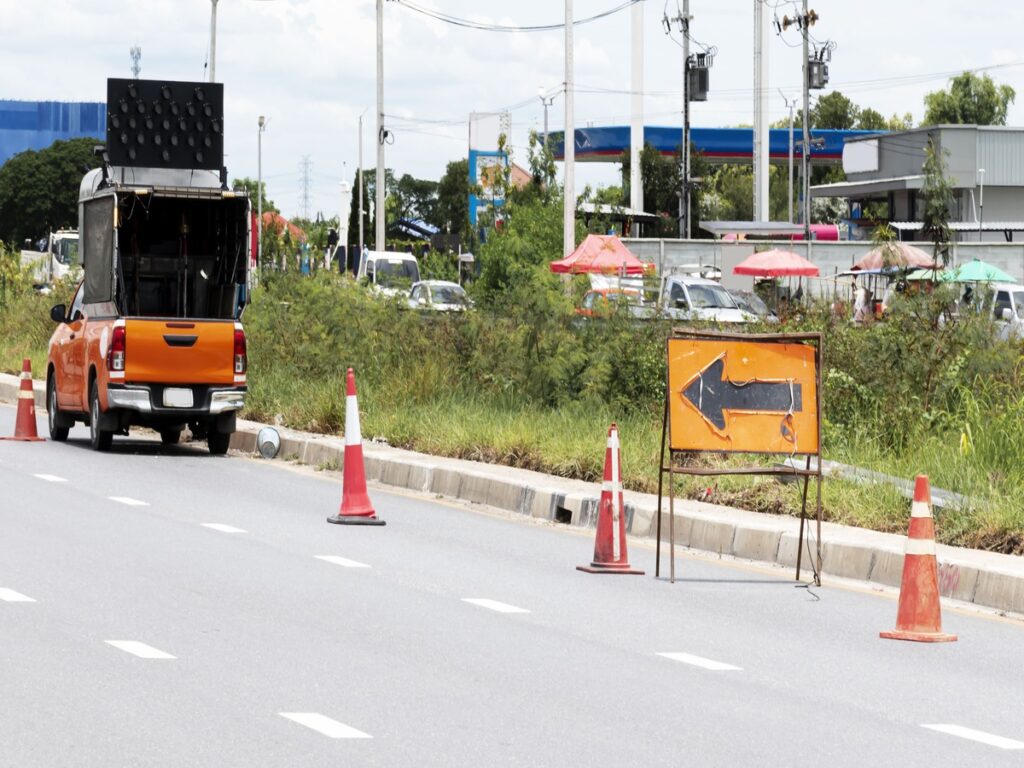
Variable Message Signs use LED technology to show dynamic information. Portable VMS units allow operators to move signs as project needs change. These displays alert drivers to roadworks, accidents, or changing conditions ahead.
- VMS manage traffic through real-time updates.
- LED lights ensure high visibility in all weather.
- Solar power systems provide sustainable 24/7 operation.
As Optraffic’s core electronic safety equipment, our VMS units combine rugged durability with advanced remote control technology. These systems provide a critical layer of safety by warning road users long before they reach the work zone.
Explore technical specifications and custom options on our product page: Portable Traffic Variable Message Signs (VMS).
Definition and scope under AS 5156 and state traffic codes
Under AS 5156, VMS units function primarily as advisory tools. They warn drivers about upcoming hazards or traffic changes. These electronic displays do not establish permanent road rules. Australian law requires drivers to prioritize static regulatory signs over VMS messages at all times. Static signs provide the legal “command,” while VMS provides the necessary “context.”
Advisory nature of VMS: why it’s not a substitute for static signs
VMS give changing messages to help drivers, but they are not the law. Portable VMS can warn about dangers or new road changes. But drivers still have to follow the normal signs. VMS can help where normal signs cannot change, but only normal signs are the law. VMS are easy to see and give more information, but they cannot take the place of normal signs.
Optraffic’s Industry Insight: Relying solely on electronic messaging creates a single point of failure. Batteries can drain, and LED components can malfunction in extreme heat. We believe the most effective traffic control plans (TCP) use a hybrid approach. Static signs provide the “legal anchor” that never fails, while VMS units capture driver attention from a distance.
In our experience, combining these tools reduces driver braking reaction times significantly. This synergy protects your workers on-site and shields your business from massive liability claims. As a manufacturer, we don’t just sell signs; we provide a fail-safe safety system that meets every Australian legal requirement.
Legal Risks of Misusing VMS to Replace Regulatory Signs
Driver confusion and liability implications
Replacing static signs with VMS creates dangerous ambiguity at roadworks. Drivers expect standardized, physical markers for mandatory commands like STOP or NO ENTRY. A flashing LED screen might capture attention, but it lacks the visual authority of a permanent board.
If a collision occurs, road authorities face immense liability. Lawyers often target “non-compliant signage” as the primary cause of negligence. Using VMS to perform a static sign’s job provides a direct opening for multi-million dollar lawsuits.
Invalid Traffic Control Orders (TCO)
In Australia, a Traffic Control Order (TCO) must match the physical equipment on-site. Most state regulations specify AS 1742-compliant static signs for regulatory functions. If you use a VMS instead of a static board, the court may rule your traffic order “invalid.”
An invalid order means your site operates outside the protection of the law. This legal gap can lead to:
- Government-issued fines for the contracting company.
- Immediate site shutdowns by safety auditors.
- Total loss of insurance coverage for the project.
Police Enforcement and Prosecution Gaps
Police rely on the “Permanent Nature” of static signs to issue enforceable fines. While VMS can display warnings, they do not hold the same evidentiary weight in court. Judges often dismiss traffic violations if the defense proves a static R1-1 or R1-2 sign was missing.
When police cannot enforce your site’s rules, driver behavior degrades quickly. This leads to higher speeds, more violations, and increased danger for your road crews.
Optraffic’s Industry Advice: The “Dual-Layer” Compliance Strategy: We recommend a “Dual-Layer” approach to maximize both safety and legal protection. Never treat VMS as a standalone solution for regulatory commands. Instead, use static signs as your Primary Legal Layer to meet AS 1742 requirements. Then, deploy VMS as your Secondary Awareness Layer to alert drivers well in advance.
Why STOP and GIVE WAY Cannot Be Replaced by VMS
Establishing Absolute Legal Right-of-Way
STOP (R1-1) and GIVE WAY (R1-2) signs establish the legal foundation for Australian road safety. These static signs define who must yield and who holds priority at any given moment. Australian Road Rules link these commands directly to physical road markings.
VMS units lack the permanent visual profile required to anchor these laws. While a VMS provides a “message,” a static sign provides a “mandate.” Drivers rely on the consistent shape and color of an octagonal STOP sign to make split-second decisions. Any variation in how these commands appear—such as an LED flickering or pixelating—can lead to catastrophic intersection collisions.
AS 1742.2: The Anti-Substitution Mandate
Australian Standard AS 1742.2 explicitly prohibits replacing regulatory signs with VMS. The standard requires physical signs for all critical intersection controls. This mandate ensures that the “Rules of the Road” remain visible even during power outages or system glitches.
Contractors must prioritize these permanent fixtures to maintain their Duty of Care. Using an unapproved electronic substitute for a STOP sign constitutes a major safety breach. This violation can lead to immediate site closures and massive corporate fines during safety audits.
Human Factors: Recognition vs. Interpretation
Human factors play a vital role in traffic safety. Static signs use Retroreflective Technology to ensure visibility under headlights without active power.
- Static Signs (Recognition): Drivers recognize the “STOP” shape instantly, even in peripheral vision.
- VMS (Interpretation): Drivers must read and interpret LED text. This process takes longer and increases cognitive load at busy junctions.
In high-stress roadwork zones, those extra milliseconds of “interpretation time” determine the difference between a safe stop and a high-speed crash.
Fail-Safe Reliability in Extreme Conditions
Variable Message Signs rely on batteries, solar controllers, and software. However, Regulatory Safety cannot depend on a battery charge. * Total Power Failure: A static sign remains 100% functional 24/7.
- Extreme Weather: Dust, heavy rain, or salt spray can obscure LED pixels, whereas high-intensity reflective film (Class 1W) cuts through the gloom.
Optraffic Insights: We design our VMS systems to complement, not compete with, static signage. A VMS should warn a driver that a “STOP Sign is Ahead,” but the physical sign must always be the one to deliver the final command.
State-Level Enforcement Policies Across Australia
- NSW (Transport for NSW): Restricts VMS to advisory use. You must use static signs for all regulatory functions.
- VIC (VicRoads): Mandates static signage at every intersection and road closure point.
- QLD (TMR): Requires physical regulatory signs for detours and entry restrictions.
Local councils verify these setups. They ensure your traffic control plan (TCP) follows state and national standards.
Designing Compliant Traffic Plans
Integration of VMS and Static Signs
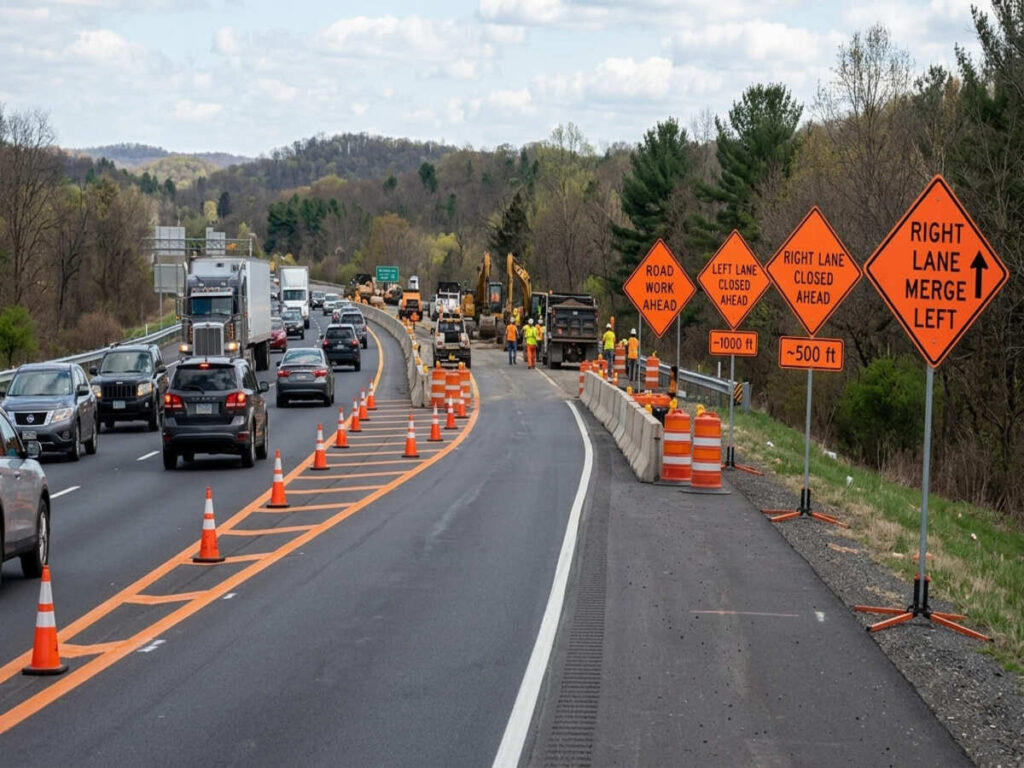
Effective traffic management combines both technologies. Use Static Signs to set the rules. Use VMS to provide advance warning.
- Step 1: Place static signs at the required regulatory point.
- Step 2: Position VMS units upstream to alert drivers early.
- Step 3: Ensure all signs meet AS 1742 size and reflective requirements.
Professional Consultation
Optraffic provides expert advice for road contractors. We offer AS 1742/AS 1743 compliant layouts and equipment. Our team ensures your site meets all safety audits and legal requirements.
Conclusion: Always Respect the Role of Permanent Traffic Control Signs
VMS enhances road safety, but it never replaces static signs. Static regulatory signs set the law. VMS provides the context. Use both correctly to protect workers and the public.
Contact Optraffic today for AS 1742-compliant signs and VMS for your next Australian project.
FAQ
What is the primary role of VMS in traffic management?
VMS units deliver real-time updates regarding road conditions. They alert drivers to upcoming hazards, detours, or special events. VMS enhances situational awareness but does not replace regulatory signs. These electronic displays help maintain smooth traffic flow by sharing news quickly.
Can VMS display regulatory commands like STOP or GIVE WAY?
No. Australian law prohibits VMS from replacing static STOP or GIVE WAY signs. Only physical signs meeting AS 1743 standards hold legal authority. While VMS can reinforce a “STOP AHEAD” warning, the physical sign must deliver the final command.
How does VMS improve safety within roadwork zones?
VMS units notify drivers of lane closures and speed changes well in advance. This early warning reduces sudden braking and prevents rear-end collisions. VMS captures driver attention and directs it toward static safety signs. This combination creates a safer environment for both road crews and motorists.
Do VMS units remain effective during extreme weather or at night?
Yes. VMS utilize high-output LED technology for maximum visibility in all conditions. These signs cut through heavy rain, fog, and darkness. Optraffic VMS units feature automatic dimming to ensure readability without blinding drivers at night. They provide reliable communication when static signs might be harder to see.
Who determines the placement of VMS on Australian roads?
State traffic authorities, local councils, and certified traffic managers decide VMS placement. They analyze road geometry and sightlines to ensure maximum safety. Placement guidelines under AS 1742.3 ensure VMS units never obstruct static regulatory signs. Proper positioning allows drivers enough time to react safely to messages.