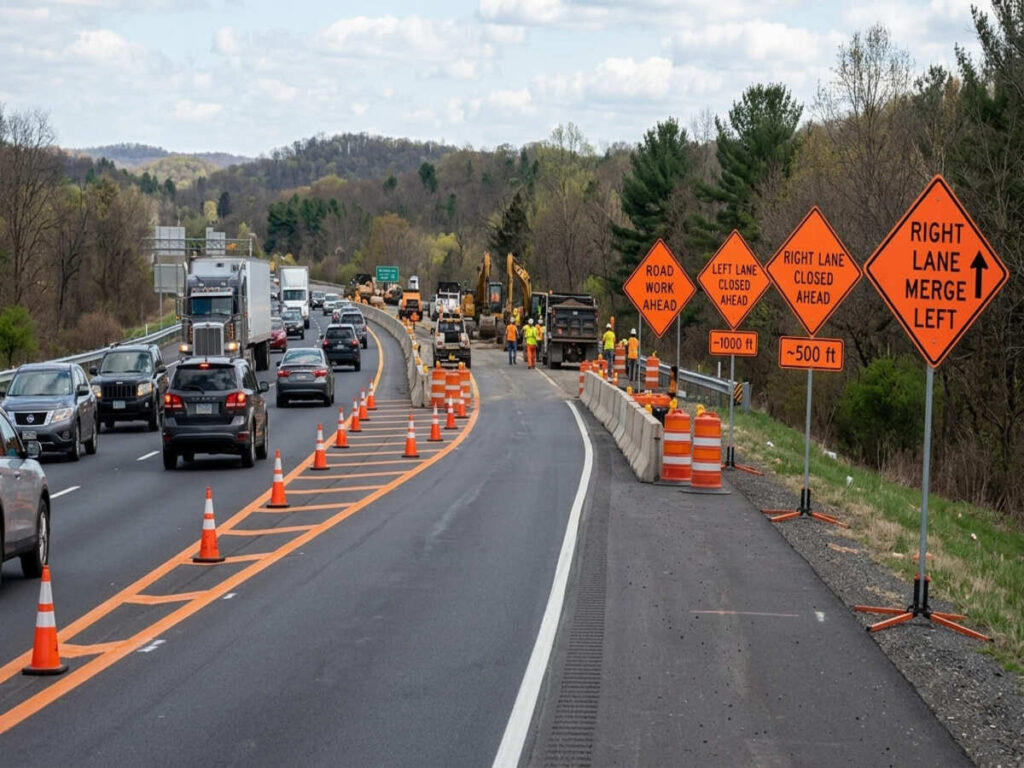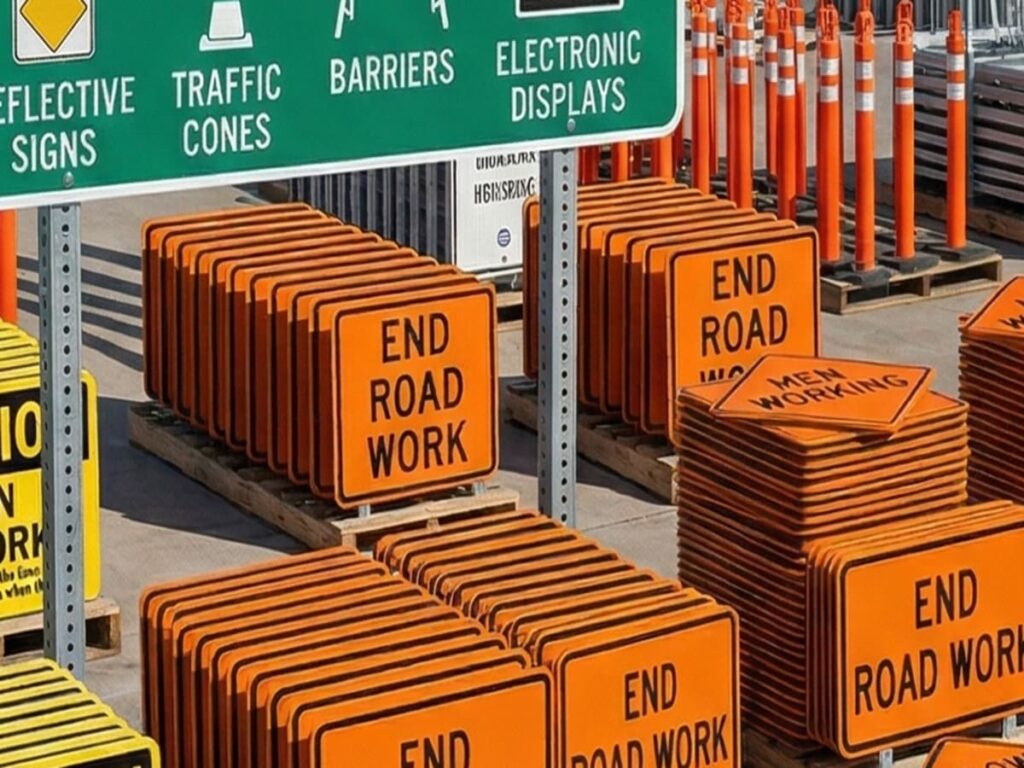
For companies that rent traffic signs to contractors, municipalities, and event crews, inventory is the revenue engine. Every sign in your rental fleet either generates income or sits as a depreciating asset. The difference usually comes down to one decision made before the first order: sourcing the right traffic signs for your rental fleet, at the right specification, from the right supplier.
This guide covers the full picture — what to stock, what MUTCD and OSHA actually require from you as a rental operator (not just from your customers), how to evaluate suppliers for rental-grade durability, and how to build a fleet that pays for itself within a season and keeps generating returns for a decade.
If you are ready to start building or expanding your fleet, OPTRAFFIC’s road safety signage range is built to MUTCD 11th Edition specifications with different sheeting options, bulk fleet pricing, and ASTM documentation included. Browse our safety signage catalog — or read on to make sure you are sourcing to the right specification for your market.
Why Traffic Signs Are a High-ROI Rental Product
Traffic signs are one of the most overlooked line items in a rental fleet. For companies already renting cones, barricades, or arrow boards, adding traffic signs to inventory is often the highest-margin expansion available. A single aluminum sign purchased at the right price point can generate its full cost in rental revenue within a single busy season.
The key difference between signs that generate returns and signs that become liabilities is the initial sourcing decision. Rental-grade signs must be built to survive repeated handling, transport, outdoor exposure, and occasional impact — characteristics that standard retail signs are not designed for.
Key benchmarks for traffic sign rental economics:
- 3–8× typical ROI on aluminum signs over a 5-year service life
- $8–$25/day average rental rate per sign (varies by region and sign type)
- 7–10 years expected service life for quality aluminum signs under regular rotation
- 6–10 rental days typical break-even point at standard daily rates
What Signs to Stock: The Core Rental Inventory
The most common mistake rental operators make is stocking too many sign types and not enough of the high-demand signs. Before purchasing, it helps to understand which signs drive the most rental activity in your market.
Tier 1: Must-Stock Signs (Highest Rental Frequency)
These signs are requested on virtually every road construction, utility, or event job. Stock them in quantity — running out means losing the entire order to a competitor.
| Sign Type | Common Applications | Standard Size | Rental Demand | Priority |
| Road Work Ahead | All road construction, utility work | 48″ × 48″ | ★★★★★ Highest | Tier 1 |
| Flagger Ahead | Lane closures, active flagging operations | 48″ × 48″ | ★★★★★ Highest | Tier 1 |
| Lane Closed Ahead | Highway maintenance, bridge work | 48″ × 48″ | ★★★★ High | Tier 1 |
| One Lane Road Ahead | Narrow work zones, rural roads | 48″ × 48″ | ★★★★ High | Tier 1 |
| Speed Limit (variable) | Work zones, temporary speed enforcement | 24″×30″ / 36″×36″ | ★★★★ High | Tier 1 |
| Stop / Slow Paddle | Flagging operations | 18″ / 24″ paddle | ★★★★ High | Tier 1 |
| Detour / Keep Right | Road closures, event traffic management | 48″ × 24″ | ★★★ Moderate | Tier 1 |
Tier 2: Support Signs (Important but Lower Frequency)
These fill out a complete work zone package. Customers who need Tier 1 signs often need Tier 2 signs alongside them — having them available increases your average order value per rental.
Tier 2 includes: Pedestrian Crossing, Survey Crew Ahead, Utility Work Ahead, No Parking — Tow Away, Begin/End Road Work, and directional arrows. See the full inventory build guide for recommended quantities and stocking ratios.
Stocking rule of thumb
For a starting rental fleet: 20–30 units of Tier 1 signs, 8–15 units of each core Tier 2 sign. Urban markets skew toward lane control and pedestrian signs; rural and highway markets need more advance warning signs in larger quantities.
MUTCD & OSHA Compliance for Rental Sign Fleets
Every sign in your rental inventory that goes out to a public roadway must comply with the Manual on Uniform Traffic Control Devices (MUTCD). This is a non-negotiable requirement — and compliance is your responsibility as the rental provider, not only the contractor’s.
What MUTCD Compliance Means for Your Inventory
The MUTCD 11th Edition (published 2023) sets minimum standards for sign design, retroreflectivity, color, size, and message. States adopt it on a rolling basis — check your state DOT’s currently adopted edition before auditing your inventory. For rental operators, the most critical compliance requirements are:
- Retroreflective sheeting grade: Work zone signs must meet Type III or Type IV minimum. Type I sheeting (common in cheaper signs) does not meet MUTCD requirements for roadway use.
- Minimum sign dimensions: Most work zone warning signs (W-series) require 48″×48″ on expressways and major highways. Verify size requirements for your primary market.
- Background color & legend: Orange background with black legend for temporary traffic control signs. Non-compliant colors void the sign for roadway use entirely.
- Condition on delivery: Signs must be clean, undamaged, and fully retroreflective when rented out. A faded or damaged sign does not comply — and creates liability for both parties.
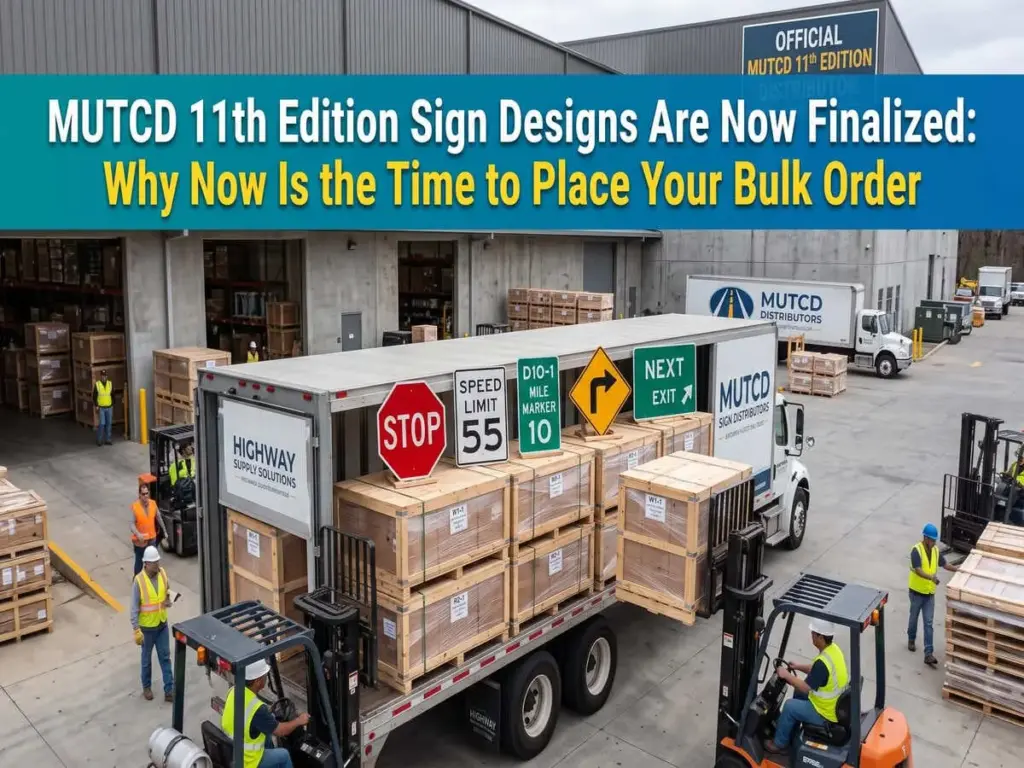
- MUTCD 11th Edition updates: Review your existing inventory against the 2023 updates, particularly new work zone sign designs and supplemental plaques.
Certifications to Require from Your Supplier
When sourcing signs for a rental fleet, require written documentation of: MUTCD compliance documentation, retroreflective sheeting grade certification (3M, Avery Dennison, or equivalent), and ISO 9001 quality management certification. For internationally sourced signs, CE marking is an additional quality indicator — but it is not a US regulatory requirement. What matters for US roadway use is MUTCD compliance and ASTM D4956 retroreflective sheeting standards.
Note: If a non-compliant sign from your rental inventory is involved in a work zone accident, your company can face shared liability alongside the contractor. Compliance documentation from your sign supplier is essential legal protection.
→ See cluster guide: Full MUTCD compliance checklist for rental fleets
Material & Durability: What Survives Repeated Rentals
The economics of sign rental depend entirely on how long a sign stays in serviceable condition. A sign that fails after two seasons costs dramatically more per rental day than one that lasts seven. The material decision at purchase time determines your long-term unit economics.
| Material | Est. Service Life (Rental) | MUTCD Compliant | Weather Resistance | Best For |
| Aluminum 0.080″ ★ Recommended | 7–10+ years | Yes | Excellent | Core rental fleet — highest ROI |
| Heavy-gauge aluminum 0.100″ | 10–15 years | Yes | Superior | High-cycle signs (Road Work Ahead, Flagger Ahead) |
| Roll-up vinyl signs | 2–4 years | Yes (if sheeted correctly) | Good | Supplemental inventory, mobile crews |
| Coroplast / plastic corrugated | 0.5–1 year | NOT for roadways | Poor | Temporary event use only — not for traffic rental |
Standard recommendation: 0.080″ aluminum with Type III retroreflective sheeting is the established industry standard for traffic sign rental fleets. It survives transport, stacking, and repeated field use while meeting all MUTCD requirements. Operators who build fleets with anything lighter typically replace inventory every 2–3 seasons instead of every decade.
→ See cluster guide: Aluminum vs. roll-up signs — full comparison for rental operators
→ See cluster guide: Retroreflective sheeting grades explained (Type I, III, IX, XI)
Traffic Sign Supplier Selection Criteria
The supplier decision is where most rental operators either build a profitable fleet or create an ongoing cost problem. The lowest price per sign is rarely the lowest cost per rental day over the asset’s life. Evaluating suppliers requires looking at total cost of ownership, not unit price alone.
What Separates Rental-Grade Suppliers from Retail Suppliers
Most sign suppliers manufacture for permanent installation or one-time use. Rental-grade specifications — specifically the combination of substrate gauge, sheeting grade, and edge treatment — are a distinct product category that not all manufacturers produce.
- Substrate thickness: Confirm 0.080″ minimum aluminum gauge. Request material certification, not just a product description.
- Retroreflective sheeting source: 3M Diamond Grade (Type XI), 3M High Intensity (Type III), or Avery Dennison equivalents are industry benchmarks. Proprietary sheeting from unknown manufacturers is a quality risk.
- Edge treatment: Rental signs take more edge impacts than installed signs. Rounded, deburred edges extend sign life and prevent sheeting delamination at corners.
- Mounting hole placement: Standardized holes (compatible with your sign stands) reduce handling time per deployment. Confirm compatibility before bulk ordering.
- MOQ and lead time: For rental inventory, you need a supplier who can fulfill repeat orders quickly. Establish an ongoing supply relationship, not just a one-time transaction.
- Quality certifications: ISO 9001 manufacturing certification and MUTCD compliance documentation are the baseline for a verifiable supply chain. CE marking (for internationally manufactured signs) is a useful additional quality indicator.
Fleet ROI: Pricing, Utilization & Replacement Cycles
Building a profitable traffic sign rental fleet requires understanding the relationship between purchase cost, daily rental rate, utilization rate, and replacement cycle. These four variables determine whether signs are an asset or a liability in your fleet.
Unit Economics Framework
As a starting framework for a standard 48″×48″ aluminum work zone sign at mid-range bulk pricing:
- ~$65 typical bulk purchase cost per MUTCD-compliant 48×48″ aluminum sign
- ~$12/day average daily rental rate (market average; varies significantly by region)
- ~6 days to break even on purchase cost at 100% utilization
- 40% annual utilization = ~146 rental days/year ≈ $1,750 revenue over 10 years on a $65 investment
The most critical variable is not daily rate but durability: a sign that fails after two seasons forces an early replacement that resets the ROI clock entirely.
Condition Tracking & Replacement
Rental-grade aluminum signs should be inspected after every return. A simple A/B/C/Retire condition grading system prevents degraded signs from returning to inventory and creating compliance issues or liability exposure.
Deep-Dive Guides by Topic
Each guide below covers one aspect of traffic sign rental fleet management in full detail — with compliance references, supplier criteria, and operational checklists.
Compliance cluster
- MUTCD 11th Edition: What Rental Companies Must Update
- OSHA & DOT Signage Requirements for Traffic Control Rental Operations
- State-by-State Signage Compliance Variations for Rental Operators
Product selection cluster
- Aluminum vs. Roll-Up Signs: Which to Stock for a Rental Fleet?
- Reflective Sheeting for Traffic Signs: Which Grade Should Your Rental Fleet Stock?
- Work Zone Sign Sizes: MUTCD Dimensions Reference for Rental Fleets
Sourcing cluster
- How to Source Wholesale Traffic Signs for a Rental Fleet
- CE & ISO Certified Traffic Sign Suppliers: What Certifications Actually Mean
- Custom Traffic Signs for Rental Fleets: When and How to Order
Operations cluster