アルミニウム サインのブランク合金の選択が調達 ROI を高める理由
間違った指定 アルミ看板ブランク合金 お金以上に費用がかかる. DOT 配送が 1 回拒否された場合、入札は失格となります, ボイドミルの保証, 再作業料金が発生します $4 に $8 ブランクあたり. 産業用看板契約を扱う調達マネージャーは、このリスクを直接知っています。. 彼らもそれを知っています アルミニウム看板ブランクを卸売で調達 合金を用途に正確に適合させるかどうかに依存します.
だいたい 85% 米国の. 交通標識や商業標識には 2 つの合金のうちの 1 つが使用されています: 5052-H38または6061-T6. ASTM B209 と AASHTO M-268 の 2 つの管理規格は、両方を受け入れます。. しかし、正しい選択はゲージに依存します, パネルサイズ, 環境, 総陸揚げ費用.
合金実行間のコストの差異 15% に 25% で 2026 市況. 5,000 個の空白の注文では、そのプレミアムが急速に加算されます. このガイドではデータに基づいてそれらを比較します, 意見ではない.
間違った合金を指定した場合の実際のコスト
サインブランクの失敗は 3 つの形式で表示されます: 成形時の応力亀裂, 使用中のエッジ腐食, 反射シートの剥離. 各故障モードは合金の選択に関係します. 連邦道路管理局は、MUTCD ガイダンスで予想される 10 年の最低耐用年数よりも短い交換サイクルの主な原因として、標識の早期故障を文書化しています。.
保証の負担が問題を複雑にする. 自治体の契約には多くの場合、 7- 10年パフォーマンスボンドまで. 1 つのロットが不合格になると、会計四半期全体のマージンが消えてしまいます.
このガイドは、中規模の製造工場の調達マネージャーを対象としています。. 技術的な深さは工場の認定に精通していることを前提としています, ASTM標準, および CNC 製造ワークフロー. ショップオーナーに署名する, QA担当者, 運用管理者は、すべてのセクションを通じて実用的な仕様を見つけることができます。.
5052-H38 アルミニウム サイン ブランク合金について
5052-H38 合金は業界の主力製品として機能します. マグネシウム含有アルミニウム合金の 5xxx シリーズに属します。. コンポジションが実行されます 2.2% に 2.8% マグネシウムと 0.15% に 0.35% クロム, アルミニウムとのバランス. H38 焼き戻しは、ひずみ硬化とそれに続く安定化を示します。これは、このファミリーで最も硬い状態です。.
これ アルミ看板ブランク合金 優れた強度バランスを実現, 成形性, 耐食性. アルミニウム協会による分類 5052 最も溶接可能な非熱処理合金の 1 つとして. 製造業者は、一時停止標識から道路名のブレードに至るまで、あらゆるものに使用しています。.
機械的性質 5052 アルミサインブランク
厚さ 1.6 mm の 5052-H38 の機械的特性を検証済み:
- 究極の引張強度: 290 MPA (42,000 psi)
- 降伏強度: 255 MPA (37,000 psi)
- 休憩時の伸び: 7%
- ブリネル硬度: 77 HB
- せん断強度: 165 MPA (24,000 psi)
- 弾性率: 70.3 GPA (10,200 KSI)
海洋および沿岸サービスにおける耐食性
マグネシウム含有量により、5052-H38 は海水および氷結防止用塩化物への曝露に対して優れた耐性を備えています。. ASTM G85 塩水噴霧試験により、沿岸地域における熱処理可能な合金よりも優れた性能が確認されています。. 沿岸州の DOT — フロリダ州, カリフォルニア, および湾岸諸国 - 定期的に指定します 5052 このような理由からの基板.
この合金は、ほとんどの屋外用途でクロメート化成コーティングを行わなくても腐食プロファイルを維持します。. これにより、1 つのプロセス ステップと 1 つのサプライ チェーンの依存関係が排除されます。.
成形性と製造挙動
5052-H38 合金は、予測可能な結果で成形操作を処理します。. 一般的な最小曲げ半径は、0.080 インチのゲージ シートの場合 1.5T ~ 2T です。. CNC ルーティングにより、標準的な超硬工具を使用してきれいなエッジを生成します.
製造業者は以下のようなスクラップ率を報告しています 2% 標準サインブランク生産の 5052-H38 用. 生産スケジュールが逼迫している場合、予測可能性が重要になります.
6061-T6 アルミニウム サイン ブランク合金について
6061-T6 合金は、 アルミ看板ブランク合金 スペクトラム. マグネシウム - シリコン合金の 6xxx シリーズに属します。. 構成には以下が含まれます 0.8% に 1.2% マグネシウム, 0.4% に 0.8% シリコン, そして 0.15% に 0.40% 銅. T6 の指定は、溶体化熱処理とそれに続く人工時効処理を示します。.
この熱処理サイクルにより、汎用アルミニウム合金の中で最高の機械的強度が得られます。. 調達管理者は、強度には成形性とコストのトレードオフが伴うことを知っておく必要があります。.
機械的特性と 6061-T6 アルミニウムの特性
サインブランク用途に最も適切な 6061-T6 アルミニウムの特性:
- 究極の引張強度: 310 MPA (45,000 psi)
- 降伏強度: 276 MPA (40,000 psi)
- 休憩時の伸び: 12% (ゲージ長50mmの場合)
- ブリネル硬度: 95 HB
- せん断強度: 207 MPA (30,000 psi)
- 弾性率: 68.9 GPA (10,000 KSI)
アルミニウム合金の引張強度の比較では、6061-T6 が 5052-H38 よりもおおよそ優れていることがわかります。 7% UTSと 8% 降伏強さについて. ギャップは、大スパンの看板や構造取り付けコンポーネントにとって最も重要です.
大型サイネージの構造上のメリット
を超える高架誘導標識の場合 30 平方フィート, 6061-T6 の構造マージンにより、風荷重によるたわみが軽減されます。. AASHTO LTS-6 は標識支持構造の風荷重計算を指定します. エンジニアリング レビューでは、多くの場合、複数のスパンに対してデフォルトで 6061-T6 が使用されます。 8 中間サポートのない足.
押し出し成形された 6061-T6 パネル システムも、さまざまなメッセージ サインを支配しています。 (VM) 住宅市場. 合金の機械加工性により、電子取り付けの厳しい公差がサポートされます.
標準標識アプリケーションにおける 6061-T6 の制限
6061-T6 に強度を与えるのと同じ熱処理により、成形性が低下します。. 以下のゲージの曲げ操作 0.080 インチでは応力亀裂の危険性があります. 成形実行中のスプリングバック 30% 5052-H38より高い. スプリングバックにより生産スケジュールが複雑になる.
海洋環境は別の弱点を露呈する. 含まれる銅の量は、 6061 塩化物が豊富な雰囲気では応力腐食割れの感受性が高まります. Coastal DOT はフラットサイン用途ではこれを回避します.
アルミニウム合金引張強さの比較及び規格表
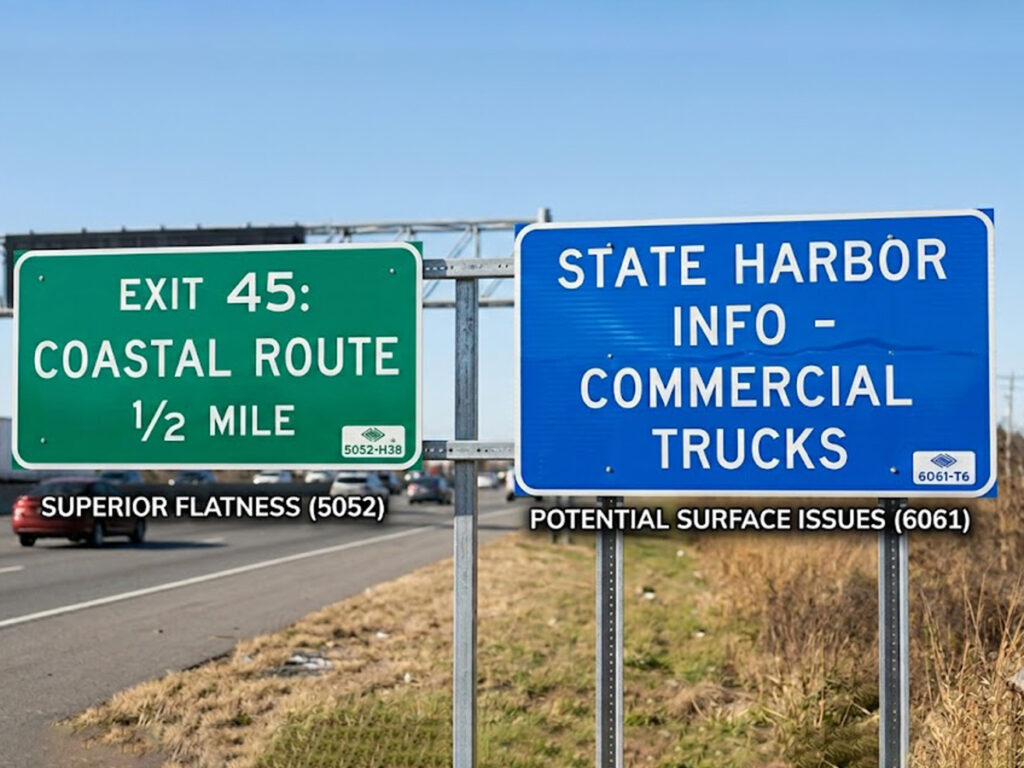
以下のアルミニウム合金の引張強さの比較は、調達管理者が仕様書と入札応答に必要とするデータをまとめたものです。.
| 財産 | 5052-H38 | 6061-T6 |
| 究極の引張強度 | 290 MPA (42,000 psi) | 310 MPA (45,000 psi) |
| 降伏強度 | 255 MPA (37,000 psi) | 276 MPA (40,000 psi) |
| 休憩時の伸び | 0.07 | 0.12 |
| ブリネル硬度 | 77 HB | 95 HB |
| せん断強度 | 165 MPA (24,000 psi) | 207 MPA (30,000 psi) |
| 弾性率 | 70.3 GPA | 68.9 GPA |
| 密度 | 2.68 g/cm³ | 2.70 g/cm³ |
| 成形性評価 | 素晴らしい | 公平 |
| 被削性評価 | 良い | 素晴らしい |
| 耐食性 | 素晴らしい (海兵隊) | 良い |
| 溶接性 | 素晴らしい | 良い |
| 通常価格プレミアム | ベースライン | +15–25% |
ソース: ASTM B209, ASMアルミニウム規格とデータ, アルミニウム協会 — https://www.アルミニウム.org/
成形性・加工性スコア
優れた成形性と普通の成形性の違いは、測定可能な製造現場の成果につながります。. ファブリケーターレポート 2% に 4% 6061-T6 成形オペレーションでのスクラップ率の向上. 合金の硬度により工具の摩耗も大きくなります.
aashto, ASTM, および FHWA への準拠
どちらの合金も、FHWA MUTCD セクション 2A に概説されている基材要件を満たしています。.08. ASTM B209 は、シートとプレートの両方の仕様を規定します。. AASHTO M-268 は再帰反射シートの互換性をカバーします. 州の DOT 補足仕様により、特定の標識カテゴリの合金の選択が制限される場合があります. 調達管理者は、見積もりの前に必ず州レベルの補足を確認する必要があります。.
5052 vs 6061 ポンド当たりのコストと総陸揚げコスト
The 5052 vs 6061 ポンドあたりのコストの違いが調達の決定のほとんどを左右します. アルミニウムの基本価格はロンドン金属取引所に連動します (LME). LMEの上に, 工場は合金と焼き戻しのプレミアムを適用します.
2026 工場の価格ベンチマーク
米国の現在の工場価格ベンチマーク. 買い手:
- 5052-H38ミルダイレクト: $3.20 に $4.10 ポンド当たり
- 6061-T6ミルダイレクト: $3.80 に $5.20 ポンド当たり
プレミアムは熱処理コストを反映します, 生産量の減少, そして集中供給. 本項に基づく関税条件 232 輸入アルミニウム板の価格に影響を与え続ける. 購入者は注文時に見積もりで価格を確認する必要があります.
ソース: USGS 鉱物品概要, アルミニウム — USGS 2025 報告, https://pubs.usgs.gov/periodicals/mcs2025/mcs2025-aluminum.pdf
合金選択における隠れたコスト
ポンド当たりの価格設定は物語の一部にすぎません. 隠れたコストには次のものがあります:
- 収量損失: 6061-T6 は通常、 2% に 4% 成形中にスクラップが増える
- ツーリングの摩耗: より硬い基材は炭化物の劣化を加速します
- 反射シートの廃棄物: 拒否された基板, 高価なシートを無駄にする
- リードタイムリスク: 6061-T6 リードタイム実行 4 に 8 週対. 2 に 4 5052-H38 の場合は週
5,000 個の空白の注文 $0.60 1ポンド当たりの保険料が追加される $3,000 1回の発送の材料費に. 年間調達予算全体に掛け合わせる, 5052-H38 と 6061-T6 の差が実際の品目になります.
ボリュームプライシングと卸売戦略
工場の価格帯は通常、次の値で区切られます。 500, 2,000, 5,000, および 10,000 個のしきい値. SKU 全体で注文を集約することで、より良い単価設定が可能になります. 調達管理者はまた、連邦資金プロジェクトに関する Buy America のコンプライアンス文書を維持するために、出荷ごとに ASTM B209 工場認証を要求する必要があります。.
アプリケーションベースの意思決定フレームワーク
右 アルミ看板ブランク合金 標識のカテゴリによって異なります. 以下の意思決定フレームワークは、ほとんどの商用および DOT 標識のワークフローに適用されます。.
標準的な規制および警告標識
フラットパネル看板用 12 平方フィート, 5052-0.080 インチまたは 0.100 インチのゲージの H38 は、あらゆる標準アプリケーションに対応します. 標識を停止します, 収量標識, 速度制限標識, および駐車標識はすべてデフォルトでこの仕様になっています. 組み合わせによりコスト効率を実現, 実証済みのシート接着力, 十分な構造性能と.
大型看板とオーバーヘッド看板
を超える高架案内標識やパネルに 30 平方フィート, 6061-ゲージが 0.125 インチ以上の T6 は、必要な構造マージンを提供します. 押出成形 6061-T6 パネル システムもこのカテゴリを支配しています. AASHTO LTS-6 による風荷重計算により、最終的なゲージの選択が行われるはずです.
この範囲のサインパネルの場合, アプリケーションに適したゲージを選択することは、 アルミ看板ブランク合金 選択.
海洋および沿岸環境
沿岸の DOT 標識用, 港湾施設の標識, およびその中のアプリケーション 5 数マイルの塩水, 5052-オプションのクロメート化成コーティングを備えた H38 は、優れた耐食性を実現します. エンジニアリングレビューで特に必要でない限り、これらの環境では 6061-T6 を避けてください。.
調達チェックリスト: アルミニウムサインブランク合金の品質の検証
調達マネージャーは、受領前にすべての出荷品を以下のチェックリストと照合する必要があります。.
ミルテストレポートとASTM B209認証
すべての工場試験報告書には次の内容が含まれている必要があります。:
- 熱数とロットのトレーサビリティ
- ASTM B209 範囲内の化学組成分析
- 機械的試験結果 (引張, 収率, 伸長)
- 気性の検証 (H38またはT6)
- 寸法証明 (厚みと平坦度)
連邦政府の資金提供を受ける DOT プロジェクトには Buy America の文書が必要です. 工場証明書はコンプライアンスの主な証拠として機能します.
受入検査基準
標準受入検査では 4 つのチェックがカバーされます:
- 厚み検証: ±0.005インチの公差
- 平坦度チェック: 0.030インチ未満 偏差以上 48 インチ
- 傷の表面欠陥検査, ミルマーク, エッジバリ
- ブリネルまたはロックウェル B スケールを使用したスポット硬度試験
サプライヤーに共通する危険信号
調達チームはあらゆる出荷にフラグを付ける必要があります。:
- ヒート番号が欠落しているか変更されている
- ASTM B209 の範囲外の化学組成値
- 同一ロット内でのゲージ厚のばらつき
- 指定されている場合に化成皮膜に関するドキュメントが欠落している
- 完全な工場認定文書の提供に消極的
これらの危険信号は、多くの場合、寸法不良の前に発生します。, シート剥離, または使用中の腐食の問題. すべての出荷を検証する調達マネージャーが保証対象を保護します.
仕様の信頼性に関する最終推奨事項
右 アルミ看板ブランク合金 選択は 4 つの要素に帰着します: パネルサイズ, 環境, ゲージ, と予算. のために 85% 標準サインブランクアプリケーションの, 5052-0.080 インチゲージの H38 が最適なバランスを実現. 構造用途および大判用途向け, 6061-T6で 0.125 インチ以上の場合、価格にプレミアムが発生します.
調達管理者は、3 つの条件が適用されない限り、デフォルトで 5052-H38 を使用する必要があります。: パネルサイズを超えています 30 平方フィート, 取り付けには構造上の完全性が必要です, またはエンジニアリングレビューが別途指定する. このデフォルトでは、 80% 合金選択の意思決定の効率化を図り、仕様のリスクを軽減します.
より広範な調達決定のため - ゲージの選択, 反射シートの互換性, および DOT コンプライアンス — 完全な内容を確認する アルミ看板基板のB2B調達体制. 兄弟リソースは MUTCD 準拠をカバーします, シートの選択, あらゆる商用看板カテゴリに対応した厚さのサイジング. The アルミ看板ブランク合金 意思決定が何年にもわたって調達の成果を形作る. スペックシートで正しく理解しましょう, あらゆる契約で節約効果がさらに高まります.
よくある質問
5052-H38 と 6061-T6 の違いは何ですか?
5052-H38 と 6061-T6 の違いは合金の化学的性質から始まります. 5052-H38 は、優れた成形性と耐食性を実現するためにひずみ硬化された、熱処理不可能なマグネシウムベースの合金です。. 6061-T6 は、強度と機械加工性が高いものの、成形性が低下したマグネシウム - シリコンの熱処理可能な合金です。. 5052-H38 はフラットサインブランクを支配し、6061-T6 は構造用途を支配します.
屋外の交通標識に最適なアルミニウム標識ブランク合金はどれですか?
5052-H38 は業界標準として機能します アルミ看板ブランク合金 屋外交通標識用. 優れた耐食性, 優れた反射シート接着力, 低コストで、以上のデフォルト仕様になります。 80% 標準的な DOT および地方自治体の標識の.
6061-T6 は MUTCD および AASHTO の要件を満たしていますか?
はい. 5052-H38 と 6061-T6 は両方とも、ASTM B209 仕様に準拠して供給される場合、FHWA MUTCD 基板要件を満たします。. 州の DOT 補足仕様により、特定の標識カテゴリの合金の選択がさらに制限される可能性があります. 引用する前に必ず州レベルの要件を確認してください.
6061-T6 は 5052-H38 と比べてどれくらい高価ですか?
The 5052 vs 6061 実行時のポンドあたりのコスト差 15% に 25% で 2026 市況. 追加コストにはリードタイムの延長が含まれます, 成形中のスクラップ率が高い, 供給業者の在庫が限られている. 陸揚げコストの合計の差は、ポンド当たりのプレミアムをさらに上回る可能性があります 5% に 10%.
6061-T6 は標準の一時停止標識の 5052-H38 の代わりに使用できますか?
技術的には, はい, しかし費用対効果が高くありません. 標準の規制標識は、成形性と耐食性が向上し、低価格で 5052-H38 と同様の性能を発揮します。. 6061-T6 は、強度マージンがプレミアムを正当化する構造用途および大型用途向けに予約してください。.
各アルミニウムサインブランク合金と組み合わせるゲージの厚さは何ですか?
5052-H38 は通常、 0.063, 0.080, 0.100, および 0.125 インチのゲージ. 6061-T6 は通常、次の場所で指定します。 0.125 構造用途の場合はインチ以上. ゲージの選択は、AASHTO LTS-6 に基づく標識寸法と風荷重要件に従う必要があります。.
参照
ASTMインターナショナル. ASTM B209 — アルミニウムおよびアルミニウム合金板および板の標準仕様.
連邦高速道路局. 均一な交通制御装置のマニュアル (mutcd).