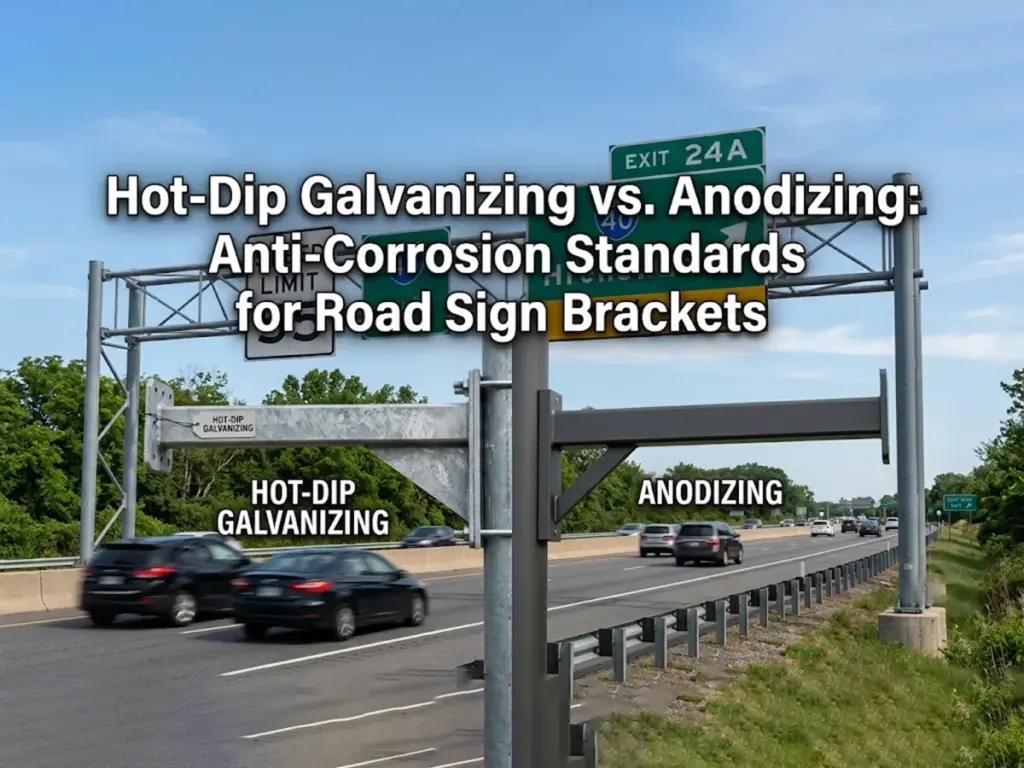
Perché le specifiche personalizzate sono importanti per i programmi di segnaletica comunale e per strutture
I team municipali di approvvigionamento si trovano ad affrontare una realtà di approvvigionamento che l'inventario standard raramente risolve. Gli spazi vuoti in stock non rispettano la spaziatura dei post MUTCD, Distanze di montaggio ADA, e orari specifici della struttura. Cartelli in alluminio personalizzati colmare queste lacune con conformità documentata e dimensioni pronte per l’uso sul campo. Per un quadro completo sulle leghe, calibri, e qualificazione dei fornitori, le agenzie dovrebbero esaminarle integralmente Guida B2B alle specifiche dei supporti per cartelli in alluminio prima di redigere qualsiasi RFP.
L'undicesima edizione del MUTCD, pubblicato a dicembre 2023, fissa una scadenza per l'adozione statale a gennaio 18, 2026. Nuove installazioni di segnaletica dopo gennaio 18, 2024, deve già conformarsi. I team di procurement che fanno affidamento su inventari legacy ora rischiano di vedersi negare i finanziamenti degli aiuti federali e la responsabilità contrattuale. Cartelli in alluminio personalizzati progettati secondo le specifiche attuali, proteggono sia i budget che gli audit trail.
Il costo reale della modifica dei grezzi grezzi sul campo
La perforazione sul campo e la rifinitura delle scorte comportano costi di manodopera non preventivati. Il Bureau of Labor Statistics riporta un maggio 2024 salario medio di $48,620 per gli addetti alla manutenzione e riparazione generale (Fonte: https://www.bls.gov/ooh/Installation-Maintenance-and-Repair/General-maintenance-and-repair-workers.htm). Carico di vantaggi, ciò si traduce in circa 35–55 dollari l’ora in molti comuni. Una squadra di due persone che impiega quattro minuti per segnale durante la perforazione sul campo aggiunge dai 4 ai 7 dollari per unità prima degli elementi di fissaggio. I pannelli preforati in alluminio eliminano completamente questo passaggio.
Driver di conformità: MUTCD, Compra l'America, e ADA
Tre quadri normativi regolano l’approvvigionamento di segnaletica moderna. L'undicesima edizione del MUTCD controlla dimensione e colore. L'ADA 2010 Gli standard §703 regolano l'orientamento delle strutture. E 23 Cfr 635.410, modificato da gennaio della FHWA 2025 Regola finale su Buy America per i prodotti manifatturieri, applica i requisiti Buy America ai prodotti in alluminio nell'ambito di progetti di aiuti federali. Per i progetti obbligatori a partire da ottobre 1, 2026, i prodotti fabbricati devono essere fabbricati negli Stati Uniti con un valore maggiore di 55% costo della componente domestica.
Quando la personalizzazione supera l'inventario di magazzino
Cartelli in alluminio personalizzati ripagare più velocemente quando:
- I volumi superano approssimativamente 100 unità per spec
- Le dimensioni non rientrano nella matrice standard della serie R MUTCD
- L'hardware di montaggio si discosta dal comune 3/8″ o 16/7″ modelli
- Gli angoli di raggio devono superare i 3/8″ valore delle azioni
Specifiche e tolleranze relative alle dimensioni dei pezzi grezzi in alluminio personalizzati
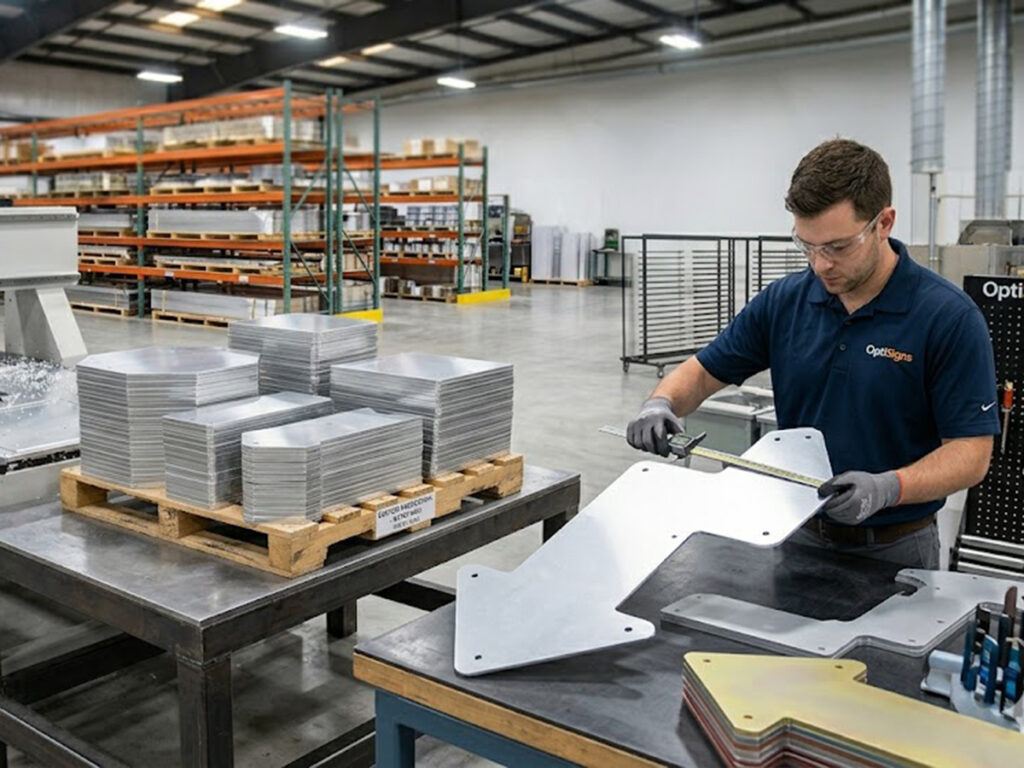
Il dimensionamento è il punto in cui iniziano la maggior parte dei fallimenti della RFP. La selezione delle dimensioni dei pezzi grezzi in alluminio personalizzati dovrebbe corrispondere direttamente alle tabelle MUTCD e al programma dell'hardware di montaggio dell'agenzia. Cartelli in alluminio personalizzati dimensionati al di fuori degli intervalli MUTCD comportano ancora l’onere di conformità dell’agenzia.
Intervalli di dimensioni standard e personalizzate
Cartelli in alluminio personalizzati spedire da un 6″×6″ facilità, placche fino a 48″×96″ fogli-segnaletica. Le dimensioni comunali più ordinate seguono i codici MUTCD:
| Tipo di segno | Codice MUTCD | Dimensioni standard (pollici) |
| FERMARE | R1-1 | 30, 36, 48 |
| PRODOTTO | R1-2 | 30, 36, 48 |
| Limite di velocità | R2-1 | 24×30, 30×36, 36×48 |
| Diamante d'avvertimento | Serie W | 30, 36, 48 |
| Targa dell'impianto | - | 6×9, 8×12, 12× 18 |
Misura, Spessore, e Tolleranza del foglio
ASTM B209 disciplina i fogli di alluminio laminati piatti forniti negli Stati Uniti. Firma dei produttori. Lo standard prevede una tolleranza sullo spessore di circa ±0,004″ per fogli inferiori a 0,080″ e valori più ristretti sopra. Quattro indicatori dominano gli appalti comunali:
| Misura (In) | Metrica (mm) | Uso tipico |
| 0.04 | 1 | Segnaletica interna o temporanea |
| 0.063 | 1.6 | Normativa standard sotto i 30 anni″ |
| 0.08 | 2 | Installazioni permanenti autostradali |
| 0.125 | 3.2 | Grandi indicazioni guida over 48″ |
Forme personalizzate per spazi vuoti di segnaletica oltre i rettangoli
Le forme personalizzate per i pannelli grezzi includono gli ottagoni (FERMARE), triangoli equilateri (PRODOTTO), Pentagono (zona scolastica), scudi (marcatori di percorso), e loghi personalizzati. Il routing CNC vale ±0,030″ tolleranza al taglio. Le forme tagliate a taglio si avvicinano a ±0,060″. La sezione 2A.11 del MUTCD fissa forma e colore per ogni tipo di segnaletica regolamentata. I loghi personalizzati rimangono aperti per la struttura, università, e ordinamenti dei dipartimenti dei parchi spazi vuoti personalizzati per insegne in alluminio su larga scala.
Angoli del raggio: Standard, Utensileria, e linguaggio delle specifiche
Gli angoli del raggio riducono sia il rischio di lesioni che i danni sul campo. Segnalano anche la qualità della produzione. I team di procurement dovrebbero specificarli ogni volta.
Raggi degli angoli standard per applicazione di segnaletica
Il MUTCD non impone un singolo raggio. La convenzione del settore associa il raggio dell'angolo alla dimensione del cartello:
- 3/8″ raggio per segnali fino a 24″
- 1/2″ raggio per 24″–36″
- 3/4″ raggio per 36″–48″
- 1-1/2″ raggio per segnali superiori a 48″
Per la segnaletica della struttura, OSHA 29 Cfr 1910.145 richiede che la segnaletica rimanga priva di spigoli vivi e bave. Un minimo 1/4″ il raggio soddisfa questo standard.
Opzioni di raggio personalizzato
Oltre l'estetica, gli angoli arrotondati sono un requisito di sicurezza nelle zone pedonali ad alto traffico per mitigare i rischi di lesioni. Utilizzando il routing CNC, produciamo raggi personalizzati da 1/8″ a 3″ con una tolleranza di precisione di ±0,015″.
- Raggio di sicurezza standard: 1.5″ o 2″ i raggi sono tipici dei segnali stradali conformi al MUTCD.
- Profili specializzati: A forma di stadio (raggio intero) gli spazi vuoti sono ideali per le stazioni di servizio, strutture di parcheggio, e segnaletica direzionale conforme ADA dove è più morbida, il profilo moderno migliora sia la leggibilità che la sicurezza tattile.
Linguaggio delle specifiche per gli appalti & Ordini di acquisto
Per garantire la coerenza tra i distretti municipali e prevenire controversie tra fornitori, utilizzare la seguente clausola PO standardizzata:
- Esempio di clausola PO: “Tutti e quattro gli angoli devono essere raggiati a 1/2″ (12.7mm) ±1/16″, sbavato per soddisfare gli standard ASTM B209, e rifiniti senza segni di utensili o spigoli vivi.”
- Suggerimento per il controllo qualità: I gestori della struttura dovrebbero eseguire un'ispezione visiva al momento della consegna. I segni dovrebbero essere lisci, bordi uniformi che consentono una manipolazione sicura senza guanti e garantiscono un'applicazione senza soluzione di continuità del rivestimento riflettente (si verificano spesso bolle negli angoli scarsamente sbavati).
Cartelli in alluminio preforati: Schemi dei fori e compatibilità hardware
I pannelli preforati in alluminio per segnaletica offrono il maggiore risparmio di installazione rispetto a qualsiasi caratteristica personalizzata. I fori praticati in fabbrica eliminano la misurazione sul campo e riducono la rottura del rivestimento.
Diametri dei fori standard
Tre dimensioni di foro coprono la maggior parte dell'hardware municipale:
- 3/8″ (0.375″) per il 16/5″ bulloni con rondelle
- 7/16″ (0.4375″) per 3/8″ Bulloni con canale a U
- 1/2″ (0.500″) per gruppi di staffe a tubo quadrato
La tolleranza della posizione dovrebbe essere ±0,030″ dal bordo di riferimento. UN 1″ l'offset del bordo è lo standard autostradale.
Modelli multiforo per tipo di palo
I montanti con canale a U utilizzano una linea centrale verticale a 2 fori a 7/16″ diametro su 1″ centri. Tubo quadrato (2″–2-1/2″) utilizza uno schema a 4 fori abbinato alla perforazione post-fabbrica. I sistemi antistrappo certificati AASHTO MASH-16 richiedono il posizionamento specifico dei fori per preservare la certificazione dei crash test.
Sbavatura e finitura dei fori
Classe 2 la sbavatura non consente sbavature superiori a 0,005″. Gli acquirenti che ordinano pezzi grezzi di alluminio verniciati a polvere devono richiedere la sbavatura prima della verniciatura. Le bave trattengono la polvere in modo non uniforme e si rompono sotto la coppia di bulloni. Una svasatura a 82° si adatta ai fissaggi ad incasso su segnali architettonici.
Grezzi in alluminio pretrattato e verniciato a polvere: Preparazione della superficie
La chimica del pretrattamento determina la durata del rivestimento. Il giusto pretrattamento costa decenni; quello sbagliato si sbuccia in due inverni. Cartelli in alluminio personalizzati ordinati senza uno standard di pretrattamento documentato espongono le agenzie a richieste di fallimento prematuro.
Cromato vs. Rivestimenti di conversione non cromati
MIL-DTL-5541 copre i rivestimenti di conversione del cromato in due classi pertinenti. La Classe 1A offre la massima protezione dalla corrosione. Classe 3 scambia una certa protezione con una resistenza elettrica inferiore. Il cromo esavalente è limitato in molti stati. Cromo trivalente (TCP) secondo MIL-DTL-81706 e i sistemi non cromati a base di zirconio secondo ASTM B921 ora fungono da alternative conformi.
Standard di prestazione della verniciatura a polvere
La famiglia di standard AAMA classifica la durabilità del rivestimento:
| Standard | Spray salino (ASTM B117) | Esposizione in Florida | Applicazione tipica |
| AMAMA 2603 | 1,500 ore | 1 anno | Al coperto o a breve termine |
| AMAMA 2604 | 3,000 ore | 5 anni | Segnaletica esterna standard |
| AMAMA 2605 | 4,000 ore (G85) | 10 anni | Siti costieri e con raggi UV elevati |
Fonte: https://www.pfonline.com/articles/understanding-aama-specifications
La polvere di poliestere standard ha uno spessore del film secco di 2,0–4,0 mil. Specificando AAMA 2604 protegge gli acquirenti nelle contee costiere e nelle zone di gelo-disgelo.
Superfici pronte per il rivestimento in fogli per vinile riflettente
I pezzi grezzi in alluminio verniciato a polvere raramente ricevono un rivestimento retroriflettente sulla stessa faccia. Il rivestimento richiede una superficie in alluminio nudo con rivestimento di conversione per l'adesione secondo ASTM D4956. I team di procurement dovrebbero specificare “rivestimento in polvere” O “pronto per il rivestimento” come elementi pubblicitari separati, mai entrambi sulla stessa faccia.
Selezione di materiali conformi a ASTM B209 e leghe di alluminio di grado traffico
La frase “Conforme ASTM B209” ha peso solo quando gli acquirenti lo verificano. Specificare la lega di alluminio per traffico stradale con la documentazione costringe i fornitori a sostenere la richiesta. Cartelli in alluminio personalizzati privi di certificazione del frantoio non possono essere considerati conformi, indipendentemente dal marketing del fornitore.
5052-H38 contro. 6061-Proprietà meccaniche T6
| Proprietà | 5052-H38 | 6061-T6 |
| Resistenza alla trazione | 41 ksi (285 MPA) | 45 ksi (310 MPA) |
| Forza di rendimento | 37 ksi (255 MPA) | 40 ksi (275 MPA) |
| Allungamento (% nel 2″) | 4 | 12 |
| Corrosione marina | Eccellente | Bene |
Fonte: https://store.astm.org/standards/b209
5052-H38 è la lega di alluminio standard per il traffico per la segnaletica. Il suo contenuto di magnesio (2.2–2,8%) aumenta la resistenza alla corrosione marina e stradale. 6061-T6 subentra dove conta la resistenza strutturale, come ad esempio sui segnali guida sopraelevati.
Per saperne di più: 5052-H38 contro 6061-T6: Scegliere la lega di alluminio giusta per i tondini per segnaletica
Certificazione e documentazione dello stabilimento
Una RFP difendibile dovrebbe richiedere rapporti di prova dello stabilimento secondo EN 10204 Tipo 3.1 con tracciabilità del calore e del lotto. Ogni pallet deve riportare un'etichetta con un riferimento incrociato a un certificato. La verifica chimica protegge dalla sostituzione: Il Mg 2,2–2,8% conferma 5052; Si conferma Mg 0,8–1,2% con Si 0,4–0,8%. 6061.
Ricezione della lista di controllo per l'ispezione
L'approvvigionamento dovrebbe convalidare almeno tre articoli per pallet:
- Spessore con calibrazione micrometrica a tre punti per lastra
- Planarità su una lastra di superficie in granito all'interno 0.5% della dimensione lunga
- Ispezione visiva secondo la sezione ASTM B209 9 per difetti superficiali
Pannelli di segnaletica personalizzata in grandi quantità e approvvigionamento di segnaletica in alluminio personalizzata all'ingrosso
Gli spazi vuoti per segnaletica personalizzata in blocco sbloccano sia i prezzi che il vantaggio dei tempi di consegna. I cartelli in alluminio personalizzati all'ingrosso in quantità rendono possibili programmi pluriennali di manutenzione dei cartelli con budget comunali ristretti.
Livelli di prezzo a volume
La struttura della maggior parte dei produttori si rompe 50, 100, 250, 500, E 1,000 unità. Le riduzioni da livello a livello in genere sono dell’8-22%. I MOQ differiscono in base alla complessità:
- 25–50 unità per dimensioni standard con foratura personalizzata
- 100–250 unità per grezzi verniciati a polvere con forma personalizzata
- 500+ unità per combinazioni uniche di leghe o calibri
Tempi di consegna in 2026
Attuale 2026 le fasce temporali di consegna riflettono le realtà tariffarie e della catena di fornitura:
- 5–7 giorni lavorativi: grezzi preforati di dimensioni standard
- 10–15 giorni lavorativi: grezzi verniciati a polvere di forma personalizzata
- 15–25 giorni lavorativi: ordini completamente personalizzati con lega diretta alla laminazione
Contratti pluriennali e documentazione Buy America
I PO globali annuali con versioni trimestrali consentono alle agenzie di coprire prezzi e tempi di consegna. Ogni contratto pubblicizzato a partire da ottobre 1, 2026, dovrebbe richiedere un certificato di origine dei materiali del prodotto fabbricato che documenti gli Stati Uniti. assemblaggio finale e >55% costo della componente domestica (23 Cfr 635.410). I fornitori che non sono in grado di produrre questa documentazione non riusciranno a rivedere le offerte sui progetti di aiuti federali.
Specifica di spazi vuoti per segnaletica in alluminio personalizzati per il successo del programma a lungo termine
Dimensionamento, perforazione, e il pretrattamento costituiscono la triade di specifiche che garantisce una durata di servizio di 10-15 anni. Ogni pilastro protegge gli altri. Il calibro corretto fallisce quando un pretrattamento scadente lascia corrodere i bordi. La perforazione perfetta fallisce quando i fori non rivestiti assorbono l'umidità nel substrato.
Cartelli in alluminio personalizzati specificato secondo ASTM B209, MUTCD 11a edizione, AMAMA 2604, e MIL-DTL-5541 Classe 1A forniscono prestazioni sul campo prevedibili e documentazione pronta per l'audit. Il risultato: meno guasti sul campo, controlli più puliti, e la piena difendibilità di Buy America attraverso il 2026 transizione.
Domande frequenti sugli spazi vuoti per cartelli in alluminio personalizzati
Quale sagoma è richiesta per la segnaletica stradale permanente?
La maggior parte dei DOT statali specifica 0,080″ per installazioni permanenti in autostrada. Lo 0,063″ lo scartamento è accettabile per i segnali inferiori a 30″. Segnali guida over 48″ generalmente richiedono 0,125″ per controllare il flutter e i danni ai bordi.
I pannelli per segnaletica in alluminio preforati sono più costosi dei pannelli di serie?
La preforatura aggiunge circa $ 0,40-$ 1,20 per foro a volume. Ogni buco, Tuttavia, consente di risparmiare dai 3 ai 6 dollari in manodopera sul campo alle tipiche tariffe comunali. Il risparmio netto sull'installazione è del 60–80% su segnaletica con molti buchi.
Qual è la differenza tra MIL-DTL-5541 Classe 1A e Classe 3?
La Classe 1A offre la massima protezione dalla corrosione per l'alluminio non verniciato o rivestito. Classe 3 riduce la resistenza elettrica per le applicazioni di messa a terra e conduttività. La maggior parte dei cartelli grezzi specifica la Classe 1A.
È possibile spedire i pannelli grezzi personalizzati in alluminio secondo ASTM B209 con leghe non standard?
SÌ. 3003-H14, 5083-H116, e di tipo marino 5086 sono disponibili su ordini personalizzati. I tempi di consegna in genere vanno dalle 4 alle 6 settimane con un minimo di 500 unità.
Gli elementi grezzi in alluminio verniciato a polvere soddisfano i requisiti dei rivestimenti retroriflettenti?
NO. I rivestimenti in polvere impediscono l'adesione chimica richiesta dalle lastre ASTM D4956. Gli acquirenti dovrebbero specificare entrambi “rivestimento in polvere” O “cappotto di conversione per teli” - mai entrambi sulla stessa faccia.
Come funziona l'Ottobre 2026 Le regole di Buy America influiscono sull'approvvigionamento di insegne in alluminio?
Progetti di aiuto federale obbligatori a partire da ottobre 1, 2026, deve procurarsi prodotti fabbricati con >55% NOI. costo dei componenti e Stati Uniti. assemblaggio finale. Le agenzie dovrebbero richiedere la certificazione di conformità in ogni sollecitazione.
Riferimenti
- Amministrazione federale delle autostrade, Manuale sui dispositivi di controllo del traffico uniforme, 11IV Edizione
- ASTM International, B209-21a Specifiche standard per fogli e piastre in alluminio e leghe di alluminio.
- eCFR, 23 Cfr 635.410 Acquista i requisiti dell'America
- Finitura dei prodotti, Comprensione delle specifiche AAMA.
- OSHA, 29 Cfr 1910.145 Specifiche per Segnaletica e Targhetta Antinfortunistica.