एक कैटलॉग साइन रीडिंग “आंखों की सुरक्षा आवश्यक” OSHA की पोस्टिंग सीमा को संतुष्ट करता है 29 सीएफआर 1910.145. एक कस्टम साइन रीडिंग “सुरक्षा चश्मा आवश्यक - रासायनिक छींटे का खतरा, ANSI Z87.1+ रेटेड - संपर्क पोस्ट करें, आंखें झपकाना 15 मिनट” खतरे के प्रकार का संचार करता है, आवश्यक उपकरण वर्ग, और एक ही पोस्टिंग में आपातकालीन प्रतिक्रिया कार्रवाई. उन दो संकेतों के बीच का अंतर दस्तावेजी खतरे के संचार में एक अंतर का प्रतिनिधित्व करता है - और नियोक्ता दायित्व संरक्षण में एक मापने योग्य अंतर.
यह आलेख खरीद विशेषज्ञों के लिए एक संरचित निर्णय रूपरेखा प्रदान करता है जो इसका मूल्यांकन करते हैं कस्टम पीपीई सुरक्षा संकेत या मानक ऑफ-द-शेल्फ उत्पाद किसी दिए गए सुविधा वातावरण के लिए सही विनिर्देश हैं. संपूर्ण संदर्भ के लिए, पूरा देखें अनुपालन मानक, सामग्री, और प्लेसमेंट नियम.
मानक ऑफ-द-शेल्फ पीपीई संकेत क्या गारंटी देते हैं - और वे क्या नहीं करते हैं
किसी मान्यता प्राप्त आपूर्तिकर्ता का एक मानक ऑफ-द-शेल्फ चिन्ह तीन दस्तावेजी गारंटी प्रदान करता है: ANSI Z535.2 डिज़ाइन अनुपालन, OSHA 1910.145 अनुपालन पोस्ट करना, और सूचीबद्ध सामग्री प्रकार के लिए सब्सट्रेट स्थायित्व प्रमाणन.
मानक चिह्न खतरे की सटीकता की गारंटी नहीं देता है, उपकरण विशिष्टता, या कार्यबल भाषा पहुंच - तीन स्थितियां जो यह निर्धारित करती हैं कि कोई संकेत अमेरिकी कानून के तहत पर्याप्त खतरा संचार प्रदान करता है या नहीं.
तीन अनुपालन अंतराल जो मानक कैटलॉग संकेत बंद नहीं कर सकते
उपकरण वर्ग विशिष्टता: एक साइन पर लिखा है 'श्वसन यंत्र की आवश्यकता है’ यह निर्दिष्ट नहीं करता कि NIOSH P100 फ़िल्टर कर रहा है या नहीं, एक आधा चेहरा श्वासयंत्र, या एससीबीए आवश्यक है. ऐसे वातावरण में जहां गलत उपकरण चयन का परिणाम रासायनिक जोखिम या मृत्यु है, वह चूक एक प्रलेखित जोखिम संचार विफलता है.
ख़तरा परिणाम संचार: ANSI Z535.2 खतरे और चेतावनी स्तर के खतरों के लिए गैर-अनुपालन के परिणाम बताने की अनुशंसा करता है. कैटलॉग संकेतों में शायद ही कभी यह तत्व शामिल होता है, ओएसएचए निरीक्षण के दौरान पर्याप्त जोखिम संचार के लिए दस्तावेजी मामले को कमजोर करना.
कार्यबल भाषा पहुंच: OSHA का सामान्य शुल्क खंड (अनुभाग 5(ए)(1) OSH अधिनियम का) नियोक्ताओं को श्रमिकों को मान्यता प्राप्त खतरों से बचाने की आवश्यकता है. जहां कार्यबल का एक महत्वपूर्ण हिस्सा केवल अंग्रेजी साइनेज नहीं पढ़ सकता है, इस खंड के तहत केवल अंग्रेजी कैटलॉग संकेत पोस्ट करना पर्याप्त जोखिम संचार नहीं हो सकता है.
कस्टम पीपीई साइनेज का उपयोग कब करें - खरीद के लिए एक निर्णय ढांचा
कस्टम बनाम. मानक निर्णय कोई प्राथमिकता प्रश्न नहीं है. यह वस्तुनिष्ठ मानदंडों के साथ एक अनुपालन और जोखिम प्रबंधन प्रश्न है. निम्नलिखित ढाँचा रक्षा योग्य संकेत विशिष्टताओं के लिए सुविधा स्थितियों को दर्शाता है.
| स्थिति | मानक चिन्ह पर्याप्त | कस्टम साइन आवश्यक |
| सामान्य एकल-श्रेणी पीपीई आवश्यकता | √ | - |
| कैटलॉग भाषा खतरे से सटीक रूप से मेल खाती है | √ | - |
| केवल अंग्रेजी-साक्षर कार्यबल | √ | - |
| संगत परिनियोजन वातावरण | √ | - |
| उपकरण वर्ग विशिष्टता की आवश्यकता है | - | √ |
| बहुभाषी कार्यबल, कोई द्विभाषी कार्यक्रम नहीं | - | √ |
| घटना के बाद या उद्धरण के बाद दस्तावेज़ीकरण की आवश्यकता | - | √ |
| सुविधा लेआउट या प्रक्रिया बदल गई है | - | √ |
| बहु-साइट मानकीकरण की आवश्यकता है | - | √ |
| शराबी, एसडीएस क्रॉस-रेफरेंस, या QR कोड की आवश्यकता है | - | √ |
स्रोत: HTTPS के://www.osha.gov/laws-regs/regulations/standardnumber/1910/1910.145
स्थितियाँ जहाँ मानक चिह्न अनुपालन सीमा को पूरा करते हैं
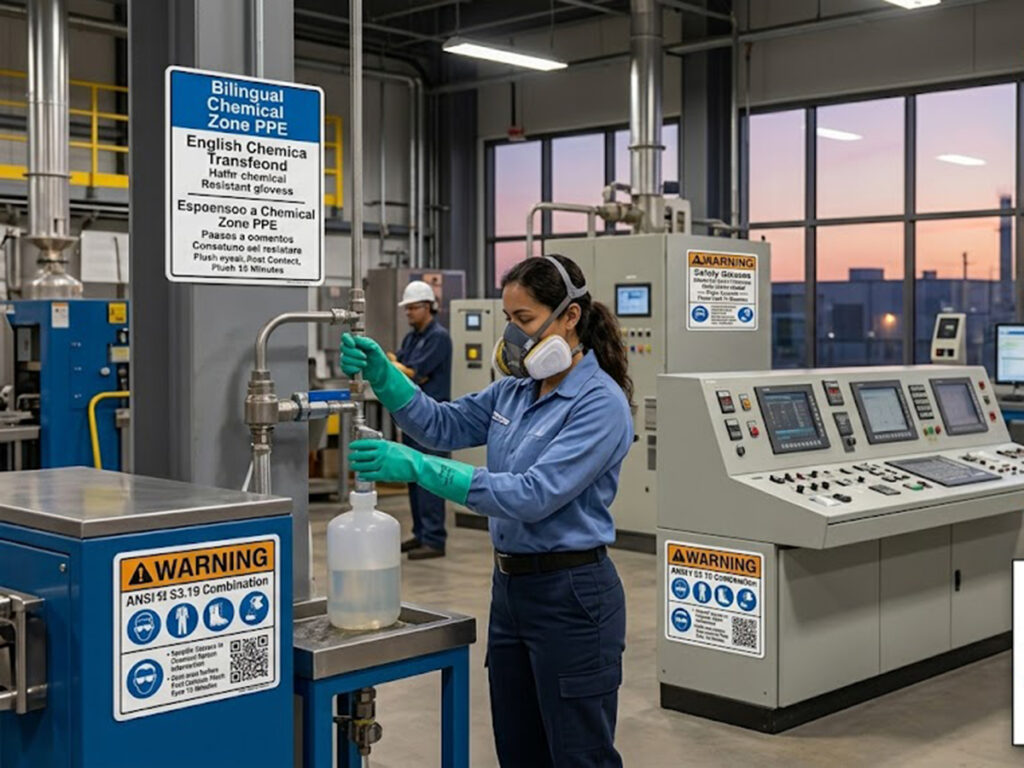
मानक संकेत OSHA को संतुष्ट करते हैं 1910.145 और ANSI Z535.2 एक साथ जब खतरा एकल-श्रेणी पीपीई की आवश्यकता हो, कैटलॉग भाषा विशिष्ट खतरे से सटीक रूप से मेल खाती है, कार्यबल अंग्रेजी पढ़ता है, सब्सट्रेट परिनियोजन वातावरण के अनुकूल है, और संकेत शब्द खतरे की गंभीरता को सही ढंग से दर्शाता है.
छह ट्रिगर जिनके लिए कस्टम पीपीई संकेतों की आवश्यकता होती है
- उपकरण वर्ग विशिष्टता: खतरे के लिए एक विशिष्ट पीपीई मानक का नामकरण आवश्यक है (उदा।, एएनएसआई Z87.1+, एनआईओएसएच पी100, ANSI / ISES 105 स्तर 4).
- बहुभाषी कार्यबल: एक प्रलेखित गैर-अंग्रेजी भाषी कार्यबल जिसके पास कोई अलग द्विभाषी जोखिम संचार कार्यक्रम नहीं है.
- घटना के बाद या उद्धरण के बाद का दस्तावेज़ीकरण: एक पूर्व OSHA उद्धरण या निकट-चूक घटना उच्च विशिष्टता की मांग करते हुए एक दायित्व रिकॉर्ड बनाती है.
- सुविधा या प्रक्रिया में परिवर्तन: लेआउट या प्रक्रिया संशोधन जो मौजूदा कैटलॉग सांकेतिक भाषा को गलत बनाते हैं.
- बहु-साइट मानकीकरण: एंटरप्राइज़-व्यापी क्षेत्र पहचानकर्ता, सुविधा कोड, या परिचालन निर्देश जिन्हें कोई भी कैटलॉग चिह्न समायोजित नहीं करता है.
- शराबी, एसडीएस, या क्यूआर कोड क्रॉस-रेफरेंस: चिह्न को किसी विशिष्ट प्रक्रिया से लिंक होना चाहिए, आज्ञा देना, या सुरक्षा डेटा शीट.
कस्टम पीपीई सुरक्षा संकेतों के लिए उद्योग-विशिष्ट उपयोग के मामले
रासायनिक प्रसंस्करण और विनिर्माण
कई रासायनिक खतरा वर्गों को संभालने वाली सुविधाओं को रासायनिक वर्ग का नामकरण करने वाले क्षेत्र-विशिष्ट संकेतों की आवश्यकता होती है, आवश्यक पीपीई मानक, और आपातकालीन प्रतिक्रिया कार्रवाई. OSHA का अद्यतन खतरा संचार मानक (HazCom), जुलाई से प्रभावी 19, 2024, और 2026-2028 तक चरणबद्ध, नियोक्ताओं को कार्यस्थल लेबलिंग को जीएचएस संशोधन के साथ संरेखित करने की आवश्यकता है 7. कस्टम पीपीई सुरक्षा संकेत वह संदर्भ अद्यतन एसडीएस स्टेशन स्थान और विशिष्ट रासायनिक पहचानकर्ता इस चरणबद्ध अनुपालन दायित्व को पूरा करने में मदद करते हैं.
निर्माण स्थल 2025 के बाद ओएसएचए पीपीई नियम
OSHA अंतिम नियम, प्रभावी जनवरी 13, 2025 (29 सीएफआर 1926.95(सी)), स्पष्ट रूप से आवश्यक है कि सभी निर्माण पीपीई 'प्रत्येक प्रभावित कर्मचारी को ठीक से फिट हों।’ कस्टम पीपीई सुरक्षा संकेत जो इस अद्यतन भाषा को प्रतिबिंबित करता है - यह निर्दिष्ट करते हुए कि यह उचित रूप से उपयुक्त है, आकार-उपयुक्त उपकरण अनिवार्य है - केवल उपकरण श्रेणी को संदर्भित करने वाले सामान्य कैटलॉग संकेतों की तुलना में मजबूत दस्तावेजी खतरा संचार प्रदान करें.
बहुभाषी कार्यबल के साथ विनिर्माण सुविधाएं
ओएसएचए के सामान्य ड्यूटी क्लॉज के लिए सभी श्रमिकों तक पहुंचने के लिए जोखिम संचार की आवश्यकता होती है, भाषा की परवाह किए बिना. द्विभाषी कस्टम पीपीई संकेत - अंग्रेजी प्राथमिक, स्पैनिश या अन्य माध्यमिक भाषा - ANSI Z535.2 के तहत पूरी तरह से अनुमति है, जो एएनएसआई अनुपालन में बदलाव किए बिना पूरक टेक्स्ट पैनल की अनुमति देता है. DuraLabel मार्गदर्शन नोट करता है कि ANSI बहुभाषी साइन लेआउट दोनों भाषा पैनलों को एक साथ परोसने के लिए एक साझा चित्रलेख प्रतीक पैनल की स्थिति रखता है.
ANSI Z535 डिज़ाइन सीमाएँ - क्या अनुकूलित किया जा सकता है और क्या नहीं
ANSI Z535.2 सख्त डिज़ाइन सीमाओं के भीतर अनुकूलन को नियंत्रित करता है. गैर-मानक हेडर रंगों या अस्वीकृत सिग्नल शब्दों का अनुरोध करने वाले संक्षिप्त विवरण स्वीकार करने वाले आपूर्तिकर्ता अपनी दावा की गई अनुपालन स्थिति की परवाह किए बिना गैर-अनुपालक उत्पाद का उत्पादन करते हैं।. किसी भी कस्टम पीपीई साइन प्रोडक्शन रन को मंजूरी देने से पहले खरीद विशेषज्ञों को इन सीमाओं को सत्यापित करना होगा.
| फिक्स्ड - अनुकूलित नहीं किया जा सकता | ANSI Z535.2 के भीतर अनुकूलन योग्य |
| सांकेतिक शब्द (खतरा / चेतावनी / सावधानी / सूचना / सुरक्षा निर्देश) | संदेश पैनल पाठ - खतरा-विशिष्ट भाषा |
| हेडर पैनल का रंग (पैनटोन-संकेत शब्द द्वारा निर्दिष्ट) | अनुपूरक सुरक्षा अनुदेश पैनल |
| सुरक्षा चेतावनी प्रतीक (त्रिकोण + !) | द्विभाषी या बहुभाषी पाठ |
| प्रतीक पैनल रंग (केवल सफेद पर काला) | जोन / सुविधा पहचानकर्ता, परमिट संख्या |
| पैनलों के बीच लेआउट अनुपात (ANSI Z535.2 अनुलग्नक के अनुसार) | क्यूआर कोड या एसडीएस क्रॉस-रेफरेंस |
| साइन आयाम (ANSI Z535.2 अनुलग्नक A न्यूनतम से ऊपर) | |
| सब्सट्रेट सामग्री और गेज |
निश्चित तत्व - गैर-परक्राम्य ANSI Z535 डिज़ाइन पैरामीटर
पाँच स्थिर तत्त्व हैं: संकेत शब्द (केवल पांच स्वीकृत एएनएसआई शर्तों में से एक), हेडर पैनल का रंग (पैनटोन-विशेष रूप से संकेत शब्द द्वारा निर्दिष्ट), सुरक्षा चेतावनी प्रतीक (त्रिकोण + विस्मयादिबोधक चिह्न, खतरे के लिए अनिवार्य / चेतावनी / सावधानी), प्रतीक पैनल रंग (केवल ANSI Z535.3 के अंतर्गत सफेद पर काला), और पैनलों के बीच लेआउट अनुपात (ANSI Z535.2 अनुलग्नक तालिकाओं द्वारा शासित). कॉर्पोरेट ब्रांडिंग रंग पैनटोन विनिर्देशों को ओवरराइड नहीं कर सकते. गैर-मानक संकेत शब्द, जैसे सुविधा-आंतरिक खतरा स्तर के नाम, अनुपालन उल्लंघन हैं.
अनुकूलन योग्य तत्व - क्या खरीद वैध रूप से निर्दिष्ट कर सकती है
सात तत्व अनुपालन सीमा के भीतर अनुकूलन की अनुमति देते हैं: खतरा-विशिष्ट भाषा के साथ संदेश पैनल पाठ, पूरक सुरक्षा अनुदेश पैनल, द्विभाषी या बहुभाषी सामग्री, क्षेत्र या सुविधा पहचानकर्ता, क्यूआर कोड या एसडीएस क्रॉस-रेफरेंस, ANSI Z535.2 अनुलग्नक A न्यूनतम से ऊपर साइन आयाम, और सब्सट्रेट सामग्री और गेज चयन.
⚠️खरीद चेतावनी: किसी भी प्रोडक्शन रन को मंजूरी देने से पहले डिजिटल डिज़ाइन प्रमाण का अनुरोध करें. पैनटोन रंग सटीकता सत्यापित करें - विशेष रूप से चेतावनी नारंगी के लिए (पैनटोन 152सी), जिसका कंट्रास्ट अनुपात डेंजर लाल या सावधानी पीले रंग की तुलना में कम है और प्रिंट विचलन के प्रति सबसे अधिक संवेदनशील है.
अनुरूप कस्टम पीपीई साइन टेक्स्ट लिखना - चार-तत्व विशिष्टता ढांचा
कस्टम साइनेज में अधिकांश खरीद विफलताएं डिज़ाइन तत्वों में नहीं होती हैं - जिन्हें प्रतिष्ठित आपूर्तिकर्ता सही ढंग से प्रबंधित करते हैं - लेकिन संदेश पाठ में, जिसे क्रय संस्था लिखती है. नीचे दिया गया चार-तत्व ढांचा संदेश पैनल टेक्स्ट तैयार करता है जो OSHA को संतुष्ट करता है 1910.145, ANSI Z535.2, और OSHA का खतरा संचार मानक (29 सीएफआर 1910.1200) इसके साथ ही.
तत्व 1 - खतरा पहचानना
वर्तमान विशिष्ट खतरा बताएं, सामान्य श्रेणी नहीं. OSHA 29 सीएफआर 1910.1200 खतरों को 'स्पष्ट रूप से और सटीक रूप से पहचानने' की आवश्यकता है।’ उदाहरण: 'हाइड्रोफ्लोरिक एसिड मौजूद है’ 'रासायनिक खतरा' के बजाय।’
तत्व 2-4 - उपकरण विशिष्टता, परिणाम, और परिहार कार्रवाई
- तत्व 2 - आवश्यक पीपीई विशिष्टता: मानक और वर्ग का नाम बताएं. उदाहरण: 'रासायनिक-प्रतिरोधी दस्ताने आवश्यक - एएनएसआई/आईएसईए 105 स्तर 4 न्यूनतम.’
- तत्व 3 - अनुपालन न करने का परिणाम (खतरा/चेतावनी स्तर के खतरे): उदाहरण: 'त्वचा के संपर्क से गंभीर रासायनिक जलन हो सकती है।’
- तत्व 4 - बचाव या आपातकालीन कार्रवाई: उदाहरण: 'प्रभावित क्षेत्र को पानी से भर दें 15 मिनट - एसडीएस स्टेशन 4-बी देखें।’
पहले / पाठ तुलना के बाद
| पीपीई श्रेणी | मानक कैटलॉग पाठ | अनुरूप कस्टम साइन टेक्स्ट |
| नेत्र सुरक्षा | आंखों की सुरक्षा आवश्यक | सुरक्षा चश्मा आवश्यक - रासायनिक छींटे का खतरा, ANSI Z87.1+ रेटेड - संपर्क पोस्ट करें: आंखें झपकाना 15 मिनट |
| सांस की सुरक्षा | श्वासयंत्र आवश्यक | हाफ-फेस रेस्पिरेटर आवश्यक - NIOSH P100 - एसिड वाष्प मौजूद - एसडीएस स्टेशन 3-बी देखें |
| सुनवाई का संरक्षण | श्रवण सुरक्षा की आवश्यकता है | श्रवण सुरक्षा आवश्यक - शोर का स्तर अधिक हो गया है 95 डीबी - एएनएसआई एस3.19 रेटेड ईयरमफ्स न्यूनतम एनआरआर 25 |
| कठोर टोपी | कठोर टोपी की आवश्यकता है | हार्ड हैट आवश्यक - पीपीई को ठीक से फिट करना अनिवार्य (29 सीएफआर 1926.95(सी)) - टाइप II क्लास ई न्यूनतम |
| रासायनिक दस्ताने | दस्ताने आवश्यक | रसायन-प्रतिरोधी दस्ताने आवश्यक - एएनएसआई/आईएसईए 105 स्तर 4 -हाइड्रोफ्लोरिक एसिड मौजूद |
लागत विश्लेषण - कस्टम बनाम. मानक पीपीई संकेत: स्वामित्व विश्लेषण की कुल लागत
वित्तीय रूप से तर्कसंगत खरीद निर्णय स्वामित्व की कुल लागत की तुलना करता है, प्रति यूनिट कीमत नहीं. कस्टम विनिर्देश चेहरों की आवश्यकता वाले वातावरण में मानक संकेतों को चुनकर प्रति संकेत $15-$30 की बचत करने वाली सुविधा $16,550 न्यूनतम प्रति ओएसएचए गंभीर उल्लंघन उद्धरण (2025 दर) यदि वह विशिष्टता अंतर एक उद्धरण उत्पन्न करता है. जानबूझकर या बार-बार उल्लंघन पहुँचता है $165,514 प्रतिवाद.
अमेरिकी बाज़ार के लिए प्रति-यूनिट मूल्य निर्धारण बेंचमार्क
| लागत प्रकार | मानक चिह्न | कस्टम संकेत |
| प्रति इकाई खुदरा (10″×14″ अल्युमीनियम) | $12-$30 | $20–$80+ |
| प्रति इकाई आयतन (50+ इकाइयां) | $6-$18 | $15–$45+ |
| सेटअप/डिज़ाइन शुल्क | कोई नहीं | $25-$75 प्रति डिज़ाइन |
| न्यूनतम व्यवहार्य रन | 1 इकाई | 5-10 इकाइयाँ आम तौर पर |
| OSHA उद्धरण जोखिम (अपर्याप्त विशिष्टता) | कार्यकर्ता’ कॉम्प/मुकदमेबाजी जोखिम | निचला |
| गंभीर उल्लंघन दंड (2025) | $16,550/उल्लंघन तक | $16,550/उल्लंघन तक |
| कार्यकर्ता’ कंप्यूटर अनुप्रयोग / मुकदमेबाजी जोखिम | उच्च | निचला |
स्रोत: HTTPS के://www.osha.gov/penalties
गलत विकल्प चुनने की सही जोखिम-समायोजित लागत
एक कस्टम पीपीई साइन बनाम एक मानक कैटलॉग साइन के लिए प्रति-यूनिट प्रीमियम आम तौर पर $8-$50 प्रति साइन होता है, सामग्री पर निर्भर करता है, मात्रा, और डिज़ाइन की जटिलता. उस चिह्न लागत के अंतर्गत आने वाले क्षेत्र में अपर्याप्त जोखिम संचार के लिए एक एकल OSHA गंभीर उल्लंघन उद्धरण $16,550 न्यूनतम - एक राशि जो लगभग 330-2,000 संकेतों से खरीद बचत का प्रतिनिधित्व करती है. कार्यकर्ता’ अपर्याप्त रूप से हस्ताक्षरित खतरे वाले क्षेत्रों में घटनाओं से उत्पन्न होने वाले मुआवजे के दावे लगातार अधिक होते हैं $40,000 प्रति दावा. कस्टम साइन प्रीमियम कोई लागत नहीं है. यह निवेश पर दस्तावेजी सकारात्मक रिटर्न वाला एक बीमा तंत्र है.
कस्टम पीपीई सुरक्षा संकेतों के लिए खरीद विशिष्टता चेकलिस्ट
किसी भी कस्टम पीपीई साइन ऑर्डर को मंजूरी देने से पहले इस 11-बिंदु चेकलिस्ट को लागू करें. प्रत्येक बिंदु एक गुणवत्ता नियंत्रण द्वार का प्रतिनिधित्व करता है जो क्रय संगठन को गैर-अनुपालक उत्पाद प्राप्त करने से बचाता है.
प्री-ऑर्डर विशिष्टता आवश्यकताएँ
ANSI Z535.2 खतरे की गंभीरता मानदंड के विरुद्ध सिग्नल शब्द चयन की पुष्टि करें - निर्णय और इसे संचालित करने वाले खतरे के आकलन का दस्तावेजीकरण करें.
- पैनटोन संदर्भ द्वारा हेडर पैनल का रंग निर्दिष्ट करें - उदा., 'चेतावनी शीर्षलेख: पैनटोन 152सी’ - नाम या हेक्स कोड से नहीं.
- सब्सट्रेट सामग्री विनिर्देश की पुष्टि करें: न्यूनतम गेज या मोटाई, यूवी स्थिरता रेटिंग, सतह खत्म, और बढ़ते अनुकूलता.
- पुष्टि करें कि साइन आयाम इच्छित तैनाती स्थान के लिए एएनएसआई Z535.2 अनुलग्नक ए देखने की दूरी की आवश्यकताओं को पूरा करते हैं.
- चार-तत्व ढांचे का उपयोग करके सभी संदेश पैनल टेक्स्ट निर्दिष्ट करें: खतरा पहचानना, आवश्यक पीपीई मानक/वर्ग, परिणाम, और बचाव/आपातकालीन कार्रवाई.
- द्विभाषी आवश्यकताएँ निर्दिष्ट करें: प्राथमिक भाषा, द्वितीयक भाषा, और पूरक पैनल प्लेसमेंट के लिए ANSI Z535.2 अनुपालन की पुष्टि करें.
- उत्पादन अनुमोदन से पहले एक डिजिटल डिज़ाइन प्रमाण का अनुरोध करें - एक संदर्भ मानक के विरुद्ध पैनटोन रंग सटीकता को सत्यापित करें.
आपूर्तिकर्ता योग्यता आवश्यकताएँ
संदर्भित विशिष्ट संस्करण के साथ लिखित ANSI Z535.2 अनुपालन प्रमाणन की आवश्यकता है (वर्तमान संस्करण: एएनएसआई Z535.2-2023).
- किसी भी बाहरी सब्सट्रेट के लिए यूवी स्थिरता परीक्षण डेटा का अनुरोध करें.
- गैर-अनुरूप उत्पाद के प्रतिस्थापन पर आपूर्तिकर्ता की नीति की पुष्टि करें - क्रेता को किसी भी कीमत पर नहीं.
- बड़ी मात्रा में ऑर्डर के लिए, पूर्ण उत्पादन चलाने से पहले पैनटोन रंग सत्यापन के लिए प्री-प्रोडक्शन भौतिक नमूने का अनुरोध करें.
दीर्घकालिक अनुपालन के लिए एक रक्षात्मक कस्टम साइनेज निर्णय रिकॉर्ड का निर्माण
कस्टम कार्यस्थल पीपीई संकेतों और मानक ऑफ-द-शेल्फ संकेतों के बीच निर्णय प्राथमिकता नहीं है. यह वस्तुनिष्ठ मानदंडों के साथ परिणाम-आधारित अनुपालन मूल्यांकन है. जब कैटलॉग भाषा विशिष्ट खतरे को सटीक रूप से संप्रेषित करती है, आवश्यक उपकरण, और गैर-अनुपालन परिणामों की गंभीरता, मानक संकेत कानूनी सीमा को पूरा करते हैं. जब उन तीनों में से कोई भी शर्त पूरी न हो, कस्टम संकेत अनुपालन विकल्प और जोखिम-प्रबंधित विकल्प दोनों हैं.
खरीद विशेषज्ञों को सुविधा के जोखिम संचार कार्यक्रम के हिस्से के रूप में इस निर्णय का दस्तावेजीकरण करना चाहिए. वह दस्तावेज - खतरे के आकलन को रिकॉर्ड करना, संकेत विशिष्टता निर्णय, और ANSI Z535.2 अनुपालन सत्यापन - एक खरीद कार्रवाई को एक प्रदर्शन योग्य सक्रिय अनुपालन रिकॉर्ड में बदल देता है जो निरीक्षण और मुकदमेबाजी के दौरान संगठन की सुरक्षा करता है.
अक्सर पूछे जाने वाले प्रश्न - कस्टम पीपीई सुरक्षा संकेत
क्यू: क्या कस्टम पीपीई सुरक्षा संकेत ओएसएचए-अनुरूप हो सकते हैं??
हाँ. कस्टम पीपीई सुरक्षा संकेत OSHA के अनुसार डिज़ाइन किए जाने पर वे पूरी तरह से OSHA-अनुपालक होते हैं 29 सीएफआर 1910.145 और एएनएसआई Z535.2. अनिवार्य निश्चित तत्व - संकेत शब्द, हेडर का रंग, और सुरक्षा चेतावनी प्रतीक - एएनएसआई विनिर्देशों के अनुरूप होना चाहिए. संदेश पैनल पाठ, अनुपूरक निर्देश, और द्विभाषी सामग्री को ANSI Z535.2 द्वारा स्थापित लेआउट बाधाओं के भीतर अनुकूलित किया जा सकता है.
क्यू: कस्टम पीपीई साइन और मानक कैटलॉग साइन के बीच क्या अंतर है??
एक मानक कैटलॉग चिह्न व्यापक प्रयोज्यता के लिए डिज़ाइन की गई पूर्व-मुद्रित सामान्य खतरा भाषा का उपयोग करता है. एक कस्टम पीपीई चिन्ह मौजूद सटीक खतरे को निर्दिष्ट करता है, आवश्यक पीपीई वर्ग या मानक, और, जहां खतरे की गंभीरता इसकी गारंटी देती है, गैर-अनुपालन का परिणाम और आपातकालीन प्रतिक्रिया कार्रवाई. कस्टम संकेत मजबूत खतरा संचार दस्तावेज़ीकरण प्रदान करते हैं, जो OSHA निरीक्षणों और व्यक्तिगत चोट मुकदमेबाजी में भौतिक साक्ष्य है.
क्यू: क्या ANSI Z535 सुरक्षा चिह्न टेक्स्ट और लेआउट के अनुकूलन की अनुमति देता है?
ANSI Z535.2 संदेश पैनल टेक्स्ट के अनुकूलन की अनुमति देता है, अनुपूरक सूचना पैनल, द्विभाषी सामग्री, मानक न्यूनतम से अधिक आयामों पर हस्ताक्षर करें, और सब्सट्रेट सामग्री. यह संकेत शब्द में संशोधन की अनुमति नहीं देता, हेडर पैनल का रंग, सुरक्षा चेतावनी प्रतीक, या प्रतीक पैनल रंग. जो आपूर्तिकर्ता गैर-मानक हेडर रंगों या अस्वीकृत सिग्नल शब्दों का अनुरोध करने वाले संक्षिप्त विवरण स्वीकार करते हैं, वे गैर-अनुपालक उत्पाद का उत्पादन कर रहे हैं.
क्यू: किसी सुविधा को मानक ऑफ-द-शेल्फ संकेतों के बजाय कस्टम पीपीई संकेतों का उपयोग कब करना चाहिए?
एक सुविधा निर्दिष्ट करनी चाहिए कस्टम पीपीई सुरक्षा संकेत जब ख़तरे की विशिष्टता, आवश्यक उपकरण वर्ग, या कार्यबल भाषा प्रोफ़ाइल को कैटलॉग भाषा द्वारा सटीक रूप से संप्रेषित नहीं किया जा सकता है. प्रमुख ट्रिगर्स में शामिल हैं: पहचान योग्य रासायनिक खतरों से निपटने वाले वातावरण (विशेषकर हजकॉम के बाद 2024 अपडेट), सामान्य श्रेणियों से परे उपकरण वर्ग विनिर्देश की आवश्यकता वाली सुविधाएं, अलग-अलग द्विभाषी जोखिम संचार कार्यक्रमों के बिना बहुभाषी कार्यबल, घटना के बाद की दस्तावेज़ीकरण आवश्यकताएँ, और बहु-साइट संचालन के लिए मानकीकृत क्षेत्र पहचानकर्ताओं की आवश्यकता होती है.
क्यू: क्या द्विभाषी PPE संकेत ANSI Z535 के अनुरूप हैं?
हाँ. ANSI Z535.2 साइन के ANSI अनुपालन में बदलाव किए बिना पूरक संदेश पैनल में द्विभाषी या बहुभाषी पाठ की अनुमति देता है. प्राथमिक संकेत शब्द अंग्रेजी में ही रहना चाहिए. द्वितीयक भाषा सामग्री प्राथमिक संदेश पैनल के नीचे दिखाई देती है. बहुभाषी साइन लेआउट दोनों भाषा पैनलों को एक साथ परोसने के लिए एक साझा सुरक्षा चित्रलेख प्रतीक पैनल की स्थिति बनाते हैं, ANSI Z535.3 प्रतीक आवश्यकताओं के अनुरूप.
इस शृंखला में संबंधित लेख
गोलियाँ:
पीपीई संकेत: OSHA अनुपालन के लिए संपूर्ण मार्गदर्शिका, सामग्री, प्लेसमेंट & खरीद
कलस्टरों:
पीपीई साइनेज खरीदने के लिए पूरी गाइड
कैसे थोक पीपीई आवश्यक चिह्नों की खरीद आपकी कंपनी का पैसा बचा सकती है
अनुरूप मुद्रण योग्य पीपीई साइन्स बनाम. सस्ती नकल: खरीद के लिए एक साथ-साथ विश्लेषण
संदर्भ
- OSHA 29 सीएफआर 1910.145 — दुर्घटना निवारण संकेतों और टैग के लिए विशिष्टताएँ — https://www.osha.gov/laws-regs/regulations/standardnumber/1910/1910.145
- ओएसएचए जनरल ड्यूटी क्लॉज - अनुभाग 5(ए)(1) OSH अधिनियम के - https://www.osha.gov/laws-regs/oshact/section5-duties
- ओएसएचए अंतिम नियम: निर्माण में पीपीई फिट आवश्यकताएँ, 29 सीएफआर 1926.95(सी) - संघीय रजिस्टर, दिसम्बर 12 2024 - https://www.osha.gov/laws-regs/federalregister/2024-12-12
- OSHA 2025 सिविल दंड राशियाँ (प्रभावी जनवरी 15 2025) - https://www.osha.gov/penalties
- OSHA खतरा संचार मानक (HazCom) - 29 सीएफआर 1910.1200 - https://www.osha.gov/hazcom
- मॉर्गन लुईस - ओएसएचए ने हजकॉम अनुपालन की समय सीमा बढ़ा दी है (जनवरी 2026) - https://www.morganlewis.com/pubs/2026/01/more-time-to-comply-osha-pushes-back-hazard-communication-deadlines-by-four-months
- FY2024 शीर्ष 10 सर्वाधिक उद्धृत मानक - https://www.osha.gov/data/commonstats