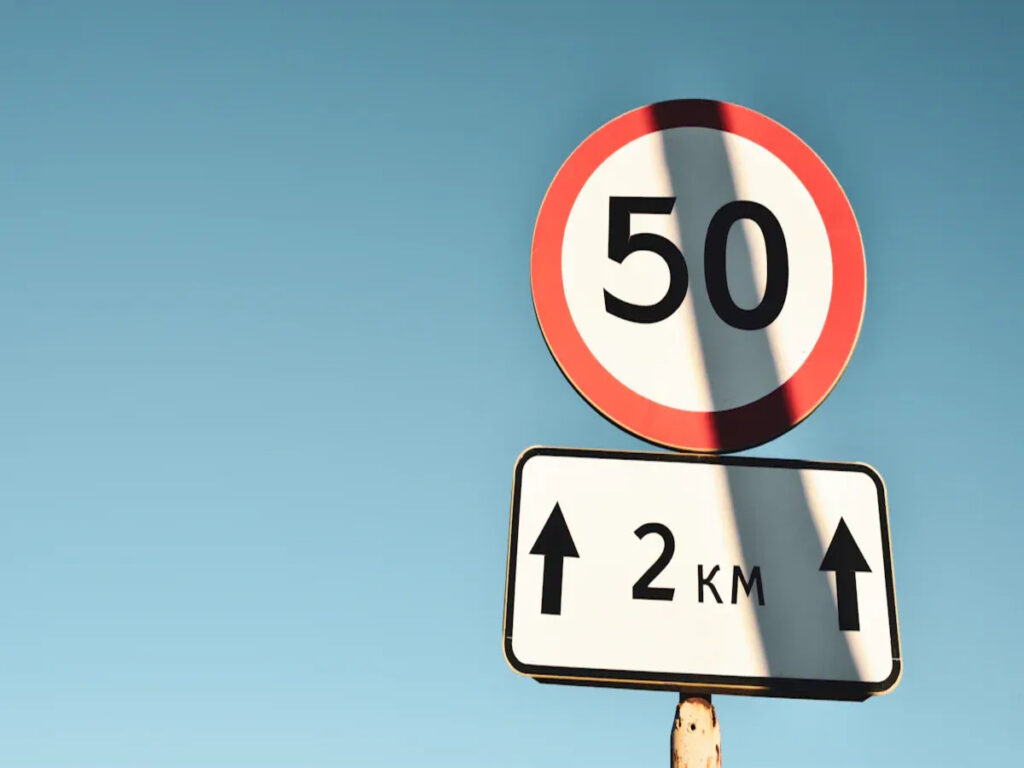
A temporary works speed limit is easy to set up. Taking it down correctly is where crews get caught out. When a roadworks project wraps, the crew removes the 30mph or 40mph temporary signs. The road then reverts to whatever limit applies without them. On most single carriageways outside built-up areas, that default is the national speed limit sign. If it isn’t reinstated, drivers have no clear indication of what limit actually applies.
Our team has reviewed reinstatement checklists after roadworks projects. In several cases, the temporary limit signs came down, लेकिन national speed limit sign never went back up. नतीजतन, the stretch sat with no speed limit signage at all for days. That left the contractor exposed if anything happened on that section — a small oversight with real liability consequences.
This guide covers three things: what the national speed limit sign actually means, what the Highway Code says about unless otherwise signed stretches, and how to build a reinstatement checklist that closes this gap before demobilisation.
चाबी छीनना
- National Speed Limit Sign: Reinstate it immediately when temporary works limits come down, बाद के विचार के रूप में नहीं.
- नियम 124: Defines the default limits that apply where no other limit is posted.
- Single vs Dual Carriageway: The same sign means different limits depending on road type, so context matters.
- Reinstatement Checklist: Treat sign removal and reinstatement as one linked task, not two separate ones.
- दायित्व एक्सपोजर: An unsigned stretch after works removal leaves the contractor, not the driver, holding the risk.
What the National Speed Limit Sign Actually Means
The national speed limit sign is the circular white sign with a black diagonal stripe. Unlike a numbered speed limit sign, it doesn’t state a specific figure. बजाय, it tells drivers that the default limit for that type of road now applies.
That default limit changes with road type and vehicle:
- एकल गाड़ी: 60mph for cars and motorcycles
- द्वय वाहन मार्ग: 70mph for cars and motorcycles
- मोटरवे: 70मील प्रति घंटा, with different limits for larger vehicles and towing
This is exactly why the sign causes confusion on temporary works sites. A driver who sees it assumes the road defaults to a fast, open-road limit. तथापि, if the actual layout still has narrow lanes, a rough surface, or leftover cones from the works, that assumption creates a real hazard.
क्या “Unless Otherwise Signed” Actually Means
मुहावरा unless otherwise signed comes directly from how the Highway Code frames default limits. संक्षेप में, a speed limit applies everywhere on that class of road unless a different, specific limit sign overrides it. नियम 124 of the Highway Code sets out these default limits. It also confirms that the national speed limit sign is the marker for “no other limit applies here.”
ठेकेदारों के लिए, this phrase has a practical consequence. If the temporary limit sign comes down and nothing replaces it, the road doesn’t go back to “unregulated.” बजाय, it reverts to the national limit for that road type — whether or not that’s actually safe for the current site conditions.
Built-Up Areas vs Outside Built-Up Areas
The Highway Code draws a sharp line between built-up and non-built-up roads. That line determines which default applies:
| Road Context | Default Limit (कारें) | Sign Required |
|---|---|---|
| Built-up area (typically street-lit) | 30मील प्रति घंटा | Repeater signs or street lighting serve as the cue; national speed limit sign not typically used |
| Outside built-up area, single carriageway | 60मील प्रति घंटा | National speed limit sign |
| Outside built-up area, dual carriageway | 70मील प्रति घंटा | National speed limit sign |
| मोटरवे | 70मील प्रति घंटा (कारें) | National speed limit sign, motorway-specific |
A works site that spans both contexts needs extra care. उदाहरण के लिए, a rural road that runs into a village needs different reinstatement signage at each transition point. Reinstating a single national speed limit sign at the edge of the works zone isn’t enough if the site also crosses into a 30mph street-lit stretch.
Building a Reinstatement Checklist That Doesn’t Skip This Step
The gap described above rarely comes from ignorance of the rule. बजाय, it comes from treating removal and reinstatement as two separate tasks, handled by two different shifts. A crew focused on clearing cones, बाधाएं, and temporary limit signs is thinking about site clearance. They aren’t necessarily thinking about what signage the road needs once they’re gone.
A reinstatement checklist that works links the two steps directly:
- Before removing any temporary limit sign, confirm what the default limit is for that stretch once works signage comes down.
- Stage the national speed limit sign or the relevant repeater signs alongside the removal crew, not as a follow-up visit.
- Photograph the reinstated signage as part of the site close-out record, the same way the original works signage was documented at setup.
- Flag any built-up/non-built-up transition points on the site plan so the crew knows exactly where the default limit changes.
Closing the Gap With the Right Signage On Hand
The reinstatement gap is usually a logistics problem, not a compliance-knowledge problem. If the national speed limit sign wasn’t on the vehicle that day, the works team ends up leaving the road under-signed rather than delaying the shift. The same happens when a crew isn’t sure whether the stretch needs one at all.
The Optraffic team builds UK works signage packages around this exact gap. Each package includes reinstatement stock, not just deployment stock. उस रास्ते, the crew that puts temporary signs up is also equipped to put the correct permanent signage back.
संबंधित पढ़ना
- परे “10% मिथक”: क्यों सटीक गति सीमा संकेत यूके आपकी साइट की सुरक्षा करते हैं
- गति सीमा के संकेत यूके के ड्राइवरों को भ्रमित और निराश क्यों करते हैं?
- क्यों यूके रोड के संकेत kph के बजाय MPH का उपयोग करते हैं: यूके की गति सीमा प्रणाली को समझना
- कार्य क्षेत्र की गति सीमाएँ: जब कोई कर्मचारी मौजूद नहीं है तो संकेत क्यों मायने रखते हैं?
अक्सर पूछे जाने वाले प्रश्न
What is the maximum speed limit on a road outside a built-up area unless otherwise signed?
On a single carriageway it’s 60mph for cars and motorcycles. On a dual carriageway it’s 70mph. The national speed limit sign marks that this default applies.
Is the national speed limit 60mph or 70mph?
दोनों, depending on road type. Single carriageways default to 60mph. Dual carriageways and motorways default to 70mph for cars.
What happens if contractors don’t reinstate the national speed limit sign after roadworks?
The road still legally reverts to the default limit for that road type. तथापि, drivers have no visual confirmation of what that limit is. नतीजतन, the contractor carries the liability if that ambiguity contributes to an incident.
Is the national speed limit sign the same as a derestriction sign?
हाँ. “Derestriction sign” is an older, informal name for the same circular sign that marks the national speed limit.
निष्कर्ष
Reinstating the national speed limit sign isn’t a formality tacked onto site clearance. बजाय, it’s the step that tells drivers what limit actually applies once the temporary works signage is gone. Treating sign removal and reinstatement as one linked task, not two, closes the gap before it becomes a liability question. That’s why the Optraffic team builds national speed limit signs into every UK works package as standard reinstatement stock, कोई वैकल्पिक ऐड-ऑन नहीं.