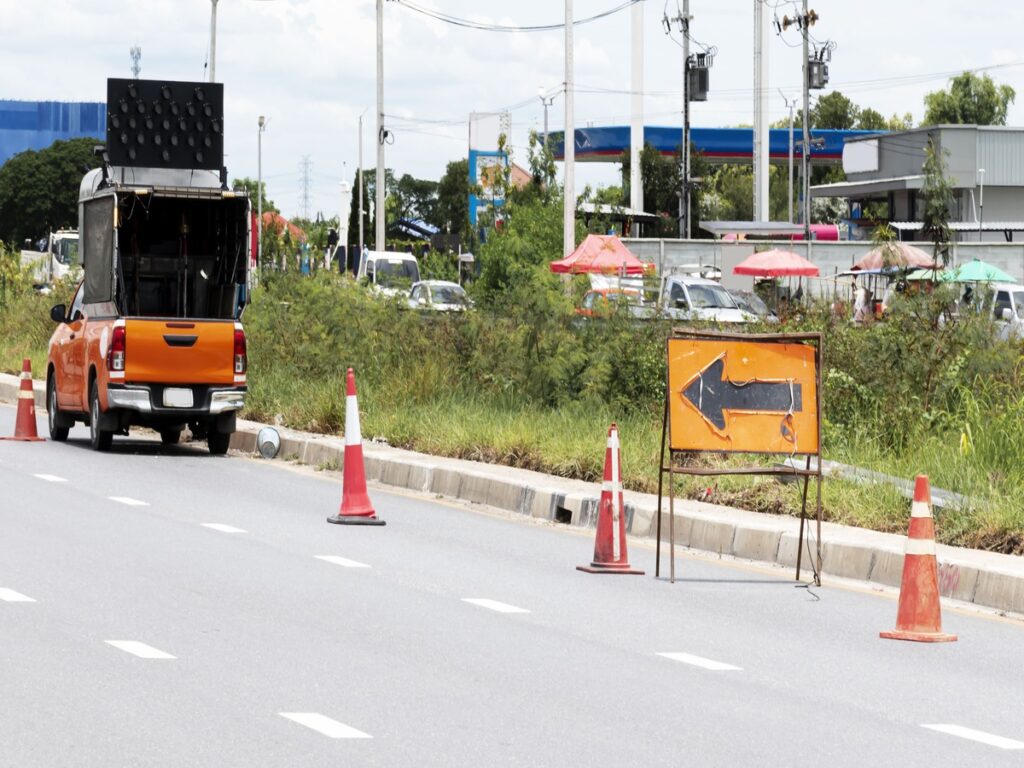
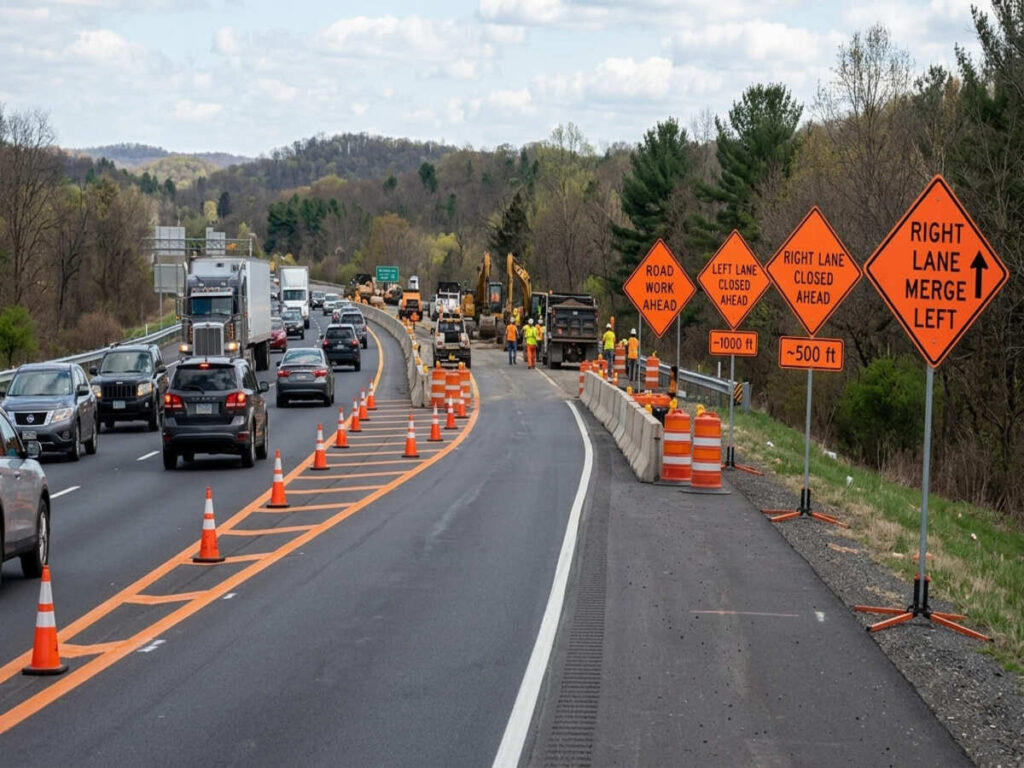
Procurement teams across Queensland and Western Australia face a costly, recurring problem. Temporary worker signs keep failing long before the project wraps. A brittle, cracked sign is not just an eyesore. It is a compliance gap that can trigger stop-work directions and safety audits. Every early failure agitates the budget further. It adds freight, labour, and schedule risk that was never costed into the tender.
This guide solves that problem directly. It compares corflute worker sign material against aluminium and PVC across UV stabilisation, wind loading, and total cost of ownership. Procurement specialists, sourcing managers, and estimators get the technical basis to specify the right material the first time.
Corflute, Aluminium and PVC at a Glance
Choosing corflute worker sign material over aluminium or PVC is rarely a single-variable decision. Weight, rigidity, UV performance, and freight economics all pull in different directions depending on project duration and site exposure. The table below summarises the specifications procurement teams request most often when comparing suppliers.
| Property | Corflute (Fluted PP) | Aluminium (5052-H32) | Rigid/Foam PVC |
| Typical thickness | 3mm or 5mm | 1.0mm–1.6mm sheet | 3mm–4mm |
| Approx. weight | ~890 GSM at 5mm | Considerably heavier per m² | Denser than corflute, lighter than aluminium |
| Outdoor UV life (non-stabilised) | 12–18 months in QLD/WA sun | 10+ years (coating-dependent) | 3–5 years, formulation-dependent |
| Scrap resale value | Effectively zero | Genuine — active theft target | Effectively zero |
| Ease of ute/pallet transport | Stacks flat, very high | Bulky, heavier per sign | Stacks flat, moderate |
For most short-to-medium civil works, corflute worker sign material is the default specification because it balances low unit cost against acceptable field life — provided the correct UV package is confirmed up front.
UV Stabilisation Physics: Why Corflute Worker Sign Material Survives — or Fails — Under QLD and WA Sun
Australia experiences some of the most intense solar UV exposure on the planet. Even through winter, Queensland, the Northern Territory, and parts of WA record a UV Index of 3 or above.¹ That level already sits past the threshold where sun protection becomes necessary. Polymer-based signage suffers the same exposure. UV photon energy breaks down polypropylene’s molecular chains, a process called chain scission. It is the mechanism behind brittleness, chalking, and edge cracking.
Non-stabilised corflute worker sign material is genuinely fragile in this environment. Independent Australian signage suppliers confirm this pattern. Under the UV intensity of QLD, WA, and northern regions, standard polypropylene can turn brittle within 12 to 18 months.² Procurement teams that specify budget, non-additive corflute are effectively pre-approving a replacement order before most civil works programs reach practical completion.
High-utility technical data points to request from suppliers:
- Confirmation of UV-inhibitor masterbatch (HALS or UV-absorber package) added at extrusion, not surface-applied
- Accelerated weathering test results (time to first visible embrittlement)
- GSM rating alongside thickness — a higher GSM at the same gauge generally signals a denser, more UV-resistant sheet
- Whether the UV additive is rated for sub-tropical exposure, not just temperate conditions
UV-stabilised corflute worker sign material retains its structural polymer bonds well beyond the 12–18-month failure window of unstabilised stock. This is the single biggest lever procurement teams have to reduce mid-project replacement orders. For a deeper comparison of stabilised versus standard stock, see “Reflective Corflute Sign vs Standard Yellow Corflute Sign: Is the Upgrade Worth It?” — particularly relevant for signage carried through a full Australian summer.
Wind Loading, GSM, and Flex Engineering on Open-Road Civil Sites
Highway upgrades and open-road civil works expose signage to a very different load profile than a suburban footpath sign. Passing heavy vehicles generate transient gusts on top of ambient wind pressure. A poorly specified sign becomes a blow-over hazard and a lost-asset cost.
Corflute behaves differently under load than aluminium. A rigid aluminium panel resists deflection until it fails outright, bending permanently or snapping at the mounting point. A correctly gauged corflute sheet, by comparison, flexes under gust load and largely recovers its shape. GSM and thickness selection are genuine engineering decisions here, not just cost line items.
Wind and rigidity specification checklist:
- 3mm corflute worker sign material suits sheltered urban sites with limited direct highway exposure
- 5mm corflute is the standard recommendation for open-road, highway-upgrade, and fully exposed rural applications
- Frame spacing and stake depth should be matched to sheet thickness, since thinner sheet needs tighter frame support to control flex
- Aluminium’s rigidity is an asset for low-wind, fixed-post regulatory signage but becomes a liability where repeated flex-and-recover cycles are expected
Sign material and shape specifications sit under AS 1743, which covers materials used to manufacture standard road signs.³ Aluminium and galvanised steel are specified for tougher weather environments. Separately, AS/NZS 1742 sets minimum retroreflectivity requirements for all temporary road signs.⁴ Non-reflective printed film does not meet the standard, regardless of substrate. Procurement specialists should confirm that both retroreflectivity class and material gauge are documented on every purchase order, not just sign dimensions.
Logistics, Freight and Scrap Theft: The Hidden Cost Aluminium Doesn’t Advertise
Weight is the quiet cost driver in large-volume civil works signage procurement. Aluminium’s density means every additional sign adds meaningfully to payload, freight cost, and handling time. Corflute, by contrast, stacks flat and loads efficiently into a ute. Field crews can transport far more signs per trip without exceeding payload limits.
Theft is the less-discussed risk. Aluminium carries genuine scrap resale value, and that value creates a target on remote or unmanned sites. In South Australia alone, more than 2,000 scrap metal thefts from building sites were recorded in the 2023–24 financial year.⁵ The estimated cost to that state’s construction industry runs to A$70 million a year. Aluminium road signage specifically retains active resale value on the scrap market. U.S. scrap yard data placed aluminium road sign scrap prices at around 0.4 USD per pound as of June 2026.⁶ Replacing a stolen sign is not just a material cost, either. Historical municipal data show individual street sign replacement can run from roughly 100 to 500 USD once labour and reissuing are factored in.
Corflute worker sign material carries effectively zero scrap value, which removes the theft incentive entirely on remote QLD and WA sites. Combined with lighter freight and faster loading, this is often the deciding factor for multi-site regional rollouts where site security cannot be guaranteed.
Logistics and theft-risk summary:
- Corflute: high stackability, low freight cost per sign, zero scrap-theft incentive
- Aluminium: lower stackability, higher freight cost per sign, active scrap-theft target
- PVC: moderate stackability, mid-range freight cost, zero scrap-theft incentive
| Logistics factor | Corflute | Aluminium | PVC |
| Stackability | High | Low | Moderate |
| Freight cost per sign | Low | High | Mid-range |
| Scrap-theft incentive | Zero | Active | Zero |
As a full-link traffic sign manufacturer, we control the entire production chain, from UV-stabilised substrate extrusion through to automated precision die-cutting. That means direct factory-level wholesale pricing and a seamless tier-1 supply chain for large-volume corflute worker sign material orders.
PVC vs Corflute Worker Sign Material: Cost and Performance Trade-Offs
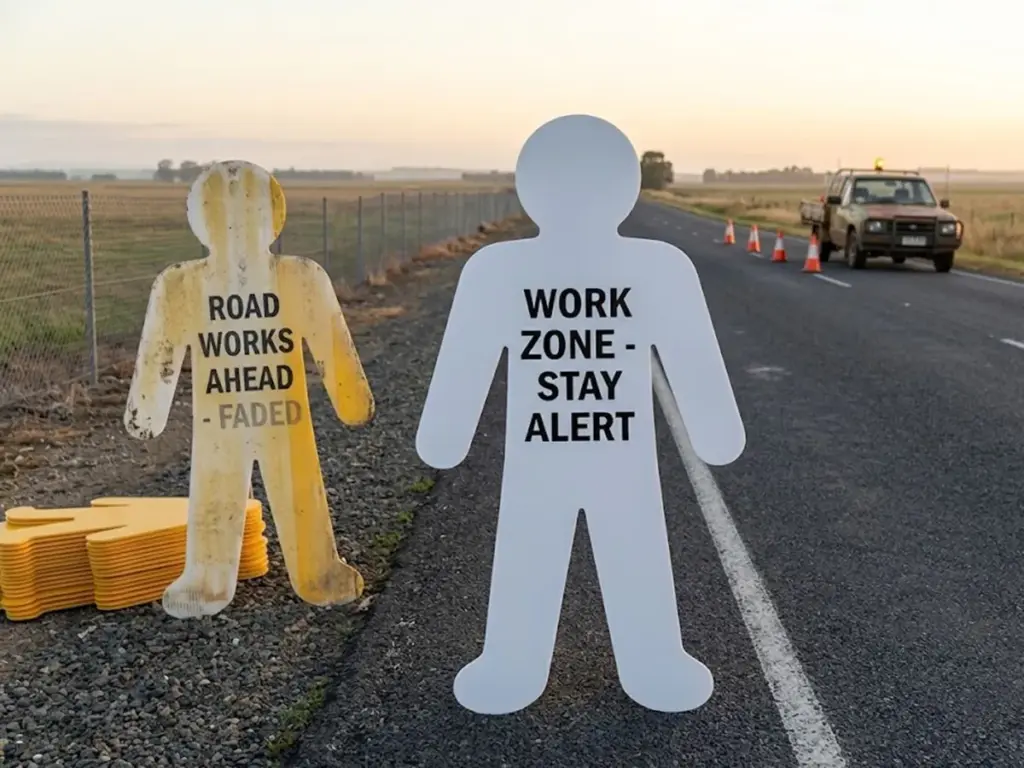
Rigid and foam PVC sit between corflute and aluminium on the cost-performance curve. It offers better rigidity than corflute without aluminium’s weight or scrap-theft exposure, typically at a moderate cost premium over standard corflute.
Procurement decision points — PVC vs corflute:
- Upfront cost: corflute is typically the lower-cost option per sign
- Rigidity: PVC outperforms corflute for close-inspection, premium-presentation applications
- Weight and freight: broadly comparable, both well below aluminium
- Site suitability: corflute remains the practical default for short-to-medium civil works; PVC suits longer-duration or higher-visibility installations
Refer to our guide on the comparison of PVC and corflute yellow worker signs for a full breakdown of where PVC earns its price premium and where corflute remains the more economical choice. It’s a useful reference for finalising a materials shortlist ahead of tender submission.
Asset Lifecycle, Compliance and Total Cost of Ownership
Matching material to project duration is the single most effective lever for controlling signage spend across a civil works program. A short works package measured in weeks rarely justifies aluminium’s cost premium, while a multi-year regulatory installation rarely suits standard corflute without a UV-stabilised specification.
Compliance and lifecycle checklist for procurement sign-off:
- Confirm sign dimensions and colours align with AS 1742 and AS 1743 series requirements
- Confirm retroreflectivity class matches the AS/NZS 1742 minimum for the sign type and road speed environment
- Request UV-stabilisation and accelerated weathering documentation from the supplier before bulk ordering
- Model total lifecycle cost — unit price, freight, replacement cadence, and theft exposure — rather than unit price alone
Our complete AU procurement guide on corflute vs aluminium worker signs covers full asset lifecycle modelling in greater depth. It’s built for teams managing signage across multiple material categories on one program.
Frequently Asked Questions
Q1: How long does corflute worker sign material last outdoors in Queensland or Western Australia?
Non-stabilised corflute typically shows embrittlement and print fade within 12 to 18 months under QLD and WA UV exposure. A correctly specified UV-stabilised corflute worker sign material extends meaningfully beyond that window.
Q2: Is aluminium or corflute worker sign material better value for large civil works programs?
Aluminium carries a higher unit cost, heavier freight, and active scrap-theft exposure. Corflute worker sign material generally delivers a lower total cost of ownership for short-to-medium programs. Longer fixed installations may still favour aluminium.
Q3: Does corflute handle wind loading on open highway sites?
Yes, when the correct thickness is specified. 5mm corflute with appropriately spaced framing is the standard recommendation for open-road and highway-upgrade exposure, since it flexes under gust load rather than bending permanently.
Q4: Why is aluminium signage a bigger theft risk than corflute on remote sites?
Aluminium retains genuine scrap metal resale value, which creates a theft incentive on unmanned regional sites, while corflute worker sign material has effectively zero resale value and removes that incentive.
What transport advantages does corflute worker sign material offer over PVC or aluminium?
Corflute stacks flat and loads efficiently, allowing more signs per pallet or ute trip than bulkier aluminium panels, which reduces freight cost per sign across large-scale regional rollouts.
References
ARPANSA — “Do you still need to check the UV index in winter?”
Industro — “Road Signs Australia: Temporary Traffic Management and AS/NZS 1742 Explained.”
The Conversation — “Copper Theft Is Hitting Building Sites, Street Lights — and Now Phones. How Do We Stop It?”
ScrapMonster — “Aluminum Road Signs Price USD/LB, U.S. Scrap Yards.”