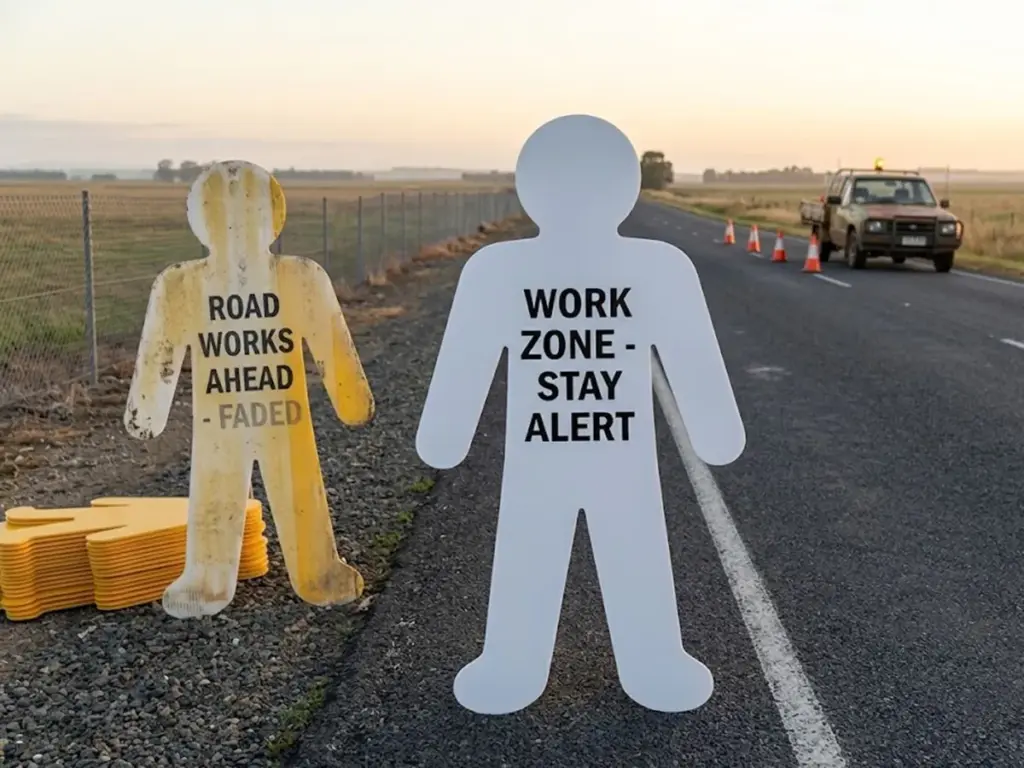
Команды закупок в Квинсленде и Западной Австралии столкнулись с дорогостоящей, повторяющаяся проблема. Вывески о временных работниках продолжают выходить из строя задолго до завершения проекта. Хрупкий, Треснутый знак - это не просто бельмо на глазу. Это нарушение требований, которое может привести к прекращению работы и проверкам безопасности.. Каждая ранняя неудача еще больше взбалтывает бюджет. Это добавляет фрахт, труд, и запланировать риск, который никогда не был учтен в тендере.
Это руководство решает эту проблему напрямую.. Он сравнивает Корфлейтовый рабочий знак материала против алюминия и ПВХ благодаря стабилизации УФ, ветровая нагрузка, и общая стоимость владения. Специалисты по закупкам, менеджеры по снабжению, а сметчики получают техническую основу для выбора нужного материала с первого раза.
Корфлут, Краткий обзор алюминия и ПВХ
Выбор Корфлейтовый рабочий знак материала решение по сравнению с алюминием или ПВХ редко является одновариантным решением.. Масса, жесткость, УФ-производительность, и экономика грузовых перевозок — все они тянутся в разных направлениях в зависимости от продолжительности проекта и уязвимости объекта.. В таблице ниже приведены спецификации, которые группы по закупкам чаще всего запрашивают при сравнении поставщиков..
| Свойство | Корфлут (Рифленый ПП) | Алюминий (5052-H32) | Жесткий/Вспененный ПВХ |
| Типичная толщина | 3мм или 5 мм | 1.0лист мм–1,6 мм | 3мм–4 мм |
| Приблизительно. масса | ~890 GSM на расстоянии 5 мм | Значительно тяжелее на м² | Плотнее корфлюта, легче алюминия |
| УФ-жизнь на открытом воздухе (нестабилизированный) | 12–18 месяцев на солнце QLD/WA | 10+ годы (зависящий от покрытия) | 3–5 лет, зависящий от рецептуры |
| Стоимость лома при перепродаже | Фактически ноль | Подлинный — активная цель кражи | Фактически ноль |
| Легкость транспортировки тележки/поддона | Складывается плоско, очень высокий | Громоздкий, тяжелее на знак | Складывается плоско, умеренный |
Для большинства коротких и средних строительных работ, Корфлейтовый рабочий знак материала является спецификацией по умолчанию, поскольку она обеспечивает баланс между низкой стоимостью единицы продукции и приемлемым сроком эксплуатации — при условии, что правильный пакет УФ-излучения подтвержден заранее.
Физика УФ-стабилизации: Почему материал для вывесок Corflute Worker выживает — или терпит неудачу — под влиянием QLD и WA Sun
Австралия испытывает одно из самых интенсивных солнечных УФ-облучений на планете. Даже зимой, Квинсленд, Северная Территория, и некоторые части Западной Австралии записывают УФ-индекс 3 или выше.¹ Этот уровень уже превышает порог, при котором защита от солнца становится необходимой.. Вывески на полимерной основе страдают от такого же воздействия. Энергия ультрафиолетовых фотонов разрушает молекулярные цепи полипропилена, процесс, называемый разрывом цепи. Это механизм хрупкости., меление, и растрескивание края.
Нестабилизированный Корфлейтовый рабочий знак материала действительно хрупкий в этой среде. Независимые австралийские поставщики вывесок подтверждают эту закономерность.. Под интенсивностью УФ QLD, Из, и северные регионы, стандартный полипропилен может стать хрупким внутри 12 к 18 месяцев.² Команды по закупкам, определяющие бюджет, неаддитивный корфлют фактически предварительно утверждает заказ на замену до того, как большинство программ строительных работ достигнут практического завершения..
Технические данные высокой полезности, которые можно запросить у поставщиков.:
- Подтверждение маточной смеси УФ-ингибитора (HALS или пакет поглотителя УФ-излучения) добавлено при выдавливании, не наносится на поверхность
- Результаты ускоренных испытаний на атмосферостойкость (время до первого видимого охрупчивания)
- Рейтинг GSM наряду с толщиной — более высокий GSM при той же толщине обычно сигнализирует о более плотной, более устойчивый к УФ-излучению лист
- Рассчитана ли УФ-добавка на воздействие субтропических условий, не только умеренные условия
УФ-стабилизированный Корфлейтовый рабочий знак материала сохраняет свои структурные полимерные связи далеко за пределами 12–18-месячного периода банкротства нестабилизированных акций.. Это самый важный рычаг, который команды по закупкам могут использовать для сокращения заказов на замену в середине проекта.. Для более глубокого сравнения стабилизированного и стандартного запаса, видеть "Светоотражающий знак корфлюта против стандартного желтого знака корфлюта: Стоит ли обновление??» — особенно актуально для вывесок, проводимых в течение всего австралийского лета..
Ветровая нагрузка, GSM, и гибкое проектирование на гражданских объектах с открытыми дорогами
Модернизация шоссе и строительные работы на открытых дорогах подвергают вывески совсем другому профилю нагрузки, чем знаки пригородных пешеходных дорожек.. Проезжающие тяжелые транспортные средства создают кратковременные порывы ветра в дополнение к давлению окружающего ветра.. Плохо указанный знак становится угрозой опрокидывания и потерей активов..
Корфлей ведет себя под нагрузкой иначе, чем алюминий.. Жесткая алюминиевая панель сопротивляется прогибам до тех пор, пока не выйдет из строя., постоянный изгиб или защелкивание в точке крепления. Корфлейтовый лист правильной толщины, по сравнению, изгибается под действием порывистой нагрузки и в значительной степени восстанавливает свою форму. GSM и выбор толщины являются здесь настоящими инженерными решениями., не только позиции затрат.
Контрольный список характеристик ветра и жесткости:
- 3мм Корфлейтовый рабочий знак материала подходит для защищенных городских объектов с ограниченным прямым доступом к шоссе
- 5рифленый материал мм является стандартной рекомендацией для открытых дорог., модернизация шоссе, и полностью открытые приложения для сельской местности
- Расстояние между рамами и глубина стоек должны соответствовать толщине листа., поскольку более тонкий лист требует более плотной поддержки рамы для контроля гибкости
- Жесткость алюминия является преимуществом при слабом ветре., нормативные указатели на фиксированных стойках, но становятся обузой, если ожидаются повторяющиеся циклы гибкости и восстановления.
Характеристики материала и формы знака указаны в соответствии с AS. 1743, который охватывает материалы, используемые для изготовления стандартных дорожных знаков.³ Алюминий и оцинкованная сталь предназначены для более суровых погодных условий.. Отдельно, AS/NZS 1742 устанавливает минимальные требования к световозвращающей способности для всех временных дорожных знаков.⁴ Неотражающая печатная пленка не соответствует стандарту, независимо от подложки. Специалисты по закупкам должны подтвердить, что в каждом заказе на поставку указаны класс световозвращающей способности и калибр материала., не просто подписать размеры.
Логистика, Кража грузов и лома: Скрытая стоимость алюминия не рекламируется
Вес является негласным фактором затрат при закупках вывесок для крупных строительных работ.. Плотность алюминия означает, что каждый дополнительный знак существенно увеличивает полезную нагрузку., стоимость перевозки, и время обработки. Корфлут, напротив, штабелируется ровно и эффективно загружается в грузовик. Полевые бригады могут перевозить гораздо больше знаков за поездку, не превышая пределов полезной нагрузки..
Кража – менее обсуждаемый риск. Алюминий имеет реальную стоимость перепродажи лома, и эта ценность создает цель на удаленных или необслуживаемых объектах.. Только в Южной Австралии, больше, чем 2,000 кражи металлического лома со строительных площадок были зафиксированы в 2023–24 финансовом году.⁵ Предполагаемый ущерб строительной отрасли этого штата составляет 70 миллионов австралийских долларов в год.. Алюминиевые дорожные указатели сохраняют активную ценность при перепродаже на рынке металлолома.. НАС. Согласно данным склада металлолома, цены на лом алюминиевых дорожных знаков составляют около 0.4 долларов США за фунт по состоянию на июнь 2026 г.⁶ Замена украденной вывески — это не только материальные затраты., или. Исторические муниципальные данные показывают, что замена отдельных уличных знаков может стоить примерно 100 к 500 долларов США с учетом оплаты труда и перевыпуска.
Материал вывески Corflute Worker фактически имеет нулевую ломовую стоимость, что полностью устраняет стимул к краже на удаленных сайтах QLD и WA.. В сочетании с более легким грузом и более быстрой погрузкой, это часто является решающим фактором для региональных развертываний на нескольких площадках, где безопасность сайта не может быть гарантирована..
Сводка по логистике и рискам краж:
- Корфлут: высокая штабелируемость, низкая стоимость перевозки одного знака, нулевой стимул за кражу металлолома
- Алюминий: более низкая штабелируемость, более высокая стоимость перевозки за знак, активная цель кражи металлолома
- ПВХ: умеренная штабелируемость, средняя стоимость перевозки, нулевой стимул за кражу металлолома
| Логистический фактор | Корфлут | Алюминий | ПВХ |
| Штабелируемость | Высокий | Низкий | Умеренный |
| Стоимость перевозки одного знака | Низкий | Высокий | Средний диапазон |
| Стимул за кражу металлолома | Ноль | Активный | Ноль |
Как производитель дорожных знаков с полной связью, мы контролируем всю производственную цепочку, от экструзии подложек, стабилизированных УФ-излучением, до автоматизированной прецизионной высечки. Это означает прямые оптовые цены на заводском уровне и бесперебойную цепочку поставок первого уровня для крупных объемов. Корфлейтовый рабочий знак материала заказы.
ПВХ против материала для вывесок Corflute Worker: Компромиссы стоимости и производительности
Жесткий и вспененный ПВХ занимают промежуточное положение между корфлютом и алюминием по кривой затрат и эффективности.. Он обеспечивает лучшую жесткость, чем корфлейт, без веса алюминия и риска кражи лома., обычно с умеренной наценкой по сравнению со стандартным корфлютом.
Точки принятия решения о закупках — ПВХ против корфлюта:
- Первоначальная стоимость: корфлейта обычно является более дешевым вариантом за знак.
- Жесткость: ПВХ превосходит корфлейт при тщательном осмотре, премиум-презентационные приложения
- Вес и фрахт: в целом сопоставимый, оба значительно ниже алюминия
- Пригодность сайта: корфлейт остается практическим стандартом для строительных работ короткого и среднего размера.; ПВХ подходит для длительных или хорошо заметных инсталляций.
Обратитесь к нашему руководству по Сравнение желтых рабочих знаков из ПВХ и корфлюта для полного анализа того, где ПВХ получает свою надбавку к цене, а где корфлют остается более экономичным выбором.. Это полезный справочник для окончательного составления списка материалов перед подачей заявки на участие в тендере..
Жизненный цикл актива, Соответствие требованиям и общая стоимость владения
Соответствие материала продолжительности проекта является единственным наиболее эффективным рычагом контроля расходов на вывески в рамках программы строительных работ.. Краткий пакет работ, измеряемый неделями, редко оправдывает надбавку к стоимости алюминия., в то время как многолетняя нормативная установка редко подходит для стандартного корфлюта без спецификации, стабилизированной к УФ-излучению..
Контрольный список соответствия и жизненного цикла для утверждения закупок:
- Убедитесь, что размеры и цвета знака соответствуют стандарту AS. 1742 и как 1743 требования к серии
- Убедитесь, что класс световозвращения соответствует AS/NZS. 1742 минимум для типа знака и скорости дорожного движения
- Перед оптовым заказом запросите у поставщика документацию по УФ-стабилизации и ускоренному воздействию атмосферных воздействий.
- Общая стоимость жизненного цикла модели — цена за единицу, груз, частота замены, и вероятность кражи, а не только цена за единицу продукции
Наш Полное руководство по закупкам в Австралии по знакам рабочих из корфлюта и алюминия более подробно описывает полное моделирование жизненного цикла активов.. Он создан для команд, управляющих вывесками из нескольких категорий материалов в одной программе..
Часто задаваемые вопросы
1 квартал: Как долго работник, работающий над корфлейтом, сохраняет свои подписи на открытом воздухе в Квинсленде или Западной Австралии??
Нестабилизированный корфлейт обычно становится хрупким и отпечаток выцветает внутри. 12 к 18 месяцев под воздействием УФ-излучения QLD и WA. Правильно выбранный УФ-стабилизированный Корфлейтовый рабочий знак материала значительно выходит за пределы этого окна.
Q2: Является ли материал для вывесок рабочих из алюминия или корфлюта более выгодным для крупных программ строительных работ??
Алюминий имеет более высокую стоимость единицы продукции, более тяжелый груз, и активное разоблачение кражи металлолома. Материал вывески Corflute Worker обычно обеспечивает более низкую совокупную стоимость владения для программ короткого и среднего размера.. Более длинные стационарные установки могут по-прежнему отдавать предпочтение алюминию..
Q3: Выдерживает ли корфлейта ветровые нагрузки на открытых участках автомагистралей?
Да, когда указана правильная толщина. 5Корфлей мм с соответствующим расположением рамы является стандартной рекомендацией для открытых дорог и модернизированных шоссе., поскольку он сгибается под действием порывистой нагрузки, а не сгибается постоянно.
Q4: Почему алюминиевые вывески представляют больший риск кражи, чем корфлейт на удаленных объектах?
Алюминий сохраняет реальную стоимость перепродажи металлолома, что создает стимул для воровства на беспилотных региональных объектах, пока Корфлейтовый рабочий знак материала имеет фактически нулевую стоимость при перепродаже и устраняет этот стимул.
Какие транспортные преимущества предлагает корфлейтовый материал для рабочих знаков по сравнению с ПВХ или алюминием??
Corflute штабелируется ровно и эффективно загружается, позволяет использовать больше знаков на поддоне или поездке, чем на более громоздких алюминиевых панелях, что снижает стоимость перевозки одного знака в крупномасштабных региональных развертываниях..
Ссылки
ЛОТЕРЕЯ — «Нужно ли еще проверять УФ-индекс зимой?”
Индустро — «Дорожные знаки Австралии: Временное управление дорожным движением и AS/NZS 1742 Объяснено.”
Разговор — «Воровство меди поражает строительные площадки, Уличные фонари — и теперь телефоны. Как нам это остановить?”
СкрапМонстр — «Алюминиевые дорожные знаки Цена USD/LB, НАС. Склады металлолома.”