Трансграничные перевозки, многонациональное строительство, и глобальные инженерные закупки разделяют одну проблему. Глобальные стандарты дорожных знаков не едины. Один транспортный коридор может пройти через три нормативные базы, прежде чем достигнет пункта назначения.. Разработчики спецификаций, которые неправильно понимают эти границы юрисдикции, сталкиваются с отклонением установок., контрактные штрафы, и подверженность ответственности.
Этот путеводитель действует как навигационный центр и отображает основные регионы регулирования.. Также показано, где глобальные стандарты дорожных знаков сходятся — и где резко расходятся. Ставки реальны. В 2024, по оценкам 39,345 люди погибли в США. дороги, согласно предварительным данным NHTSA о катастрофе (Источник: https://www.nhtsa.gov/press-releases/nhtsa-estimates-39345-traffic-fatalities-2024). Эффективные вывески спасают жизни. Соответствующие вывески экономят контракты.
Почему глобальные стандарты дорожных знаков важны для соблюдения требований и безопасности
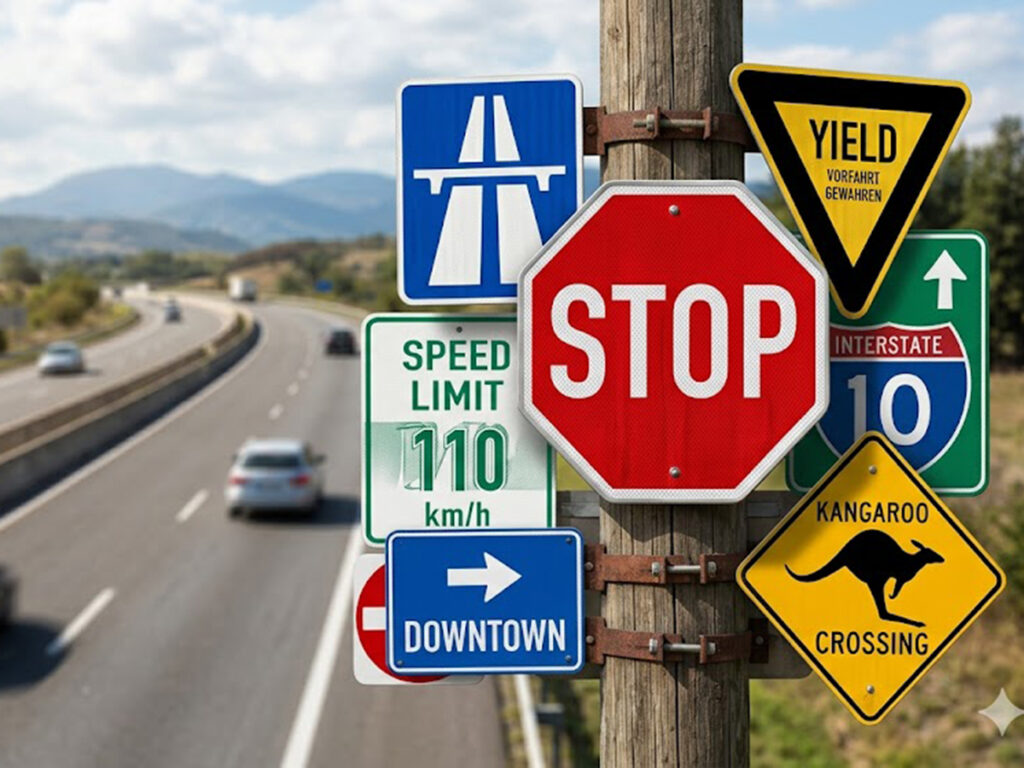
В каждом регионе, глобальные стандарты дорожных знаков добиться трех результатов: безопасность, соблюдение законодательства, и право на закупку.
Экономическое обоснование понимания юрисдикционных различий в дорожных знаках
Разработчики B2B сталкиваются с прямым коммерческим риском. Комиссия, не соответствующая требованиям финансируемого из федерального бюджета США. проект может аннулировать возмещение. Знак без маркировки CE в ЕС не может быть законно введен в эксплуатацию.. Команды по закупкам, управляющие межрегиональными тендерами, должны прочитать свод правил каждой юрисдикции, прежде чем публиковать спецификации..
Трансграничные перевозки добавляют еще один уровень. Водители ожидают интуитивно понятных визуальных подсказок. непоследовательный глобальные стандарты дорожных знаков повысить когнитивную нагрузку и риск аварий.
Как нормативно-правовая база влияет на спецификации и закупки
Правительственные правила в отношении дорожных знаков диктуют все, что происходит на дорогах ниже по течению. Марки материалов, класс световозвращающего покрытия, допуски на размеры, и монтажные высоты все вытекают из нормативных документов. Стандарты устройств регулирования дорожного движения – это не эстетические предпочтения. Это юридические инструменты.
Международные конвенции о дорожных знаках и рамки гармонизации
Венская конвенция о дорожных знаках и сигналах закрепляет большинство мировых глобальные стандарты дорожных знаков.
Объяснение Венской конвенции о дорожных знаках и сигналах
The 1968 Договор ООН вступил в силу в 1978. В последнее время 2025, 72 страны ратифицировали его. Договор гармонизирует формы, цвета, и пиктограммы среди подписавших сторон. Красные треугольники предупреждают. Красные круги запрещают. Синие прямоугольники информируют.
В марте 2025, Глобальный форум ЕЭК ООН по безопасности дорожного движения (WP.1) принял предложение о существенной поправке. Обновление модернизирует текст договора., вводит новую схему нумерации знаков, и касается цифровых вывесок и автономных транспортных средств..
Страны, действующие вне рамок Венской конвенции
Несколько крупных экономик не входят в конвенцию. Соединенные Штаты, Канада, Австралия, и Ирландия выбрали альтернативные рамки. Китай, Япония, Израиль, и Малайзия также не являются участниками. Эти расхождения формируют региональные спецификации дизайна дорожных знаков во всем мире..
Североамериканские правила и стандарты соответствия дорожным знакам
В Северной Америке действует крупнейшая структура за пределами Вены.. Его правила теперь находятся в центре любого глобальные стандарты дорожных знаков обсуждение.
Стандарты соответствия MUTCD в США
Федеральное управление автомобильных дорог публикует Руководство по единым устройствам регулирования дорожного движения.. 11-е издание вступило в силу в январе. 18, 2024. Государства должны добиться существенного соответствия к январю 18, 2026. Обновление представлено 213 новые указатели и нормативные знаки. FHWA опубликовало редакцию 1 в марте 5, 2026.
Ключевые изменения включают фиолетовый цвет в качестве стандартного цвета для управляемых полос и взимания платы за проезд.. Управление световозвращающим эффектом раздела 2A.22 остается обязательным элементом соблюдения требований..
Канадские требования к дорожным знакам и их изменения в провинциях
Канада следует принципам Транспортной ассоциации Канады.. Двуязычные обязательства применяются в большинстве провинций. Квебек вводит в действие вывески, ориентированные на французов. Согласование с США. MUTCD является частичным, не полный.
Европейские правила дорожных знаков и соответствие требованиям государств-членов
Европа накладывает договорное право, директивы ЕС, и технические стандарты CEN в жестко регулируемую структуру.. Это формирует отдельный фрагмент глобальные стандарты дорожных знаков.
Нормативно-правовая база Европейского Союза для дорожных знаков
В 12899 регулирует фиксированные вертикальные дорожные знаки на всей территории ЕС. Маркировка CE обязательна с января 1, 2013, согласно Регламенту (Евросоюз) Нет 305/2011 [8]. Производители должны пройти испытания заводского производственного контроля через уполномоченный орган, прежде чем размещать панели на рынке..
Большинство государств-членов ЕС также являются участниками Венской конвенции.. Таким образом, визуальный язык в целом соответствует. Документы о соответствии не.
➡️Исследуйте кластеры:
Полное руководство по пониманию дорожных знаков на шоссе Великобритании
Заметные различия в технических требованиях к конструкции региональных дорожных знаков в государствах-членах ЕС
Германия применяет правила дорожного движения (СтВО). Франция выполняет Межминистерскую инструкцию. В Соединенном Королевстве действуют Правила дорожных знаков и Общие указания. (TSRGD), которые еще больше разошлись после Брексита. Эти национальные кодексы накладываются на базовые стандарты ЕС.. Вместе, они создают нормативную базу дорожных знаков по странам, которая требует пристального внимания.
Стандарты дорожных знаков Азиатско-Тихоокеанского региона и Океании
В Азиатско-Тихоокеанском регионе наблюдается самое большое расхождение внутри глобальные стандарты дорожных знаков. Некоторые страны принимают Венские принципы. Другие создают совершенно независимые коды..
Соответствие австралийским стандартам дорожных знаков согласно AS 1742
Австралия управляет AS 1742 ряд. Дорожные власти штатов и территорий выпускают дополнительные инструкции. В австралийских предупреждающих знаках используется желтый ромб, который визуально ближе к MUTCD, чем к европейскому треугольнику..
Сравнительная система регулирования дорожных знаков в Японии, Китай, и Индия
Япония использует уникальные пиктограммы за пределами Венских конвенций. Китай обеспечивает соблюдение ГБ 5768 в качестве национального стандарта устройств управления дорожным движением. Индия применяет IRC:67, со значительными вариациями реализации на уровне штата. Сравнительная сложность важна для экспортных производителей..
Новые и региональные структуры на Ближнем Востоке и в Африке
Эти регионы завершают глобальные стандарты дорожных знаков картина. Оба характеризуются растущими инвестициями в инфраструктуру и растущим спросом на спецификацию..
Стандарты дорожных знаков GCC и национальные различия на Ближнем Востоке
Совет сотрудничества стран Персидского залива координирует региональное выравнивание. ОАЭ, Саудовская Аравия, и Катар применяют национальные добавки. Двуязычные арабско-английские вывески добавляют объемности и усложняют читаемость..
Африканская нормативно-правовая база и стандарт SADC-RTSM
Руководство по дорожным знакам Сообщества развития стран юга Африки распространяется на десять стран.. Многие положения перекликаются с Венской. Некоторые адаптируются к региональным моделям дорожного движения и сельским условиям..
Сравнение мировых стандартов: Стратегический справочник для спецификаторов
В этом разделе синтезированы наиболее заметные различия между глобальные стандарты дорожных знаков для потенциальных клиентов по закупкам.
Варианты цветового кодирования в разных юрисдикциях
| Функция знака | Венская конференция | Mutcd (США) | Австралия (КАК 1742) |
| Предупреждение | Красный треугольник, белый/желтый фон | Желтый бриллиант | Желтый бриллиант |
| Запрет | Красный круг, белая земля | Красный круг (ограниченный) | Красный круг |
| Обязательный | Синий круг | Белый прямоугольник, черный текст | Синий/белый круг |
| Информация / Гид | Синий или зеленый прямоугольник. | Зеленый прямоугольник | Зеленый/белый прямоугольник |
| Управляемые полосы / Толлинг | Не указан | Фиолетовый (с 11-го изд.) | Не указан |
Форма, Символ, и стандарты размеров по сравнению
В то время как восьмиугольный “ОСТАНАВЛИВАТЬСЯ” знак - редкий глобальный консенсус, большинство дорожных указателей подчиняются различным региональным принципам.. Для спецификаторов, понимание этих технических расхождений имеет решающее значение для обеспечения соответствия требованиям и предотвращения дорогостоящих ошибок при закупках.:
- Пиктограммы против. Текстовые конструкции:
Венская конвенция (ЕС/Великобритания/Азия) отдает приоритет универсальным символам, чтобы обойти языковые барьеры, тогда как MUTCD (Северная Америка) часто использует текстовые инструкции (НАПРИМЕР., “Урожай” против. перевернутый треугольник с красной каймой). - Юрисдикционная логика с цветовой кодировкой:
Цвета указателей направления не универсальны.. В то время как США в основном используют зеленый цвет для межштатных автомагистралей., во многих регионах Европы и Ближнего Востока синий цвет используется для автомагистралей, а зеленый — для основных дорог и дорог А.. Неправильная идентификация может привести к систематическим сбоям установки.. - Ретрорефлексивность & Материальные стандарты:
Основным техническим препятствием являются различия в характеристиках листового проката.. Разработчикам спецификаций приходится выбирать между ASTM D4956. (Североамериканские стандарты) и 12899-1 (Европейские стандарты). В этих рамках используются разные системы классификации. (НАПРИМЕР., Сорт 1, 2, 3 против. RA1, RA2, RA3) для микропризматических характеристик и долговечности. - Размерный & Допуски шрифтов:
Разборчивость знака на высоких скоростях зависит от местных условий. “ClearView” или “Транспорт” шрифты и определенная высота букв, установленная региональными властями (НАПРИМЕР., Британский TSRGD против. Австралия как 1742).
💡Стратегический совет: Для межрегиональных тендеров, всегда устанавливайте “Доминирующая юрисдикция” на ранних этапах жизненного цикла актива. Модернизация знака для соответствия позднее установленному стандарту EN или ASTM часто требует трехкратного увеличения затрат по сравнению с обеспечением соответствия на ранней стадии..
2026 Снимок соответствия: Почему этот год имеет значение для мировых стандартов дорожных знаков
Несколько нормативных сроков сходятся в 2026. Разработчики спецификаций сталкиваются с одновременным переходом в несколько юрисдикций.
Действующие нормативные сроки, влияющие на глобальные закупки
| Область | Стандартный / Рамки | 2026 Статус |
| США | MUTCD, 11-е издание | Срок государственного усыновления: Январь 18, 2026 |
| США | MUTCD 11-е изд.. Редакция 1 | Опубликовано в марте 5, 2026 |
| Евросоюз | В 12899 / Маркировка CE | Обязательно с 2013, исполнение продолжается |
| Глобальный | Поправки к Венской конвенции | Принят март 2025, выполнение 2026+ |
| Австралия | КАК 1742 ряд | Активный, с доплатами государственного уровня |
Контрольный список закупок и спецификаций для 2026
- Проверьте статус принятия DOT штата по сравнению с январским 18, 2026 федеральный срок.
- Подтвердите класс световозвращающего покрытия по стандарту ASTM D4956, тип III или выше для США.. проекты.
- Аудит запасов, привязанных к ЕС, на предмет текущего EN 12899 Маркировка CE и декларация производительности.
- Перепроверьте поправки к Венской конвенции на предмет любых знаков, снятых с производства. 2025 обновлять.
- Документирование доказательств соответствия для каждого тендера по проекту.
Заключение: Уверенное применение глобальных стандартов дорожных знаков на автомагистралях
Глобальные стандарты дорожных знаков оставаться раздробленным. Они также судоходны. Относитесь к соблюдению требований как к функции закупок., не второстепенная мысль. Сопоставьте каждый проект с его регулирующей юрисдикцией. Подробные технические подробности можно найти в статьях нашего кластера..
Для полной технической основы по всем спецификациям, Соответствие MUTCD, приобретение, и управление жизненным циклом активов, вернуться на наш основной ресурс: Полный справочник по дорожным знакам шоссе.
Ссылки
- Статистика аварий NHTSA — предварительная оценка смертности в результате дорожно-транспортных происшествий, 2024. https://crashstats.nhtsa.dot.gov/
- РИНА — UNI RU 12899: Маркировка CE для вертикальных дорожных знаков. https://www.rina.org/en/fixed-vertical-road-traffic-signs
- ЕЭК ООН — Соглашения и конвенции о дорожном движении, дорожных знаках и сигналах. https://unece.org/road-traffic-and-road-signs-and-signals-agreements-and-conventions
- FHWA — Даты соответствия 11-му изданию MUTCD. https://mutcd.fhwa.dot.gov/
- FHWA — Публикация стандартных дорожных знаков, Февраль 2026 Выпускать. https://mutcd.fhwa.dot.gov/ser-shs_millennium.htm
- FHWA — Лента новостей MUTCD (Редакция 1, Маршировать 5, 2026). https://mutcd-dr.fhwa.dot.gov/mutcd_news.htm
- EUR-Lex — Регламент (Евросоюз) Нет 305/2011 по строительной продукции. https://eur-lex.europa.eu/legal-content/EN/TXT/?uri=CELEX:32011R0305