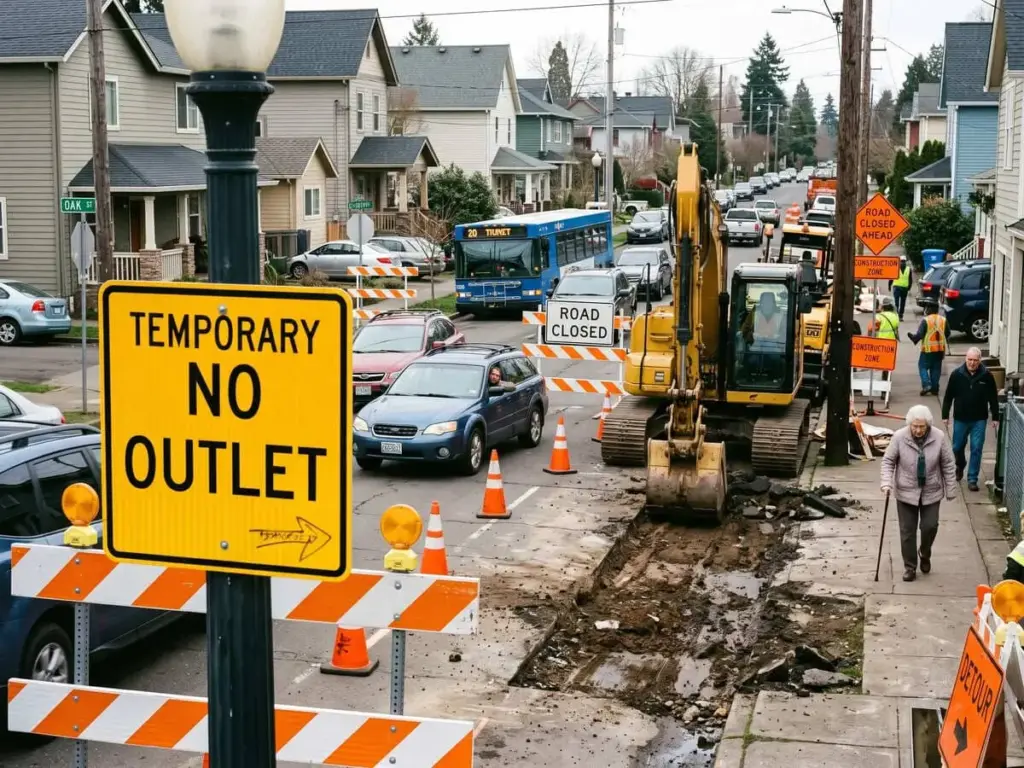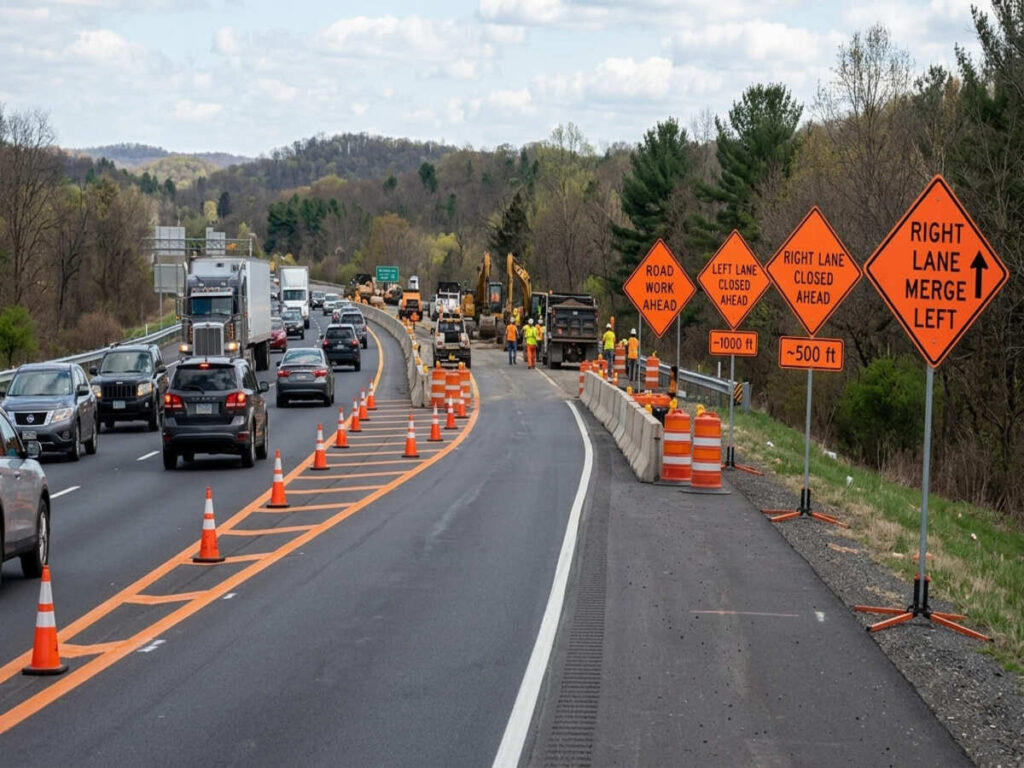
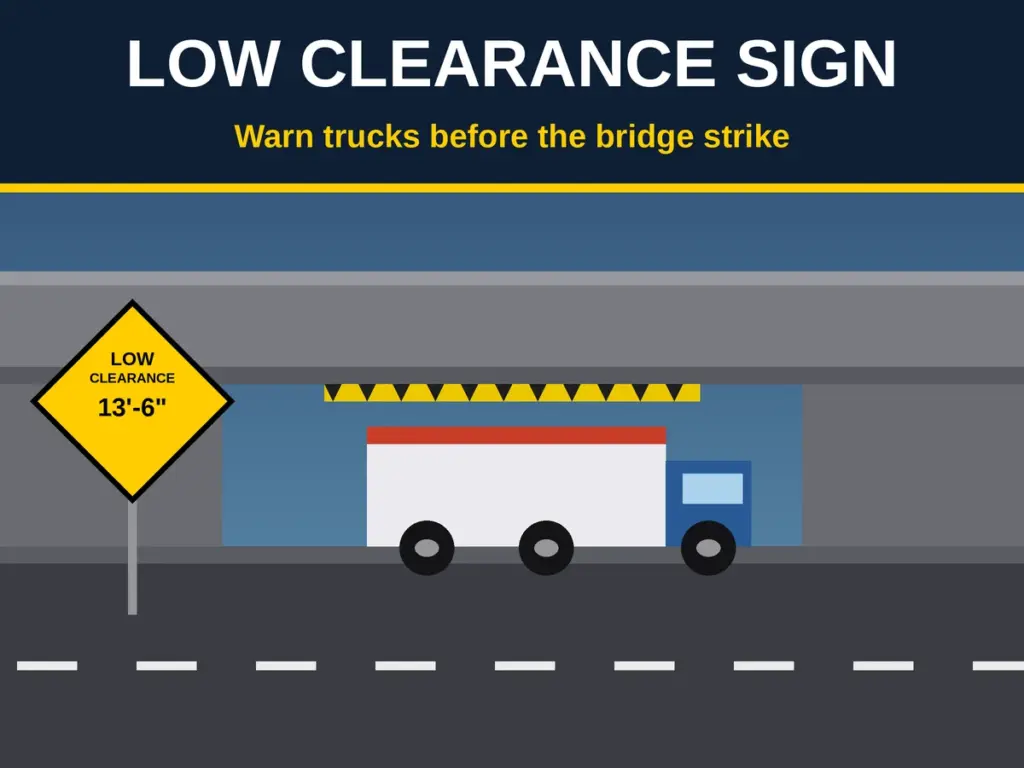
A truck strikes a low bridge. The driver blames the GPS. The agency blames the driver. Тем временем, the contractor who rerouted traffic onto that road last week gets a call. Detours push heavy vehicles onto roads they never used before. Не хватает одного low clearance sign can turn a routine detour into a bridge strike.
Our team has seen this pattern on detour plans. The crew signed the closure well. Однако, nobody checked the vertical clearance on the detour route itself. The low clearance warning sign sat only at the bridge, with nothing before the last turn-off. Trucks had no way out once they saw it.
Bridge strikes are also in the news. New York announced a statewide bridge strike campaign on July 27, 2026, with patrols and a new 8-point driver violation. The state reported 310 bridge strikes in 2025. Twenty-six states and Washington, округ Колумбия. now run the same “Check Your Height, Know It’s Right!” campaign. Enforcement is rising, and so is the scrutiny on how the roads are signed.
В этом руководстве рассматриваются три вещи. Первый, what the MUTCD requires from a low clearance sign. Второй, where to place advance and overhead signs. Третий, how to stock a full set for detour work.
Ключевые выводы
- Low Clearance Sign (W12-2): Warns trucks of bridges under 14 ноги 6 дюймы, so drivers can exit before the structure.
- Предварительное размещение: Pair every W12-2 with a distance plaque at the last intersecting road, so trucks can turn around.
- Надземные знаки (W12-2a, W12-2b): Mount them on the structure itself, so drivers see the posted clearance at the point of impact.
- Detour Route Checks: Verify clearance on every detour leg, so rerouted trucks never meet an unsigned bridge.
- Complete Sign Sets: Stock W12-2 with weight limit and narrow bridge signs, so one delivery covers the whole structure.
What the MUTCD Requires From a Low Clearance Sign
The W12-2 low clearance sign is a yellow, квадрат, diamond-oriented warning sign. It shows the actual vertical clearance in feet and inches. The FHWA MUTCD 11th Edition sets the rule in Section 2C.25. A low clearance sign shall warn road users of vertical clearances less than 14 ноги 6 дюймы. It also applies where clearance sits less than 12 inches above the statutory maximum vehicle height, whichever is greater.
Three details matter in the field:
- Displayed height: The sign should show the actual clearance to the nearest 1 дюйм, not exceeding the real measurement.
- Frost areas: Agencies may reduce the displayed height by up to 3 inches where frost action changes the roadway surface.
- Periodic review: Clearances should be evaluated periodically. Resurfacing can lower a bridge’s clearance without anyone updating the sign.
You can read the full text in the FHWA MUTCD, 11-е издание, Chapter 2C.
Which Low Clearance Sign Goes Where
The MUTCD uses three versions of the sign. Each one does a different job. Choosing the wrong one leaves a gap in the warning sequence.
| Знак | Where It Goes | Что он делает | Typical Mistake |
|---|---|---|---|
| W12-2 | Advance of the structure, plus the nearest intersecting road or wide point | Warns drivers early, with a distance plaque, so they can turn around | Posted only at the bridge, with no exit left |
| W12-2a | On the structure itself | Shows clearance at the point of impact | Used alone, with no advance warning |
| W12-2b | Over a lane or shoulder when clearance varies across the structure | Shows the lowest clearance for each lane | Covers only one lane of a varying arch |
The MUTCD also says a W12-2 should be placed at the nearest intersecting road or wide point. That rule is the practical heart of bridge strike prevention. A truck needs a place to go when it reads the sign. A warning sign placed after the last exit does not prevent a strike. It only records one.
For arch-type structures with varying clearance, the MUTCD says two or more overhead signs should be installed on the structure. The posted clearance should also match the lowest clearance shown.
Why Detours Create Bridge Strike Risk
A permanent road has years of driver familiarity. A detour has none. Drivers who know the main route also know its bridges. They do not know the bridges on the detour.
That gap shows up in three ways:
- Unchecked detour legs. Planners confirm lane width and turning radius. Vertical clearance often gets skipped.
- GPS blind spots. Consumer navigation apps may not account for low bridges. NYSDOT recommends commercial-grade GPS and the 511NY Trucker Mode for height-restricted routes.
- Passenger-car sign habits. A detour sign tells drivers where to go. It does not tell a 13-foot-6 truck which bridge to avoid.
The fix is simple. Add a vertical clearance check to the detour plan. Then post a low clearance sign with a distance plaque before each decision point.
Digital signs close the gap on live detours. New York showed “Check Your Height, Know It’s Right!” on its variable message signs statewide during the campaign week. Contractors can do the same on a smaller scale. The Optraffic team builds portable variable message signs for detour height warnings that crews can place one decision point before the route splits. When the detour changes, the crew updates the message instead of reprinting a sign.
A Low-Cost Warning That Works
Some agencies add a physical backup. Tennessee uses an overhead sign on SR-27 at I-24 in Marion County. It reads “Trucks That Hit This Will Hit Bridge.” Chimes hang from the sign at the clearance height. A tall truck strikes the chimes first. The noise warns the driver before the vehicle reaches the bridge itself.
The idea works because it adds a second warning at the point of decision. The Информационный центр по безопасности рабочей зоны documents the approach. Signs alone work best when drivers can still exit. Devices like chimes help where they cannot.
Repeat strike sites also need evidence. New York now targets patrols at locations with documented strikes. Solar-powered surveillance camera trailers for bridge strike sites record which vehicles ignored the warnings. That footage shows agencies where extra signing is worth the cost.
New Compliance Dates for Bridge-Related Signs
The MUTCD 11th Edition also sets target compliance dates. Table 1B-1 gives agencies five years from the January 18, 2024 дата вступления в силу. That puts two bridge-related deadlines at January 18, 2029:
| Раздел MUTCD | Знак | Required Change |
|---|---|---|
| 2C.25 | Low Clearance Advance (W12-2) | Post the W12-2 sign in advance of the structure |
| 2B.64 | Максимальный вес | Post an additional Weight Limit sign with an advisory distance or directional legend in advance |
For agencies and contractors, this means replacement work is coming. A structure that has a sign only at the bridge will need an advance sign. Orders will come in batches, not one sign at a time. Buyers who plan early avoid a rush in 2028.
Building a Full Bridge Warning Set
Bridge strike prevention rarely needs one sign. A typical structure needs several, and they must work together. A crew that orders only the W12-2 will find itself short on the day of installation.
A practical bridge set often includes:
- Advance W12-2 at the last intersecting road, with a distance plaque.
- Overhead W12-2a or W12-2b on the structure.
- Weight limit and narrow bridge signs where the structure has those limits. See our guides on знаки ограничения веса и знаки узкого моста.
- Обходные знаки that route trucks around the structure, not toward it.
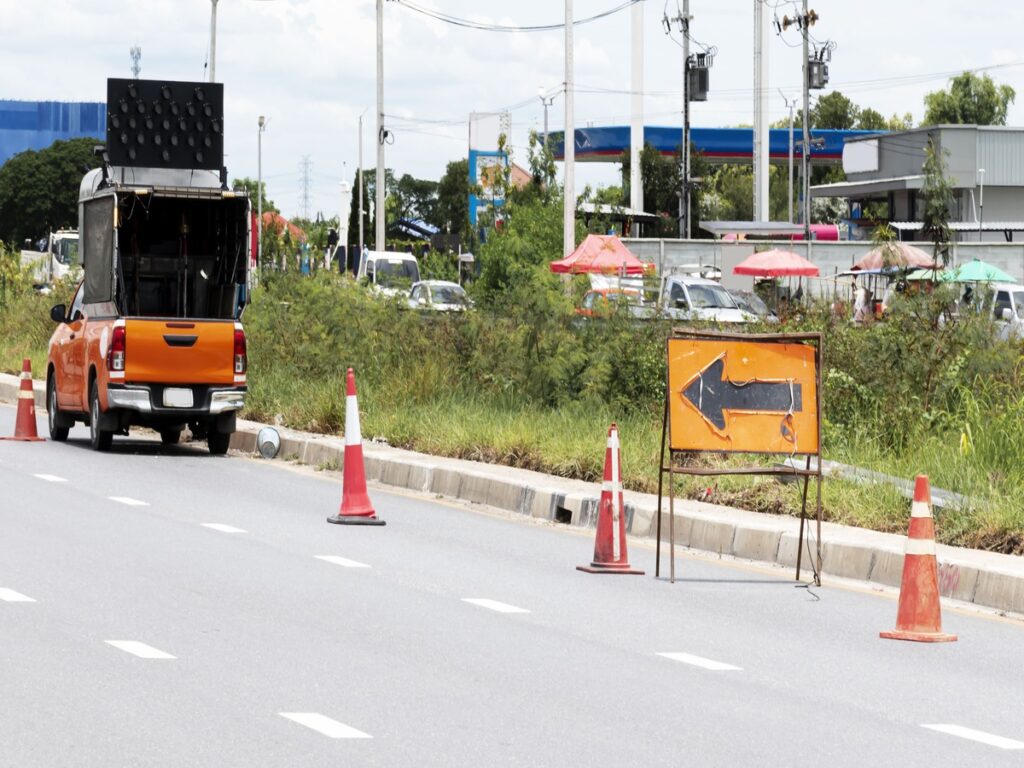
Night and overnight closures add one more need. When a lane closure steers trucks away from the low lane, drivers must see the exit direction early. Solar-powered electronic arrow boards give that cue in the dark, where a static panel can fade into the background.
The Optraffic team supplies these signs as matched bridge sets. Contractors and rental fleets then receive every sign for one structure in a single delivery. That avoids the common problem where the overhead sign arrives weeks after the advance sign. Each sign is cut to the clearance in the plan, so crews do not relabel panels on site.
Связанное чтение
- Понимание признаков ограничения веса: Ключевые правила, Типы, и соображения безопасности
- Как предотвратить несчастные случаи на узких мостах: Правильный трафик
- Вершина 10 Дорожные знаки для грузовых автомобилей, которые должен распознавать каждый менеджер автопарка
- Пакеты управления движением в рабочей зоне: Соответствующие знаки, Конусы, и канализаторы для вашего типа закрытия
Часто задаваемые вопросы
What does a low clearance sign mean?
It warns drivers that the road ahead passes under a structure with limited vertical clearance. The sign shows the actual height in feet and inches.
When does the MUTCD require a low clearance sign?
Section 2C.25 requires one for clearances less than 14 ноги 6 дюймы. It also applies where clearance is under 12 inches above the statutory maximum vehicle height, whichever is greater.
What is the difference between W12-2, W12-2a, and W12-2b?
W12-2 is the advance warning sign. W12-2a is mounted on the structure. W12-2b is an overhead sign placed over a lane or shoulder when clearance varies across the structure.
How far ahead should a low clearance sign be placed?
The MUTCD gives no fixed distance for W12-2. It does say the sign with a distance plaque should also be placed at the nearest intersecting road or wide point. That gives trucks a place to turn around.
Do detours need low clearance signs?
Да, if any detour leg passes under a low structure. Detours route drivers onto unfamiliar roads, and GPS may not warn them. Check vertical clearance on every leg before the plan is final.
Заключение
A bridge strike is rarely about one missing sign. It usually comes from a missing exit, an unchecked detour, or an overhead warning that arrived late. Posting a low clearance sign at the structure is the minimum. Posting one where trucks can still turn around is the goal. That is why the Optraffic team delivers advance, накладные расходы, Максимальный вес, and detour signs as one matched set, so every low clearance sign on a structure ships together.