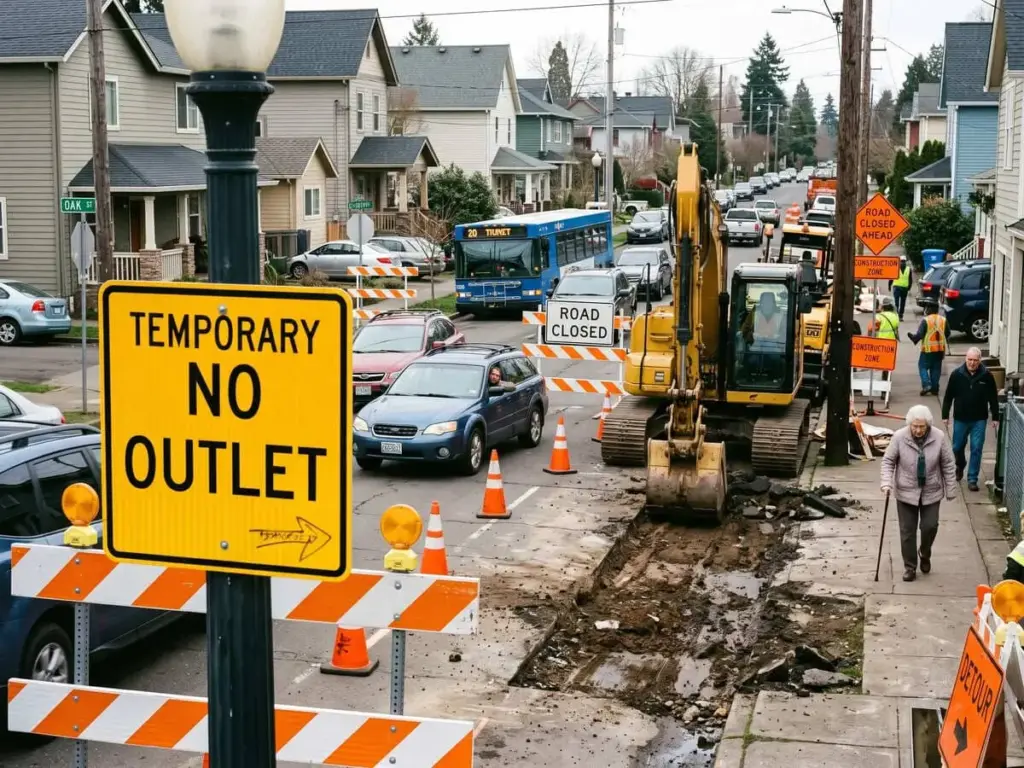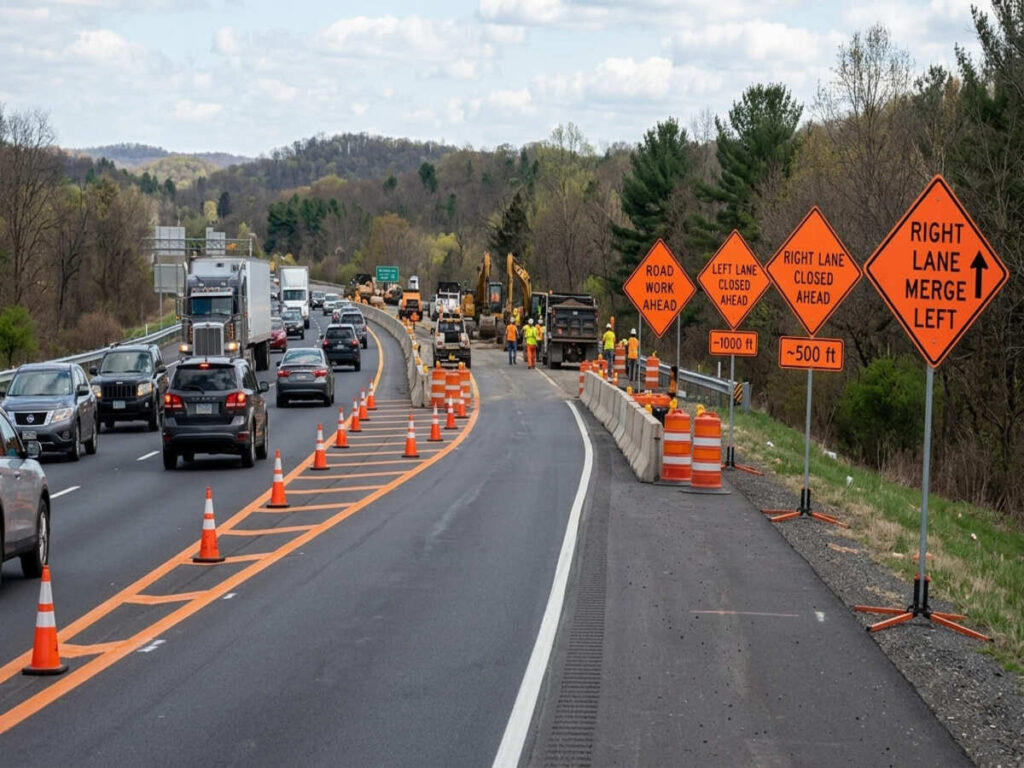

Converter uma estrada de mão dupla em temporária Mão Única seção parece simples no papel. Na prática, é uma das configurações mais fáceis de errar. É também um dos mais perigosos quando uma tripulação erra. Um motorista que entra pelo lado errado não fica apenas confuso. Eles agora enfrentam tráfego em sentido contrário em uma estrada que esperam estar livre.
Nossa equipe voltou às zonas de trabalho após uma mudança de turno e encontrou um problema. O final de saída de uma faixa convertida ainda exibia a sinalização bidirecional original. A tripulação trocando o sinal para um caminho o tráfego cobriu apenas o ponto de entrada. Essa lacuna é exatamente onde acontecem os acidentes na contramão. Felizmente, é evitável. Um bom pacote de sinalização e uma lista de verificação que cubra as duas pontas da conversão fecham essa lacuna, não apenas o fim voltado para o sinalizador.
Este guia explica o que o MUTCD exige para uma conversão unidirecional. Também cobre onde as equipes mais frequentemente perdem a cobertura. Finalmente, mostra como construir um pacote de sinalização que preencha essas lacunas antes do início do primeiro turno.
Takeaways -chave
- Cobertura errada: Assine todos os pontos de entrada de uma conversão unilateral, não apenas a abordagem voltada para o sinalizador.
- MUTCD R6-1/R6-2: Use a variante de seta dividida em pontos de abordagem medianos ou canalizados.
- Pacote por duração: Combine a densidade do sinal e a montagem com o comprimento de conversão, nem um único kit padrão.
- Transferências de turno: Exigir que as equipes que saem conduzam as equipes que chegam por todos os pontos de entrada antes de deixar o local.
- Kits pré-construídos: Pacotes de conversão unidirecional fecham lacunas de inventário que causam perda de cobertura.
Por que as conversões unidirecionais são mais arriscadas do que parecem
Uma rua de mão única permanente tem pistas redundantes. Setas pintadas, marcações de meio-fio, faseamento do sinal, e motoristas que aprenderam a rota reforçam o padrão. Uma conversão temporária de zona de trabalho não tem nada disso. Em vez de, motoristas se aproximando de um sinal de estrada de sentido único pela primeira vez confie inteiramente no pacote de sinalização. Se esse pacote estiver incompleto, eles não têm alternativa.
O risco também aumenta à noite e em condições meteorológicas de baixa visibilidade. Nessas condições, os motoristas muitas vezes perdem uma placa derrubada. No momento em que eles percebem, eles já se comprometeram na direção errada.
O que o MUTCD exige para controle de tráfego unidirecional
O Manual sobre Dispositivos Uniformes de Controle de Tráfego define a linha de base para sinais de sentido único e seus dispositivos complementares no controle de tráfego temporário (TTC) zonas. Especificamente, três tipos de sinal definem uma configuração compatível:
- R6-1 (Mão Única) - o sinal de seta retangular padrão. As equipes colocam-no no ponto de entrada da conversão e repetem-no em cada interseção ao longo da seção convertida.
- R6-2 (Mão Única, divided arrow) — used where the one-way section faces oncoming approaches directly, typically paired at median or channelized points.
- Wrong-Way and Do Not Enter signs (R5-1a, W16-6P) — required at every point a driver could physically enter from the closed end, not just the main approach.
The Federal Highway Administration maintains these standards. Cada EUA. jurisdiction references them for TTC compliance.
Crews working across state lines, or exporting packages to Canada or Australia, should note one caveat. O shape and color logic is broadly shared internationally. No entanto, the specific sign codes and mounting heights differ by jurisdiction. Always confirm against the local supplement before shipping a standard MUTCD package into another market.
Where Crews Actually Miss Coverage
O feedback de campo das frotas de aluguel que realizam conversões de faixa de curta duração aponta para as mesmas três lacunas, de novo e de novo:
- O extremo da conversão. Tripulações assinam o ponto de entrada onde fica o sinalizador. Eles então esquecem o final da saída, que ainda precisa de uma placa de Não entrar ou de sentido errado voltado para o tráfego na outra direção.
- Calçadas e ruas laterais no meio do quarteirão. Qualquer entrada de automóveis privada ou rua lateral não sinalizada que dê acesso à seção convertida é um potencial ponto de entrada no sentido errado. Precisa de sinalização própria, não apenas cobertura nos dois principais cruzamentos.
- Transferência de mudança de turno. Uma conversão configurada corretamente às 7h pode criar lacunas no turno da noite. Isso acontece sempre que a equipe que sai deixa de guiar a equipe que chega por todos os pontos de entrada, não apenas os principais.
Pacote de sinalização unidirecional por duração da conversão
O pacote certo depende de quanto tempo a conversão permanece em vigor. Afinal, um desvio de dois dias não precisa do mesmo hardware que um fechamento de pista de seis semanas.
| Tipo de conversão | Duração Típica | Pacote de sinalização principal | Montagem |
|---|---|---|---|
| Curto prazo (comprimento do turno) | Sob 24 horas | R6-1 Unidirecional, W16-6P Seta no sentido errado, portátil Não entre | Estrutura em A portátil ou montada em cone |
| Médio prazo | Vários dias a semanas | R6-1 + R6-2 em cada interseção, refletivo na direção errada em todos os pontos de entrada | Pós-montado, base com saco de areia |
| A longo prazo (duração do projeto) | Semanas a meses | Conjunto completo R6-1/R6-2, sinais de sentido errado iluminados para visibilidade noturna, sinalização redundante em todas as entradas das ruas laterais | Post mount de estilo permanente |
Combinar antecipadamente o pacote com a duração evita dois modos de falha comuns. Por um lado, uma conversão de longo prazo pode acabar mal assinada e degradar-se ao longo de semanas de exposição climática. Por outro lado, um desvio de dois dias pode ficar exagerado e consumir a margem de uma frota de aluguel.
Construindo o pacote sem montá-lo no local
As lacunas descritas acima geralmente não são um problema de treinamento. Em vez de, eles são um problema de estoque. Uma equipe muitas vezes precisa reunir os sinais R6-1 de uma caixa, Setas na direção errada de outro, e cartazes improvisados de Não entre porque o estoque certo acabou. As lacunas de cobertura tornam-se o resultado previsível.
Um kit de conversão unidirecional pré-construído muda isso. Ele agrupa R6-1, R6-2, Caminho errado, e Não insira sinalização para corresponder aos níveis de pacote acima, o que elimina as suposições. Os pacotes de aluguel e venda da Optraffic seguem exatamente essa lógica. Uma tripulação solicita um “conversão unilateral de médio prazo” e recebe um completo, Conjunto compatível com MUTCD, em vez de montar um com o que sobrou no quintal. Em cima disso, O sistema de rastreamento gratuito baseado na web da Optraffic também ajuda. Ele permite que um gerente de frota confirme que cada unidade de um pacote foi contabilizada e devolvida ao estoque assim que a conversão for alcançada, sem necessidade de assinatura de software separada.
Leitura Relacionada
- Como os departamentos de transporte selecionam o sinal certo de contramão
- Guia de sinalização de fechamento de faixa única: Configuração do MUTCD & Cônico
- Operações de sinalização: Sinal de bandeiras à frente & Guia da zona tampão
- Guia de sinalização de obras rodoviárias futuras: Padrões W20-1, Colocação & “Homens trabalhando” Regras
Perguntas frequentes
O que significa um sinal de mão única? Mostra que o tráfego nessa seção só pode circular na direção da seta. É proibido entrar pelo lado oposto. As tripulações normalmente o associam a uma placa de direção errada ou de não entrar voltada para essa abordagem.
É um sinal de sentido único regulatório ou de advertência? Regulatório. R6-1 e R6-2 são sinais regulamentares retangulares brancos, distinto dos sinais de alerta em forma de diamante usados para perigos.
Quantos sinais de sentido único são necessários ao converter uma faixa de mão dupla em uma zona de trabalho? Não há uma contagem fixa única. Em vez de, O MUTCD requer cobertura em todos os pontos em que um motorista pode entrar na seção convertida, então o total varia de acordo com o número de cruzamentos e calçadas ao longo da rota.
O que acontece se um motorista entrar em um trecho temporário de mão única pelo lado errado? Eles enfrentam tráfego em sentido contrário sem aviso prévio. Como resultado, este cenário continua sendo a principal causa de colisões frontais em conversões de zona de trabalho de curta duração.
Conclusão
Uma conversão unilateral é tão segura quanto seu ponto de entrada mais fraco. Conseguir a colocação do MUTCD bem no final do sinalizador significa pouco se a extremidade oposta ou uma entrada de automóveis no meio do quarteirão não estiver sinalizada. É por isso que a equipe Optraffic cria pacotes de conversão unidirecionais em torno da duração da conversão. Como resultado, as equipes param de montar cobertura com o que resta em estoque, e cada sinal de sentido único é colocado e todos os pontos de entrada são cobertos antes da chegada do primeiro veículo.