Introdução: Acalmia de tráfego moderna para conformidade comercial australiana
Instalações industriais e propriedades comerciais enfrentam graves riscos de segurança devido a velocidades descontroladas dos veículos. Os incidentes de transporte no local de trabalho continuam a ser uma das principais causas de lesões graves nos setores industriais australianos. Os gerentes locais devem implementar uma infraestrutura robusta para proteger os ativos, trabalhadores, e pedestres. A instalação de dispositivos de acalmia de tráfego de alta qualidade resolve esses desafios críticos de segurança de forma eficaz.
Este guia abrangente atende ao setor de compras B2B australiano. Nós nos concentramos na conformidade regulatória, seleção de materiais, e planejamento do local. Os gerentes de propriedades aprenderão a escolher o caminho certo redutores de velocidade para estradas para mitigar riscos.
O alto custo das falhas no gerenciamento de tráfego
A gestão de tráfego deficiente leva a danos dispendiosos aos veículos e a graves responsabilidades legais. Empilhadeiras e veículos comerciais pesados exigem ambientes controlados para operar com segurança.
- Colisões danificam infraestruturas caras, inventário, e construindo ativos.
- Os custos de reparo de veículos devido à velocidade descontrolada esgotam rapidamente os orçamentos operacionais.
- Pedestres feridos freqüentemente lançam ações dispendiosas de responsabilidade civil contra proprietários de imóveis.
Investimento inicial em serviços pesados redutores de velocidade na Austrália evita essas perdas financeiras catastróficas. O projeto seguro de infraestrutura cria fluxos de tráfego previsíveis e reduz o desgaste do pavimento.
Alinhando-se com as Diretrizes do Trabalho Seguro da Austrália
Safe Work Australia dita regras rígidas para gerenciamento de tráfego no local de trabalho. O Guia Geral para Gestão do Tráfego no Local de Trabalho exige uma separação clara entre pedestres e veículos.
Os proprietários devem eliminar os riscos de tráfego na medida do razoavelmente praticável. Instalando amarelo e preto altamente visíveis redutores de velocidade garante conformidade imediata. Esses dispositivos de deflexão vertical forçam a conformidade onde a sinalização por si só falha. A instalação adequada de lombadas alerta visualmente os motoristas sobre zonas de travessia de pedestres de alto risco.
De acordo com o Bureau of Labor Statistics dos EUA, lesões de trabalhadores causadas por colisões de veículos continuam sendo um grande risco industrial em todo o mundo. O recente da agência 2025 O censo relata que incidentes de transporte causaram 37% de todos os acidentes de trabalho fatais (dados disponíveis em https://www.bls.gov/iif). As operações industriais australianas refletem esses riscos, tornando a mitigação da velocidade física um requisito de segurança inegociável.
Colisão de velocidade vs.. Speed Hump: Principais diferenças técnicas
Os responsáveis pelas compras muitas vezes confundem os termos “ressalto” e “corcunda.” Esta confusão linguística leva a uma seleção incorreta de produtos e a um mau controlo do tráfego.. Escolher a geometria errada não resolve problemas de velocidade e aumenta os danos ao veículo.
Compreender os perfis de engenharia precisos resolve esses problemas operacionais. Sorces Bumps apresentam um design agressivo para desacelerações repentinas. Eles normalmente têm 75 mm a 100 mm de altura e uma largura curta de 300 mm a 900 mm. Esta pegada compacta obriga os condutores a abrandar abruptamente para 2–5 km/h.
Em contraste, lombadas proporcionam uma transição muito mais suave. Eles têm de 50 mm a 75 mm de altura, mas se estendem até 3.7 metros de largura. Este design mais amplo reduz suavemente a velocidade do veículo para 15–25 km/h. Ao avaliar os perfis de engenharia e as taxas de deflexão dinâmica, explorando o Colisão de velocidade vs.. Speed Hump: Principais diferenças técnicas fornecerá dados geométricos e de suporte de carga precisos.
Geometria do perfil e reduções de velocidade
As seções transversais do dispositivo determinam diretamente a física do veículo e o desconforto do motorista. Os fabricantes projetam parabólicos, sinusoidal, e perfis de topo plano para metas de velocidade específicas.
- Perfis parabólicos criam aceleração vertical repentina para dissuadir motoristas em excesso de velocidade.
- Perfis sinusoidais oferecem uma subida mais suave para automóveis de passageiros com pouca altura livre.
- Perfis de topo plano acomodam veículos comerciais com maior distância entre eixos sem aterramento.
A face abrupta de uma lombada transfere alta energia cinética para a suspensão do carro. Os motoristas sentem grande desconforto se excederem a velocidade alvo. Uma análise adequada de lombada versus lombada evita impactos dispendiosos no material rodante do veículo.
Opções de zoneamento: Estradas Públicas vs.. Propriedade Comercial Privada
O volume de tráfego e as leis de zoneamento determinam o posicionamento do dispositivo. Vias públicas e estacionamentos privados exigem estratégias de acalmia de tráfego totalmente diferentes.
Conselhos australianos restringem redutores de velocidade nas estradas porque atrapalham os ônibus de transporte público. As autoridades rodoviárias locais preferem lombadas nas ruas públicas para manter um fluxo constante.
Propriedades comerciais privadas utilizam redutores de velocidade para proteger zonas pedonais de alto risco. Docas de carga de empilhadeiras e entradas de armazéns precisam de supressão absoluta de velocidade. Implantando comercial redutores de velocidade nessas zonas protege os trabalhadores contra colisões em pontos cegos.
Dados recentes de tráfego destacam o impacto global do zoneamento de velocidade adequado. Estudos do Departamento de Transportes dos EUA confirmam que os dispositivos físicos de deflexão vertical reduzem significativamente os acidentes residenciais (dados disponíveis em https://www.transportation.gov). O posicionamento adequado resolve problemas de layout antes que causem acidentes.
Qual é a altura padrão de uma lombada de acordo com os padrões australianos?
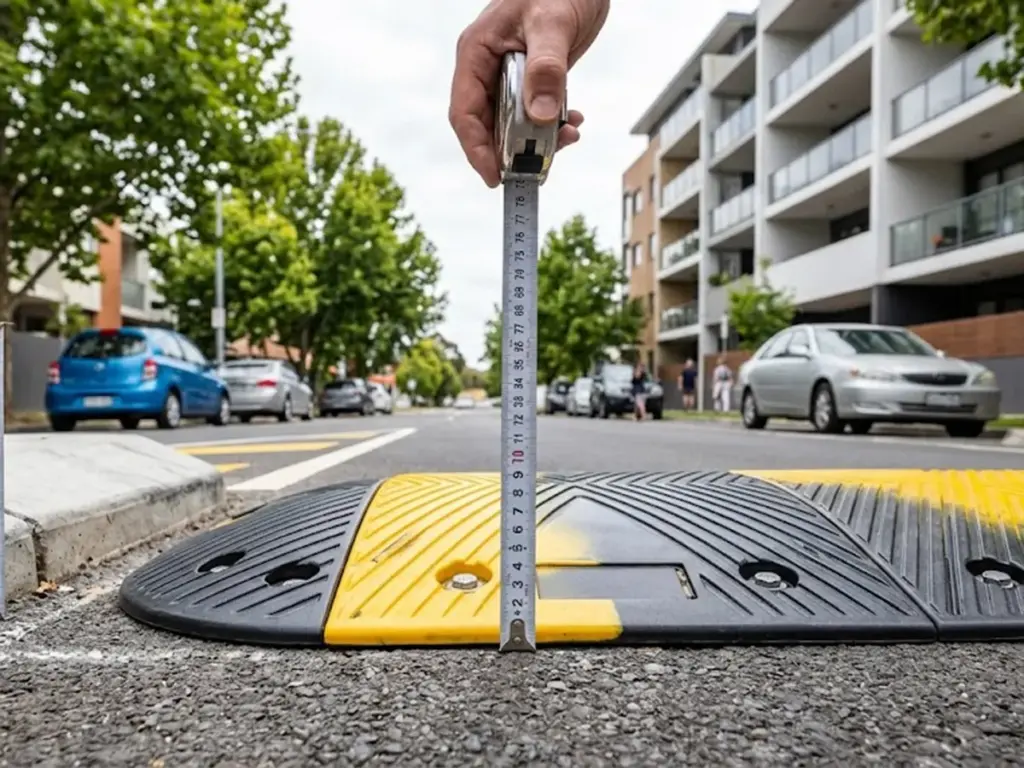
A conformidade com os padrões nacionais de fabricação protege os empreiteiros civis de ações judiciais dispendiosas. Os padrões australianos determinam medições precisas para todas as instalações de controle de tráfego.
A principal referência regulatória para estacionamentos fora da rua é AS2890.1:2004 (Estacionamento fora da rua). Esta norma regula os parâmetros de projeto do Tipo 2 lombadas explicitamente.
A lei determina um limite máximo de altura de 75 mm para esses dispositivos. O dispositivo também deve apresentar dimensões transversais específicas para evitar o aterramento do veículo.
Além disso, você não pode colocar esses dispositivos em caminhos designados para cadeiras de rodas ou rotas acessíveis. O não cumprimento desses limites de altura pode resultar em severas penalidades municipais. Para uma análise localizada das variações estado por estado, revise nosso guia sobre Regulamentos de lombadas & Padrões: Requisitos australianos e de estacionamento.
Compreendendo a conformidade AS2890.1 para estacionamento fora da rua
Os gestores de ativos devem compreender as suas responsabilidades civis ao abrigo dos códigos de construção australianos. AS2890.1:2004 Cláusula 4.6 exige que os proprietários forneçam ambientes de tráfego seguros.
Instalações não conformes criam enormes responsabilidades financeiras para proprietários de imóveis comerciais. Superdimensionado redutores de velocidade danificam frequentemente os sistemas de escape dos veículos e os pára-choques dianteiros.
Se o seu redutores de velocidade A instalação na Austrália viola as especificações padrão, você enfrenta ações judiciais dispendiosas por negligência. Seguir o código nacional garante que os proprietários mantenham uma posição legalmente defensável.
Permissões máximas de altura e regras de layout de largura
O limite de altura padrão de 75 mm fornece regulação de velocidade ideal para veículos de passageiros padrão. No entanto, locais industriais pesados geralmente exigem planejamento de layout especializado.
Os empreiteiros devem mapear cuidadosamente o espaçamento dos dispositivos em toda a propriedade. Os drivers aceleram rapidamente se você colocar os dispositivos muito distantes um do outro.
- Espace seu comercial redutores de velocidade 10 para 15 metros de distância para controle máximo de velocidade.
- Certifique-se de que a largura do dispositivo deixe um espaço livre de calha de 300 mm em cada lado para drenagem.
- Instale amarelo e preto de alta visibilidade redutores de velocidade alertar os motoristas com antecedência.
Órgãos estaduais como Transport for NSW impõem regras de altura semelhantes para faixas de acesso público. Suas diretrizes afirmam que mudanças repentinas de elevação não devem exceder os limites de suspensão padrão.
Estudos recentes realizados pelas autoridades rodoviárias dos EUA confirmam que padrões de altura uniformes reduzem as solicitações de manutenção dos veículos. Dados da Administração Rodoviária Federal revelam que os controles de velocidade padronizados diminuem as disputas por danos materiais em 40% (dados disponíveis em https://rodovias.dot.gov). Seguir essas especificações protege os resultados financeiros de sua empresa.
Selecionando o perfil de material correto: Borracha vs.. Plástico versus. Aço
Os gerentes de compras devem avaliar os ciclos de vida dos materiais antes de comprar redutores de velocidade. Escolher os materiais errados aumenta os custos de manutenção e causa reclamações de ruído dos inquilinos.
Diferentes ambientes operacionais exigem configurações modulares específicas para garantir durabilidade máxima. A borracha reciclada absorve perfeitamente o som e oferece um alto coeficiente de atrito. Polietileno linear de baixa densidade (PEBDL) o plástico resiste aos fortes raios UV e produtos químicos de forma eficiente. O aço resistente tolera perfeitamente pesos extremos de eixo de máquinas industriais.
A escolha do material impacta diretamente suas despesas gerais de manutenção a longo prazo. Leia nossa avaliação operacional de Materiais para lombadas & Instalação: Borracha vs.. Plástico versus. Aço para determinar o ROI do ciclo de vida do seu tipo de propriedade.
Borracha reciclada modular para zonas comerciais tranquilas
Desenvolvimentos de varejo de uso misto exigem infraestrutura eficaz de amortecimento de ruído. Barreiras sólidas tradicionais criam fortes vibrações estruturais quando os veículos as atravessam.
A borracha reciclada modular comprime-se ligeiramente sob cargas padrão de veículos comerciais. Esta compressão absorve a energia do impacto e elimina sons irritantes de tinido.
Além disso, a superfície de alta fricção evita o deslizamento dos pneus durante o inverno chuvoso australiano. Os gerentes de instalações resolvem reclamações de ruído e problemas de segurança simultaneamente com módulos de borracha.
Aço Pesado para Instalações Industriais e Logísticas
Pátios logísticos e instalações industriais lidam diariamente com um enorme tráfego de caminhões B-double. Materiais leves quebram rapidamente sob essas intensas forças mecânicas. Dispositivos de velocidade em aço de alta resistência resistem a impactos pesados e repetitivos do eixo sem rachar. As nervuras estruturais internas distribuem o peso extremo do veículo uniformemente pela sub-base do pavimento.
Os empreiteiros usam aço resistente para evitar a substituição frequente de infraestrutura em zonas de alto estresse. A instalação adequada da lombada requer âncoras mecânicas robustas para estabilidade permanente.
A Administração Rodoviária Federal dos EUA monitora de perto o desempenho dos ativos industriais. Seu recente 2025 relatório de ativos de infraestrutura afirma que componentes de aço para serviços pesados prolongam a vida útil do pavimento em 25% em zonas de trânsito de alta carga (dados disponíveis em https://rodovias.dot.gov). A implementação de projetos de aço protege eficazmente os corredores de transporte industrial pesado.
Posição comercial do redutor de velocidade e design de layout do site
Os engenheiros civis devem planejar os layouts do tráfego com precisão para alcançar uma redução eficaz da velocidade. Dispositivos mal posicionados não conseguem controlar motoristas em excesso de velocidade e criam zonas de aceleração inseguras.
Um único dispositivo não resolve problemas de velocidade em grandes propriedades industriais. Os engenheiros devem estabelecer intervalos padrão de colocação de engenharia em todo o local. Dispositivos de espaçamento 40 para 60 metros de distância mantém baixas velocidades contínuas do veículo de forma eficaz.
Além disso, os operadores devem instalar sinalização regulatória para alertar os motoristas que se aproximam com antecedência. Os projetos de layout devem incluir sinais de alerta posicionados no mínimo 30 metros antes do dispositivo. Este aviso avançado dá aos condutores distância suficiente para desacelerar com segurança.
Cálculos de espaçamento para controle contínuo de velocidade
Instalações isoladas criam um efeito perigoso de pista de corrida em estradas comerciais. Os motoristas freiam com força antes do obstáculo e aceleram rapidamente imediatamente após ele.
Perfis matemáticos de aceleração provam que os motoristas recuperam a velocidade máxima dentro 30 metros. O design de espaçamento controla a velocidade média entre as unidades continuamente.
- Calcule a distância de desaceleração necessária do veículo com base na velocidade inicial de entrada.
- Posicione unidades sucessivas dentro da curva de aceleração para limitar o pico de velocidade.
- Manter um intervalo estrito de espaçamento máximo de 45 metros para faixas de trânsito de empilhadeiras.
Este layout rítmico força os motoristas a manter um ritmo constante, ritmo de rastreamento seguro. A posição estratégica do redutor de velocidade elimina totalmente as explosões de aceleração em alta velocidade.
Sinalização obrigatória e marcações de linha de conformidade MUTCD
Falhas de visibilidade causam acidentes noturnos graves e aumentam reclamações de danos materiais. A conformidade exige sistemas de alerta altamente visíveis em todas as abordagens.
O Manual de Dispositivos Uniformes de Controle de Tráfego (MUTCD) dita padrões exatos de sinais de alerta. A Seção 2C.29 exige o uso de sinais de alerta de lombada W5-10.
- Instale sinais W5-10 para alertar os motoristas sobre as próximas mudanças verticais.
- Use classe 1100 folhas retrorrefletivas para garantir alta visibilidade à noite.
- Pinte amarelo e preto redutores de velocidade com marcações xadrez no pavimento claramente.
Parte MUTCD 3 requer marcações de linhas retrorrefletivas na superfície de aproximação do pavimento. Amarelo brilhante e preto redutores de velocidade pegar faróis de longas distâncias. A sinalização adequada resolve problemas de visibilidade antes que ocorram acidentes.
Avaliações recentes de segurança no trânsito destacam a importância global da visibilidade adequada dos perigos. A Administração Rodoviária Federal dos EUA relata que a sinalização retrorrefletiva compatível reduz as colisões noturnas de ativos em 28% (dados disponíveis em https://rodovias.dot.gov). A implementação de padrões rigorosos do MUTCD protege efetivamente pedestres e motoristas.
Navegando na Responsabilidade Civil: Leis de Trânsito e Instalação de Propriedade Privada
Os gestores de propriedades devem navegar pelas complexas leis de trânsito civil antes de implantar infraestrutura de mitigação de velocidade. A instalação de barreiras de tráfego não autorizadas cria uma enorme exposição legal para as empresas.
Os proprietários têm um dever estrito de cuidado sob a lei consuetudinária australiana. Você deve garantir que os sistemas de gerenciamento de tráfego não criem riscos de segurança não gerenciados. Instalações mal planejadas frequentemente ferem motociclistas ou danificam veículos com pouca distância livre.
Instalações não autorizadas em vias públicas podem resultar em multas municipais severas e ordens de remoção obrigatórias.
Autorização de Instalação em Vias Públicas vs.. Terreno Privado
Os conselhos municipais locais mantêm jurisdição absoluta sobre todas as redes rodoviárias públicas. Os cidadãos não podem modificar legalmente a infraestrutura das vias públicas de forma independente.
Alterar uma via pública sem a aprovação do conselho de engenharia viola as leis estaduais de transporte. Por exemplo, a Lei de Estradas de Nova Gales do Sul 1993 Seção 138 proíbe explicitamente obras rodoviárias não aprovadas. Esta cláusula determina penalidades severas para estruturas não autorizadas em vias públicas.
Por outro lado, empreendimentos comerciais privados permitem instalação independente em terrenos privados. Os gerentes podem instalar redutores de velocidade, Modelos certificados pela Austrália dentro de fronteiras privadas sem licenças municipais. No entanto, o layout privado ainda deve atender às diretrizes nacionais de segurança e engenharia.
Gerenciando Riscos, Lesões Pessoais, e reclamações de danos a veículos
As lombadas não conformes expõem as operações comerciais a dispendiosos processos judiciais de responsabilidade pública. Motoristas podem processar por danos estruturais ao veículo causados por colisões ilegais.
- Comercial padrão redutores de velocidade deve seguir limites de altura precisos para proteger o chassi do veículo.
- Certifique-se de que uma sinalização de alerta clara acompanhe cada projeto de instalação de lombadas.
- Documente sua adesão aos padrões de engenharia para evitar reclamações de ferimentos frívolos.
A infraestrutura compatível prova que sua empresa gerencia ativamente os riscos de velocidade dos veículos. Esta documentação de segurança proativa reduz os prêmios de seguro e mitiga os riscos de litígios corporativos.
Dados legais recentes provam que dispositivos de trânsito compatíveis reduzem disputas de propriedade. A Administração Nacional de Segurança de Tráfego Rodoviário dos EUA relata que layouts padronizados de acalmia de tráfego reduzem os litígios localizados sobre danos à propriedade em 35% (dados disponíveis em https://www.nhtsa.gov). A instalação de sistemas certificados protege sua empresa contra dispendiosas batalhas judiciais.
Alternativas inovadoras aos sistemas tradicionais de acalmia de tráfego
Propriedades comerciais de alto padrão muitas vezes rejeitam barreiras verticais padrão devido a desvantagens estéticas e operacionais. Saliências físicas bloqueiam a drenagem de águas superficiais e arranham veículos com pouco espaço livre.
Os incorporadores imobiliários modernos precisam de métodos de controle de velocidade não invasivos para manter a estética imobiliária imaculada. Os dissuasores de velocidade ópticos e psicológicos resolvem esses desafios específicos de layout de propriedades comerciais.
3A geometria visual D altera a percepção de profundidade do driver de forma eficaz. Esses projetos alcançam uma redução documentada de 10 a 15% nas velocidades médias dos veículos sem impacto físico.
Onde as barreiras físicas apresentam desafios operacionais para veículos com pouco espaço livre ou empilhadeiras industriais, a implementação de métodos de acalmia visual de tráfego oferece uma alternativa altamente eficaz. Descubra como isso funciona na prática lendo nossa análise detalhada de “Dentes de dragão” 3D marcações da estrada: Um design visual revolucionário para segurança rodoviária.
Acalmia visual do trânsito: O poder das marcações de ilusão óptica 3D
As marcações rodoviárias com ilusão de ótica aproveitam a psicologia do condutor para reduzir os riscos de excesso de velocidade com segurança. O cérebro humano percebe plana, padrões triangulares pintados como blocos tridimensionais sólidos.
Esta ilusão de percepção de profundidade força os motoristas a pisar no freio instintivamente antes do perigo. Estruturas de projetos arquitetônicos modernos favorecem essas soluções em vez de instalações barulhentas de lombadas de aço.
Além disso, esses sistemas visuais cumprem integralmente as políticas corporativas de design de saúde e segurança no local de trabalho. Eles retardam o tráfego de forma eficiente, sem causar choques físicos violentos aos motoristas ou veículos.
Quando implantar virtual vs.. Restrições físicas de velocidade
Os gerentes de instalações devem avaliar variáveis específicas do local antes de escolher sistemas de controle de tráfego. A capacidade de drenagem e as rotinas regulares de limpeza determinam a seleção do produto.
- Implantar marcações visuais onde o acúmulo de águas superficiais ameaça a segurança da propriedade.
- Usar tradicional redutores de velocidade onde a restrição absoluta da velocidade física permanece crítica.
- Instalar barreiras físicas em áreas industriais escuras e sem iluminação ambiente adequada.
Esta estrutura abrangente serve como seu comercial definitivo redutores de velocidade guia pilar para compras B2B inteligentes. Equilibrar marcações ópticas com barreiras físicas otimiza a segurança dos parques empresariais modernos.
Dados recentes de tráfego apoiam a integração estratégica de sistemas psicológicos de controle de tráfego. A Administração Rodoviária Federal dos EUA confirma que os padrões de marcação óptica diminuem as velocidades de entrada em interseções urbanas em 12% (dados disponíveis em https://rodovias.dot.gov). Implementar infraestrutura visual protege propriedades sem custos de manutenção de equipamentos físicos.
Lista de verificação resumida para aquisições de gerenciamento de tráfego B2B
Os compradores B2B devem priorizar a conformidade, adequação do material, e instalação profissional em todos os projetos civis. Esta lista de verificação concisa resume os principais protocolos de alinhamento técnico para instalações comerciais australianas. Use esta estrutura como seu comercial definitivo redutores de velocidade guia de pilares para garantir a máxima segurança do local.
- Verifique se todas as dimensões do produto estão perfeitamente alinhadas com AS2890.1:2004 requisitos de engenharia.
- Selecione módulos de borracha reciclada duráveis para áreas de estacionamento comercial silenciosas para reduzir o ruído.
- Escolha módulos de aço resistentes para suportar o tráfego frequente de veículos articulados em pátios logísticos.
- Mapeie sua posição exata do redutor de velocidade para manter um ritmo de tráfego consistente abaixo 25 km/h.
- Instale lombadas amarelas e pretas de alta visibilidade junto com sinais de alerta MUTCD compatíveis.
- Agende inspeções semestrais de fixadores para evitar que os componentes modulares se soltem sob cargas de tráfego intenso.
Perguntas frequentes (Perguntas frequentes)
Qual é o termo técnico para uma lombada?
Em estruturas de engenharia estrutural e planejamento civil, a categoria técnica abrangente é Dispositivos de Acalmia de Tráfego ou Módulos de Deflexão Vertical. Dentro dos padrões oficiais australianos (AS2890.1), eles são explicitamente classificados como Tipo 2 Speed Humps.
Você pode estacionar em uma lombada de acordo com as regras de trânsito australianas?
Não. De acordo com as regras rodoviárias australianas padrão (Regulamento 208), os veículos não devem parar ou estacionar em um dispositivo de acalmia de tráfego, Speed Hump, ou nas proximidades de uma ilha de tráfego elevado, a menos que seja explicitamente marcado por vagas de estacionamento do conselho local, pois isso obstrui as linhas de visão claras e cria um grave risco de colisão.
Qual a altura legal de uma lombada em um estacionamento comercial?
De acordo com AS2890.1:2004, a altura máxima legal absoluta para um dispositivo de mitigação de velocidade em um estacionamento fora da rua é de 75 mm. Qualquer dispositivo que exceda esta altura corre o risco de violar os códigos de conformidade e expõe o proprietário do imóvel a reclamações de responsabilidade por danos no material rodante do veículo.
O que acontece se um veículo passar por uma lombada comercial muito rápido?
Quando um veículo atinge uma lombada de 75 a 100 mm em altas velocidades, os suportes de suspensão sofrem rápida, compressão não amortecida. Isto pode levar a um afundamento imediato, falhas de alinhamento estrutural, panelas de óleo perfuradas, e amortecedores queimados, ao mesmo tempo que aumenta significativamente a poluição sonora localizada.
As lombadas modulares de plástico ou borracha exigem aprovação do conselho para estradas privadas?
Se a estrada for estritamente classificada como terreno privado (Por exemplo, um parque industrial comercial interno ou propriedade de estratos privados), a aprovação do conselho geralmente não é necessária, desde que a instalação esteja de acordo com os padrões de projeto AS2890.1. No entanto, se a estrada se conecta diretamente a uma rede pública ou fica em uma servidão pública, a aprovação completa da engenharia do conselho municipal é obrigatória.
Referência
AS/NZS 2890.1:2004, Parques de estacionamento – Estacionamento fora da rua
Guia para parte de gerenciamento de tráfego 8: Gestão de Ruas Locais
Trabalho seguro na Austrália, Guia geral para gerenciamento de tráfego no local de trabalho
Direção Técnica: Dispositivos e Diretrizes para Acalmar o Tráfego