La seguridad de los cruces de peatones es un aspecto crítico de la infraestructura pública que garantiza la seguridad y el bienestar de todos los peatones., especialmente en zonas escolares y áreas públicas con mucho tránsito peatonal. Para abordar las preocupaciones actuales relacionadas con la seguridad de los peatones., Es imperativo que los municipios y las autoridades de transporte instalen, visible, y señales de cruce de peatones compatibles. Este blog describe la parte superior 10 señales de tráfico para pasos de peatones, incluyendo señales de advertencia anticipadas, señales de cruce escolar, y señales LED intermitentes, entre otros. Cumplir con las pautas de MUTCD para Señales de cruce de peatones mejora la seguridad vial y facilita el cumplimiento legal.
Para municipios y autoridades de transporte que buscan soluciones de seguridad para peatones duraderas y que cumplan con las normas, OPTRAFICO ofrece una amplia selección de compatibles con MUTCD Señales de cruce de peatones. Como fabricante de señalización de confianza, OPTRAFFIC se especializa en producir señales de advertencia anticipadas de alta calidad., señales de cruce escolar, y señales de cruce de peatones diseñadas para máxima visibilidad y durabilidad.. Estos signos, ideal para zonas escolares y áreas de alto tránsito peatonal, ayudar a garantizar la seguridad de los peatones manteniendo al mismo tiempo el pleno cumplimiento normativo. El compromiso de OPTRAFFIC de proporcionar señalización de tráfico confiable y eficaz los convierte en un socio de referencia para los gobiernos locales y los departamentos de transporte enfocados en mejorar la seguridad de los peatones..
Control de llave
- Emplear señales de tráfico de alta visibilidad, como la señal de cruce de peatones. (W11-2) ayuda a proporcionar una comunicación clara a los conductores y promueve la seguridad de los peatones.
- Colocación y mantenimiento adecuados de estos carteles., especialmente en zonas escolares y espacios públicos, puede reducir significativamente los accidentes.
- La inspección periódica y el cumplimiento de los estándares de cumplimiento de MUTCD garantizan una funcionalidad y visibilidad óptimas de las señales de cruce de peatones..
Signo de cruce de peatones (W11-2)
Diseño y símbolo de letrero
La señal de paso de peatones (W11-2) muestra una imagen sencilla. Le dice a la gente dónde pueden cruzar la calle.. El cartel tiene la forma negra de una persona caminando.. El fondo es un diamante amarillo.. Este color y forma ayudan a los conductores a ver la señal rápidamente.. Los conductores saben lo que significa de inmediato. La imagen en amarillo brillante y en negrita hace que sea fácil de detectar.. La gente puede verlo desde lejos.. El letrero es fácil de notar en lugares concurridos.. Es muy importante cerca de escuelas y lugares públicos.. Estas señales ayudan a mantener a las personas seguras. Para obtener más información sobre cómo se pueden integrar las señales de seguridad para peatones en la planificación urbana para proteger a los usuarios vulnerables, lea nuestro último blog sobre Cómo las señales de seguridad de los peatones pueden mejorar la seguridad vial para los usuarios vulnerables.
| Código MUTCD | Objetivo |
|---|---|
| W11-2 | Alerta a los usuarios de la vía sobre lugares donde es probable que los peatones ingresen a la vía o donde se anticipa actividad de peatones.. |
Colocación y visibilidad
La colocación estratégica de estas señales cerca de cruces peatonales e intersecciones es esencial para brindarles a los conductores tiempo suficiente para reducir la velocidad.. Se recomienda instalar el letrero a la altura de los ojos y en áreas libres de obstrucciones como árboles o postes de servicios públicos.. En ciudades como San Francisco, La instalación de señales de paso de peatones bien ubicadas ha dado lugar a una notable reducción de los accidentes relacionados con peatones., demostrando la eficacia de la colocación adecuada de la señalización.
Normas de cumplimiento
El letrero W11-2 cumple con Muescato estándares, Garantizar la uniformidad y el reconocimiento entre jurisdicciones.. Este cumplimiento garantiza que los conductores encuentren señales de tráfico consistentes., reducir la confusión y mejorar la seguridad vial.
Señal de cruce escolar (T1-1)
Apariencia y significado
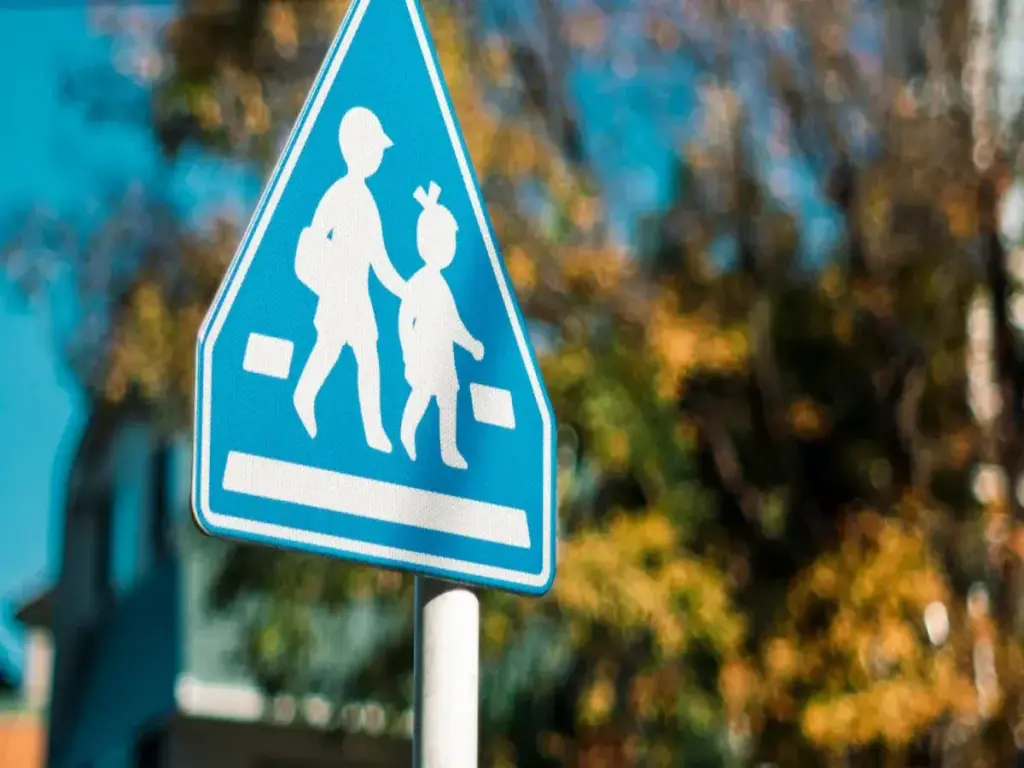
La señal de cruce escolar (T1-1) Es una señal de control de tráfico muy visible que advierte a los conductores sobre cruces de peatones cerca de zonas escolares.. Es fondo amarillo verdoso fluorescente y la representación de dos figuras caminando están diseñadas para alertar a los conductores para que reduzcan la velocidad cuando se acerquen a zonas escolares.. El letrero presenta materiales retrorreflectantes., asegurando que sea visible tanto de día como de noche.
| Descripción estándar | Detalles |
|---|---|
| Color de fondo | Amarillo verdoso fluorescente |
| Leyenda y borde | Negro |
| Retroreflectorización | Requerido para la visibilidad |
| Instalación | En el cruce de la escuela con una placa con una flecha apuntando hacia abajo. |
Donde usar
Las ciudades ponen la señal de cruce escolar (T1-1) cerca de escuelas y parques. También lo usan en calles concurridas donde cruzan niños.. Estas señales muestran a los conductores dónde están los cruces peatonales y escolares.. Los letreros ayudan a mantener seguros a los estudiantes y las familias durante las horas punta. Los estudios dicen que las señales para peatones en las calles y la reducción del tráfico reducen la velocidad de los vehículos. 0.94 km/h. Los autos más lentos cerca de los cruces peatonales hacen que sea más seguro para los niños caminar a la escuela.
Consejos de instalación
- Pon el cartel justo donde está el cruce escolar..
- Agregue una señal de flecha diagonal para señalar el cruce..
- Utilice señales que brillen o se iluminen para que los conductores puedan verlas.Consejo: Busque árboles o autos que bloqueen la señal.. Asegúrese de que los conductores puedan ver la señal desde lejos..
Señal de tráfico en la calle para paso de peatones (R1-6)
Características y eficacia
Las señales de advertencia para peatones en la calle (R1-6) tener características especiales. Estas señales ayudan a los conductores a ver los cruces de peatones y les recuerdan que deben detenerse ante las personas.. Las ciudades colocan estos carteles en esquinas concurridas y cerca de escuelas.. La siguiente tabla enumera características importantes que hacen que las señales sean fáciles de ver y seguras.:
| Característica | Descripción |
|---|---|
| Colocación en islas peatonales | Ubicado en la punta de las islas peatonales para recordar a los usuarios de la vía las leyes de derecho de paso.. |
| Cumplimiento de los requisitos de separación | Cumple con las pautas de AASHTO para garantizar la seguridad en caso de impacto.. |
| Opción de uso estacional | Puede usarse estacionalmente para evitar daños causados por las operaciones de arado en invierno.. |
| Uso de brazos de mástil | Las señales están elevadas por encima de los carriles de circulación para una mejor visibilidad.. |
| Pasos de peatones de alta visibilidad | Incorpora cruces peatonales diseñados para ser más visibles para los conductores.. |
| Balizas de advertencia activas | Incluye balizas que alertan activamente a los conductores sobre la presencia de peatones.. |
La investigación muestra que estas señales de cruce de peatones ayudan a que más conductores se detengan.
- Sin señales R1-6, solo 7% de conductores detenidos.
- Con señales de entrada R1-6, 79% de conductores detenidos.
- Cuando las ciudades quitaron las señales, solo 52% de conductores detenidos.
- Línea central con señales de borde hechas justo 36% de los conductores se detienen.
- La puerta de enlace R1-6 es una forma económica de lograr que más conductores se detengan ante las personas.
Pautas de colocación
Las ciudades colocan la señal de paso de peatones en medio de la calle o al lado de los pasos de peatones. Los trabajadores ponen estas señales donde camina mucha gente. Las señales no deben bloquear lo que ven los conductores o las personas.. Colocarlos al frente de las islas peatonales ayuda a los conductores a recordar las reglas de derecho de paso.. Algunas ciudades utilizan brazos de mástil para levantar las señales en alto para que los conductores puedan verlas mejor.. Usar los letreros solo en algunas estaciones los mantiene a salvo de los quitanieves.
Consejo: Asegúrese siempre de que nada bloquee la vista antes de colocar señales de cruce de peatones.. Los conductores deben ver las señales desde lejos..
Mantenimiento
Los trabajadores revisan con frecuencia las señales de advertencia para peatones en la calle para que sigan funcionando bien. Buscan daños tras tormentas o mucho tráfico. Las ciudades cambian rápidamente los carteles viejos o rotos. Quitar las señales en invierno los mantiene a salvo de los quitanieves. Limpiar las señales y comprobar las balizas de advertencia ayuda a que las personas las vean.. Una buena atención garantiza que cada paso de peatones sea seguro para todos.
Señal de advertencia anticipada escolar
Diseño y color
Las señales de advertencia anticipada escolar utilizan colores brillantes. El cartel tiene un fondo amarillo verdoso.. Tiene un borde negro grueso y letras negras.. Este color es fácil de ver a la luz del sol y de noche.. El cartel está fabricado en aluminio resistente.. No se oxida ni se rompe. Los gráficos utilizan tintas especiales., vinilo, o película. Esto hace que el mensaje sea fácil de leer.. El letrero puede tener láminas reflectantes. Algunos tipos duran 10 años. otros duran 12 años. Estas funciones ayudan a los conductores a ver la señal a distancia. Los conductores pueden reaccionar rápidamente cuando lo ven..
| Tipo de especificación | Detalles |
|---|---|
| Material | .080 aluminio |
| Opciones de láminas reflectantes | Reflectante prismático amarillo de alta intensidad (10 garantía anual), Amarillo Fluorescente Verde (12 garantía anual) |
| Gráficos de signos | Tintas translúcidas, vinilo, o película translúcida |
| Resistencia al clima | Aluminio apto para tráfico resistente a la intemperie que no se oxida ni se agrieta. |
| Montaje | Preperforado 3/8″ agujeros para montaje en poste, muro, o cerca |
| Cumplimiento | Cumple con las especificaciones MUTCD para uso en carreteras federales. |
Ubicación cerca de escuelas
Las ciudades colocan señales de advertencia escolar anticipada antes de las zonas escolares. También los colocan cerca de pasos de peatones. La señal indica a los conductores que reduzcan la velocidad.. Les advierte que estén atentos a los niños.. Los trabajadores colocan el cartel donde los estudiantes caminan o cruzan calles concurridas. Todas las señales para peatones de una zona utilizan el mismo color.. Esto ayuda a los conductores a saber que están cerca de una escuela.. Los letreros pueden tener placas adicionales.. Estos dicen "ADELANTE" o "XXX PIES". Una buena ubicación mantiene a todos seguros cerca de las escuelas.
Consejo: Coloque la señal donde los conductores pueden reducir la velocidad antes de los cruces de peatones..
Cumplimiento
Las señales de advertencia anticipada escolar siguen las reglas de MUTCD. Los carteles cumplen con los estándares federales de tamaño y color.. También cumplen con las normas de reflectividad.. Las ciudades utilizan agujeros preperforados para montar carteles fácilmente. Los signos duran muchos años.. No se rompen con mal tiempo.. Usar el mismo color para todas las señales de zonas escolares ayuda a los conductores a conocer el área. Seguir las reglas hace que cada cruce sea seguro y fácil de ver..
Parada para peatones en paso de peatones (R1-6a)
Propósito del signo
La parada para peatones en el paso de peatones (R1-6a) Un letrero indica a los conductores que se detengan ante las personas en el cruce de peatones.. Las palabras del cartel son claras y fáciles de leer.. El diseño es atrevido, así se destaca. Las ciudades utilizan estas señales para recordar a los conductores sobre la ley. Las señales ayudan a mantener seguras a las personas cuando caminan.. Estas señales funcionan bien en lugares concurridos como escuelas y parques.. Cuando las ciudades colocan señales en una configuración de entrada, más conductores reducen la velocidad y se detienen. Los estudios muestran que esta configuración hace que más conductores se detengan. También hace que los coches suban 10 mph más lento en algunos cruces de peatones. La configuración de la puerta de enlace funciona tan bien como los sistemas costosos.. No hace que los coches se detengan de repente..
Requisitos legales
Las ciudades sólo pueden poner Paradas para Peatones en los Pasos de Peatones (R1-6a) señales en zonas escolares si la ley estatal dice que los conductores deben detenerse ante las personas en los cruces peatonales.
Cada estado tiene sus propias reglas para estos letreros que cumplen con mutcd.. Las ciudades deben comprobar la ley antes de colocar las señales. Algunos estados dicen que los conductores deben detenerse ante las personas en los cruces peatonales.. Otros estados solo piden a los conductores que cedan el paso. Conocer la ley ayuda a las ciudades a elegir la señal adecuada para sus zonas escolares.
Instalación
Los trabajadores colocan la señal R1-6a en el borde o en medio de los pasos de peatones. Usan postes o bases fuertes que se doblan si se golpean.. La señal debe estar orientada al tráfico para que los conductores puedan verla desde lejos.. Las ciudades colocan estos carteles en esquinas concurridas o cerca de escuelas. Los buenos lugares ayudan a los conductores a ver la señal temprano y detenerse de manera segura. Los trabajadores revisan los letreros con frecuencia para mantenerlos limpios y fáciles de ver.. Las ciudades arreglan o reemplazan rápidamente las señales rotas para mantener a todos seguros.
| Paso de instalación | Detalles |
|---|---|
| Ubicación | Borde o centro de cruces peatonales |
| Montaje | Poste resistente o base flexible |
| Visibilidad | Enfrente el tráfico que viene en sentido contrario |
| Mantenimiento | Limpieza y controles periódicos |
Ceda el paso aquí a los peatones (R1-5)
Función de signo
El cartel de ceder el paso a los peatones (R1-5) ayuda a los conductores a saber cuándo ceder el paso a las personas en los cruces peatonales. Este letrero juega un papel clave para mantener a todos seguros.. El manual de dispositivos de control de tráfico uniformes (Muescato) explica que esta señal indica a los vehículos que cedan el paso a las personas que utilizan el cruce. Las ciudades utilizan esta señal tanto en las carreteras como en las zonas de aparcamiento.. La señal aclara las reglas para los conductores y ayuda a prevenir accidentes.. Cuando los conductores ven el letrero, Saben reducir la velocidad y estar atentos a las personas que caminan..
Colocación
Ciudades colocan cartel de Ceda el Paso a los Peatones (R1-5) antes de los cruces de peatones. Esto les da a los conductores tiempo suficiente para ver la señal y reaccionar.. El letrero funciona bien en áreas públicas concurridas y cerca de escuelas.. Colocar la señal con antelación ayuda a los conductores a ceder el paso antes. Los estudios demuestran que las marcas de paso anticipadas alientan a los conductores a detenerse antes y con más frecuencia. La siguiente tabla muestra cómo estas señales mejoran la seguridad en diferentes situaciones.:
| Referencia de estudio | Recomendaciones |
|---|---|
| Huybers y Van Houten, 2004 | Las marcas de paso anticipadas alientan a los conductores a ceder el paso antes y con más frecuencia en los cruces peatonales a mitad de cuadra. |
| Van Houten et al., 2001 | Conductores’ El comportamiento mejora con marcas de rendimiento avanzadas en escenarios con visión limitada.. |
| Garay-Vega et al., 2008 | Mayor probabilidad de ceder observada con marcas de rendimiento avanzadas en comparación con marcas estándar. |
Consejo: Coloque el letrero donde los conductores puedan verlo antes de llegar al cruce de peatones.. Esto les ayuda a detenerse de forma segura..
Cumplimiento
El cartel de ceder el paso a los peatones (R1-5) Cumple con todos los estándares de señales compatibles con mutcd.. Las ciudades deben seguir estas reglas para asegurarse de que todas las señales tengan el mismo aspecto. Esto ayuda a los conductores a entender qué hacer., No importa a dónde conduzcan. El letrero también funciona bien con otros letreros para peatones y cruces de peatones.. Los controles regulares mantienen el letrero limpio y fácil de ver.. Un buen mantenimiento ayuda a mantener los cruces peatonales seguros para todos.
No estacionar/parar cerca del cruce de peatones
Importancia para la seguridad
Las señales de Prohibido estacionar/Parar cerca de un cruce de peatones ayudan a mantener a las personas seguras. Estas señales impiden que los coches se estacionen cerca de los pasos de peatones. Cuando los autos se mantienen alejados, conductores y peatones pueden verse. Si los autos estacionan demasiado cerca, es dificil de ver. Esto puede ser peligroso para niños y adultos.. La gente podría salir a la calle sin ser vista.. Es posible que los conductores no tengan tiempo suficiente para detenerse. Las ciudades utilizan estas señales para reducir la posibilidad de accidentes. El espacio libre alrededor de los cruces peatonales hace que todos se sientan más seguros. Los estudios muestran que ocurren menos accidentes cuando los autos se quedan atrás.
Nota: Mantener los coches alejados de los cruces peatonales ayuda a los conductores a ver a las personas cruzar.
Reglas de colocación
Las ciudades tienen reglas sobre dónde colocar señales de No estacionar/Parar cerca de un cruce de peatones. Los trabajadores ponen estos carteles al menos 20 pies de los cruces peatonales. Esto proporciona a los conductores una visión clara de la calle.. Los letreros deben enfrentar los autos que se dirigen hacia ellos. Deben estar a la altura de los ojos para que los conductores puedan verlos.. Los trabajadores revisan si hay árboles o postes que puedan bloquear el letrero.. Las señales van a ambos lados de la calle.. Por aquí, Los conductores los ven desde todas las direcciones.. Las ciudades utilizan estas señales cerca de las escuelas, parque, y lugares ocupados.
| Regla de colocación | Descripción |
|---|---|
| Distancia mínima | 20 pies de los cruces peatonales |
| Visibilidad | Sin obstrucciones; instalación a la altura de los ojos |
| Dirección | Enfrente el tráfico que viene en sentido contrario |
| Ubicación | Ambos lados de la calle cerca de señales para peatones. |
Personalización
Las ciudades pueden cambiar las señales de Prohibido estacionar/Parar cerca de un cruce de peatones para adaptarlas a sus necesidades. Algunos letreros tienen palabras adicionales como “Zona de remolque” o “Sólo días escolares”. Los trabajadores pueden agregar flechas o símbolos para mostrar dónde no está permitido estacionar. Los carteles pueden utilizar materiales brillantes para que la gente los vea de noche.. Las ciudades eligen señales más grandes para calles concurridas y otras más pequeñas para calles tranquilas. Las señales personalizadas ayudan a los conductores a conocer las reglas. Esto mantiene los cruces de peatones despejados para todos..
Consejo: Los letreros personalizados con palabras e imágenes claras ayudan a los conductores a seguir las reglas y a mantener a las personas seguras en los cruces peatonales..
Marcas y líneas de cruce de peatones
Tipos de marcas
Las ciudades utilizan patrones para ayudar a las personas a ver los cruces de peatones. Las mejores marcas son los pares de barras., continental, y diseños de escaleras. Estos patrones ayudan a los conductores y peatones a detectar los cruces desde lejos. Los cruces peatonales continentales tienen franjas anchas que van a lo largo de la acera.. Los pasos de peatones con escaleras tienen franjas laterales y peldaños anchos.. Los pasos de cebra utilizan franjas inclinadas, pero no son tan fáciles de ver como los continentales. La siguiente tabla muestra cada tipo.:
| Tipo de señalización de cruce de peatones | Descripción |
|---|---|
| Patrón continental | Franjas anchas corren junto a la acera durante todo el cruce., haciendo que sea más fácil de ver. |
| Paso de peatones con escalera | Rayas laterales con peldaños anchos., no tan bueno como el continental. |
| Paso de cebra | Rayas inclinadas, no es tan fácil de ver como continental. |
Las ciudades colocan estas marcas en los cruces en medio de las cuadras y en lugares sin señales de alto.. Agregar materiales brillantes como cinta especial hace que las líneas sean más brillantes por la noche.
Visibilidad y mantenimiento
La buena visibilidad ayuda a mantener seguros los cruces peatonales. Las ciudades usan luces., señales de cruce de peatones, y luces intermitentes en la carretera para ayudar a los conductores a ver. Los trabajadores revisan los cruces peatonales cada año antes de que comiencen las clases.. La nueva pintura mantiene las líneas brillantes. La siguiente tabla enumera formas de cuidar las marcas.:
| Estrategia de mantenimiento | Descripción |
|---|---|
| Uso de termoplástico | Dura más, cuesta más al principio. |
| Marcas de empotramiento | Se mantiene a salvo de los quitanieves, pero cuesta más. |
| Ubicación de las marcas | Quitar los puntos de giro ayuda a que duren. |
| Mantenimiento de superficies | Necesita atención adicional para la seguridad de las personas.. |
Consejo: Las ciudades deberían volver a pintar los cruces peatonales cuando las líneas se vuelvan difíciles de ver para que los cruces permanezcan seguros.
Cumplimiento
Las ciudades deben seguir las reglas de MUTCD para las marcas de cruces peatonales. Estas reglas garantizan que todos los cruces tengan el mismo aspecto y sean seguros.. El uso de materiales y patrones aprobados ayuda a los conductores a saber por dónde cruzan las personas.. Los controles regulares y las líneas de reparación mantienen los cruces peatonales seguros para todos.
Señal de paso de peatones LED intermitente
Tecnología y Efectividad
Las señales LED intermitentes para cruce de peatones utilizan nueva tecnología para ayudar a los conductores a ver a las personas en los cruces peatonales. Balizas intermitentes rápidas rectangulares, o RRFB, tener dos luces amarillas con matrices de LED. Estas luces parpadean rápidamente y llaman la atención de los conductores rápidamente.. Los RRFB son más brillantes que las balizas normales y utilizan patrones de destello especiales.. Las balizas se encienden sólo cuando alguien está a punto de cruzar. Esto hace que funcionen mejor.. Los conductores notan las luces y reducen la velocidad.. Esto ayuda a mantener a todos a salvo. Los RRFB ayudan a los conductores a prestar más atención y evitar accidentes en cruces peatonales concurridos.
- Los RRFB facilitan la visibilidad de las personas en los pasos de peatones.
- El patrón de parpadeo ayuda a los conductores a notar la señal de inmediato..
- Las balizas sólo se encienden cuando hay alguien allí., para que funcionen mejor.
Los estudios demuestran que los sistemas de luces intermitentes para peatones reducen los accidentes y hacen que más conductores se detengan. La siguiente tabla muestra cómo funcionan los diferentes letreros y cuándo funcionan mejor.:
| Tipo de tratamiento | Eficacia | Condiciones |
|---|---|---|
| Baliza híbrida peatonal (PHB) | Funciona bien día y noche | No hay grandes cambios en las paradas de los conductores entre el día y la noche. |
| Baliza de destello rápido rectangular (RRFB) | Funciona mejor por la noche | Más conductores paran por la noche |
| Señal de cruce integrada con LED (LED encendido) | Funciona mejor durante el día | Más conductores se detienen en zonas de baja velocidad con carriles de cierto tamaño |
Opciones de ubicación y energía
Las ciudades colocan señales LED intermitentes para peatones cerca de las escuelas, parque, y lugares ocupados. Los trabajadores colocan estas señales en ambos extremos de los cruces peatonales.. Por aquí, Los conductores que vienen de ambos lados pueden verlos.. Los paneles solares a menudo alimentan las balizas., para que trabajen donde no hay electricidad. Algunas señales usan baterías o se conectan a la energía de la ciudad.. Los carteles que funcionan con energía solar funcionan mejor en lugares soleados. Las ciudades eligen el mejor tipo de energía para cada lugar y clima.
Consejo: Coloque señales LED intermitentes donde los conductores puedan verlas temprano. Esto les da a los conductores más tiempo para reducir la velocidad y detenerse..
Cumplimiento de MutCD
Las señales LED intermitentes de cruce de peatones deben seguir las reglas de MUTCD. Estas reglas dicen qué tan grande debe ser el letrero., que color es, y como las luces parpadean. Las ciudades siguen estas reglas para que todas las señales se vean y funcionen igual. Las reglas de MUTCD ayudan a los conductores a saber qué hacer en los cruces peatonales. Las ciudades revisan las señales con frecuencia para asegurarse de que funcionen y sean fáciles de ver.. Los trabajadores arreglan luces rotas y limpian mucho los carteles.. Seguir estas reglas mantiene los cruces peatonales seguros para todos.
Señal de cruce de peatones adelante
Propósito de la advertencia anticipada
La señal de cruce de peatones adelante indica a los conductores que pronto habrá un cruce de peatones. Esta señal advierte a los conductores con antelación, para que puedan estar atentos a las personas que cruzan. Los conductores ven estas señales en lugares donde los cruces de peatones son difíciles de notar o donde las personas pueden cruzar cuando los conductores no lo esperan.. La señal ayuda a los conductores a prestar más atención y reducir la velocidad.. Esto mantiene a todos a salvo, especialmente cerca de escuelas o lugares concurridos.
Colocación
Las ciudades colocan señales de paso de peatones adelante en muchos lugares para mantener a las personas seguras. Los trabajadores colocan estos carteles donde mucha gente camina y cruza la calle.. Algunos lugares comunes son:
- Pasos de peatones en medio de cuadras sin semáforo, como en el centro o zonas comerciales
- Zonas transitadas para caminar cerca de las tiendas., restaurantes, o lugares para divertirse
- Paradas de autobús o estaciones de tren donde la gente cruza la calle con frecuencia
- Zonas hospitalarias donde los pacientes y visitantes cruzan mucho la calle
- Parques donde las familias van a los parques infantiles, campos deportivos, o senderos
- Residencias para personas mayores donde las personas mayores pueden cruzar la calle lentamente
Estas señales funcionan bien con otras señales para peatones y cruces de peatones.. Colocarlos en buenos lugares ayuda a los conductores a ver la señal antes de llegar al cruce..
Visibilidad
Es importante que todas las señales de cruce de peatones sean fáciles de ver.. Las ciudades utilizan colores y materiales brillantes para que los conductores puedan ver la señal durante el día y la noche.. Los trabajadores se aseguran de que nada bloquee el cartel., como árboles, polos, o autos estacionados. Las señales deben estar a la altura de los ojos y ser fáciles de detectar desde lejos.. Las señales claras ayudan a los conductores a reducir la velocidad y mantener los cruces peatonales seguros para todos.
Tabla comparativa de los mejores 10 Letreros
Descripción general de las características clave
La siguiente tabla enumera las características principales de la parte superior. 10 Señales de cruce de peatones. Cada signo tiene su propio código., uso principal, información de cumplimiento, y características de visibilidad. Esto facilita a los lectores comparar los signos rápidamente..
| Nombre | Código | Uso principal | Cumplimiento de MutCD | Características de visibilidad |
|---|---|---|---|---|
| Signo de cruce de peatones | W11-2 | Áreas públicas, escuelas | Sí | Amarillo brillante, símbolo en negrita |
| Señal de cruce escolar | T1-1 | Zonas escolares | Sí | color fluorescente, pensativo |
| Señal de cruce de peatones en la calle | R1-6 | Pasos de peatones ocupados | Sí | Colocación del centro, base separatista |
| Señal de advertencia anticipada escolar | T1-1a | Cerca de escuelas | Sí | Fluorescente, letras grandes |
| Parada para peatones en paso de peatones | R1-6a | Escuela/áreas públicas | Sí | Texto en negrita, montaje flexible |
| Ceda el paso aquí a los peatones | R1-5 | Áreas públicas | Sí | Colocación avanzada, redacción clara |
| No estacionar/parar cerca del cruce de peatones | N / A | Todos los cruces de peatones | Sí | Texto personalizado, pensativo |
| Marcas y líneas de cruce de peatones | N / A | Todos los cruces de peatones | Sí | Rayas anchas, termoplástico |
| Señal de paso de peatones LED intermitente | N / A | Zonas de alto tráfico | Sí | Luces LED, energía solar |
| Señal de cruce de peatones adelante | W11-2a | Advertencia anticipada | Sí | color brillante, pensativo |
Referencia rápida
- Los letreros con colores brillantes y materiales brillantes son mejores cerca de las escuelas..
- Las señales en la calle y las señales LED intermitentes son más útiles en lugares concurridos.
- Las luces adicionales y las luces en la carretera reducen los accidentes y hacen que los conductores reduzcan más la velocidad..
- Líneas de cruce de peatones y “No estacionar” Las señales ayudan a mantener seguras a las personas en lugares públicos..
Consejo: Las ciudades deberían utilizar señales y luces LED intermitentes en las carreteras en lugares concurridos. Estas características pueden hacer que los autos funcionen 25% más lento y hacer que más conductores se detengan para dejar pasar a la gente, de 30% a 62%. Las señales especiales para peatones y mejores luces también hacen que los accidentes nocturnos ocurran la mitad.
Las ciudades pueden elegir señales según las necesidades de cada zona.. Las zonas escolares necesitan señales luminosas y relucientes. Las calles concurridas funcionan mejor con luces de advertencia y líneas claras. Los lugares públicos se mantienen más seguros con señales fáciles de ver y cruces peatonales abiertos.
Elegir e instalar señales de tráfico para pasos de peatones
Evaluación de necesidades
Los diseñadores evalúan varios factores al determinar la necesidad de pasos de peatones.. Examinan el tráfico peatonal tanto actual como proyectado para anticipar la demanda futura.. Además, El tipo de edificios y parques cercanos juega un papel importante a la hora de influir en la ubicación de los cruces.. También es importante considerar la frecuencia con la que los peatones utilizan los cruces existentes.. Si los vehículos en el área circulan a altas velocidades., Se necesitan mayores medidas de seguridad para mitigar los riesgos potenciales.. Los datos históricos de accidentes son otro factor crítico, ya que destaca las zonas con mayor incidencia de accidentes, lo que plantea la necesidad de mejorar la señalización. Además, Evaluar la efectividad de las medidas de seguridad actuales ayuda a determinar si se requiere señalización adicional.. Un estudio que comparó las regulaciones de diferentes ciudades enfatizó que los pasos de peatones deben diseñarse para acomodar a todas las personas., independientemente de sus necesidades o capacidades.
La siguiente tabla describe los factores clave que los diseñadores consideran al planificar cruces de peatones.:
| Criterios | Descripción |
|---|---|
| Demanda existente y proyectada | Los diseñadores consideran la demanda de cruces de peatones tanto actual como prevista.. |
| Usos de la tierra | El tipo de uso del suelo de la zona influye en la necesidad de pasos de peatones. |
| Cumplimiento de peatones | Comprender con qué frecuencia los peatones utilizan los cruces existentes es crucial para la evaluación. |
| Velocidad | La velocidad de los vehículos en la zona afecta a la seguridad y necesidad de los cruces. |
| Medidas de seguridad | Se deben evaluar las medidas de seguridad existentes para determinar si se necesita señalización adicional.. |
| Historial de accidentes | Los datos históricos sobre accidentes pueden informar sobre la necesidad de mejorar las señales de cruce de peatones. |
Ejemplo de historial de accidentes que afecta la planificación de la señalización:
En 2021, las muertes de peatones representaron casi 48% de muertes por accidentes de tránsito en San Francisco. Un ejemplo trágico es la muerte de un peatón de 78 años en las calles Sexta y Howard en agosto. 2025. Esta intersección es parte de la ciudad. “Red de lesiones altas,” que ve 68% de accidentes graves a pesar de cubrir sólo 12% de las calles. Siguiendo esto, La ciudad dio prioridad a la mejora de la señalización de los pasos de peatones., incluyendo señales LED parpadeantes, para mejorar la seguridad y reducir futuras muertes.
Cumplir con los estándares
Las ciudades deben seguir las reglas de MUTCD cuando eligen señales. Cada letrero debe tener la forma y el color correctos.. Las señales deben ir en el lugar correcto.. Las señales utilizan materiales brillantes para que los conductores puedan verlas desde lejos.. Los conductores deben ver la señal desde al menos 200 metros de distancia. Esto es muy importante en calles concurridas.. Los diseñadores eligen letreros que se doblan si se golpean y vuelven a levantarse. Esto evita que se rompan para siempre.. Las señales nunca deben bloquear el paso de las personas..
Las mejores prácticas de instalación
Una buena instalación ayuda a mantener segura a las personas en los cruces. Los trabajadores colocan carteles que no superen 4 pies. Los letreros deben enfrentar los autos que se dirigen hacia ellos. No deben bloquear aceras ni caminos.. Las ciudades necesitan revisar y limpiar las señales con frecuencia. Una investigación muestra que las señales de advertencia y las luces en la carretera ayudan a detener los accidentes. Estas herramientas hacen que los conductores presten más atención, incluso cuando es difícil de ver.
| Tipo de evidencia | Descripción |
|---|---|
| Señales de advertencia | Las señales de advertencia reducen la velocidad de los vehículos y los conflictos entre peatones y automovilistas. |
| Luces de advertencia en la carretera | Estas luces mejoran la seguridad y modifican el comportamiento del conductor, especialmente en condiciones de mala visibilidad. |
Las ciudades deberían repintar los cruces peatonales y arreglar las luces rotas rápidamente. Los controles periódicos mantienen los cruces seguros para todos.
Cuando las ciudades utilizan señales de cruce de peatones que cumplen con MUTCD, la seguridad mejora. Los conductores notan más estas señales y prestan más atención. Las buenas señales y sistemas de advertencia ayudan a todos en la comunidad..
- Pregunte siempre a los expertos locales sobre dónde colocar y cómo cuidar las señales..
- Consulte programas como Rutas Seguras a la Escuela y Calles Completas para conocer más formas de hacer que los cruces sean más seguros.
| Consejo de colocación | Requisito estándar |
|---|---|
| Altura de la señal | 7 pies en las ciudades, 5 pies en zonas rurales |
| Visibilidad | Al menos 200 metros de distancia |
Preguntas frecuentes
¿Qué significa MUTCD para las señales de paso de peatones??
MUTCD significa Manual sobre dispositivos uniformes de control de tráfico. Establece las reglas para las señales de tráfico.. Las ciudades utilizan estas reglas para mantener las señales claras y seguras.
¿Con qué frecuencia las ciudades deberían comprobar las señales de paso de peatones??
Las ciudades deberían revisar las señales al menos una vez al año.. Buscan daños, desvanecimiento, o vistas bloqueadas. Las reparaciones rápidas ayudan a mantener a todos seguros.
¿Pueden las ciudades personalizar las señales de cruce de peatones??
Sí, las ciudades pueden agregar mensajes o símbolos personalizados. Deben seguir las reglas de MUTCD para el color., tamaño, y colocación para mantener las señales efectivas.