
Alquiler de letreros de construcción es un modelo de negocio eficiente en términos de capital, pero sólo cuando el precio cubre el costo de la flota, maneja las obligaciones de cumplimiento, y tiene en cuenta los patrones de utilización reales de un inventario de alquiler. Muchos operadores fijan sus precios por intuición o igualando la tarifa de un competidor.. Ninguno de los dos enfoques indica si un determinado alquiler es rentable, ¿Cuántas implementaciones activas necesita para cubrir los gastos generales?, o cuando sea necesario el reemplazo de la flota.
Esta guía cubre la mecánica operativa y financiera de la gestión de una operación de alquiler de letreros de construcción.: cómo estructurar los precios a lo largo del día, semanalmente, y niveles mensuales; cómo calcular la tasa de utilización de su flota y establecer un objetivo; y cómo crear un cálculo del ROI del alquiler de señales de tráfico que conecte la inversión en la flota con la rentabilidad.
El marco de cumplimiento para los propios signos - MUTCD 11.ª edición, Láminas ASTM D4956, OSHA 29 CFR 1926.200 - está cubierto en los otros artículos de este grupo. Este artículo se centra en los mecanismos empresariales que se encuentran por encima de esa línea base de cumplimiento..
Para configuración del kit y detalles del paquete de firmas por tipo de trabajo, ver nuestro guía de paquetes de señales de zona de trabajo. Los operadores de alquiler que construyen o amplían una flota de señales de zona de trabajo que cumplen con las normas pueden navegar Gama de señalización de seguridad compatible con MUTCD de OPTRAFFIC — disponible para pedidos de flotas a granel con documentación de especificación ASTM D4956 previa solicitud.
Alquiler de letreros para construcción de carreteras: Clasificación por tipo de proyecto y duración
Por qué el tipo de proyecto impulsa la estructura de precios
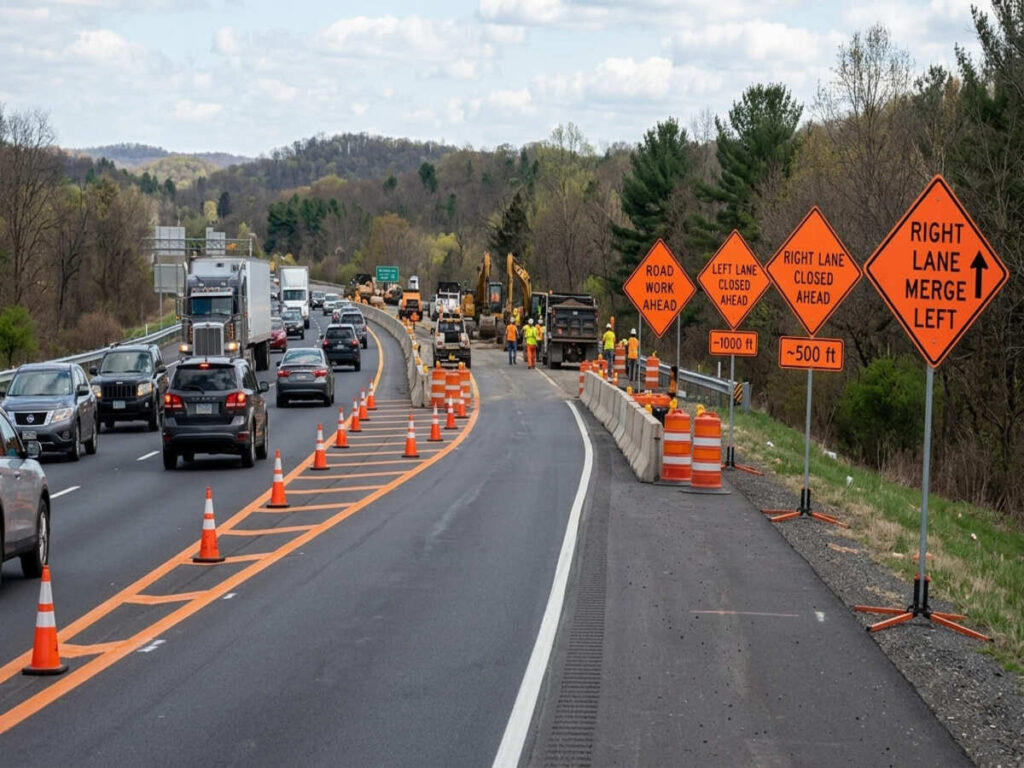
El alquiler de señales de construcción de carreteras no es un solo producto. Un equipo de servicios públicos que alquila cinco señales para reparar baches en dos días tiene una economía fundamentalmente diferente a la de un contratista de pavimentación que alquila un kit completo de cierre de carril para un proyecto de carretera de tres meses.. Fijar ambos precios de la misma manera significa subvaluar los empleos de larga duración o sacar del mercado los empleos de corta duración..
El marco de clasificación más práctico para el alquiler de carteles de construcción utiliza dos variables.: duración del proyecto y complejidad del kit. Estas dos variables juntas determinan su exposición a los costos por evento de alquiler..
| Tipo de proyecto | Duración típica | Complejidad del kit | Nivel de precios | Impulsor de costos clave |
| Utilidad / corta duración | 1–3 días | Bajo (5–8 signos) | Tarifa diaria | Costo de movilización y manejo por evento. |
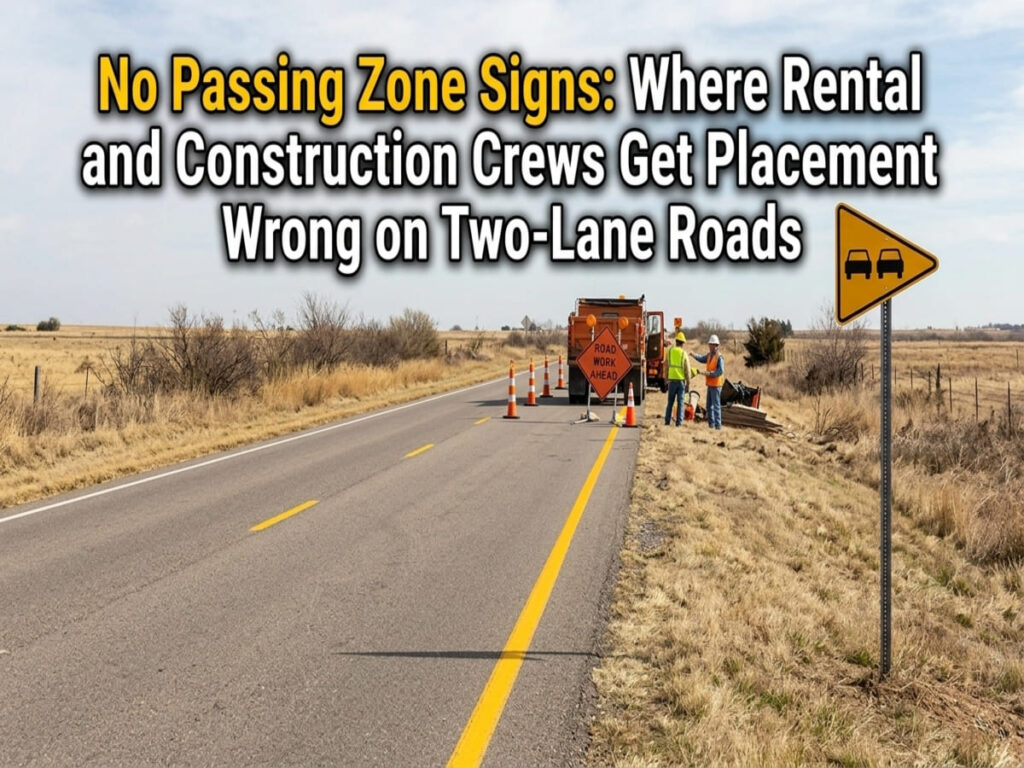
| Señalización de dos carriles | 1–14 días | Moderado (8–12 señales por dirección) | Diario o semanal | Cantidad de señales × tarifa diaria |
| Cierre de carril urbano | 1–30 días | Moderado (10–15 signos) | Semanal o mensual | Duración × tarifa diaria con descuento semanal |
| Construcción de larga duración | 1–12 meses | Alto (20+ letreros, múltiples SKU) | Mensual | El costo de capital de las señales está vinculado a una sola implementación |
| Carretera / cierre de autopista | Varía | Alto (tamaños especiales, reflectividad nocturna) | Mensual + de primera calidad | Documentación de cumplimiento + inventario de especialidades |
| Desvío / cierre de carretera | 1–14 días | Variable (paneles de flecha de desvío) | Diario o semanal | Cantidad de señales direccionales × longitud de la ruta |
Esta clasificación debería guiar la estructura de su hoja de tarifas.. Los trabajos de servicios públicos de corta duración necesitan una tarifa diaria que recupere rápidamente el costo de movilización. Los proyectos de larga duración justifican las tarifas mensuales con descuentos por volumen incorporados. La creación de una hoja de tarifas que aplica una tarifa diaria fija en todos los escenarios normalmente cobra menos de lo necesario para los proyectos largos y demasiado para los cortos, o viceversa..
Cómo fijar el precio del alquiler de señales de tráfico: El marco de costos primero
Comience con la economía unitaria, No tasa de mercado
Igualar la tarifa de un competidor sin conocer la economía de su propia unidad es el error de fijación de precios más común en el alquiler de letreros.. El punto de partida correcto es el costo primero: calcular lo que cuesta poseer, mantener, y desplegar cada unidad de letrero, luego establezca una tarifa que cubra ese costo y ofrezca un margen aceptable.
Los cuatro costos para cada SKU de letreros en su flota de alquiler son:
- Costo de adquisición: el precio mayorista pagado por unidad, incluyendo envío. Esta es tu inversión de capital por signo..
- Vida útil esperada: para señales TTC de aluminio tipo III en condiciones de alquiler, aproximadamente 5 a 7 años. Para carteles de tela enrollables, 2–3 años. (Consulte la guía de abastecimiento de su inventario para obtener detalles sobre las calidades de las láminas.)
- Costo de mantenimiento anual: inspección laboral, limpieza, y costo de reparación por unidad por año. Calcule entre el 5% y el 10% del costo de adquisición anual para letreros de aluminio alquilados activamente..
- Asignación de costos de cumplimiento: la proporción por unidad de los gastos generales del método de gestión de la Sección 2A.22 de MUTCD: documentación, seguimiento de lotes, y programación de reemplazo. Esto a menudo se pasa por alto, pero es un costo operativo real..
El cálculo de la tarifa diaria
Una vez que tengas economía unitaria, la tarifa diaria mínima viable por signo es sencilla:
Fórmula de tarifa mínima diaria
Costo de propiedad anual por signo = (Costo de adquisición ÷ Vida útil en años) + Costo de mantenimiento anual
Objetivo de días facturables por año = 365 × Tasa de utilización objetivo (P.EJ., 365 × 0.60 = 219 días)Tarifa diaria mínima = Costo de propiedad anual ÷ Días facturables objetivo
Ejemplo: $85 costo de adquisición ÷ 6 años = $14.17/año de depreciación + $7/el mantenimiento = $21.17/año
En 60% utilización: $21.17 ÷ 219 = mínimo de $0,097/día, antes de la asignación de margen y gastos generales.
Nota: Este es el costo por señal.. Las tarifas de los kits incluyen varios carteles. Aplicar gastos generales y margen en la parte superior..
Creación de la hoja de tarifas: A diario, Semanalmente, Niveles mensuales
El estándar de la industria son tres niveles de facturación.: a diario, semanalmente (7 días calendario), y mensual (28 días calendario). La relación entre niveles debe reflejar su curva de recuperación de costos: los costos de movilización y manejo se concentran al principio, por lo que los alquileres cortos conllevan tarifas diarias más altas.
| Nivel de facturación | Duración | Relación de tarifas | Razón fundamental |
| A diario | por dia | Tarifa básica | Recupera el coste de movilización rápidamente; Apropiado para trabajos de utilidad y de corta duración. |
| Semanalmente | 7 días | 4–5× tarifa diaria (no 7×) | Descuento por volumen por compromiso; el cliente ahorra ~30 % frente al diario × 7 |
| Mensual | 28 días | 8–10× tarifa diaria (no 28×) | Descuento significativo para larga duración.; El cliente ahorra entre un 60% y un 70% en comparación con el diario × 28 |
El principio clave: un cliente que guarda carteles para 28 Los días deben pagar aproximadamente entre 8 y 10 veces la tarifa diaria., no 28 veces. Esto es estándar en el alquiler de equipos en todas las categorías.. Si su tarifa mensual es demasiado alta en relación con la diaria, los clientes regresarán y volverán a alquilar en ciclos cortos, lo que aumenta el costo de manipulación y reduce la utilización efectiva.
Además, notificar a los clientes cuando su costo de alquiler acumulado se acerque al precio de compra del equipo. Esta es a la vez una buena práctica y una herramienta de retención de clientes: abre la conversación sobre la compra de una flota o un contrato a largo plazo..
Alquiler de señales de tráfico: Precio del kit vs.. Precios por señal
El caso de los precios basados en kits
Fijar el precio del alquiler de letreros de construcción según el letrero individual crea dos problemas operativos. Primero, Requiere que los clientes sepan qué señales necesitan, y la mayoría no.. Segundo, Genera facturas complejas que son difíciles de conciliar para los contratistas con los presupuestos de sus proyectos..
Los precios basados en kits, en los que se ofrecen paquetes preconfigurados a una tarifa fija, resuelven ambos problemas. El cliente pide un “kit de cierre de carril” o “kit de trabajo utilitario,” y la tarifa cubre todos los carteles de ese paquete.. Su hoja de tarifas se vuelve más sencilla de vender, más fácil de cotizar, y más rápido para facturar.
Cómo crear tarifas de kit
Las tarifas del kit deben reflejar la economía unitaria total de todos los letreros del kit., más un margen a nivel de kit que tiene en cuenta el montaje, preparación de documentación, y entrega. la formula:
Fórmula de tarifa diaria del kit
Tarifa diaria del kit = Σ (Tarifa diaria por signo × Cantidad) + Asignación de costos de ensamblaje del kit + Costo de preparación de documentos de cumplimiento
Ejemplo: kit de cierre de carril (10 señales a un promedio de $0,35/día cada una):
Costo de la señal: 10 × $0.35 = $3.50/día
+ Asignación de ensamblaje del kit: $0.50/día
+ Documentación de cumplimiento: $0.25/día
= mínimo de $4,25/día, antes del margen
Tarifa sugerida en 40% margen bruto: $4.25 ÷ 0.60 = ~$7.10/precio del kit por día
Las tarifas de los kits también le brindan influencia en los precios de las ventas adicionales. A un cliente que alquila un kit de cierre de carril estándar se le puede ofrecer un “kit listo para cumplir” a un precio superior: uno que incluye documentación de certificación ASTM D4956 preformateada y un registro de inspección previa al alquiler.. Esto es realmente valioso para los contratistas de proyectos financiados con fondos federales que necesitan documentación para las auditorías..
Para los códigos de señales específicos y las cantidades en cada kit de tipo de trabajo, ver nuestro generador de paquetes de señales de zona de trabajo. Para tamaños de letreros estándar por zona de velocidad de implementación, ver nuestro Referencia de tamaños de señales de zona de trabajo MUTCD.
Tasa de utilización de la flota de carteles de alquiler: Cómo calcular y a qué apuntar
Qué significa la tasa de utilización para el alquiler de carteles
La tasa de utilización de la flota es el porcentaje de su inventario de letreros que se implementa activamente y genera ingresos en un día determinado.. una flota de 500 signos con 300 actualmente en alquiler tiene un 60% tasa de utilización. El restante 40% ya sea en inspección, en almacenamiento, o disponible para nuevos alquileres.
La tasa de utilización es la métrica operativa más importante para una empresa de alquiler de carteles de construcción.. Determina directamente si la inversión de su flota está generando un retorno adecuado.. demasiado bajo, y llevas capital ocioso. demasiado alto, y no puede cumplir con nuevos pedidos, lo que significa pérdida de ingresos y pérdida de clientes..
Calcular su tasa de utilización
Cálculo de la tasa de utilización
Tasa de utilización diaria = Unidades en alquiler activo ÷ Total de unidades alquilables en la flota
Utilización promedio mensual = Total de días de firma facturados en el mes ÷ (Signos totales × Días en el mes)
Ejemplo: 400 letreros en flota, 8,400 días de firma facturados en un mes de 28 días
8,400 ÷ (400 × 28) = 8,400 ÷ 11,200 = 75% utilización mensual
Nota: Excluir signos en jubilación, reparar, o retención de inspección del denominador.
Tasas de utilización objetivo por etapa de la flota
La utilización objetivo varía según la madurez de la flota y la profundidad del mercado.. El 75% El umbral se cita ampliamente en el alquiler de equipos como el punto de equilibrio donde la propiedad se vuelve más rentable que el alquiler para los usuarios finales, lo cual es un contexto relevante para la forma en que sus clientes piensan sobre el alquiler versus el alquiler.. comprando sus propios carteles.
| Etapa de flota | Utilización objetivo | Implicación |
| Etapa temprana (< 2 años) | 40–55% | Construyendo una base de clientes; debajo de esto, La flota está sobredimensionada para la demanda actual. |
| Etapa de crecimiento (2–5 años) | 55–70% | Crecimiento saludable; suficiente inventario inactivo para manejar nuevos pedidos sin desabastecimientos |
| Operación madura (5+ años) | 65–80% | Rango óptimo; arriba 80% corre el riesgo de desabastecimiento y fallas en el servicio al cliente |
| sobreutilizado (> 85%) | Reducir si se mantiene | No se pueden cumplir nuevos pedidos; invertir en la ampliación de la flota o aumentar los precios para racionar la demanda |
Seguimiento de la utilización por SKU de signo, no solo la flota general. una flota en 70% En general, puede haber tipos de signos específicos en 95% utilización: esas son las señales que generan riesgo de desabastecimiento y aquellas en las que la expansión de la flota tiene el retorno de la inversión más claro.
Cálculo del ROI del alquiler de señales de tráfico: Construyendo el caso de negocio para la inversión en flotas
El marco de retorno de la inversión para la expansión de la flota de carteles
Ya sea que esté construyendo una nueva flota desde cero o evaluando la expansión de una existente, El cálculo del ROI del alquiler de señales de tráfico sigue la misma estructura.: Ingresos totales del proyecto de la flota incremental., restar el costo total incluido el capital, mantenimiento, y gastos generales de cumplimiento, y comparar el resultado con el costo de capital.
Cálculo del ROI en cuatro pasos
| Paso | Cálculo | Ejemplo (100-firmar la ampliación de la flota) |
| 1 | Costo total de adquisición de flota = Unidades × Costo promedio por señal | 100 signos × $85 promedio = $8,500 inversión de capital |
| 2 | Ingresos anuales = Unidades × Tarifa diaria × 365 × Utilización objetivo | 100 × $0.35 × 365 × 0.65 = $8,303/año |
| 3 | Costo anual = Depreciación + Mantenimiento + Gastos generales de cumplimiento | ($8,500 ÷ 6) + ($8,500 × 0.08) = $1,417 + $680 = $2,097/año |
| 4 | Beneficio anual = Ingresos - Costo; ROI = Beneficio anual ÷ Inversión | $8,303 − $2,097 = $6,206 ganancia; retorno de la inversión = $6,206 ÷ $8,500 = 73% |
El ejemplo anterior utiliza suposiciones conservadoras.: $0.35/día por signo y 65% utilización. En la práctica, Los precios basados en kits con primas de documentación de cumplimiento y descuentos en contratos de varios meses elevarán la línea de ingresos.. La sensibilidad crítica en este modelo es la tasa de utilización: ejecutar el mismo cálculo a 50% VS 70% La utilización muestra cómo el rendimiento operativo impulsa directamente la rentabilidad..
Cálculo del período de recuperación
Además del retorno de la inversión (ROI), seguimiento del período de recuperación: cuántos meses hasta que la inversión en la flota recupere su costo de capital a partir de las ganancias operativas. Esta es la métrica más útil para decisiones de expansión de flota:
Fórmula del período de recuperación
Beneficio mensual = (Tarifa diaria × Unidades × Días del mes × Utilización) − Costo mensual
período de recuperación (meses) = Inversión total ÷ Beneficio mensual
Ejemplo: $8,500 inversión, $517/beneficio mensual → recuperación de la inversión = 8,500 ÷ 517 = ~16 meses
Objetivo: período de recuperación bajo 24 meses para SKU de letreros estándar. Letreros especiales (de gran tamaño, nivel de carretera) puede tener una recuperación más larga pero tasas por unidad más altas.
Alquiler de señales de carretera: Factores de precios premium para proyectos federales y de alta velocidad
Por qué los proyectos de carreteras exigen tasas más altas
El alquiler de señales de carretera conlleva costos operativos más altos que justifican precios superiores. Tres factores impulsan la diferencia de costos con respecto a los despliegues arteriales estándar:
- Tamaños de letreros más grandes: La tabla MUTCD 6F-1 requiere 48″×48″ mínimo para todas las señales de advertencia de TTC en las carreteras publicadas 35 mph y más, con dimensiones sobredimensionadas para algunas aplicaciones en autopistas. Los carteles más grandes tienen un mayor coste de adquisición, mayor costo de almacenamiento, y mayor peso por entrega.
- Requisitos de grado de lámina más altos: Las zonas de trabajo nocturno en instalaciones de alta velocidad requieren efectivamente láminas de grado diamante Tipo IX o Tipo XI en lugar de Tipo III., debido a las expectativas de retrorreflectividad de la 11.ª edición a velocidades elevadas. Las láminas de mayor calidad aumentan tanto el costo de adquisición como la frecuencia de reemplazo.
- Requisitos de documentación de cumplimiento: Los proyectos de carreteras financiados con fondos federales requieren cada vez más la certificación ASTM D4956., documentación de fecha de adquisición, y un método de gestión escrito de la Sección 2A.22 del MUTCD del proveedor del letrero.. La preparación y el mantenimiento de esta documentación es un coste real que los alquileres de calles locales estándar no conllevan..
Prima de precio de alquiler de autopistas
Una prima razonable para el alquiler de carreteras y proyectos financiados con fondos federales es entre un 25 % y un 40 % superior a la tarifa estándar del kit arterial.. Esta prima refleja el mayor costo de inventario de letreros., mayor costo de grado de lámina, y gastos generales de documentación de cumplimiento. Póngale un precio explícito: los clientes en proyectos federales esperan esto y lo pagarán porque los requisitos de su contrato exigen documentación que las empresas de alquiler de letreros generales no pueden proporcionar..
construir un “cumplimiento documentado” nivel de kit en su hoja de tarifas específicamente para proyectos financiados con fondos federales. Incluir en la descripción del kit.: Certificación ASTM D4956 Tipo III o superior, documentación de fecha de adquisición, registro de inspección previa al alquiler, y confirmación por escrito de su método de gestión de la Sección 2A.22. Este es su producto premium y su diferenciador competitivo frente a los proveedores de alquiler de rótulos básicos..
Preguntas frecuentes: Operaciones de alquiler de letreros de construcción
Nota de esquema: implementar como página de preguntas frecuentes con pregunta / aceptadoMarcado de respuesta.
Q1: ¿Cómo debo estructurar el día a día?, semanalmente, y tarifas de alquiler mensuales?
La tarifa semanal debe ser aproximadamente de 4 a 5 veces la tarifa diaria. (no 7 veces), y la tarifa mensual debe ser aproximadamente de 8 a 10 veces la tarifa diaria (no 28 veces). Esta estructura de descuento escalonada recompensa los compromisos más prolongados y reduce el costo de gestión por evento de alquiler.. Los clientes con trabajos cortos pagan más cerca de la tarifa diaria; Los clientes en proyectos largos obtienen ahorros significativos que les impiden comprar competidores a mitad del proyecto..
Q2: ¿Cuál es una tasa saludable de utilización de la flota para una operación de alquiler de letreros de construcción??
Para una operación madura, 65–80% es el rango objetivo. Abajo 55%, Su flota está sobredimensionada para la demanda actual: reduzca el inventario o invierta en la adquisición de clientes.. Arriba 85% sostenido, corre el riesgo de desabasto en nuevos pedidos. Seguimiento de la utilización por SKU de letrero individual, no solo el promedio general de la flota: tipos específicos de letreros pueden estar sobreutilizados mientras que otros permanecen inactivos.
Q3: ¿Cómo calculo si tiene sentido ampliar mi flota de alquiler??
Ejecute un cálculo de retorno de la inversión en cuatro pasos: (1) Costo total de adquisición de los letreros incrementales., (2) ingresos anuales proyectados a su tasa de utilización objetivo y tarifa diaria, (3) costo total anual incluyendo depreciación, mantenimiento, y gastos generales de cumplimiento, (4) porcentaje de beneficio anual y retorno de la inversión. Un período de recuperación bajo 24 meses es el objetivo general para los SKU de señales estándar. Ampliar la flota cuando la utilización de SKU específica exceda consistentemente 75%.
Q4: ¿Debo cotizar por cartel individual o por kit??
El precio basado en kits es operativamente superior para la mayoría de las operaciones de alquiler de letreros de construcción.. Simplifica las cotizaciones, reduce las disputas sobre facturas, y lo posiciona como un proveedor de soluciones en lugar de un proveedor de productos básicos. Precio de carteles individuales para clientes que necesitan complementos específicos, pero haga que su hoja de tarifas principal esté basada en un kit. Incluir un nivel de documentación de cumplimiento para proyectos financiados con fondos federales con una prima del 25 % al 40 % sobre las tarifas del kit estándar..
Q5: ¿Cuándo debo notificar a los clientes que el costo de alquiler se acerca al precio de compra??
Cuando los cargos de alquiler acumulados alcancen aproximadamente 80% del precio de compra al por menor de los carteles alquilados. Esta es a la vez una buena práctica y una oportunidad de desarrollo empresarial: algunos clientes preferirán comprar en ese momento., mientras que otros se convertirán a un contrato de alquiler a largo plazo.. Cualquiera de los dos resultados es mejor que un cliente que se siente sorprendido por una gran factura de alquiler sin tener la opción de comprar..
Q6: ¿Qué costos adicionales debo incluir en el precio de alquiler de señales de tráfico??
El alquiler de autopistas debería tener un precio: la prima de costo para letreros de mayor tamaño y láminas de mayor calidad (Tipo IX o XI vs.. Tipo III); el costo de tiempo de preparación de la documentación de certificación ASTM D4956 por kit; la sobrecarga de documentación de cumplimiento para los registros del método de gestión de la Sección 2A.22 de MUTCD; y una prima de entrega si los proyectos de carreteras requieren transporte especializado para señales de gran tamaño.. Una prima del 25 al 40 % sobre la tarifa estándar del kit arterial es apropiada para la mayoría de los alquileres de proyectos financiados con fondos federales y de autopistas..
Creación de una operación rentable de alquiler de carteles de construcción
La rentabilidad del alquiler de carteles de construcción se reduce a tres disciplinas operativas que trabajan juntas.
Primero, Construir precios sobre la base de economías unitarias en lugar de igualar las tasas del mercado.. Conozca su costo por señal, establecer tarifas que recuperen ese costo con una utilización realista, y construir estructuras de niveles que recompensen compromisos más largos. Segundo, gestionar la utilización activamente. Realice un seguimiento de qué SKU de señales generan ingresos y cuáles están inactivos. Utilice esos datos para guiar las decisiones de expansión y contracción de la flota.. Tercero, tratar la documentación de cumplimiento como un producto. La capacidad de proporcionar la certificación ASTM D4956., MUTCD Sección 2A.22 registros del método de gestión, y la documentación de inspección previa al alquiler es una ventaja competitiva genuina en proyectos financiados con fondos federales; póngale el precio correspondiente.
Para costos de adquisición mayoristas que alimentan este modelo de ROI, consulte nuestra guía sobre cómo conseguir señales de tráfico al por mayor para una flota de alquiler. Los operadores de flotas de alquiler pueden fuente de señales de zona de trabajo que cumplen con MUTCD a granel de OPTRAFFIC: documentación de especificaciones e ISO 9001 certificación incluida bajo petición.
Artículos relacionados en esta serie
- Señales de zona de trabajo: Generador de paquetes de firmas por tipo de trabajo (D1)
- Tamaños de señales de zona de trabajo: Referencia de dimensiones de MUTCD para flotas de alquiler (B3)
- Cómo conseguir señales de tráfico al por mayor para una flota de alquiler (C1)
- Volver al pilar: Señales de tráfico para empresas de alquiler — Flota completa & Guía de abastecimiento
Referencias
- FHWA — MUTCD 11ª edición, Parte 6: Control de tráfico temporal (efectivo en enero 18, 2024): https://mutcd.fhwa.dot.gov/pdfs/11th_Edition/part6.pdf
- FHWA — MUTCD 11ª edición, Sección 2A.22: Mantener la retrorreflectividad mínima: https://mutcd.fhwa.dot.gov/pdfs/11th_Edition/part2a.pdf
- OSHA— 29 CFR 1926.200: Letreros, Señales, y barricadas (Industria de la construcción): https://www.osha.gov/laws-regs/regulations/standardnumber/1926/1926.200
- ASTM Internacional — ASTM D4956: Especificación estándar para láminas retrorreflectantes para control de tráfico: https://www.astm.org/d4956-23.html
- FHWA: métodos para mantener la retrorreflectividad de las señales de tráfico (Capítulo 4: Métodos de gestión): https://safety.fhwa.dot.gov/roadway_dept/night_visib/policy_guide/fhwahrt08026/chapter4.cfm