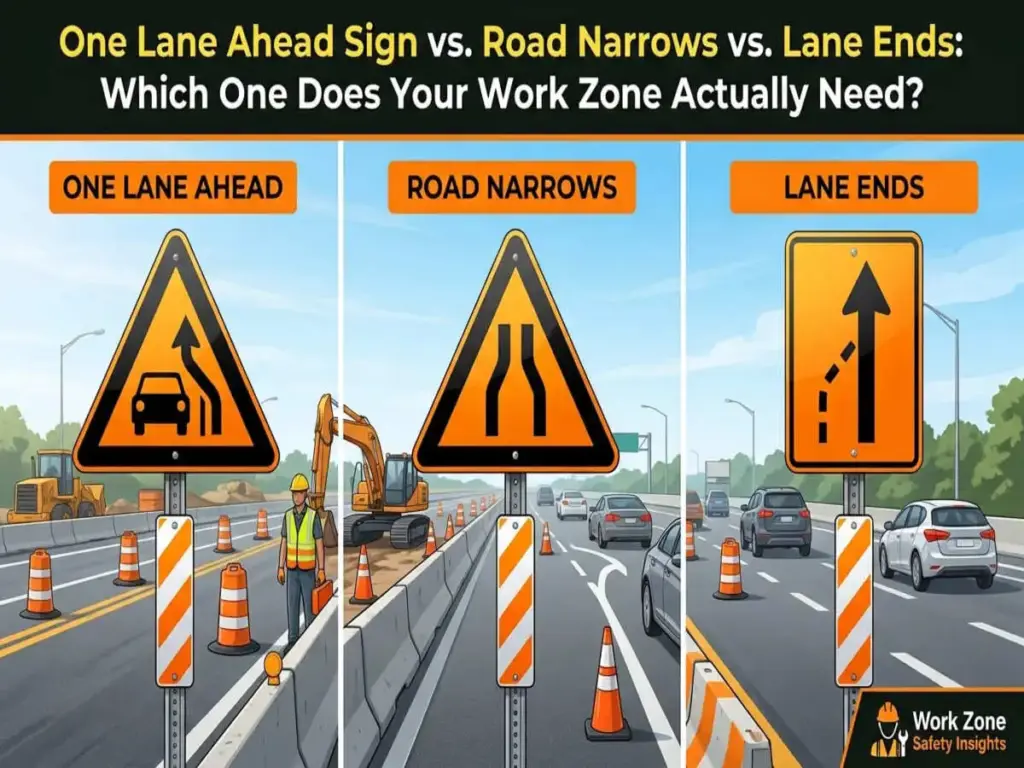
Cada cierre de carretera en los Estados Unidos depende de un documento regulatorio: El manual de dispositivos de control de tráfico uniformes (Muescato). Dentro de ese marco, Señales de desvío MUTCD soportar algunas de las cargas de cumplimiento más pesadas. Un solo letrero no conforme puede anular la indemnización del contratista, desencadenar hallazgos de auditoría federal, y exponer a las agencias a responsabilidad extracontractual. Este manual brinda a los gerentes de proyectos, oficiales de adquisiciones, y los ingenieros de tráfico la referencia autorizada que necesitan, desde los fundamentos legales de la FHWA hasta los grados de láminas de ASTM y los protocolos complementarios estatales del DOT..
La arquitectura legal de la Autoridad de Señales de Desvío de MUTCD: Por qué el cumplimiento federal no es negociable
Base legal de la FHWA y estándar uniforme de dispositivos de control de tráfico
Título 23 Parte CFR 655 establece el MUTCD como la base legalmente ejecutable para todos los dispositivos de control de tráfico en las vías públicas que reciben fondos federales.. La FHWA “conformidad sustancial” mandato requiere que cada estado, condado, y agencia municipal para alinear sus prácticas de señalización con los mínimos de MUTCD. Parte MUTCD 6 — Control de tráfico temporal: rige todas las señales de desvío y desvío dentro de la construcción., mantenimiento, y zonas de gestión de incidentes.
El MUTCD 11ª edición, finalizado por la FHWA a finales 2023 con una ventana de adopción estatal gradual, revisa la parte clave 6 Disposiciones que afectan a la taxonomía de las señales de desvío., requisitos de TTC para peatones, y umbrales de duración operativa. Aproximadamente 52 A NOSOTROS. jurisdicciones - todas 50 estados, corriente continua, y Puerto Rico: conllevan la obligación legal de cumplir. Los proyectos construidos bajo las especificaciones del contrato de la décima edición que se extienden hasta la ventana de conformidad de la undécima edición enfrentan un riesgo de cumplimiento específico que los equipos de adquisiciones deben abordar de manera proactiva..
Exposición de responsabilidad civil y contractual por señalización de desvío que no cumple con las normas
El marco de responsabilidad extracontractual por señalización defectuosa en zonas de trabajo se centra en la doctrina del deber de diligencia. Los tribunales han sostenido sistemáticamente que las agencias y los contratistas tienen el deber de proporcionar dispositivos de advertencia adecuados.. Los accidentes en zonas de trabajo siguen siendo un grave problema de seguridad: Los datos de la FHWA muestran que en 2022, Había 857 Muertes en accidentes en zonas de trabajo en todo Estados Unidos.. (Fuente: https://Highways.dot.gov/safety/other-safety/work-zones/work-zone-data-and-statistics)
No conforme Señales de desvío MUTCD — ya sea de tamaño insuficiente, falta la retrorreflectividad requerida, o secuenciados incorrectamente: han aparecido como evidencia material en un litigio por negligencia en la zona de trabajo.. Los proyectos de ayuda federal incorporan el formulario FHWA FHWA-1273 como disposición contractual obligatoria. Ese formulario hace referencia al cumplimiento de MUTCD como un contrato mínimo entregable., lo que significa que la no conformidad del signo puede constituir un incumplimiento de contrato independientemente de cualquier reclamo por lesiones.
Parte MUTCD 6 Análisis profundo: clasificaciones de señales de desvío, Designaciones de series, y aplicaciones previstas
Señales guía serie D: Marcadores de ruta de desvío estándar y paneles de destino
La serie D cubre Señales de desvío MUTCD Se utiliza para guía de ruta e información de destino.. Los códigos clave incluyen la serie D1 para señales de destino, Serie D3 para marcadores de ruta, y serie D4 para paneles de flechas direccionales. Tres tipos de mensajes principales definen las aplicaciones de señales de guía de desvío:
- Marcador de ruta de desvío: identifica el corredor de desvío activo
- Panel de flechas direccionales de ruta de desvío: confirma la dirección de giro en las intersecciones
- Fin del desvío: señala el regreso a la ruta principal
El Capítulo 6H de MUTCD exige una leyenda negra y un borde sobre un fondo naranja para todas las señales guía del TTC. Esta combinación de colores no es negociable en proyectos financiados con fondos federales: sustituir fondos amarillos o rojos constituye una violación de MUTCD independientemente del nivel de retrorreflectividad..
Señales de advertencia de la serie W en secuencias de desvío: La señal de desvío adelante de MUTCD
La señal de desvío adelante MUTCD pertenece a la categoría de advertencia de la serie W, Funcionando como un dispositivo de aviso previo colocado antes de que el conductor encuentre el desvío real.. MUTCD establece una secuencia de colocación graduada en distancia ligada a la velocidad publicada: aparecen señales de advertencia anticipadas en 1 milla, 1/2 milla, y 1,500 pies en carreteras de alta velocidad, con espaciado comprimido en calles urbanas.
Los paneles de diamantes naranja versus los paneles rectangulares naranjas cumplen funciones distintas. Los letreros de la serie W en forma de diamante advierten sobre las condiciones futuras. Las señales rectangulares de la serie D brindan orientación direccional una vez que el conductor ingresa al corredor de desvío. Mezclar estos formatos (colocar paneles rectangulares con una función de advertencia anticipada) viola los estándares de forma de letreros de MUTCD según la Sección 2A..
Tipos de señales de desvío especiales: Peatonal, ADA, y Paneles de Desvío Multimodales
Las señales de desvío para peatones MUTCD tienen requisitos que difieren significativamente de las aplicaciones de desvío para vehículos. MUTCD Capítulo 6C y Capítulo 6H señalización de desvío para peatones siempre que haya una acera, paso de peatones, o el camino de uso compartido se cierra como parte de una operación de TTC. Estas señales deben dirigir a los peatones a un camino alternativo accesible que cumpla con los estándares ADA y PROWAG..
La 11.ª edición del MUTCD reforzó estos requisitos, agregar nuevas especificaciones de paneles de rutas peatonales accesibles y ampliar la guía TTC multimodal para cubrir paneles de desvío para ciclistas y señalización de coordinación de desvíos de tránsito. Las agencias que pasan por alto los requisitos de las señales de desvío para peatones enfrentan una responsabilidad compuesta: Tanto la no conformidad con MUTCD como las violaciones del Título II de la ADA pueden aplicarse simultáneamente.
Dimensiones de la señal de desvío, Normas de color, y especificaciones de leyenda en MUTCD
Matriz de tamaños de señales de desvío estándar por velocidad publicada y clase de carretera
La Tabla 6H-1 de MUTCD establece tamaños mínimos de letreros para aplicaciones TTC. La siguiente tabla refleja los mínimos federales: los suplementos estatales pueden requerir paneles más grandes en tipos de corredores específicos..
Mesa 1: Tamaño mínimo de las señales de desvío de MUTCD por zona de velocidad
| Zona de velocidad | mín.. Tamaño del panel | Aplicación en carreteras | Mínimo de gastos generales. |
| Bajo 25 mph (urbano) | 24″ × 24″ | Calles locales, paseos | N / A |
| 25–45 mph (convencional) | 30″ × 30″ | Arteriales, coleccionistas | 48″ × 48″ |
| 45–65 mph (carretera rural) | 36″ × 36″ | Carreteras estatales, Rutas de EE. UU. | 60″ × 60″ |
| 65+ mph (autopista/autopista) | 48″ × 48″ | Interestatales, autopistas | 72″ × 72″ |
Fuente: MUTCD Tabla 6H-1
Desviaciones de tamaño incluso 10% por debajo de estos mínimos puede generar hallazgos de no conformidad en las presentaciones de materiales de proyectos de ayuda federal. Los equipos de adquisiciones deben crear un margen de tolerancia dimensional del 5 al 10 % en las especificaciones de los letreros para tener en cuenta la variación de fabricación..
Cromaticidad de fondo naranja, Color de leyenda, y especificaciones de borde
MUTCD Sección 6H.01 especifica fondos de letreros naranjas utilizando coordenadas de cromaticidad CIE que definen la zona de color exacta para aplicaciones de zonas de trabajo. El naranja estándar y el naranja fluorescente tienen diferentes propósitos: El naranja estándar se aplica a la mayoría de las señales TTC., mientras que el naranja fluorescente, que proporciona una visibilidad diurna significativamente mayor, se requiere o recomienda para operaciones de desvío de autopistas de alta velocidad y condiciones de amanecer/anochecer..
La norma ASTM D4956 regula la retención del color de las láminas retrorreflectantes durante su vida útil.. Las láminas Tipo III y Tipo IV deben mantener la cromaticidad naranja dentro de las tolerancias especificadas por ASTM durante un período de servicio mínimo de 3 años.. La degradación del color que desplaza el fondo naranja fuera de las coordenadas CIE constituye una falla en el cumplimiento de la retrorreflectividad incluso si la intensidad luminosa del letrero sigue siendo técnicamente adecuada..
Fuente de leyenda, Espaciado, y estándares de simbología de flechas
La fuente Highway Gothic (series B a E) es el tipo de letra exigido por MUTCD para todas las señales de desvío elevadas y montadas en el suelo.. La serie B se aplica a paneles más pequeños.; La Serie E maneja señales guía aéreas de gran formato en rutas de desvío de autopistas. La altura mínima de las letras se relaciona directamente con el tamaño del panel de señalización y la altura de montaje., como se especifica en Alfabetos estándar de MUTCD para señales de carretera.
Los módulos de flechas direccionales siguen proporciones estandarizadas definidas en MUTCD Figura 2D-2. Los equipos de adquisiciones que obtienen letreros de fabricantes que no están familiarizados con estas proporciones corren el riesgo de recibir una geometría de flecha no estándar que no pasa la inspección dimensional.. Paneles de desvío solo con símbolos: usando flechas sin “DESVÍO” texto: están permitidos por MUTCD solo en rutas donde la comprensión de símbolos se establece mediante firma previa.
Necesita señales de desvío que cumplan con MUTCD a granel con dimensiones certificadas? Solicite una cotización de señalización personalizada hoy.
Requisitos de retrorreflectividad para señales de desvío y desvío: estándares ASTM y cumplimiento de desempeño nocturno
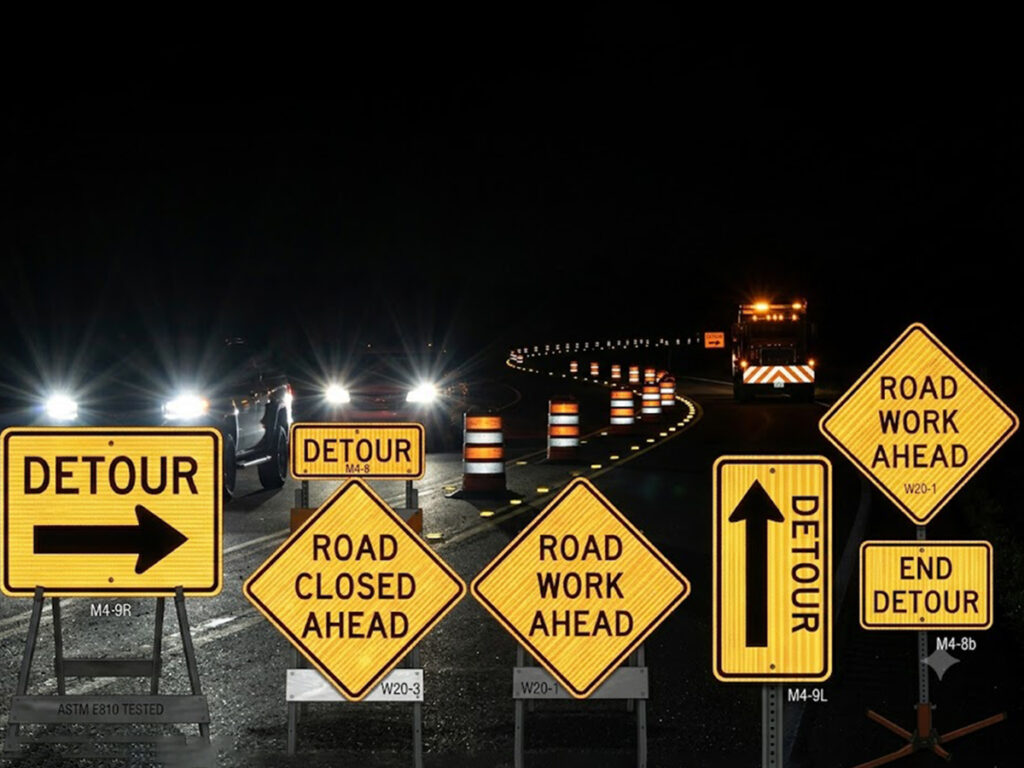
MUTCD Estándares mínimos de retrorreflectividad para señales TTC y paneles de desvío
MUTCD Sección 6F.02 establece la retrorreflectividad como un requisito mínimo federal para todas las señales TTC, incluyendo señales reflectantes de desvío y desvío. La regla de mantenimiento de retrorreflectividad de la FHWA (23 CFR 655.603) requiere que las agencias mantengan un programa de gestión de letreros que garantice que los letreros cumplan con los valores mínimos de retrorreflectividad durante toda su vida útil..
Los valores mínimos de retrorreflectividad para las señales TTC naranjas superan los de las señales guía estándar blancas o verdes porque el naranja presenta un color más desafiante para la visibilidad nocturna.. Los fondos naranjas deben alcanzar un coeficiente mínimo de retrorreflexión. (REAL ACADEMIA DE BELLAS ARTES) de 15 cd/lux/m² para láminas Tipo III bajo condiciones de medición ASTM E1709. El incumplimiento de este umbral durante la inspección nocturna constituye una falta de cumplimiento del MUTCD..
Clasificaciones de tipos de láminas ASTM D4956 y su aplicación a señales de desvío
ASTM D4956 define el rendimiento de las láminas retrorreflectantes en los tipos I a XI. Para Señales de desvío MUTCD, los tipos aplicables son:
| Tipo de láminas | Tecnología | mín.. REAL ACADEMIA DE BELLAS ARTES (Naranja) | Aplicación recomendada |
| Tipo I | Grado de ingeniero | < 15 cd/lux/m² | No cumple con TTC |
| Tipo III | Prismático de alta intensidad | ≥ 15 cd/lux/m² | Carreteras convencionales ≤ 45 mph |
| Tipo IV | Prismático de alta intensidad | ≥ 25 cd/lux/m² | Carreteras rurales de 45 a 65 mph |
| Tipo VIII | Grado de diamante DG3 | ≥ 75 cd/lux/m² | Desvíos de autopistas, intensivo nocturno |
| Tipo IX | Fluorescente de grado diamante | ≥ 75 cd/lux/m² | Alta velocidad + corredores de amanecer/anochecer |
| Tipo XI | Súper grado de ingeniería | ≥ 100 cd/lux/m² | TTC de autopista crítica, proyectos premium |
Fuente: Especificación estándar ASTM D4956 para láminas retrorreflectantes
Los documentos de licitación del contrato especifican cada vez más láminas Tipo VIII o IX para todas las señales de desvío en carreteras con velocidades indicadas superiores 55 mph. Los equipos de adquisiciones deben verificar la certificación del tipo de láminas de los proveedores antes de emitir la orden de compra; la sustitución no certificada es la causa más común de rechazo de la presentación de materiales en proyectos TTC con ayuda federal..
Degradación de la retrorreflectividad, Ciclos de inspección, y desencadenantes de reemplazo
La guía de la FHWA especifica una vida útil de 12 a 36 meses para láminas temporales de señalización TTC, varía según el tipo y las condiciones de exposición. Las láminas tipo III en paneles orientados hacia el sur en climas con alta radiación ultravioleta pueden degradarse por debajo de los valores mínimos de RA en tan solo 18 meses. Los contratistas que mantienen inventarios de letreros para proyectos con ayuda federal deben documentar las fechas de instalación de las láminas y programar inspecciones a intervalos de 12 meses..
La inspección visual por sí sola no satisface los requisitos del programa de retrorreflectividad de la FHWA cuando se sospecha degradación.. La medición con retrorreflectómetro utilizando el protocolo ASTM E1709 proporciona la documentación defendible que los contratistas necesitan para demostrar el cumplimiento durante las auditorías.. Las láminas degradadas que caen por debajo de los valores mínimos de RA crean una exposición de responsabilidad documentada: los tribunales han admitido registros de pruebas de retrorreflectividad como evidencia de cumplimiento o negligencia en litigios en zonas de trabajo..
Montaje posterior, Hardware de instalación, y Temporal vs.. Estándares de colocación permanente
Dispositivo de canalización MUTCD y estándares de publicación para señales de desvío TTC
MUTCD Parte 6F define los tipos de soporte de señales temporales aprobados para aplicaciones de señales de desvío TTC. Letreros enrollables portátiles sobre bases lastradas., paneles temporales de lámina plana en barricadas tipo III, soportes de letreros portátiles con lastre, y los postes separables clavados en el suelo o montados en mangas con peso, todos califican, siempre que cumplan con las alturas mínimas de montaje.. Las señales de desvío montadas en el suelo requieren un espacio mínimo de 5 pies desde la parte inferior del panel hasta la superficie de la carretera.. Los paneles montados en el techo requieren 7 pies.
Los requisitos de desplazamiento lateral colocan los letreros montados en el suelo a un mínimo de 6 pies desde el borde de la vía transitada en carreteras convencionales, con mayores compensaciones requeridas en las autopistas. Zonas de fuertes vientos: definidas en ASCE 7-22 mediante mapas de velocidad del viento: exige lastre adicional en soportes de letreros independientes. Los equipos de adquisiciones que obtengan soportes de señalización para proyectos costeros o de terreno elevado deben especificar la capacidad de lastre adecuada para ASCE. 7-22 velocidades del viento de diseño.
Corto plazo, Intermedio, y clasificaciones de duración de instalación a largo plazo
MUTCD define tres categorías de duración de operación de TTC que rigen los requisitos de hardware de señales:
- Corta duración: Menos que 1 hora: se aceptan letreros portátiles enrollables o montados en vehículos
- Intermedio: 1 hora a menos 3 días — soportes de señalización portátiles con lastre, Mínimo de láminas tipo III
- A largo plazo: 3 días o más: montaje en poste de estilo permanente, láminas mejoradas, Se requiere un plan TTC formal
El lenguaje del contrato de proyecto de ayuda federal generalmente se basa en estándares de hardware a largo plazo para cualquier ruta de desvío que permanecerá activa durante más de 72 horas, independientemente de la clasificación de duración de MUTCD que de otro modo se aplicaría. Cuando un desvío temporal se extiende más allá 30 días sin reemplazo, puede calificar como un “desviación semipermanente” bajo varios suplementos estatales del DOT, Activando un tamaño de señal mejorado, chapas, y requisitos del puesto.
Criterios de diseño de postes separables y NCHRP 350 / Cumplimiento de MASH para estructuras de señales de desvío
Los letreros en carreteras de alta velocidad deben cumplir con los criterios de desempeño separatista según MASH (Manual para evaluar el hardware de seguridad), el sucesor del Informe NCHRP 350. Nivel de prueba MASH 3 (TL-3) certificación: que cubre el impacto del vehículo en 62 mph: es el estándar para señales en carreteras con velocidades indicadas de 45 mph o más. Los memorandos de política de la FHWA exigen hardware certificado por MASH en todas las instalaciones nuevas con ayuda federal a partir de enero 2020.
Los contratos de adquisición exigen cada vez más la certificación MASH TL-3 documentada de los proveedores de hardware de señalización como requisito de presentación de materiales.. Los proveedores que no puedan proporcionar documentación de certificación para sistemas de postes separables deberían ser descalificados de la consideración de licitaciones para proyectos con ayuda federal.. El hardware no certificado utilizado en un proyecto de ayuda federal puede provocar la retención del reembolso federal por los elementos de trabajo afectados..
Suplementos estatales del DOT a los estándares de señales de desvío de MUTCD: piso federal, Techo local
¿Por qué se permite a los estados complementar? (Pero no contradecir) Estándares federales MUTCD
La FHWA “conformidad sustancial” El marco otorga a los estados la autoridad para complementar los estándares MUTCD, pero solo hacia arriba.. Los suplementos estatales pueden requerir tamaños de letreros más grandes, grados de láminas más altos, o tipos de señales adicionales más allá de los mínimos de MUTCD. No pueden bajar ningún estándar mínimo federal. El Comité Técnico de Ingeniería de Tráfico de AASHTO coordina el desarrollo de suplementos estatales para armonizar las prácticas y al mismo tiempo preservar el piso de cumplimiento federal..
Los estados suelen complementar los estándares de señales de desvío de MUTCD en cuatro áreas: tipos de signos o símbolos adicionales no presentes en MUTCD (particularmente para desvíos de rutas estatales), Requisitos de retrorreflectividad más restrictivos para corredores de alto tráfico., color de letrero específico del estado o variantes de panel para rutas de desvío intraestatales, y ajustes localizados de altura de publicación y desplazamiento lateral para terrenos urbanos o montañosos densos.
Descripción general de alto nivel de los programas estatales clave de suplementos de señales de desvío del DOT
Cuatro programas estatales complementarios del DOT se encuentran con mayor frecuencia en proyectos de desvío financiados con fondos federales o multiestatales.:
- PennDOT: Publicación de Pensilvania 111 (Parte del manual de diseño 2) complementa la parte MUTCD 6 con requisitos de señalización de zonas de trabajo específicos del estado aplicables a las carreteras mantenidas por el estado de PA. Los contratistas que presenten ofertas para proyectos PennDOT deben hacer referencia a la publicación 111 junto a MUTCD.
- MDOT: Tanto el DOT de Michigan como el DOT de Maryland mantienen suplementos de señales TTC localizados alineados con sus respectivos sistemas de clasificación de carreteras estatales.. Estos suplementos abordan los requisitos de secuencia de señales en rutas estatales no cubiertas por MUTCD a nivel federal..
- MasaDOT: Los suplementos de Massachusetts incluyen paneles con símbolos de desvío para peatones específicos del estado y secuencias de señales modificadas para zonas de trabajo dentro del área metropolitana de Boston., donde los requisitos de TTC para peatones y ciclistas superan los mínimos federales.
- FDOT: Los Estándares de Diseño de Carreteras de Florida incluyen especificaciones de señales TTC más allá de los mínimos federales específicamente para rutas de evacuación de huracanes y aplicaciones de corredores costeros., donde los requisitos de retrorreflectividad y tamaño de las señales son más estrictos.
Estos resúmenes representan el umbral de lo que pertenece a este subpilar.. Símbolos granulares específicos de cada estado, vectores de diseño, y los códigos de publicación se tratan exclusivamente en el recurso de clúster dedicado. Ver el Guía de cumplimiento de los suplementos de señales de desvío del DOT estatal para PennDOT, FDOT, MasaDOT, y especificaciones MDOT para detalles.
Cómo deben navegar los contratistas en proyectos de desvío interestatales o multiestatales
Los proyectos de ayuda federal que cruzan fronteras estatales deben satisfacer el mayor de los dos suplementos estatales aplicables, no simplemente el mínimo federal de MUTCD.. Identificando el “el más restrictivo” suplemento ya que la línea base de todo el proyecto elimina el riesgo de no conformidad de señales en los límites estatales. El supervisor de control de tráfico (TCS) tiene la responsabilidad principal de verificar el cumplimiento del suplemento entre estados en proyectos activos.
Las listas de verificación previas a la licitación deben incluir una solicitud formal de documentación complementaria estatal por parte de los titulares del plan del DOT para cada segmento del corredor del proyecto en una jurisdicción diferente.. Los paquetes de adquisiciones multiestatales que consolidan las especificaciones de los letreros bajo un único marco de cumplimiento minimizan la exposición a cambios en las órdenes cuando surgen discrepancias en los suplementos durante la construcción..
Actualizaciones de la 11.a edición de MUTCD que afectan la adquisición y especificación de señales de desvío en 2025-2026
Cambios estructurales clave de la 11.ª edición relevantes para la señalización de desvíos
El MUTCD 11ª edición, publicado por FHWA en diciembre 2023, lleva una fecha límite de cumplimiento estatal que crea una ventana de cumplimiento definida para proyectos en curso. Parte 6 Las revisiones introducen nuevas designaciones de códigos de signos para varias aplicaciones TTC., desaprobar los códigos heredados utilizados en las especificaciones de contratos anteriores a 2023, y fortalecer sustancialmente los requisitos de señales TTC para peatones y accesibles.
Los cambios en el umbral de clasificación de duración en la 11.ª edición redefinen cuándo se aplican los estándares de hardware a largo plazo. Los gerentes de adquisiciones que trabajan en proyectos con contratos que hacen referencia a la décima edición deben auditar esas especificaciones con respecto a los requisitos de la undécima edición para identificar brechas antes de que comience la construcción.. Para obtener el desglose técnico completo de los cambios de la 11.ª edición y 2026 implicaciones de cumplimiento del contratista, consulte la guía sobre los requisitos de las señales de desvío de la 11.ª edición de MUTCD: Lo que los contratistas deben saber 2026.
Implicaciones del lenguaje de adquisiciones y contratos de la transición a la undécima edición
Los documentos de licitación emitidos después de la fecha límite de conformidad con la FHWA deben hacer referencia a la 11.ª edición como norma rectora.. Los proyectos licitados bajo las especificaciones de la décima edición que entran en la ventana de conformidad enfrentan una doble obligación de cumplimiento.: Cumplir tanto con el estándar establecido en el contrato como con el mínimo requerido a nivel federal.. Los contratistas que tengan un inventario de letreros existente adquirido según las especificaciones de la décima edición deben realizar una auditoría formal de deficiencias antes de implementar ese inventario en nuevos proyectos..
Plazos de entrega de adquisiciones para el promedio actualizado del inventario de letreros que cumplen con MUTCD 8 a 14 semanas a escala para fabricantes certificados. Las organizaciones que retrasan las auditorías de cumplimiento de la 11.ª edición hasta la movilización de la construcción enfrentan tanto el riesgo de cronograma como la prima de costo de la fabricación acelerada de letreros..
Estándares emergentes: Zonas de trabajo conectadas, Señalización de desvío digital, y las disposiciones tecnológicas de MUTCD
La parte de la 11ª edición de MUTCD 6 incluye disposiciones para señales de mensajes dinámicos (DMS) en aplicaciones TTC, establecer las condiciones bajo las cuales las señales de desvío de mensaje variable pueden complementar o reemplazar los paneles estáticos. Los dispositivos DMS deben cumplir con la luminancia, altura del personaje, y estándares de legibilidad de leyendas comparables a los requisitos de señales estáticas; no satisfacen automáticamente las especificaciones de señales de desvío de MUTCD simplemente mostrando el mensaje correcto.
Zona de trabajo conectada de FHWA (CWZ) La iniciativa integra la comunicación entre el vehículo y la infraestructura con la firma física de TTC.. Sin embargo, físico Señales de desvío MUTCD siguen siendo obligatorios incluso en zonas de trabajo conectadas: los datos de CWZ complementan las señales físicas; no los reemplaza según la guía federal actual. Los paquetes de desvío híbridos físicos y digitales se especifican cada vez más en los complejos planes TTC de ayuda federal., con el componente de señal física continuando asumiendo todas las obligaciones de cumplimiento de MUTCD.
Marcos de adquisiciones, Listas de verificación de especificaciones, y calificación de proveedores para señales de desvío que cumplen con MUTCD
Requisitos de adquisición de letreros para proyectos de ayuda federal: comprar america, Baba, y Certificación de Materiales
El programa Build America, Buy America (Baba) Acto, promulgada como ley bajo la Ley de Empleo e Inversión en Infraestructura de 2021, extiende las preferencias de Buy America a todos los proyectos de infraestructura financiados con fondos federales, incluyendo materiales de señalización. Señales de desvío MUTCD adquiridos para proyectos de ayuda federal deben utilizar láminas y materiales de sustrato fabricados en los Estados Unidos, a menos que se otorgue una exención. Los fabricantes de letreros deben proporcionar certificaciones de fábrica para sustratos de aluminio y certificaciones de fabricante para láminas retrorreflectantes para documentar el cumplimiento de BABA..
Formulario FHWA FHWA-1273 — Disposiciones contractuales requeridas Contratos de construcción con ayuda federal — incorpora el cumplimiento de MUTCD como una obligación afirmativa. Los paquetes de presentación de materiales para letreros deben incluir la certificación de láminas ASTM D4956., Certificación de hardware MASH cuando corresponda, y documentación de calidad del fabricante que confirme el cumplimiento dimensional con la Tabla 6H-1 de MUTCD.
Creación de un paquete de especificaciones de señales de desvío que cumpla con las normas: Elementos clave de la lista de verificación
Un paquete completo de especificaciones de señales de desvío para un proyecto de ayuda federal incluye estos elementos esenciales:
- Confirmación de tipo de señal y código de serie MUTCD (Serie D, Serie W, según corresponda)
- Tamaño mínimo del panel verificado según la Tabla 6H-1 de MUTCD para la zona de velocidad aplicable
- Tipo de lámina y certificación de retrorreflectividad ASTM D4956 del fabricante de la lámina
- Hardware de montaje/poste Documentación de certificación MASH TL-3 (para 45 carreteras mph+)
- Matriz de cantidades alineada con el plan secuenciado de TTC (advertencia anticipada, guía, final del desvío)
- Programa de inspección con intervalos de medición de retrorreflectividad y activadores de reemplazo
- Documentación de cumplimiento de BABA para todos los componentes del material.
Este marco de lista de verificación se aplica independientemente de si el proyecto hace referencia a la décima u undécima edición: los elementos del umbral federal permanecen consistentes en ambas ediciones..
Criterios de calificación de proveedores para el abastecimiento de señales de desvío de gran volumen
Calificar a un proveedor de señales para la adquisición de un gran volumen de señales de desvío requiere una verificación en cinco dimensiones: Láminas con certificación ASTM D4956 provenientes de fabricantes aceptados por FHWA, ISO 9001 Certificación de gestión de calidad para procesos de fabricación de rótulos., inventario documentado de hardware certificado por MASH, capacidad demostrada para proporcionar documentación de cumplimiento de suplementos estatales en múltiples jurisdicciones del DOT, y un historial verificable de presentaciones exitosas de material sobre proyectos de ayuda federal.
Los indicadores de advertencia de proveedores que no cumplen incluyen la incapacidad de proporcionar hojas de datos de retrorreflectividad., ausencia de documentación de certificación MASH, láminas provenientes de fabricantes no aceptados por la FHWA, y falta de familiaridad con los requisitos de presentación del formulario FHWA-1273. Los equipos de adquisiciones que se saltan la calificación de los proveedores corren el riesgo de sufrir un costoso rechazo de materiales, retrasos de proyectos, y posible retención de reembolso federal.
Preguntas frecuentes: consultas de alta intención para ingenieros y directores de proyectos
¿Cuáles son los requisitos específicos de tamaño de las señales MUTCD para señales de desvío en carreteras con velocidades indicadas superiores? 45 mph?
MUTCD Tabla 6H-1 juegos 36″ × 36″ como tamaño mínimo de señal de desvío montada en el suelo para carreteras en el rango de 45 a 65 mph, escalando a 48″ × 48″ para autopistas y autopistas arriba 65 mph. Los paneles montados en el techo requieren 60″ × 60″ y 72″ × 72,” respectivamente, en esos umbrales de velocidad. Las disposiciones especiales de los proyectos de ayuda federal frecuentemente imponen tamaños superiores a estos mínimos: los equipos de adquisiciones deben verificar tanto la Tabla 6H-1 del MUTCD como el cronograma de señales específico del proyecto..
¿Cuál es la diferencia entre los requisitos de instalación de señales de desvío a corto y largo plazo según la Parte MUTCD? 6?
MUTCD define operaciones TTC de corta duración como aquellas que duran menos de 1 hora, Permitir letreros portátiles enrollables o montados en vehículos sin necesidad de postes.. Operaciones a largo plazo: duraderas 3 días o más: requiere montaje en poste de estilo permanente, Láminas tipo III o superior, y un plan TTC formalmente documentado. Los contratos de ayuda federal generalmente no cumplen con todas las rutas de desvío que exceden 72 horas según estándares de hardware a largo plazo, independientemente de la duración real, Tratar la duración proyectada como un parámetro de planificación en el peor de los casos..
¿Qué tipo de lámina ASTM D4956 se requiere para las señales de desvío que cumplen con MUTCD en carreteras de alta velocidad??
MUTCD requiere láminas mínimas de Tipo III (AR ≥ 15 cd/lux/m² para naranja) en carreteras convencionales, pero la mayoría de los suplementos estatales del DOT y las especificaciones de proyecto requieren el Tipo VIII o IX para carreteras por encima 55 mph. El grado de diamante tipo VIII proporciona valores RA de 75 cd/lux/m² o más, cinco veces el mínimo de Tipo III, lo que brinda el margen de visibilidad nocturna que exigen los corredores de desvío de alta velocidad. Las presentaciones de material contractual deben incluir la certificación del fabricante que documente el tipo de lámina específico y los valores RA medidos..
¿Puede un contratista enfrentar responsabilidad civil por usar señales de desvío que cumplan con los mínimos de MUTCD pero no cumplan con los requisitos suplementarios estatales del DOT??
Sí. MUTCD establece el piso de cumplimiento federal, pero los suplementos estatales definen el estándar legalmente aplicable en las carreteras mantenidas y financiadas por el estado.. El uso de letreros de MUTCD mínimo en un proyecto PennDOT o FDOT sin cumplir con el suplemento estatal aplicable constituye un incumplimiento de contrato y una posible falla en el deber de diligencia.. Los tribunales de múltiples jurisdicciones han admitido el incumplimiento del suplemento estatal como prueba de advertencias inadecuadas en las zonas de trabajo en litigios por lesiones personales.. Cumplir únicamente con los mínimos federales no es una defensa cuando se aplica un estándar estatal más restrictivo.
¿Cuáles son los requisitos de MUTCD para las señales de desvío para peatones cuando el cierre de una acera es parte de un plan TTC de zona de trabajo??
MUTCD Capítulo 6C y Capítulo 6H exigen la señalización exclusiva de desvíos para peatones siempre que una acera, paso de peatones, o una ruta peatonal accesible se cierra como parte de una operación de TTC. Los elementos requeridos incluyen una señal de desvío para peatones que dirija a los peatones al camino alternativo., paneles de flechas direccionales en cada punto de decisión, y una señal de fin de desvío para peatones que marca el regreso a la ruta estándar. El camino alternativo debe cumplir con los estándares de accesibilidad de ADA y PROWAG: una secuencia de señales que cumpla con las normas que dirigen a los peatones a una ruta alternativa inaccesible no satisface ni la Sección 6D de MUTCD ni el Título II de ADA..
¿Cómo debería un gerente de adquisiciones documentar el cumplimiento de la retrorreflectividad de las señales de desvío en un proyecto de ayuda federal para protegerse contra los hallazgos de la auditoría??
Un paquete completo de documentación de cumplimiento de retrorreflectividad incluye: Certificación de láminas ASTM D4956 del fabricante al momento de la compra., lecturas del retroreflectómetro (Protocolo ASTM E1709) tomada en la instalación del letrero, un registro de antigüedad de las láminas que registre las fechas de instalación de cada letrero en el plan TTC, un cronograma de reemplazo vinculado a la vida útil nominal del fabricante de la lámina, y documentación de cualquier letrero reemplazado debido a la degradación de la retrorreflectividad. El programa de mantenimiento de retrorreflectividad de la FHWA bajo 23 CFR 655 requiere que las agencias, y por extensión sus contratistas según el formulario FHWA FHWA-1273, mantengan esta documentación para el registro del proyecto..
Los contratistas y los equipos de adquisiciones que gestionan programas de infraestructura de desvío de un extremo a otro encontrarán especificaciones de señales, marcos de calificación de proveedores, y matrices de cumplimiento estatal consolidadas en nuestro centro integral de adquisiciones de seguridad vial — la referencia B2B definitiva para el abastecimiento de dispositivos de control de tráfico.
Referencias
- Administración Federal de Carreteras (FHWA). Manual en dispositivos de control de tráfico uniformes (Muescato), 11décima edición. A NOSOTROS. Departamento de Transporte, 2023.
- FHWA. 23 Parte CFR 655 - Dispositivos de control de tráfico en calles y carreteras con ayuda federal y otras.
- FHWA. Formulario FHWA-1273 — Disposiciones contractuales requeridas Contratos de construcción con ayuda federal.
- ASTM International. Norma ASTM D4956-17: Especificación estándar para láminas retrorreflectantes para control de tráfico.
- ASTM International. ASTM E1647: Práctica estándar para determinar la retrorreflectancia de las marcas en el pavimento utilizando un instrumento portátil manual.