Introduction: The “Construction Pylon” Misconception
Construction pylons are temporary traffic control devices used to warn drivers and channelize flow around work zones.
Many procurement managers refer to every orange plastic marker as a “construction pylon.” However, the MUTCD (Manual on Uniform Traffic Control Devices) classifies them into distinct categories: Cones, Tubular Markers, and Drums.
Choosing the wrong shape creates liability. A lightweight cone creates insufficient visual warning on a 70 MPH highway. Conversely, a massive drum blocks too much space on a narrow city street.
Optraffic manufactures all three types of channelizing devices. This guide clarifies exactly when to use a standard construction pylon (cone) versus a tube or drum to ensure safety and compliance.
Device Hierarchy: Choosing the Right Construction Pylon
Optraffic classifies construction pylons by speed limit and visibility needs.
Engineers select devices based on specific project constraints. Speed limits determine the necessary device size. Duration dictates the required stability. Lane width limits the available footprint. Optraffic organizes these specifications below for quick selection.
| Device Type | Speed Limit | Primary Use Case | Visual Target |
| Traffic Cone | < 45 MPH | Local Roads, Short-Term | Low |
| Tubular Marker | Any Speed | Space-Constrained Dividers | Medium |
| Plastic Drum | > 45 MPH | Freeways, Long-Term | High |
Traffic Cones: The Standard Construction Pylon
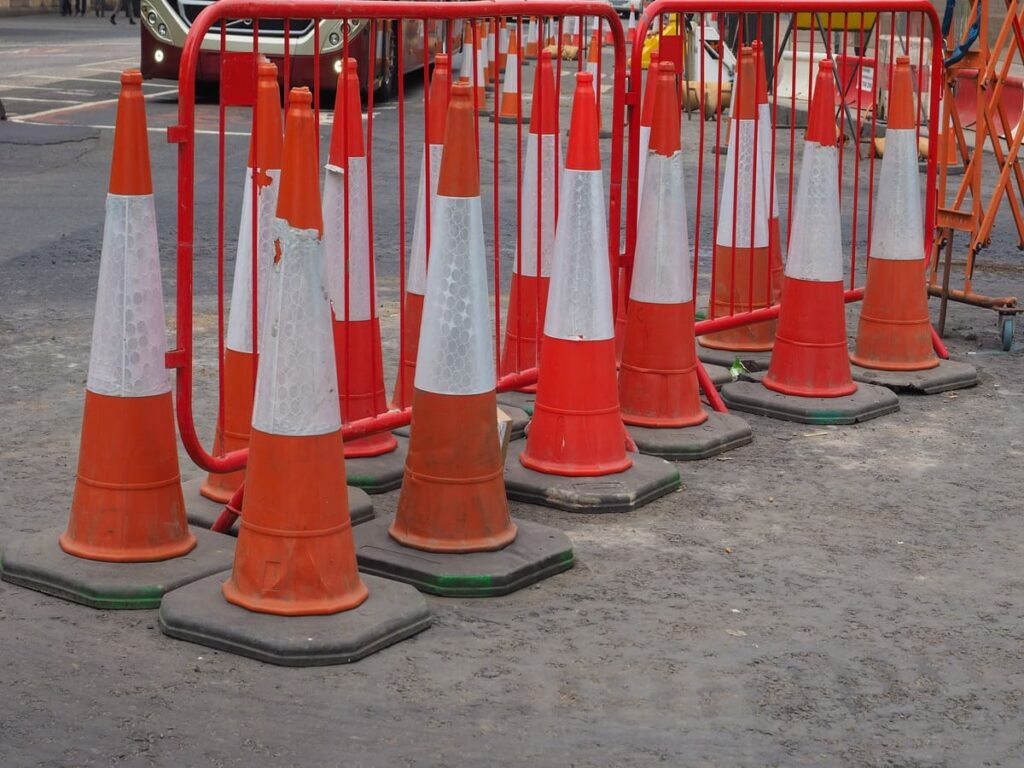
Most site managers recognize these orange construction pylons. They suit temporary lane closures best. Optraffic manufactures them using flow-molded PVC for maximum durability. This material survives impacts from heavy trucks without cracking. The high-density black base grips the road surface firmly. This design prevents wind from blowing the cone into live traffic. Federal rules dictate size based on speed limits. Night operations demand retroreflective collars for visibility.
| Cone Height | MUTCD Requirement | Optraffic Recommendation |
| 18-Inch | Low-Speed (< 40 MPH) | Painting, Parking Lots |
| 28-Inch | High-Speed (> 45 MPH) | Highways, Night Work |
| 36-Inch | Extreme Visibility | Freeways, Checkpoints |
Tubular Markers: Space-Saving Construction Pylons
Urban work zones often lack the space for standard cones. Tubular markers solve this problem with a slim profile. They fit perfectly between narrow lanes without blocking traffic. Optraffic designs “Loopers” with an integrated handle for fast deployment. Crews grab them easily from safety trucks. The heavy recycled rubber base grips the road surface. This weight resists strong wind gusts from passing semi-trucks. Bright retroreflective bands ensure visibility during night operations.
| Feature | Specification | Benefit |
| Stem Width | 4 Inches | Fits Narrow Lanes |
| Base Weight | 10lb – 30lb | Resists High Winds |
| Reflectivity | 3-Inch Bands | Meets MUTCD Night Rules |
Plastic Drums: High-Visibility Construction Pylons
Freeway work zones require maximum visibility. Standard cones often disappear against the complex background of a 70 MPH highway. Plastic drums (barrels) solve this by offering a massive visual target. Optraffic engineers these channelizers using durable PE material to withstand high-speed impacts.
1. Why Size Matters on Freeways
Drivers need time to react. A 39.4-inch (1000mm) plastic drum commands respect. Its wide body forces drivers to merge early. This physical presence creates a safer buffer zone between live traffic and your crew.
2. Stability and Ballast
Wind from passing semi-trucks can easily blow over lighter devices. Optraffic drums feature a specialized base design for stability. You simply verify the weight requirements for your specific zone. The PE body resists cracking even in cold weather conditions.
| Specification | MUTCD Standard | Optraffic Standard |
| Height | Min 36 Inches | 39.4 Inches (1 Meter) |
| Material | Impact-Resistant | High-Density PE |
| Reflectivity | 4-6 Inch Bands | Recessed Grooves |
Conclusion: Sourcing Compliant Construction Pylons
Safety managers must select the right device for the speed limit. Optraffic manufactures a full range of MUTCD-compliant traffic channelizers.
1. The Optraffic Advantage
We supply everything from 18-inch painting cones to 39.4-inch freeway drums. Our high-density PE materials resist cracking in cold weather. The recessed design protects reflective bands from damage during transport.
2. Bulk Manufacturing Power
Optraffic controls the entire production process. This ensures consistent quality for large municipal or highway projects. Contact Optraffic today for direct bulk pricing on your next safety project.
FAQ
“Construction pylon” is a general term. The MUTCD specifically classifies them as traffic cones, drums, or tubular markers.
Spacing usually equals the speed limit in feet. Place devices 60 feet apart on a 60 MPH road.
High-density polyethylene (PE) resists impact better than rigid plastic. It absorbs shock without cracking in cold weather.
Optraffic manufactures orange, red, and custom colors. However, federal law mandates orange for all road work zones.