Introduction: The Color of Emergency
A car crash is not a construction site. It is unplanned, chaotic, and temporary. Yet, many tow truck operators and first responders still deploy standard orange construction signs at accident scenes.
This is a critical mistake.
Incident management signs must be distinct from road work zones. Drivers see orange cones and signs every day. They often tune them out or assume a construction crew is ahead.
To break this visual habit, the MUTCD (Manual on Uniform Traffic Control Devices) mandates a specific color for unplanned events: Fluorescent Pink.
This guide explains the strict regulations of Chapter 6I. We compare Pink (Incident) vs. Orange (Construction) and define exactly which incident management signs your fleet needs to stay compliant and safe.
Safety Tip: While pink is for quick response, Optraffic manufactures high-visibility Orange Construction Signs. These are the mandatory standard for any incident management zone that extends beyond 24 hours, turning the scene into a long-term work zone.
Pink vs. Orange: The MUTCD Chapter 6I Standard
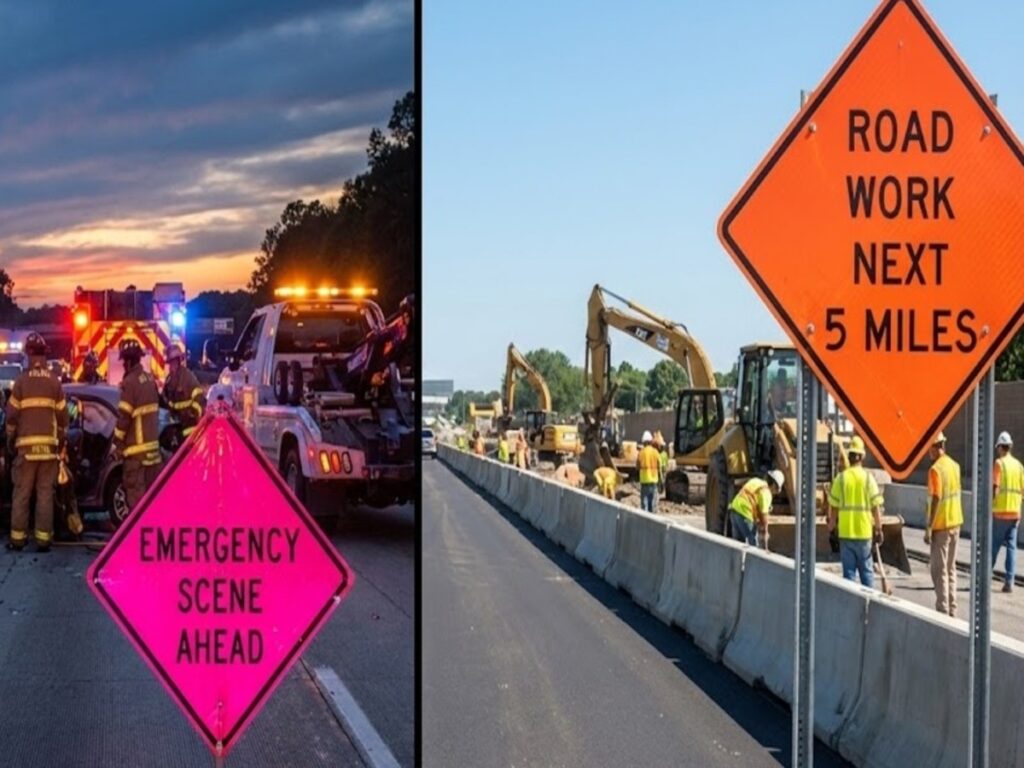
The distinction between these two colors is not a suggestion. It is a federal standard designed to alter driver psychology.
1. Orange: The Color of “Planned” Work
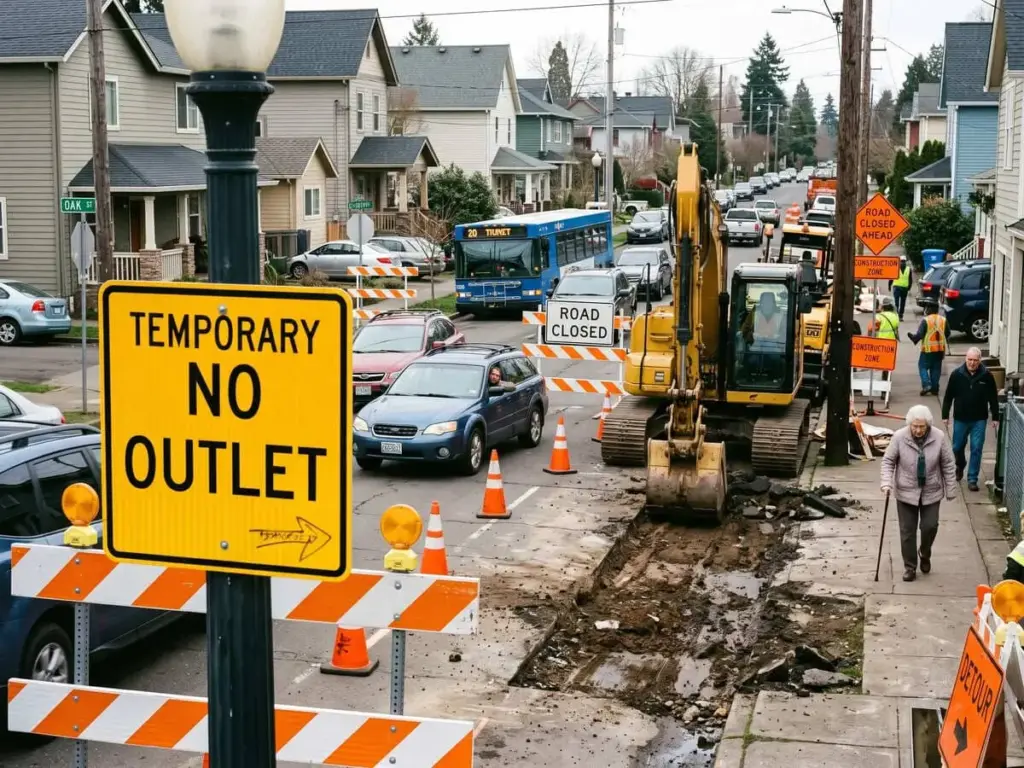
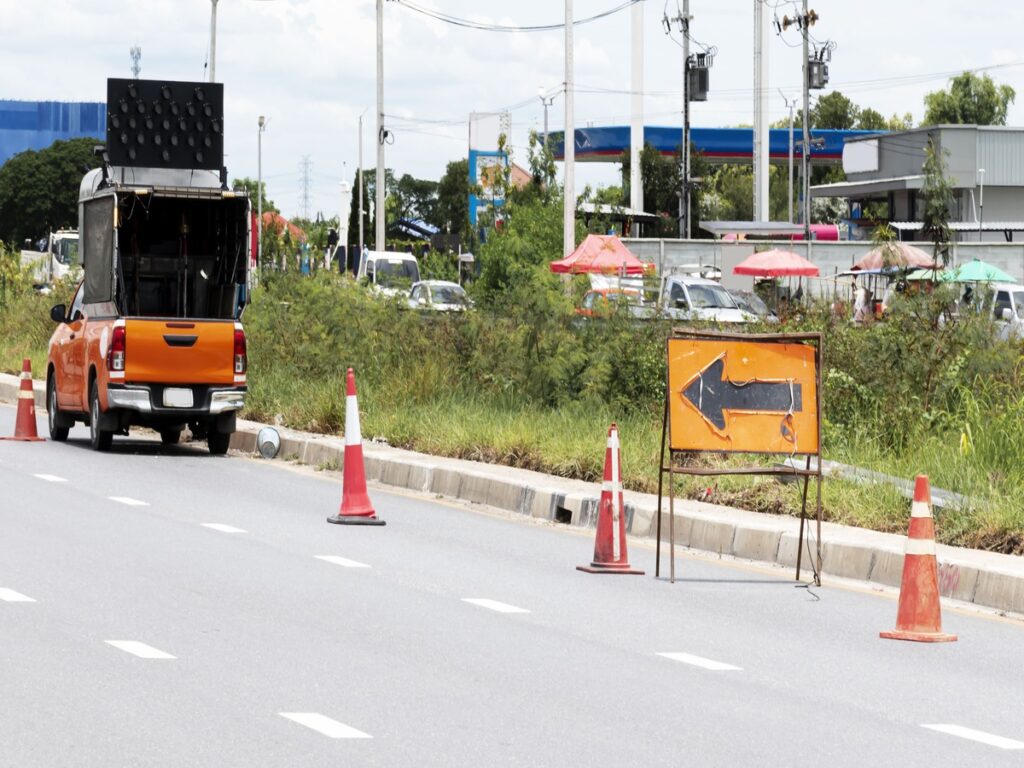
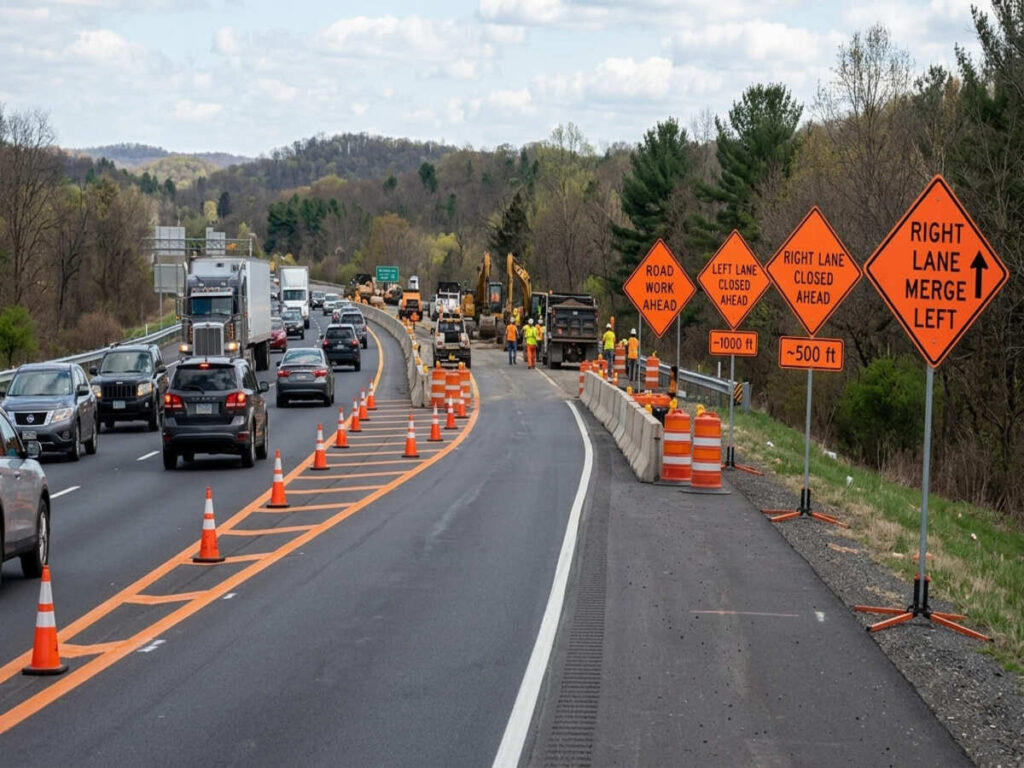
Construction signs are Fluorescent Orange.
- Meaning: “Road Work Ahead.”
- Context: The driver expects a long-term lane closure, heavy machinery, or a detoured route.
- Driver Reaction: Caution, but often with a delay in slowing down due to “sign fatigue.”
2. Pink: The Color of “Unplanned” Incidents
Incident management signs are Fluorescent Pink (also called Coral).
- Meaning: “Emergency Scene Ahead.”
- Context: A crash, a stalled vehicle, a spill, or a natural disaster.
- Driver Reaction: Immediate alert. Pink is a rare color on the roadway. It signals a fresh, active hazard that requires instant attention.
The Rule: According to MUTCD Section 6I.01, fluorescent pink is the recommended background color for all traffic control signs used in incident management areas.
Why Use Incident Management Signs? (The Science)
Why did the Federal Highway Administration (FHWA) choose pink? It comes down to Contrast and Urgency.
1. Visual Separation from Construction
Roads are full of orange barrels and work zones. If you place an orange “Emergency Scene Ahead” sign near an existing work zone, drivers will miss it.
- The Pink Advantage: Fluorescent pink incident management signs cut through the visual clutter of orange construction zones. They tell the driver: “This is a NEW hazard, separate from the road work.”
2. Color Spectrum Sensitivity
Fluorescent pink sits on a different part of the color spectrum.
- Daytime: It absorbs UV light and emits a high-intensity glow, similar to fluorescent orange but with a distinct hue.
- Night/Rain: Pink maintains high contrast against wet pavement and headlights, ensuring the incident management zone is visible from 1,000 feet away.
The Essential Series: Which Incident Management Signs Do You Need?
Unlike a construction zone that might have 20 different sign types, an incident zone relies on speed and simplicity. You need a core set of incident management signs to establish an “Advance Warning Area” quickly.
1. “Emergency Scene Ahead” (W20-13)
This is the universal first warning.
- Usage: Deploy this pink incident management sign 500 to 1,000 feet upstream of the crash.
- Purpose: It gives drivers enough PRT (Perception-Reaction Time) to realize that traffic flow is about to change drastically, potentially coming to a complete stop.
2. “Tow Truck Ahead” (W21-19)
For recovery operators, this specific legend provides legal cover.
- Usage: Place this sign if your wrecker is blocking a lane or shoulder.
- Liability: It explicitly warns drivers of a heavy vehicle entering or exiting the roadway, reducing your liability if a secondary collision occurs during the recovery.
3. “Be Prepared to Stop” (W3-4)
- Usage: Often the second sign in the series.
- Purpose: Prevents rear-end collisions—the #1 killer of first responders. A fluorescent pink version of this sign cuts through the visual noise better than the standard orange version in low-light conditions.
Deployment Speed: Why Roll-Up Incident Management Signs Rule
In a construction project, you have hours to set up rigid aluminum signs. In an emergency, you have minutes. This is why roll-up management signs are the industry standard for TIM (Traffic Incident Management).
1. The “60-Second” Setup
- Portability: A responder can carry a roll-up sign and a compact stand in one hand.
- Storage: They collapse into a tight tube, easily fitting into the storage lockers of fire trucks, patrol cars, or wreckers.
- Stability: Modern stands use dual springs to resist the wind generated by passing semi-trucks, ensuring the sign stays upright even in a storm.
2. Visual Uniformity (The Pink Perimeter)
The goal is to create a “clean” zone. By using fluorescent pink incident management signs, you establish a visual boundary that is distinct from construction work. For maximum effectiveness, many responders reinforce this perimeter by deploying matching pink traffic cones alongside the signs, creating a seamless, high-contrast taper that tells drivers: “This is an active emergency, not a road work site.”
3. Reflectivity Requirements
- Fluorescent Pink: This is not just a pigment choice; it is a performance standard.
- Nighttime: The sheeting must be retroreflective (typically Type VI or higher) to be visible under headlamps. Non-reflective vinyl mesh is dangerous and illegal for night operations.
Incident Management Sign Placement Rules: Setting Up the “TIM Area”
Unlike construction zones, which are measured with engineering precision days in advance, an incident scene is chaotic. However, the MUTCD Chapter 6I still requires a structured “Traffic Incident Management (TIM) Area.”
You cannot just throw a pink incident management sign next to the bumper of your fire truck. It must be placed upstream to give drivers time to react.
1. The Advance Warning Area
This is the distance between the first incident management sign and the start of the taper (cones).
- Urban Streets (Low Speed): Place the sign 100 to 200 feet upstream. In a city, blocks are short. Placing it too far back might put it before a turning intersection, causing drivers to miss it.
- Highways (High Speed): Place the sign 1,000 to 2,500 feet upstream. At 65 MPH, a vehicle covers 100 feet per second. You need massive distance to prevent secondary rear-end collisions.
2. The Transition Area (The Taper)
This is where you move traffic out of the blocked lane.
- The Device: Use your pink traffic cones or standard orange cones here to form a diagonal line.
- The Angle: On high-speed roads, the taper should be long and gradual. A short, sharp taper forces drivers to slam on brakes, causing chaos.
Pro Tip: Always deploy incident management signs before you set up the cone taper. Warning first, action second.
Duration Rules: When Pink Turns to Orange
One of the strict rules of incident management signs is that they have a time limit.
1. The “24-Hour” Guideline
Fluorescent Pink is legally reserved for temporary traffic control.
- Short-Term (< 2 Hours): Pink signs are mandatory.
- Intermediate (2-24 Hours): Pink signs are acceptable.
- Long-Term (> 24 Hours): If an incident (like a bridge strike or massive spill) requires a lane closure lasting more than 24 hours, it technically becomes a “Work Zone.” You must switch from pink incident management signs to orange construction signs.
2. Why the Switch Matters
- Sign Fatigue: Pink is an “alarm” color. If drivers see pink warning signs standing for days with no active emergency activity, they become desensitized. The color loses its power.
- Reflectivity Fade: Fluorescent pink pigments are less UV-stable than orange. They are designed for short bursts of intense visibility, not months of sun exposure.
Termination: Clearing the Scene
The “End of Incident” phase is just as dangerous as the start. Leaving incident management signs up after the wreckers have left is a major safety violation (the “Cry Wolf” effect).
- The Rule: As soon as the last vehicle (tow truck or ambulance) leaves the roadway, the incident management signs must be removed immediately.
- The Sequence: Remove devices in reverse order.
- Pick up the cones (Taper) first, protecting yourself with the blocking vehicle.
- Remove the upstream incident management signs last. This ensures you are protected by warning signs until the very final moment you leave the site.
Hardware Selection: Why Rigid Construction Signs Matter
For short-term incidents, responders use pink. But for major recovery operations—like a bridge repair after a crash or a multi-day cleanup—the rules change. You enter the domain of Orange Construction Signs.
1. The 24-Hour Rule: Switching to Orange
If your incident scene will be active for more than 24 hours, MUTCD Chapter 6I requires you to transition from pink “Incident” signs to standard Orange “Road Work” signs.
- Why? Drivers associate orange with long-term hazards.
- The Solution: Optraffic’s Orange Construction Signs are designed exactly for this transition.
For a complete breakdown of long-term setup requirements, refer to The Comprehensive Guide to Construction Signage: Enhancing Safety, Efficiency, and Compliance on Job Sites.
2. Stability & Durability (Rigid Aluminum)
Whether for a long-term incident or a standard construction project, lightweight signs fail in high winds.
- Wind Resistance: Optraffic uses heavy-gauge rigid aluminum substrates. Unlike roll-up signs that can flutter, our rigid signs remain static and readable.
- Reflectivity: We apply industrial-grade High Intensity Prismatic (HIP) or Diamond Grade orange sheeting to ensure your zone is visible from 1,000+ feet, night or day.
Conclusion: Compliance for Every Duration
Managing an incident requires knowing when to use pink and when to switch to orange. Using the wrong color can confuse drivers and increase liability.
While first responders handle the initial “Pink” phase, Optraffic is your partner for the heavy-duty “Orange” phase.
- Need MASH-compliant rigid signs?
- Looking for durable aluminum substrates?
- Requiring MUTCD-compliant orange retroreflectivity?
Ensure your fleet is ready for the long haul. Contact Optraffic today to source the industry’s most durable Orange Construction Signs.
FAQ: Common Questions on Incident Management Signs
No. MUTCD Chapter 6I specifically designates Fluorescent Pink for incident management. Orange is reserved for planned construction work. Using orange can confuse drivers and reduce their urgency to slow down
For temporary emergency zones, the bottom of the sign should be at least 1 foot above the roadway. If the incident lasts longer than 3 days (becoming a long-term project), standard mounting heights (7 feet urban / 5 feet rural) apply.
Yes. Just like orange signs, incident management signs must be retroreflective to be seen at night. Optraffic uses high-grade fluorescent pink sheeting that reflects headlights from 1,000+ feet away.