لماذا يعد استبدال لافتة معدات الوقاية الشخصية من أولويات الامتثال, ليست فكرة لاحقة للصيانة
لقد واجه كل مدير للبيئة والصحة والسلامة السيناريو الذي يحدد فيه الفحص الروتيني لإدارة السلامة والصحة المهنية وجود تدهور, تلاشى, أو علامة معدات الوقاية الشخصية المعرضة للخطر هيكليًا في منطقة الخطر النشطة. برنامج معدات الوقاية الشخصية نفسه سليم. سجلات التدريب كاملة. لكن استبدال علامة معدات الوقاية الشخصية لم يتم إضفاء الطابع الرسمي على الدورة مطلقًا - والآن يوجد اقتباس على الطاولة. يعد فهم كيف يؤدي تدهور اللافتات بشكل مباشر إلى تطبيق إدارة السلامة والصحة المهنية (OSHA) أمرًا أساسيًا لأي برنامج سلامة متوافق. من أجل إطار أوسع لعلامات معدات الوقاية الشخصية, يمكن لمديري البيئة والصحة والسلامة الرجوع إلى دليل كامل يغطي المواد, الموضع, والمشتريات.
اللافتات المتدهورة ليست مصدر قلق هامشي. أفاد مكتب إحصاءات العمل أنه في 2023, تقريبًا 2.6 وتم تسجيل مليون إصابة وأمراض غير مميتة في مكان العمل في القطاع الخاص, مع عدم كفاية الاتصالات بالمخاطر, بما في ذلك فشل اللافتات, تم الاستشهاد به كعامل مساهم في قطاعات صناعية متعددة. علامة السلامة التي لم يعد العمال قادرين على قراءتها لا تحذر. إنها ببساطة تشغل مساحة بينما يظل الخطر الذي كان من المفترض أن تشير إليه غير مرئي.
يتعامل موقف الإنفاذ الخاص بإدارة السلامة والصحة المهنية مع حالة اللافتات باعتبارها مقياسًا مباشرًا لسلامة اتصالات المخاطر في المنشأة. توضح دورة استبدال علامة السلامة الاستباقية الاجتهاد. إن النهج التفاعلي - استبدال اللافتات فقط بعد فشلها بشكل واضح - يدعو إلى التدقيق بما هو أبعد من العلامات نفسها.
ما الذي تتطلبه إدارة السلامة والصحة المهنية فعليًا لصيانة علامات السلامة
تستمد متطلبات صيانة علامات السلامة الخاصة بإدارة السلامة والصحة المهنية (OSHA) من مصدرين رئيسيين: المعيار المقنن في 29 CFR 1910.145 ومعيار الإجماع الطوعي ANSI Z535, والتي تشير إليها إدارة السلامة والصحة المهنية كمعيار فني لتصميم اللافتات ووضوحها.
29 CFR 1910.145(أ)(1) ينص على أن علامات الخطر تظهر فقط في حالة وجود خطر مباشر, مما يتطلب ضمنيًا أن تظل العلامات دقيقة وحديثة. علامة تركت في مكانها بعد حل الخطر, أو واحد لم يعد قادرًا على توصيل تحذيره الأصلي, يصبح مسؤولية الامتثال. 29 CFR 1910.145(ج)(1) يتطلب أن تتوافق العلامات مع مواصفات التصميم القياسية. عندما يقل تباين الألوان أو وضوح وسيلة الإيضاح عن حدود ANSI Z535.1, العلامة غير مطابقة.
تعليمات إدارة السلامة والصحة المهنية CPL 02-01-058 تنص صراحة على أن العلامات يجب أن تكون “يتم الحفاظ عليها في حالة نظيفة ومقروءة في جميع الأوقات.” تمنح هذه اللغة مفتشي إدارة السلامة والصحة المهنية سلطة واضحة للاستشهاد بأي علامة - بغض النظر عن العمر - تفشل في اختبار الوضوح في يوم التفتيش. بالإضافة إلى ذلك, حيث لا يعالج معيار محدد بشكل مباشر تدهور اللافتات, تستدعي إدارة السلامة والصحة المهنية بند الواجب العام (قسم 5(أ)(1)) عندما تخلق العلامات المتدهورة خطرًا معروفًا.
يوضح الجدول أدناه المتطلبات التنظيمية الرئيسية التي تحكم متى يصبح استبدال لافتة معدات الوقاية الشخصية إلزاميًا:
| معيار | متطلبات | آلية التنفيذ |
| 29 CFR 1910.145(أ)(1) | يجب أن تعكس العلامات بدقة المخاطر الموجودة في جميع الأوقات | الاقتباس تحت 1910.145 + بند الواجب العام |
| 29 CFR 1910.145(ج)(1) | يجب أن تكون اللافتات مطابقة لمواصفات التصميم من حيث اللون والأسطورة | الاقتباس المباشر; علامة عدم المطابقة = مخالفة |
| أنسي Z535.1 (2017) | مواصفات اللون: سلامة الأحمر = مونسيل 7.5R 4/14; تحذير = 5Y 7/12 | أدرجت حسب المرجع; أداة إنفاذ إدارة السلامة والصحة المهنية |
| أنسي Z535.4 (2017) | ارتفاع الرسالة دقيقة. 0.5″ لكل 5 مسافة المشاهدة قدم | معيار الوضوح; يؤدي النص المتدهور إلى الاقتباس |
| OSHA CPL 02-01-058 | يجب أن تكون العلامات “يتم الحفاظ عليها في حالة نظيفة ومقروءة في جميع الأوقات” | وثيقة توجيه التنفيذ |
عمر علامة السلامة حسب المادة - ما تظهره البيانات
يحدد اختيار المواد عند الشراء بشكل مباشر دورة استبدال علامة السلامة. يمكن لمديري البيئة والصحة والسلامة الذين يفهمون خصائص العمر الافتراضي لكل ركيزة أن يبنوا مواد يمكن الدفاع عنها, جداول الاستبدال المستندة إلى البيانات بدلاً من الاعتماد على الفحص البصري وحده.
تمثل معايير العمر التالية عمر الخدمة الحقيقي في ظل ظروف التشغيل القياسية. عادةً ما يفترض العمر الافتراضي الذي تحدده الشركة المصنعة في البيئات الخاضعة للرقابة - عمر الخدمة الفعلي في البيئات الصناعية أقصر بنسبة 20-30٪ بسبب التعرض للأشعة فوق البنفسجية, الاتصال الكيميائي, والارتداء الجسدي.
| مادة | عمر داخلي | عمر في الهواء الطلق | وضع الفشل النموذجي |
| الفينيل اللاصق | 2-5 سنوات | 1-3 سنوات | رفع الحافة, تلون الأشعة فوق البنفسجية |
| الألومنيوم (.040″) | 7- 10 سنوات | 5-7 سنوات | الأكسدة السطحية, يتلاشى الطباعة |
| الألومنيوم (.080″) | 10-15 سنة | 7- 10 سنوات | الضرر الجسدي (الخدوش/التأثير) |
| البوليسترين / بولي كلوريد الفينيل | 3-5 سنوات | 1-سنتان | هشاشة الأشعة فوق البنفسجية, تزييفها |
| الألياف الزجاجية / فرب | 10-15 سنة | 10-15 سنة | التصفيح تحت الحرارة الشديدة |
| أغطية عاكسة | 7- 10 سنوات | 5-7 سنوات | فقدان الانعكاسية |
| فوتولومينيسسينت | 5-7 سنوات | غير موصى به | انخفاض أداء النصوع |
تعتمد نطاقات العمر الافتراضي على بيانات أداء الصناعة النموذجية, بما في ذلك المبادئ التوجيهية من الإدارة الفيدرالية للطرق السريعة ومعايير المواد مثل ASTM D4956. قد يختلف عمر الخدمة الفعلي حسب الظروف البيئية, التعرض للأشعة فوق البنفسجية, جودة التثبيت, وممارسات الصيانة.
وتؤثر المضاعفات البيئية بشكل كبير على هذه الأرقام. المرافق التي تحتوي على مؤشر الأشعة فوق البنفسجية أعلاه 6, مناطق الرش الكيميائي, دورة درجة الحرارة أقل من -20 درجة فهرنهايت أو أعلى من 140 درجة فهرنهايت, أو بيئات الغسيل ذات الضغط العالي - الشائعة في معالجة الأغذية - يجب أن تطبق تخفيضًا بنسبة 30-40٪ على معايير العمر الخارجي. تعرض مواقع البناء ظروف التآكل الأكثر عدوانية; استبدال علامة معدات الوقاية الشخصية على فترات تتراوح من سنة إلى سنتين هي الممارسة المعتادة بغض النظر عن الركيزة.
للحصول على تفاصيل مفصلة عن المواد التي تحقق أفضل أداء في بيئات صناعية محددة, هذا نظرة عامة على خيارات مواد علامة PPE يوفر المعلومات المقارنة التي يحتاجها مديرو البيئة والصحة والسلامة في مرحلة تحديد المصادر.
بناء جدول زمني لاستبدال لافتة السلامة — إطار عملي
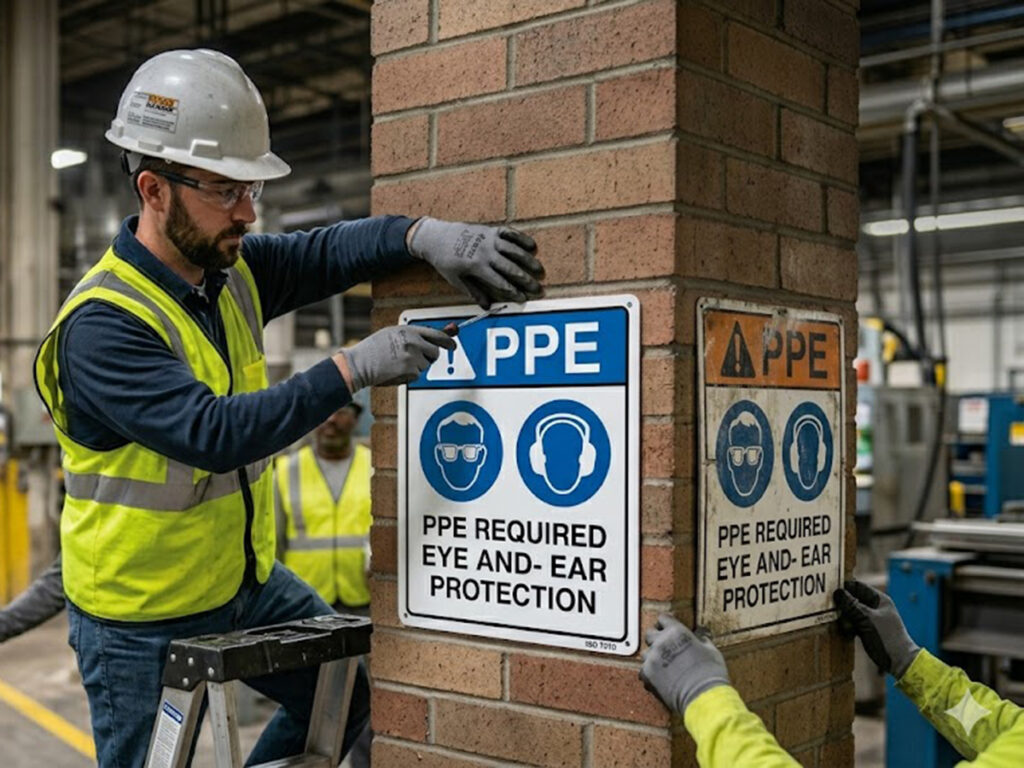
يجمع الجدول الزمني لاستبدال لافتة السلامة التي يمكن الدفاع عنها بين فترات الفحص المجدولة وبيانات العمر الافتراضي المستندة إلى المواد ومعايير الاستبدال الناجمة عن الحدث. يوفر إطار العمل التالي لمديري البيئة والصحة والسلامة هيكلًا قابلاً للتكرار لأي نوع من أنواع المنشآت.
خطوة 1: قم بإجراء تدقيق كامل لمخزون اللافتات
قم بفهرسة كل لافتة من معدات الوقاية الشخصية حسب الموقع, مادة الركيزة, تاريخ التثبيت (إذا كان معروفا), والحالة الحالية على مقياس 1-5: 5 = متوافقة تماما; 4 = تآكل بسيط, لا يوجد إجراء مطلوب; 3 = تدهور معتدل, استبدال الجدول الزمني; 2 = تدهور كبير, استبدال داخل 30 أيام; 1 = مطلوب استبدال فوري.
خطوة 2: علامات الطبقة حسب الأهمية
- الطبقة 1 (شديد الأهمية): مناطق الخطر النشطة – الأماكن الضيقة, اللوحات الكهربائية, تخزين المواد الكيميائية. فحص كل 30 أيام. استبدال في تصنيف الحالة 3 أو أدناه.
- الطبقة 2 (عالي): مناطق الإنتاج ذات الحركة المرورية العالية, تحميل الأرصفة, محيط المستودع. فحص ربع سنوي. استبدال في تصنيف الحالة 2 أو أدناه.
- الطبقة 3 (معيار): المناطق الادارية, مناطق منخفضة المخاطر. فحص نصف سنوي. استبدال في تصنيف الحالة 2 أو أدناه.
خطوة 3: خريطة عمر المواد لاستبدال النوافذ
قم بالإشارة إلى جدول العمر في القسم 3 مع الركيزة لكل علامة. قم بجدولة الاستبدال المجمع قبل انتهاء فترة الصلاحية وليس بعد ظهور التدهور. لعلامات الفينيل في البيئات الخارجية, تعتبر فترة الاستبدال لمدة عامين مناسبة. ل .080″ الألومنيوم في الأماكن المغلقة, نافذة لمدة 12 عاما يمكن الدفاع عنها.
خطوة 4: تعريف الاستبدال غير القابل للتفاوض الناتج عن حدث ما
- أي إشارة فيها كلمة الإشارة (خطر/تحذير/تنبيه) غير قابل للقراءة
- أي علامة حيث يكون الرسم التخطيطي الإلزامي لمعدات الوقاية الشخصية مفقودًا أو لا يمكن التعرف عليه
- أي علامة منفصلة جسديا, مشوه, أو معرضة لخطر السقوط
- أي علامة لم تعد تعكس ظروف الخطر الحالية بعد تغيير العملية
- أي علامة تضررت بسبب التعرض للمواد الكيميائية, نار, أو الفيضان
خطوة 5: احتفظ بسجل بديل لجاهزية التدقيق
يتطلب كل إجراء فحص واستبدال وثائق: موقع التوقيع / الهوية, الركيزة والمواصفات, تاريخ التفتيش, تصنيف الحالة, الإجراء المتخذ, تاريخ الاستبدال, واسم المفتش. يطلب مفتشو إدارة السلامة والصحة المهنية هذه السجلات أثناء مراجعة المستندات. توضح المرافق ذات السجلات المنظمة “الاجتهاد المعقول” - أحد العوامل التي تأخذها إدارة السلامة والصحة المهنية في الاعتبار عند تخفيف العقوبة (حتى 25% التخفيض بموجب إرشادات العقوبات بحسن نية الخاصة بإدارة السلامة والصحة المهنية). (مصدر: https://www.osha.gov/penalties)
القائمة المرجعية لفحص لافتة معدات الوقاية الشخصية - ما الذي يجب البحث عنه قبل أن تفعله إدارة السلامة والصحة المهنية
تعمل قائمة المراجعة التالية المكونة من 12 نقطة على تفعيل معايير الامتثال الخاصة بـ OSHA وANSI Z535 وتحويلها إلى أداة ميدانية عملية. يتم تعيين كل عنصر لمعيار معين.
- التحقق من الوضوح: هل يمكن قراءة الأسطورة كاملة على مسافة المشاهدة المطلوبة? يتطلب ANSI Z535.4 ارتفاعًا أدنى للأحرف يبلغ 0.5″ لكل 5 قدم من مسافة المشاهدة.
- سلامة اللون: هل تتوافق خلفية كلمة الإشارة مع مواصفات Munsell? خطر: 7.5ر 4/14 (الأحمر الآمن); تحذير/تحذير: 5ي 7/12 (برتقالي/أصفر للسلامة).
- نسبة التباين: هل يتوافق تباين النصوع بين النص والخلفية مع الحد الأدنى من ANSI Z535؟ 3:1
- سلامة الرمز: هل رموز السلامة المتوافقة مع ISO 7010 سليمة تمامًا؟, غير محجوب, وغير مشوهة?
- الحالة البدنية: فحص الشقوق, تزييفها, التصفيح, الخدوش, ثقوب, أو علامات الحروق.
- حالة الحافة والزاوية: تحقق من وجود تقشير أو حواف مرتفعة (فينيل); التآكل في فتحات التركيب (الألومنيوم).
- تصاعد الأمن: هل تم تثبيت اللافتة بقوة عند 60-65″ خط الوسط إلى الأرض? (OSHA/ANSI الارتفاع على مستوى العين)
- الرؤية/العوائق: لا توجد معدات, رفوف, الأنابيب, أو مواد مؤقتة تحجب وجه اللافتة.
- إعادة الانفعال (إن أمكن): ASTM D4956 النوع الأول الحد الأدنى = 70 cd/lux/m2 بزاوية مراقبة 0.2 درجة.
- أداء فوتولومينيسسينت (إن أمكن): يتم شحن اللافتة بشكل كافٍ تحت الإضاءة القياسية وتحافظ على الرؤية 90+ دقائق بعد الإضاءة لكل ISO 17398.
- دقة المحتوى: هل تعكس العلامة المخاطر الحالية بدقة؟, متطلبات معدات الحماية الشخصية, وتنسيقات كلمات الإشارة ANSI Z535 بعد عام 2017?
- التوثيق: هو تاريخ التفتيش, تصنيف الحالة, واسم المفتش المسجل في سجل صيانة المنشأة?
الانتهاكات الحقيقية لإدارة السلامة والصحة المهنية التي تتضمن علامات السلامة المتدهورة - هياكل العقوبات وأنماط المخاطر
تصنف إدارة السلامة والصحة المهنية (OSHA) انتهاكات علامات السلامة حسب خطورتها, ويعكس هيكل العقوبة احتمال الضرر. يساعد فهم أنماط الاقتباس مديري البيئة والصحة والسلامة على تحديد المخاطر المالية المؤجلة استبدال علامة معدات الوقاية الشخصية القرارات.
عتبات عقوبة إدارة السلامة والصحة المهنية الحالية (2026)
- مخالفات أخرى غير الجسيمة: حتى $16,550 لكل انتهاك — يتم تطبيقه عادةً في المناطق الأقل خطورة
- انتهاك خطير: حتى $16,550 لكل انتهاك — احتمال أكبر للوصول إلى الحد الأقصى عندما تكون الإشارة في منطقة خطر نشطة
- الانتهاك المتعمد أو المتكرر: حتى $165,514 لكل انتهاك - يتم تشغيله عندما يتبع نمط تدهور الإشارة اقتباسًا مسبقًا دون اتخاذ إجراء تصحيحي
مصدر: https://www.osha.gov/penalties
أنماط الاقتباس الشائعة
يستشهد مفتشو إدارة السلامة والصحة المهنية (OSHA) في أغلب الأحيان 29 CFR 1910.145(ج) عندما لا تلبي العلامات حدود اللون أو الوضوح. في بيئات المعالجة الكيميائية, ينطبق شرط الواجب العام عندما تتدهور علامات حماية العين من معدات الوقاية الشخصية أو علامات الخطر الكيميائي في مناطق الرش النشطة. بشكل حاسم, نادرًا ما يكون انتهاك اللافتة قائمًا بذاته - عادةً ما يقوم المفتشون الذين يشيرون إلى علامات معدات الوقاية الشخصية المتدهورة بتوسيع النطاق ليشمل برنامج معدات الوقاية الشخصية الكامل بموجب 29 CFR 1910.132, مضاعفة عدد الاقتباسات المحتملة بشكل كبير.
نمط إنفاذ تمثيلي: تلقت منشأة لتجهيز الأغذية اقتباسًا بموجب بند الواجب العام بعد أن أصبحت علامات حماية العين الخاصة بمعدات الوقاية الشخصية غير مقروءة بسبب رذاذ المطهر المتكرر. تكلفة استبدال علامة معدات الوقاية الشخصية للمنطقة المصابة: تحت $300. عقوبة OSHA الناتجة: $11,625. النسبة - تقريبًا 39:1 — يوضح التكلفة غير المتناسبة للصيانة المؤجلة. تؤكد بيانات التفتيش الخاصة بـ OSHA.gov أن هذا النمط يتكرر عبر صناعة الأغذية, التعامل مع المواد الكيميائية, وقطاعات البناء.
مصدر: https://www.osha.gov/ords/imis/enterment.html
قرارات الشراء التي تعمل على تمديد دورة الاستبدال وتقليل تكلفة الامتثال الإجمالية
الأكثر فعالية من حيث التكلفة استبدال علامة معدات الوقاية الشخصية تبدأ الإستراتيجية عند الشراء. اختيار الركيزة, مواصفات الحبر, ويحدد تأهيل البائع عند نقطة الشراء بشكل مباشر مدة أداء كل علامة قبل أن يصبح الاستبدال إلزاميًا.
معايير المواصفات التي تعمل على إطالة عمر الإشارة
تلعب معايير اختيار المواد والمواصفات دورًا حاسمًا في تحديد عمر خدمة لافتات المرور والسلامة. تسلط إرشادات الصناعة الصادرة عن الإدارة الفيدرالية للطرق السريعة ومعايير المواد مثل ASTM D4956 الضوء على العديد من العوامل الرئيسية:
أنظمة الحبر المقاومة للأشعة فوق البنفسجية
الأشعة فوق البنفسجية هي السبب الرئيسي لتلاشي اللون وتدهور المواد في اللافتات الخارجية. تشير الوثائق الفنية من الشركات المصنعة مثل 3M وAvery Dennison إلى أن أنظمة الحبر المستقر للأشعة فوق البنفسجية تعمل بشكل كبير على تحسين الاحتفاظ بالألوان ومقاومة الطقس مقارنة بطرق الطباعة الرقمية القياسية.
تراكبات صفائحية واقية
توفر الأفلام المتراكبة حاجزًا إضافيًا ضد التعرض للأشعة فوق البنفسجية, رُطُوبَة, والتآكل. منتجات مثل سلسلة 3M Scotchcal Overlaminate 8518 تم تصنيفها لما يصل إلى 7 سنوات من المتانة الخارجية في ظل ظروف التعرض العمودي, دعم عمر الخدمة الطويل في البيئات الصعبة.
سمك الركيزة الألومنيوم
وفقًا لمبادئ المتانة التي أشارت إليها الإدارة الفيدرالية للطرق السريعة, زيادة سمك الألومنيوم يحسن مقاومة التشوه, إجهاد حمل الرياح, والتأثير الجسدي. عادةً ما يتم تحديد ركائز القياس الأثقل للتركيبات طويلة المدى أو عالية التعرض.
التوافق مع ANSI Z535
يحدد معيار ANSI Z535 المتطلبات المتسقة لألوان السلامة, الرموز, وتنسيقات التوقيع. تدعم اللافتات المعتمدة مسبقًا الامتثال التنظيمي, يقلل من مخاطر التدقيق, ويضمن التوافق مع متطلبات السلامة في مكان العمل.
التكلفة الإجمالية للامتثال: 10-مقارنة السنة
نهج تكلفة دورة الحياة - يتماشى مع مبادئ إدارة الأصول من ISO (على سبيل المثال, ISO 15686) والإدارة الفيدرالية للطرق السريعة - يوضح أن متانة المواد تؤثر بشكل مباشر على التكلفة الإجمالية للملكية.
تتطلب المواد منخفضة التكلفة مثل الفينيل عادةً دورات استبدال أكثر تكرارًا نظرًا لمتانتها المحدودة في الهواء الطلق. في المقابل, توفر أنظمة اللافتات المصنوعة من الألومنيوم عمر خدمة ممتدًا, تقليل وتيرة الاستبدال ومتطلبات العمل المرتبطة بها.
خلال فترة تقييم مدتها 10 سنوات, تستفيد المشاريع التي تستخدم ركائز متينة بشكل عام من:
- انخفاض وتيرة استبدال المواد
- انخفاض عمالة التركيب التراكمية
- تحسين الاتساق في الامتثال والرؤية
إن هذا النهج القائم على دورة الحياة يفضل باستمرار استخدام الألومنيوم في التركيبات الثابتة الدائمة, بينما يظل الفينيل مناسبًا للتطبيقات المؤقتة, البيئات المستأجرة, أو المواقع التي تتطلب تحديثات متكررة للرسائل.
تحويل استبدال علامة معدات الوقاية الشخصية إلى برنامج امتثال استباقي
استبدال علامة معدات الوقاية الشخصية ليست مهمة صيانة يقوم بها مديرو البيئة والصحة والسلامة عندما تبدو اللافتات مهترئة. وهو برنامج امتثال منظم يقوم على ثلاث ركائز أساسية: دورات التفتيش المجدولة, الجداول الزمنية لاستبدال المواد المتطابقة, والسجلات الموثقة التي تثبت الاجتهاد التنظيمي.
الوضع المالي واضح. يتكلف الاقتباس الخطير الواحد لإدارة السلامة والصحة المهنية لعلامة معدات الوقاية الشخصية المتدهورة ما يصل إلى $16,550. يتكلف برنامج استبدال اللافتات الشامل لمعظم المرافق متوسطة الحجم جزءًا صغيرًا من ذلك المبلغ سنويًا - وينتج دليلًا موثقًا على حسن النية الذي تكافئه إرشادات العقوبات الخاصة بإدارة السلامة والصحة المهنية بما يصل إلى 25% التخفيضات. يمكن أن يصل الانتهاك المتعمد أو المتكرر بعد الاستشهاد السابق إلى حد كبير $165,514 لكل مثيل. ولا توجد ميزانية بديلة تبرر هذا التعرض.
والحالة التشغيلية واضحة بنفس القدر. العمال الذين لا يستطيعون قراءة لافتة معدات الوقاية الشخصية لا يتلقون بلاغ المخاطر الذي صممت اللافتة لتوصيله. لا تؤدي العلامات المتدهورة إلى خلق مخاطر تنظيمية فحسب، بل إنها تمثل فشلًا مباشرًا في واجب المنشأة المتمثل في حماية القوى العاملة لديها.
ابدأ بقائمة المراجعة الموجودة في القسم 5. إجراء تدقيق المخزون الأساسي داخل 30 أيام. تعيين تقييمات الحالة. قم بإنشاء جداول استبدال متدرجة باستخدام بيانات العمر في القسم 3. قم بتوثيق كل إجراء. هذا التسلسل - الذي يتكرر باستمرار - يتحول استبدال علامة معدات الوقاية الشخصية من عبء رد الفعل إلى أصل امتثال يمكن الدفاع عنه.
الأسئلة المتداولة: استبدال علامة معدات الوقاية الشخصية
كم مرة تطلب إدارة السلامة والصحة المهنية استبدال علامات السلامة؟?
ولا تحدد إدارة السلامة والصحة المهنية فترة استبدال ثابتة. 29 CFR 1910.145 يتطلب أن تظل العلامات مقروءة ويتم صيانتها في جميع الأوقات. تردد الاستبدال يعتمد على الحالة. تجمع أفضل الممارسات بين دورات الفحص المجدولة - شهريًا للطبقة 1 مناطق الخطر, ربع سنوي للمناطق ذات حركة المرور العالية - مع معايير عمر قائمة على المواد لوضع جدول زمني استباقي لاستبدال لافتات السلامة.
ما الذي يشكل انتهاكًا لعلامة السلامة الباهتة الخاصة بإدارة السلامة والصحة المهنية (OSHA).?
علامة لم تعد تلبي مواصفات الألوان ANSI Z535.1 Munsell, أو الذي لا يمكن قراءة وسيلة إيضاحه على مسافة المشاهدة المطلوبة, غير مطابق تحت 29 CFR 1910.145(ج). ويجوز لإدارة السلامة والصحة المهنية الاستشهاد بموجب المعيار المحدد أو استدعاء بند الواجب العام عندما تشكل العلامة المتدهورة خطرًا معترفًا به. يمكن أن يؤدي انتهاك علامة السلامة الباهتة الخاصة بإدارة السلامة والصحة المهنية (OSHA) إلى فرض عقوبات تصل إلى $16,550 لكل علامة في التصنيف الخطير.
ما هو العمر المتوقع لعلامة سلامة معدات الوقاية الشخصية?
يختلف العمر الافتراضي حسب الركيزة والبيئة. الفينيل اللاصق: 2– 5 سنوات في الأماكن المغلقة, 1– 3 سنوات في الهواء الطلق. الألومنيوم القياسي (.040″): 7– 10 سنوات في الأماكن المغلقة, 5– 7 سنوات في الهواء الطلق. ألومنيوم شديد التحمل (.080″): 10– 15 سنة داخلياً, 7– 10 سنوات في الهواء الطلق. الألياف الزجاجية / فرب: 10– 15 سنة في البيئات القاسية. عمر الخدمة في العالم الحقيقي يقل بنسبة 20-30% عن مواصفات الشركة المصنعة في البيئات الصناعية.
هل يمكن للمنشأة الحصول على اقتباس إدارة السلامة والصحة المهنية لعلامة واحدة باهتة؟?
نعم. وتقوم إدارة السلامة والصحة المهنية بتقييم كل علامة باعتبارها عنصر امتثال منفصل. عادة ما تؤدي علامة واحدة غير متوافقة في منطقة الخطر النشطة إلى إثارة استشهاد خطير. بشكل أكثر أهمية, عادةً ما تطالب إحدى اللافتات التي تم وضع علامة عليها بمراجعة أوسع لبرنامج اللافتات الخاص بالمنشأة بالكامل وموقف الامتثال لمعدات الوقاية الشخصية بموجبه 29 CFR 1910.132.
ما الذي يجب أن تتضمنه القائمة المرجعية لفحص توقيع معدات الوقاية الشخصية?
تغطي قائمة المراجعة المتوافقة: الوضوح على مسافة المشاهدة المطلوبة, سلامة الألوان وفقًا لمواصفات مونسيل, نسبة التباين, سلامة الرمز, الحالة الجسدية, حالة الحافة والزاوية, تصاعد الأمن في 60-65″ ارتفاع خط الوسط, الرؤية/العوائق, إعادة الانفعال (حيثما ينطبق ذلك), أداء ضوئي (حيثما ينطبق ذلك), دقة المحتوى, وتوثيق حدث التفتيش.
كيف يؤثر نوع المنشأة على الجدول الزمني لاستبدال لافتة السلامة?
تتطلب مواقع البناء استبدالًا قويًا — دورات مدتها سنة إلى سنتين بغض النظر عن المادة — بسبب الأشعة فوق البنفسجية, تراب, والتأثير الجسدي. تتطلب مرافق المعالجة الكيميائية ركائز مقاومة للمواد الكيميائية وفحصًا متكررًا. تتطلب بيئات تجهيز الأغذية ركائز مصنفة للغسيل عالي الضغط. يمكن للبيئات الإدارية أن تحافظ على نوافذ بديلة أطول مع اختيار الركيزة المناسبة.
ما هو الفرق بين OSHA 29 CFR 1910.145 و أنسي Z535?
29 CFR 1910.145 هو معيار OSHA القابل للتنفيذ. ANSI Z535 هو معيار إجماعي طوعي يحدد المواصفات الفنية - قيم الألوان, عتبات الوضوح, متطلبات الرمز - التي تستخدمها إدارة السلامة والصحة المهنية لتقييم الامتثال للعلامة. عادةً ما تكون اللافتة التي تفشل في مواصفات الألوان ANSI Z535 غير مطابقة للمواصفات أدناه 1910.145, تزويد إدارة السلامة والصحة المهنية بسلطة الاقتباس من خلال مبدأ الدمج حسب المرجع.
مقالات ذات صلة في هذه السلسلة
حبوب:
تَجَمَّع:
علامات سلامة معدات الوقاية الشخصية للبناء المقاومة للعوامل الجوية: الألومنيوم مقابل كورفلوت
كيفية اختيار المواد المناسبة لعلامات معدات الوقاية الشخصية المطلوبة في مكان عملك