في 2026, تحديد ضباط المشتريات ومهندسي المرور علامات الطرق السريعة العلوية المخصصة مواجهة مجموعة مركبة من الهيكلية, تنظيمي, وضغوط سلسلة التوريد. تم تحديث فئات حمل التعب AASHTO LTS-6, جديد FHWA شراء أحكام الاستدامة الأمريكية للألمنيوم المعاد تدويره, وتسريع V2I (من السيارة إلى البنية التحتية) لقد أدت تفويضات التعديل التحديثي إلى تغيير جذري في حساب المواصفات لأنظمة اللافتات العلوية العملاقة والكابولية.
يعد هذا الدليل مرجعًا لمواصفات العمل - وليس نظرة عامة على المنتج - ويتمحور حول القرارات الهندسية التي يجب على مسؤولي المشتريات الالتزام بها قبل إصدار طلب تقديم العروض. لإجراء مراجعة شاملة للمواد, أطر التكلفة, وعمليات التصنيع التي تدعم كل عملية شراء لللافتات العلوية, انظر دليل لإشارات الطرق السريعة المخصصة: مواد, التكاليف, والتصنيع. تركز هذه الوثيقة بشكل خاص على الأنظمة الهيكلية العلوية.
اختيار النوع الهيكلي: العملاقة مقابل. ناتئ - إطار القرار
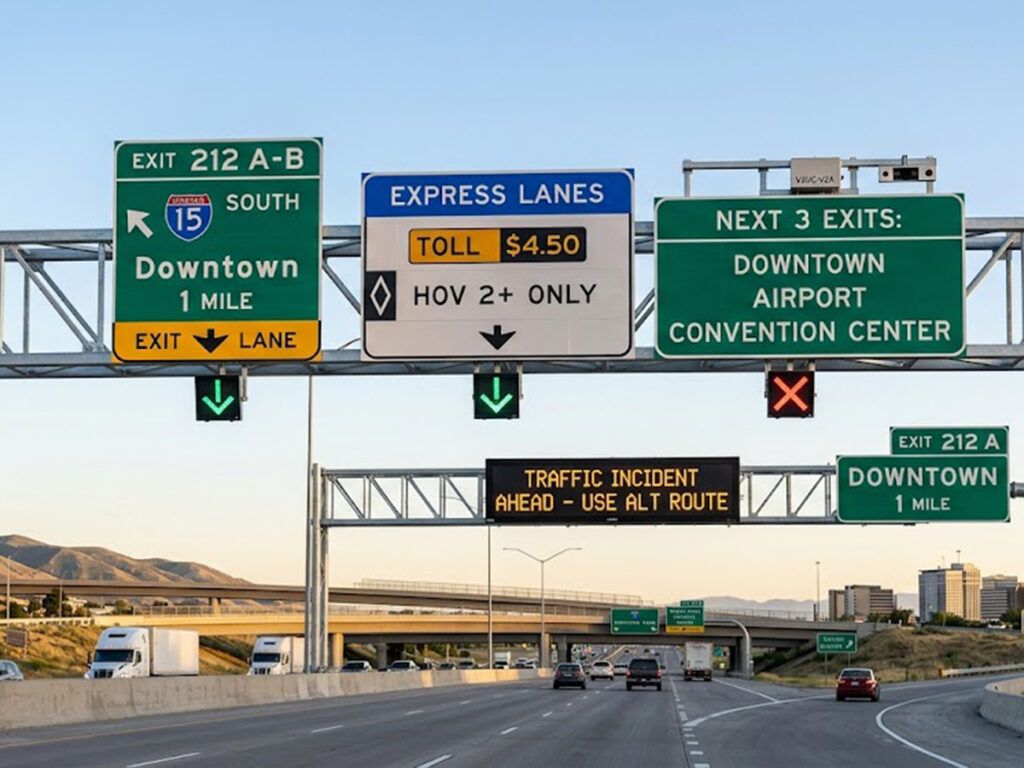
يعتمد قرار الشراء الأساسي - القنطرية أو الكابولية - على أربعة متغيرات مترابطة: طول المدى, إجمالي مساحة لوحة الإشارة, حق الطريق (صف) قيود, ومتطلبات حمل عمر الخدمة المتوقعة. يعد تحديد نوع البنية الخاطئة هو الخطأ الأكثر تكلفة في المواصفات عند شراء اللافتات العلوية, عادةً ما يتم إضافة 40.000 دولار - 120.000 دولار في إعادة التصميم, إعادة السماح, وتكاليف إعادة التصنيع لكل موقع التثبيت.
أنظمة الكابولي: المغلف الهيكلي والحدود
تم تحسين الهياكل الكابولية أحادية الصاري لتمتد إلى ما يصل إلى 20 أقدام من خط مركز الصاري ومساحات اللوحة لا تتجاوز 50 قدم مربع لكل قسم AASHTO LTS-6 3. فهي المواصفات الصحيحة ل:
- الطرق ذات المسار الواحد أو المسارين حيث يتطلب مسار سفر واحد فقط التوقيع في الأعلى
- المواقع ذات قيود ROW التي تمنع الأساسات ذات الأعمدة المزدوجة
- عمليات التثبيت حيث لا يتم التخطيط لتكامل DMS/VMS في المستقبل خلال فترة 10 سنوات
- التكلفة الإجمالية المقدرة للتركيب: $40,000 - $80,000 (2026 تسعير الوحدة, باستثناء إلكترونيات DMS)
يتم تقييد طول الذراع الكابولي بشكل مباشر بواسطة حمل الذراع الثاني على عمود الصاري. بطول ذراع كامل يبلغ 20 قدمًا مع أ 50 لوحة لافتة من الألومنيوم بطول قدم مربع (حمولة ميتة: ~ 100 رطل), تقترب لحظة الانحناء عند قاعدة الصاري من حد التصميم للجدول القياسي مقاس 12 بوصة 40 أعمدة الأنابيب الفولاذية المجلفنة في أ 90 منطقة التعرض للرياح ميلا في الساعة (ASCE 7-22, فئة التعرض ج).
أنظمة جسرية كاملة النطاق: التكوين والقدرة
تعتبر الهياكل العملاقة ذات الامتداد الكامل — سواء تكوينات الوتر الجمالوني أو الوتر الملتف — هي المواصفات الصحيحة للشرايين والطرق السريعة متعددة الحارات حيث يجب أن تمتد لوحات الإشارة على عرض الطريق بالكامل. العتبات الهندسية الرئيسية:
- نطاق الامتداد: 18 قدم ل 80 قدم بين خطوط الوسط العمود
- سعة مساحة اللوحة: 50-400+ قدم مربع, اعتمادا على عمق الجمالون وقسم الوتر
- تكامل DMS/VMS: قياسي - نوع الجمالون المفضل للحمولة الميتة الموزعة من خزانات DMS الثقيلة (8– 14 رطلاً / قدم مربع مقابل 14 رطلاً / قدم مربع. 2– 4 رطل / قدم مربع لألواح الألمنيوم الثابتة)
- التكلفة الإجمالية المقدرة للتركيب: $150,000 - $300,000+ (2026 تسعير الوحدة, فترة كاملة مع أسس مزدوجة, باستثناء الالكترونيات)
توفر تكوينات الجمالون الملحومة نسب صلابة إلى وزن فائقة للمسافات المذكورة أعلاه 45 قدم. تعتبر الجملونات ذات الوتر المدلفن فعالة من حيث التكلفة لمسافات تتراوح من 18 إلى 40 قدمًا حيث يكون الانحراف تحت الحمل الميت وحمل الرياح أقل أهمية. حدد الحد الأقصى للانحراف المسموح به في طلب تقديم العروض (توصي AASHTO LTS-6 باستخدام L/150 للإشارات الثابتة, L/200 لهياكل اللافتات الداعمة لوحدات DMS).
تكوينات مثبتة على الجسر وقوس اللفافة
عندما لا تكون أسس الأعمدة المنفصلة ممكنة - التقاطعات الحضرية, حقوق الطريق الضيقة, أو معابر التدفق - يتم تحديد أقواس اللافتات العلوية المثبتة على الجسر وفقًا لمذكرة سياسة FHWA FHWA-HNG-10 (2018). متطلبات المواصفات الحرجة: يجب مراجعة أحمال اللافتات المثبتة على قوس من قبل مهندس إنشاءات الجسر المسجل ويجب ألا تتجاوز بدل الحمل المباشر المسموح به للجسر. المناطق الزلزالية 3 و 4 بالإضافة إلى ذلك، يتطلب تصميم عزل الأقواس وفقًا لمواصفات دليل AASHTO للتصميم الزلزالي لجسور الطرق السريعة.
مواصفات أحمال الرياح والهيكل: توافق AASHTO LTS-6
آشتو LTS-6 (7الطبعة الرابعة, 2023) هو المعيار الحاكم لتصميم هيكل اللافتات العلوية على الإطلاق 50 الولايات والولايات المتحدة. المناطق. يجب على مسؤولي المشتريات التحقق من أن كل عطاء جهة تصنيع متأصل في أحكام تحميل LTS-6 - وليس محرفًا من جداول LTS-5 الأقدم, والتي تقلل من أهمية متطلبات التعب على وصلات الذراع الكابولية بنسبة تصل إلى 22% في بيئات الطرق السريعة ذات الدورة العالية.
فئات سرعة الرياح الأساسية وحمولة التعب
يحدد LTS-6 التصميم وفقًا لـ ASCE 7-22 خرائط سرعة الرياح. نقاط بيانات مواصفات المشتريات الرئيسية:
- فئة التعرض ج (التضاريس المفتوحة, الطرق السريعة في الضواحي): صمم ضغوط الرياح من 18 إلى 28 رطلًا لكل قدم مربع على لوحات اللافتات المسطحة بسرعة رياح أساسية تبلغ 90-115 ميلاً في الساعة
- فئة التعرض د (ساحلية, الواجهة البحرية): ضغط الرياح التصميمي 30-45 رطل لكل قدم مربع - يزيد من حمولة الفولاذ الهيكلي لكل خليج جسري بنسبة 25-40%
- التعب الفئة الأولى (الطريق السريع بين الولايات): يتطلب تحليل تساقط الدوامة والركض لكل قسم LTS-6 11; تحديد الأجهزة المثبط في طلب تقديم العروض
- معامل السحب (قرص مضغوط): علامات اللوحة المسطحة = 1.7; علامات الوجه كوة = 1.3; الألواح المثقبة = 0.8-1.2
علامة حمراء مهمة للمشتريات: يجب إعادة تقديم أي جهة مصنعة تقتبس الامتثال لحمل الرياح دون الإشارة بشكل صريح إلى فئة حمل التعب وتصنيف التعرض. لا تحدد سرعة الرياح وحدها الطلب الهيكلي - فعدد دورات الكلال وطيف الحمل محددان بشكل متساوٍ لعمر الخدمة الذي يبلغ 20 عامًا.
مواصفات أجهزة تخفيف الاهتزاز
تقرير NCHRP 469 (تصميم مقاوم للتعب للإشارة الكابولية, لافتة, ويدعم الضوء) يوفر الأساس لمواصفات أجهزة التخفيف. قم بتضمين هذه العناصر بشكل صريح في نطاق طلب تقديم العروض:
- مخمدات تبختر (نوع لزج): مطلوب للأسلحة الكابولية التي تتجاوز 14 قدم في بيئات التعب من الفئة الأولى والثانية
- أثقال الموازنة: تحديد نسبة الكتلة (كتلة الثقل الموازن/كتلة لوحة الإشارة) من 0.8-1.2 للتحكم في الركض بطرف الذراع الكابولي
- تستعد قطري: مطلوب لجميع الجمالون العملاقة التي تتجاوز 60 أقدام للتحكم في التأرجح خارج الطائرة تحت أحمال الرياح غير المتماثلة
مواصفات المواد: 2026 المعايير الهيكلية واللوحة
اختيار المواد الهيكلية لأنظمة الإشارات العلوية في 2026 يتم إعادة تشكيلها من خلال قوتين متقاربتين: الإدارة الفيدرالية للطرق السريعة (الهيئة الفيدرالية للطرق السريعة (FHWA).) إنفاذ أحكام Buy America المحدثة - والتي تتطلب وصول المنتجات المصنعة إلى 55% عتبة المحتوى المحلي مع انتهاء عملية التخلص التدريجي من الإعفاء بحلول أكتوبر 1, 2026- والاعتماد المتزايد للألواح المركبة HDPE (مصدر: https://www.crowell.com/en/insights/client-alerts/end-of-the-road-fhwa-rescinds-longstanding-buy-america-waiver-for-manufactured-products)
بينما ركزت مناقشات الصناعة السابقة على نسب المحتوى المعاد تدويره, تظل الأولوية التنظيمية الحالية هي موقع التصنيع المحلي ومصادر المواد. على الجانب الهيكلي, يقوم المهندسون بتقييم دورة حياة الألومنيوم بشكل متزايد مقابل الألواح المركبة HDPE كبديل أخف وزنًا للأذرع الكابولية لتقليل إجهاد الحمل الساكن. للحصول على تحليل أداء مباشر لهذه المواد أدناه 2026 معايير الامتثال, HDPE مقابل. علامات الطريق السريع الألومنيوم: مقارنة الأداء الفني يوفر بيانات دورة الحياة والتكلفة الأساسية التي تُعلم بشكل مباشر مواصفات لوحة اللافتات العلوية الحديثة.
الصلب الهيكلي: أعضاء العمود والوتر
الأعضاء الهيكلية الأساسية - الأعمدة, الحبال الجمالون, والدعامات القطرية - يتم تحديدها على أنها:
- ASTM A572 الصف 50 الفولاذ الهيكلي المجلفن: الحد الأدنى من قوة الخضوع 50 KSI; المجلفن بالغمس الساخن وفقًا لمعيار ASTM A123 (الحد الأدنى 3.0 أوقية / قدم مربع للأقسام الهيكلية)
- ASTM A500 الصف C جولة HSS: المعيار لأعمدة الصاري الكابولية (50 الحد الأدنى للعائد ksi)
- جمعيات مرساة الترباس: ASTM F1554 الصف 55 أو 105, اعتمادا على الطلب التوتر التصميم; حدد ما يعادل AASHTO M314 بلغة DOT الخاصة بالحالة
مواد لوحة التوقيع: الألومنيوم مقابل. مركب البولي إيثيلين عالي الكثافة
يعد اختيار مادة اللوحة في الهياكل العلوية في المقام الأول قرارًا لإدارة الأحمال الساكنة:
- 6061-ألومنيوم T6: 2– 4 رطل / قدم مربع; المواصفة القياسية للعلامات الإرشادية الثابتة, علامات تحذير متقدم, وجميع اللوحات العلوية التنظيمية; التصاق ممتاز للأغطية العاكسة
- الألواح المركبة HDPE: 1.4– 2.0 رطل/قدم مربع (30– أخف بنسبة 40% من الألومنيوم); 2026 البرامج التجريبية في 7+ الدول; تحديد الفاصل الزمني لمراجعة تثبيت الأشعة فوق البنفسجية 5 سنوات والتحقق من التوافق مع أنظمة لاصقة الأغطية العاكسة من النوع XI
إعادة عرض الأغطية: المتطلبات العامة المحددة
تتطلب ارتفاعات التركيب العلوية التي تتراوح من 18 إلى 25 قدمًا أداءً عاكسًا أعلى بكثير من اللافتات المثبتة على الأرض. حدد ASTM D4956 النوع IX أو النوع XI من الأغطية المنشورية العاكسة للضوء لجميع اللوحات العلوية. الحد الأدنى من معاملات الانعكاس (را) وفقًا لجدول MUTCD 2A-3 للعلامات الإرشادية العلوية: أسطورة بيضاء على خلفية خضراء — الحد الأدنى الأبيض 250 CD/Lux/M², الحد الأدنى الأخضر 15 CD/Lux/M². توفر الأغطية من النوع XI أداءً فائقًا متوافقًا مع ADAS وهي الأفضل 2026 معيار لمنشآت الممرات الجديدة.
الحماية من التآكل: مواصفات المناطق الساحلية والصناعية
للساحلية (فئة التعرض د) ومنشآت الممرات الصناعية:
- الجلفنة بالغمس الساخن وفقًا لمعيار ASTM A123 + طبقة مسحوق بوليستر TGIC فوق سطح مجلفن لخزائن اللافتات والأعضاء الثانوية
- طبقة إضافية من حاجز الإيبوكسي التمهيدي (2– 4 مليون DFT) للهياكل داخل 0.5 أميال من المسطحات المائية المالحة
- التحقق من صحة مقاومة رش الملح: أستم B117, اختبار لا يقل عن 1000 ساعة لمشتريات المناطق الساحلية; تحديدها كشرط تقديم إلزامي في طلب تقديم العروض
الامتثال التنظيمي لـ MUTCD وFHWA لتركيب اللافتات العلوية
MUTCD الجزء 2E يحكم التنسيب, التخليص, ومتطلبات الانعكاس الرجعي للعلامات الإرشادية العلوية على الطرق السريعة والطرق السريعة. للحصول على إطار عمل شامل للامتثال للتركيب يغطي أنظمة اللافتات العلوية والمثبتة على الأرض, انظر الهيئة الفيدرالية للطرق السريعة (FHWA). & متطلبات MUTCD لتركيب لافتة الطريق السريع المادة الكتلة. يسلط القسم التالي الضوء على الأحكام العامة المحددة التي تؤدي بشكل روتيني إلى فشل الامتثال في عمليات الشراء والتركيب.
متطلبات التخليص والتنسيب الجانبي
الحد الأدنى من الخلوصات الرأسية لكل MUTCD القسم 2E.47:
- الطرق السريعة الريفية والطرق السريعة: 17.5 قدماً من سطح الطريق إلى أدنى نقطة في لوحة الإشارة
- الطرق السريعة الحضرية (السرعة المنشورة 45 ميلا في الساعة +): 16.5 قدم الحد الأدنى من التخليص
- الشوارع الحضرية مع حركة مرور الشاحنات: 16.0 قدم الحد الأدنى; التحقق محليًا - تفرض العديد من DOTs الحكومية متطلبات أكثر صرامة
- الإزاحة الجانبية من حافة الطريق المقطوعة: يجب أن تحافظ الأعمدة العملاقة على خلوص لا يقل عن 6 أقدام من حافة حارة السفر; يجب أن يكون الحد الأدنى من الصواري الكابولية 4 قدم من شريط الحافة
الإضاءة والمواصفات الكهربائية
يجب أن تستوفي العلامات العلوية على الطرق السريعة المقسمة التي تخدم حركة المرور الليلية ذات الحجم الكبير معايير الصيانة الدنيا للانعكاس الرجعي MUTCD (برنامج قياس الانعكاس السنوي المطلوب بموجب 23 جزء CFR 655). لخزائن اللافتات العلوية المضاءة داخليًا:
- مقالة اللجنة الوطنية للانتخابات 600 الامتثال لجميع التوصيلات الكهربائية
- توجيه القناة داخل أقسام عمود HSS المجوفة: تحديد الحد الأدنى لقناة EMT للتشغيل الداخلي; قناة مجلفنة صلبة لأي أقسام قناة خارجية
- حماية دائرة GFI في القاعدة: مطلوب لجميع التركيبات العلوية المضيئة وDMS
- حماية الطفرة: إلزامي لإلكترونيات DMS/VMS - حدد IEEE C62.41 الفئة C لمنع زيادة التيار; يتم حذفها عادة من طلبات تقديم العروض وكثيرا ما تكون مصدر فشل الإلكترونيات
المدينة الذكية وتكامل ADAS: 2026 مواصفات الجاهزية الهيكلية
USDOT “إنقاذ الأرواح من خلال الاتصال” تقود المبادرة طرح V2X على مستوى البلاد, مع أهداف قصيرة المدى تهدف إلى التجهيز 20% للنظام الوطني للطرق السريعة (هيئة الخدمات الصحية الوطنية) مع اتصال قابل للتشغيل البيني عن طريق 2028 (مصدر: https://www.transportation.gov/briefing-room/usdot-releases-national-deployment-plan-vehicle-everything-v2x-technologies-reduce, https://www.infrainsightblog.com/usdots-recent-announcement-on-connected-vehicles-to-increase-roadway-safety). لموظفي المشتريات, وهذا يعني أن واحدًا تقريبًا من كل خمسة أميال من شبكة الطرق السريعة الفيدرالية مخصص لـ V2I (من مركبة إلى بنية) التكامل خلال هذا العقد.
تحديد التركيبات العملاقة والكابولية الجديدة في 2026 يقدم انتقادا, نافذة ضيقة لدمجها “جاهز للمستقبل” الأحكام - مثل قطرات الطاقة المخصصة, قناة التوصيل الخلفي, و رسو (وحدة جانب الطريق) أقواس التثبيت - بتكلفة هامشية تتراوح بين 1000 دولار و8000 دولار لكل هيكل أثناء التصنيع الأولي. في المقابل, انتظار تعديل هذه الهياكل بعد التثبيت يمكن أن يؤدي إلى ارتفاع التكاليف إلى 25000 دولار - 90000 دولار لكل موقع, خاصة عند الأخذ في الاعتبار التحكم في حركة المرور, عمالة متخصصة, والتعديلات الهيكلية المحتملة لأحمال المعدات الجديدة. بالمحاذاة 2026 المواصفات مع USDOT 5.9 معايير الطيف جيجا هرتز, يمكن للوكالات أن تتجنب النفقات الباهظة لعمليات التعديل التحديثي في المراحل المتأخرة مع دعم الهدف الوطني المتمثل في صفر وفيات على الطرق.
الأحكام الهيكلية لتركيب هوائي V2I وC-V2X
حدد الأحكام التالية لجميع هياكل اللافتات العلوية الجديدة في ممرات المركبات المتصلة:
- قناة مخصصة للسباق (2-بوصة الحد الأدنى لحجم التجارة) من فتحة القاعدة إلى نقطة تركيب الوتر
- لوحة تركيب مثقوبة مسبقًا (1/4-بوصة من الألومنيوم, 12 س 12 بوصة) ملحومة بالوتر العلوي في المنتصف لتركيب دعامة هوائي DSRC/C-V2X
- 120توفير دائرة مخصصة V/20A مع وعاء مقاوم للعوامل الجوية على مستوى الوتر العلوي للوحدة الموجودة على جانب الطريق (رسو) قوة
- بدل ميزانية الوزن: الحد الأدنى 15 رطل من سعة الحمولة الميتة المحجوزة لكل هوائي/مجموعة RSU في الحسابات الهيكلية
مواصفات وجه الإشارة المتوافقة مع ADAS
متطلبات اللافتات العلوية التي يمكن قراءتها آليًا للتعرف على المركبات ذاتية القيادة وشبه ذاتية القيادة (أنظمة SAE المستوى 2-4 ADAS) فرض متطلبات مواصفات إضافية تتجاوز الحد الأدنى من MUTCD:
- إعادة الانفعال: النوع الحادي عشر من الأغطية الحد الأدنى من RA 350 cd/lux/m² للأسطورة البيضاء (25% أعلى من الحد الأدنى MUTCD) لضمان اكتشاف موثوق لكاميرا ADAS على مسافة 200 متر
- التسامح مع تسطيح اللوحة: ±1/8 بوصة لكل قدم - وهو أمر بالغ الأهمية لدقة التعرف على الإشارات المستندة إلى الكاميرا; تحديد كمعيار قبول التصنيع
- الخط الاسطوري: FHWA Series E تم تعديل الحد الأدنى عند ارتفاعات الحروف العلوية القياسية; لا توجد خطوط مكثفة أو مخصصة دون موافقة FHWA
- إزالة منطقة الخلفية: حدود واضحة بحد أدنى 4 بوصات داخل حافة اللوحة, خالية من ظلال الأعضاء الهيكلية, لالتقاط رؤية الآلة دون عائق
علامة الرسالة الديناميكية (DMS) التكامل الهيكلي
تفرض وحدات DMS LED ذات المصفوفة الكاملة متطلبات هيكلية مختلفة بشكل كبير عن لوحات الإشارة الثابتة:
- حمولة ميتة لخزانة DMS: 8– 14 رطلاً / قدم مربع مقابل 14 رطلاً / قدم مربع. 2-4 رطل/قدم مربع للألمنيوم الثابت - قم دائمًا بإعادة حساب أحمال تصميم الوتر الجسري قبل تحديد تحديث DMS على الهياكل الحالية
- مواصفات الطاقة: الحد الأدنى 30A / 240V دائرة أحادية الطور لكل وحدة DMS قياسية; تحديد احتياطي UPS لمدة 4 ساعات كحد أدنى لتطبيقات الممرات ذات الأهمية الحيوية للسلامة لكل FHWA 2025 إرشادات مؤقتة بشأن مرونة طاقة DMS
- الشمسية + بطارية هجينة: الناشئة 2026 مواصفات التركيبات العملاقة الريفية خارج نطاق الشبكة - حدد الحد الأدنى من الاستقلالية لمدة 3 أيام في 25% دورة العمل لعرض رسائل VMS
كتابة مواصفات المشتريات: متطلبات طلب تقديم العروض لهياكل اللافتات العلوية
طلب تقديم العروض منظم جيدًا لـ علامات الطرق السريعة العلوية المخصصة يقلل من غموض العطاء, يضغط دورات مراجعة التقديم, وتنتج عطاءات قابلة للمقارنة حقًا. يجب أن تظهر العناصر الإلزامية التالية في كل حزمة شراء لهيكل اللافتات العلوية.
مراجع المعايير الإلزامية في المواصفات الفنية
قم بتضمين هذه المعايير بالرقم - وليس بالاسم فقط - في مواصفات المشتريات:
- آشتو LTS-6: المواصفات القياسية للدعائم الهيكلية لإشارات الطرق السريعة, الفوانيس, وإشارات المرور (7إد., 2023)
- ASCE 7-22: الحد الأدنى للأحمال التصميمية والمعايير المرتبطة بها للمباني والمنشآت الأخرى
- أستم A572 غرام. 50: المواصفات القياسية للفولاذ الإنشائي عالي القوة ومنخفض السبائك الكولومبيوم والفاناديوم
- أستم A123: المواصفات القياسية للزنك (تراجع الساخنة المجلفن) الطلاءات على منتجات الحديد والصلب
- ASTM D4956: المواصفات القياسية للألواح العاكسة للضوء للتحكم في حركة المرور
- أوس د1.1: كود اللحام الهيكلي – الصلب
- تقرير NCHRP 469: تصميم مقاوم للتعب للإشارة الكابولية, لافتة, ويدعم الضوء
تقديمات المصنع المطلوبة
حدد هذه التقديمات كشروط لقبول العطاء:
- رسومات تصنيع مختومة وموقعة من مؤسسة منشأة مرخصة في دولة المشروع
- مواصفات إجراءات اللحام (WPS) وسجلات تأهيل اللحام وفقًا لـ AWS D1.1
- شهادات المطحنة لجميع أعضاء الفولاذ الإنشائي (A572 غرام. 50 أو 500 غرام. ج حسب الاقتضاء)
- تقرير شهادة الجلفنة بالغمس الساخن وفقًا لمعيار ASTM A123 (قراءات سمك في 5 نقاط لكل عضو هيكلي)
- حزمة حساب حمل الرياح تشير إلى AASHTO LTS-6 وASCE 7-22 مع ذكر فئة التعب وتصنيف التعرض بشكل صريح
- اختبار قبول المصنع (سمين) تقرير لوحدات DMS/VMS: يشمل التوحيد LED, إخراج السطوع, والتحقق من بروتوكول الاتصالات
بروتوكول فحص القبول الميداني
حدد معايير القبول في طلب تقديم العروض - وليس كمفاوضات ما بعد التسليم:
- جودة اللحام: الفحص البصري وفقًا لجدول AWS D1.1 8.1; تحديد المستوى 2 فحص MT أو UT لجميع اللحامات CJP في توصيلات قاعدة الصاري
- سمك الجلفنة: قياس المقياس المغناطيسي, الحد الأدنى 3.0 أوقية / قدم مربع على الأعضاء الهيكلية, الحد الأدنى 2.0 أوقية / قدم مربع على الأجهزة
- مرساة عزم الدوران: تحقق من مواصفات التثبيت الخاصة بالشركة المصنعة لكل مسمار تثبيت; وثيقة مع سجلات وجع عزم الدوران معايرة
- فحص البقعة الانعكاسية: قراءة مقياس الانعكاس الرجعي المحمول وفقًا لمعيار ASTM E1709 على الأقل 10% من الألواح لكل دفعة شحنة
- تقديم الرسم المدمج: حالة الدفع النهائي; تحديد تنسيق التسليم (دوغ + قوات الدفاع الشعبي, مرجع جغرافي)
المقارنة الفنية: العملاقة مقابل. هياكل الإشارة العلوية الكابولية
| معلمة المواصفات | نظام ناتئ | نظام جسري كامل النطاق |
| نطاق النطاق النموذجي | حتى 20 قدم من الصاري CL | 18 قدم – 80 قدم (عمود إلى عمود) |
| مساحة اللوحة القصوى (آشتو LTS-6) | 50 قدم مربع لكل ذراع | 400+ قدم مربع (يعتمد عمق الجمالون) |
| 2026 التكلفة المثبتة (وحدة, السابق. الإلكترونيات) | $40,000 - $80,000 | $150,000 - $300,000+ |
| نوع الأساس | عمود محفور واحد أو قاعدة منتشرة | أعمدة محفورة مزدوجة أو قواعد منتشرة |
| بصمة الصف | منخفض - سارية واحدة, الحد الأدنى من تأثير ROW | عالي - تتطلب الأعمدة المزدوجة صفًا أوسع |
| تكامل DMS/VMS | محدود - تحقق من سعة التحميل الميتة أولاً | قياسي - يفضل الجمالون لأحمال DMS |
| التكوين الهيكلي | صاري HSS/WF بذراع واحد + ذراع ناتئ | وتر الجمالون الملحوم أو الجمالون المدلفن |
| المعيار الهيكلي الأساسي | آشتو LTS-6 ثانية. 3 & 11 | آشتو LTS-6 ثانية. 3, 4 & 11 |
| فئة التعب من حمل الرياح (عادي) | الفئة الأولى والثانية (دورة عالية) | الفئة الأولى (الطريق السريع/الطريق السريع) |
| مطلوب تخفيف الاهتزاز | نعم — مخمدات تبختر للأذرع >14 قدم | تستعد قطري للامتدادات >60 قدم |
| خيارات مادة اللوحة | الألومنيوم 6061-T6 أو مركب HDPE | الألومنيوم 6061-T6 (HDPE قابلة للحياة <50 لوحات قدم مربع) |
| ADAS / جاهزية V2I | تحديد القناة + أحكام لوحة جبل | تحديد قناة القناة + جبل الوتر العلوي |
| متطلبات المنطقة الزلزالية 3-4 | تصميم عزل القوس إذا تم تركيبه على الجسر | لوحات عزل قاعدة العمود; مراجعة PE |
| المهلة النموذجية (2026) | 10– 16 أسبوعًا (الفولاذ المجلفن القياسي) | 18– 28 أسبوعًا (جسر الرافعة المتكامل DMS) |
| المواصفات الأغطية العاكسة | ASTM D4956 النوع التاسع الحد الأدنى; النوع الحادي عشر لـ ADAS | ASTM D4956 النوع التاسع الحد الأدنى; النوع الحادي عشر لـ ADAS |
| توفير الكهرباء (DMS) | 30أ/240 فولت + 4-ساعة يو بي إس (إذا تم تحديد DMS) | 30أ/240 فولت لكل خليج DMS + 4-ساعة يو بي إس |
| توقعات الضمان (2026 سوق) | 5-سنة هيكلية / 10-صفائح سنة | 5-سنة هيكلية / 10-صفائح سنة |
الأسئلة المتداولة
س1: ما طول الامتداد الذي يؤدي إلى الحاجة إلى جسر جسري كامل الامتداد مقابل جسر جسري كامل الامتداد؟. ناتئ?
كعتبة عامة بموجب AASHTO LTS-6, تعتبر الأذرع الكابولية عملية من الناحية الهيكلية تقريبًا 20 قدم من خط الوسط الصاري و 50 قدم مربع من مساحة اللوحة. أبعد من هذه الحدود - أو عندما يجب أن يغطي التوقيع ثلاثة ممرات أو أكثر - فإن المواصفات الصحيحة هي القنطرة ذات العمود الواحد أو الجسر الكامل. قد تفرض المواصفات الإضافية الخاصة بوزارة النقل التابعة للدولة حدودًا أكثر صرامة; تحقق دائمًا من المواصفات القياسية للدولة المطبقة قبل الانتهاء من نوع الهيكل في طلب تقديم العروض.
Q2: هل يمكن تعديل هيكل جسر الرافعة الحالي لعلامة رسالة ديناميكية (DMS)?
نعم, ولكن فقط بعد إعادة تقييم الحمل الهيكلي رسميًا بواسطة مؤسسة منشأة مرخصة. حمولة ميتة لخزانة DMS (8– 14 رطل/قدم مربع) يمكن أن يكون أكبر بمقدار 3 إلى 5 مرات من لوحة اللافتات الثابتة التي تحل محلها. يجب أن تتحقق عملية إعادة التقييم من عمر الكلال المتبقي تحت الحمل الساكن المنقح, تأكيد مرساة الترباس وكفاية الأساس, وتوثيق متطلبات الترقية الكهربائية. ال 2026 يوفر برنامج البنية التحتية للمركبات المتصلة FHWA تمويلًا مشتركًا في التكلفة لمشاريع التعديل التحديثي على الممرات المؤهلة - تحقق من أهلية برنامج USDOT قبل إصدار طلب تقديم العروض.
س3: ما هي معايير ASTM وAASHTO التي يجب الرجوع إليها في طلب تقديم العروض الخاص بهيكل اللافتة العلوية?
على الأقل: آشتو LTS-6 (التصميم الهيكلي), أستم A572 غرام. 50 (الفولاذ الهيكلي), أستم A500 غرام. ج (أقسام إتش إس إس), أستم A123 (الساخنة ديب جلفنة), ASTM D4956 (الأغطية العاكسة), أوس د1.1 (لحام), وتقرير NCHRP 469 (تصميم التعب). مرجع ASCE 7-22 لتحديد حمل الرياح. المواصفات القياسية لوزارة النقل الحكومية تحل محل أو تكمل تلك المواصفات عندما تتعارض.
س 4: كيف تؤثر فئات التعرض للرياح على تكلفة هيكل اللافتات العلوية?
إلى حد كبير. الانتقال من ASCE 7-22 فئة التعرض ج (التضاريس المفتوحة القياسية) لفئة التعرض د (ساحلية) يمكن أن تزيد حمولة الفولاذ الهيكلي لكل خليج جسري بنسبة 25-40٪, مدفوعة بضغوط الرياح التصميمية الأعلى (30-45 رطل لكل قدم مربع مقابل. 18-28 رطل قدم مربع). يُترجم هذا إلى تكلفة تصنيع إضافية تتراوح بين 20,000 و60,000 دولار أمريكي لكل حجرة جسرية للهياكل كاملة الامتداد. حدد فئة العرض الصحيحة بشكل صريح في طلب تقديم العروض - ولا تترك الأمر لافتراضات الشركة المصنّعة.
س5: ما هي المهلة الزمنية النموذجية للشراء لهياكل اللافتات العملاقة المخصصة؟ 2026?
الهياكل الكابولية الفولاذية المجلفنة القياسية: 10-16 أسبوعًا من أمر الشراء إلى التسليم. هياكل عملاقة كاملة الامتداد: 14– 22 أسبوعًا. جسر الرافعة المتكامل DMS مع إلكترونيات كاملة: 18– 28 أسبوعًا. مذكرة سلسلة التوريد: استقرت فترات انتظار الفولاذ الهيكلي بعد عام 2024, لكن المكونات المتخصصة - مجموعات مسامير التثبيت المخصصة, لوحات قاعدة كبيرة فوق 2 بوصة سميكة, وإلكترونيات DMS - قد تضيف 4 إلى 8 أسابيع إلى الجدول الزمني. قم ببناء مهلة الشراء في الجدول الزمني للمشروع قبل إصدار طلب تقديم العروض, وليس بعد الجائزة.
س6: هل تمت الموافقة على مادة لوحة HDPE لتطبيقات اللافتات العلوية من قبل إدارة الغذاء والدواء الأمريكية (FHWA).?
لم تتم الموافقة على الألواح المركبة HDPE عالميًا بموجب المواصفات القياسية لإدارة الغذاء والدواء الأمريكية (FHWA) اعتبارًا من وقت مبكر 2026, ولكن مسموح بها بموجب البرامج التجريبية الخاصة بالولاية في 7+ الدول. يجب على مسؤولي المشتريات في مشاريع المساعدات الفيدرالية التحقق من أن أي مواصفات لوحة HDPE قد تلقت موافقة كتابية من مكتب قسم FHWA قبل تضمينها في طلب تقديم العروض. للمشاريع غير الفيدرالية, تحقق من قائمة الموافقة على مواد DOT المعمول بها في الولاية.
مراجع
- 1. آشتو LTS-6 (2023): المواصفات القياسية للدعائم الهيكلية لإشارات الطرق السريعة, الفوانيس, وإشارات المرور, 7الطبعة الرابعة. مسؤولي الطرق السريعة في الجمعية الأمريكية ونقلهم. store.transportation.org
- 2. FHWA MUTCD الجزء 2E (2023 طبعة): العلامات الإرشادية - الطرق السريعة والطرق السريعة. الإدارة الفيدرالية للطرق السريعة. mutcd.fhwa.dot.gov
- 3. ASCE 7-22: الحد الأدنى للأحمال التصميمية والمعايير المرتبطة بها للمباني والمنشآت الأخرى. الجمعية الأمريكية للمهندسين المدنيين. asce.org/publications-and-news/asce-7
- 4. تقرير NCHRP 469: تصميم مقاوم للتعب للإشارة الكابولية, لافتة, ويدعم الضوء. مجلس أبحاث النقل, الأكاديميات الوطنية للعلوم. nap.edu/catalog/10076
- 5. مذكرة سياسة الإدارة الفيدرالية للطرق السريعة FHWA-HNG-10 (2018): التوقيع على المرفقات لهياكل الجسور. الإدارة الفيدرالية للطرق السريعة. fhwa.dot.gov/bridge