التكلفة الخفية للممرات التجارية غير الآمنة
الوقوف غير المصرح به كمسؤولية ومخاطر العمليات
تؤدي المركبات غير المصرح بها المتوقفة في الممرات التجارية إلى حدوث حالات فشل تشغيلية متتالية. تعمل ممرات الوصول في حالات الطوارئ المحظورة على تأخير استجابة الحريق واستجابة EMS - وهو عامل تقريبًا 20% من وفيات الحرائق التي يمكن الوقاية منها في الولايات المتحدة. إدارة الحرائق (https://www.usfa.fema.gov/). تكلف اضطرابات التسليم الناجمة عن طرق التحميل المحظورة العقارات التجارية في المتوسط $1,200 لكل حادث في رسوم الشحن المعاد جدولتها, وفقًا لبيانات صناعة FreightWaves. تتصاعد شكاوى المستأجرين بسرعة عندما يتم عرقلة طرق وصول الضيوف والموظفين.
يمتد التعرض للمسؤولية إلى أبعد من ذلك. عندما تسد مواقف السيارات غير المصرح بها الطرق التي يمكن الوصول إليها أو الممرات المخصصة من قبل ADA, يواجه أصحاب العقارات إجراءات إنفاذ محتملة للمادة III ADA. سجلت وزارة العدل 4,800+ شكاوى إمكانية الوصول إلى ADA ضد العقارات التجارية في 2024 (https://www.ada.gov/topics/title-iii/). سليم الممر التجاري لا توجد علامات وقوف السيارات ليست ترقية تجميلية - فهي ضرورة لإدارة المخاطر.
لماذا تفشل اللافتات السكنية القياسية في البيئات التجارية
علامات كوروبلاست من الدرجة السكنية وألومنيوم رفيعة المقياس (0.040″) مشبك تحت حمولة الرياح, تتلاشى داخل 18 شهور, ولا تحمل أي تصنيف أداء انعكاسي. الممر التجاري لا توجد علامات وقوف السيارات تتطلب 0.080″ ألومنيوم عالي التحمل على الأقل - وهو مقياس يقاوم الانحناء نتيجة ملامسة باب السيارة والتخريب الجسدي المباشر. تفتقر اللافتات السكنية القياسية أيضًا إلى اللغة القانونية التي تتطلبها قوانين المركبات الحكومية للسماح بإجراءات التنفيذ. إن نشر اللافتات دون المستوى المطلوب يعرض مديري العقارات لنزاعات القطر المتنازع عليها والمسؤولية المدنية المحتملة.
الأطر القانونية التي تسمح بإنفاذ إجراءات سحب الممرات التجارية
رموز المركبات الحكومية وما هي العلامات التي يجب عرضها
السلطة القانونية للسحب من الممتلكات التجارية الخاصة مستمدة من قوانين المركبات الحكومية, وليس القانون العام. رمز مركبة كاليفورنيا § 22658 - أحد الأطر الأكثر مرجعية - ينص على ضرورة وضع علامات السحب عند كل مدخل للممر, عرض
اسم شركة القطر المعتمدة ورقم الهاتف المتاح على مدار 24 ساعة, ولاية “منطقة يمتنع ايقاف المركبات بها لعدم قطرها إلى مرفأ السيارات المخالفة” صراحة, وتلبية الحد الأدنى للحجم 17″ × 22″. الممر التجاري لا توجد علامات وقوف السيارات عادة ما تتجاوز هذا في 18″ × 24″ لضمان وضوح الطريق.
مديري العقارات في تكساس, فلوريدا, وتواجه الولايات الأخرى ذات الكثافة السكانية العالية متطلبات موازية. يلخص الجدول أدناه تفويضات التوقيع الرئيسية عبر ثلاث ولايات قضائية رئيسية.
| ولاية | النظام الأساسي | متطلبات علامة المفتاح |
| كاليفورنيا | رمز المركبة § 22658 | اسم شركة السحب + 24-هاتف ساعة, 17″×22″ دقيقة |
| تكساس | رمز النقل § 2308 | لغة السحب, إذن مالك العقار |
| فلوريدا | النظام الأساسي § 715.07 | التوقيع عند كل مدخل, مطلوب إشعار السحب |
مصادر: كاليفورنيا DMV, تكساس دي بي اس, فلوريدا DHSMV
تعمل سجلات اللافتات كدليل مادي عند الطعن في دعاوى السحب في محكمة المطالبات الصغيرة. تؤيد المحاكم باستمرار القطر حيث الممر التجاري لا توجد علامات وقوف السيارات تم تثبيتها بشكل صحيح, الامتثال للقانون, ويتم توثيقها في سجلات صيانة الممتلكات.
اعتبارات MUTCD وADA عند مداخل الممرات
تحدد معايير التوقيع MUTCD R7-1 وR7-2 متطلبات اللون الأساسي الفيدرالي ومتطلبات الانعكاس الرجعي للعلامات التنظيمية التي تمنع وقوف السيارات. يجب أن تتم محاذاة العقارات ذات الممرات التي يتم الوصول إليها من الطرق العامة الممر التجاري لا توجد علامات وقوف السيارات بهذه المواصفات لتحمل التدقيق القانوني. يجب أن تتجنب اللافتات الموضوعة بالقرب من ممرات انتظار السيارات التي يمكن الوصول إليها التداخل البصري مع علامات تحديد الطريق الخاصة بـ ADA - وهو تمييز يتم تناوله بشكل منفصل في عمليات تدقيق الامتثال.
معايير المواد الخاصة بلافتات الممرات التجارية شديدة التحمل
سمك مقياس الألومنيوم و 0.080″ الحد الأدنى التجاري
سمك المقياس يحدد بشكل مباشر طول عمر الإشارة ومقاومة التخريب. المقارنة أدناه توضح السبب الممر التجاري لا توجد علامات وقوف السيارات الطلب 0.080″ الألومنيوم الثقيل كالحد الأدنى من المواصفات.
- 0.040″ الألومنيوم: الاستخدام السكني فقط. ينحني تحت الضغط المباشر. لا ينصح به للمحيطات التجارية.
- 0.063″ الألومنيوم: تجاري خفيف. مناسبة لهياكل مواقف السيارات الداخلية مع الحد الأدنى من التعرض للطقس.
- 0.080″ الألومنيوم الثقيلة: مطلوب للممرات التجارية. يقاوم رفع الرياح, تأثير باب السيارة, والضربات المباشرة من الحطام.
يعمل المقياس الأثقل أيضًا على تحسين صلابة ما بعد التثبيت عندما يتم تركيب قناة U في مناطق الرياح العاتية - وهو عامل مهم بالنسبة للعقارات التجارية الساحلية والغرب الأوسط الخاضعة لـ ASCE 7-22 متطلبات حمل الرياح.
درجات الصفائح العاكسة - ASTM D4956 النوع الأول مقابل. النوع الرابع
الانعكاسية الرجعية تحدد مدى نجاحها الممر التجاري لا توجد علامات وقوف السيارات أداء ليلا تحت المصابيح الأمامية للسيارة. ASTM D4956 هو المعيار الحاكم. يقارن الجدول أدناه الدرجات الرئيسية الثلاثة ذات الصلة بتطبيقات الممرات التجارية.
| الصف الأغطية | نوع ASTM D4956 | إعادة الانفعال | أفضل تطبيق |
| الصف المهندس | النوع الأول | ~70 شمعة/لتر/م² | ممرات داخلية منخفضة الحركة |
| المنشورية عالية الكثافة | النوع الرابع | ~300 شمعة/لتر/م² | تقترب سرعة الشارع, الطرق الشريانية |
| درجة الماس | النوع الحادي عشر | ~700 شمعة/لتر/م² | عالية السرعة, هندسات معقدة |
مصدر: ASTM D4956-21 المواصفات القياسية للألواح العاكسة للضوء للتحكم في حركة المرور
للممرات التي يتم الوصول إليها من الطرق الشريانية أو المجمعة, توفر الصفائح المنشورية عالية الكثافة من النوع الرابع أربعة أضعاف السطوع الانعكاسي من الدرجة الهندسية من النوع الأول. 3M الأغطية المنشورية عالية الكثافة (3سلسلة منتجات M 3930) يحمل ضمانًا لمدة 10 سنوات ضد فشل الأغطية في ظل ظروف التعرض الخارجية القياسية. تحافظ الطلاءات المقاومة للأشعة فوق البنفسجية على الأغطية المعتمدة على سلامة وجه الإشارة 7+ سنوات دون أن يتلاشى اللون بشكل كبير.
تراكبات مضادة للكتابة على الجدران وطلاءات سطحية مقاومة للتخريب
تواجه الممرات التجارية الحضرية أضرارًا مستمرة بالكتابة على الجدران. تعمل الطبقات المصفحة المقاومة للضغط والمضادة للكتابة على الجدران على حماية الوجه العاكس للضوء, مما يسمح بإزالة الكتابة على الجدران باستخدام المذيبات دون التأثير على أداء الأغطية. تتفوق طبقات البوليستر المستقرة للأشعة فوق البنفسجية على بدائل البولي بروبيلين في التعرض الخارجي الممتد. يمكن أن تكلف عملية استبدال اللافتة الواحدة في ممر شديد التخريب ما بين 85 إلى 200 دولار; تراكب محمي الممر التجاري لا توجد علامات وقوف السيارات إطالة عمر الخدمة بمقدار 3 إلى 5 سنوات وفقًا لتوجيهات إدارة الإشارات الصادرة عن الإدارة الفيدرالية للطرق السريعة (FHWA).
حجم اللافتة ومتطلبات التصميم المرئي
الحد الأدنى 18″ × 24″ لنهج الممرات ذات السرعة في الشارع
تعتمد وضوح الإشارة عند اقتراب الممرات التجارية على ارتفاع الحرف وسرعة اقتراب السائق. باستخدام إرشادات وضوح MUTCD - حوالي 40-50 قدمًا من المسافة المقروءة لكل بوصة من ارتفاع الحرف - 18″ × 24″ تحقق اللافتة التي تحتوي على حروف مقاس 3 بوصات مسافة وضوح تبلغ 120-150 قدمًا. تتطلب الممرات التجارية التي تقترب بسرعة 15-25 ميلاً في الساعة الحد الأدنى من المسافة التي يمكن للسائق أن يقرأها ويستجيب لها.
الممرات بسرعات اقتراب أعلى 25 ميلا في الساعة, أو تلك ذات المداخل ذات الزوايا الحادة التي تقلل من خطوط الرؤية الفعالة, مطلوب 24″ × 30″ علامات ممنوع وقوف السيارات في الممر التجاري. يعد تقليل الحجم هو الخطأ الأكثر شيوعًا في شراء اللافتات التجارية والسبب الرئيسي لفشل تنفيذ السحب.
تباين اللون الأحمر والأبيض مع رمز السحب العالمي
يتوافق التباين الأحمر والأبيض مع إرشادات الألوان MUTCD الخاصة بعلامات الحظر التنظيمية. تقييد الإشارات الحمراء عبر جميع معايير تدريب السائقين الرئيسية في أمريكا الشمالية. يزيد الرسم التخطيطي لشاحنة السحب العالمية من الفهم للسائقين الذين لا يجيدون القراءة باللغة الإنجليزية - وهو أمر مهم للممرات التجارية في الأسواق الحضرية عالية التنوع.
أفضل الممارسات الممر التجاري لا توجد علامات وقوف السيارات تضمين عنوان العقار, اسم مشغل السحب المعتمد, ورقم الاتصال على مدار 24 ساعة مباشرة على وجه اللافتة. يلبي هذا متطلبات ترخيص السحب الخاصة بـ California VC § 22658 ويوفر لمديري العقارات مسارًا ورقيًا يمكن الدفاع عنه في حالة الاعتراض على التنفيذ.
أنظمة الدعم وأجهزة التثبيت للدفاع الدائم عن المحيط
تركيب عمود فولاذي على شكل U - الارتفاع, عمق, والامتثال الانفصالي
الممر التجاري لا توجد علامات وقوف السيارات تتطلب التركيب مع وضع الجزء السفلي من اللافتة على ارتفاع 5-7 أقدام فوق الدرجة النهائية. يلبي نطاق الارتفاع هذا إرشادات الارتفاع MUTCD لتطبيقات الملكية الخاصة على الطرق الوعرة ويضمن خط رؤية السائق دون عائق فوق المناظر الطبيعية والمركبات المتوقفة.
يتطلب تضمين منشور قناة U حدًا أدنى من 30 بوصة تحت الدرجة في التربة المضغوطة القياسية, و 36 بوصة في حشوة فضفاضة أو رملية. تواجه العقارات ذات الممرات المتاخمة لحقوق الطريق العامة متطلبات إضافية: AASHTO تصميم آخر الانفصالي. تعمل أنظمة القاعدة المنزلقة أو قاعدة الكسر على تقليل مخاطر إصابة الركاب عندما تصطدم السيارة بعمود على جانب الطريق - وهو متطلب في معظم سياسات المنطقة الواضحة التابعة لوزارة النقل المعمول بها داخل الولاية 30 أقدام الطريق المسافر
التركيب المباشر على الجدار والسياج الحجري للعقارات الحضرية
يؤدي التثبيت على الحائط أو السياج إلى التخلص من التعرض لصدمة السيارة ويقلل من تكلفة الصيانة على المدى الطويل. أجهزة مقاومة للتلاعب — مسامير أمان أحادية الاتجاه وصواميل سداسية مضادة للتلاعب — تمنع إزالة اللافتات غير المصرح بها. يحدد اختيار الركيزة البناء نوع المرساة:
- كتلة جامعة كارنيجي ميلون: المراسي الأكمام الزنك, 3/8″ الحد الأدنى للقطر, 2.5″ عمق التضمين.
- صب الخرسانة: إسفين المراسي, 3/8″ قطر, 1.75″ الحد الأدنى من التضمين لكل تقييمات انسحاب الشركة المصنعة.
- قشرة الطوب: من خلال الترباس إلى الدعم الهيكلي; المراسي السطحية فقط ليست مناسبة.
الجميع الممر التجاري لا توجد علامات وقوف السيارات أكبر من 24″ × 30″ تتطلب التثبيت من أربع نقاط. يؤدي التثبيت من نقطتين على اللافتات كبيرة الحجم إلى إنشاء إجهاد القص عند نقاط التثبيت ويزيد من خطر الفشل تحت حمل الرياح.
تعظيم الرؤية في الزوايا العمياء والمداخل ذات حركة المرور العالية
تتطلب مداخل الممر بزاوية تسعين درجة وجود علامات ثانوية مثبتة على وجه الاقتراب المتعامد - لا يمكن للسائق الذي ينعطف إلى الممر رؤية لافتة موضوعة موازية للطريق. تعمل الأعمدة المحددة العاكسة للضوء جنبًا إلى جنب مع أعمدة اللافتات على تحسين رؤية حافة الممر ليلاً بأقل تكلفة إضافية. تستفيد مداخل المرآب المغطاة وممرات هيكل مواقف السيارات مع عدم كفاية الإضاءة المحيطة للانعكاس الرجعي السلبي من خزائن اللافتات ذات الإضاءة الخلفية LED أو لوحات اللافتات المضيئة داخليًا.
استراتيجية التنسيب - كم عدد اللافتات ومكان التثبيت
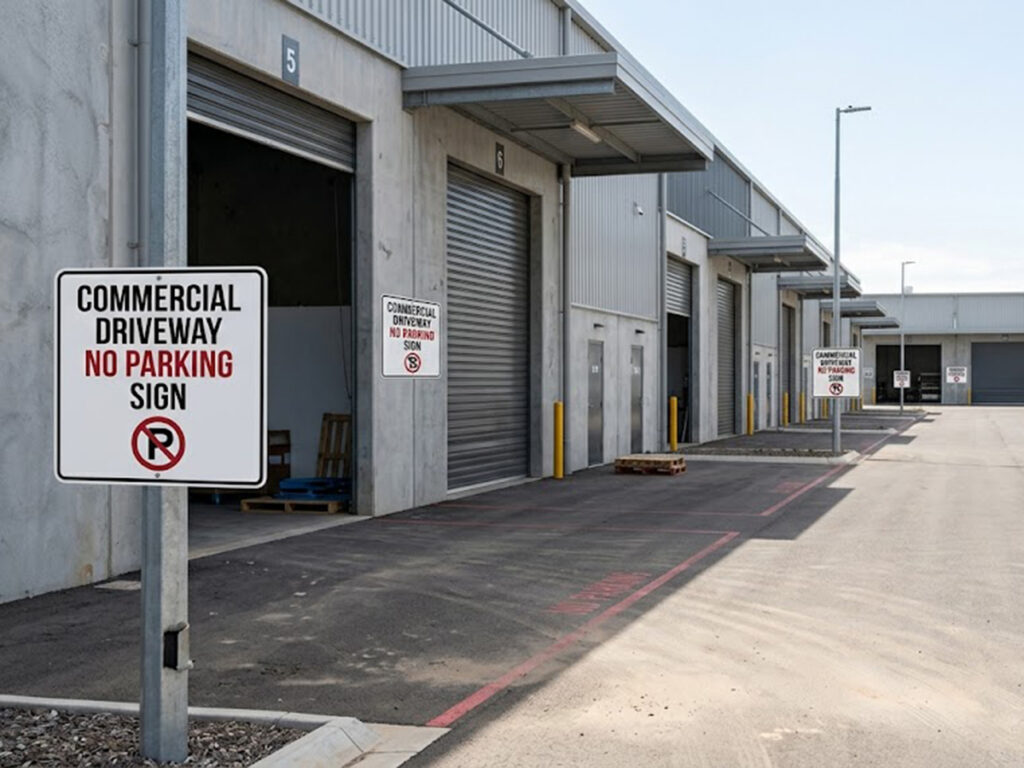
تغطية المدخل وقاعدة التكرار 50-100 قدم
يتطلب كل مدخل ونقطة خروج في الممر, على الأقل, ممر تجاري واحد لا توجد لافتة وقوف السيارات في كل حارة. الممرات التجارية الطويلة تتجاوز 100 تتطلب الأقدام تكرار اللافتات كل 50-100 قدم على طول المحيط. التكرار ليس زائدا عن الحاجة - فهو يزيل “لم أر ذلك” الدفاع في إجراءات نزاع القطر ويفي بمتطلبات إشعار الدولة بأن تكون العلامات مرئية من جميع مسارات الاقتراب العملية للمركبة.
عقارات ذات نقاط وصول متعددة – بوابات جانبية, مداخل الخدمة, محركات الأقراص المخصصة للموظفين فقط - تتطلب وجود لافتات مستقلة في كل منها. لا توفر علامة الدخول الواحدة تغطية قانونية عبر محيط كامل في معظم الأطر القانونية للقطر في الولاية.
للتحكم المؤقت في المحيط المرتبط بالأحداث أو قيود الوصول قصيرة المدى, يمكن لمديري العقارات مراجعة خيارات نشر لافتات الممرات قصيرة المدى بسرعة دليل لوضع علامات ممنوع وقوف السيارات المؤقتة.
كثافة الإشارة المحيطية للعقارات التجارية الكبيرة
تتطلب الحرم الجامعية التجارية الكبيرة والساحات السطحية ممرًا تجاريًا واحدًا بدون إشارة لوقوف السيارات لكل منها 75 أقدام خطية من محيط الوصول. ينبغي لمدير الأمن الذي يدير محيطًا يمكن الوصول إليه بطول 400 قدم أن يخطط لخمس إلى ست علامات كخط أساسي. المناطق عالية الخطورة - مناطق وقوف السيارات الليلية, ممرات نافذة وقت التسليم, قطاعات تجاوز الحدث - تضمن فترات زمنية أكثر صرامة.
لافتات الممرات التجارية المخصصة — العلامات التجارية, النص القانوني, والمشتريات
ما هي عناصر النص المخصصة المطلوبة للقطر القانوني
فعال الممر التجاري لا توجد علامات وقوف السيارات تتطلب أكثر من المعيار “ممنوع الوقوف” نص. العناصر التالية ترضي California VC § 22658 ومعادلاتها الهيكلية في معظم الدول الأخرى:
- “ممنوع ركن السيارات - منطقة السحب” اللغة على وجه الإشارة.
- عنوان العقار أو معرف موقع الممر المحدد.
- اسم شركة السحب المعتمدة ورقم الهاتف على مدار 24 ساعة.
- ساعات التنفيذ, إذا كان القطر مقيدًا بالوقت.
إن إضافة رمز الاستجابة السريعة الذي يرتبط بصفحة سياسة القطر الخاصة بالعقار يوفر للسائقين إمكانية الوصول الفوري إلى معلومات حل النزاع - وهي ممارسة تقلل من حوادث المواجهة عند نقطة التنفيذ.
اعتبارات الشراء بالجملة للمحافظ العقارية المتعددة
يجب على شركات إدارة العقارات التي تشرف على أصول تجارية متعددة توحيد المعايير في قالب إشارة واحد في جميع المواقع. تعمل اللغة القانونية المتسقة ودرجة الأغطية على تقليل تكلفة الشراء لكل وحدة, تبسيط التدريب على التثبيت لأطقم الصيانة, والتأكد من توثيق الامتثال الموحد. أوامر الحجم 12 أو أكثر الممر التجاري لا توجد علامات وقوف السيارات عادةً ما يتم توفير توفير لكل وحدة بنسبة 15-25% والسماح بلوحات بصمة مخصصة محددة مسبقًا للطلبات المتكررة. تتطلب لافتات الألمنيوم العاكسة المطبوعة خصيصًا فترة زمنية تتراوح من 5 إلى 10 أيام عمل - مهلة قياسية للإنتاج - خطة الشراء المتعلقة بتجديدات عقد الإيجار, عمليات تدقيق أمن المرافق, أو مراجعات الامتثال الموسمية.
دمج لافتات الممرات في نظام إنفاذ أوسع للمنشأة
كيف تعمل لافتات الممر جنبًا إلى جنب مع لافتات المنطقة الداخلية
الممر التجاري لا توجد علامات وقوف السيارات تعمل بمثابة خط الردع الأول - فهي تمنع المركبات غير المصرح بها من دخول محيط الممتلكات. علامات المنطقة الداخلية (المساحات المحجوزة, مواقف سيارات يمكن الوصول إليها, المناطق الزمنية) إدارة السلوك بمجرد وجود السيارة في الموقع. ويجب تصميم الطبقتين معًا لإزالة فجوات التنفيذ. الملكية التي تحتوي على لافتات داخلية قوية ولكن مداخل الممرات غير المميزة لا تزال تدعو إلى الدخول غير المصرح به بالسيارة والجلوس القرفصاء طوال الليل.
تحمل الممرات التي تعمل بمثابة طرق وصول إلى أجهزة الطوارئ متطلبات إضافية للإشارة بموجب NFPA 1 وقسم مؤسسة التمويل الدولية 503. يجب على مديري العقارات مراجعة حارة النار لا متطلبات نشر علامة وقوف السيارات لضمان الامتثال عند مداخل الممرات التي تتضاعف كممرات للوصول إلى الحرائق.
متى يجب إجراء تدقيق اللافتات قبل الشراء بالجملة
يجب أن يسبق تدقيق لافتات إنفاذ مواقف السيارات أي ممر تجاري كبير، ولا يوجد أمر بوضع علامة على مواقف السيارات في العقارات ذات تخطيطات الوصول المعقدة, حقوق الارتفاق المشتركة, أو ممرات الوصول إلى المرافق. أساسيات قائمة التدقيق:
- مخزون التوقيع الحالي: عمر, فئة الانعكاس, الحالة الجسدية.
- سحب عملة العقد: تأكد من أن اسم المشغل المعتمد ورقم الهاتف الموجود على اللافتات الموجودة لا يزال صالحًا.
- مراجعة تحديث النظام الأساسي للدولة: كاليفورنيا في سي § 22658 تم تعديله في 2022 - يتم تحديث قوانين القطر بشكل دوري.
- ADA تصريح مسار السفر: تأكد من عدم وجود علامات تعيق الالتزام بمسار الوصول.
للحصول على إطار عمل كامل يغطي جميع فئات لافتات إنفاذ مواقف السيارات عبر العقارات التجارية, ال دليل لافتات إنفاذ مواقف السيارات التجارية يوفر خارطة طريق منظمة للتدقيق والمشتريات لمديري أمن المنشآت ومديري العقارات.
الأسئلة المتداولة - الممر التجاري لا توجد لافتات لوقوف السيارات
ما هو الحد الأدنى لحجم لافتة السحب للممر التجاري?
للممرات التجارية التي يتم الوصول إليها بسرعات الشارع, 18″ × 24″ هو الحد الأدنى لمعايير الصناعة. يحقق هذا الحجم مسافة وضوح تبلغ 120-150 قدمًا مع حروف مقاس 3 بوصات. يجب ترقية الخصائص ذات سرعات الاقتراب الأعلى أو خطوط الرؤية المعيقة إلى 24″ × 30″. كاليفورنيا في سي § 22658 يحدد 17″ × 22″ الحد الأدنى القانوني لترخيص السحب — عادةً ما تتجاوز المنشآت التجارية هذا الحد.
ما هي درجة الأغطية العاكسة للضوء التي تتطلبها الممرات التجارية والتي لا تتطلب علامات وقوف السيارات?
ASTM D4956 Type I Engineer Grade هو الحد الأدنى للممرات الداخلية ذات حركة المرور المنخفضة. تتطلب الممرات التي يتم الوصول إليها من الطرق الشريانية أو من خلال التعرض لمواقف السيارات غير المصرح بها ليلاً، استخدام منشوري عالي الكثافة من النوع الرابع, والذي يوفر ما يقرب من أربعة أضعاف السطوع الانعكاسي من النوع الأول تحت المصابيح الأمامية للسيارة.
كم عدد علامات عدم وقوف السيارات الكافية قانونيًا لدعم إجراء إنفاذ السحب?
لا يوجد معيار فيدرالي واحد, ولكن أفضل الممارسات المعتمدة على نطاق واسع - بما يتوافق مع California VC § 22658 وأطر الدولة المماثلة – تتطلب وجود علامات عند كل نقطة دخول للممر, يتكرر كل 50-100 قدم على طول المقاطع المحيطة التي يمكن الوصول إليها. تؤيد المحاكم عملية القطر حيث تكون اللافتات مرئية من جميع مسارات اقتراب المركبات العملية. فجوات التغطية هي الأساس الأساسي لنجاح منازعات القطر.
ما هي الأجهزة التي تمنع سرقة أو تخريب لافتات الممرات التجارية?
تمنع مسامير الأمان أحادية الاتجاه المقاومة للعبث في جميع نقاط التثبيت الإزالة بدون أدوات متخصصة. مثبتات إسفينية من الزنك وصواميل سداسية مضادة للعبث تعمل على تأمين الجدار أو اللافتات المثبتة على السياج على ركائز البناء. تعمل التراكبات المصفحة المضادة للكتابة على الجدران على حماية وجه اللافتة. في البيئات عالية التخريب, تقوم أقواس التثبيت الملحومة بتثبيت العلامات بشكل دائم على هياكل النشر.
هل عام “ممنوع الوقوف” قم بالتوقيع على الترخيص القانوني بالقطر من طريق تجاري?
في معظم الولايات, لا. كاليفورنيا في سي § 22658, قانون النقل في تكساس § 2308, وقانون فلوريدا § 715.07 كلها تتطلب صريحة “منطقة يمتنع ايقاف المركبات بها لعدم قطرها إلى مرفأ السيارات المخالفة” اللغة بالإضافة إلى اسم مشغل السحب المعتمد ورقم الاتصال على مدار 24 ساعة. لا توجد علامات عامة لوقوف السيارات تحذف هذه المعلومات تعرض أصحاب العقارات للمسؤولية المدنية في حالة الاعتراض على السحب. مخصص الممر التجاري لا توجد علامات وقوف السيارات مع النص المتوافق مع الولاية القضائية هي معيار الشراء المناسب لأي ملكية تبدأ في التنفيذ النشط.
مراجع
- نحن. إدارة الإطفاء — الاستجابة للحريق وحواجز الوصول
- نحن. وزارة العدل — ADA الباب الثالث إحصاءات التنفيذ 2024
- ASTM D4956-21 المواصفات القياسية للألواح العاكسة للضوء للتحكم في حركة المرور
- FHWA قم بتوقيع دليل إدارة الانعكاس الرجعي
- ASCE 7-22 الحد الأدنى من أحمال التصميم للمباني والمنشآت الأخرى
- دليل سياسة الأجهزة على جانب الطريق FHWA (المشاركات الانفصالية)
- كاليفورنيا DMV — رمز المركبة § 22658 سحب الملكية الخاصة
- تكساس DPS — رمز النقل § 2308 لوائح القطر
- فلوريدا DHSMV — النظام الأساسي § 715.07 متطلبات السحب
- موجات الشحن — تحليل تكلفة انقطاع التسليم التجاري