إن منع وصول أجهزة الإطفاء إلى الطريق يكلف الأرواح. عندما تصل شركة محركات محملة إلى منشأة تجارية وتجد مركبات تسد ممر الطوارئ, تؤدي الاستجابة المتأخرة للقمع إلى تفاقم الأضرار الهيكلية وتهدد بقاء الركاب. ال حارة النار لا توجد علامة وقوف السيارات هو خط الدفاع الأول ضد هذه النتيجة - ولكن فقط عندما يتم نشره وفقًا للمواصفات التنظيمية الدقيقة.
يوفر هذا الدليل الأبعاد, إعادة الانفعال, ومعايير التنفيذ التي وضعها مديرو البيئة والصحة والسلامة في الشركات, مدراء سلامة المرافق, ويجب على المديرين التنفيذيين لإدارة المخاطر التنفيذ لتحقيق الامتثال الكامل لقانون الحرائق الدولي (IFC) قسم 503, NFPA 1 الفصل 18, و ASTM D4956. كل المواصفات المذكورة هنا ترتبط مباشرة بعنصر قائمة فحص فحص رجال الإطفاء.
الهيكل التنظيمي الذي يحكم التزامات وضع علامات على حارات الحريق
يوجد رمزان نموذجيان يحددان الإطار القانوني للافتات حارات الحريق في الولايات المتحدة: قسم مؤسسة التمويل الدولية 503 و NFPA 1 الفصل 18. يتم اعتماد كلا القانونين على مستوى الولاية - مع تعديلات في كثير من الأحيان - ثم يتم إنفاذهما محليًا من قبل الهيئة ذات الاختصاص القضائي (AHJ). إن فهم الكود الذي يحكم منشأة معينة يحدد مواصفات اللافتة التي تنطبق.
مؤسسة التمويل الدولية, نشره مجلس الكود الدولي, يفرض على أجهزة الإطفاء الوصول إلى أبعاد الطريق, نصف قطر الدوران, وضرورة وضع لافتات ممنوع وقوف السيارات في حارة الحريق في أي مكان قد يعيق الوصول إليه بسبب وقوف السيارات غير المصرح به. NFPA 1, نشرته الجمعية الوطنية للحماية من الحرائق, يوفر متطلبات موازية تتعايش في كثير من الأحيان مع مؤسسة التمويل الدولية في الدول التي تستخدم نموذج الاعتماد المقسم. في 2024, 43 تبنت الدول نسخة ما من مؤسسة التمويل الدولية, بينما 27 حافظت الدول على NFPA مستقل أو مختلط 1 هياكل التبني. (مصدر: مجلس الكود الدولي, خريطة اعتماد الدولة, 2024)
قسم مؤسسة التمويل الدولية 503 — الوصول إلى تفويضات أبعاد الطريق واللافتات
قسم مؤسسة التمويل الدولية 503.3 يتطلب من جميع طرق الوصول إلى أجهزة الإطفاء الحفاظ على الحد الأدنى من العرض دون عائق 20 قدم وارتفاع واضح 13 قدم 6 بوصة. قسم 503.3.1 يثير إلزامية حارة النار لا توجد علامة وقوف السيارات النشر حيثما يقرر AHJ أن ركن السيارة من شأنه أن يقلل من عرض السفر الفعلي أدناه 20 قدم. يحتفظ AHJ بالسلطة التقديرية الكاملة بموجب القسم 503.1.1 لفرض معايير أبعاد أكثر صرامة مما يتطلبه نص الكود الأساسي.
قبل شراء أي حارة النار لا توجد علامة وقوف السيارات جرد, يجب على فرق البيئة والصحة والسلامة تقديم خطة طريق للوصول إلى أجهزة الإطفاء إلى AHJ للمراجعة الرسمية والموافقة الكتابية. المرافق التي تتجاوز مراجعة الخطة لا تحمل أي حماية إدارية في إجراءات المسؤولية بعد الحادث.
NFPA 1 الفصل 18 — التداخل التشغيلي وصراعات التبني على مستوى الدولة
NFPA 1 الفصل 18 يحدد فترات نشر علامة, ارتفاعات التركيب, ووضع علامات على متطلبات الاستمرارية التي تتعارض أحيانًا مع قسم IFC 503 اللغة في ولايات التبني المزدوج. تتضمن نقاط التعارض الست الأكثر شيوعًا فترات تباعد بين الإشارات (NFPA 1 يسمح بفواصل زمنية تبلغ 75 قدمًا في المناطق ذات الإشغال المنخفض حيث تفرض مؤسسة التمويل الدولية 50 قدمًا كحد أقصى), كبح وضع علامات على مواصفات اللون, و تعريف “عرض سطح القيادة” لمشغلات النشر الثنائية.
عندما تتعارض لغة التعليمات البرمجية, أرسل طلبًا كتابيًا للترجمة الفورية إلى كل من قائد الإطفاء المحلي ورئيس الإطفاء التابع للولاية في وقت واحد. قم بتنفيذ المتطلبات الأكثر صرامة وتوثيق استجابات AHJ في ملف امتثال المنشأة.
مواصفات اللافتة المادية - الأبعاد, فئات الانعكاسية, والامتثال ASTM D4956
اختيار الصحيح حارة النار لا توجد علامة وقوف السيارات تتطلب اللوحة مطابقة تسمية MUTCD, الأبعاد المادية, وفئة الأغطية الانعكاسية لسياق التثبيت المحدد. لا تعد الألواح غير العاكسة خيارًا لتوفير التكلفة - فهي تعرض للمسؤولية.
طاولة 1: مصفوفة مواصفات لافتات حارات الحريق
| نوع علامة | أبعاد دقيقة | فئة الأغطية | الحد الأدنى RA (CD/Lux/M²) |
| R7-1 لا يوجد موقف سيارات | 12 في × 18 في | ASTM D4956 النوع الثالث | 75 (أبيض) / 14.3 (أحمر) |
| R8-3a فاير لين | 24 في × 30 في (عالية السرعة) | ASTM D4956 النوع الرابع | 95 (أبيض) / 25 (أحمر) |
| علامة دخول السحب | 17 في × 22 في | النوع الثالث الحد الأدنى | 75 (أبيض) |
| استنسل الرصيف | 6-في ارتفاع الرسالة دقيقة. | الخط FHWA Series C/D | غير متوفر - انعكاسية الطلاء |
مصادر: Mutcd 2023 طبعة (الهيئة الفيدرالية للطرق السريعة (FHWA).), أستم D4956-23, IFC 2024 قسم 503.3
هندسة اللوحة القياسية — مواصفات اللافتات R7-1 وR8-3a
علامة MUTCD R7-1 ممنوع وقوف السيارات (12 في × 18 في) وتعيين R8-3a No Parking Fire Lane (24 في × 30 في ممرات الوصول عالية السرعة أو واسعة النطاق) تحديد معلمات الوضوح الأساسية. ألواح سبائك الألومنيوم (0.080-بوصة سمك الاسمي, 5052-سبائك H38) توفير القاعدة الهيكلية للالتصاق بألواح النوع الرابع وتلبية متطلبات مقاومة حمل الرياح البالغة 100 ميل في الساعة بموجب معيار AASHTO M 133. يجب ألا يتجاوز نصف قطر زاوية اللوحة 3/8 بوصة لمنع تصفيح الصفائح عند حافة الركيزة.
ASTM D4956 متطلبات الانعكاس الرجعي - مصفوفة اختيار الأغطية
تفشل لافتات حارات إطفاء الحرائق غير العاكسة لوقوف السيارات في عتبات الوضوح الليلية التي تتبعها إدارة الغذاء والدواء الأمريكية (FHWA) وتؤدي إلى التعرض للإهمال المباشر في حوادث الوصول في حالات الطوارئ بعد حلول الظلام. تتطلب الأغطية المنشورية الدقيقة ASTM D4956 النوع III الحد الأدنى من معامل الانعكاس الرجعي (را) ل 75 cd/lux/m² لعناصر الأسطورة البيضاء و 14.3 cd/lux/m² للخلفيات الحمراء. النوع الرابع من الصفائح المنشورية عالية الكثافة يرفع تلك العتبات إلى 95 سي دي/لوكس/م² و 25 مؤتمر نزع السلاح/لوكس/م² على التوالي.
المرافق الموجودة في المنطقة المناخية ASHRAE 4 وما فوق, أو مع سرعات طريق الوصول المنشورة أعلاه 15 ميلا في الساعة, يجب تحديد النوع الرابع باعتباره الحد الأدنى المقبول لدرجة الأغطية لكل منها حارة النار لا توجد علامة وقوف السيارات في مخزون المنشأة.
تدهور تشبع اللون والتوافق مع دورة حياة الأغطية في Windows
تحمل الأغطية العاكسة ذات الدرجة الهندسية ضمانًا من الشركة المصنعة لمدة تتراوح من 7 إلى 10 سنوات, لكن تدهور معامل RA القابل للقياس يبدأ في السنوات 4-5 تحت التعرض المستمر للأشعة فوق البنفسجية في المناخات الجنوبية والمرتفعات العالية. توفر طريقة الفحص الليلي المرئي التابعة لإدارة الغذاء والدواء الأمريكية (FHWA) تقييمًا للمؤهلات قابلاً للنشر ميدانيًا. تستخدم المرافق التي تتطلب قياسًا دقيقًا لـ RA بروتوكول مقياس الانعكاس الرجعي ASTM E1710 بزاوية مراقبة تبلغ 0.2 درجة وزاوية دخول تبلغ 88.76 درجة. أي حارة النار لا توجد علامة وقوف السيارات يتطلب إرجاع قيم RA أقل من الحد الأدنى من النوع III استبدالًا فوريًا.
نشر اللافتة العمودية – فترات التباعد, مرتفعات التركيب, ومعايير التوجيه
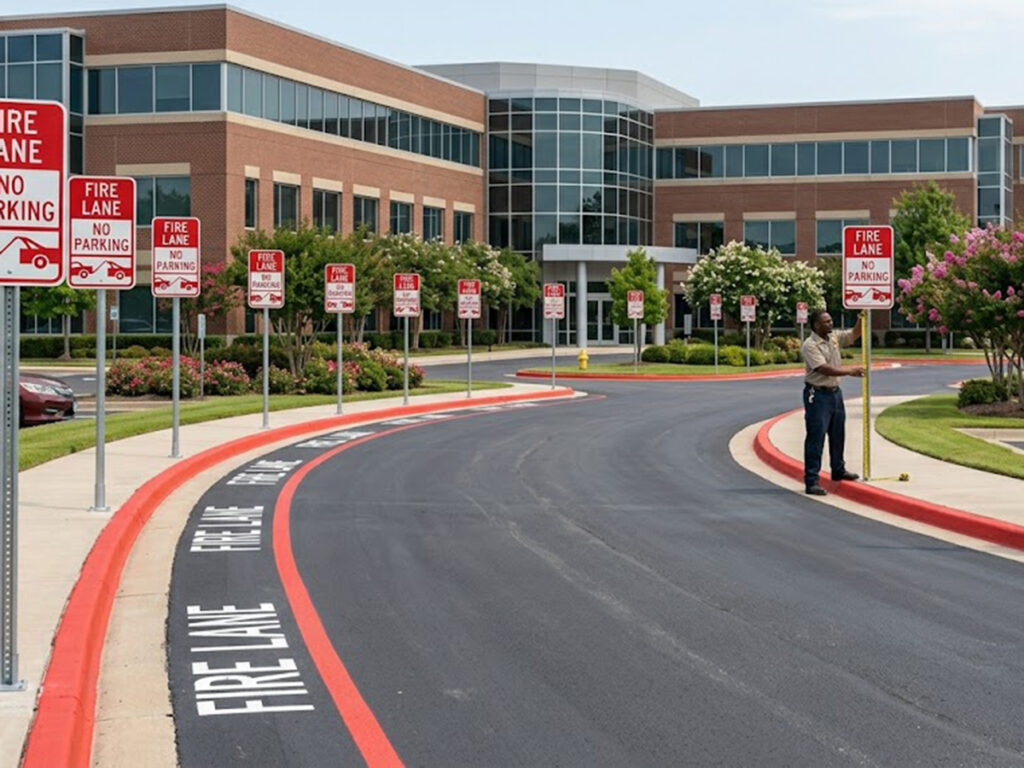
قسم مؤسسة التمويل الدولية 503.3 تترجم متطلبات النشر إلى ثلاث معلمات قابلة للقياس ميدانيًا: الفاصل الزمني للتوقيع, ارتفاع التركيب, واتجاه اللوحة بالنسبة لاتجاه تدفق حركة المرور. تظهر جميع المعلمات الثلاثة في قوائم الفحص البصري لشرطة مكافحة الحرائق وتولد استشهادات إشعار الانتهاك عندما تكون خارج نطاق التسامح.
قاعدة الحد الأقصى للفاصل الزمني البالغ 50 قدمًا - علامات الحدود ومنطق تحديد الموضع في منتصف التشغيل
حارة الإطفاء يجب عدم وضع علامات وقوف السيارات على فترات لا تتجاوز 50 قدم على طول خط الرصيف المحدد. العلامات الإلزامية عند نقاط البداية والنهاية المحددة لكل حدود حارات الحريق لها الأسبقية - يجب على فرق البيئة والصحة والسلامة تثبيت الحواف المحيطة أولاً, ثم احسب الفترات الداخلية. تتطلب المسافة الموحدة التي تبلغ 50 قدمًا عبر ممر النار الذي يبلغ طوله 200 قدم خمسة مواقع للإشارة: 0 قدم, 50 قدم, 100 قدم, 150 قدم, و 200 قدم.
العوائق الثابتة - معايير الضوء, الناهضون قناة المرافق, تتطلب منحدرات ADA - التي تمنع وضع فواصل زمنية موحدة، سجلات انحراف موثقة في خطة سلامة الموقع وإحداثيات موضع بديلة معتمدة من AHJ.
خلوص ارتفاع التركيب — معيار الجزء السفلي من اللوحة من 7 إلى 8 أقدام
الخلوص الأرضي إلى الحافة السفلية لكل منهما حارة النار لا توجد علامة وقوف السيارات يجب أن تقع اللوحة بينهما 7 قدم و 8 قدم. يقوم هذا النطاق بمسح ملفات تعريف المرآة والكابينة الخاصة بالفئة 6 والطبقة 7 مركبات التسليم (الحد الأقصى لارتفاع المرآة: 6 قدم 8 بوصة لكل جزء FMCSA 393.82) مع إبقاء اللوحة ضمن مخروط الرؤية المتجه للأسفل بزاوية 10 درجات لسائق سيارة الركاب الجالس. عمق ما بعد التضمين يتبع معيار AASHTO M 133 مواصفات فئة التربة, مع التحقق من تقييمات عزم الدوران المنفصلة عند التثبيت.
بروتوكول النشر الثنائي لطرق الوصول بين 20 و 26 قدم
قسم مؤسسة التمويل الدولية 503.3 يفرض وضع علامات حارة الحريق على جانبي أي طريق وصول مع عرض سطح القيادة المرصوف بينهما 20 و 26 قدم. ال “سطح القيادة” يمتد القياس من حافة الرصيف إلى حافة الرصيف, باستثناء صراحة المزاريب وأحواض الصرف الصحي. النشر الثنائي يضاعف مخزون التوقيع, عمالة ما بعد التثبيت, والتزامات الصيانة المستمرة - وهو عامل التكلفة الذي يجب على مديري البيئة والصحة والسلامة إدراجه في طلب الميزانية الرأسمالية منذ البداية.
أنظمة وضع العلامات ذات الطبقة المزدوجة - طلاء حافة أحمر, استنسل الرصيف, والتنسيق الفاصل
اللوحات الرأسية وحدها لا تلبي معظم متطلبات الامتثال لـ AHJ. يجمع نظام وضع علامات على حارات الحريق المتوافق تمامًا بين لافتة عدم ركن السيارات مع طلاء الرصيف الأحمر الصلب وطباعة الرصيف بالستينسيلا, إنشاء نظام تحذير مرئي زائد عن الحاجة تتوقعه رموز مكافحة الحرائق في أي منشأة تجارية عالية الإشغال.
مواصفات طلاء الحافة الحمراء - AASHTO M 248 معايير التطبيق
يجب أن يتوافق طلاء الرصيف الأحمر الصلب المطبق على طول المدى الخطي الكامل لحدود حارة الحريق مع معايير AASHTO M 248 معايير طلاء علامات المرور: سمك الفيلم الجاف لا يقل عن 3 مل, معيار اللون الفيدرالي 595 لون 31136 (جهاز إطفاء باللون الأحمر), وكثافة التضمين حبة عاكسة للضوء 6 رطل/جالون لضبط الوضوح أثناء الليل. يتطلب التطبيق تحضير السطح لـ SSPC-SP 1 معايير التنظيف بالمذيبات على الركائز الخرسانية ودرجات الحرارة المحيطة التي تزيد عن 50 درجة فهرنهايت مع ارتفاع اتجاه مقياس الحرارة.
طباعة استنسل الرصيف - متطلبات حجم الحروف والفاصل الزمني من 25 إلى 50 قدمًا
ممنوع الوقوف - يجب أن تستخدم الطباعة البيضاء في حارة الحريق ارتفاعًا لا يقل عن 6 بوصات بخط FHWA Series C أو D وتكرارها على فترات تتراوح من 25 إلى 50 قدمًا على طول ممر حارة النار. يعمل حساب الفاصل الزمني للاستنسل بشكل مستقل عن الفاصل الزمني للإشارة العمودية. يجب أن تتحقق المرافق من عدم وجود فجوة خط رؤية للسائق في أي نقطة على طول حدود حارة الحريق لكل من أقرب علامة عمودية لحارة إطفاء الحرائق وأقرب استنسل للرصيف.
دورات فحص الصيانة لتحديد علامات التدهور
يفقد طلاء الرصيف الأحمر في منطقة FHWA IV من الإشعاع الشمسي ومناخات ذوبان الجليد والتجميد 60-70% من معامل RA الخاص به خلال 18-24 شهرًا - وهو معدل تدهور يفوق معظم جداول الصيانة الخارجية. يحدد الفحص البصري السنوي في فصل الربيع وفقًا لعتبات ASTM E1710 أجزاء الرصيف المؤهلة لإعادة الطلاء قبل دورة فحص مكافحة الحرائق التالية. يبلغ متوسط التكلفة لكل قدم خطي لإعادة طلاء الرصيف المتوافق 3.50 دولارًا - 5.00 دولارًا في سوق المقاولات التجارية 2025-2026. (مصدر: RSMeans بيانات تكلفة إنشاء المرافق 2026)
هيئة سحب الملكية الخاصة - البنية التحتية للامتثال للدخول وحدود الاختصاص القانوني
أ حارة النار لا توجد علامة وقوف السيارات يعد النظام بدون آلية إنفاذ القطر المعتمدة قانونًا بمثابة رادع سلبي, ليست مراقبة السلامة النشطة. يجب على مديري البيئة والصحة والسلامة إنشاء حزمة لافتات دخول متوافقة وتنفيذ اتفاقيات ترخيص القطر قبل أن يكون لدى المنشأة أي سلطة قانونية لإزالة المركبات التي تعيق الوصول في حالات الطوارئ.
مواصفات علامة تفويض السحب - The 17 في × 22 في معيار الدخول
تتطلب معظم رموز المركبات الحكومية علامات ترخيص القطر في جميع نقاط دخول مرافق الوصول العامة بقياس لا يقل عن 17 بوصة واسعة 22 بوصة طويلة. وتشمل عناصر الكشف المطلوبة: اسم شركة القطر المرخصة من قبل الدولة ورقم الاتصال, العنوان الفعلي لمنشأة الحجز ورقم هاتف الاسترجاع, الحد الأقصى لرسوم السحب الأولية, وقناة الإرسال المحلية لإنفاذ القانون في غير حالات الطوارئ. قسم رمز السيارة في كاليفورنيا 22658, قسم رمز النقل في تكساس 2308.252, وقانون فلوريدا 715.07 تمثل الأطر الثلاثة الأعلى للإشغال التجاري التي تحكم هذه المواصفات.
إنشاء سلطة القطر الموثقة قبل تفتيش المطافئ
لا يمكن للمنشأة التي لا تحتوي على اتفاقية ترخيص القطر المنفذة بشكل صحيح والمسجلة لدى كل من مقاول القطر ووكالة إنفاذ القانون المحلية أن تبدأ قانونيًا في إزالة المركبات التي تسد الطرق المؤدية إلى أجهزة الإطفاء. تتكون حزمة ترخيص القطر المكونة من ثلاث وثائق من: خطاب ترخيص المنشأة (موقعة من مالك العقار أو وكيله المعتمد), التحقق من ترخيص الحالة الحالية لمشغل القطر, وشهادة التأمين الحالية لمنشأة الحجز.
للمرافق التي تدير الإغلاقات المؤقتة لحارات الحريق أثناء مراحل البناء, نشر الحواجز المؤقتة للاستجابة السريعة وبروتوكولات النشر يوفر وضعًا تنفيذيًا مؤقتًا يمكن الدفاع عنه قانونيًا أثناء استعادة البنية التحتية الدائمة للتوقيع.
التعرض للمسؤولية من القطر غير المصرح به - معايير التوثيق
تؤدي دعاوى السحب غير المشروعة إلى أضرار قانونية تتراوح بين 500 إلى 2500 دولار لكل مركبة في الولايات التي لديها قوانين صارمة لحماية المستهلك. يقوم مديرو البيئة والصحة والسلامة بمنع التعرض من خلال عنصري تحكم: حزمة علامة ترخيص القطر المتوافقة والتي يمكن رؤيتها من جميع نقاط الدخول, وسير عمل التوثيق الفوتوغرافي ذو الطابع الزمني الذي يلتقط موقع السيارة بالنسبة لعلامات حارة الحريق قبل منح تصريح السحب. احتفظ بجميع وثائق حدث السحب لمدة لا تقل عن خمس سنوات.
الانعكاسية الرجعية والمسؤولية الليلية - لماذا تخلق اللوحات غير المتوافقة تعرضًا لمخاطر لا يمكن الدفاع عنها
في الليل على طريق وصول غير مضاء, أ حارة النار لا توجد علامة وقوف السيارات مع الأغطية المتدهورة أو غير المتوافقة تصبح غير مرئية للرؤية المحيطية على مسافات أبعد 100 قدم. جهاز إطفاء محمل يسير في 20 ميلا في الساعة يتطلب تقريبا 148 قدم لتنفيذ توقف متحكم فيه. تعمل فجوة تحديد الهوية البالغة 48 قدمًا على تحويل نقص اللافتات إلى عامل سببي مباشر في أي حادث تأخر في الاستجابة لحالات الطوارئ.
عتبة الفشل الضوئي – عندما تصبح الإشارة غير مرئية
تثبت أبحاث الإدارة الفيدرالية للطرق السريعة (FHWA) أن السائقين الذين يسافرون بسرعة 15-25 ميلاً في الساعة على طرق الوصول الخاصة غير المضاءة يحتاجون إلى مسافة تعريف لا تقل عن 100 قدم للمسار المتوافق أو مناورات التوقف. علامة حارة النار تعيد معامل RA أدناه 50 يقع cd/lux/m² خارج النطاق الملموس عند مسافة التعريف هذه.
معايير الاكتتاب في التأمين لتوثيق الامتثال للافتات حارة الحريق
ناقلات المسؤولية العامة التجارية في التصنيع, اللوجستية, وتقوم القطاعات التجارية متعددة المستأجرين الآن بدمج وثائق الامتثال للافتات الخاصة بحارات الحريق في استبيانات الاكتتاب. تواجه المرافق غير المتوافقة رسومًا إضافية بنسبة 8-15% أو استثناءات التغطية لحوادث تأخير الوصول المرتبطة بالحريق. يتضمن طلب شركات تأمين حزمة الوثائق خطابات شهادة درجة الصفائح ASTM D4956, صور التثبيت مع المقاييس المرجعية للقياس, ومراسلات موافقة AHJ.
فحص علامات الطب الشرعي بعد الحادث - ما يفحصه رجال الإطفاء والمحامون
في التحقيقات المتعلقة بالحريق بعد الحادث حيث يكون تأخير الوصول إلى الأجهزة عاملاً مساهماً, يطبق فاحصو الطب الشرعي بروتوكول مقياس الانعكاس الرجعي ASTM E1710 لإطلاق إشارات الممرات في موقع الحادث. القياسات أقل من الحد الأدنى من النوع الثالث, جنبا إلى جنب مع سجلات استبدال الإشارة الغائبة, إثبات أن المنشأة انتهكت واجبها في الرعاية. تعمل المرافق التي لديها برامج موثقة لاستبدال العلامات في دورة مدتها 7 إلى 10 سنوات على إنشاء سجل أدلة يقيد بشكل كبير نظريات المدعي بشأن الإهمال.
إعداد تدقيق فحص Fire Marshal - سير عمل الاستعداد التشغيلي لمدة 60 يومًا
تعمل عمليات التفتيش على امتثال رجال الإطفاء على تقييم كل من تركيب اللافتات المادية وحزمة الوثائق الإدارية. فرق البيئة والصحة والسلامة التي تبدأ الإعداد المسبق للتدقيق 60 قبل أيام من تاريخ الفحص المقرر، يتم تحقيق تصريح الامتثال للمرور الأول باستمرار. الفرق التي تبدأ 14 قبل أيام من مواجهة الجداول الزمنية للإجراءات التصحيحية بشكل روتيني والتي تتداخل مع نافذة جدولة إعادة التفتيش التالية.
تدقيق الموقع الفعلي قبل التفتيش لمدة 60 يومًا
يبدأ التدقيق الفعلي من خلال إرشادات تفصيلية متدرجة للرسم لكل عملية تثبيت حارة النار لا توجد علامة وقوف السيارات ضد خطة الموقع المعتمدة من AHJ. التقاط القياسات الميدانية: ارتفاع آخر, إزالة أسفل لوحة الإشارة, الإزاحة الجانبية من وجه الرصيف, والمسافة الفاصلة بين العلامات المتعاقبة. تتضمن أوجه القصور التي تؤدي إلى الشراء التصحيحي الفوري أي إشارة تكون فيها قيم RA أقل من عتبات النوع الثالث, أي فجوة فاصلة تتجاوز 50 قدم, وأي ارتفاع تركيب خارج نطاق الامتثال من 7 إلى 8 أقدام.
حزمة الوثائق الإدارية – استشهادات الكود, سجلات الموافقة, وسجلات الصيانة
يحتاج حراس الإطفاء إلى الوصول إلى أربع وثائق إدارية أثناء عمليات التفتيش الرسمية:
- خطاب الموافقة على خطة AHJ مع رسم طريق الوصول لجهاز الإطفاء المعتمد
- قم بالتوقيع على شهادة الألواح ASTM D4956 الخاصة بالشركة المصنعة لكل نوع من أنواع الألواح الموجودة في مخزون المنشأة
- اتفاقية ترخيص القطر الحالية مع التحقق من ترخيص مشغل القطر
- سجل مسح حالة الإشارة المؤرخ الذي يُظهر آخر فحص كامل للانعكاس الرجعي
أوجه القصور الثلاثة الأكثر شيوعًا في التوثيق والتي تؤدي إلى إصدار إشعار الانتهاك الفوري هي: عدم وجود موافقة على خطة AHJ في الملف, لا توجد وثائق شهادة الأغطية, واتفاقيات القطر مع تراخيص المشغلين منتهية الصلاحية.
الجداول الزمنية للإجراءات التصحيحية بعد التفتيش - إشعار الاستجابة للانتهاك
عادةً ما يحمل إشعار انتهاك أوجه القصور في لافتات حارات الحريق فترة إجراء تصحيحي تتراوح من 30 إلى 60 يومًا. يجب على مديري البيئة والصحة والسلامة البدء فورًا في عملية الشراء لاستبدال اللافتات العاكسة لمنع وقوف السيارات, إشراك المثبت المعتمد, والحصول على جدول سريع لإعادة التفتيش من AHJ قبل الموعد النهائي لعلاج المخالفة. تدابير الحماية المؤقتة - الأقماع المرورية, ترسيم الحاجز المؤقت - إظهار جهود الامتثال بحسن نية لـ AHJ خلال فترة الشراء والتركيب.
القياس الكمي للمخاطر التشغيلية - الحالة المالية وحالة المسؤولية للامتثال الكامل لإشارة Fire Lane
يعد الالتزام بلافتات حارات الحريق استثمارًا رأسماليًا يحمل عائدًا قابلاً للقياس في الغرامات التي تم تجنبها, تخفيضات احتياطيات الدعاوى القضائية, وتحسين أقساط التأمين. تتيح مصفوفات البيانات التالية لمديري البيئة والصحة والسلامة إنشاء حزمة اعتماد ميزانية يمكن الدفاع عنها للقيادة التنفيذية.
طاولة 2: الهياكل البلدية الغرامية لمخالفات لافتات حارات الحريق (2025-2026)
| الاختصاص | قاعدة غرامة / يوم | رسوم إعادة الفحص | أقصى عقوبة متصاعدة |
| لوس أنجلوس, كاليفورنيا | 1000 | 350 | $5,000+ |
| هيوستن, تكساس | 500 | 200 | 2000 |
| شيكاغو, إيل | 750 | 300 | 3500 |
| نيويورك, نيويورك | 1500 | 500 | 7500 |
| فينيكس, ال | 500 | 150 | 2500 |
مصادر: تم تجميعها من جداول إنفاذ قانون مكافحة الحرائق البلدية ومكاتب محامي المدينة, 2025-2026. قانون الحرائق في لوس أنجلوس §57.503.3; قانون بلدية شيكاغو §13-196
دعوى تأخير الوصول في حالات الطوارئ - بيانات الحالة الموثقة
واجهت المرافق التجارية التي ساهم فيها تأخر الوصول إلى أجهزة الإطفاء في خسارة الممتلكات أو وقوع إصابات، أحكام إهمال وتسويات تتراوح بين 1.2 مليون دولار إلى 14.7 مليون دولار في القضايا المرفوعة بين 2018 و 2025. استشهد الشهود الخبراء المدعيون في هذه القضايا باستمرار بثلاثة أوضاع لفشل اللافتات: الأغطية العاكسة غائبة أو غير متوافقة, تجاوز فترات الإشارة 50 أقدام تخلق فجوات في الرؤية, وغياب علامات دخول تصريح القطر التي تلغي سلطة إنفاذ المنشأة. (مصدر: قاعدة بيانات دعاوى الإهمال التجاري في Westlaw, 2018-2025)
أ 2023 قرار الاستئناف في ولاية كاليفورنيا في قضية ميريليس ضد. أكد Pacific Commerce Center LLC أن فشل المنشأة في الحفاظ على حارة إطفاء متوافقة مع ASTM D4956 وعدم وجود علامات وقوف السيارات يشكل دليلاً كافيًا على الإهمال في حد ذاته للبقاء على قيد الحياة من الحكم الموجز. تجاوزت التسوية 3.8 مليون دولار.
نموذج التكلفة الإجمالية للملكية للبنية التحتية المتوافقة مع لافتة Fire Lane
متوافق حارة النار لا توجد علامة وقوف السيارات التثبيت باستخدام صفائح ASTM D4956 Type IV على المشاركات الانفصالية القياسية AASHTO يحمل تكلفة سنوية مطفأة لكل علامة تتراوح بين 38 و52 دولارًا على مدار دورة استبدال مدتها 7 سنوات. نموذج تكلفة البنية التحتية الإجمالية لكل قدم خطي - بما في ذلك العلامات, دعامات, طلاء الرصيف الأحمر بسعر 3.50 دولارًا - 5.00 دولارًا للقدم الخطي, واستنسل الرصيف بسعر 1.80 دولارًا - 2.40 دولارًا للقدم الخطي - بمتوسط 22 إلى 35 دولارًا للقدم الخطي لنظام متوافق مع التثبيت الأول. يحمل محيط ممر الحريق الذي يبلغ طوله 500 قدم تكلفة إجمالية للتركيب الأول تتراوح بين 11000 دولار و17500 دولار, مقارنة بالتعرض لغرامة بلدية واحدة تصل إلى $7,500 يوميًا في ولايات العاصمة الكبرى. يدفع استثمار الامتثال تكاليفه في غضون ثلاثة إلى خمسة أسابيع من تجنب التعرض للغرامة في الأسواق عالية التنفيذ.
►اتصل بـ OPTsigns لتسعير حجم المؤسسة على علامات عدم وقوف السيارات العاكسة المتوافقة مع ASTM وحزم علامات حارات الحريق.
لفرق البيئة والصحة والسلامة التي تدير محافظ متعددة العقارات, OPTsigns’ حلول شاملة لإنفاذ منطقة وقوف السيارات في العقارات التجارية توفير بنية الامتثال المتكاملة - من حارة النار لا توجد علامة وقوف السيارات مواصفات وثائق الإنفاذ - التي تدعم النشر الأولي على نطاق واسع والاستجابة للانتهاكات المستمرة.
الأسئلة الشائعة التكتيكية - سيناريوهات الامتثال عالية التعقيد لعمليات البيئة والصحة والسلامة
عندما تتعارض متطلبات تباعد إشارات حارات الإطفاء التابعة للبلدية والولاية, الذي يحكم المعيار?
معيار التحكم هو المعيار المعتمد رسميًا من قبل AHJ المحلي من خلال قانون اعتماد قانون البلدية. أرسل طلبًا كتابيًا للترجمة الفورية إلى كل من مدير الإطفاء المحلي والدولي في وقت واحد. تنفيذ الشرط الأكثر صرامة, قم بتوثيق كلا الإجابتين في ملف امتثال المنشأة, ولاحظ في خطة سلامة الموقع أنه تم الحصول على توضيح السلطة المزدوجة. هذا السجل الإداري هو الدفاع الأساسي ضد إجراءات التنفيذ بأثر رجعي بموجب قانون AHJ الجديد.
كيف ينبغي لفرق البيئة والصحة والسلامة إدارة الامتثال لعلامات حارات الحريق أثناء مشاريع البناء متعددة المراحل?
مراحل البناء التي تغير عرض طريق الوصول, طول, أو تؤدي هندسة الدوران إلى الحاجة إلى خطة منقحة للوصول إلى أجهزة الإطفاء يتم تقديمها إلى AHJ قبل كل مرحلة انتقالية. مؤقت حارة النار لا توجد علامة وقوف السيارات يجب أن تستوفي المنشآت جميع معايير التثبيت الدائمة - ارتفاع التركيب, فترات التباعد, فئة الأغطية الانعكاسية - ويجب على فريق إدارة البناء الاحتفاظ بسجل امتثال خاص بالمرحلة مع وثائق فوتوغرافية عند حدود كل مرحلة.
ما هو البروتوكول المؤقت عندما يتلاشى طلاء الرصيف الأحمر ولكن اعتماد الميزانية معلق؟?
قم بتثبيت علامات الرصيف المرتفعة المؤقتة باللون الأحمر العاكس (مطابق للمواصفة ASTM D4280 النوع IA) على فترات 24 بوصة على طول قطاع الرصيف المتدهور. قم بتوثيق التثبيت بالصور وأمر العمل المؤرخ. أرسل طلبًا رسميًا لانحراف الميزانية مع حساب تكلفة عدم الامتثال - التعرض اليومي للغرامات بالإضافة إلى تقدير احتياطي التقاضي - لخلق حاجة مالية ملحة في عملية الموافقة.
كيف يمكن لمدير البيئة والصحة والسلامة التحقق من أن العلامات الموجودة تتوافق مع معايير ASTM D4956 دون وثائق الشراء الأصلية?
إجراء قياس الانعكاس الرجعي المعاير بموجب بروتوكول ASTM E1710 في الليل, باستخدام زاوية المراقبة القياسية البالغة 0.2 درجة وهندسة زاوية الدخول البالغة 88.76 درجة. أي حارة النار لا توجد علامة وقوف السيارات إرجاع قيم RA أدناه 75 cd/lux/m² لعناصر الأسطورة البيضاء أو أقل 14.3 cd/lux/m² للخلفيات الحمراء يفشل في الحد الأدنى من ASTM D4956 Type III ويتطلب الاستبدال الفوري, بغض النظر عن حالة النهار المرئية.
ما هي الوثائق التي يجب أن تحتفظ بها المنشأة للدفاع ضد دعوى سحب غير مشروعة من إجراء إنفاذ قانون الطوارئ في حارة الحريق?
تتضمن حزمة الوثائق التي يمكن الدفاع عنها الحد الأدنى: لقطات أمنية تحمل طابعًا زمنيًا لموقع السيارة بالنسبة لعلامات حارة الحريق المنشورة, سجل إرسال شركة القطر مع أوقات الوصول والإكمال, تقرير الحادث الصادر عن سائق الجهاز المستجيب يؤكد عرقلة الوصول, صورة لعلامة تصريح القطر للمدخل الملتقطة بالداخل 24 ساعات من الحادث, ونسخة من اتفاقية ترخيص القطر الحالية. احتفظ بهذه الحزمة لمدة لا تقل عن خمس سنوات وضعها تحت الحجز القانوني عند استلام أي خطاب طلب.
مراجع
- مجلس الكود الدولي. قسم مؤسسة التمويل الدولية 503, طرق الوصول لأجهزة الإطفاء. 2024 طبعة.
- الرابطة الوطنية للحماية من الحرائق. NFPA 1 كود النار, الفصل 18. 2024 طبعة.
- الهيئة الفيدرالية للطرق السريعة (FHWA).. دليل على أجهزة مراقبة حركة المرور الموحدة (Mutcd), 2023 طبعة.
- ASTM الدولية. أستم D4956-23: المواصفات القياسية للألواح العاكسة للضوء للتحكم في حركة المرور.
- ASTM الدولية. أستم E1710-23: طريقة الاختبار القياسية لقياس مواد وضع علامات الرصيف العاكسة للضوء باستخدام الهندسة الموصوفة من CEN.
- الهيئة الفيدرالية للطرق السريعة (FHWA).. الحفاظ على الانعكاس الرجعي لإشارة المرور, لايف-سا-07-020.