Ржавый зажим позволяет вращаться нормативному знаку 40 градусы отклонения, и вдруг состояние остановки становится невидимым для приближающегося транспорта. Ваши экипажи не ошиблись с установкой. Панель в порядке. Монтажное оборудование вышло из строя — и теперь эта неисправность занесена в файл с претензиями с названием вашего агентства.. Финансовые риски редко ограничиваются заменой детали.: Аварийный ответ, перекрытие полосы движения, резерв ответственности за правонарушение, и политическая цена предотвратимого инцидента - все они попадают в один и тот же бюджетный цикл..
Выбор правильного Материалы кронштейнов для дорожных знаков на этапе спецификации — самая дешевая точка управления во всей цепочке. В этом руководстве выбор материала кронштейнов организован так, как это действительно нужно инженеру-материалисту.: по пути загрузки, класс коррозионной активности, регулирующий стандарт, и общая стоимость владения.
Почему выбор материала кронштейна является решением структурной ответственности, Не является статьей закупок
Цепочка неудач: Как $12 Скобка вызывает шестизначный иск о правонарушении
Неисправность монтажа следует предсказуемой последовательности: крепежная коррозия, потеря сечения на границе зажима, зарождение усталостных трещин при ветровой вибрации, затем поворот или разделение панели. Поскольку кронштейн является элементом с наименьшей стоимостью в сборке., это также элемент, который чаще всего создается с учетом долгосрочной спецификации — именно поэтому он становится первоначальным дефектом..
Менеджер активов против. Инженер по материалам: Согласование двух приоритетов спецификации
Управляющие активами оптимизируют стандартизацию запасов, производительность экипажа, и предсказуемые капитальные циклы. Инженеры по материалам оптимизируют усталостную устойчивость, гальваническая совместимость, и проверенные коррозионные характеристики. Эти приоритеты сходятся только тогда, когда обе стороны оценивают Материалы кронштейнов для дорожных знаков на срок службы, а не на цену за единицу.
Область применения данного руководства: Краткий обзор структуры принятия решений по материалам
В таблице ниже сравниваются три семейства основных материалов с точки зрения типичной среды эксплуатации., регулирующий стандарт на материалы, и относительное положение жизненного цикла.
| Материальная семья | Типичная среда обслуживания | Основной регулирующий стандарт | Относительная позиция жизненного цикла |
| Алюминиевый сплав (6000-ряд) | Прибрежный, противообледенительные коридоры, сайты с высокой стоимостью доступа | АСТМ Б221 (экструзии), Б209 (лист) | Более высокая стоимость единицы, низкое обслуживание |
| Горячеоцинкованная углеродистая сталь | Внутренний, умеренная коррозионная активность, высокая потребность в нагрузке | АСТМ А36 / А123 / А153 | Низкая стоимость единицы, зависящий от покрытия |
| Аустенитная нержавеющая сталь (300-ряд) | Морской, туннель, мостовое крепление, суровое обслуживание | АСТМ А240, Ф593/Ф594 | Самая высокая стоимость единицы, самый длинный объемный срок службы |
| УФ-стабилизированный полимер/композит | Навигация с низкой нагрузкой, диэлектрическая изоляция | Заявлено производителем, ограниченное принятие DOT | Самая низкая стоимость, самый узкий конверт |
Определение сборки кронштейна: Загрузить пути, Классы компонентов, и условия обслуживания
Таксономия компонентов: Почтовые зажимы, Перекрестье, Ветровые лучи, Бандинг, и крепежные
Спецификация кронштейна на самом деле представляет собой спецификацию сборки из нескольких материалов.. Корпус зажима, болт, шайба, полосатость, и каждый штырь может быть изготовлен из другого сплава - и каждый интерфейс разнородных металлов является потенциальной ячейкой коррозии..
Управляющие варианты нагрузки: Давление ветра, Мертвая нагрузка, Вибрационная усталость, и влияние
Структурная адекватность опор для знаков регулируется Спецификациями AASHTO LRFD на структурные опоры для дорожных знаков., Светильники, и светофоры (LTS), не MUTCD. Критически, большинство отказов на местах вызвано циклической вибрацией и усталостью, вызванной ветром, а не единичным событием статической перегрузки.. Кронштейн, удовлетворяющий пределу прочности, все равно может выйти из строя при 15 лет, если категория детализации усталости никогда не оценивалась.
Классы экологической службы: Обледенение, Прибрежный, Засушливый, и промышленная атмосфера
Iso 9223 Категории коррозионной активности дают спецификаторам надежный способ классификации объектов.. В С5 (очень высокий) атмосфера, Скорость потери цинка составляет примерно 4,2–8,4 мкм в год., против 0,7–2,1 мкм в год в С3 — разница в расходе покрытия до 6 раз при одинаковой заданной толщине. Эта единственная переменная должна определять выбор семейства материалов больше, чем любая другая.. Для более глубокого лечения циклического замораживания-оттаивания, УФ-нагрузка, и поведение при воздействии морской среды, см. наш анализ как алюминиевые крепежные детали выдерживают экстремальные погодные условия.
Каковы три основных материала кронштейнов дорожных знаков??
Материалы для крепления дорожных знаков делятся на три инженерные семьи: алюминиевые сплавы, которые противостоят коррозии благодаря самопассивирующему оксидному слою; стали, которые обеспечивают максимальную несущую способность, но зависят либо от защитного покрытия, либо от высокого содержания хрома.; и инженерные полимеры, которые обслуживают только низкую нагрузку, неструктурные приложения. Выбор определяется классом коррозионной активности объекта., расчетная ветровая и усталостная нагрузка, и стоимость будущего доступа для технического обслуживания.
Кронштейны из алюминиевого сплава: Экономика «сила-вес» и самопассивация
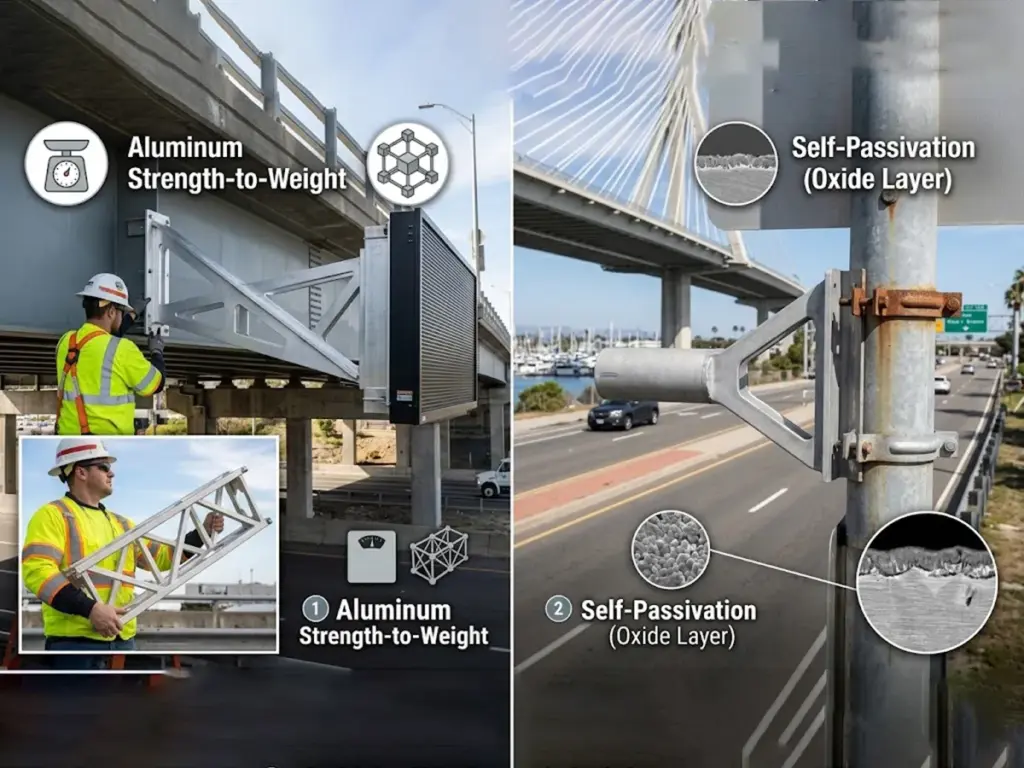
Примерно 2.70 г/см³ по сравнению с углеродистой сталью 7.85 G/CM³, алюминий - это примерно 66% легче при том же объеме, что напрямую приводит к более быстрой установке двумя людьми и снижению стоимости доставки за единицу при оптовых заказах.. Его более важным преимуществом является металлургическое: алюминий образует собственную защитную оксидную пленку, поэтому коррозионная стойкость не зависит от стойкости покрытия к эксплуатации в полевых условиях.. Деформируемые сплавы серии 6000 подходят для большинства работ по креплению на шоссе.; более прочные серии появляются в особых случаях нагрузки. Обозначения темпераментов и полные сравнительные компромиссы описаны в нашей разбивке выбор между 6000 и 7000 Серия сплавов для дорожных кронштейнов, а более широкий практический случай представлен в нашем обзоре где легкие брекет-системы обеспечивают максимальную отдачу
Углеродистая сталь и нержавеющая сталь: Урожайность, Жесткость, и зависимость покрытия
Управляющее различие простое. Долговечность углеродистой стали — это свойство покрытия.; долговечность нержавеющей стали является свойством сыпучего материала. ASTM A123 устанавливает минимальную среднюю толщину покрытия 3.9 мил (100 мкм) для структурных форм 1/4 дюйм и толще — настоящий, измеримый критерий приемки, который ваши инспекторы могут проверить с помощью магнитного манометра. Как только этот цинк будет израсходован или проколот, углеродистая сталь не имеет оставшейся защиты. Аустенитная нержавеющая сталь серии 300 не требует покрытия, но стоит значительно дороже за единицу.. Посмотрите наше сравнение крепежные детали из оцинкованной стали и нержавеющей стали в условиях эксплуатации с высоким содержанием хлоридов и полный структурный профиль в Характеристики прочности и долговечности стального кронштейна.
Инженерные полимеры и композиты: Законные варианты использования и жесткие ограничения
Для диэлектрической изоляции подходят УФ-стабилизированные полимеры и стеклоармированные композиты., парковка для малой нагрузки и указатели, и аксессуары для нейлоновых лент. Их дисквалифицируют от нормативных знаков из-за ползучести при длительной нагрузке., несоответствие теплового расширения металлическим столбам, и охрупчивание при холодной эксплуатации. Наш трехсторонний обзор алюминий, сталь, и пластиковые варианты для программ уличных указателей охватывает граничные условия.
Коррозионная инженерия: Гальваническая связь, Покрытия, и реалистичный срок службы
Гальваническая совместимость: Самая распространенная ошибка спецификации
Классическая поломка — крепеж из нержавеющей стали, пробитый через алюминиевый кронштейн в противообледенительном коридоре.. Алюминий становится анодом, соотношение маленького катода и большого анода инвертируется, и кронштейн жертвует собой вокруг отверстия для болта. Три элемента управления решают эту проблему: по возможности сочетайте материалы, диэлектрически изолировать с помощью гильз или шайб, и сознательно управлять соотношением площади катода к аноду.
Категории защитных покрытий и что каждая из них на самом деле дает вам
Горячее цинкование обеспечивает протекторную катодную защиту и устойчиво к истиранию в полевых условиях.. Анодирование утолщает собственный оксид алюминия и превосходно защищает от воздействия хлоридов, но не приносит никаких жертв в случае нарушения.. Порошковое покрытие обеспечивает барьерность и контроль внешнего вида.. Дуплексные системы сочетают в себе цинк плюс краску и, согласно Американской ассоциации гальванизаторов, обычно продлевают срок службы за пределы простой суммы двух систем. Подробности порогового уровня описаны в нашем руководстве по антикоррозионные стандарты для горячего цинкования и анодирования.
Установление оправданных ожиданий срока службы
Любые заявления о сроке службы без указанной категории коррозионной активности непригодны.. Требуйте, чтобы поставщики выражали долговечность как “лет до первого технического обслуживания в ISO 9223 Категория С4,” не как неполное число.
Запросить тестовые данные. Мы являемся полностью интегрированным производителем дорожных знаков с комплексной цепочкой поставок — от необработанного алюминия и стали до нанесения покрытия., печать на заказ, и готовое оборудование — поэтому сводные данные по солевому туману ASTM B117 и записи о толщине покрытия получены в результате нашего собственного контролируемого процесса., не сторонний трейдер. Запросить документацию по испытаниям на коррозию!
Что делает “Одобрено Министерством транспорта США” На самом деле означает оборудование для кронштейнов для знаков?
“одобрено DOT” не является федеральным сертификатом. Оборудование для структурных знаков принимается в каждом штате через список сертифицированных продуктов или список одобренных продуктов каждого агентства., поддерживается соответствием AASHTO LTS и соответствующим спецификациям ASTM. Для обоснованного заявления требуются сертифицированные протоколы заводских испытаний., сертификаты покрытия, и документация по отечественному контенту.
Как ФХВА, MUTCD, и AASHTO LTS разделяют юрисдикцию
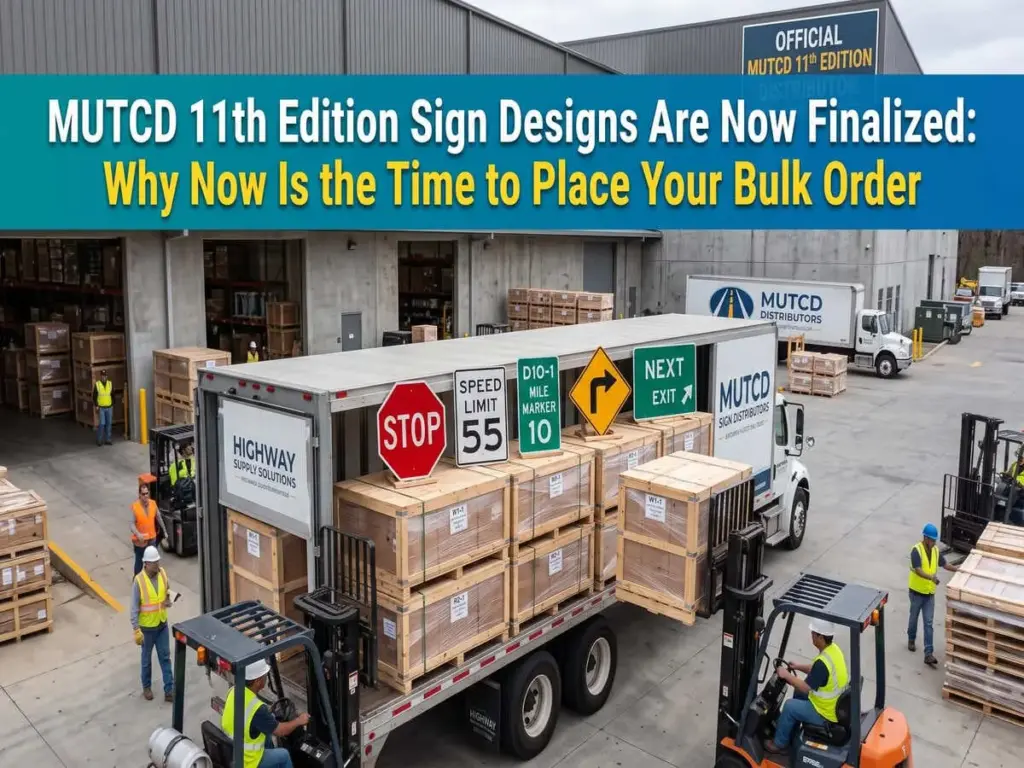
MUTCD — 11-е издание, опубликовано FHWA в декабре 2023 - регулирует применение знаков, размещение, и ретрорефлексивность. Он не регулирует конструктивную способность кронштейна.. Это относится к AASHTO LTS и государственным руководствам по проектированию конструкций., с ударопрочностью отрывных опор, оцененной по критериям MASH.
QPL, Постройте Америку, купите Америку, и протоколы заводских испытаний
Под стройкой Америки, Купить Закон Америки, Проекты, финансируемые из федерального бюджета, требуют, чтобы производимая продукция соответствовала пороговому значению стоимости внутреннего содержания — 55% Стоимость компонентов является стандартным ориентиром — наряду с требованиями к выплавке и разливке чугуна и стали внутри страны.
Структурная проверка: Какие доказательства тестирования должно содержать заявление
Механическая квалификация: Растяжимый, Пробная нагрузка, Момент до отказа, Усталость
Статическая предельная сила расскажет вам о редком случае перегрузки.. Данные о вибрационной усталости расскажут вам о следующем: 25 годы. Для вывесок, нагруженных ветром, второе важнее.
Интерпретация результатов ускоренной коррозии
Часы солевого тумана являются инструментом сравнительного скрининга., не прогноз полевых лет. Результаты пары B117 при циклических испытаниях на коррозию и измеренной (не номинальной) толщине покрытия..
Системы качества поставщиков и отслеживание партий
Документированное управление качеством, входная проверка материалов, и отслеживание на уровне партии являются такими же активами защиты в судебных процессах, как и инструменты обеспечения качества.. Рабочий процесс проверки на уровне процесса подробно описан в нашем обзоре как изготавливаются металлические кронштейны для вывесок и контролируется качество.
Выбор на основе приложения: Соответствие класса материала контексту установки
Межгосударственные указатели: Высокая нагрузка, Высокие последствия, Низкий доступ
Большие площади панелей, повышенные ветровые нагрузки, а затраты на закрытие полос делают доступ к техническому обслуживанию доминирующим фактором затрат, что подталкивает спецификации к узлам с более длительным сроком службы даже при более высокой цене за единицу..
Муниципальная улица и навигация: Объем, Стандартизация, Сопротивление краже
Среди тысяч активов, рационализация инвентаря и скорость установки доминируют. Здесь важны устойчивые к взлому крепления и эстетика района.; видеть Выбор декоративного и промышленного металла для крепления кронштейнов.
Суровое обслуживание: Мост, Прибрежный, и туннельные крепления
Насыщение хлоридами, постоянная влажность, и ограниченный доступ для проверки являются поводом для перехода к системам из нержавеющей стали или дуплексным системам.. Для прямой встречи лицом к лицу, просмотрите наш Сравнение плюсов и минусов алюминиевого сплава и стальной дороги скобки.
Моделирование затрат жизненного цикла: Обоснование материалов кронштейнов для дорожных знаков премиум-класса
Общая стоимость владения, помимо цены за единицу
Монтажные работы, регулирование дорожного движения и аренда полосы движения, циклы проверки, Аварийный ответ, резерв ответственности, и стоимость восстановления алюминиевого лома — все они включены в модель. Цена за единицу обычно представляет собой наименьший термин..
Математика интервала замены
Используя 7% реальная ставка дисконтирования, которую предписывает OMB Circular A-94 для федерального анализа экономической эффективности, система покрытия, исключающая один цикл замены в середине срока службы, часто компенсирует надбавку к цене за единицу продукции в размере 30–40%, если включить затраты на регулирование дорожного движения..
Обновление рамочных материалов для комитетов капитала
Перевести инженерное обоснование на бюджетный язык: сокращение отсроченного технического обслуживания, риск ответственности, и восстановлено рабочее время персонала. Полное моделирование представлено в нашем анализ стоимости жизненного цикла материалов для кронштейнов премиум-класса и муниципальных бюджетов на техническое обслуживание.
Готов уточнить? Загрузите бесплатный контрольный список подачи брекетов или запросить оптовую расценку на оборудование DOT с ценообразованием по количеству. Производство сертифицировано по стандарту ISO 9001; документально подтвержденное соответствие ASTM для каждой партии.
Часто задаваемые инженерные вопросы о материалах оборудования для монтажа вывесок
Достаточно ли прочны алюминиевые кронштейны для больших дорожных знаков??
Да, когда геометрия сечения и состояние сплава рассчитаны на расчетную нагрузку; сталь остается распространенным явлением там, где жесткость на доллар имеет решающее значение.. Контролирующим фактором является проверенная усталостная способность., не материальная семья.
Можно ли использовать крепеж из нержавеющей стали с алюминиевыми кронштейнами??
Да, с выгодным соотношением площади катода к аноду и диэлектрической изоляцией. Неконтролируемый контакт смешанных металлов в хлоридной среде является основной причиной преждевременного выхода из строя..
Что собой представляет кронштейн “одобрено DOT”?
Принятие на уровне штата через список сертифицированных продуктов, поддерживается соответствием ASTM и AASHTO, сертифицированные протоколы испытаний мельницы, и Build America Купить документацию по Америке.
Как долго служат горячеоцинкованные кронштейны?
Срок службы зависит от толщины покрытия и коррозионной активности места установки.; одно и то же покрытие толщиной 3,9 мил держится в несколько раз дольше при воздействии C3, чем при воздействии C5. Всегда привязывайте оценки к категории коррозионной активности..
Анодированный алюминий лучше оцинкованной стали??
Анодирование обычно превосходит воздействие хлоридов.; цинкование лучше переносит механические повреждения, поскольку цинк защищает жертвенно. Правильный ответ зависит от окружающей среды.
Ссылки
ААШТО— Технические характеристики LRFD на структурные опоры для дорожных знаков, Светильники, и светофоры
АСТМ Интернешнл — А123, А153, Б221, Б209, Б117, F3125
Американская ассоциация гальванизаторов — Данные о сроке службы цинкового покрытия
Постройте Америку, Купить Америку — Требования к внутреннему контенту
Циркуляр ОМБ А-94 — Ставки дисконтирования для федерального анализа