Выбор правильного размеры знака парковки нет это не предпочтение форматирования, а обязательное инженерное обязательство.. В соответствии с разделом 2B MUTCD и 23 Часть CFR 655, несоблюдение размеров может привести к отклонению муниципальными властями плана регулирования дорожного движения. (TCP), аннулирование страхового покрытия подрядчика, и создать ответственность за халатность как таковую в судебных разбирательствах о столкновении третьих сторон.
Руководители проектов гражданского строительства и генеральные подрядчики обычно недооценивают, какую юридическую и финансовую угрозу создает один-единственный неверный знак.. Правило световозвращения Федерального управления шоссейных дорог (эффективный 2012) усугубляли этот риск, накладывая обязательства по исполнению материалов поверх требований к размеру.. Вместе, эти две основы — размерная геометрия и класс световозвращающего покрытия — определяют зону полного соответствия для каждого знака «Парковка запрещена», установленного на полосе отвода общего пользования или рядом с ней..
Это руководство охватывает всю цепочку принятия решений по спецификации.: Четыре стандартных формата знаков парковки запрещены, минимальные соотношения высот букв, Выбор марки листового покрытия ASTM D4956, сроки ухудшения световозвращающей способности, и язык закупок, который фиксирует каждое из этих решений в защищенной договорной документации..
Почему размеры знаков парковки запрещены
В таблице 2B-1 MUTCD размеры знаков преобразуются из указаний в обязательные минимальные значения на любой дороге, получающей федеральную помощь для шоссейных дорог, которая охватывает подавляющее большинство улиц общего пользования в Соединенных Штатах.. Государственные комитеты по устройствам управления дорожным движением в Калифорнии (КАК MUTCD), Техас (Техас MUTCD), и Флорида (Стандарты проектирования дорог FDOT) приняли эквивалентные или более строгие размеры полов, это означает, что подрядчики из нескольких штатов не могут применять единую спецификацию частной собственности ко всем проектам..
Линия юрисдикционного разлома имеет решающее значение. Частные парковки подпадают под действие местных норм зонирования и требований ADA к доступности. (28 Часть CFR 36, Раздел 4.30). Общественная полоса отвода подпадает под действие MUTCD и государственных дополнений.. Для подъездной дорожки, расположенной по обе стороны бордюра, могут потребоваться две разные спецификации в зависимости от того, какой регулирующий орган имеет приоритет — определение, которое должно быть сделано во время обследования площадки перед началом строительства., не во время проверки TCP.
Подрядчики, которые указывают размеры знака парковки нет без этого юрисдикционного анализа создается неясность объема работ, которая приводит к дорогостоящим запросам информации, заказы на изменение материалов, и, в худшем случае, недостатки в перечне ошибок, которые задерживают выдачу свидетельства о приеме на работу.
Четыре стандартных формата знаков, запрещающих парковку: Матрица приложений
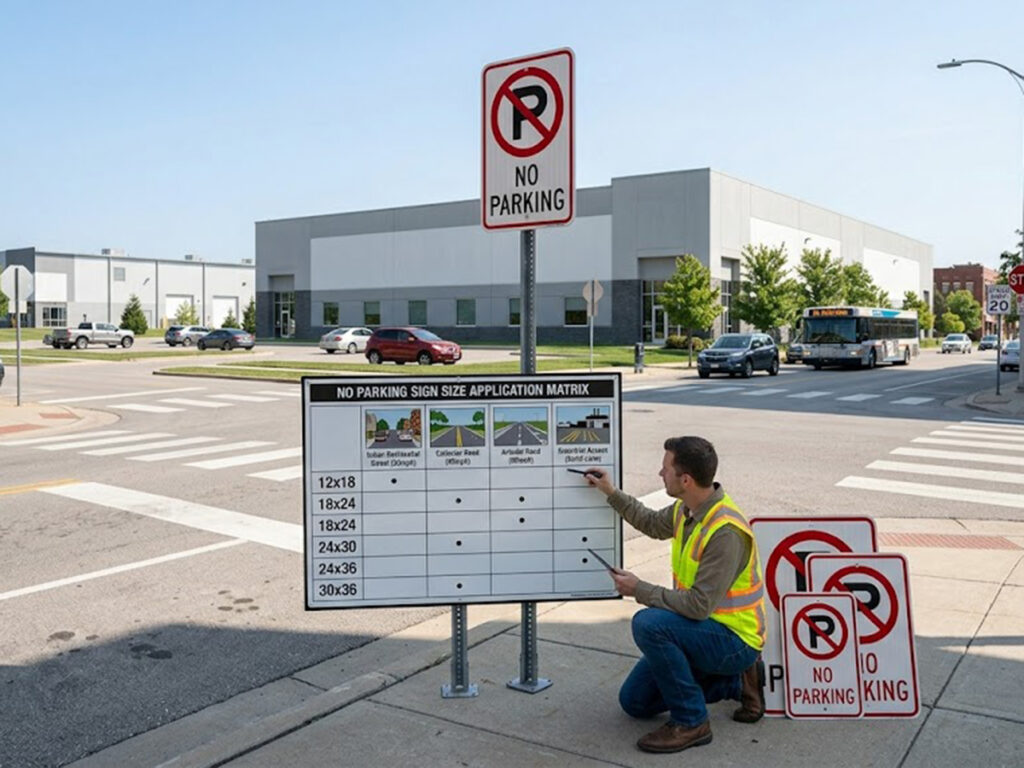
MUTCD определяет четыре основных размеры знака парковки нет в условиях обычных дорог и рабочих зон. Каждый формат привязан к определенной комбинации юрисдикции почтового органа., скорость движения транспорта, и конфигурация полос.
Матрица стандартных размеров знаков, запрещающих парковку — MUTCD, Таблица 2B-1. Сопоставление приложений
| Размер панели | Основное приложение | Мин. Высота письма | Листовое покрытие ASTM | Юрисдикция |
| 12 × 18 в | Частные участки, жилые проезды, Квартирные комплексы | 1.5 в | Тип i (НАПРИМЕР) допустимо | Частное/локальное зонирование |
| 18 × 24 в | Общественные улицы ≤ 35 миль в час, Коммерческий тротуар | 1.5 в | Минимум HIP типа IV | Муниципальный / Mutcd |
| 24 × 24 в | Знак символа MUTCD R8-3; артериальный ≥ 45 миль в час | N/a (символ) | Требуется тип XI DG3 | MUTCD обязательно |
| 24 × 30 в | Городские артерии, многополосные строительные коридоры | 2.5 минимум | Требуется тип XI DG3 | Mutcd / АТССА ТТС |
Источник: ФХВА MUTCD 2023 Таблица редакции 2B-1
Согласие & Разбивка приложений по формату размера
The 12 × 18 по формату подходит исключительно для частной собственности. Подрядчики, которые устанавливают этот размер знака «Парковка запрещена» на коммерческой общей подъездной дороге, граничащей с общественным тротуаром, немедленно нарушают MUTCD, поскольку площадь лицевой панели панели оказывается ниже 18 × 24 минимум для тихоходных муниципальных улиц.
The 18 × 24 Формат соответствует стандартному размеру знака «Парковка запрещена» для заявленных скоростей не выше. 35 миль/ч на обычных дорогах общего пользования. Минимальная поддерживаемая световозвращающая способность FHWA для этого формата составляет 7 кд/лк/м² на белом фоне красного цвета, согласно FHWA-SA-12-027.
The 24 × 24 in format применяется конкретно к символическому знаку MUTCD R8-3 — панель с красным кружком и косой чертой, используемая там, где копия легенды заменяется графическими символами.. Его геометрия не подлежит обсуждению.: минимум 0,5 дюйма для контура круга, угол наклона 45°, и ширина подсимвола P-стрелки, определенная на рисунке MUTCD. Рисунок 2B-16.. Пользовательское изменение масштаба без разрешения FHWA на проведение экспериментов представляет собой нестандартное устройство..
Большой знак запрета парковки на 24 × 30 представляют собой указанные выше требования к тяжелым нагрузкам для городских магистралей. 45 миль в час и активные многополосные строительные коридоры. Рекомендации ATSSA по качеству для временных устройств управления движением и OSHA 29 CFR 1926.200 оба устанавливают этот формат как минимум для нормативных знаков рабочей зоны на дорогах с интенсивным движением транспорта..
Высота надписи: Разработка легенды для обеспечения читаемости на расстоянии
Высота буквы на знаке «Парковка запрещена» является расчетным результатом., не выбор дизайнера. Методика индекса разборчивости FHWA дает примерно 40 расстояние распознавания в футах на дюйм высоты колпачка для FHWA Series E Модифицированный шрифт на световозвращающем фоне.
Математика разборчивости: Скорость против. Расчетная высота буквы
- Правило 40 футов: А 30 скорость приближения миль в час, с необходимой дистанцией распознавания 75 футов под руководством MUTCD по времени реакции, выдает минимальную расчетную высоту буквы 1.875 дюймы.
- Дизайнерский этаж: Этот математический вывод подтверждает, что стандартная высота шрифта в 1,5 дюйма является абсолютным нормативным минимумом., не является целью инженерного проектирования.
- Высокоскоростное масштабирование: Для 24 × 30 в коридорах строительных работ знаки запрещены для парковки, Высота буквы должна увеличиваться до 2.5 дюймов или выше, чтобы компенсировать более высокие скорости захода на посадку..
Серия шрифтов & Мандаты геометрической пропорциональности
- Сопоставление серий шрифтов (MUTCD Раздел 1А.02):
- Шрифт серии D: Стандарт для регулирующих знаков на дорогах общего пользования с указанием скорости не выше 35 миль в час.
- Модифицированный шрифт Series E: Строго требуется для высокоскоростных приложений..
- Проверка соответствия: Смешение серий шрифтов в одном расписании знаков создает нарушение неравномерности в соответствии с разделом 1A MUTCD..02 — недостаток, который рецензенты TCP регулярно отмечают во время проверки плана..
- Требования пропорциональности (MUTCD Раздел 2а.06): В масштабе 2,5 дюйма или больше., дизайнер должен убедиться, что междустрочный интервал и поля границ соответствуют правилам пропорциональности.. Эта обязательная проверка предотвращает усечение легенды на панелях фиксированного размера..
- Исключение символа R8-3 (MUTCD Рисунок 2B-16): The 24 × 24 в формате символов R8-3 полностью исключает копирование легенды. Хотя это удаляет переменную высоты буквы, он предъявляет строгие требования к графической геометрии: диаметр круга, ширина штриха косой черты, и размеры стрелок фиксированы и не могут быть масштабированы для нестандартных форматов панелей..
ASTM D4956 Световозвращающая пленка: Три класса, которые должен правильно указать каждый подрядчик
Светоотражающие знаки запрещена парковка не являются отдельной категорией материалов.. ASTM D4956 определяет одиннадцать типов листового материала.. Три из них имеют непосредственное отношение к спецификациям знаков подрядчика.: Тип I инженерного класса, Призматический высокоинтенсивный тип IV, и класс алмаза типа XI 3. Каждый из них имеет свой начальный коэффициент световозвращения. (РА) и другая кривая срока службы, а указание неправильного класса является одним из наиболее распространенных источников несоответствия световозвращающей способности после эксплуатации..
ASTM D4956 Сравнение марок листового покрытия для знаков, запрещающих парковку
| Тип АСТМ | Технология | Начальный РА (CD/LX/M²) | Срок службы, соответствующий требованиям FHWA | Разрешенное применение |
| Тип I — инженерный уровень | Стеклянная бусина | ~70 | 3–5 лет (высокий УФ) | Временный / только частный |
| Тип IV — ГИП | Микропризматический куб-уголок | ~ 250 | 7–10 лет | Общественные улицы, муниципальный |
| Тип XI — ДГ3 | Призма с полным кубом | ~700 | 10–12 лет | артериальный, строительство ТТК |
Источник: ASTM D4956-23 Стандартные спецификации на световозвращающую пленку для управления дорожным движением, Правило световозвращения FHWA 23 CFR 655 Подчасть F
- Лист инженерного класса I типа основан на оптике со стеклянными шариками и обеспечивает начальный RA примерно 70 CD/LX/M². При установке на южной стороне в условиях с высоким уровнем УФ-излучения., этот класс пересекает минимальный поддерживаемый порог световозвращения FHWA, равный 7 CD/LX/M² (белое на красном) всего за три года. Тип I теперь ограничен временными вывесками., частная собственность, и внутреннего применения. Указание типа I на любом знаке, предназначенном для передачи государственному учреждению при закрытии проекта, создает недостаток соответствия с первого дня..
- Призматические листы высокой интенсивности типа IV использует микропризматические ретрорефлекторы для обеспечения начального RA примерно 250 CD/LX/M². Этот класс соответствует минимальным стандартам световозвращающей способности FHWA в течение 7–10 лет при нормальном атмосферном воздействии и представляет собой минимальную спецификацию для постоянных светоотражающих знаков, запрещающих парковку на дорогах общего пользования.. Руководящий документ FHWA FHWA-SA-12-027 прямо определяет HIP как соответствующий класс начального уровня для обычных дорожных знаков..
- Алмазный сорт типа XI 3 лист использует геометрию призмы с полным кубом для обеспечения начального прямого восхождения примерно 700 кд/лк/м² — улучшение в 10 раз по сравнению с типом I и почти в 3 раза по сравнению с типом IV.. Исследование человеческого фактора, упомянутое в отчете FHWA FHWA-HRT-07-059 устанавливает, что водителям требуется минимум 50 кд/лк/м² на лицевой стороне знака для 85-го процентиля распознавания в ночное время на магистралях. DG3 значительно превышает этот порог даже по окончании срока службы и является обязательной спецификацией для больших знаков, запрещающих парковку, на высокоскоростных дорогах и в коридорах активного строительства..
Ухудшение световозвращающей способности и сроки ответственности за правонарушения
Ухудшение световозвращения — это инженерная переменная, зависящая от времени., не двоичное событие «пройден/не пройден». Ультрафиолетовое воздействие, термоциклирование, и загрязнение твердыми частицами постоянно снижают $R_A$ со дня установки..
Кривые срока службы материалов & Экологическое ускорение
Согласно данным ускоренного выветривания ASTM G155. (эквивалентно 1,000+ часов интенсивного УФ-воздействия), график R_A (коэффициент световозвращения) Превышение минимального этажа FHWA сильно зависит от типа защитного покрытия.:
- Тип I (Инженерный класс): Пересекает минимальный минимальный уровень соответствия примерно в год. 3 в условиях высокого УФ-излучения (Зона 5).
- Покрытие типа IV (Высокоинтенсивные призматические – БЕДРО): Поддерживает соответствующий уровень R_A в течение 7–8 лет..
- Покрытие типа XI (Алмазный класс – DG3): Поддерживает соответствующий уровень R_A в течение 10–12 лет..
⚠️ Переменная ускорения для южной стороны.: Ориентация знака на юг ускоряет все три кривые деградации на 20–30 %.. Например, Панель типа IV, установленная на южной стороне в таких регионах, как Феникс или Майами, может не соответствовать минимальным требованиям FHWA по годам. 5 — за два полных года до истечения номинального срока службы. Менеджеры проектов обычно упускают из виду это критическое изменение базовой линии во время закупок..
Федеральные мандаты & Ответственность за небрежность как таковую
Когда световозвращающая способность знака падает ниже установленного законом порога, технический недостаток влечет за собой немедленную юридическую ответственность:
- Федеральный мандат (23 CFR 655.603): Согласно правилам FHWA, агентства, получающие федеральную помощь из средств на строительство дорог, должны поддерживать программу управления знаками, гарантирующую, что все знаки соответствуют требованиям.. При проектировании-сборке или DBOM (Проектирование-Строительство-Эксплуатация-Обслуживание) проекты, это обязательство по техническому обслуживанию, не подлежащее делегированию, по договору переходит непосредственно к подрядчику.
- The “Небрежность как таковая” Курок: Показания ретрорефлектометра под полом FHWA, документально подтверждено в ходе аудита после ввода в эксплуатацию, устанавливает фактическое основание для иска о халатности как таковой. В теории права, нарушение настоящего закона о регулировании дорожного движения представляет собой автоматическое нарушение обязанности соблюдать осторожность..
- Финансовые риски: В случаях столкновения транспортных средств, адвокаты истцов регулярно используют в качестве оружия журналы проверки знаков, показания ретрорефлектометра, и спецификации закупок, чтобы переложить ответственность на сторону, которая выбрала листинг ниже спецификации. Потому что один иск о столкновении на магистральной скорости может легко исчисляться семизначными цифрами., размещение типа XI DG3 на всех дорожных знаках общего пользования является единственным наиболее эффективным решением по снижению финансовых рисков, которое может принять подрядчик..
Большие знаки запрета парковки для строительных коридоров: Структурные и нормативные обязательства
Большой знак запрета парковки на 24 × 30 в настоящее время 720 дюйм² площади лица — а 67% увеличиться в течение 432 дюйм² 18 × 24 в панели. Это масштабное изменение геометрии имеет немедленные структурные и юридические последствия..
Механика ветровых нагрузок & Характеристики поддержки AASHTO
Увеличение площади поверхности панели фундаментально меняет ее требования к проектированию конструкций согласно AASHTO LTS-6. (Стандартные спецификации на структурные опоры для дорожных знаков):
- Скачок изгибающего момента: В 90 ветровая зона миль в час, а 24 × 30 в панели, установленной на стандартной высоте 7 футов, создается изгибающий момент фундамента примерно 245–441 фут-фунт. (рассчитано с использованием эталонного давления ветра по данным ASCE. 7-22 Базовая карта скорости ветра).
- Сбой после обновления: Стандартные стойки U-образного профиля 12 калибра обладают моментом сопротивления, достаточным только для панелей меньшего размера до 18 × 24 в.
- Страховой риск: Увеличение размера до 24 × 30 в панели без модернизации системы поддержки до U-канала 10 калибра или схемы 2-в-OD 40 круглый столб (с инженерной опорой) является серьезным структурным недостатком. Это одна из наиболее часто упоминаемых причин в страховых исках о повреждении знаков после урагана..
Нормативное регулирование & Юридический приоритет (MUTCD против. Оша)
При установке больших знаков запрещения парковки во временном регулировании дорожного движения (Ttc) зоны, подрядчикам приходится ориентироваться в сложной сетке пересекающихся нормативных рамок.:
- Рекомендации по обеспечению качества ATSSA: Установить минимальные поддерживаемые размеры световозвращения и панелей для всех регулирующих устройств TTC..
- Оша 29 CFR 1926.200: Устанавливает строгий размер знака, макет, и критерии цвета в границах активного строительства для обеспечения безопасности работников и населения..
- Особые положения DOT штата: Часто вмешиваться в замену стандартных минимальных спецификаций MUTCD на основе конкретных профилей коридоров..
⚖️ Руководящий принцип: Когда эти три структуры конфликтуют, всегда действуют самые строгие требования. Подрядчики должны проверить и устранить эти несоответствия в ходе Плана управления движением. (TCP) этап подготовки, никогда не ниже по течению во время полевой проверки.
Близость частной собственности & Орган публикации
Для частной или полугосударственной собственности, расположенной в непосредственной близости от строительных коридоров., появляется дополнительный уровень соответствия:
- Пороги правоприменения: Наличие у подрядчика по закону полномочий устанавливать и обеспечивать соблюдение ограничений на парковку на прилегающей частной территории зависит от весьма конкретных местных законодательных порогов..
- Срок действия вывесок: Это определение напрямую влияет как на спецификацию технического знака, так и на фактическую применимость самого ограничения.. Несанкционированное размещение может аннулировать права на буксировку и вернуть гражданскую ответственность подрядчику..
Проектные группы должны решить вопросы о разрешении на размещение до закупок — в этом документе подробно рассматривается юридическая сила несанкционированных вывесок на объектах недвижимости. Анализ законности частных знаков, запрещающих парковку, который охватывает как законодательные полномочия, так и риск правоприменения.
Спецификации закупок: Закрепление соблюдения требований в контракте перед заказом
Контрактная запись является основной защитой подрядчика как при проверке плана агентства, так и в судебных разбирательствах.. Общие описания, такие как “Светоотражающие знаки: парковка запрещена” без конкретного обозначения типа являются наиболее распространенным недостатком закупок.. Эта двусмысленность позволяет поставщикам заменять низкосортный материал Типа I по ценам Типа IV., что приведет к несоблюдению требований и ответственности в будущем.
Пять обязательных атрибутов для позиций графика подписания CSI
Чтобы зафиксировать соответствие перед заказом, каждая позиция знака «парковка запрещена» в подразделении CSI MasterFormat 10 14 00 (Устройства идентификации) или Отдел 34 41 13 (Знаки дорожного движения) должен явно содержать эти пять обязательных атрибутов:
- Обозначение кода знака MUTCD: Явно укажите точный код (НАПРИМЕР., R8-3 для стандартного символа, или R8-3a для вариантов с ограничением по времени).
- Номинальные размеры панели: Определение точных размеров со строгими допусками ($\pm$1/8 дюйма по размерам обрезки).
- Класс листового покрытия по типу ASTM D4956: Укажите тип IV или тип XI — никогда не используйте общие термины, такие как “отражающий”.
- Спецификация подложки: Для постоянной установки знаков требуется минимум 0,080 дюйма алюминиевого сплава 5052-H38..
- Критерий приемлемости световозвращающей способности: Требовать, чтобы R_A был 90% минимума ASTM D4956 при доставке, подтверждено сертификатом соответствия производителя (К из С) или независимый лабораторный тест согласно ASTM E2401..
Показатели затрат и выгод & Распродажа Соответствие
- Финансовая выгода типа XI DG3: В любом проекте, обязательства по техническому обслуживанию которого превышают 24 месяцы, расчет затрат и выгод в значительной степени отдает предпочтение листовому материалу типа XI DG3.. Хотя DG3 имеет надбавку на 30–50% за единицу по сравнению с HIP. (Тип IV) листовое покрытие на уровне панели, по 36-месячному проекту строительного коридора, эта премия полностью исключает один полный цикл замены знака. Это приводит к чистой экономии даже без учета риска избежать ответственности..
- Поэтапная доставка & Усечение ТТС: Поэтапная доставка знаков требует строгого параллельного отслеживания
- Временные характеристики TTC: Обычно Тип IV на легком/свернутом алюминиевом корпусе..
- Характеристики постоянного знака: Тип IV или XI на алюминии толщиной 0,080 дюйма., предназначен для того, чтобы оставаться.
- Пунш-лист & Урегулирование споров при закрытии сделки: 📸 Совет по снижению рисков: Подрядчики должны осуществить комплексную фотодокументацию состояния установленных знаков как при активации, так и при закрытии TCP, чтобы предоставить юридически обязательные доказательные записи, необходимые для быстрого разрешения этих споров о закрытии..
Создание соответствующей программы знаков «Парковка запрещена»: Интегрированная структура спецификаций
Оправданная программа знаков, запрещающих парковку, опирается на три сходящихся уровня спецификаций.. Первое – это размерная геометрия.: правильный размер панели, соответствующий юрисдикции органа публикации, скорость движения транспорта, и конфигурация полос в соответствии с MUTCD Таблица 2B-1. Второе — материальное исполнение: Класс листового покрытия ASTM D4956 выбран для обеспечения минимально поддерживаемой световозвращающей способности FHWA на протяжении всего запланированного срока эксплуатации, а не только при первоначальной установке.. Третье – договорная документация.: подписывать графики, пакеты подачи, производитель записей C of C, и фотографии оборота, которые демонстрируют соответствие принимающему агентству и служат доказательством для любого спора об ответственности после завершения проекта..
Нет размеров знака парковки определить разборчивость, юридическая сила, и структурная нагрузка. Класс покрытия определяет долговечность видимости, и подверженность ответственности. Ни одна из переменных не является необязательной., и ни один из них не терпит общей спецификации. Каждая позиция в спецификации знаков должна содержать как спецификацию размеров, привязанную к контексту приложения MUTCD, так и спецификацию материала, привязанную к именованному типу ASTM D4956..
Подрядчики, которые внедряют эту интегрированную структуру в Отдел 10 или Отдел 34 разделы спецификаций перед закупкой устраняют три наиболее распространенных источника проектного риска, связанного со знаками: Отклонение TCP при проверке плана, несоответствие световозвращающей способности во время проверок технического обслуживания, и ответственность за причинение вреда в судебных разбирательствах по поводу столкновений с третьими лицами.
Для проектных групп, создающих полную программу нормативных знаков, включая интервалы размещения знаков., допуски по высоте монтажа, требования к послерасстоянию, и государственную дополнительную документацию об отклонениях — полная система соответствия подробно описана в Руководство по соблюдению дорожных знаков MUTCD: парковка запрещена, который служит авторитетным центральным ресурсом по этой теме..
Технические вопросы и ответы: Пять вопросов подрядчику по спецификациям знаков, запрещающих парковку
Какой расчет ветровой нагрузки определяет выбор столбов для 24 × 30 в знаках «парковка запрещена»?
Таблица AASHTO LTS-6 3-3 управляет. В 90 ветровая зона миль в час (ASCE 7-22), а 24 × 30 в панели генерирует расчетную силу 35–63 фунта.. На высоте установки 7 футов, это создает изгибающий момент фундамента 245–441 фут-фунт.. Стандартные U-образные стойки 12-го калибра не подходят для такой нагрузки.. Обновление до U-канального калибра 10 или расписания 2-in-OD. 40 круглый столб с заглублением в грунт минимум 42 дюйма, или используйте инженерный бетонный фундамент в зависимости от геотехнических условий площадки..
Может ли листовое покрытие инженерного класса I соответствовать краткосрочному TCP на улице общего пользования??
Технически да, с определенной датой удаления по ПТС. Однако, Минимальные правила световозвращения, поддерживаемые FHWA в соответствии с 23 CFR 655 Подраздел F применяется с первого дня. Покрытие типа I может опускаться ниже 7 кд/лк/м² этаж (белое на красном) в течение 2–3 лет в условиях высокого УФ-излучения. Для любого TCP, превышающего 12 месяцы, HIP типа IV — это оправданный минимум, позволяющий избежать неудачных проверок световозвращения в середине проекта..
Есть ли легенда об ограничении времени (7 ЯВЛЯЮСЬ - 6 Премьер -министр) на знаке R8-3a требуется панель большего размера?
А: Не автоматически, но требуется проверка высоты букв. Дополнительная легенда о 18 × 24 в панелях должна соответствовать минимальной высоте 1 дюйм. На 24 × 30 в панелях пол поднимается до 1.25 в. Если день недели, временной диапазон, и текст исключения не может поместиться на минимальной соответствующей высоте в пределах доступного пространства лиц с требуемыми полями границы MUTCD., дизайнер должен либо увеличить размер панели, либо уменьшить содержание легенды, а не сжимать шрифт..
Как подрядчику проверить соответствие ASTM D4956 при доставке без наличия лаборатории ретрорефлектометров на объекте??
А: Существуют три приемлемых метода: (1) Требуйте сертификат соответствия производителя. (К из С) со ссылкой на конкретный тип ASTM D4956 и производственную партию; (2) Укажите независимое лабораторное тестирование 2% Выборочная поставка образцов в соответствии с ASTM E2401 за счет подрядчика; или (3) Для панелей типа XI DG3, использовать полевой скрининг портативного ретрорефлектометра в качестве приблизительного показателя «прошел/не прошел». Метод 2 обеспечивает самую сильную защитную позицию во время проверок агентства после оккупации.
Что означает «стандартные размеры знака парковки запрещена»?’ означает в общей спецификации, и как должен реагировать подрядчик?
Фраза не имеет значения, определенного MUTCD.. В разговорной речи это относится к 18 × 24 на общественных улицах, но это может означать 12 × 18 в контексте частной собственности. Отправьте RFI инженеру записи с запросом явного подтверждения со ссылкой на таблицу MUTCD 2B-1 и соответствующую объявленную скоростную зону.. Задокументируйте письменный ответ в журнале отправки перед размещением заказа.. По умолчанию 12 × 18 в приложении для дорог общего пользования вызывает уведомление о несоответствии при проверке TCP.
Ссылки
- ФХВА MUTCD 2023 Версия, Часть 2Б — Нормативные знаки
- 23 Часть CFR 655 — Устройства регулирования дорожного движения на улицах и автомагистралях Федеральной помощи, а также на других улицах и автомагистралях.
- FHWA-SA-12-027 — Поддержание видимости в ночное время: Справочное руководство по световозвращающей способности знаков
- FHWA-HRT-07-059 — Разборчивость и эффективность действий водителя при использовании надписей
- Оша 29 CFR 1926.200 — Знаки и бирки для предотвращения несчастных случаев