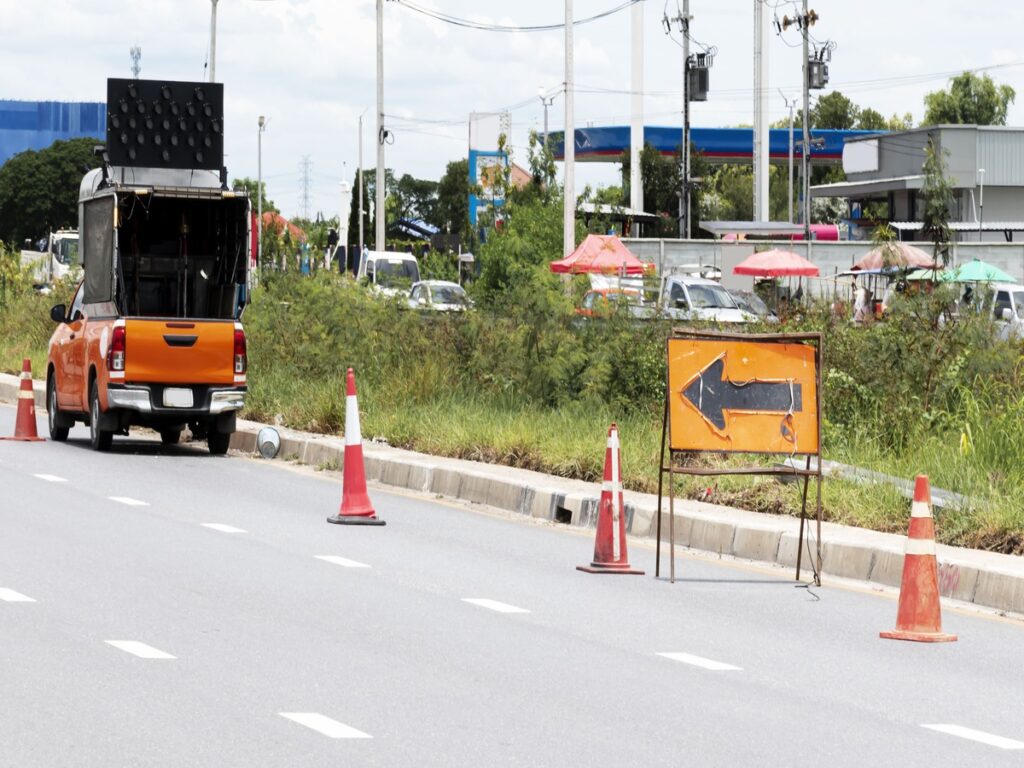
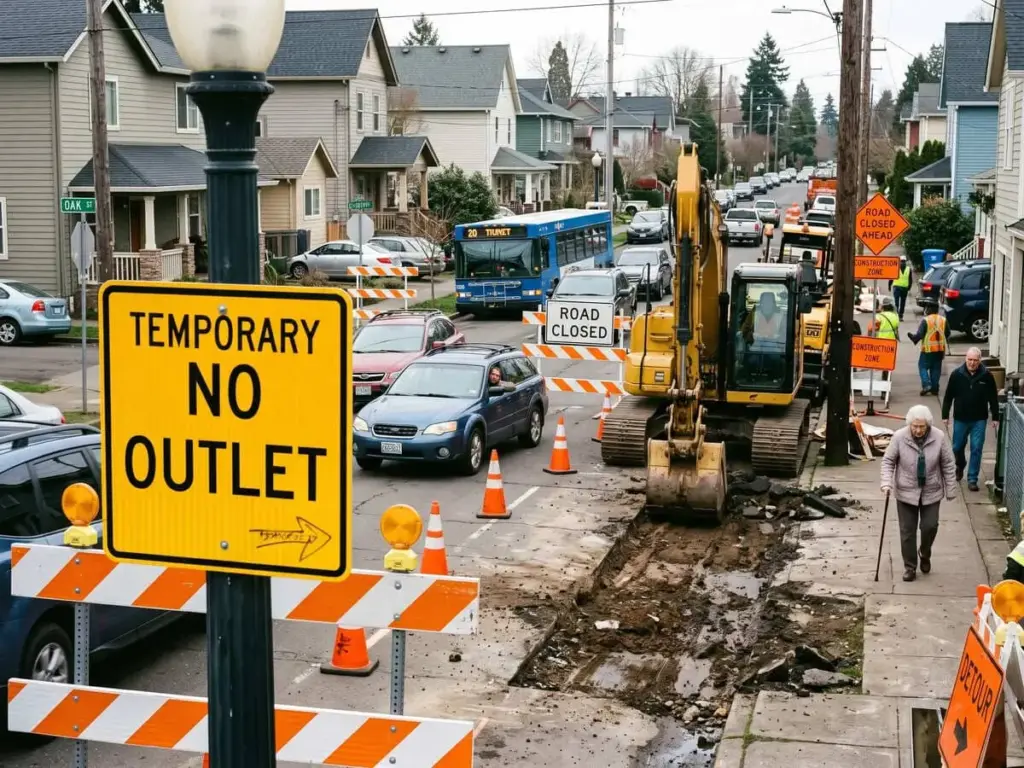
A street that normally connects through to another road can stop working that way the moment construction closes one end. The road network hasn’t physically changed. 하지만, it now functions exactly like a no outlet 영역. There’s one entrance and no way through. If nobody posts a sign to say so, drivers who know the street as a through route keep driving until they hit the closure. GPS-dependent drivers are especially likely to do this, since they have no reason to expect a dead end.
Our team has seen this play out on real sites. The closure itself was signed correctly. 하지만, nobody flagged the secondary effect. The street beyond the closure was now functionally a dead network, and outside traffic had no warning before committing to it. That’s a temporary no outlet sign situation the crew never planned for, because the original traffic control plan only accounted for the closure point itself.
이 가이드에서는 세 가지 사항을 다룹니다.: why this gap gets missed, how to tell whether a closure needs No Outlet signage in addition to the closure signs, and how to remember to pull it once the closure ends.
주요 테이크 아웃
- Temporary Closures Create Temporary No Outlet Conditions: A street doesn’t need to be permanently isolated to need a No Outlet sign; a construction closure can create the same effect for weeks or months.
- Sign Where Drivers Still Have a Choice: The sign needs to go where a driver can still pick a different route, not at the closure point itself.
- Navigation Apps Won’t Catch This: Most GPS routing doesn’t reflect a fresh construction closure in real time, which makes the physical sign the only reliable warning.
- Interior Intersections May Need the Directional Variant: If the isolated network has branching streets, W14-2a signs at interior intersections matter as much as the entrance sign.
- Remove It When the Closure Ends: A No Outlet sign left up after the road reopens becomes a permanent, incorrect signal that misleads drivers indefinitely.
Why This Gap Gets Missed on Real Sites
Traffic control plans naturally focus on the closure point. That’s where the barricades, the Road Closed signage, and the detour routing all live. It’s also where inspectors typically check compliance first. The secondary effect doesn’t show up on the plan unless someone specifically thinks to add it. Everything upstream of the closure has just become a no outlet network, and that fact tends to go unnoticed.
The result is a closure that’s fully compliant at the point of work. 그 동안에, drivers approaching the isolated section from the opposite direction get no warning at all until they reach the barricade themselves.
No Outlet vs. 막다른 골목: Which One Fits the Closure
A construction closure that isolates a single road, with no branching streets, functions like a Dead End for as long as it’s in place. A closure that isolates a broader network of streets calls for something different. 거기, residents and deliveries still need normal access, but through traffic no longer has a route out. That situation needs a temporary no outlet sign 대신에.
The distinction matters because it changes what a driver should expect. A Dead End sign tells a driver the road simply stops. A No Outlet sign tells a driver they can still get where they’re going inside the area, but they won’t be able to continue through it. The Federal Highway Administration sets out both sign types and their intended use in MUTCD 부분 5: Traffic Control Devices for Low-Volume Roads, which applies the same logic whether the condition is permanent or created by a temporary closure.
배치 및 기간: Two Different Traffic Control States
| 상태 | Where the Sign Goes | 지속 |
|---|---|---|
| Permanent no-outlet network | At the fixed entrance to the network | Indefinite, matches the road’s permanent layout |
| Construction-created no-outlet condition | At the point where a driver still has an alternate route available, before committing to the isolated section | Only for the duration of the closure |
The construction case needs more attention to timing than the permanent case does. A permanent No Outlet sign doesn’t need anyone to remember to take it down. A temporary one does. That’s exactly where the next problem shows up.
Don’t Forget to Pull It When the Closure Ends
A temporary No Outlet sign left in place after the road reopens becomes actively wrong, not just outdated. Drivers who see it will still turn away from a route that now works fine. That defeats the reopening and can misdirect traffic for weeks if nobody catches it.
Building sign removal into the same checklist as the original placement is what actually prevents this. Treating removal as a separate cleanup task doesn’t work as well. The crew that put the sign up during mobilization should be the same one confirming it comes down during demobilization.
Building This Into the Broader Closure Plan
Catching this gap depends on one thing. Crews need to evaluate what a closure does to the surrounding network, not just the closure point itself. That’s a natural extension of the same thinking behind matching an entire device package to a closure type, instead of treating each sign as an isolated decision.
The Optraffic team builds closure packages that account for secondary effects like this one. Each package includes temporary No Outlet and Dead End signage sized for the closure’s actual duration, alongside the standard closure signage itself.
관련 독서
- 작업 구역 교통 통제 패키지: 일치하는 징후, 콘, 클로저 유형에 따른 채널라이저 및 채널라이저
- 추월 금지 구역 표지판: 2차선 도로에서 임대 및 건설 직원이 배치를 잘못한 경우
- One Way Traffic Control in Work Zones: 잘못된 충돌을 일으키지 않고 차선 전환에 서명하는 방법
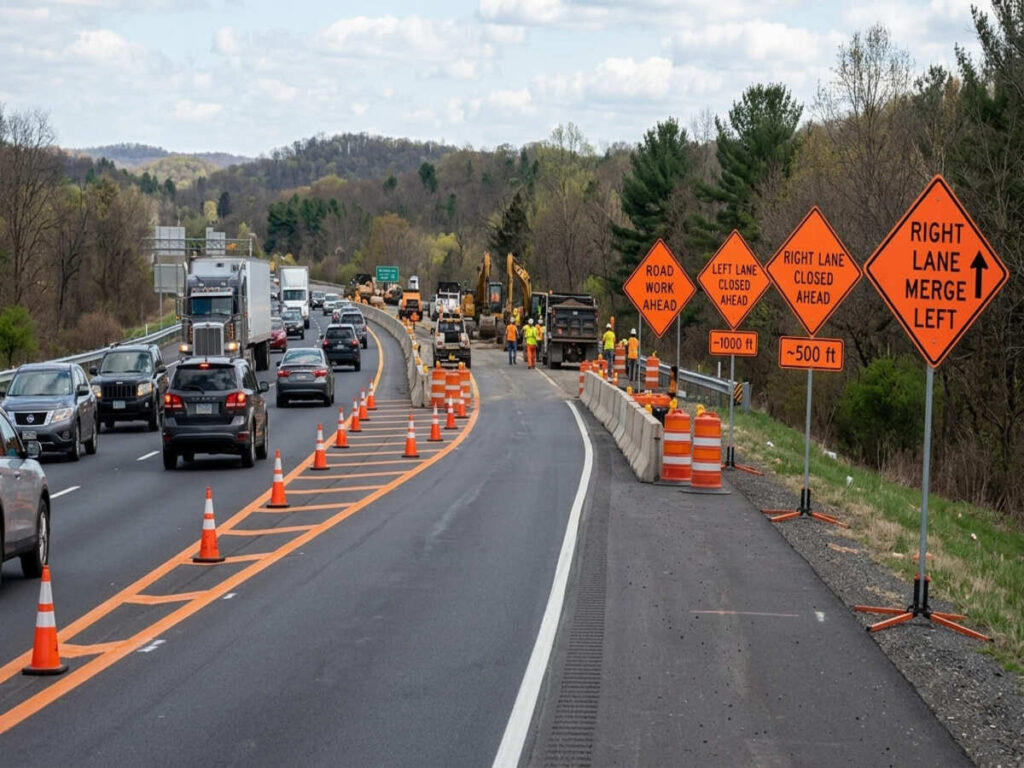
- 고속도로 병합 표지판: 작업 구역의 임시 차선 축소 배치 규칙
FAQ
Can a construction closure create a no outlet situation even on a normally through street?
예. If a closure removes the only other way out of a street or network, that area functions exactly like a permanent no-outlet area for as long as the closure is in place.
Do I need a No Outlet sign or a Dead End sign for a construction closure?
It depends on what’s isolated. A single road with no branches functions like a Dead End. A network of streets that still has internal access but no through route needs a No Outlet sign instead.
Will GPS navigation warn drivers about a new construction-related no outlet condition?
안정적이지 않음. Most navigation apps don’t update quickly enough to reflect a fresh closure. That makes the physical sign the main warning drivers actually see in time.
What happens if a temporary No Outlet sign isn’t removed after the closure ends?
It continues to tell drivers the area has no through route even after it does. This can misdirect traffic and undermine the point of reopening the road.
결론
A construction closure doesn’t just affect the point where work is happening. It can turn an entire street or network into a functional No Outlet area that the original traffic control plan never accounted for. That’s why the Optraffic team builds temporary No Outlet and Dead End signage into closure packages from the start. Removal gets treated as part of the same plan as placement, 나중에 생각하지 않고.