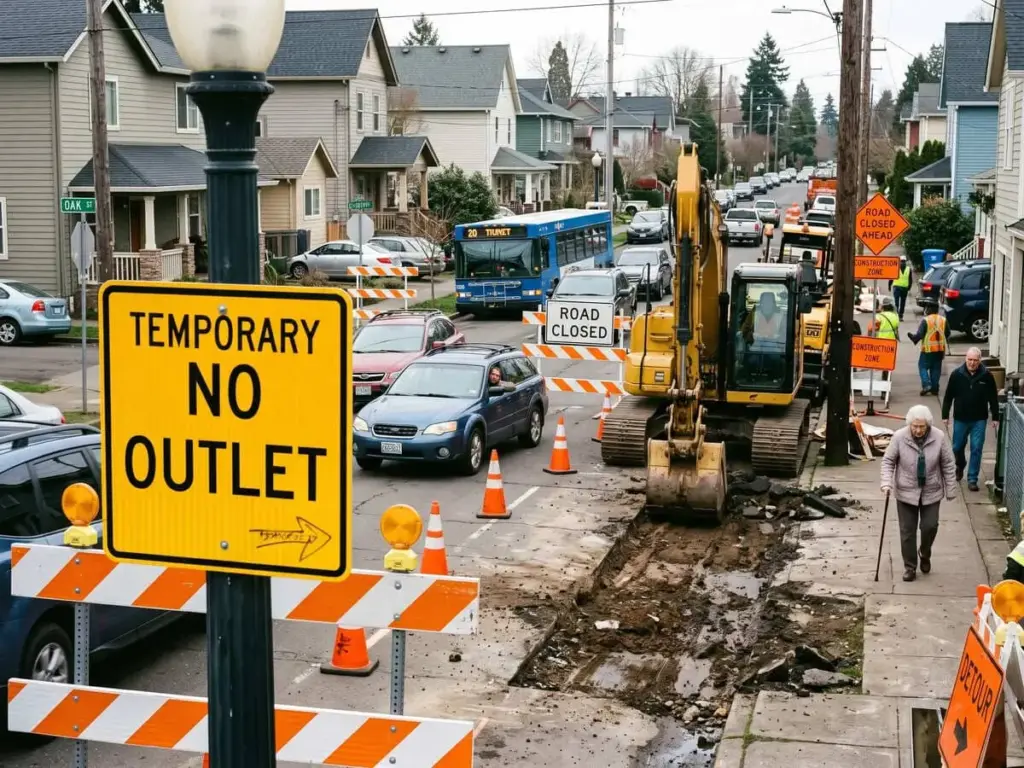
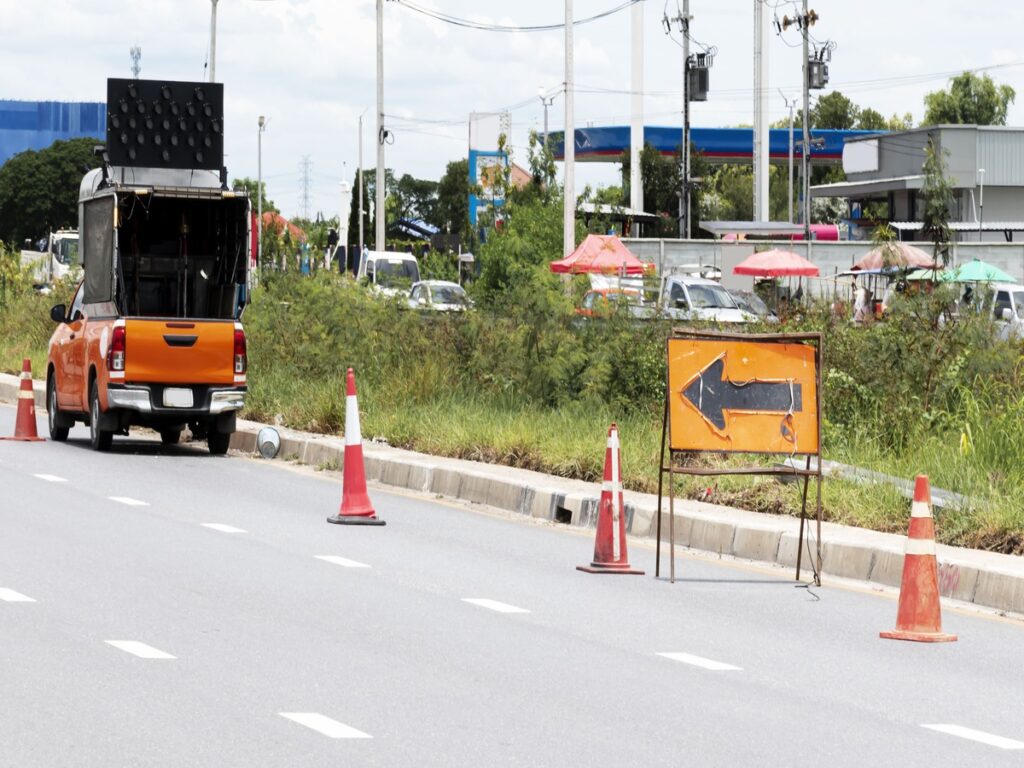
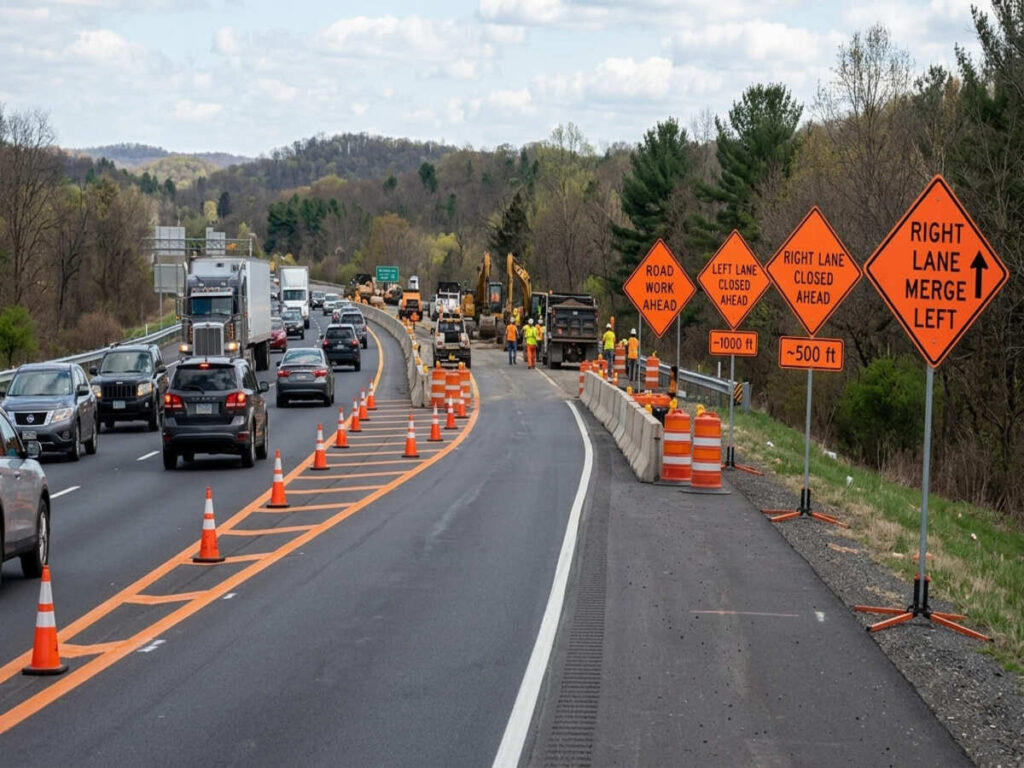
Most work zone setups fail for the same reason. The signage is right, but the cones and channelizers don’t match the actual closure type. A crew posts the correct warning signs. Then they fall back on whatever cone count and spacing the truck happens to carry. It doesn’t matter whether the job is a shoulder closure, a partial lane closure, or a full closure. 그만큼 work zone traffic control package a site needs changes with the closure type, not just the sign.
Our team has reviewed sites with this exact problem. The signage passed inspection on its own. 하지만, the cone taper leading up to it didn’t match what a partial lane closure actually requires. Drivers had accurate warning signs and an inconsistent physical taper guiding them into the closure. That mismatch is exactly where confusion, 그리고 충돌, happen.
This guide covers how closure type should drive the whole device package, not just the signage. It also covers the mismatch that shows up most often between what’s posted and what’s physically placed on the ground.
주요 테이크 아웃
- Closure Type Sets the Package: 어깨, partial lane, and full closures each need a different combination of signs, 원뿔, 및 채널라이저, not just different signs.
- Signage Alone Isn’t the Full Package: A site can pass a signage check and still confuse drivers if the cone taper doesn’t match.
- Channelizers Aren’t Interchangeable With Cones: Higher-speed or longer-duration closures often call for channelizers instead of standard cones.
- Taper Length Scales With Speed and Lane Width: The physical taper needs to match the posted speed, not a single default spacing.
- Package Consistency Matters More Than Any Single Device: A driver reads the whole setup together, not the sign and the cones as separate signals.
Why Closure Type Should Drive the Whole Package
A shoulder closure, a partial lane closure, and a full closure each ask drivers to do something different. A shoulder closure barely changes the driving lane at all. A partial lane closure removes a lane while traffic keeps moving past it. A full closure stops or reroutes traffic entirely.
Each of these needs its own combination of devices, not just its own sign:
| 클로저 유형 | Core Signage | Cones or Channelizers | 일반적인 사용 사례 |
|---|---|---|---|
| Shoulder closure | 어깨 작업을 앞두고, Right/Left Shoulder Closed | 표준 콘, wider spacing | Utility work, minor repairs away from the travel lane |
| Partial lane closure | 레인은 앞서 닫혔다, One Lane Ahead, Merge signage | Channelizers preferred at higher speeds, tighter taper spacing | Paving, milling, longer-duration lane reductions |
| Full closure | 도로 폐쇄, Detour signage | Barricades plus channelizers at the closure point | Bridge work, major utility cuts, full road reconstruction |
Signage Alone Doesn’t Tell the Full Story
A site can have every required sign correctly placed. 비록 그렇다 하더라도, drivers can still get confused if the physical taper doesn’t reinforce it. The sign tells a driver what’s coming. The cone or channelizer taper is what actually guides the vehicle into the new path. When the two don’t match, drivers get a warning without a clear physical path to follow.
This is the gap our team sees most often on partial lane closures. The signage is correct. 하지만, the taper uses whatever spacing was left over from the last job. It doesn’t reflect the spacing the current speed and lane width actually call for. The Federal Highway Administration sets these taper length and device spacing formulas in MUTCD 부분 6: 임시 교통 통제, and every U.S. jurisdiction references it when a plan gets checked.
Why Channelizers Aren’t Just Bigger Cones
Standard cones work well for lower-speed, shorter-duration closures. 채널 화기, 하지만, offer more visibility and stability. That matters most on higher-speed roads, or on closures that stay in place for weeks rather than hours.
Swapping a standard cone taper for a channelizer taper isn’t just an upgrade. 대신에, it’s a different device suited to a different risk level. A crew that defaults to cones on every job, regardless of speed or duration, ends up under-equipping the higher-risk closures. 동시에, they over-equip the lower-risk ones.
Building the Package Around the Closure, Not the Truck Inventory
The mismatch described above usually isn’t a knowledge gap. 대신에, it’s an inventory gap. A crew’s truck often carries a fixed set of cones and a standard sign kit. That’s what goes up, regardless of whether the job actually calls for channelizers or a wider taper.
The Optraffic team builds work zone packages around closure type specifically. Each package pairs the right signage with matched cones or channelizers, instead of treating them as separate purchases. A crew requesting a “partial lane closure package” gets signage, 테이퍼 장치, and spacing guidance built for that closure type. It’s not a generic kit assembled from whatever’s in stock.
관련 독서
- 작업 구역 표지판: 작업 유형별 패키지 빌더 서명
- 채널라이저 콘과 비교. 트래픽 콘: Understanding the Differences and Application
- 단일 차선 폐쇄 표지판 안내: MUTCD 설정 & 작은 초
- 1차선 전방 표지판 대. 도로 협소 대. 차선 끝: 귀하의 작업 영역에 실제로 필요한 것은 무엇입니까??
FAQ
What’s included in a work zone traffic control package?
A complete package matches signage, cones or channelizers, and taper spacing to the specific closure type. Signs and taper devices aren’t treated as separate purchases.
Do I need channelizers or standard cones for a lane closure?
It depends on speed and duration. Higher-speed roads and longer-duration closures generally call for channelizers, since they offer more visibility and stability than standard cones.
Why would a site fail an inspection even with the correct signs posted?
The physical taper, made up of cones or channelizers, has to match what the closure type and posted speed require. Correct signage with a mismatched taper still leaves drivers without a clear physical path to follow.
Does a shoulder closure need the same device package as a full closure?
아니요. A shoulder closure typically needs lighter signage and standard cone spacing, since it barely affects the travel lane. A full closure needs barricades and channelizers at the closure point itself.
결론
A work zone traffic control package is only as effective as its weakest matched device, and that’s rarely the sign. Closure type should set the whole package. That means the signage, the taper devices, and the spacing between them, not just what’s already sitting in the truck. 이것이 Optraffic 팀이 구축하는 이유입니다. work zone traffic control packages around closure type from the start. 이런 식으로, crews arrive with a matched set instead of assembling one from whatever’s on hand.