導入: The “Open Lane” 危険
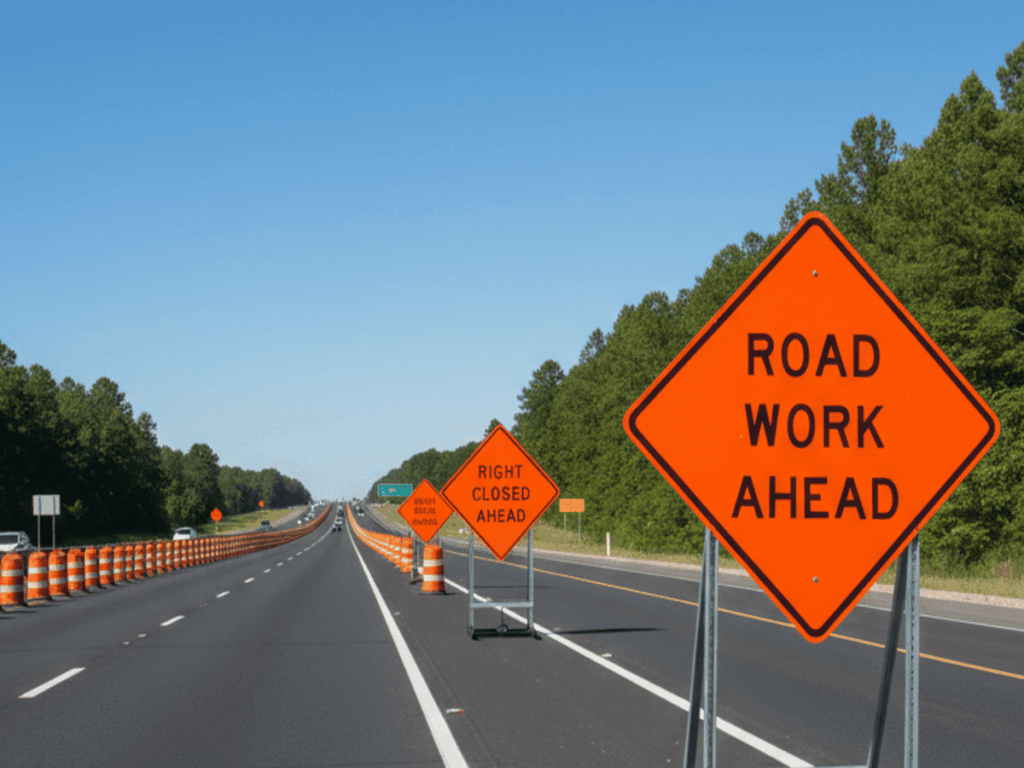
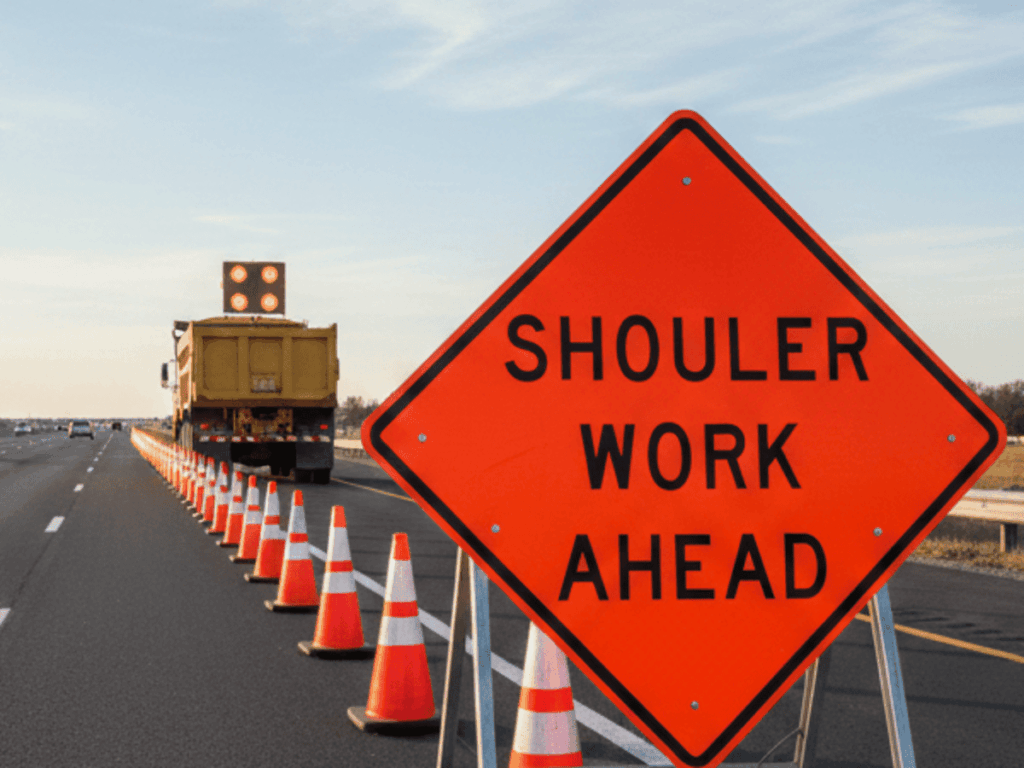
Shoulder maintenance keeps traffic lanes open. しかし, this convenience creates a false sense of security. Drivers often drift into the work area due to distraction. これを防ぐため, site managers must deploy a high-visibility Shoulder Work Ahead sign. This specific warning defines the visual boundary and protects the crew.
Site managers must treat shoulder work with the same rigor as a full lane closure. While the basic Four-Zone Structure applies here, shoulder closures require specific modifications to the standard spacing rules.
For a complete breakdown of the Four Zones and general spacing formulas, read our ワークゾーンのセットアップ 101: 工事用道路標識設置ガイド.
The Shoulder Work Ahead Sign: Your First Line of Defense
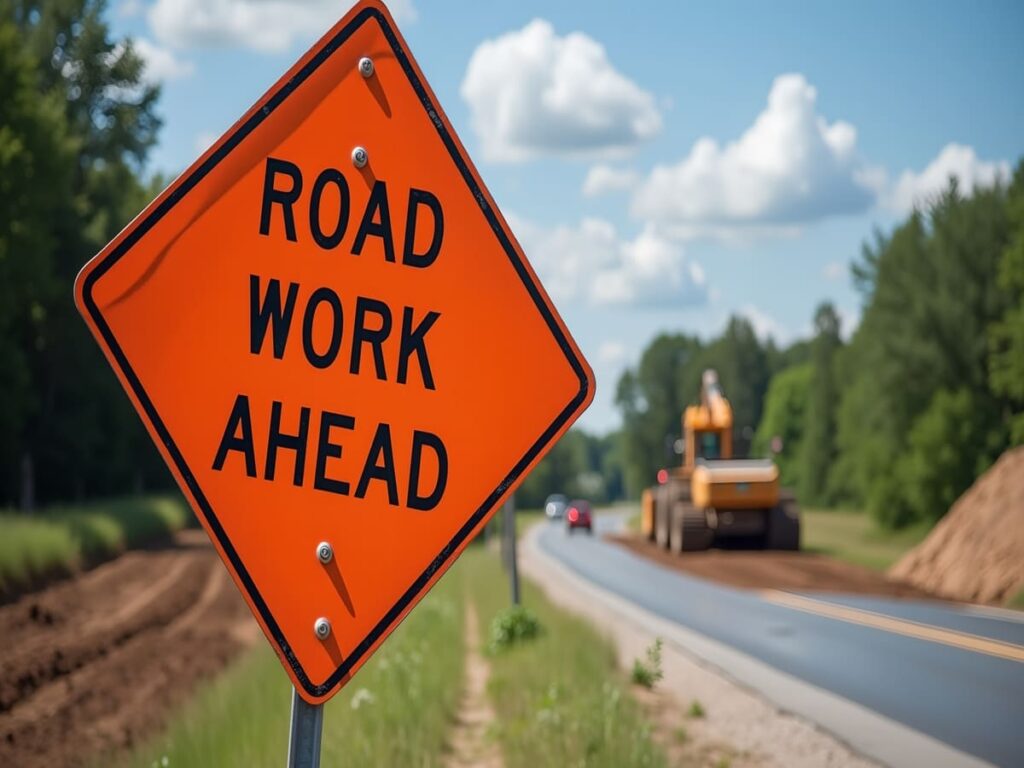
A generic warning often fails in this scenario. 標準 “先に道路作業” sign implies a lane closure. This causes drivers to merge unnecessarily. This creates “phantom traffic jams.”
The specific shoulder work ahead sign clarifies the situation. It tells the driver: “The travel lane is open, but the edge is occupied.” This legend keeps traffic moving. It also heightens awareness of the roadside crew.
Shoulder Work Ahead Sign MUTCD Requirements
均一な交通制御装置に関するマニュアル (mutcd) mandates high visibility for this work zone sign.
- 色: Orange background with black legend.
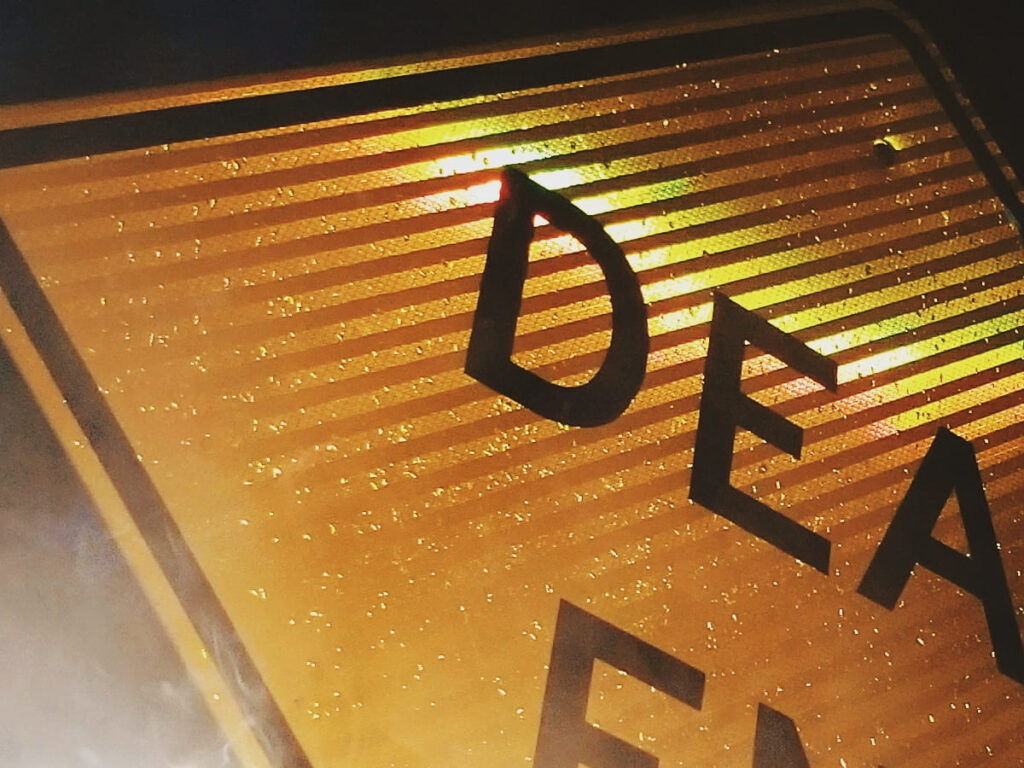
- 反射率: Use High-Intensity Prismatic (ヒップ) or Diamond Grade sheeting for night work.
- サイズ: Use 48″ ×48″ signs for highways. Use 36″ x 36″ signs for lower-speed urban roads.
オプトラフィック manufactures these 道路工事の標識 to meet all federal reflectivity standards. This ensures the shoulder ahead sign remains visible even in poor weather.
Calculating the Shoulder Taper (The “1/3 l” ルール)
You must close the shoulder gradually. A sudden block forces drivers to swerve. You need a “Shoulder Taper” constructed with high-visibility 交通コーン or road drums.
The formula differs from a standard lane closure. A shoulder taper requires One-Third (1/3) of the standard Taper Length (l).
The Math in Action
- Calculate L: 初め, determine the standard Taper Length (l) based on the speed limit and lane width. Refer to the standard MUTCD speed formulas for this base number.
- Divide by 3: Take that ‘L’ value and divide it by three.
- 例: If your standard L is 600 足, your Shoulder Taper must be at least 200 長さのフィート.
This shortened taper visually pushes wandering vehicles back into the travel lane. It protects the workspace without consuming excessive road space.
Arrow Board Rules for Shoulder Work Signs
Misusing arrow boards causes accidents. Never use a directional arrow (pointing left or right) for a shoulder closure.
- The Risk: A directional arrow tells drivers to “merge now.” If you use this on a shoulder, drivers will panic. They will merge into an adjacent active lane. This causes side-swipe collisions.
- 解決策: を使用します “Caution Mode”. This displays four flashing corners or a flashing horizontal bar.
- The Message: It tells drivers to “pass with care” but stay in their current lane.
オプトラフィック arrow boards feature a dedicated, one-touch Caution Mode. This prevents operator error during setup and ensures the 作業ゾーンサイン remain the primary source of directional information.
Placing the Shoulder Work Ahead Sign in Different Zones
Speed limits and road geometry change the rules. You must adapt the shoulder work sign layout to fit the specific environment. a “one-size-fits-all” approach fails here.
Highway Shoulder Ahead Sign Spacing
High speeds allow zero margin for error. Drivers need maximum reaction time to process the shoulder work ahead sign.
- Extended Warning Distance: MUTCD Table 2C-3 requires longer gaps. Place the first sign at least 1,000 feet upstream. 高速道路で (65+ MPH), extend this to 2,640 足 (0.5 マイル).
- Sign Size Matters: Use standard 48″ ×48″ サイン. Smaller 36″ signs vanish visually at highway speeds.
- 取り付け高さ: Install signs at a minimum height of 7 足. This clears guardrails. It also prevents mud splatter from obscuring the retroreflective legend.
- Positive Protection: A simple cone taper is often insufficient. Use Truck-Mounted Attenuators (TMAs) to shield the crew from high-impact collisions.
Urban Road Work Sign Placement
City streets present visual clutter. 私道, 交差点, and billboards compete for the driver’s attention.
- Reduced Spacing: Long gaps cause confusion here. Drivers might turn into a driveway between the sign and the work area. Reduce sign spacing to approximately 100 feet to keep the message immediate.
- Business Access: Do not block driveways with the shoulder ahead sign. Adjust placement slightly to keep commercial entrances open.
- 歩行者の安全: Shoulder work often blocks sidewalks. You must provide a compliant ADA path. Use longitudinal channelizers to separate walkers from active traffic.
結論: Compliant Shoulder Work Ahead Sign Setup
A shoulder closure is not a “minor” operation. It demands professional planning. You must calculate the taper correctly using the “1/3 l” ルール. You must select the specific shoulder work ahead sign to inform drivers without confusion. ついに, you must set your arrow board to Caution Mode to prevent dangerous merges.
Safety depends on the right equipment. Using a generic road work sign or a directional arrow creates liability. It puts your crew at risk.
Equip Your Fleet with Optraffic
Ensure your team has the right tools for the job. Optraffic supplies MUTCD-compliant road work signs, 頑丈なコーン, and programmable arrow boards. We design our equipment for high-visibility performance in both urban and highway environments.
今日お問い合わせください to secure your bulk order of compliant shoulder safety equipment.
よくある質問: Shoulder Work Signs & Setup Rules
It warns drivers that maintenance work occupies the shoulder. The actual travel lanes remain open. It tells drivers to proceed with caution but stay in their current lane.
On high-speed highways, place the sign at least 1,000 feet upstream. On low-speed urban roads, reduce this distance to 100 足. This prevents confusion with nearby intersections.
いいえ. Never use a directional arrow (left or right) for a shoulder closure. This causes dangerous, unnecessary merges. Always use the Caution Mode (flashing corners or bar) on your arrow board.
を使用します “1/3 l” ルール. 初め, calculate the standard lane closure taper length (l) based on the speed limit. それから, divide that number by three.
MUTCD requires 48″ ×48″ signs for freeways and high-speed roads. You may use smaller 36″ x 36″ signs on lower-speed urban streets or secondary roads.