I veicoli parcheggiati sui prati aziendali causano molti più danni di quanto suggerisca la sola estetica. Terreno compattato, zolla strappata, linee di irrigazione interrotte, e i margini di terreno accidentato si traducono direttamente in sforamenti del budget delle strutture – e si ripetono ogni stagione senza una chiara posizione di applicazione. Selezionando il diritto prato commerciale senza segnaletica di parcheggio è il primo, intervento più conveniente a disposizione dei direttori delle strutture che gestiscono i perimetri paesaggistici.
Il centro di costo nascosto: Quanto costa effettivamente alla tua struttura il parcheggio in erba non autorizzato
Costi di riparazione del paesaggio che non compaiono mai nel rapporto di parcheggio
Sostituzione della zolla per una singola sezione danneggiata dal veicolo $300 A $800 per 500 piedi quadrati alle tariffe degli appaltatori commerciali in 2025. Aggiunta riparazione linea di irrigazione $150 A $600 per pausa, e la bonifica della compattazione del suolo che richiede aerazione e concimazione con composti che figurano stagionalmente. Queste spese compaiono raramente nei rapporti di controllo dei parcheggi: emergono tranquillamente nelle fatture di manutenzione dei terreni, rendere il parcheggio in erba uno dei centri di costo più invisibili nella gestione delle strutture.
I direttori delle strutture che tengono traccia dei costi di riparazione del paesaggio separatamente dalle operazioni di parcheggio trovano costantemente spiegazioni sui danni indotti dai veicoli 15 A 25 percentuale dei superamenti annuali della manutenzione del terreno. Distribuzione prato commerciale senza segnaletica di parcheggio nei punti perimetrali vulnerabili converte la spesa reattiva in una spesa fissa, risorsa esecutiva a basso costo.
Esposizione di responsabilità derivante dall'accesso incontrollato di veicoli su terreni morbidi
Il tappeto erboso con solchi crea superfici pedonali irregolari adiacenti ai percorsi pedonali. Quando tali irregolarità ostacolano i percorsi conformi all'ADA o creano rischi di inciampo, il proprietario della struttura è esposto a una potenziale esposizione alla responsabilità dei locali ai sensi dell'Americans with Disabilities Act e degli standard statali applicabili in materia di responsabilità civile. I camion per le consegne notturne e i pendolari in eccesso – i due trasgressori con il maggior volume di traffico nei campus aziendali – in genere accedono a terreni morbidi durante le finestre di scarsa visibilità quando le forze dell’ordine sono assenti.
La segnaletica affissa costituisce un avviso prima facie della restrizione del proprietario dell’immobile. Senza quella documentazione agli atti, l'autorizzazione al traino e la difesa dalla responsabilità diventano molto più difficili da mantenere. I segnali di divieto di sosta montati a terra e posizionati in tutti i punti di accesso creano il documento legale da cui dipende l'applicazione.
Il problema dell'attrito del tosaerba: Perché i segnali economici aggravano la perdita
I tosaerba commerciali che operano lungo i margini del tappeto erboso colpiscono abitualmente segnali fissati in modo improprio, spezzare pali leggeri e triturare pannelli di plastica ondulata. Un singolo ciclo di taglio può distruggere un segnale di tipo residenziale installato da un team della struttura settimane prima. Il costo di sostituzione, anche a un prezzo unitario basso, si moltiplica durante l'intera stagione di taglio fino a raggiungere una cifra che supera il costo iniziale dell'hardware in alluminio per carichi pesanti.
La decisione materiale non è una preferenza: è un calcolo del costo del ciclo di vita. Segnaletica di divieto di parcheggio in plastica ondulata sostituita due volte a stagione $15 A $25 ciascuno costa più in tre anni di un singolo .080-unità in alluminio calibro con una durata di servizio verificata di 10 anni.
Definire il perimetro: Messaggi di segnaletica che creano confini erbosi legalmente difendibili
Fondamento “Divieto di parcheggio sull’erba”.’ Messaggistica: la prima linea di difesa perimetrale
Generico “Parcheggio vietato” i segnali posti ai margini del tappeto erboso creano ambiguità sulla superficie a cui si applica la restrizione. I conducenti che parcheggiano parzialmente su asfalto e parzialmente su erba possono ragionevolmente contestare l'applicazione della normativa senza che venga pubblicata una dicitura specifica sulla superficie. Prato commerciale senza segnaletica di parcheggio recante la leggenda “Divieto di sosta sull'erba” eliminare tale ambiguità e rimuovere il divario interpretativo sfruttato dai trasgressori.
Le opzioni del messaggio secondario per contesti operativi specifici includono “Tieni lontano dall'erba,” “Nessun accesso ai veicoli oltre questo punto,” E “Vietato parcheggiare su tappeto erboso.” Ognuno di essi ha un tono di applicazione distinto, da didattico a proibitivo, e i direttori delle strutture dovrebbero selezionare messaggi coerenti con la posizione di applicazione che intendono mantenere..
Direzionalità della freccia: definizione dell'esatto confine orizzontale del tappeto erboso
Freccia singola prato commerciale senza segnaletica di parcheggio designano confini unidirezionali e funzionano bene agli ingressi delle proprietà dove la restrizione inizia in un punto di transizione specifico. I segnali a freccia bidirezionali a doppia punta definiscono un margine lineare e continuo del tappeto erboso: la configurazione preferita lungo estesi buffer paesaggistici tra parcheggi e campi in erba. Posizionamento in ogni punto di transizione da asfalto a tappeto erboso, ancoraggio angolare perimetrale, e il percorso di accesso secondario colma le lacune di copertura attraverso le quali i trasgressori si muovono.
Linguaggio di applicazione che autorizza il rimorchio e scoraggia il ripetersi di violazioni
“I trasgressori verranno rimorchiati a spese del proprietario” trasforma un segnale direzionale in uno strumento giuridico. La maggior parte delle giurisdizioni richiede che questa lingua - o la lingua equivalente dell'ordinanza municipale sul rimorchio - sia affissa in tutti i punti di accesso prima che un rimorchio privato sia legalmente autorizzato. I team delle strutture che gestiscono campus con finestre di consegna notturne attive dovrebbero integrare la segnaletica primaria “Traino forzato 24 Ore” pannelli per colmare il divario di applicazione notturna ad alto rischio.
Specifiche dei materiali che sopravvivono alle operazioni su terreni commerciali
Alluminio resistente: l'unico materiale perimetrale permanente per terreni commerciali
.080-l'alluminio antiruggine è lo standard prestazionale per la segnaletica perimetrale permanente del tappeto erboso. A quel calibro, il pannello resiste alla deformazione dovuta all'umidità dell'irrigazione, sopravvive ai movimenti del terreno gelo-disgelo senza rompersi, e resiste ai colpi accidentali di scarico della falciatrice che distruggono i materiali più leggeri. Le finiture verniciate a polvere o smaltate a forno prolungano la vita estetica del prato commerciale senza segnaletica di parcheggio nei campus aziendali di fascia alta dove l'uniformità visiva è una priorità nella gestione della proprietà.
Un cartello in alluminio opportunamente specificato ammortizza all'incirca il suo costo unitario $5 A $8 all'anno per una durata di servizio verificata di 10 anni. Un ciclo di sostituzione della plastica ondulata, anche a $20 per unità - composti a $60 nello stesso periodo tenendo conto dei guasti stagionali. I calcoli relativi all’approvvigionamento favoriscono l’alluminio a tutti i livelli quantitativi superiori alle cinque unità.
Requisiti dei teli riflettenti per l'applicazione dei turni serali e notturni
| Grado di fogli | Riflettività | Miglior caso d'uso | Consigliato per |
| PRISMATICO PROPRIETTO INGEGNERE (EGP) | Standard | Perimetri a basso traffico con illuminazione ambientale | Lotti interni del campus |
| Prismatico ad alta intensità (ANCA) | Alto | Consegne serali attive o campus con turno notturno | Strade perimetrali, aree di servizio posteriori |
| Grado di diamanti (Dg) | Premium | Strade perimetrali ad alta velocità o bui campus rurali | Grandi campus industriali |
Fonte: Standard di retroriflessione FHWA MUTCD
Non riflettente prato commerciale senza segnaletica di parcheggio non riuscire a fermare l'autista della consegna che effettua a 10 Corsa del pomeriggio. Quella finestra specifica: dopo l'orario lavorativo, prima dell'arrivo del personale di terra: rappresenta il periodo a più alto rischio di danni al tappeto erboso nella maggior parte dei campus aziendali. Il rivestimento HIP garantisce che i segnali di divieto di parcheggio montati a terra rimangano leggibili alla distanza dei fari attraverso l'intera finestra di controllo notturno.
Plastica ondulata: il materiale giusto per il giusto caso d'uso temporaneo
Segnaletica di divieto di parcheggio in plastica ondulata (Coroplast) svolgere una funzione legittima ma ristretta: distribuzione a evento singolo, controllo stagionale di breve durata, o marcatura perimetrale temporanea di durata inferiore a 30 giorni. La degradazione UV inizia all'interno 6 A 18 mesi di esposizione continua al sole, e il materiale non può trattenere un picchetto di ancoraggio sotto la pressione del terreno umido o resistere al contatto con la falciatura commerciale.
I team di approvvigionamento non dovrebbero mai specificare i segnali di divieto di parcheggio in plastica ondulata come materiale perimetrale permanente in un contratto di gestione delle strutture. Per impieghi temporanei su superfici pavimentate, i direttori delle strutture possono esaminare le opzioni di configurazione rapida per il controllo della superficie pavimentata a breve termine per identificare l'hardware corretto per quel contesto.
Standard di dimensionamento commerciale: perché 12 X 18 È il benchmark della gestione delle strutture
Ingegneria della visibilità su scala immobiliare
UN 12″ x 18″ la facciata del segnale fornisce un'altezza adeguata della legenda per la leggibilità del conducente a velocità di avvicinamento di 10 A 15 mph: la gamma standard per le strade interne del campus. A quelle dimensioni, un'altezza della legenda primaria di 2 pollici soddisfa la soglia minima di leggibilità commerciale a 50 piedi di distanza di avvicinamento. Residenziale 10″ X 14″ i segnali scendono al di sotto di tale soglia e introducono una lacuna nell'applicazione ogni volta che un conducente afferma che la restrizione non era visibile in tempo per fermarsi.
I direttori delle strutture che gestiscono strade perimetrali adiacenti alle strade pubbliche o agli ingressi principali del campus con requisiti di visibilità più ampi dovrebbero specificare 18″ X 24″ unità. Il formato più grande estende la leggibilità a 75+ piedi, l'avvicinamento coprente accelera fino a 25 mph senza ambiguità.
Codici colore standard e formattazione della legenda
La legenda nera su sfondo bianco è lo standard allineato al MUTCD per la segnaletica di proprietà privata senza parcheggio e massimizza il contrasto a distanza. Pannelli di intestazione con accento rosso: utilizzati per “Divieto di sosta con rimozione forzata” designazioni: aggiungi l'urgenza visiva appropriata per le zone ad alta violazione. Uniformità visiva in tutto il campus prato commerciale senza segnaletica di parcheggio riduce la confusione del conducente e rafforza la percezione di un'applicazione attiva.
Branding personalizzato per proprietà aziendali di fascia alta
I campus aziendali di Classe A possono integrare le intestazioni dei nomi delle proprietà: “One Meridian Park: divieto di sosta sull'erba” - e bordi di colori aziendali abbinati a Pantone in sequenze di segnaletica personalizzate. La maggior parte dei fornitori commerciali sblocca le tirature di stampa personalizzate su 10 A 25 minimi unitari, una soglia quantitativa raggiunta dalla maggior parte dei campus di medie dimensioni nell'ambito di un singolo audit perimetrale.
Gestione di un campus multiedificio? Richiedi un preventivo per quantità per marchi personalizzati prato commerciale senza segnaletica di parcheggio standardizzare la segnaletica su tutti i perimetri del tappeto erboso, a partire da un minimo di 10 unità.
Ingegneria a terra per superfici morbide: pali, Flange, e Sistemi di Ancoraggio
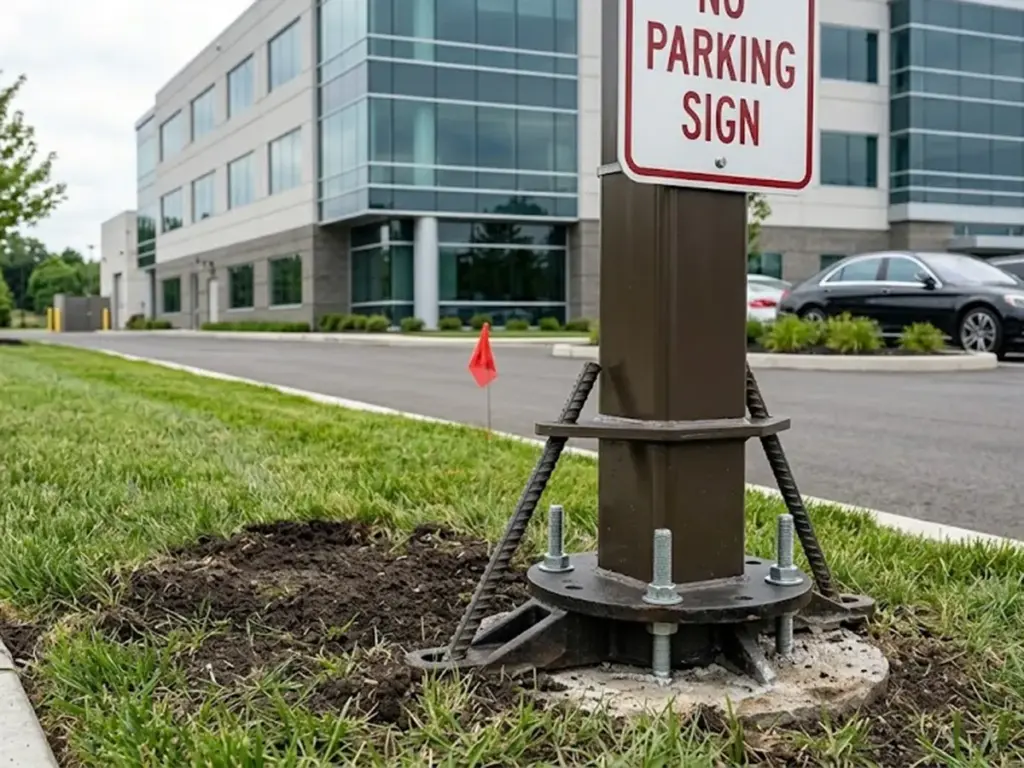
Kit di segnaletica e picchetti per carichi pesanti: lo standard permanente per terreni morbidi
Appuntito, picchetti metallici resistenti alla flessione guidati 18 A 30 pollici nel terreno commerciale forniscono la base di ancoraggio primaria per i segnali di divieto di parcheggio permanenti montati a terra. L'elemento fondamentale di differenziazione in qualsiasi specifica di kit di picchetti è la flangia antitorsione: una staffa saldata che impedisce al pannello segnaletico di ruotare perpendicolarmente al flusso del traffico sotto la pressione del terreno sciolto o un carico di vento forte. Senza flange antitorsione, i segnali installati correttamente sono rivolti nella direzione sbagliata entro pochi giorni dall'installazione, distruggendo completamente il loro valore di applicazione.
I pali zincati rappresentano la specifica corretta per gli ambienti con tappeti erbosi irrigati. I pali in acciaio standard sviluppano ruggine superficiale nel corso di una singola stagione irrigua, macchiando sia il pannello segnaletico che la zolla circostante. Le macchie di ruggine in un campus aziendale di fascia alta creano un problema estetico che il team del parco dedica quindi ulteriori ore di lavoro alla correzione.
Stabilizzazione del terreno con vento forte e gelo-disgelo
Nelle zone climatiche settentrionali, Il ciclo di gelo-disgelo sposta i pali poco profondi mentre l'umidità del terreno si espande e si contrae. Una profondità di inserimento minima di 24 pollici è lo standard del settore per le installazioni di picchetti commerciali nelle zone resistenti all'USDA 5 e sotto. I terreni sabbiosi e argillosi richiedono una superficie della flangia più ampia per resistere allo sfilamento sotto carico; i terreni argillosi richiedono la preumidificazione del punto di installazione prima di piantare i picchetti per evitare la flessione dell'acciaio.
I team delle strutture dovrebbero includere un'ispezione trimestrale dei pali e un controllo della nuova sede nella POS della gestione dei terreni. I segnali di divieto di parcheggio montati a terra che elencano o ruotano non vengono letti e i segnali non letti non generano alcun valore di applicazione.
La base temporanea in gomma garantisce l'implementazione non invasiva del tappeto erboso
Supporti da pavimento portatili con base in gomma che vanno da 27 A 60 I libbre forniscono un controllo perimetrale flessibile durante eventi speciali su tappeti erbosi di alto valore senza penetrazione dei picchetti o rottura delle zolle. La base da 27 libbre gestisce lo schieramento di eventi con tempo calmo su superfici erbose piatte; 60-le basi in libbre sono necessarie ovunque i veicoli si avvicinino al segnale a bassa velocità o l'esposizione al vento supera le condizioni di brezza leggera. Le basi in gomma sono impilabili e riutilizzabili: calcolo dell'ammortamento dei costi per evento 20 A 30 i cicli di distribuzione in genere comportano un costo inferiore $3 per evento per segno.
Le configurazioni con base in gomma rappresentano la soluzione standard per i segnali di divieto di parcheggio temporanei in erba per i campi sportivi, prati per eventi esecutivi, e perimetri di proprietà affittate in cui l'installazione di picchetti non è consentita dai termini del contratto di locazione.
Difesa perimetrale multistrato: abbinamento della segnaletica con le barriere fisiche
Le ruote commerciali si fermano sulla linea di transizione da asfalto a tappeto erboso
I cordoli dei parcheggi commerciali ancorati lungo il bordo perimetrale dell'asfalto creano un fermo fisico per i veicoli che l'applicazione della sola segnaletica non può. Un conducente che ignora pubblicato prato commerciale senza segnaletica di parcheggio non può ignorare un fermo della ruota in gomma o plastica riciclata da 4 pollici ancorato a filo con la linea del tappeto erboso. L'associazione di ogni segnale di punto di transizione con un arresto della ruota elimina il “Non l'ho visto” difesa e impedisce ai veicoli di avanzare su terreni morbidi anche in condizioni di scarsa illuminazione.
I team delle strutture che gestiscono le zone di trasporto merci su superficie dura lungo i perimetri del tappeto erboso dovrebbero tenerlo presente segnaletica zona di carico dedicata e le configurazioni delle barriere hanno uno scopo operativo strutturalmente diverso e richiedono un quadro di specifiche separato.
Integrazione estetica hardscaping per campus aziendali di classe A
I massi decorativi in granito o pietra da campo posizionati nei punti di ingresso del margine del tappeto erboso offrono una barriera fisicamente invalicabile che si integra naturalmente con il paesaggio aziendale di fascia alta. I segmenti di recinzione architettonica, in alluminio o ferro battuto, fungono anche da elemento di design, eliminando completamente l'accesso dei veicoli. Le file di siepi sempreverdi piantate lungo i confini estesi del tappeto erboso aggiungono uno strato di deterrenza stagionale che fonde l'applicazione del perimetro con l'identità del paesaggio piuttosto che segnalare una posizione di sicurezza.
Quando passare ai partenariati di autorizzazione e applicazione del ritiro
Una volta posizionata la segnaletica e le barriere fisiche, i direttori della struttura possiedono le basi documentate necessarie per eseguire un contratto di rimorchio con un operatore di rimorchio privato. La maggior parte delle giurisdizioni richiede l'affissione della segnaletica in tutti i punti di accesso prima che un rimorchio privato sia legalmente autorizzato, rendendo la fase di installazione della segnaletica non negoziabile anche quando le barriere fisiche gestiscono il carico di applicazione principale.
Quando le fatture mensili per la riparazione del paesaggio superano costantemente $500, il caso del ROI per un contratto esecutivo completo di barriera più traino è stabilito matematicamente. La maggior parte dei direttori delle strutture può autorizzare tale livello di spesa per segnaletica e hardware all'interno dell'autorità di bilancio discrezionale senza un ciclo di approvazione del capitale.
Manuale di implementazione: un quadro di audit del perimetro del campus per i direttori delle strutture
Il controllo del perimetro a quattro zone: mappatura dei punti di vulnerabilità del tappeto erboso
I direttori delle strutture dovrebbero segmentare il perimetro di ogni campus in quattro zone di applicazione prima di specificare la quantità di segnali o hardware:
- Zona 1 — Gole d'ingresso: Transizioni dal vialetto del campus alla proprietà con la più alta frequenza di violazioni.
- Zona 2 — Linee di transizione dall'asfalto al manto erboso: Bordi del parcheggio dove i veicoli avanzano sull'erba: richiede l'arresto delle ruote e l'abbinamento del segnale.
- Zona 3 — Campi di overflow degli eventi: Aree erbose designate o ad hoc utilizzate durante gli eventi di picco di occupazione: zona di distribuzione temporanea della segnaletica.
- Zona 4 — Perimetri di servizio e di consegna: Margini del tappeto erboso sul retro dell'edificio adiacenti alle aree di carico - finestra di violazione notturna.
La mappatura di queste quattro zone produce una stima strutturata della quantità di segnaletica e un elenco di specifiche hardware che alimenta direttamente un flusso di lavoro di approvvigionamento.
Calcolo della quantità di segni, Spaziatura, e kit hardware per ordini all'ingrosso
Lo standard di spaziatura commerciale per l'applicazione del perimetro è un segno per 50 A 75 metri lineari di confine del tappeto erboso in condizioni standard e un segno per 30 A 40 piedi in zone ad alta violazione. Un campus di medie dimensioni di 5 A 10 acri in genere richiedono 20 A 40 prato commerciale senza segnaletica di parcheggio in tutte e quattro le zone. Ordini all'ingrosso sopra 10 le unità in genere sbloccano i prezzi in quantità; ordini di cui sopra 25 le unità in genere sbloccano percorsi di branding personalizzati.
Coordinamento dell'installazione con gli addetti al terreno e all'irrigazione
Il coordinamento pre-installazione deve includere l'ottenimento delle mappe delle linee di irrigazione prima che vengano piantati eventuali paletti. Il briefing del personale di terra dovrebbe comunicare le posizioni dei picchetti alle squadre di falciatura, e le bandiere fisiche dovrebbero identificare le posizioni dei segnali per la prima stagione completa di sfalcio. Un'ispezione trimestrale e un controllo della riposizionamento integrati nella SOP di gestione del terreno garantiscono che ogni segnale di divieto di sosta montato a terra funzioni secondo le specifiche attraverso il movimento stagionale del terreno.
Confini dell'ambito: cosa non copre questo sistema di segnaletica perimetrale
Perimetri dei cantieri industriali e delle zone di costruzione
La segnaletica delle zone di costruzione OSHA e MUTCD opera in un ambiente normativo distinto da quello della proprietà commerciale privata. Dovrebbero fare riferimento i team delle strutture che gestiscono la costruzione attiva nel campus Sistemi di segnaletica conformi OSHA per il controllo perimetrale dei cantieri industriali per identificare il corretto quadro di conformità per tali ambienti.
Vialetto permanente in cemento e applicazione della superficie in asfalto
Divieto di parcheggio su superficie dura: piazzali in cemento, vialetti in asfalto, e tagli sui marciapiedi: richiedono hardware di montaggio diverso e spesso richiedono il coordinamento del traino da parte del comune. I direttori delle strutture che assicurano i vialetti d'ingresso pavimentati permanenti dovrebbero consultarsi soluzioni permanenti di segnaletica di divieto di parcheggio per vialetti per la corretta guida alle specifiche.
Costruire una strategia di controllo dei parcheggi a livello universitario che sia valida
Atteggiamento di applicazione unificato su tutti i tipi di superfici immobiliari
I campus aziendali in genere si estendono da quattro a sei tipi distinti di superfici e casi d'uso: margini del tappeto erboso, lotti interni pavimentati, vialetti d'ingresso, zone di carico, corsie di fuoco, e perimetri di costruzione. Una strategia di segnaletica unificata: materiali coerenti, grado di riflettività, codici colore, e il linguaggio di applicazione su tutte le superfici: elimina le lacune di responsabilità create da programmi di segnaletica incoerenti o specifici della superficie.
Quando passare dagli acquisti a segnale singolo a un controllo della segnaletica a livello di campus
Rinnovi del contratto di locazione, acquisizioni di campus, controlli assicurativi che segnalano un avviso pubblicato inadeguato, e le richieste ricorrenti di danni al paesaggio rappresentano tutti eventi scatenanti per un controllo completo della segnaletica del campus. Il risultato finale dell'audit, un documento con le specifiche della segnaletica superficie per superficie, diventa l'elenco principale degli appalti che elimina gli acquisti reattivi e la frammentazione dell'ordine di acquisto tra più fornitori.
Costruire il business case per l'approvazione della proprietà immobiliare
Il quadro del ROI è semplice: lo storico dei costi di riparazione del paesaggio più il costo del ciclo di vita del segno più il valore deterrente per il traino equivalgono al ROI netto dell'applicazione. La maggior parte dei budget per la segnaletica del campus 10 A 25 il livello di segno rientra nell'autorità di spesa discrezionale del direttore della struttura, non richiedendo alcun ciclo di approvazione del capitale. Prato commerciale senza segnaletica di parcheggio posizionato come un investimento per evitare i costi, non come una spesa, con un'approvazione interna costantemente chiara a livello di gestione della struttura, senza escalation.
Per il quadro completo che copre tutti gli scenari di controllo dei parcheggi nelle proprietà commerciali su ogni tipo di superficie, esplorare il guida completa alla segnaletica di controllo dei parcheggi commerciali per le proprietà aziendali - la risorsa autorevole per la strategia di controllo perimetrale a livello di campus.
Domande frequenti: Segnaletica di divieto di parcheggio per prati commerciali: riferimento rapido per il direttore della struttura
Q1: Qual è il miglior materiale per la segnaletica per un prato commerciale permanente, segnaletica di divieto di parcheggio installata su tappeto erboso irrigato?
.080-calibro in alluminio antiruggine con prismatico ad alta intensità (ANCA) i teli riflettenti sono le specifiche definitive per l'applicazione permanente del perimetro del tappeto erboso. I segnali di divieto di parcheggio in plastica ondulata si guastano sotto il contatto della falciatura commerciale e non riescono a trattenere gli ancoraggi dei picchetti sotto la pressione del terreno bagnato. L'alluminio si ammortizza $5 A $8 all'anno per una durata di servizio di 10 anni, rendendolo l'unico materiale che offre un ROI positivo a lungo termine per le operazioni commerciali.
Q2: A quale profondità devono essere piantati i paletti metallici per i segnali di divieto di parcheggio montati a terra su erba morbida o irrigata??
Porta la posta in gioco al minimo 18 pollici in condizioni standard e 24 pollici nelle zone climatiche settentrionali soggette a cicli di gelo-disgelo. Precoordinare le posizioni di installazione con le mappe di irrigazione per evitare colpi di linea. Specificare picchetti zincati per tutti gli ambienti irrigati. Includere l'ispezione trimestrale dei pali e il riposizionamento nella SOP di gestione del terreno per mantenere l'orientamento della segnaletica durante i movimenti stagionali del terreno.
Q3: È possibile utilizzare i segnali di divieto di parcheggio in plastica ondulata sui prati commerciali per il controllo del parcheggio degli eventi?
Sì, con condizioni rigorose. I segnali di divieto di parcheggio in plastica ondulata sono adatti per eventi singoli o implementazioni stagionali di durata inferiore a 30 giorni e dovrebbe essere montato 27 a basi in gomma da 60 libbre piuttosto che a picchetti per tappeti erbosi di alto valore dove la penetrazione della zolla non è accettabile. Coroplast non è appropriato come materiale perimetrale permanente: La degradazione UV inizia all'interno 6 A 18 mesi, e il contatto di falciatura lo distrugge completamente.
Q4: La dimensione del segnale è standard per l'applicazione del perimetro del tappeto erboso commerciale, e deve essere riflessivo?
12″ x 18″ è il minimo commerciale per i margini del tappeto erboso interno del campus con velocità di avvicinamento di 10 A 15 mph. La riflettività è operativamente necessaria – non facoltativa – per i campus con finestre di consegna serali o personale di turno notturno. PRISMATICO PROPRIETTO INGEGNERE (EGP) la lamiera soddisfa lo standard minimo; Prismatico ad alta intensità (ANCA) il rivestimento è la specifica corretta per ambienti notturni attivi in cui non è riflettente prato commerciale senza segnaletica di parcheggio creare un divario completo nell’attuazione.
Q5: In che modo i direttori delle strutture impediscono ai camion delle consegne e ai pendolari di parcheggiare sull'erba del campus quando la sola segnaletica è insufficiente??
Implementare un sistema di applicazione multilivello: le ruote commerciali si fermano ancorate in ogni punto di transizione dall'asfalto all'erba, massi decorativi o recinzioni architettoniche per perimetri di Classe A, “I trasgressori verranno rimorchiati a spese del proprietario” linguaggio di applicazione su tutti i post prato commerciale senza segnaletica di parcheggio, e un contratto di rimorchio privato con un operatore autorizzato. Documentare tutte le posizioni dei segnali pubblicati con fotografie per il fascicolo di responsabilità. Quando le fatture mensili per la riparazione del paesaggio superano $500, la tesi del ROI per l'applicazione completa della barriera più il traino è matematicamente stabilita.
Riferimenti
- Legge sugli Americani con Disabilità – Titolo III: Strutture ricettive pubbliche e commerciali:
- Codice antincendio internazionale (IFC) 2024 - Sezione 503: Strade di accesso agli apparati antincendio (rilevanti per l'applicazione dell'accesso perimetrale)
- Standard generali di settore OSHA: 29 Cfr 1910.22: Superfici di camminamento-lavoro
- Programma nazionale di ricerca in autostrada cooperativa (NCHRP) Rapporto 350
- NOI. Consiglio per l'edilizia verde (USGBC) LEED v4.1 — Credito per i siti sostenibili: Valutazione del sito