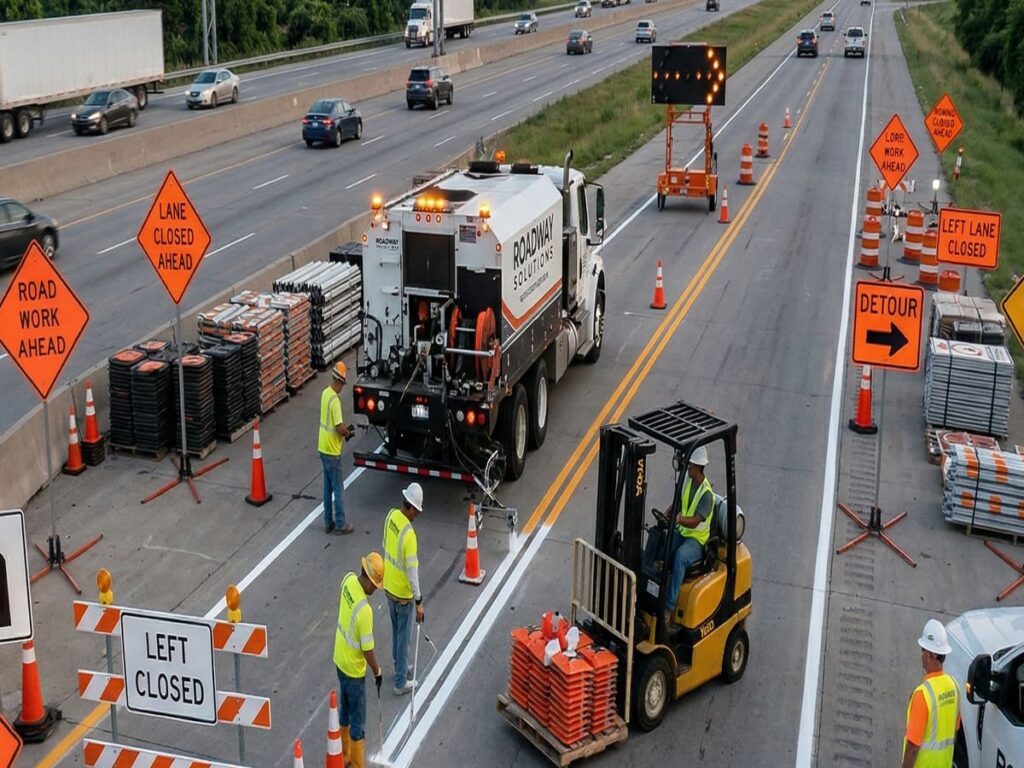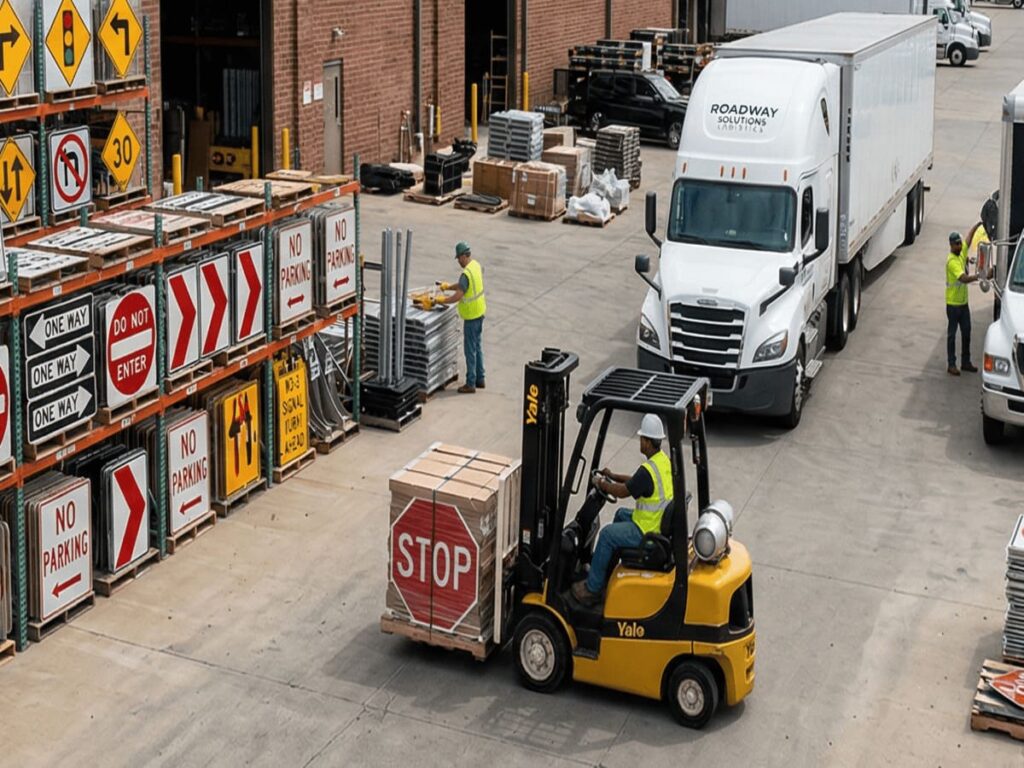

Approvisionnement en signalisation de construction détermine si un site traite les panneaux comme des « tableaux jetables » ou comme des panneaux réutilisables, actifs traçables. Il remodèle le contrôle des coûts, discipline de sécurité, et rythme opérationnel.
Les zones de travail sont des environnements à forte friction où la logistique engloutit souvent les profits. Les références de l'industrie suggèrent que jusqu'à 30% de signalisation de chantier est remplacé prématurément en raison de dommages causés par le transport, vol, ou un mauvais suivi des stocks plutôt qu'une usure réelle. Entre-temps, Les citations les plus fréquentes de l’OSHA impliquent souvent “Signal et marquage” carences, où les pénalités journalières en cas d'infractions graves peuvent dépasser $16,000.
Dans ce contexte, la signalétique ne peut pas rester dans la catégorie « fournitures diverses ». Quand les signes échouent, les équipages se bousculent. Quand les signes disparaissent, les superviseurs réorganisent sans poser de questions. Un modèle plus intelligent traite la signalisation comme un actif opérationnel avec un coût total de possession mesurable (Coût total de possession).
Pour un aperçu fondamental des types de sécurité et des exigences légales, référez-vous à notre Guide complet de la signalisation de construction.
Approvisionnement en signalisation de construction et coût total de possession (Coût total de possession)
La plupart des équipes connaissent le prix unitaire d'un panneau. Moins d’équipes connaissent le véritable coût par rotation de projet. Cet angle mort entraîne des gaspillages répétés.
Un moyen pratique de résoudre ce problème consiste à adopter le langage TCO de la gestion d'actifs.. Le cadre de gestion des actifs de l’ISO se concentre sur la gestion des actifs tout au long de leur cycle de vie pour générer de la valeur.. Cet état d’esprit correspond parfaitement à la signalisation de construction, parce que les panneaux ont un cycle de vie et qu'ils n'apportent de la valeur que lorsque les équipes peuvent les déployer rapidement, gardez-les lisibles, et réutilisez-les sur tous les sites.
Un modèle de TCO réalisable pour l'approvisionnement en signalisation de construction comprend quatre catégories:
- Coût d'acquisition: visages, substrats, cadres, publications, matériel de montage
- Coût de manutention: transport, temps de chargement, mouvements de cour, réinitialisations sur site
- Coût des pertes et dommages: écrasement des bords, décoloration UV, vol, mauvais placement
- Coût des temps d'arrêt: des retards lorsque le bon panneau est manquant ou illisible
Une fois que les équipes d’approvisionnement suivent ces catégories, la conversation change. Le prix cesse d’être le seul levier. Durée de vie, taux de dégâts, et la vitesse de mise à jour deviennent des facteurs de décision égaux.
Comprendre ces variables est la première étape pour transformer la signalisation d'un coût irrécupérable en un actif gérable.. Pour voir comment ces facteurs se traduisent en chiffres réels et comment votre stratégie d'approvisionnement peut générer une récupération budgétaire significative, lisez notre analyse complète.: Impact financier des panneaux de construction: Frais, Retour sur investissement, Économies.
Sélection stratégique des matériaux de signalisation de construction: Le retour sur investissement de la durabilité
Le choix des matériaux détermine si les panneaux survivront au chantier réel. Soleil, grincer, résidus de ruban adhésif, et une manipulation constante punit rapidement les décisions « bon marché ». Par conséquent, le meilleur approvisionnement en signalisation de construction la stratégie adapte le niveau de matériau à l'exposition et à l'intensité de la manipulation, pas aux durées de vie pieux.
Ce qui échoue en premier sur le terrain
Sur de nombreux sites, les matériaux n’« expirent » pas uniquement à cause des intempéries. Ils échouent à cause du stress opérationnel:
- les coins se plissent lors de l'empilage
- visages rayés pendant le transport
- l'impression s'abîme à cause d'essuyages répétés
- les panneaux se déforment lorsqu'ils sont stockés sous une charge inégale
- L'exposition aux UV atténue le contraste avec le temps
Ce modèle d’échec est important, car cela signifie que les achats doivent être optimisés pour gérer la durabilité, pas seulement l'évaluation extérieure.
Un modèle pratique pour les matériaux de signalisation de construction
Vous trouverez ci-dessous une manière conviviale d'envisager les substrats en matière d'approvisionnement.. Les plages de durée de vie varient selon le climat, protection d'impression, et comment les équipes gèrent les panneaux, les équipes doivent donc les traiter comme des éléments de planification, pas de garanties.
| Niveau matériel | Cas d'utilisation le mieux adapté | Pourquoi ça gagne | Signal commun de planification du cycle de vie |
|---|---|---|---|
| Plastique ondulé (Corroplaste) | messagerie à cycle court, échanges rapides, manipulation plus légère | faible coût, impression rapide, facile à déplacer | l'exposition aux UV en extérieur peut raccourcir la durée de vie; La protection UV le prolonge |
| Plastique ondulé robuste | déplacements répétés à travers les projets | meilleure rigidité, moins d'écrasement des bords | les équipes le traitent souvent comme le niveau en plastique de « rotation » |
| Matériau composite en aluminium (ACM) | chantiers pluriannuels, exposition élevée, réutilisation élevée | rigide, écurie, cote de service longue durée en extérieur | utilisation en extérieur souvent évaluée autour 10–15 ans selon les conditions |
Deux notes gardent ce tableau honnête.
D'abord, le plastique ondulé peut durer plus longtemps à l'extérieur grâce à la protection UV, mais la gestion réelle de la construction réduit souvent cette durée de vie théorique. Les fournisseurs de coroplast citent généralement une durée de vie plus courte sous UV direct sans protection et une durée de vie plus longue avec protection.
Deuxième, La durabilité de l’ACM semble souvent excellente sur le papier, pourtant, les graphiques et les pelliculages nécessitent encore une planification. Autrement dit, la durée de vie du substrat et la lisibilité des faces ne se terminent pas toujours en même temps.
Pour un examen plus approfondi des matériaux qui survivent le mieux aux conditions extrêmes, lire le message complet: Des matériaux pour panneaux de construction qui durent dans des environnements de chantier difficiles.
La logique de retour sur investissement que les acheteurs peuvent réellement utiliser
Une équipe d’approvisionnement n’a pas besoin de prévisions parfaites. Il a besoin de comparaisons reproductibles. Une méthode de retour sur investissement propre utilise le « coût par déploiement réussi »,» et non « coût par unité ».
- Une face à faible coût qui échoue après une rotation difficile peut coûter plus cher qu'une face premium réutilisée sur trois projets..
- Un substrat rigide qui empêche la déformation peut réduire la fréquence de réimpression et réduire le temps passé par l’équipe à « faire fonctionner un mauvais panneau ».
- Un matériau qui s'efface sans image fantôme peut préserver la lisibilité, ce qui protège la posture de conformité et réduit les retouches.
C'est pourquoi la signalétique durable de chantier devient un levier business, pas seulement un élément de sécurité. La valeur se compose au fil des rotations.
Le cadre d’approvisionnement en panneaux de construction modulaire
Un système modulaire constitue le moyen le plus rapide de réduire les déchets de remplacement sans ralentir les opérations.. L'idée de base est simple. Conserver la structure à long terme, et échange le message rapidement.
Découpler le cadre du graphique
En modulaire approvisionnement en signalisation de construction, l'équipe investit dans des composants longue durée:
- cadres
- poteaux et bases
- matériel de montage
- solutions de bords de protection
Ensuite, l'équipe traite les graphiques comme des inserts ou des faces spécifiques au projet.. Cette structure fait deux choses à la fois. Cela réduit la perte d’actifs, et il transforme les modifications de contenu en un processus contrôlé.
OPTRAFIC simplifie cela avec un guichet unique pour toute la signalisation du site. Ils fournissent tout, des cadres de signalisation robustes aux panneaux de sécurité standard et aux panneaux personnalisés, en une seule commande.. En obtenant toutes les pièces auprès d'un seul fournisseur, les équipes s'assurent que tout s'emboîte parfaitement et gagnent du temps en évitant plusieurs fournisseurs.
Des panneaux d'avertissement de base aux kits de montage complets, OPTRAFIC fournit tout le nécessaire pour qu'un site soit prêt et conforme.
La normalisation réduit les frictions logistiques
La taille standard n’est pas une « préférence de marque ». C'est l'ingénierie logistique.
Quand une entreprise standardise autour d’une ou deux tailles dominantes, ça réduit:
- complexité de stockage dans la cour
- variabilité du chargement des camions
- erreurs lors des transferts de sites
- temps perdu à chercher le « bon cadre correspondant »
Une norme commune comme 24″×36″ fonctionne parce qu'il équilibre la visibilité et la manipulation. Même lorsqu'un site nécessite des formats spéciaux, une structure standardisée réduit toujours le nombre de SKU uniques que les achats doivent gérer. Pour rationaliser votre inventaire et garantir que chaque tableau s'adapte parfaitement aux cadres et aux publications de votre site, explorez notre guide d'experts sur la sélection des dimensions les plus efficaces pour les projets à grande échelle: Pourquoi les géants de l'infrastructure achètent uniquement 2 Tailles des panneaux de construction.
Pourquoi la modularité accélère les mises à jour
La modularité est plus importante lorsque le périmètre change en cours de route. Un détour se déplace. Le nom d’un entrepreneur change. Une zone de danger s'agrandit. Si le système nécessite un remplacement complet de la carte, les coûts augmentent et le site ralentit.
Un système modulaire peut réduire considérablement le temps de mise à jour car les équipes échangent uniquement la couche graphique. Cela améliore la rapidité de conformité et réduit la tentation de « laisser l’ancienne inscription pour le moment ». En pratique, cette discipline réduit également la confusion pour les conducteurs et les travailleurs.
Gestion de la logistique et du turnover multi-sites
Les opérations multisites brisent les systèmes d’approvisionnement faibles. Les signes dérivent. Les inadéquations matérielles se multiplient. L'inventaire devient un savoir tribal. Donc, un plan d'approvisionnement solide en signalisation de construction doit inclure des mécanismes de rotation.
La « réalité des cinq sites » qui entraîne la perte de signalisation
Lorsque les entreprises gèrent plusieurs sites simultanément, le même motif apparaît:
- un site termine et retourne le matériel en retard
- un autre site démarre et emprunte des panneaux « temporairement »
- un troisième site change de périmètre et stocke des pièces de rechange
- le chantier perd de la visibilité sur ce qui existe et où il se situe
Au fil du temps, l'entreprise continue d'acheter des enseignes qu'elle possède déjà. Ce n'est pas une erreur d'achat. Il s'agit d'un échec de suivi des actifs.
Les dommages dus au transport sont prévisibles, alors conçois pour ça
Les dommages causés aux panneaux semblent souvent aléatoires, pourtant les causes se répètent.
L'écrasement des bords provient souvent d'un empilement sans protection des coins. La déformation provient souvent d’une charge inégale pendant le transport. L'abrasion de la surface provient souvent de grains coincés entre les faces. Entre-temps, La fragilisation par les UV s'accélère lorsque les panneaux restent exposés au soleil pendant de longues périodes..
Les achats peuvent éviter ces échecs sans transformer le blog en une « liste de contrôle ». Trois choix de conception font l'essentiel du travail:
- Géométrie d'empilage contrôlée qui maintient la charge hors des coins
- Couches de séparation qui empêchent l'abrasion des grains sur le visage
- Règles de mise en scène couvertes qui réduisent l’exposition inutile aux UV
Ces choix réduisent les remplacements car ils s’attaquent aux causes profondes, pas les symptômes.
Suivi des stocks que les entrepreneurs assurent réellement
De nombreuses équipes échouent dans le suivi parce qu'elles choisissent des systèmes qui nécessitent une discipline parfaite.. L’objectif devrait être « une visibilité suffisante,"pas la perfection.
Un modèle pratique utilise une identification légère:
- un simple identifiant d'actif au dos de chaque panneau
- un journal téléphonique qui enregistre « extrait sur le site A »
- une balise de condition comme "OK / Réparation / Se retirer"
Cette approche répond à deux questions opérationnelles auxquelles les achats doivent répondre:
- Combien de panneaux déployables existent aujourd'hui?
- Combien devront être remplacés avant la prochaine rotation?
Une fois que ces réponses existent, le renouvellement de la signalétique cesse d'être un chaos. Cela devient un flux géré.
Si vous en avez assez de gérer des panneaux perdus ou endommagés sur différents sites, ou vous vous demandez pourquoi votre signalétique de travail est inutilisable après un seul projet, notre analyse approfondie offre la solution dont vous avez besoin. Lisez l’analyse complète pour savoir comment briser le “panneau à usage unique” piège: Le défi des 5 sites: Pourquoi votre signalisation de construction échoue après un projet (et comment y remédier).
Approvisionnement en conformité et normes spécialisées
La conformité n'est pas qu'un simple règlement. Un chantier et un projet en bordure d’autoroute peuvent nécessiter des spécifications différentes, même si les deux « utilisent des signes ».
Panneaux de travaux routiers vs. Panneaux de chantier
Pour travaux en bordure de route, les dispositifs de contrôle de la circulation doivent s'aligner sur Mutcd exigences dans de nombreux contextes. La norme de construction de l'OSHA stipule explicitement que la conception et l'utilisation des dispositifs de contrôle de la circulation pour la protection des travailleurs de la construction doivent être conformes à la partie 6 du MUTCD.
Ce point est important pour les achats. Cela signifie que la sélection des panneaux ne concerne pas uniquement le contenu du message.. Il renvoie au type d'appareil correct, déploiement correct, et corriger les attentes en matière de performances.
La 11e édition du MUTCD est également importante pour la planification actuelle. La FHWA note que le règlement final adoptant la 11e édition a été publié en décembre 19, 2023, avec une date d'effet en janvier 18, 2024, et les États doivent l'adopter comme norme juridique dans un délai de deux ans.
La réflectivité n’est pas un « avantage » à proximité du trafic
Les travaux à proximité d'autoroutes nécessitent souvent une performance rétroréfléchissante. Les équipes d'approvisionnement doivent traiter la sélection des feuilles réfléchissantes comme une variable de spécification, pas après coup.
ASTM D4956 est communément référencé comme cadre de classification des feuilles, mais il couvre le composant de feuille, pas le système de signalisation entièrement installé. Cette nuance aide les achats à éviter une erreur courante. Une équipe peut acheter de « bonnes feuilles » tout en obtenant de mauvaises performances sur le terrain si elle imprime, recouvrir, ou les choix d'installation dégradent la lisibilité.
Les systèmes de conception de panneaux de sécurité sont également importants
Même lorsqu'un site n'est pas adjacent à une autoroute, L'OSHA régit toujours la manière dont les panneaux de sécurité dans la construction communiquent les dangers. La sous-partie G de l'OSHA fait référence aux formats de panneaux de sécurité ANSI pour les spécifications des panneaux de danger et d'avertissement..
Cela influence les achats de manière pratique. Un acheteur qui normalise les systèmes de conception de panneaux réduit la confusion entre les équipes et les sites. La cohérence améliore la vitesse de compréhension, surtout lorsqu'un effectif comprend des origines linguistiques mixtes.
Si vous avez du mal à suivre l'évolution des normes ou si vous vous demandez quelles règles spécifiques s'appliquent à votre projet actuel, notre analyse approfondie des normes de sécurité vous apporte la clarté dont vous avez besoin. Lisez le guide complet pour vous assurer que votre site reste entièrement conforme et prêt pour l'audit.: Conformité de la signalisation des chantiers de construction: Comprendre MUTCD et OSHA.
Calculer votre signalisation “Taux de combustion”
Le Burn Rate transforme les achats en un système mesurable. Cela révèle également des « coûts cachés » que les équipes ignorent généralement..
Une formule propre ressemble à ceci:
Taux de combustion = (Achat initial + Transport + Remplacement en cas de dommage/perte) ÷ Nombre de projets servis
Cette mesure prend en charge de meilleures décisions que le seul prix unitaire. Cela rend également visibles les compromis. Un achat initial plus élevé peut toujours être avantageux s'il réduit le temps de remplacement et de traitement de l'équipe..
Un exemple simple qui montre l'avantage modulaire
Prenons une entreprise qui mène trois projets similaires par an.
- Dans une configuration non modulaire, l'entreprise rachète fréquemment des pensions complètes car les messages changent et les visages se dégradent.
- Dans une configuration modulaire, l'entreprise réutilise les cadres et échange les visages.
Si la modularité réduit le remplacement en pension complète après la première rotation, la courbe des coûts se courbe rapidement. À la troisième rotation, un système modulaire produit souvent un coût par projet beaucoup plus faible, parce que les pièces coûteuses continuent de rapporter de la valeur.
L'important n'est pas le pourcentage exact dans un exemple. L'important est que le taux de combustion rend les économies vérifiables. Les équipes financières peuvent le voir. Les équipes opérationnelles peuvent le gérer. Les équipes achats peuvent le défendre.
Conclusion: L'approvisionnement comme avantage concurrentiel
Stratégique Approvisionnement en signalisation de construction protège trois résultats: déploiement plus rapide, une posture de conformité plus claire, et réduire le TCO grâce à la réutilisation. Quand une entreprise considère la signalétique comme un bien géré, il arrête de payer plusieurs fois pour le même panneau et construit un système qui évolue à mesure que les sites se multiplient.
OPTRAFIC rend ce processus sans effort. Nous sommes spécialisés dans la fourniture de produits de haute qualité, solutions de signalisation de construction personnalisées adapté aux besoins spécifiques de votre industrie. Des avertissements de sécurité standard à la personnalisation du site, nos panneaux durables sont conçus pour durer et faciles à déployer.
Avec OPTRAFIC, vous obtenez les bons panneaux, ce qui vous aide à maintenir la conformité et à réduire les coûts pour chaque projet.
FAQ: Approvisionnement en signalisation de construction & Gestion des actifs
La décision dépend de votre portefeuille de projets. Si vous gérez du court terme, des projets ponctuels sans capacité de stockage, Le coroplast jetable est souvent le choix logique. Cependant, si tu as 3 ou plusieurs projets simultanés ou un pipeline d'une durée de plus de 12 mois, un système modulaire (cadres réutilisables avec inserts remplaçables) atteint généralement un seuil de rentabilité dès la deuxième rotation du projet, à terme, réduisant vos dépenses de signalisation jusqu'à 60%.
Oui. Le coroplaste standard de 4 mm a souvent une faible densité (environ. 600-700 GSM), le rendant sujet à “écrasement des bords” pendant le transport. GSM élevé (800-1000+) les substrats fournissent la rigidité structurelle nécessaire pour que les panneaux puissent être empilés, dépilé, et déplacé entre les sites sans déformation ni froissement dans les coins, qui est le #1 cause du retrait des panneaux dans la construction.
Si votre site borde une voie publique, votre approvisionnement doit être conforme au MUTCD (Manuel sur les dispositifs de contrôle de la circulation uniformes) normes, même s'il s'agit d'un projet de construction privé. Cela inclut des qualités spécifiques de feuilles rétroréfléchissantes (ASTM D4956) et supports de signalisation résistants aux chocs (Nchrp 350 ou écraser). Vérifiez toujours si votre projet nécessite “Type III” ou une intensité de réflexion plus élevée pour éviter toute responsabilité et les citations de l'OSHA.
Pour les systèmes modulaires, vous pouvez utiliser des superpositions de vinyle amovibles pour mettre à jour des données de projet spécifiques (comme une nouvelle date d'achèvement ou le nom du sous-traitant) sans remplacer le substrat. Cependant, assurez-vous que l'impression de base est une encre durcie aux UV de haute qualité pour éviter “fantôme” lorsque l'ancienne superposition est supprimée. Cette pratique est une pierre angulaire d’un plan d’achats durables.