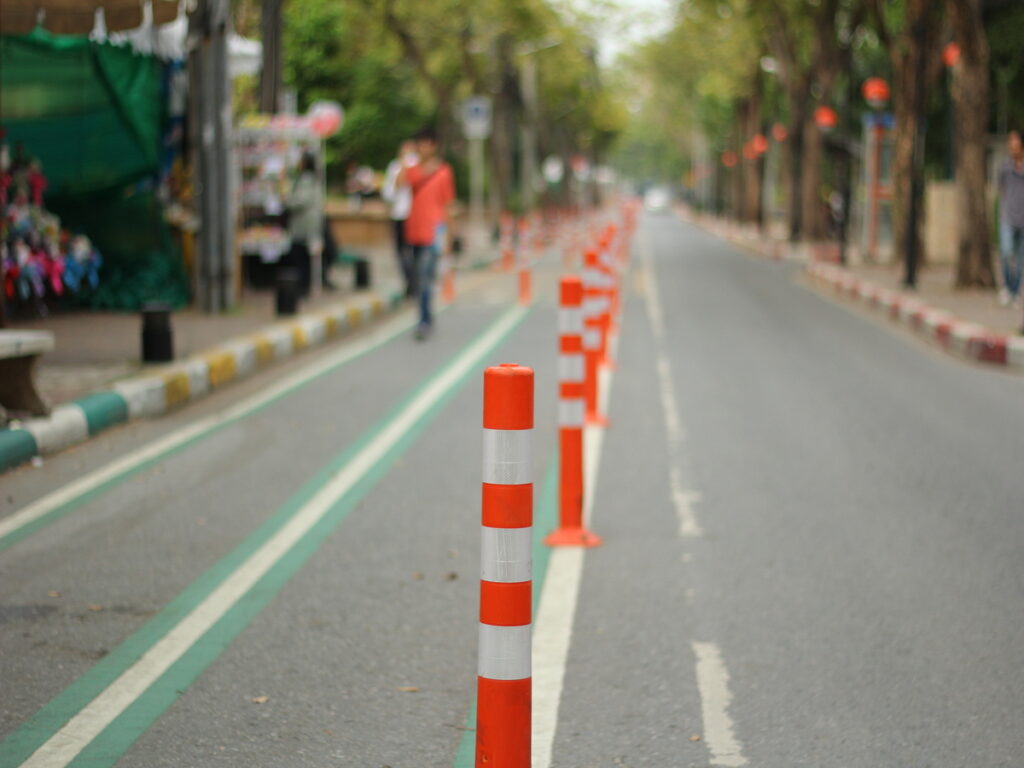
Choosing the right foundation ensures long-term durability and functionality. The foundation dictates how well your traffic control devices withstand environmental stress. Key performance factors include:
- High Visibility: Flexible polypropylene materials enhance visibility across diverse road environments. Discover the best materials for lane delineators for your specific project.
- Versatility: Different foundations support various applications to offer ultimate traffic management flexibility. Compare channelizers vs road delineators before finalizing your equipment list.
- Superior Impact Resistance: Premium engineered systems endure up to 200 impacts at 70 MPH.
The five primary foundation options include portable bases, surface mount anchors, driven posts, poured concrete, and precast foundations. Optraffic evaluates each option to help industry partners meet specific project demands effectively.
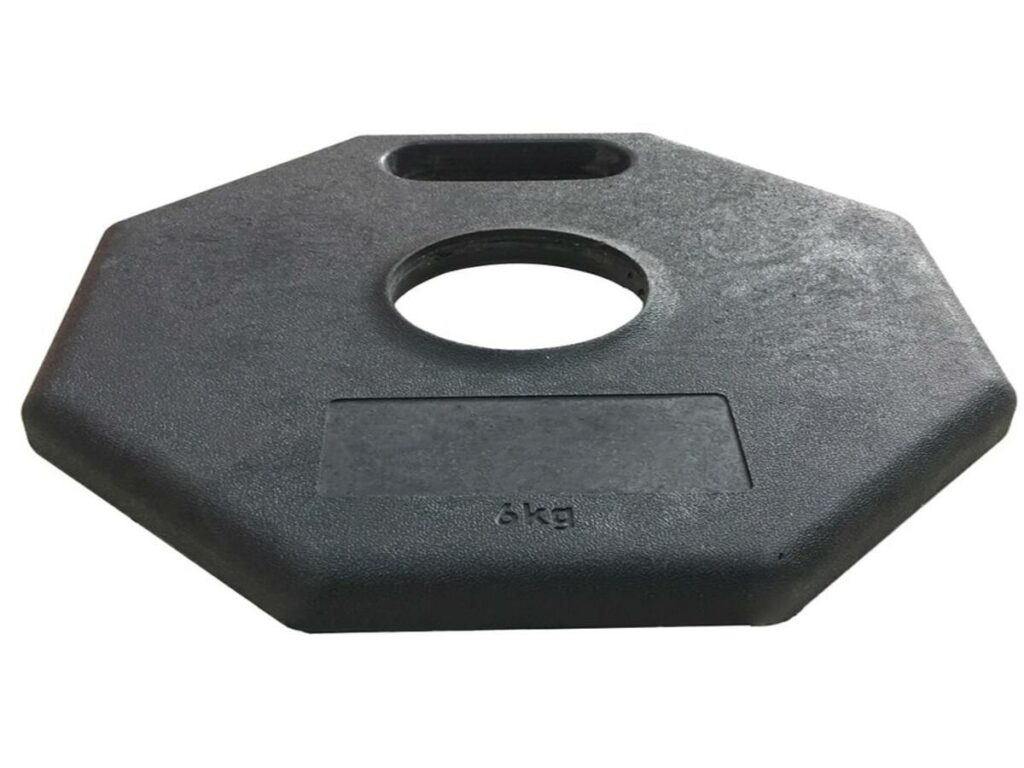
1. Portable Rubber Bases for a Flexible Delineator Post with Base
Temporary work zones require highly mobile and reliable safety equipment. Heavy-duty rubber bases provide the perfect solution for short-term traffic control. Optraffic engineers these portable solutions to keep road workers safe.
- Cost Evaluation: Optraffic utilizes affordable recycled rubber for these heavy bases. Purchasing standard rubber bases requires a minimal upfront investment. This extreme cost-effectiveness suits strict temporary project budgets perfectly.
- Labor Requirements: Installation costs remain practically zero. One worker drops the heavy base onto the road surface instantly. The process completely eliminates heavy construction machinery and complex personnel training.
- Pros & Cons: Lightweight designs allow rapid setup and fast relocation during dynamic events. However, high-wind areas require additional temporary sandbags to prevent sliding.
2. Surface Mounts for a Flexible Delineator Round Post with Base
Urban environments and parking lots experience frequent vehicle strikes. Industry partners deploy surface mount installations to secure flexible posts. Workers bolt these flexible plastic bases directly into concrete surfaces.
- Cost Evaluation: Manufacturers craft the rugged base from impact-resistant polyurethane. Customers only need to purchase cheap steel bolts for mounting. This lightweight design slashes transportation fees for large bulk orders.
- Labor Requirements: Beginner workers master the installation technique very quickly. Installing one flexible base takes only 5 to 10 minutes. Workers only need a standard power drill and a measuring tape.
- Pros & Cons: Flexible polyurethane construction ensures rapid post recovery after vehicle impacts. Heavy-duty steel bolts distribute structural loads evenly to prevent substrate cracking. Explore the key applications of flexible traffic delineators in these high-risk urban zones.
3. Driven Ground Anchors for Delineators with Base
Highway verges and soft soil require deep ground stabilization. Driven metal spikes offer rapid deployment in these unpaved roadside areas. This method completely eliminates the need for messy wet concrete.
- Cost Evaluation: Manufacturers use impact-resistant plastic for the visible base component. Installers use galvanized steel spikes to anchor the unit underground. Bulk purchasing these components lowers the overall expense for roadway expansions.
- Labor Requirements: Workers execute this straightforward process quickly with minimal training. Crews use gas-powered or manual post drivers to secure the steel spike. Small teams finish standard installations within just a few hours.
- Pros & Cons: The steel anchor holds firm while the flexible post bends and recovers. However, extremely soft or loose soil reduces anchor stability significantly.
4. Evaluating Concrete for a Permanent Delineator Post with Base
Concrete provides the highest structural integrity for permanent traffic installations. However, rigid concrete does not pair perfectly with flexible reboundable posts. Engineers reserve this expensive method for heavy permanent traffic signs.
- Cost Evaluation: Concrete materials require an affordable mix of cement, sand, and gravel. However, average slab installation carries a premium labor price tag. Large-scale site preparation increases total project expenses significantly.
- Labor Requirements: This method demands highly skilled construction labor. Workers must mix, pour, and level the concrete accurately. The multi-day curing process also delays immediate project completion.
- Pros & Cons: Concrete offers unmatched durability for high-traffic permanent sign areas. Conversely, soil settlement can easily crack these rigid concrete foundations over time.
5. Assessing Precast Concrete for a Delineator Post with Base
Precast foundations deliver instant stability without the onsite pouring mess. Factories cast these blocks to guarantee maximum structural integrity. Customers use these heavy blocks for permanent infrastructure rather than flexible channelization.
- Cost Evaluation: Factories use high-strength concrete and internal steel bars. The controlled indoor production process makes precast units expensive. Heavy shipping weights also generate significant transportation costs for industry partners.
- Labor Requirements: Workers install precast bases instantly to eliminate curing times. Teams use cranes or forklifts to position the heavy blocks accurately. Workers need moderate alignment skills to secure the final placement.
- Pros & Cons: Reusable factory molds guarantee exact dimensions and superior quality control. However, teams cannot modify precast foundations easily once they leave the manufacturing facility.
Master Comparison Matrix for a Delineator Post with Base
To help industry partners make quick decisions, Optraffic consolidated the critical data. Evaluate your specific project timeline and budget using the comparison matrix below.
| Foundation Type | Initial Cost | Installation Labor Time | Equipment Required | Best Application Suitability |
| Portable Rubber Bases | Extremely Low | Zero (Seconds) | None | Temporary Events / Work Zones |
| Surface Mount Anchors | Low | Minimal (5-10 Minutes) | Power Drills | Urban Roads / Parking Lots |
| Driven Ground Anchors | Low to Moderate | Low (Hours) | Post Drivers | Soft Soil / Highway Verges |
| Precast Concrete | High (Shipping Fees) | Low (Instant placement) | Cranes, Forklifts | Permanent Heavy Infrastructure |
| Poured Concrete | High (Material & Labor) | High (Multi-day curing) | Heavy Mixers | Permanent Highway Traffic |
Evaluating Long-Term Costs and Sustainability
Initial purchase prices do not reflect total lifetime value. Portable bases use recycled vulcanized rubber to divert waste from landfills. Steel mounting anchors feature fully recyclable metals. These temporary options protect natural landscapes completely because they avoid disruptive excavation.
Concrete requires cement production, which generates significant carbon emissions. Optraffic recommends adding fly ash to concrete mixes to reduce this environmental footprint.
Upgrade Your Road Safety Infrastructure Today
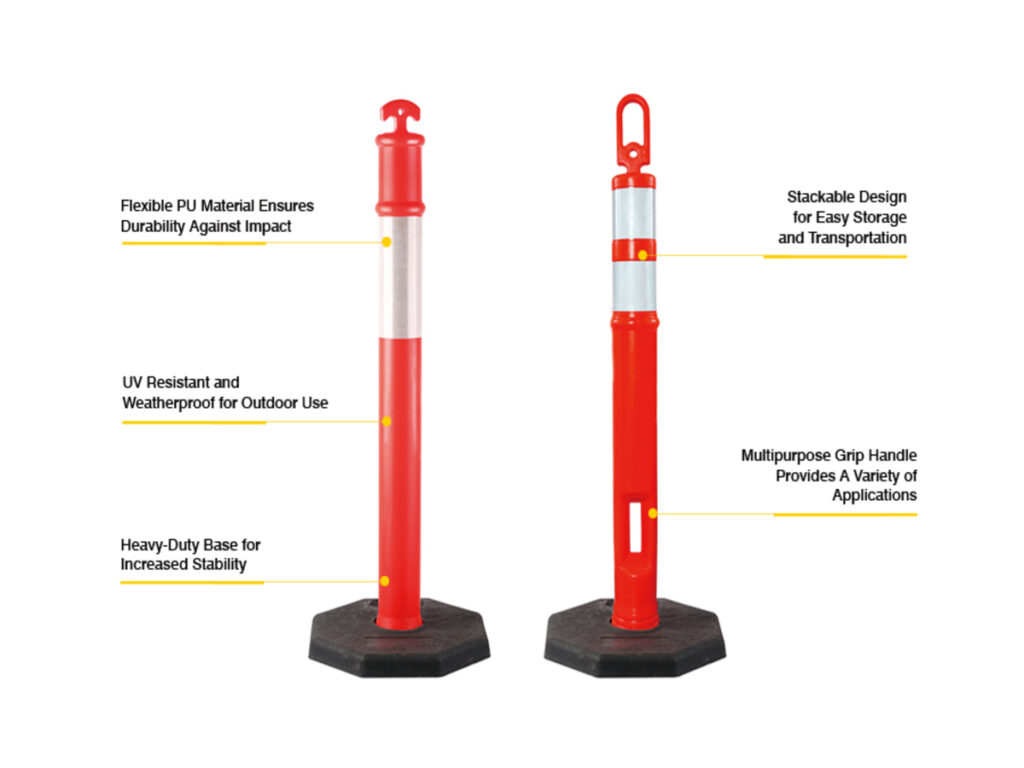
Selecting the correct foundation secures your work zone and reduces long-term maintenance costs. Optraffic engineers durable and reliable traffic safety solutions. Industry partners easily find the exact equipment for any challenging road environment. Browse our complete range of high-quality products on the Optraffic Delineators & Bollards page. Equip your next project with reliable safety infrastructure today.
FAQ
What is the most cost-effective foundation option for temporary installations?
Portable bases and surface mount anchors provide the cheapest temporary solutions. Their lightweight designs and basic tool requirements reduce overall project costs significantly.
Which foundation type is best for high-traffic impact zones?
Surface mounted polyurethane bases paired with flexible posts survive heavy traffic best. The steel bolt stays secure while the post absorbs the vehicle impact.
How does soil type affect foundation selection?
Soft soil demands driven steel posts or wide concrete bases. Surface mount anchors perform perfectly on firm concrete or asphalt.
Are portable rubber bases suitable for outdoor use?
Yes, portable bases withstand harsh outdoor weather conditions easily. Optraffic manufactures them from durable rubber to resist severe UV degradation.