Introducción: El Universal “Botón de inicio” para la seguridad
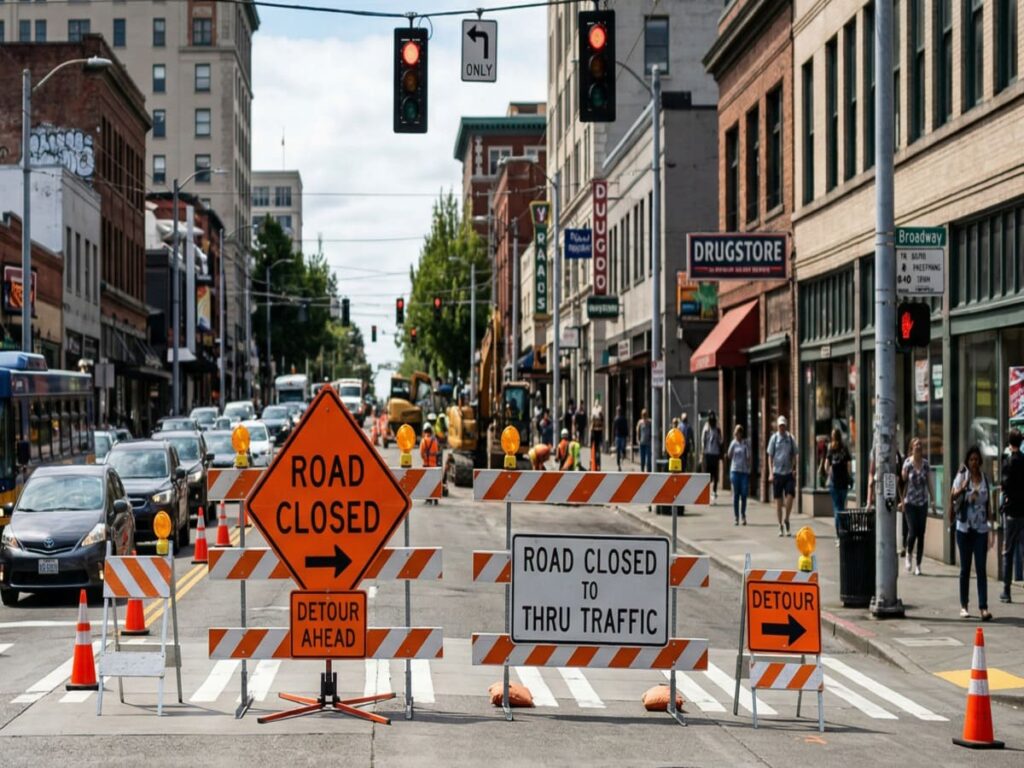
Todo proyecto de construcción de una carretera comienza con un solo, decisión crítica: la colocación de la primera señal de advertencia anticipada. Antes de que un conductor vea un cono de tráfico, un abanderado, o una excavadora, deben ver el diamante.
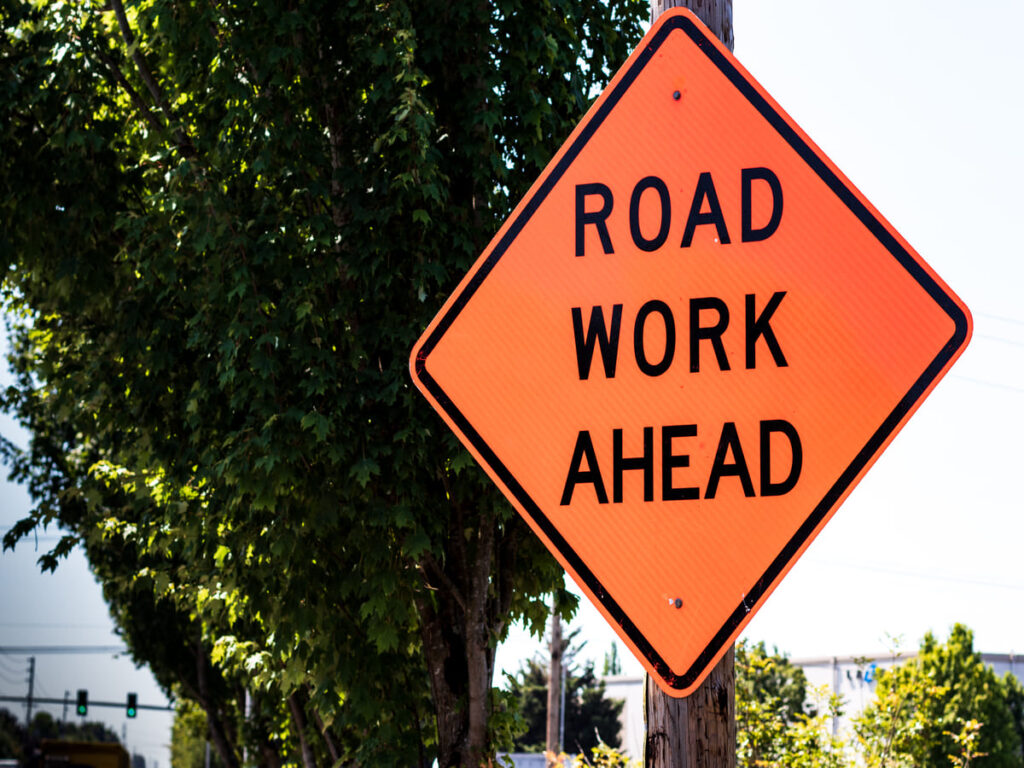
El Señal de trabajo por delante (Código MUTCD W20-1) es el universal “botón de inicio” para el control temporal del tráfico (TTC). Cumple una función jurídica y psicológica específica.. Cambia el estado mental del conductor de “crucero por carretera abierta” a “precaución alerta.”
Si coloca este letrero incorrectamente, o si carece de la retrorreflectividad adecuada, toda su zona de trabajo no cumple. un desaparecido Señal de trabajo por delante es lo primero que busca un abogado después de un accidente en zona de trabajo. La responsabilidad suele depender de esta única pieza de aluminio naranja..
Esta guía proporciona un desglose completo del estándar W20-1.. Cubriremos el cambio del legado. Signo de hombres en el trabajo, las distancias de colocación específicas para zonas urbanas vs.. carreteras rurales, y como elegir el correcto señal de trabajo por delante con soporte para tu tripulación.
Recurso relacionado: La ubicación de su W20-1 define el “Dimensión A” para toda tu zona. Para obtener una tabla de espaciado completa, hacer referencia a nuestro Guía de colocación de señales viales de construcción.
La evolución: “Hombres trabajando” VS. “Trabajo por carretera por delante”
Durante décadas, El estándar de la industria era el basado en texto. Signo de hombres en el trabajo. Aún verás este término usado en conversaciones informales y en especificaciones de contratos más antiguos.. Sin embargo, Los estándares federales y las mejores prácticas han evolucionado significativamente..
1. Por qué “Hombres trabajando” está desactualizado
El alejamiento de Hombres en el trabajo signos no se trata sólo de corrección política; se trata de precisión y seguridad.
- Inclusión: La fuerza laboral de la construcción moderna es diversa. Usar lenguaje específico de género no es profesional en el entorno de cumplimiento actual.
- Alcance del peligro: El término “Hombres trabajando” implica que el solo El peligro es un ser humano.. esto es peligroso. Una zona de trabajo a menudo presenta riesgos incluso cuando no hay trabajadores presentes., como:
- carriles desiguales o placas de acero.
- Anchos reducidos debido a barreras de hormigón.
- Barro o grava en la carretera.
- La solución: El Señal de trabajo por delante cubre todo condiciones. Advierte a los conductores que el camino mismo se modifica, independientemente de si hay un humano parado sobre él.
2. El estándar MUTCD moderno (W20-1 & W21-1)
El Manual en dispositivos de control de tráfico uniformes (Muescato) La sección 6F.18 establece el W20-1 Señal de trabajo por delante como principal señal de advertencia general.
Para escenarios en los que necesita advertir específicamente sobre la presencia humana (P.EJ., una reparación puntual de corta duración), el MUTCD recomienda el Signo Símbolo (W21-1). Este letrero presenta un gráfico de un trabajador sosteniendo una pala..
- Por qué ganan los símbolos: Un conductor que se desplaza a 65 MPH procesa un símbolo gráfico 2 veces más rápido que leer texto como “Hombres trabajando.”
- Legibilidad: Los signos de texto requieren alfabetización y dominio del idioma. Los símbolos son universales..
Para llevar: Si su contrato especifica un Signo de hombres en el trabajo, aclarar con el ingeniero. En 99% de casos, en realidad requieren un W20-1 Señal de trabajo por delante o un signo de símbolo W21-1.
La física de la visibilidad: Por qué es importante el naranja
No puedes usar cualquier signo naranja.. La efectividad de un construcción por delante señal de tráfico depende de dos factores: Fluorescencia y retrorreflectividad.
1. Naranja fluorescente (El héroe diurno)
La pintura naranja estándar se desvanece. Moderno señales de trabajo de construcción por delante utilice láminas de color naranja fluorescente.
- La ciencia: La fluorescencia absorbe la luz ultravioleta del sol. (que es invisible) y la reemite como luz naranja visible.
- El resultado: El letrero parece “brillo” durante el día, especialmente al amanecer y al anochecer. Esto aumenta la distancia de detección hasta 40%.
2. Retroreflectividad (El héroe nocturno)
Por la noche, la señal debe rebotar los faros hacia el conductor.
- Grado de ingeniería (Tipo I): No uses esto. esta obsoleto para señales de construcción de carreteras por delante. Refleja sólo una fracción de la luz..
- Prismático de alta intensidad (Tipo IV): El estándar mínimo para la mayoría de las señales temporales..
- Grado de diamante (Tipo XI): El patrón oro. Para autopistas de alta velocidad (55+ Mph), necesitas láminas tipo XI. Refleja la luz incluso en ángulos de entrada amplios (P.EJ., si la señal está torcida o el coche está en el carril lejano).
Para la punta: A señal de trabajo por delante con láminas Tipo XI es visible desde 1,500 pies lejos por la noche. Esto le da al conductor 15 segundos adicionales para reaccionar en comparación con materiales más baratos.
El “Dimensión A”: Reglas de colocación de precisión
La infracción más común en las inspecciones de zonas de trabajo es el espaciamiento inadecuado.. No puedes simplemente colocar un Señal de trabajo por delante “en algún lugar antes de los conos.”
El MUTCD define esta distancia como la “Dimensión A.” Se calcula en función del límite de velocidad y la complejidad del entorno de la carretera.. Esta distancia le da al conductor tiempo de percepción-reacción. (PRT).
1. Urbana Baja Velocidad (≤ 35 Mph)
- La regla: Coloca el cartel 100 pies (30 medidores) antes de la zona de transición.
- La lógica: En entornos urbanos, los bloques son cortos (a menudo 300-400 pies). Si colocas el cartel demasiado atrás (P.EJ., 500 pies), podría terminar:
- Antes del cruce anterior (haciendo que el tráfico que gira lo pierda).
- Escondido detrás de un camión de reparto estacionado.
- Confundir a los conductores que giran apagado la carretera antes de llegar a su zona de trabajo.
- Guión: Un equipo de reparación de baches en una calle residencial.
2. Alta Velocidad Urbana (≥ 40 Mph)
- La regla: Coloca el cartel 350 pies (100 medidores) por adelantado.
- La lógica: En 40 Mph, un vehículo viaja aproximadamente 60 pies por segundo. Una brecha de 350 pies le da al conductor aproximadamente 6 segundos para ver el señal de construcción adelante, léelo, y levantan el pie del acelerador antes de encontrar el cono.
- Guión: Obras de servicios públicos en un bulevar arterial de 4 carriles.
3. Rural & Carretera (≥ 50 Mph)
- La regla: Coloca el cartel 500 pies a 1,000 pies (150-300 medidores) por adelantado.
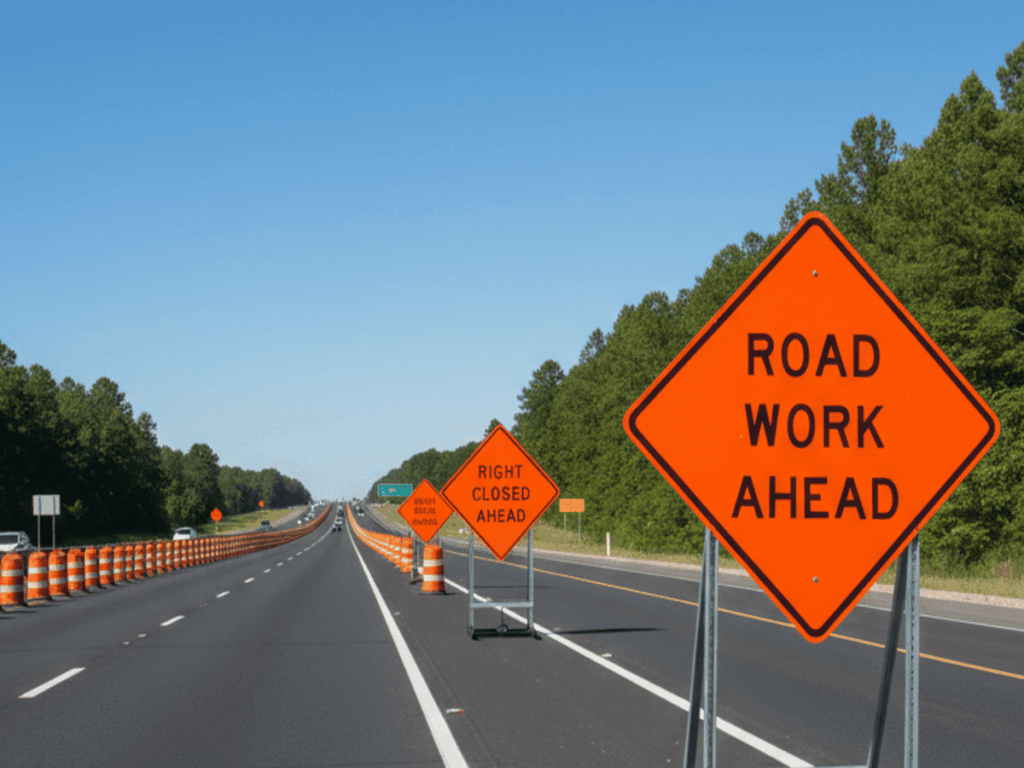
- La lógica: En carreteras, la velocidad es el enemigo. Los conductores suelen estar en “hipnosis de carretera.” Necesitas una enorme zona de amortiguamiento. En 70 MPH interestatales, Este signo suele ser el primero de una serie de 3 signos. (Trabajos en la carretera por delante> Carril izquierdo cerrado más adelante -> Banderas por delante), espaciado 1,000 pies separados.
- Guión: Reparación de la plataforma del puente interestatal o repavimentación de carriles.
Advertencia crítica: Nunca coloques un señal de construcción de carreteras adelante donde contradice los signos permanentes existentes. Por ejemplo, no lo coloque inmediatamente después de “Límite de velocidad 65” firmar. Cubra el letrero permanente si es necesario..
Elegir el texto: Variantes & Matices legales
Mientras que W20-1 “Trabajo por carretera por delante” es el valor predeterminado, proyectos específicos exigen un lenguaje específico. El uso de texto incorrecto puede confundir a los conductores sobre el naturaleza del peligro o limitar su protección legal.
Aquí se explica cómo elegir entre las variantes comunes.:
1. El “Civil pesado” Estándar: Señal de construcción de carreteras adelante
Para grandes proyectos de infraestructura que impliquen excavación, pavimentación, o reparación de puentes, Los ingenieros a menudo especifican el señal de construcción de carreteras adelante (Variante W20-1).
- La implicación: La palabra “Construcción” implica un proyecto a largo plazo (durando más de 3 días) involucrando maquinaria pesada, Cambios de carril, y posibles paros.
- Uso: este es el preferido construcción por delante señal de tráfico para proyectos de mejora de capital. Les indica a los camioneros y a los lugareños que esto no es solo una reparación de baches: es un sitio importante..
- Distancia: Porque “Construcción” implica complejidad, Estos letreros generalmente se colocan más atrás. (1,500+ pies) en las carreteras para permitir que los camiones pesados tengan tiempo de incorporarse temprano.
2. El escudo legal: Señal de zona de trabajo adelante
Algunos estados y municipios exigen el texto señal de zona de trabajo adelante (G20-5aP) o combinarlo con un “Multa Doble” placa.
- La trampa legal: En muchas jurisdicciones, la definición legal de “Zona de trabajo” Activa sanciones reforzadas por exceso de velocidad o conducción imprudente..
- ¿Por qué usarlo?? Si su principal preocupación es proteger a los trabajadores de los coches a alta velocidad, usando especifico “Zona de trabajo” la nomenclatura establece el límite legal para las multas dobles. Tiene más autoridad que una advertencia genérica..
3. El especialista en servicios públicos: Trabajo de servicios públicos por delante
Si su equipo está trabajando en líneas eléctricas, red de gas, o telecomunicaciones, no utilices un genérico señal de trabajo de construcción por delante.
- La regla: Usar “Trabajo de servicios públicos por delante” (W21-7).
- La expectativa del conductor: Cuando un conductor ve “Utilidad,” Esperan un cierre de arcén o un camión con cesta bloqueando un solo carril. No esperan una calzada excavada.
- Exactitud: Usando “Construcción” para una instalación de cable es engañoso. Usando “Utilidad” le dice al conductor exactamente qué buscar (líneas aéreas o trabajo en hombros).
4. El “Hombres trabajando” Legado
Como se mencionó en la introducción., el texto Signo de hombres en el trabajo se está eliminando gradualmente. Sin embargo, si trabaja en una instalación privada (como un complejo de fábrica o un estacionamiento privado) donde persisten los estándares más antiguos, es posible que aún veas solicitudes para esto.
- Recomendación: Actualice siempre al signo de símbolo (W21-1). se comunica “Presencia humana” al instante sin barreras del idioma.
Elegir la señal de trabajo en carretera correcta con soporte: Rígido vs.. Enrollable
Un cartel es inútil si está tirado en el suelo.. Para el control temporal del tráfico, El sistema de montaje es tan importante como la cara retrorreflectante.. Generalmente tienes dos opciones de materiales al comprar un señal de trabajo por delante con soporte.
1. Señales de construcción rígida adelante (Aluminio/Dibond)
- Mejor para: Proyectos a largo plazo (durando más de 3 días) o instalaciones semipermanentes.
- Pros: Extremadamente duradero, resistente al viento, y mantiene la retrorreflectividad por más tiempo.
- Contras: Pesado, Difícil de guardar en una camioneta., y peligrosos si se convierten en proyectiles en un choque.
- Montaje: Generalmente requiere postes cuadrados de acero de alta resistencia o grandes barricadas con estructura en A..
2. Señales enrollables de obras viales más adelante (Vinilo/Malla)
- Mejor para: Operaciones diarias, equipos de mantenimiento, y camiones utilitarios.
- Pros: Ligero, se despliega en menos 60 artículos de segunda clase, y ocupa un espacio de almacenamiento mínimo.
- Contras: Poder “aleteo” en vientos fuertes si no se tensa correctamente.
- El estándar de la industria: Para la mayoría de los equipos móviles, un letrero enrollable de obras viales con soporte es el kit ideal. Permite que un solo trabajador establezca un área de alerta anticipada que cumpla con las normas en cuestión de minutos..
Para evitar comprar la configuración incorrecta para la realidad diaria de su tripulación, mira la comparación completa aquí: Roll-up vs. Construcción de aluminio rígido Señales por delante: Lo que es adecuado para su proyecto de construcción?
Normas de seguridad para soportes de señales de obras viales por delante (MEZCLA & NCHRP-350)
No puedes apuntalar un construcción por delante señal de tráfico contra un árbol o montarlo en un marco de madera casero. El soporte en sí es un dispositivo de seguridad regulado..
1. Resistencia al choque: Por qué su stand necesita colapsar
Si un conductor distraído golpea su letrero en 60 Mph, lo que sucede?
- No conforme: un pesado, el soporte rígido podría estrellarse contra el parabrisas, herir o matar al conductor.
- Obediente: Un soporte compatible con MASH está diseñado para colapsar o fracturarse en caso de impacto., pasando por debajo del vehículo.
- Responsabilidad: El uso de un stand que no cumple con las normas expone a su empresa a demandas masivas de responsabilidad en caso de un accidente..
2. Resistencia al viento para carteles portátiles
Para uso en autopista o caminos rurales abiertos, el viento es el enemigo. Un trípode estándar volará cuando un camión pase por 70 Mph.
- La solución: Busque un señal de trabajo por delante con soporte que cuenta con resortes dobles de alta resistencia.
- Mecanismo: Los resortes permiten que la cara del letrero se flexione y se doble con la ráfaga de viento., luego vuelva a colocarse en posición vertical, en lugar de volcar toda la base.
Reglas de altura de montaje para señales de construcción por delante
¿A qué altura debe estar la parte inferior del letrero desde el suelo?? El MUTCD tiene dos reglas distintas basadas en el medio ambiente..
1. Rural & Carretera (El “1-Regla del pie”)
- Altura: El fondo del señal de trabajo por delante Debe ser al menos 1 pie (12 pulgadas) encima de la carretera.
- Por qué? En caminos abiertos, la principal preocupación es la estabilidad. Un centro de gravedad más bajo evita que el cartel se vuelque. Ya que no hay coches estacionados ni peatones que bloqueen la vista., 1 El pie es suficiente para iluminar los faros..
2. Urbano & Distritos comerciales (El “7-Regla del pie”)
- Altura: La parte inferior del letrero debe ser al menos 7 pies sobre el suelo.
- Por qué?
- Visibilidad: En las ciudades, Los coches suelen estar aparcados en la banquina.. Una señal de 1 pie sería invisible detrás de un sedán estacionado.
- Peatones: Una señal baja representa un peligro de lesiones en la cabeza para los peatones que caminan por la acera..
- Implicaciones de hardware: Necesita un soporte con patas ajustables o una extensión de mástil para alcanzar este requisito de 7 pies.
Para la punta: Si estás trabajando en una acera, es posible que también necesites un “Acera cerrada” firmar. Consulta nuestro Guía de señales de acera cerrada para detalles específicos de la ADA.
Cerrando el círculo: La señal de trabajo en la carretera final (G20-2)
El señal de trabajo por delante inicia la zona de responsabilidad legal, pero que termina?
Salir de una zona de trabajo “abierto” es un riesgo importante para la seguridad. Si los conductores pasan el último cono pero no ven una señal de terminación, Siguen sin estar seguros de si el límite de velocidad ha vuelto a la normalidad.. Con el tiempo, esto causa “ceguera de signos,” donde los conductores ignoran futuras señales de advertencia porque suponen que la zona está inactiva.
1. La regla de los 500 pies para las señales de fin de obras en la carretera
- El estándar: Según la Sección 6F.59 de MUTCD, el Señal de fin de obras en la carretera (G20-2) debe ser colocado 500 pies más allá del final del espacio de trabajo (el último cono o barril).
- La función: Esta señal pone fin legalmente a la zona de control de tráfico temporal.. Restaura el límite de velocidad original y le dice al conductor, “Puedes relajarte ahora.”
2. Por qué “Fin de la carretera” es crucial para las señales de construcción por delante
Si usas un construcción por delante señal de tráfico al principio, Le debes al conductor avisarle cuando termine la construcción..
- Confianza: Definiendo estrictamente el final de la zona, construyes confianza. Es más probable que los conductores obedezcan sus señal de zona de trabajo adelante la próxima vez porque saben que su señalización es precisa y está actualizada.
Conclusión: Adquisición de señales de obras viales que cumplan con las normas
El Señal de trabajo por delante (W20-1) es el diamante más importante en el camino. Define el “Dimensión A,” establece el límite legal para la zona de trabajo, y sirve como primera línea de defensa para tu tripulación.
Ya sea que lo llames un hombres en el trabajo, señal, a señal de trabajo de construcción por delante, o simplemente W20-1, el requisito es el mismo: debe ser retrorreflectante, debe montarse a la altura correcta, y debe ser estable.
tráfico opt fabrica la gama completa de dispositivos de alerta avanzada compatibles con MUTCD:
- Prismático de alta intensidad & Láminas de grado de diamante: Asegurando su señal de trabajo por delante es visible desde 1,500 pies por la noche.
- Soportes compatibles con MASH: De servicio pesado, soportes de doble resorte que resisten los vientos de la carretera.
- Leyendas personalizadas: Necesidad “Trabajo de servicios públicos por delante” o “Equipo de encuesta”? Imprimimos según las especificaciones.
No arriesgue el cronograma de su proyecto con equipos que no cumplen con las normas. Contacto Optraffic hoy para equipar su flota con el estándar de la industria en protección de advertencia anticipada.
Preguntas frecuentes: Preguntas comunes sobre las señales de obras viales más adelante
es un “Signo de hombres en el trabajo” todavía legal?
Técnicamente, Sí, pero esta desactualizado. El MUTCD prefiere el Señal de trabajo por delante (W20-1) o el Signo de símbolo de trabajador (W21-1) porque son neutrales en cuanto al género y los conductores los reconocen más rápidamente. La mayoría de los contratos estatales del DOT ahora requieren estrictamente W20-1.
¿A qué distancia se deben colocar las señales de construcción más adelante??
Depende del límite de velocidad..
- Urbana Baja Velocidad: 100 pies.
- Alta Velocidad Urbana: 350 pies.
- Carreteras: 500 a 1,000 pies.
¿Puedo usar un “Señal de zona de trabajo adelante” en cambio?
Sí. El señal de zona de trabajo adelante Se utiliza a menudo cuando hay multas dobles en vigor.. Tiene un peso legal significativo y a menudo va acompañado de una señal de reducción del límite de velocidad..