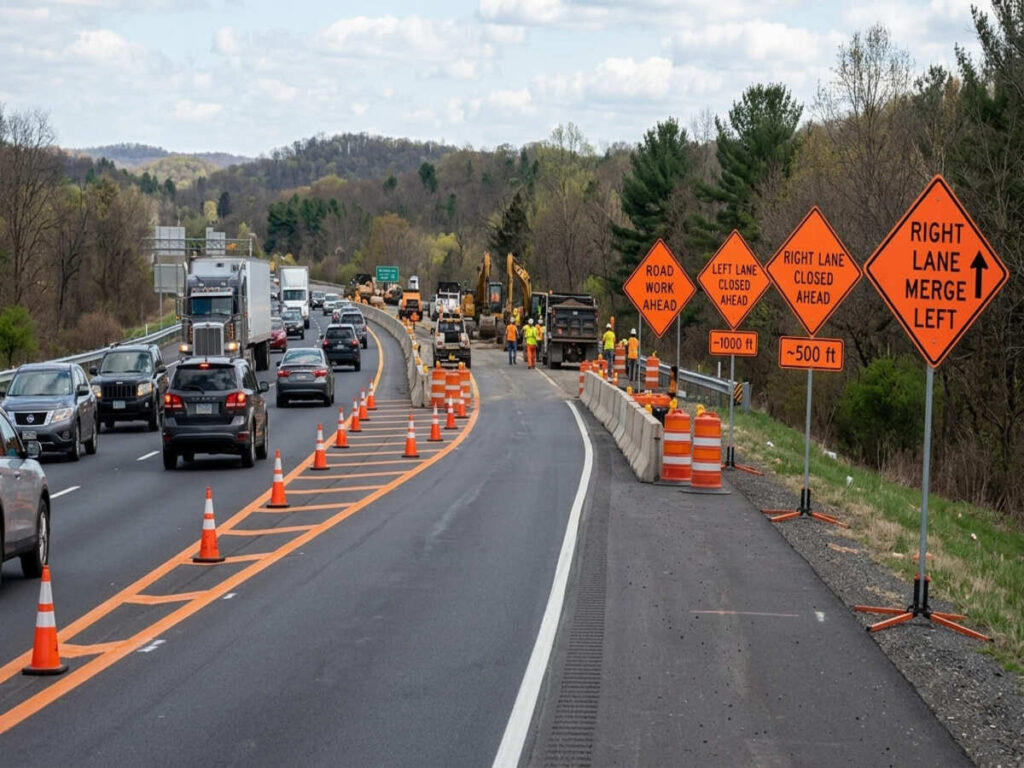
Un equipo volvió a apuntar a esa señal de alto en marzo.. Para agosto, está mirando hacia el hombro otra vez, y los mismos dos técnicos están nuevamente dentro de un carril cerrado haciendo un trabajo de llave de cinco minutos por tercera vez este año.. Cada viaje repetido quema horas de camión, configuraciones de cono, y exposición a la carretera que ninguna partida presupuestaria de mantenimiento tiene en cuenta, y una señal reglamentaria rotada fuera de la línea de visión del conductor es una exposición de responsabilidad, no solo una orden de trabajo abierta.
La rotación casi nunca es un problema del viento. Es un problema de sujeción: La fricción en la interfaz entre la tubería y el soporte nunca fue suficiente para vencer el torque que genera el panel.. Esta guía desglosa exactamente cómo soporte de sillín de poste Distribuye la fuerza de sujeción en comparación con cómo lo hace un estribo., para que pueda especificar hardware que mantenga el azimut durante toda su vida útil.
Por qué los letreros girados son una falla de sujeción, No es un problema de viento
Un letrero girado es evidencia de que el torque aplicado en la abrazadera excedió la capacidad de fricción estática del conjunto.. El viento suministra la carga., pero el hardware determina si esa carga se resiste o se convierte en deslizamiento..
El costo de la devolución de llamada repetida: Cuantificación de la mano de obra reasignada en un inventario de 400 signos
El trabajo con la llave lleva unos minutos.. Todo lo que lo rodea no. Una tripulación de dos personas, un rollo de camión, una configuración de control de tráfico temporal que cumple con la 11.ª edición del MUTCD (publicado en diciembre 2023, efectivo en enero 18, 2024, con adopción estatal requerida para enero 2026), y la desmovilización suele consumir medio día. A través de un inventario de postes circulares de 400 letreros, incluso un 5% La tasa de rotación anual produce 20 devoluciones de llamadas no programadas - 20 Cierres de carril generados enteramente por la selección de hardware..
Fricción, No sujetadores: La física que mantiene un signo en posición
La abrazadera de montaje de letreros sin poste redondo resiste la rotación mediante codificación mecánica. Resiste mediante fuerza normal convertida en fricción estática a través del arco de contacto.. Tres variables están bajo el control del especificador: longitud del arco de contacto, uniformidad de la presión de sujeción, y el coeficiente de fricción entre superficies de zinc coincidentes.. Un perno no sostiene el letrero; la presión que ese perno genera a través del arco sí lo hace..
Dónde se ubica esta comparación en el panorama más amplio
Las familias de monturas y estribos son las dos respuestas principales para los tubos redondos, y el comportamiento del hardware cambia con el área del panel y la ruta de carga. Antes de finalizar un detalle estándar, Vale la pena revisar cómo el número de paneles cambia el brazo de momento en un solo poste: un conjunto de panel doble puede duplicar la demanda de torsión en un año. soporte de sillín de poste debe absorber.
Anatomía de un soporte de montura para poste: Presión equilibrada de doble perno explicada
A soporte de sillín de poste es un conjunto de sujeción de dos piezas en el que una cuna formada por un radio y una mitad de respaldo opuesta se unen mediante dos pernos pasantes colocados tangencialmente a cada lado de la tubería.. Su diferenciador del hardware estilo envolvente es la simetría.: La fuerza de sujeción proviene de dos vectores reflejados en lugar de uno..
La ruta de carga de dos puntos: Cómo los pernos opuestos crean una envoltura de presión simétrica
Apretar dos pernos equidistantes de la línea central de la tubería produce dos vectores de fuerza opuestos que se resuelven hacia el eje de la tubería.. Porque la resultante pasa por el eje neutro., No se introduce ningún momento de flexión neto en la pared del tubo.. El resultado práctico para un supervisor de mantenimiento: el soporte no se amartilla bajo carga, por lo que el arco de contacto que existía en el momento de la instalación es el mismo arco que sigue funcionando tres inviernos después.
Geometría de arco de contacto: Por qué la coincidencia del radio de la silla gobierna el área de sujeción real
Los postes de tráfico redondos siguen el cronograma ASTM A53 40 dimensiones - 2″ nominal en 2,375″ DO con un 0,154″ muro, 2½” nominal en 2.875″ DO con un 0,203″ muro, y 3″ nominal a 3.500″ DO con un 0,216″ muro. Una silla formada con uno de esos diámetros desarrolla una amplia, arco continuo. A “universal” silla que abarca varios tamaños contacta tangencialmente en su lugar, colapsando ese arco en dos contactos de línea estrecha. Mismo torque de perno, una fracción del área de fricción.
Lectura de hojas de especificaciones del soporte del sillín: Indicador, Profundidad del arco, e interacciones entre grados de pernos
Exija cuatro artículos en cada presentación.: espesor del material base, Profundidad del arco referenciada a un diámetro exterior nominal., diámetro y grado del perno, y tipo de tuerca. Carga de sujeción alcanzable para tapas de grado de perno: se especifica un sujetador ASTM A307 Grado A en 60 tracción ksi, mientras que un perno A325/F3125 alcanza 120 ksi, y ese techo determina la presión máxima que un soporte de abrazadera para poste de alta resistencia puede generar. Las tuercas con brida dentada o con inserto de nailon resisten el aflojamiento por vibración que el tráfico por carretera produce continuamente.
Dentro del soporte de estribo galvanizado: Tensión de cierre excéntrico de un solo perno
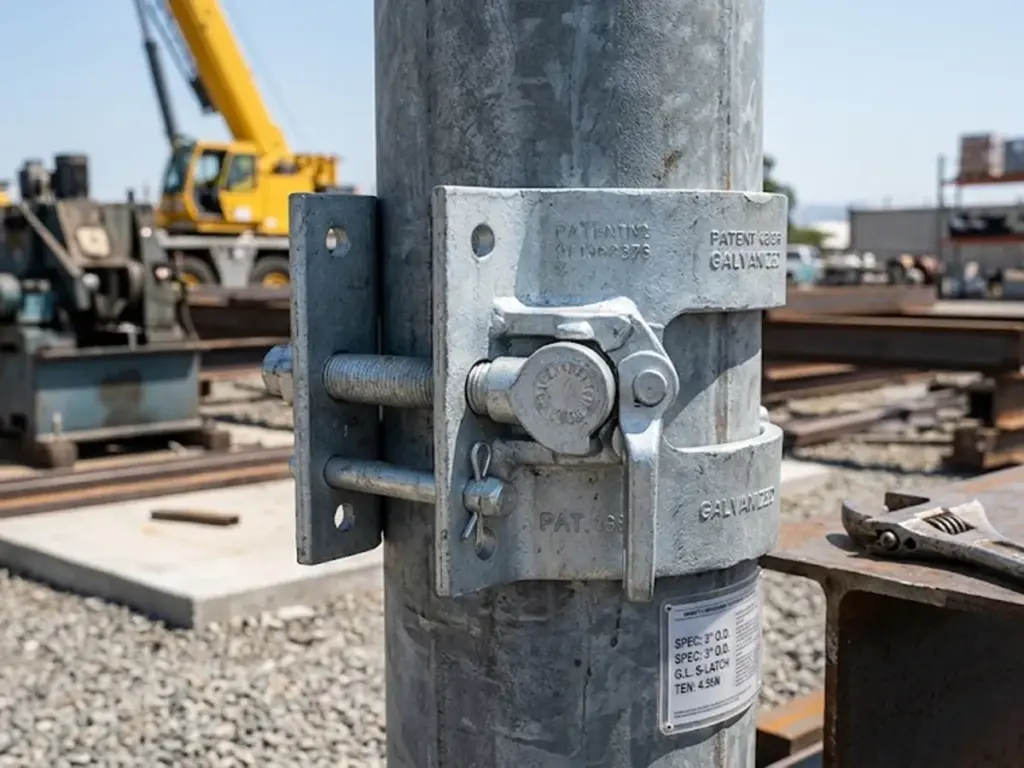
Los estribos galvanizados envuelven el poste con una correa en forma de U o de gancho cerrada contra un único punto de tensión.. Un sujetador, una llave, Un arco de contacto y una geometría de fuerza sustancialmente diferente..
El problema del momento excéntrico: ¿Qué sucede cuando la fuerza de sujeción está fuera del centro?
Un único punto de tensión colocado fuera del eje neutro de la tubería produce tanto un componente de compresión como un momento de rotación en el cuerpo del soporte.. Bajo carga de viento sostenido, ese momento deja que el soporte camine o se arquee ligeramente, descargando parte de la envoltura. La cifra de fricción calculada durante la instalación ya no es la cifra de fricción disponible: un modo de falla que un soporte de letrero de doble perno para poste redondo no comparte.
Ángulo de envoltura vs.. Carga de abrazadera: Donde la geometría del estribo realmente supera
El contrapunto honesto: un estribo de envoltura larga puede desarrollar un contacto de 180° o más desde un solo sujetador, frecuentemente excediendo el arco de una silla poco profunda. La fricción se acumula alrededor de la envoltura en forma de cabrestante., y una correa flexible se adapta a la variación de OD: realmente valiosa en postes antiguos, tubo de pared delgada, o diámetros no estándar donde no existe una silla con radio coincidente.
Velocidad en la escalera: La ventaja de un solo sujetador para el tiempo de exposición de la tripulación
Un perno significa menos piezas caídas, una mano libre, y menos tiempo por encima del tráfico. La duración de la exposición de la tripulación es una variable de seguridad legítima, y pertenece a la matriz de selección junto con el rendimiento de deslizamiento en lugar de descartarse como conveniencia.
Resistencia al deslizamiento por torsión en Sch 40 Tubo: Comparación de la capacidad de retención real
Elaboración de un presupuesto de par de deslizamiento: Área de letreros, Presión de ráfaga, y el momento en la abrazadera
El lado de la demanda sigue las Especificaciones AASHTO LRFD para soportes estructurales para señales de carretera., Luminarias, y señales de tráfico (LRFDLTS-1) forma de presión, pag = 0.00256 × K_z × G × V² × C_d, con velocidades básicas del viento extraídas de ASCE 7-22 — aproximadamente 95 a 115 mph para la Categoría de riesgo II en la mayor parte del interior de los Estados Unidos y superando 180 mph en la costa de Florida. Multiplique la presión resultante por el área del panel proyectado., luego por la excentricidad desde la línea central de la tubería, y tienes el torque que tu abrazadera debe batir con margen.
Matemáticas de capacidad de fricción: Fuerza normal, Arco de contacto, y Galvanizado sobre Galvanizado µ
El lado resistente comienza en el sujetador.. La carga de la abrazadera se aproxima a F = T / (K×D), donde el factor de tuerca K se acerca 0.20 para acero simple y más cercano a 0,25–0,30 para roscas galvanizadas en caliente, cuyas superficies de zinc consumen más par de entrada como fricción del hilo. AISC 360-22 clasifica las superficies galvanizadas en caliente y rugosas como Clase A con un coeficiente de deslizamiento de µ = 0.30, versus 0.50 para acero clase B limpiado con chorro de arena. Ese valor cae aún más cuando el zinc está húmedo., con hielo, o recubierto con una película de carretera, que es precisamente cuando llegan las ráfagas máximas.
Veredicto cara a cara: Cuándo gana la simetría de doble perno y cuándo no
La siguiente tabla compara ambas familias según el margen de par de deslizamiento., sensibilidad del instalador, tolerancia a la sobredosis, Comportamiento de nuevo par térmico., y redundancia de fallos.
| Dimensión de rendimiento | Soporte de silla de montar (Doble perno) | Soporte de estribo galvanizado (Perno único) |
| Margen de par de deslizamiento | Alto: dos tornillos, envolvente de presión simétrica | Moderado: depende en gran medida de asientos totalmente envolventes. |
| Sensibilidad a la técnica del instalador. | Bajo: el torque de patrón cruzado se autocorrige | Alto: el asiento parcial se siente apretado pero con abrazaderas inferiores |
| Tolerancia para la variación de OD | Bajo: requiere que el radio coincida con el tamaño nominal | Alto: la correa se adapta a diámetros irregulares |
| Comportamiento después del ciclo térmico. | Previsible; responde bien al nuevo torque de 30 días | La envoltura puede relajarse de manera desigual, reduciendo el arco efectivo |
| Redundancia de fallas | El segundo perno conserva su posición si uno se afloja | Ninguno: un fallo en un solo punto libera el conjunto |
| Tiempo de instalación por encima del tráfico | Más extenso (dos sujetadores, se requiere preparación previa) | Más corto (sujetador único) |
Para grandes paneles regulatorios, montaje desplazado, o exposición sostenida a ráfagas altas, un radio coincidente soporte de sillín de poste entrega el margen. Para aplicaciones de bajo torque y diámetros no estándar, los estribos siguen siendo la opción pragmática.
Como fabricante de señales de tráfico totalmente integrado, Controlamos la cadena desde el sustrato y el hardware mediante impresión y galvanizado personalizados, razón por la cual las profundidades del arco de nuestra silla coinciden con el programa A53 real. 40 dimensiones en lugar de promediar entre tamaños. Navega por nuestro soportes de sillín para postes ahora.
Prevención del aplastamiento de tuberías y la deformación de las paredes al apretar demasiado
Umbrales de ovalización: ¿Cuánto Sch 40 El muro realmente lo tolera
Aquí gobiernan la tensión circular y el pandeo local.. Un 2.375″ Publicación OD con 0.154″ La pared no se comporta como un tubo de pared delgada reutilizado con la mitad de ese espesor.. Esté atento a los tres indicadores de campo.: puntos planos visibles, roca del soporte cuando se empuja con la mano, y pérdida del mismo arco de contacto que produjo la fuerza de sujeción..
Mapeo de concentración de presión: Dos contactos amplios vs.. Un bocado estrecho
Una tubería abollada suele ser evidencia de que una abrazadera no se sujeta bien. Deformación significa fuerza concentrada a lo largo de una línea en lugar de distribuida a lo largo de un arco: carga de sujeción desperdiciada que generó deformación en lugar de fricción.. Este es el núcleo contradictorio de la mecánica de postes redondos.: la uniformidad vence a la magnitud.
Especificar el torque en lugar de confiar en la sensación: Procedimientos de campo que previenen ambas fallas
Publique los valores de torque en sus detalles estándar., llaves dinamométricas calibradas de serie o controladores limitadores de torsión en cada camión, apriete los sillines de doble perno en un patrón cruzado alterno, y documentar un nuevo torque de 30 días en todas las instalaciones nuevas para capturar el asentamiento inicial sin juntas y el primer ciclo térmico..
Protegiendo la barrera galvanizada: Daños en el revestimiento como acelerador de la corrosión
Por qué una capa de zinc rayada falla más rápido de lo que sugiere el acero
El zinc protege de manera sacrificial y autocura pequeños rayones a medida que los productos de corrosión migran a través del metal desnudo.. ASTM A123 especifica grados de recubrimiento por espesor del material - Grado 75 (3.0 mils) para acero ⅜” a menos de ⅝”, Calificación 100 (3.9 mils) para ⅝” y mas grueso. La Asociación Estadounidense de Galvanizadores informa un consumo atmosférico cercano a 0,1 a 0,2 mil por año en exposición rural y suburbana., por lo que una capa intacta de 3,0 mil representa décadas. Las hendiduras profundas y las hendiduras que retienen la humedad rompen ese mecanismo..
Puntos de daño inducidos por el ensamblaje: Bordes de la correa, Hilos de perno, y deslizamiento de cuna
El daño se concentra en cuatro momentos.: arrastrar el hardware hacia abajo por el poste para colocarlo, Bordes afilados y sin rebabas en correas estampadas., Rosca irritada contra la pared de la tubería., y reposicionamiento repetido durante el reapunte. Las correas estilo envolvente presentan más contacto con el borde deslizante por instalación; una silleta presenta más proximidad de la rosca al tubo.
Compatibilidad de revestimiento y emparejamiento galvánico en conjuntos de metales mixtos
Especifique galvanizado en caliente según ASTM A123 para soportes y ASTM A153 para sujetadores., y gestionar el par galvánico cuando el hardware inoxidable se encuentra con el acero recubierto de zinc.. La sustitución de aleaciones está cambiando este cálculo: vea dónde los herrajes de aleación más livianos están desplazando al acero en los ensamblajes al costado de la carretera.
para las compensaciones por corrosión.
Secuenciación de instalación y tiempo de exposición de la tripulación: Un procedimiento de campo de 7 pasos
Cómo instalar un conjunto de sillín de doble perno (7 Pasos)
- Preensamblar el soporte de sillín de poste, panel, y sujetadores en el camión, no en la escalera.
- Verifique el diámetro exterior de la tubería contra el arco de la silla antes del montaje: 2,375″, 2.875″, o 3.500″.
- Coloque el conjunto levantando, nunca arrastrando, para proteger la capa de zinc.
- Asiente el arco de la silla completamente contra el tubo y confirme el contacto con toda la cara..
- Enrosque ambos pernos a mano antes de aplicar cualquier torsión con la llave..
- Cómodo alternativamente en forma de cruz., luego establezca el acimut del signo final.
- Apriete al valor publicado con una llave calibrada y registre la fecha de instalación..
Secuencia de estribo de un solo sujetador y sus modos de falla comunes
Envoltura, asiento, establecer azimut, luego tensión, en ese orden. Cuatro errores producen un desliz posterior: asientos envolventes incompletos, giro de la correa, un pestillo no completamente enganchado, y el tensado antes de que el azimut sea definitivo. La trampa es que un estribo desarmado se siente apretado mucho antes de sujetarlo..
Estandarización del hardware para reducir la carga de camiones y el tiempo de capacitación
Reduzca la expansión de SKU a los dos o tres diámetros exteriores de tubería que su agencia realmente tiene en stock., kit de fijaciones con soportes, e imprima el valor de torsión directamente en la hoja de detalles estándar para que la especificación sobreviva la rotación del personal..
Creación de una especificación de soporte defendible para su inventario de postes redondos
Una matriz de selección por área del panel, Diámetro exterior de la tubería, y exposición a ráfagas regionales
Establecer umbrales, no preferencias. Grandes paneles regulatorios, montajes desplazados o en voladizo, y ASCE 7-22 zonas por encima aproximadamente 115 mph garantizan una abrazadera antirrotación de doble perno como obligatoria. Los conjuntos de bajo torque y los diámetros no estándar siguen siendo territorio de estribo. Donde ninguno despeja el margen, la respuesta correcta es un tubo más grande, no un soporte diferente.
Los proveedores de idiomas de presentación realmente pueden reunirse
Requerir: El radio coincide con un diámetro exterior nominal indicado.; arco de contacto mínimo; Galvanizado en caliente según ASTM A123/A153; datos publicados de carga de sujeción o par de deslizamiento; Grado de sujetador y tipo de tuerca.; y bordes desbarbados. Rechazar al recibir inspección cualquier soporte con bordes puntiagudos estampados., caras cortadas desnudas, o documentación de torque faltante.
Auditoría de instalaciones existentes antes de la próxima falla de rotación
Recorre el inventario buscando marcas de testigos alrededor de la abrazadera., rayas de metal brillantes en el poste, puntos planos ovalados, sujetadores sueltos, y ya firma el azimut. La selección de abrazaderas es una decisión dentro de un sistema de hardware más grande: para el desglose completo, revisa nuestra referencia en Familias de hardware de montaje en carretera y dónde pertenece cada uno..
Preguntas frecuentes
¿Qué torsión de perno debo usar en un soporte de montura para poste montado a 2⅜?” Sch 40 tubo?
Siga el valor publicado por el fabricante en lugar de una cifra genérica, dado que la carga de la abrazadera está limitada por el diámetro y el grado del perno y las roscas galvanizadas en caliente aumentan el factor de la tuerca a aproximadamente 0,25–0,30. Si no se publica ningún valor, Trátelo como motivo para solicitar uno antes de aprobar el envío..
¿Un soporte de estribo galvanizado sostendrá un letrero reglamentario grande sin girar con viento fuerte??
Puede, siempre que la envoltura esté completamente asentada y el torque aplicado se mantenga muy por debajo de la capacidad de fricción en µ = 0.30. Para paneles grandes o montaje desplazado, un soporte de doble perno ofrece más margen y es mucho menos sensible a la técnica del instalador.
¿Necesito una cuña?, transatlántico, o llave antirotación entre el soporte y el tubo?
Los revestimientos diseñados específicamente pueden aumentar la fricción y proteger el zinc, pero las cuñas improvisadas generalmente reducen el arco de contacto y empeoran el deslizamiento.. Hacer coincidir el radio del soporte con el diámetro exterior real de la tubería resuelve el problema subyacente de manera más confiable.
¿Cómo evito que los soportes rayen el revestimiento galvanizado durante la instalación??
Levante y coloque en lugar de arrastrar, especificar bordes desbarbados, y evitar reposicionamiento después de tensar. El zinc se cura solo con sacrificio para pequeños rasguños, pero las hendiduras profundas deben repararse con un producto rico en zinc según ASTM A780..
¿Se puede reutilizar la misma abrazadera de montaje del letrero de poste redondo después de retirar el letrero??
Comúnmente se reutilizan brackets con roscas sanas y sin deformación permanente., aunque se deben reemplazar los sujetadores e inspeccionar la tubería para detectar ovalización en la ubicación de la abrazadera anterior. Un soporte que ya se resbaló una vez normalmente se resbalará nuevamente.
Referencias
ASCE/SEIS 7-22 - Cargas mínimas de diseño y criterios asociados para edificios y otras estructuras
AISC 360-22 - Especificación para edificios de acero estructural (coeficientes de deslizamiento, Tabla J3.x)
ASTM A53/A53M — Especificación estándar para tubería, Acero, Negro y bañado en caliente, Recubierto de zinc, Soldado y sin costura
ASTM A123/A123M — Zinc (Galvanizado en caliente) Recubrimientos sobre productos de hierro y acero
ASTM A153/A153M — Revestimiento de zinc (inmersión caliente) sobre herrajes de hierro y acero
ASTM A780/A780M — Reparación de áreas dañadas y sin recubrir de recubrimientos galvanizados en caliente