Descargo de responsabilidad: Este artículo proporciona orientación general sobre los estándares de certificación de proveedores solo con fines informativos.. No constituye asesoramiento legal.. Los requisitos de certificación varían según la jurisdicción., categoría de producto, y especificaciones del proyecto. Verificar la validez de la certificación directamente con el organismo emisor antes de tomar decisiones de adquisición..
Señales de tráfico con certificación ISO y los productos con la marca CE aparecen periódicamente en los catálogos de proveedores de fabricantes internacionales. Para compradores de flotas de alquiler en EE. UU., Estas certificaciones plantean una cuestión práctica.: ¿Qué prueban realmente sobre los carteles que está a punto de comprar y qué no prueban??
La respuesta honesta tiene matices.. ISO 9001 La certificación es una señal significativa sobre los procesos de gestión de calidad de un proveedor.. Marcado CE, sin embargo, es un requisito del mercado de la UE que tiene una relevancia directa limitada para las adquisiciones en los EE. UU.. Ninguna certificación sustituye la documentación de láminas ASTM D4956 o el cumplimiento dimensional de MUTCD, los dos estándares que realmente rigen el desempeño de las señales de tránsito en las carreteras de EE. UU..
Esta guía explica claramente cada certificación., desde la perspectiva de un comprador estadounidense, para que pueda utilizarlos adecuadamente al evaluar proveedores mayoristas de señales de tráfico.
OPTRAFICO tiene ISO 9001 Certificación con alcance que cubre la fabricación de señales de tráfico.. Nuestro Señales de seguridad vial con certificación ISO Viene con documentación de láminas ASTM D4956 a pedido..
ISO 9001 Fabricante de señales de tráfico: Lo que demuestra la certificación
¿Qué ISO? 9001 Es
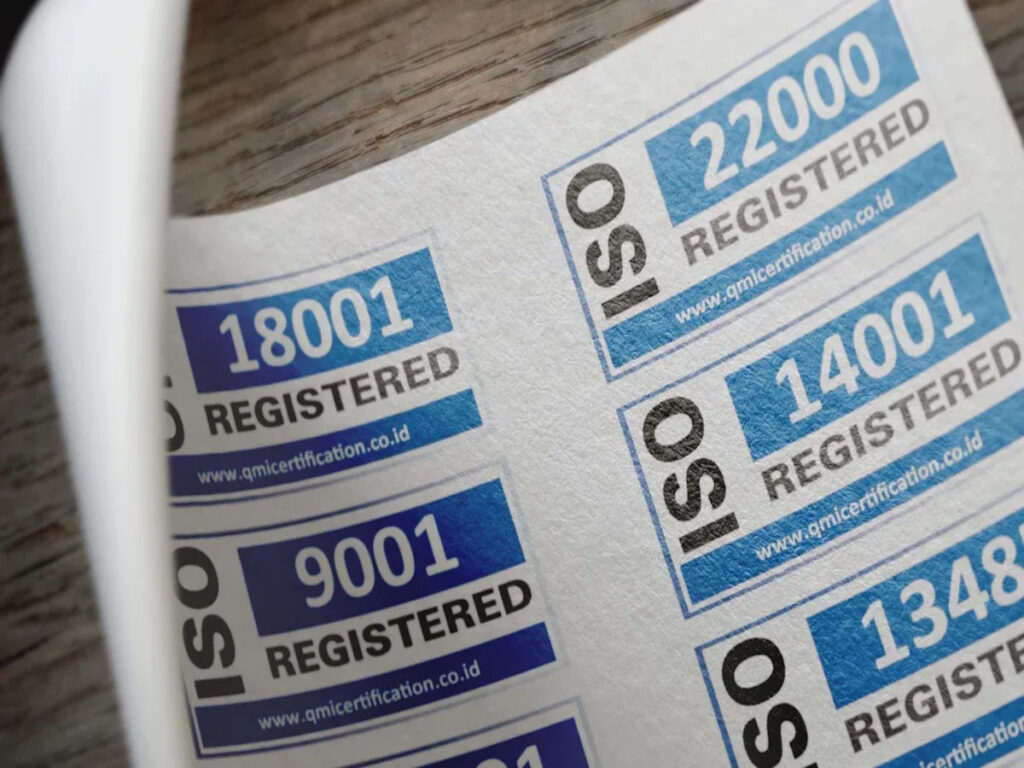
ISO 9001 es el estándar internacional para los Sistemas de Gestión de Calidad (sistema de gestión de la calidad), publicado por la Organización Internacional de Normalización. Especifica los requisitos sobre cómo una empresa documenta, monitores, y mejora continuamente sus procesos internos. Más de un millón de organizaciones en 189 países tienen ISO 9001 proceso de dar un título, convirtiéndolo en el estándar de sistemas de gestión más utilizado en el mundo..
En tono rimbombante, ISO 9001 certifica los procesos de la organización, no sus productos. La Sociedad Estadounidense para la Calidad lo describe como un marco que "ayuda a las organizaciones a garantizar que sus clientes reciban constantemente productos y servicios de alta calidad".’ La certificación demuestra que el fabricante ha implementado estructuras, procesos de gestión de calidad auditables.
Lo que esto demuestra para la adquisición de señales de tráfico
Para un comprador de flota de alquiler que evalúa un proveedor mayorista de señales de tráfico, ISO 9001 La certificación de un organismo acreditado demuestra tres cosas.:
- El proveedor ha documentado procedimientos de control de calidad que cubren su proceso de fabricación..
- Esos procedimientos han sido auditados por un organismo de certificación externo independiente, no autodeclarado..
- La certificación se revisa anualmente y se renueva cada tres años., lo que significa que refleja las operaciones actuales, no es una instantánea única.
En términos prácticos, Es menos probable que un fabricante de señales de tráfico con certificación ISO 9001 envíe señales fuera de especificación sin ser detectadas.. Su proceso incluye la inspección del material entrante., controles de calidad en el proceso, y acciones correctivas documentadas para no conformidades. Para pedidos de flotas a granel donde la inspección unidad por unidad no es práctica, Esta documentación del proceso reduce el riesgo de recibir señales que no cumplan con sus especificaciones..
Cómo verificar ISO 9001 proceso de dar un título
1. Solicitar una copia de la ISO 9001 certificado del proveedor.
2. Verifique el organismo de certificación emisor; debe ser un organismo acreditado (reconocido por la IAF). Ejemplos comunes: Oficina Veritas, SGS, TÜV Renania, DNV.
3. Lea atentamente la declaración del alcance del certificado.. Debe cubrir explícitamente la fabricación de señales de tráfico o la categoría de producto que está solicitando..
4. Consulta la fecha de caducidad. Los certificados se renuevan cada 3 años; un certificado caducado ya no es válido.
5. Comuníquese directamente con el organismo de certificación para verificar el número de certificado si es necesario..
ISO 9001 Significado de la certificación: Lo que NO prueba
Un error común
Un error frecuente en la evaluación de proveedores es tratar las normas ISO 9001 como garantía de calidad del producto. No lo es. La propia norma establece que ISO 9001 Certifica procesos de gestión de calidad: no certifica que ningún producto específico cumpla con ningún estándar de desempeño específico..
Un fabricante con ISO 9001 la certificación podría, en principio, producir letreros con el grado de lámina incorrecto y aun así mantener un certificado válido, siempre y cuando su proceso de gestión de calidad entregue consistentemente cualquier especificación que hayan documentado internamente. El SGC certifica la coherencia, no la especificación en sí.
Tres cosas ISO 9001 No puedo decirte
- Si la lámina cumple con ASTM D4956 Tipo III o superior, eso requiere una certificación de prueba ASTM separada del fabricante de la lámina..
- Si las dimensiones del letrero se ajustan a los requisitos de la 11.ª edición de MUTCD, eso requiere verificación dimensional según la Sección 2C y Parte 2C de MUTCD. 6 Tabla 6F-1.
- Si el sustrato de aluminio cumple .080″ espesor y 5052 o 6061 especificaciones de aleación: eso requiere un certificado de fábrica.
Por lo tanto, ISO 9001 Es una señal de adquisición útil, pero no suficiente.. Pertenece a la evaluación de su proveedor junto con, no en lugar de, las certificaciones de láminas ASTM D4956 y las especificaciones dimensionales en su orden de compra..
ISO 9001 VS. ISO 7010 — Dos estándares diferentes
Una fuente de confusión en la adquisición de señales de tráfico es la diferencia entre ISO 9001 e iso 7010. Son normas no relacionadas. ISO 9001 gobierna el sistema de gestión de calidad de un proveedor. ISO 7010 es una norma independiente que regula los símbolos gráficos y los colores de las señales de seguridad; se utiliza principalmente en el diseño de señales de seguridad en el lugar de trabajo a nivel europeo e internacional.. Un proveedor puede tener ISO 9001 certificación sin siquiera hacer referencia a ISO 7010, y viceversa. Para la adquisición de señales de tráfico en EE. UU., ISO 7010 no tiene relevancia directa para el cumplimiento de MUTCD. Para más información sobre ISO 7010 y su papel en la estandarización de los símbolos de signos, consulte nuestra guía sobre ISO 7010 señal de seguridad normalización de la UE.
Señales de tráfico con marcado CE: Lo que significa para los compradores estadounidenses
Qué es el marcado CE
Marcado CE: de la Conformité Européenne francesa, que significa Conformidad Europea, es una etiqueta obligatoria para los productos vendidos en el Espacio Económico Europeo. (EEA). Indica que el fabricante ha declarado que el producto cumple los requisitos sanitarios aplicables de la UE., seguridad, y requisitos ambientales para esa categoría de producto.
Dos aclaraciones importantes de fuentes oficiales:
- El marcado CE no es un indicador de calidad. La Sociedad Estadounidense para la Calidad afirma explícitamente: ‘No es una declaración de garantía de calidad, no muestra evidencia de pruebas de terceros.’
- El marcado CE no es un requisito legal en los Estados Unidos. No tiene estatus regulatorio según MUTCD., OSHA 29 CFR 1926.200, o ASTM D4956.
La perspectiva del comprador estadounidense
Para un comprador de flotas de alquiler en EE. UU. que busca señales de tráfico internacionales, El marcado CE transmite una señal limitada pero distinta de cero.. Un fabricante que ha pasado por el marcado CE para clientes de la UE ha demostrado su capacidad para producir documentación: una Declaración de conformidad., expediente técnico, y evaluación de la conformidad, que evidencia procesos de cumplimiento estructurados. Este es un indicador modesto de la madurez del proceso..
Sin embargo, Esa señal es más débil que ISO. 9001 certificación de un organismo acreditado. El marcado CE para muchas categorías de productos implica la autodeclaración del fabricante sin auditoría de terceros. El fabricante firma una Declaración de Conformidad indicando el cumplimiento, pero ningún organismo independiente ha verificado necesariamente la afirmación..
La conclusión práctica para las adquisiciones estadounidenses: Tratar el marcado CE como un indicador positivo menor de que el proveedor tiene experiencia exportadora en la UE., no como una certificación independiente de calidad o cumplimiento para su compra en EE. UU..
La “exportación china”’ Mark: un riesgo conocido
Una precaución práctica: una versión falsificada de la marca CE, a veces llamada "China Export’ Marca: existe y es visualmente similar a la marca CE genuina.. La principal diferencia visual es el espaciado entre letras.. En la marca CE genuina, las letras tienen proporciones específicas con un espacio visible. En la versión falsificada, las letras generalmente se colocan más juntas.
Si el marcado CE está presente en las señales que está evaluando, Solicite la Declaración de conformidad de la UE del fabricante: un documento legalmente requerido que nombra la directiva específica de la UE.(s) bajo el cual se aplicó la marca. Un proveedor con marcado CE genuino puede producir este documento a pedido..
Comprobación rápida del marcado CE para compradores estadounidenses
Marcado CE genuino: Las letras tienen el espaciado y las proporciones correctos según las directrices de la UE..
Pedir: Declaración de conformidad de la UE (Doc) — nombra la directiva(s) y estándares con los que se evaluó el producto.
Verificar: Si el marcado CE hace referencia a un organismo notificado (NÓTESE BIEN), un número de cuatro dígitos sigue a la marca: verifique el NB en la base de datos NANDO de la UE.
Recordar: Para el cumplimiento del mercado de EE. UU., La marca CE no sustituye a la certificación de láminas ASTM D4956 ni al cumplimiento dimensional de MUTCD..
Certificación de proveedores de señales de tráfico: Cómo verificar antes de realizar el pedido
La lista de verificación de verificación
Independientemente de las certificaciones que reclame un proveedor, Los siguientes pasos de verificación protegen su adquisición antes de realizar cualquier orden de compra..
| Proceso de dar un título / Documento | Qué solicitar | Cómo verificar | Relevancia del mercado estadounidense |
| ISO 9001 | Certificado con declaración de alcance y fecha de vencimiento. | Confirmar que el organismo emisor esté acreditado por la IAF; llame al cuerpo para verificar el número de certificado | Alto: confirma el proceso de gestión de calidad. |
| Láminas ASTM D4956 | Certificado de prueba del fabricante de láminas. (no certificado de distribuidor) | Confirmar tipo III o superior; verifique la fecha del certificado y la marca de la lámina | Crítico: gobierna directamente el rendimiento de las señales en EE. UU. |
| Certificado de fábrica de aluminio | Certificado de molino para grado de aleación (.080″, 5052 o 6061) | Referencia cruzada con especificaciones de compra.; solicitud por lote | Crítico: gobierna la especificación del sustrato |
| Marcado CE | Declaración de conformidad de la UE | Consulte DoC para obtener referencias directivas; verificar el número NB en NANDO si corresponde | Bajo: sin estatus legal en EE. UU.; indicador de proceso menor |
| ISO 7010 | Confirmar el alcance de cualquier ISO 7010 referencia | Distinguirse de ISO 9001 — se aplica a los símbolos gráficos, no sistema de gestión de la calidad | No aplicable para el cumplimiento de MUTCD |
Declaración de alcance: el detalle más importante
Al revisar una ISO 9001 certificado, La declaración de alcance es el elemento más crítico.. Un auditor sólo verifica lo que está dentro del alcance establecido. Un certificado con el alcance 'fabricación de carteles y displays promocionales.’ no cubre la fabricación de señales de tráfico, incluso si el proveedor también fabrica señales de tráfico.
Solicitar que la declaración de alcance haga referencia explícita a la fabricación de señales de tráfico., fabricación de señales de tráfico, o idioma equivalente. Si no es así, Preguntar al proveedor si la producción de señales de tráfico está dentro del alcance del SGC auditado., y solicitar confirmación por escrito del organismo de certificación.
Proveedor certificado de señales de tráfico: El marco de decisión sobre adquisiciones de EE. UU.
Qué priorizar en orden de relevancia en el mercado estadounidense
Para un comprador de flota de alquiler en EE. UU., Aquí está la priorización correcta de las credenciales de los proveedores, ordenadas por impacto real en el cumplimiento de MUTCD y OSHA.:
- Primera prioridad: Certificación de láminas ASTM D4956 (Mínimo tipo III) del fabricante de láminas original. Esto determina directamente si sus letreros cumplen con los mínimos de retrorreflectividad de la Tabla 2A-5 de MUTCD..
- Segunda prioridad: Certificado de fábrica de aleación de aluminio (.080″, 5052-H38 o 6061-T6). Esto confirma que el sustrato cumple con sus especificaciones..
- Tercera prioridad: ISO 9001 Certificación con alcance que cubre la fabricación de señales de tráfico.. Esto confirma que los procesos de gestión de calidad del proveedor están auditados y documentados..
- Cuatro: Marcado CE con Declaración de Conformidad disponible bajo petición. Indicador positivo menor; no es una credencial de cumplimiento de EE. UU..
Un proveedor con documentación sólida ASTM D4956 y una certificación ISO válida. 9001 El certificado que cubre la fabricación de señales de tráfico representa una opción de adquisición defendible para pedidos de flotas de alquiler a granel.. Un proveedor con marcado CE pero sin documentación ASTM D4956 no.
Para un marco completo de evaluación de proveedores, incluida la negociación de MOQ, especificaciones de la orden de compra, y requisitos de documentación: consulte nuestra guía sobre Cómo conseguir señales de tráfico al por mayor para una flota de alquiler. La señalización de zonas de trabajo compatible con MUTCD de OPTRAFFIC está disponible para pedidos de flotas mayoristas con ISO 9001 Certificación y documentación ASTM D4956 a pedido..
Estándares de calidad de señales de tráfico: Certificaciones ASTM D4956 frente a ISO
Un punto común de confusión es la relación entre las certificaciones ISO y la norma ASTM D4956 que rige el rendimiento de las láminas de señales de tráfico en EE. UU.. Operan en dominios completamente diferentes..
| Estándar | Tipo | Lo que gobierna | Situación legal de EE. UU. | ¿Quién lo emite? |
| ASTM D4956 | Estándar de rendimiento del producto | Clasificación de láminas retrorreflectantes (Tipos I-XI), valores mínimos de RA | ✅ Referenciado por MUTCD; legalmente vinculante en las vías públicas de EE. UU. | ASTM International; probado por laboratorios acreditados |
| ISO 9001:2015 | Estándar del sistema de gestión | Los procesos de gestión de calidad del proveedor, no el rendimiento del producto. | Sin capacidad legal directa en EE. UU. | Organismos de certificación acreditados por la IAF |
| Marcado CE | Etiqueta de acceso al mercado de la UE | Conformidad con las directivas de productos de la UE (salud, seguridad, ambiente) | Sin estatus legal en EE. UU. | Autodeclaración del fabricante u organismo notificado de la UE |
| ISO 7010 | Estándar de diseño gráfico. | Símbolos de señales de seguridad y códigos de colores para señales de trabajo internacionales/de la UE | Sin capacidad legal directa en los EE. UU. | ISO; adoptado por la UE y muchos organismos nacionales de normalización |
La conclusión práctica es sencilla. Al adquirir señales de tráfico para el despliegue de flotas de alquiler en EE. UU., La certificación ASTM D4956 es el documento no negociable. ISO 9001 es un valioso indicador complementario. Marcado CE e ISO 7010 son instrumentos del mercado de la UE con una relevancia directa limitada para el cumplimiento del MUTCD. Para obtener más detalles sobre ASTM D4956 Tipo I a XI y qué grados pertenecen a una flota de alquiler, consulte nuestra guía sobre Grados de láminas reflectantes para flotas de alquiler.
Preguntas frecuentes: Proveedores de señales de tráfico con certificación ISO y CE
Q1: ¿ISO 9001 La certificación significa que una señal de tráfico cumple con los estándares MUTCD.?
No. ISO 9001 certifica los procesos de gestión de calidad del proveedor, no el rendimiento del producto. Un letrero de un fabricante con certificación ISO 9001 aún requiere una certificación de lámina ASTM D4956 por separado para confirmar el cumplimiento de la retrorreflectividad según la Tabla 2A-5 de MUTCD.. ISO 9001 Reduce el riesgo de recibir señales fuera de especificaciones al confirmar que el proveedor tiene controles de calidad documentados., pero no sustituye a la documentación a nivel de producto.
Q2: ¿Se requiere el marcado CE para las señales de tráfico vendidas en los Estados Unidos??
No. El marcado CE es un requisito del mercado de la UE sin valor legal en los Estados Unidos. Muescato, OSHA 29 CFR 1926.200, y ASTM D4956 son los estándares aplicables para el cumplimiento de las señales de tráfico en EE. UU.. El marcado CE puede aparecer en carteles de origen internacional como indicador de que el fabricante exporta a la UE., pero no confirma el cumplimiento de MUTCD y no lo exige ninguna autoridad reguladora de EE. UU..
Q3: ¿Cómo verifico que una ISO 9001 el certificado es genuino?
Solicitar el certificado con el nombre del organismo de certificación emisor y el número de certificado. Confirmar que el organismo de certificación esté acreditado por una IAF (Foro Internacional de Acreditación) cuerpo miembro. Comuníquese directamente con el organismo de certificación para verificar el número de certificado y verificar que la declaración de alcance cubra la fabricación de señales de tráfico.. Un alcance caducado o mal aplicado hace que el certificado sea irrelevante para su compra..
Q4: ¿Cuál es la diferencia entre ISO? 9001 e iso 7010?
Son estándares completamente separados.. ISO 9001 Gobierna el sistema de gestión de calidad de una empresa: sus procesos internos para entregar productos de manera consistente.. ISO 7010 rige los símbolos gráficos y códigos de color de las señales de seguridad, Se utiliza principalmente en el diseño de señales de seguridad en el lugar de trabajo a nivel europeo e internacional.. Para la adquisición de señales de tráfico en EE. UU., ISO 9001 es la certificación relevante a solicitar a un proveedor. ISO 7010 no tiene relación directa con el cumplimiento de MUTCD.
Q5: ¿Cómo puedo saber si la marca CE en un letrero es genuina??
La marca CE genuina tiene proporciones y espacios entre letras específicos.. Una versión falsificada, a veces llamada "Exportación de China".’ marca: coloca las letras más juntas. Para verificar la autenticidad, solicitar la Declaración UE de conformidad del fabricante, que nombra la directiva de la UE(s) bajo el cual se aplicó la marca. Para productos evaluados por un organismo notificado de la UE, Aparece un número de identificación de cuatro dígitos junto a la marca CE y se puede verificar en la base de datos NANDO de la Comisión Europea..
Q6: ¿Qué documentos debo solicitar a un proveedor internacional de señales de tráfico con certificación ISO??
Para un pedido de flota de alquiler en EE. UU.: ISO 9001 Certificado con alcance que cubre la fabricación de señales de tráfico y una fecha de vencimiento actual.; Certificación de láminas ASTM D4956 del fabricante de láminas original (Mínimo tipo III, con tipo ASTM y fecha de prueba); certificado de molino de aleación de aluminio (.080″, aleación 5052-H38 o 6061-T6); y fecha de adquisición en la factura o lista de empaque. La documentación del marcado CE es opcional e informativa, pero no es un requisito de cumplimiento para la implementación en EE. UU..
Uso de certificaciones como parte de un marco de adquisiciones más amplio
ISO 9001 La certificación es una señal positiva genuina: le indica que el proveedor ha estructurado, procesos de gestión de calidad auditables. El marcado CE es una señal más débil para los compradores estadounidenses, útil principalmente como indicador de hábitos de documentación. Ninguno de los dos reemplaza la certificación de láminas ASTM D4956 ni el certificado de fábrica que rigen directamente si sus letreros cumplirán con los requisitos de MUTCD y OSHA en las zonas de trabajo de EE. UU..
El enfoque más defendible es sencillo.: Cree una lista de verificación de evaluación de proveedores que requiera la documentación ASTM D4956 como una línea de pedido obligatoria y trate a ISO. 9001 certificación como un fuerte calificador adicional. Un proveedor que cumple con ambos criterios le brinda una combinación de confianza en el proceso y documentación sobre el desempeño del producto que resiste el escrutinio de cumplimiento..
Artículos relacionados en esta serie
- Cómo conseguir señales de tráfico al por mayor para una flota de alquiler (C1)
- Láminas reflectantes para señales de tráfico: Guía de calificaciones de flotas de alquiler (B2)
- Volver al pilar: Señales de tráfico para empresas de alquiler — Flota completa & Guía de abastecimiento
Lectura complementaria