Einführung: Warum die Prüfung von Verkehrszeichenherstellern nicht verhandelbar ist
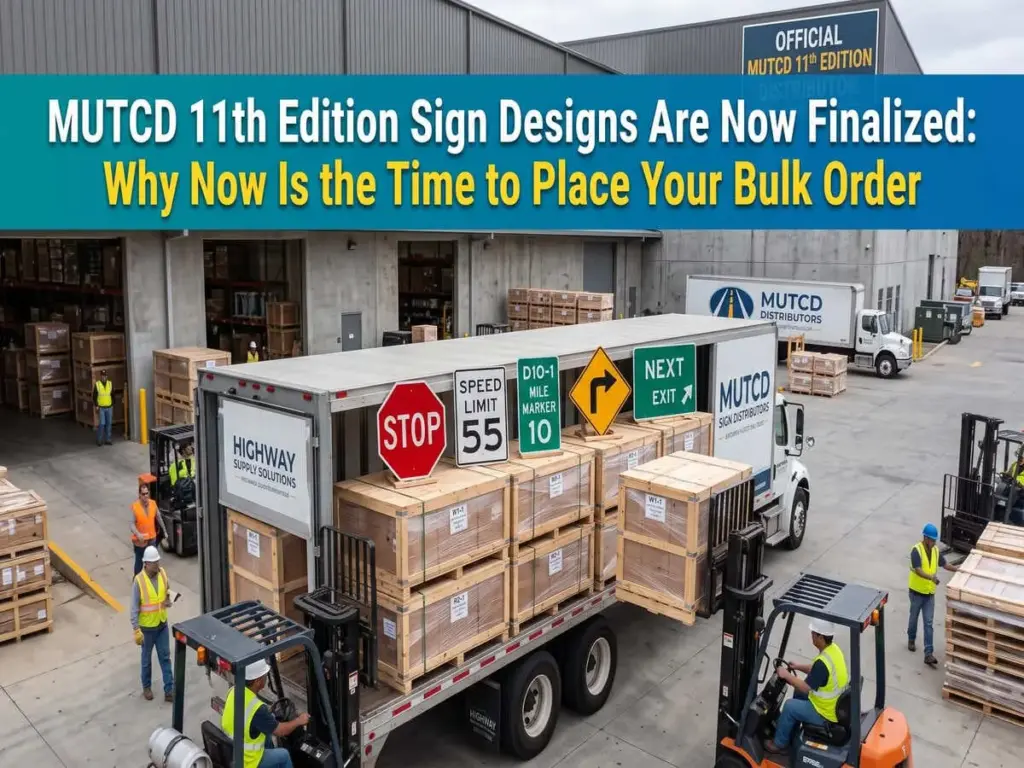
Beschaffungsbeauftragte, die die Beschaffung von Verkehrsschildern verwalten, stehen vor einer entscheidenden Verantwortung: Sicherstellen, dass die Schilder den Sicherheitsstandards von Bund und Ländern entsprechen. Mit dem Januar 18, 2026, Die Frist für die Annahme der 11. Ausgabe der MUTCD durch die Staaten ist nun abgelaufen, der Übergang von “Vermächtnis” Die Beschilderung nach neuen Compliance-Standards hat sich von einer Planungsphase zu einer strikten Durchsetzungsrealität gewandelt.
Nicht konforme Beschilderungen stellen nicht nur ein regulatorisches Risiko dar, sondern gefährden auch die öffentliche Sicherheit und setzen die Behörden schwerwiegenden finanziellen Konsequenzen aus. Nach aktuellen US-Angaben. Verkehrsministerium (USDOT) Durchsetzungstrends im Frühstadium 2026, Zu den Risiken der Nichteinhaltung gehören::
- Bundesfinanzierungssanktionen: Nichteinhaltung der bundesstaatlichen Sicherheitsstandards (wie die 11. Ausgabe. MUTCD- oder CDL-Sicherheitsprotokolle) kann dazu führen, dass erhebliche Infrastrukturzuschüsse zurückgehalten werden. Zum Beispiel, Die FMCSA hat kürzlich ungefähr zurückgehalten $160 Millionen aus dem National Highway Performance Program für einen einzelnen Staat aufgrund sicherheitsrelevanter regulatorischer Versäumnisse.
- Explodierende Ersatzkosten: Eine proaktive Beschaffung ist eine budgetäre Notwendigkeit. Stand April 2026, Der Notfallersatz für ausgefallene Beschilderungen kostet deutlich mehr als geplante Modernisierungen. Während ASTM D4956 Typ XI (Diamantqualität) Blattdurchschnitte $15.50 - - $21.00 pro qm. ft., Die Überstundensätze für Rettungsdienstmitarbeiter liegen mittlerweile zwischen $40 Zu $75 pro Stunde, ohne Mobilisierungsgebühren, die darüber hinausgehen können $5,000 pro Tag in städtischen Gebieten.
- Haftung aus unerlaubter Handlung & Rechtliche Offenlegung: Veraltete oder nicht reflektierende Schilder sind oft die Ursache “primärer Beweis” bei Personenschäden. In 2026, Schadensregulierungen bei Autounfällen, bei denen es um fahrlässige Beschilderung geht, beginnen oft bei $50,000 pro Person für die Grundhaftpflicht, kann aber auf mehrere Millionen Dollar ansteigen “Überlebensaktion” Schadensersatz, wenn systemisches Verschulden bei der Beschaffung nachgewiesen wird.
Quelle: https://ballotpedia.org/California_Establish_Personal_Injury_Lawyer_Regulations_Initiative_(2026), https://www.transportation.gov/briefing-room/trumps-transportation-secretary-sean-p-duffy-gavin-newsom-illegal-trucking-licenses
Über sofortige Strafen hinaus, minderwertige Schilder erfordern kostspielige, ungeplante Ersetzungen, die die kommunalen Haushalte belasten und den Verkehrsbetrieb stören. Der Umgang mit diesen Risiken erfordert ein tiefes Verständnis des Herstellungsprozesses – beginnend mit dem Grundlagen der Materialien, Kosten, und leistungsstarke Produktion von Autobahnschildern.
ICH. Die Compliance Foundation verstehen: Standards & Vorschriften
Vor der Durchführung von Herstelleraudits, Beschaffungsbeauftragte müssen die rechtlichen Rahmenbedingungen für die Herstellung von Verkehrsschildern in den Vereinigten Staaten verstehen.
ASTM D4956 – Der Materialstandard, der die Qualität von Schildern definiert
Was ASTM D4956 spezifiziert:
ASTM D4956-23 (aktuelle Ausgabe) legt Leistungsanforderungen für retroreflektierende Folien fest, die in Verkehrskontrollgeräten verwendet werden. Der Standard definiert drei kritische Spezifikationen:
1. Retroreflexionsgrade (Gemessen in cd/m²/Lux):
- Typ I (Ingenieurqualität): Minimum 75 cd/m²/lux
- Geeignet für Landstraßen, Umgebungen mit niedriger Geschwindigkeit
- Erwartete Lebensdauer: 3-5 Jahre
- Die wirtschaftlichste Option
- Typ II (Hochintensive Note): Minimum 250 cd/m²/lux
- Standard für die meisten Autobahnanwendungen
- Erwartete Lebensdauer: 7-10 Jahre
- Bietet ausreichende Sicht bei Scheinwerferlicht
- Typ III (Diamantqualität): Minimum 500+ cd/m²/lux
- Premium-Option für Hochgeschwindigkeit, stark frequentierte Korridore
- Erwartete Lebensdauer: 10+ Jahre
2. Farbspezifikationen:
ASTM D4956 legt genaue Farbwerte fest:
- Weiß (Hintergrundfarbe für die meisten Schilder)
- Gelb (Standard-Warnschildfarbe)
- Rot (Stoppschilder, Verbotszeichen)
- Blau (Hinweisschilder)
- Grün (Wegweiser)
Farben müssen während der gesamten Lebensdauer des Zeichens bestimmte Farbkoordinaten beibehalten. Zum Beispiel, Weiße Materialien müssen Y beibehalten (Luminanz) Werte innerhalb definierter Bereiche nach beschleunigter Bewitterungsprüfung.
3. Haltbarkeitsanforderungen:
Der Standard schreibt die Simulation beschleunigter Alterungsprotokolle vor 3-10 Jahre der Exposition:
- UV-Strahlungszyklus (gemäß ASTM G154)
- Feuchtigkeitseinwirkung (95%+ relative Luftfeuchtigkeit)
- Temperaturwechsel (-40°F bis 160°F)
- Salzsprühtest für Küstenanlagen
Materialien müssen erhalten bleiben ≥75 % des anfänglichen Retroreflexionsvermögens nach Alterungszyklen. Dies ist von entscheidender Bedeutung, da viele gefälschte oder minderwertige Materialien die Haltbarkeitsprüfung nicht bestehen.
MUTCD-Konformität – Design- und Platzierungsstandards
Das Handbuch auf einheitlichen Verkehrssteuerungsvorrichtungen (MUTCD 2003 Ausgabe mit Überarbeitungen bis 2009) legt Designanforderungen fest, die Hersteller befolgen müssen, Allerdings obliegt die spezifische Einhaltung häufig den Konstrukteuren und nicht den Herstellern selbst.
Wichtige MUTCD-Bestimmungen, die sich auf die Fertigung auswirken:
§ 2A.01 – Zeichenabmessungen und Nachrichtenformat:
- Jeder Schildtyp hat Mindest- und Höchstabmessungen, um die Sichtbarkeit aus angemessenen Entfernungen zu gewährleisten
- Zum Beispiel, Standard-Stoppschilder müssen 30 sein″ × 30″ auf Wohnstraßen (den Verkehr verlangsamen <25 Meilen pro Stunde) oder 36″ × 36″ auf Straßen mit höherer Geschwindigkeit
- Hersteller müssen Schilder genau nach diesen Spezifikationen herstellen – Maßabweichungen können dazu führen, dass Schilder nicht den Anforderungen entsprechen
§ 2C.02 – Retroreflexionsanforderungen für Stoppschilder:
- Alle Stopp- und Vorfahrtsschilder müssen weiß sein, Rot, oder eine Kombination aus retroreflektierender Folie gemäß ASTM D4956
- Minimale Retroreflexion von 250 cd/m²/lux für Sichtbarkeit bei Nacht
Die menschlichen und finanziellen Kosten von Beschilderungsausfällen
Ab 2026, Der Zusammenhang zwischen der Verschlechterung der Beschilderung und Verkehrstoten ist für USDOT zu einem Hauptschwerpunkt geworden “Nationale Strategie zur Straßenverkehrssicherheit.” Beschaffungsbeauftragte müssen erkennen, dass ein Hersteller § 2C nicht einhält.02 Die Höhe des Retroreflexionsvermögens trägt maßgeblich zu nächtlichen Navigationsfehlern bei.
Kritische Sicherheitsstatistiken (2025-2026 Daten):
- Ungleichheit der nächtlichen Todesopfer: Nach Angaben der NHTSA früh 2026 Berichte, während nur 25% des gesamten Verkehrsaufkommens erfolgt nach Einbruch der Dunkelheit, fast 50% aller tödlichen Autounfälle ereignen sich nachts. Aufgrund des fehlenden Umgebungslichts ist die retroreflektierende Beschilderung das einzige lebensrettende Navigationsinstrument, das Autofahrern zur Verfügung steht. (Quelle: https://www.mevorahlaw.com/blog/are-auto-accidents-more-likely-to-happen-at-night)
- Der “Sichtbarkeitslücke”: FHWA-Studium im Frühstadium 2026 weisen darauf hin, dass ordnungsgemäß gewartete retroreflektierende Schilder angebracht sind (Erfüllung der ASTM D4956-Standards) kann nächtliche Unfälle an ländlichen und städtischen Kreuzungen um reduzieren 33% Zu 38%. Umgekehrt, Schilder, die unterhalb des Gebots verblasst sind 250 Der cd/lx/m²-Schwellenwert erhöht die Wahrscheinlichkeit von “Nichterfüllung” Unfälle vorbei 22%. (Quelle: https://www.fhwa.dot.gov/innovation/everydaycounts/edc_7/nighttime_visibility.cfm)
- Risikofaktoren für Fußgänger: Mit 2025-2026 Daten, die das belegen 76% der tödlichen Unfälle mit Fußgängern ereignen sich bei schlechten Lichtverhältnissen, die Rolle hochintensiver Beschilderung (Typ IV und XI) Die Warnung von Autofahrern vor Zebrastreifen war noch nie so wichtig. Es hat sich gezeigt, dass verstärkte fluoreszierende Folien diese spezifischen Vorfälle reduzieren können 18% Zu 25%. (Quelle: https://www.fhwa.dot.gov/innovation/everydaycounts/edc_7/nighttime_visibility.cfm)
Haftung und Deliktsdelikt in 2026:
Die Rechtslandschaft hat sich in Richtung einer strengeren Rechenschaftspflicht für Infrastruktureigentümer verschoben. Im Strom 2026 Rechtsstreit, “Konstruktiver Hinweis” wird häufig angewendet: wenn eine Agentur Schilder von einem nicht geprüften Hersteller beschafft, dessen Materialien den Anforderungen nicht genügen 3 Jahre (anstelle der 10-jährigen Garantielaufzeit), Die Agentur wird oft gehalten 100% für damit verbundene Unfallschäden haftbar. Diese Siedlungen in 2026 jetzt durchschnittlich zwischen $250,000 Und $2.1 Millionen pro Vorfall.
§ 2D.03 – Anforderungen an Warnzeichen:
- Warnzeichen (gelber Hintergrund, schwarze Nachricht) Es müssen hochintensive retroreflektierende Materialien verwendet werden
- Das Kontrastverhältnis zwischen Hintergrund und Botschaft muss der Spezifikation entsprechen
- Hersteller müssen auf eine ordnungsgemäße Laminierung achten, um den Farbkontrast langfristig aufrechtzuerhalten
Variationen auf Landesebene:
Während MUTCD nationale Basislinien bereitstellt, Einzelne Staaten legen häufig strengere Anforderungen fest. Zum Beispiel:
- Einige Staaten schreiben ASTM D4956 Typ III vor (Diamantqualität) für alle Autobahnschilder
- Andere erfordern für Wüstenregionen einen zusätzlichen UV-Schutz
- Küstenstaaten können eine erhöhte Korrosionsbeständigkeit vorschreiben
Beschaffungsbeauftragte müssen die Anforderungen des staatlichen DOT überprüfen, bevor sie die Spezifikationen mit den Herstellern abschließen.
DOT-Konformitätsanforderungen und Auswirkungen auf die Garantie
Die Behörden des State Department of Transportation beziehen sich in Beschaffungsspezifikationen in der Regel sowohl auf MUTCD- als auch auf ASTM-Standards, häufig werden landesspezifische Bestimmungen hinzugefügt.
DOT-Qualitätssicherungstests:
Staatliche DOTs führen regelmäßige Prüfungen der installierten Beschilderung durch, Messung des Retroreflexionsvermögens mit kalibrierten Retroreflexionsmessgeräten. Wenn die Zeichen unter die MUTCD-Spezifikationen fallen, der Staat DOT kann:
- Geben Sie Mitteilungen über Verstöße heraus innerhalb dessen ein Austausch erforderlich ist 30-90 Tage
- Strafen erheben gegenüber den für die Instandhaltung zuständigen Kommunen oder Dienststellen
- Führen Sie Untersuchungen durch in den anfänglichen Beschaffungsprozess ein, um die Verantwortung zu bestimmen
Staatliche DOT-Durchsetzungsmaßnahmen & Strafen für nicht konforme Beschilderung (2026 Daten)
| Geben Sie DOT an | Durchsetzungsmechanismus | Typische Strafe/Aktion | Rechtliche/regulatorische Grundlage (2026) |
| Caltrans (Kalifornien) | Obligatorisches Retroreflexionsaudit | Zurückhaltung des Senatsgesetzes 1 (SB1) lokale Straßen- und Wegefinanzierung (oft mehr als 500.000 US-Dollar pro Gemeinde). | CA-Straßen & Straßenverkehrsordnung 搂 2100-2123 |
| FDOT (Florida) | Pauschalierter Schadensersatz in Tagessätzen | Strafen reichen von $500 Zu $2,500 pro Tag, wenn sicherheitskritische Schilder nicht innerhalb von 30 Tagen ausgetauscht werden “Mängelrüge” Fenster. | Abschnitt „FDOT-Standardspezifikationen“. 7-11 |
| NYSDOT (New York) | Beschaffungsuntersuchung (Rückforderung) | Volle Rückerstattung der Fördermittel, wenn sich herausstellt, dass Schilder mit nicht ASTM D4956-konformer Folie hergestellt wurden 3 Jahre der Installation. | New Yorker Straßengesetz 10-24 |
| Txdot (Texas) | Gestaffelte Compliance-Bußgelder | $1,000 pro nicht konformes Schild, das bei landesweiten Sicherheitskorridor-Audits gefunden wurde; verpflichtende Nachprüfung der gesamten Beschaffungskette. | Titel des Verwaltungsgesetzes von Texas 43 |
| PennDOT (Pennsylvania) | Ausschluss des Auftragnehmers | Platzierung der Hersteller auf der “Kurzfristig nicht förderfähig” Liste (1-? Jahre) für die Bereitstellung von Beschilderungen für jedes staatlich geförderte Projekt. | 67 Pa. Code 457.3 |
Gewährleistung und Haftung:
Hersteller garantieren in der Regel Schilder für 1-2 Jahre gegen Herstellungsfehler. Jedoch, Materialhersteller (3M, Avery Dennison, Orafol) Garantiert retroreflektierende Folie für 7-10 Jahre je nach Jahrgangsstufe. Wenn die Zeichen vorzeitig versagen:
- Wenn innerhalb der Herstellergarantiezeit ein Fehler auftritt, Für den Ersatz ist der Schilderhersteller verantwortlich
- Wenn innerhalb der materiellen Gewährleistungsfrist ein Fehler auftritt, Es kann sein, dass der Verkehrszeichenhersteller dafür verantwortlich ist, den Materiallieferanten zur Rechenschaft zu ziehen
- Wenn ein Fehler auftritt, nachdem alle Garantien abgelaufen sind, Die Beschaffungsorganisation trägt die Wiederbeschaffungskosten
Ii. Systematischer Lieferantenqualifizierungsprozess
Die Qualifizierung eines Verkehrszeichenlieferanten erfordert das Durchlaufen aufeinanderfolgender Bewertungsphasen.
Überprüfung der Vorqualifikationsdokumentation
Phase 1: Zertifizierungen überprüfen
Fordern Sie diese Dokumente von potenziellen Herstellern an:
- ASTM D4956-Konformitätszertifizierung
- Muss von anerkannten Prüflaboren stammen (akkreditiert durch A2LA oder gleichwertig)
- Sollte sich auf die aktuelle Ausgabe beziehen (D4956-23 oder höher)
- Muss in der Vergangenheit datiert sein 12 Monate
- Sollte spezifische Namen der Materiallieferanten und Chargennummern enthalten
- Staatliche Herstellungslizenz
- Hersteller von Verkehrsschildern muss im Staat lizenziert sein(S) wo sie tätig sind
- Überprüfen Sie, ob die Lizenz in gutem Zustand ist (Wenden Sie sich an die staatliche Lizenzbehörde)
- Prüfen Sie, ob Sperren oder Verstöße vorliegen
- ISO 9001 Zertifizierung (dringend empfohlen)
- Zeigt eine externe Prüfung von Qualitätssystemen an
- Sollte den Umfang umfassen, der die Herstellung von Verkehrsschildern bestätigt
- Das Auditdatum sollte in der Vergangenheit liegen 24 Monate
- Versicherungsdokumentation
- Allgemeine Haftung ($1-2 mindestens eine Million)
- Arbeiter’ Entschädigung (staatlich geforderte Mengen)
- Produkthaftpflichtversicherung
Phase 2: Überprüfung der Kundenreferenz
Kontaktieren Sie mindestens drei Referenzen, die in der Vergangenheit ähnliche Schilder gekauft haben 18 Monate. Fragen:
- Wurden die Schilder im versprochenen Zeitrahmen geliefert??
- Haben alle Schilder die Werksabnahmeprüfung bestanden? (FETT) ohne mängel?
- Sofern Mängel festgestellt wurden, Wie schnell reagierte der Hersteller auf Korrekturmaßnahmen??
- Hat die Referenz ihre Lieferantenbeziehung erneuert??
Fertigungsaudit vor Ort
Bewertung des Qualitätsmanagementsystems:
Bei Besuchen vor Ort, Beschaffungsbeauftragte sollten dies überprüfen:
- Dokumentation zur Rückverfolgbarkeit von Rohstoffen
- Werden retroreflektierende Materialien in dafür vorgesehenen Räumen gelagert?, gekennzeichnete Bereiche?
- Kann der Hersteller bestimmte Materialchargen bis zum fertigen Produkt zurückverfolgen??
- Sind Materialien nach Typ geordnet, Grad, und Zertifizierungsstatus?
- Qualitätskontrolle im Prozess
- Teststationen beobachten (Retroreflexionsmessungen, Farbüberprüfung)
- Fordern Sie Chargentestprotokolle mit Ergebnissen für eingehende Materialien an
- Stellen Sie sicher, dass die Messgeräte kalibriert sind (Retroreflexionsmessgeräte sollten alle kalibriert werden 6 Monate)
- Dokumentation der Nichtkonformität
- Bitten Sie darum, hochwertige Protokolle aus der Vergangenheit zu überprüfen 3-6 Monate
- Ein Hersteller mit null Nichtkonformitäten deuten auf eine unzureichende Inspektion hin, nicht perfekte Herstellung
- Suchen Sie nach Beweisen dafür, dass Nichtkonformitäten auf ihre Grundursache analysiert und Korrekturmaßnahmen verfolgt werden
III. Abnahmeprüfung im Werk (FETT) Protokolle

FAT definiert, wie die Konformität vor dem Versand überprüft wird. Legen Sie FAT-Verfahren schriftlich fest, bevor die Produktion beginnt.
FAT-Umfang und -Verfahren
Stichprobenstrategie:
Für Bestellungen von 1-50 Zeichen: 100% Sichtprüfung + 25% detaillierte Tests
Für Bestellungen von 50-200 Zeichen: 100% Sichtprüfung + 10-15% detaillierte Tests
Für Bestellungen >200 Zeichen: Statistische Probenahme gemäß ANSI/ASQC Z1.4
Elemente testen:
- Visuelle Inspektionskriterien
- Oberflächenbeschaffenheit: Frei von Dellen, Delaminierung, Farbe verläuft
- Materialausrichtung: Retroreflektierende Folie richtig positioniert
- Platzierung der Befestigungselemente: Schrauben/Nieten gemäß Spezifikation korrekt installiert
- Prüfung des Retroreflexionsvermögens
- Mindestens messen 3 Standorte auf jedem abgetasteten Schild
- Verwenden Sie ein kalibriertes Retroreflexionsmessgerät (Z.B., LTL-X-Messgerät)
- Die Ergebnisse müssen die ASTM D4956-Spezifikationen für die verwendete Materialqualität erfüllen oder übertreffen
- Dokumentieren Sie alle Messungen mit Standort und Zahlenwerten
- Dokumentation
- FAT-Bericht vom Hersteller und Vertreter der Beschaffungsorganisation unterzeichnet
- Fügen Sie Fotos etwaiger Mängel bei
- Geben Sie alle Gegenstände, die die Prüfung nicht bestanden haben, und deren Entsorgung detailliert an (nacharbeiten, Ersatz, Akzeptanz mit Abweichung)
Akzeptanzkriterien:
Legen Sie klare Schwellenwerte fest, bevor FAT beginnt:
- Toleranz der Retroreflexion: ±5 % oder ±10 % des Spezifikationsminimums
- Visuelle Mängel: Keine außer kosmetischen Schönheitsfehlern <0.5 Zoll
- Farbgenauigkeit: ±5 Delta-E-Farbdifferenzeinheiten
- Maßtoleranz: ±1/8 Zoll für Schilderabmessungen
Iv. Reflektierende Bleche & Materialüberprüfung
Bei der Materialspezifikation entscheidet die Qualität über Erfolg oder Misserfolg.
Materialbeschaffung und Garantievalidierung
Zugelassene Materiallieferanten:
Zu den wichtigsten Herstellern retroreflektierender Materialien gehören::
- 3M (Scotchlite)
- Avery Dennison (Reflexit)
- Orafol (Oracover)
- Nickelit (Sitz in Indien)
Jeder Lieferant unterhält unterschiedliche Garantieprogramme. Zum Beispiel:
3Beispiel einer M-Garantie:
- Scotchlite Typ II: 7-Jahr Garantie gegen Verlust der Retroreflexion
- Scotchlite Typ III Diamant: 10-Jahr Garantie
- Die Garantie deckt Materialfehler ab, keine Installations- oder Umweltschäden
Verifizierungsprozess:
Anfrage von Herstellern:
- Bestellungen mit angegebenen Materialien
- Konformitätszertifikate von Materiallieferanten (Verknüpfung von Materialchargen mit ASTM-Konformitätstestergebnissen)
- Zuweisung der Materialgarantiedokumentation (Bestätigung, dass der Verkehrszeichenhersteller die Verantwortung für die materielle Gewährleistungsleistung übernimmt)
- Lagerungs- und Handhabungsverfahren, die zeigen, dass die Materialien vor der Verwendung ordnungsgemäß gewartet werden
Rote Flagge:
Hersteller sind nicht in der Lage, Materialien bestimmten Chargennummern zuzuordnen, oder die keine unabhängigen Prüfzeugnisse vorlegen können, Verwenden Sie wahrscheinlich Materialien vom Graumarkt oder von nicht autorisierten Händlern, was ein Fälschungsrisiko mit sich bringt.
V. Laufendes Lieferantenmanagement & Compliance-Überwachung
Jährliche Auditanforderungen und Leistungskennzahlen
Audithäufigkeit:
- Jährliche Vor-Ort-Audits aller aktiven Lieferanten
- Zusätzliche Audits aufgrund von Qualitätsmängeln, Designänderungen, oder regulatorische Fragen
- Audits, die innerhalb durchgeführt werden 30 Tage auslösender Ereignisse
Verfolgte Metriken:
- Pünktliche FAT-Annahmerate: _ % [Ziel: ≥ 95%]
- Fehlerrate: _ Mängel pro 1000 Zeichen
- Garantieanspruchsquote: _
- Lieferleistung: _ % pünktlich
Erwartungen an Korrekturmaßnahmen:
Wenn Prüfungsfeststellungen vorliegen:
- Dokumentationslücken → Korrekturmaßnahmen innerhalb 2 Wochen (Verfahrensüberarbeitung, Ausbildung, Wiederherstellung von Dokumenten)
- Fehler bei der Qualitätskontrolle → Sofortiger Produktionsstopp + Ursachenanalyse + Implementierung von Korrekturmaßnahmen innerhalb 4 Wochen + Verifizierungsaudit
- Nichteinhaltung von Vorschriften → Sofortige Meldung an das staatliche DOT + umfassender Korrekturmaßnahmenplan + Verantwortung auf Führungsebene
Wann sollte gekündigt werden?:
- Gefälschte Zertifizierungen oder Testdaten
- Weigerung, Korrekturmaßnahmen umzusetzen
- Behördliche Vorladungen oder Durchsetzungsmaßnahmen
- Unfähigkeit, die ASTM D4956-Konformitätsdokumentation aufrechtzuerhalten
VI. Dokumentation & Aufbewahrung von Aufzeichnungen
Erforderliche Datensätze zur Archivierung:
| Dokumenttyp | Aufbewahrungsfrist | Zweck |
| Bestellungen & Verträge | 7 Jahre | Verjährungsfrist |
| FAT-Inspektionsberichte | Produktlebensdauer + 5 Jahre | Gewährleistungs-/Mängelansprüche |
| Lieferantenauditberichte | 10 Jahre | Regulatorische Due Diligence |
| Zertifizierungen | 3 Jahre mindestens | Compliance-Überprüfung |
| Aufzeichnungen über Korrekturmaßnahmen | 7 Jahre | Rechenschaftspflicht & Trends |
VII. Abschluss & Implementierungs-Roadmap
Beschaffungsbeauftragte sollten bereit sein, eine strenge Prüfung durchzuführen:
- Führen Sie grundlegende Audits aller aktuellen Lieferanten durch
- Entwickeln Sie schriftliche Verfahren und Audit-Checklisten
- Legen Sie objektive Bewertungskriterien für die Lieferantenbewertung fest
- Erstellen Sie FAT-Verfahren und eine Dokumentation der Akzeptanzkriterien
- Erstellen Sie Ablagesysteme, in denen Aufzeichnungen nach Lieferant und Auditjahr organisiert sind
Häufig gestellte Fragen: Auditierung und Qualifizierung von Verkehrszeichenlieferanten
Q1: Wie wirkt sich der Übergang zur 11. Ausgabe der MUTCD auf die aktuellen Audit-Checklisten der Verkehrszeichenhersteller aus??
Die Annahme der 11. Ausgabe der MUTCD in 2026 hat die Einhaltung von einem freiwilligen Upgrade zu einem strikten Durchsetzungsauftrag verlagert. Mithilfe einer robusten Audit-Checkliste für Verkehrszeichenhersteller muss nun überprüft werden, ob die Produktionssoftware und -hardware eines Lieferanten auf die neuen Standards für Lesbarkeit und Retroreflexion kalibriert ist. Beschaffungsbeamte sollten speziell den Ausstieg aus Typ-I-Folien auf Hochgeschwindigkeitskorridoren prüfen und sicherstellen, dass der Hersteller die aktualisierten Schilderabmessungen und -symbole produzieren kann, die in den neuen Bundesrichtlinien erforderlich sind, um Verstöße gegen die DOT-konforme Schilderherstellung zu vermeiden.
Q2: Welche spezifischen Risiken bestehen bei der Umgehung des Lieferantenqualifizierungsprozesses für Verkehrszeichen??
Das Umgehen eines strengen Lieferantenqualifizierungsprozesses setzt eine Kommune Risiken aus “Konstruktiver Hinweis” Haftung. In 2026 Rechtliche Präzedenzfälle, wenn eine Agentur es versäumt, einen Anbieter zu prüfen und die Schilder innerhalb von drei Jahren versagen, Für Unfallschäden wird häufig die Agentur – nicht der Hersteller – haftbar gemacht, mit Siedlungen im Durchschnitt bis zu $2.1 Million. Außerdem, Unqualifizierten Lieferanten mangelt es oft an der Rückverfolgbarkeit der Rohstoffe, Das bedeutet, dass sie nicht nachweisen können, dass sie echte ASTM D4956-konforme Folien verwendet haben, Dies kann zur Rückforderung von Infrastrukturzuschüssen des Bundes führen.
Q3: Wie sollte ein Beschaffungsbeauftragter eine Garantievalidierung für technische reflektierende Folien durchführen??
Die Validierung muss über ein einfaches Papierzertifikat hinausgehen. Ein Wirtschaftsprüfer sollte dies überprüfen “Garantiekette” indem Sie Konformitätszertifikate anfordern, die bestimmte Materialchargennummern mit den fertigen Schildern verknüpfen. Denn Hochleistungsfolien wie Typ XI (Diamantqualität) trägt a 10-15 Jahr Garantie, Der Prüfer muss sicherstellen, dass es sich beim Hersteller um einen handelt “autorisierter Konverter” für Marken wie 3M oder Avery Dennison. Ohne diese Genehmigung, die Materialgarantie kann ungültig werden, Die Gesamtkosten des vorzeitigen Ausfalls und Ersatzes müssen von der Kommunalverwaltung getragen werden.
Q4: Welche spezifischen Werksabnahmetests (FETT) Für die DOT-Konformität sind Verfahren erforderlich?
Ein DOT-konformes Schilderherstellungsprotokoll erfordert eine zweistufige FAT. Erste, 100% Eine visuelle Inspektion ist erforderlich, um eine Delamination und Kantenbehandlung festzustellen. Zweite, quantitative Retroreflexionsprüfung mit einem kalibrierten Handmessgerät (wie der LTL-X) muss an einer statistischen Stichprobe durchgeführt werden. Um die Einheitlichkeit zu gewährleisten, müssen Messungen an mindestens drei Stellen pro Schild durchgeführt werden. In 2026, Viele DOTs verlangen mittlerweile, dass digitale Protokolle dieser FAT-Ergebnisse über ein sicheres Portal übermittelt werden, bevor eine Sendung zur Lieferung freigegeben wird.
F5: Warum ist die Überprüfung der ASTM D4956-Konformität für die langfristige Budgetoptimierung von entscheidender Bedeutung??
Die Überprüfung der ASTM D4956-Konformität ist die einzige Möglichkeit, sicherzustellen, dass die Schilder ihre erwartete Lebensdauer erreichen 10+ Jahre. Minderwertig bzw “grauer Markt” Materialien können die anfänglichen Retroreflexionswerte erreichen, bestehen jedoch innerhalb der UV-Abbautests nicht 36 Monate. Da Notfall-Ersatzkosten in 2026 beinhalten Spezialarbeitstarife ($40–75 $/Stunde) und Mobilisierungsgebühren, die darüber hinausgehen $5,000 pro Tag, Der Kauf eines Schildes mit nachgewiesener Haltbarkeit reduziert die Gesamtbetriebskosten erheblich (Gesamtbetriebskosten) im Vergleich zum “niedrigstes Gebot” nicht konforme Alternative.
F6: Was “Rote Fahnen” bei einem Vor-Ort-Audit die Beendigung einer Lieferantenbeziehung rechtfertigen?
Beschaffungsbeauftragte sollten eine sofortige Kündigung oder Aussetzung in Betracht ziehen, wenn ein Hersteller keine Dokumentation zur Rückverfolgbarkeit von Rohstoffen vorlegen kann oder wenn seine Messgeräte beschädigt sind (Retroreflektometer) Es fehlt ein Kalibrierungsaufkleber, der nicht älter als sechs Monate ist. Zu den weiteren kritischen Warnsignalen gehört die Entdeckung nicht identifizierter Folienrollen im Produktionsbereich, ein Mangel an klimatisierter Lagerung für Klebstoffe, oder jegliche Vorgeschichte gefälschter ASTM D4956-Testdaten. Jeder behördliche Verweis eines staatlichen Ministeriums für die DOT-konforme Schilderherstellung sollte ebenfalls eine umfassende erneute Prüfung auslösen.
Referenz
FHWA – MUTCD 11. Auflage, Abschnitt 2A.08 & Tabelle 2A-3: Aufrechterhaltung einer minimalen Retroreflexion (Mindestanforderungen an Candela für 2026 Einhaltung): https://mutcd.fhwa.dot.gov/pdfs/11th_Edition/part2a.pdf
NHTSA – Fakten zur Verkehrssicherheit 2024-2026 Daten: Analyse der nächtlichen Todesraten und Sichtbarkeitsfaktoren (Frühe Ausgabe): https://crashstats.nhtsa.dot.gov/#!/PublicationList/82
Caltrans — 2026 Compliance-Handbuch für lokale Unterstützung: Richtlinien für den Gesetzentwurf des Senats 1 (SB1) Finanzierungs- und Beschilderungsprüfungen: https://dot.ca.gov/programs/local-assistance/guidelines-and-procedures
FDOT – Standardspezifikationen für den Straßen- und Brückenbau (Januar 2026): Abschnitt 7-11 Vertragsstrafe und Einhaltung von Sicherheitsvorrichtungen: https://www.fdot.gov/programmanagement/implemented/specbooks
FHWA – Nationale Verkehrssicherheitsstrategie (2026 Aktualisieren): Gezielte Verbesserung der Sichtbarkeit bei Nacht und der Sicherheit von Fußgängern: https://www.transportation.gov/NRSS